Tag: IHC

  • PM Kakar appears before Islamabad High Court in Baloch missing students case

    PM Kakar appears before Islamabad High Court in Baloch missing students case

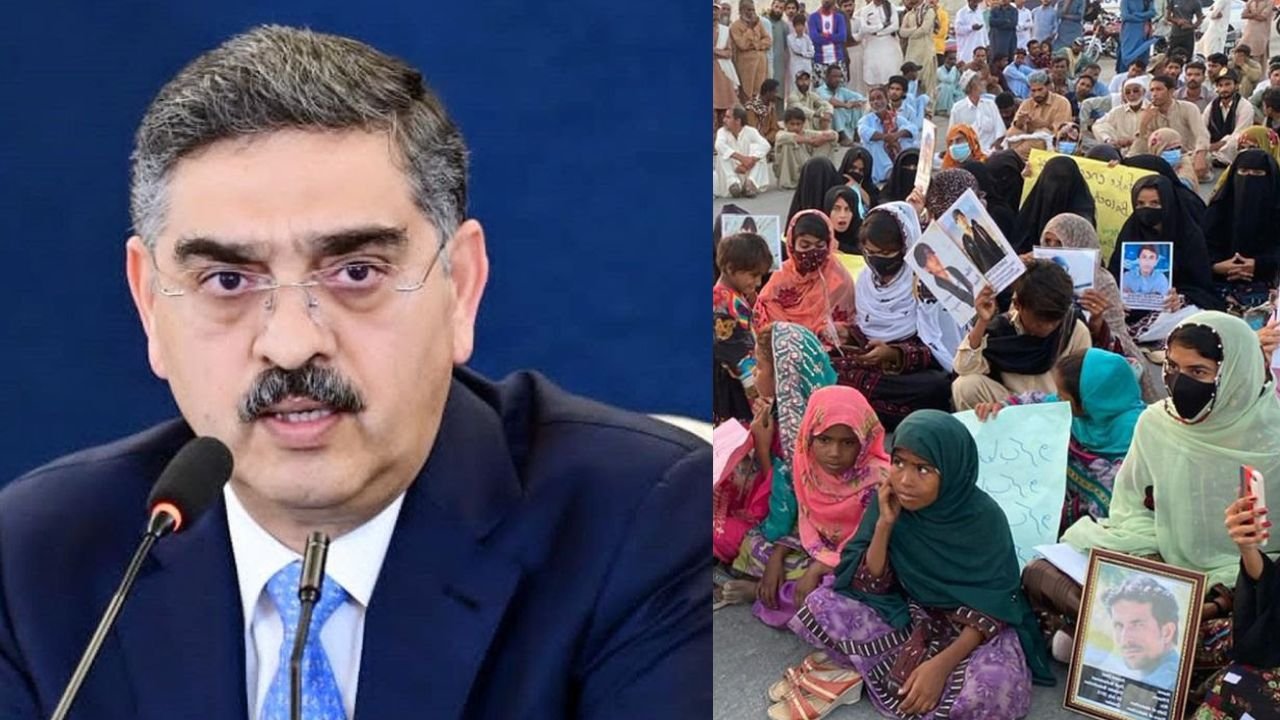
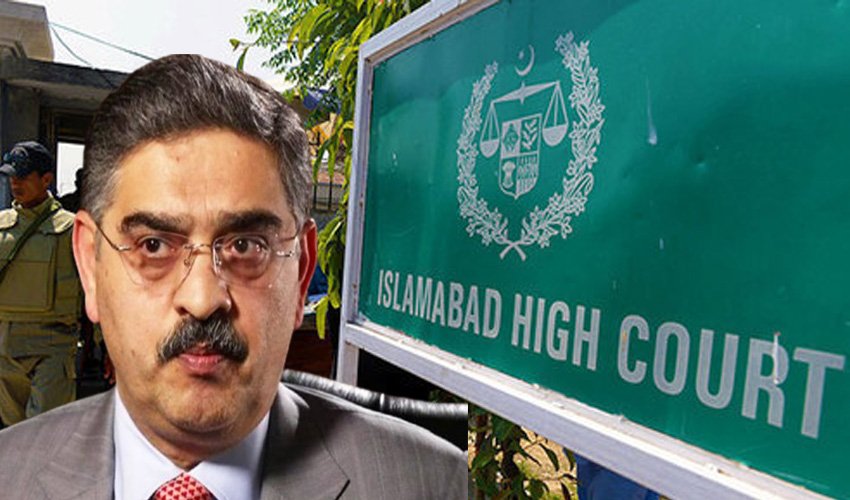
    Caretaker Prime Minister Anwarul Haq Kakar has appeared before the Islamabad High Court (IHC) on Wednesday in a case related to the recovery of Baloch missing students.

    Justice Mohsin Akhtar Kayani of the IHC heard the case related to Baloch missing students when PM, Anwarul Haq Kakar appeared before the court after skipping the last two hearings.

    During the last hearing, the IHC had instructed the caretaker prime minister, ministers, and secretaries to attend the next one. Additionally, they formed a three-member committee involving intelligence institutions to help find missing Baloch students.

    Apart from the caretaker prime minister, the interior secretary and caretaker federal Interior Minister Gohar Ijaz have also appeared in the high court.

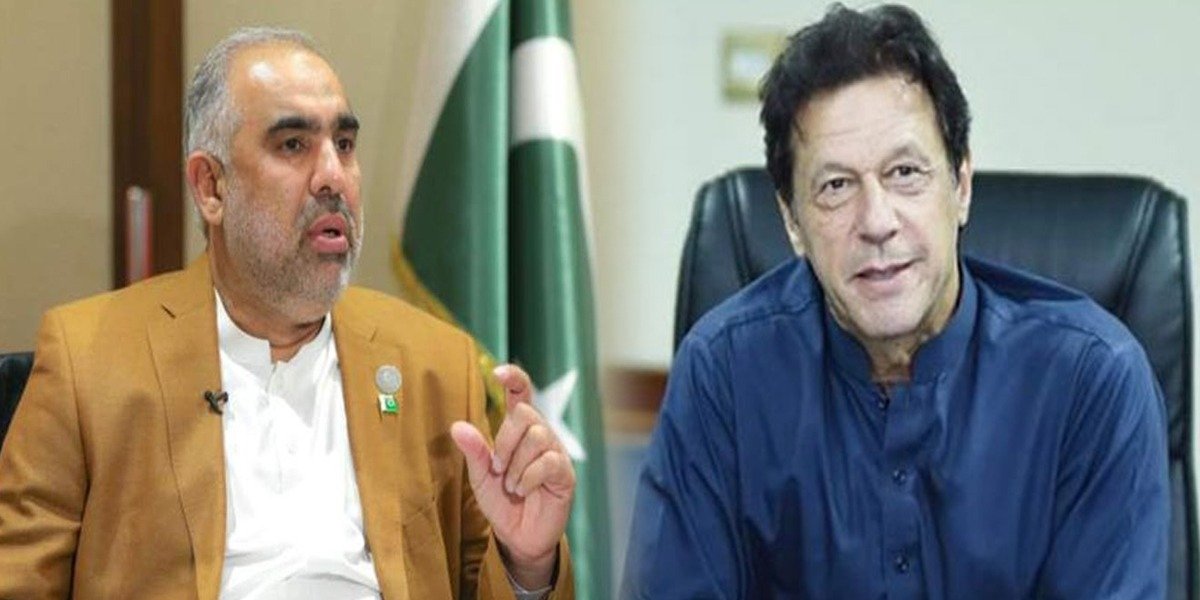
  • If decision made on merit, Imran Khan will be PM of Pakistan: Asad Qaiser

    If decision made on merit, Imran Khan will be PM of Pakistan: Asad Qaiser

    Pakistan Tehreek-e-Insaf (PTI) leader Asad Qaiser said on Wednesday that if the decision is made on merit, party founder Imran Khan will be the prime minister of Pakistan.

    While speaking to the media outside of Adiala jail, Rawalpinid, Qaiser said that the Election Commission of Pakistan (ECP) has conducted the worst polls in the country’s history.

    “We still have hopes from the judicial system of Pakistan,” he remarked, adding that the party will continue its “legal struggle” against the people in power.

    The former speaker of the National Assembly (NA) also said that the Islamabad High Court (IHC) gave him permission to meet Imran Khan, but jail authorities didn’t allow him to do so, instead asking him to come tomorrow.

  • Caretaker PM Kakar once again fails to appear in missing Baloch Students’ case

    Caretaker PM Kakar once again fails to appear in missing Baloch Students’ case

    Islamabad High Court (IHC) summoned Caretaker Prime Minister Anwaar-ul-Haq Kakar for the third time on Monday in the case of the missing Baloch students. The court’s orders came before adjourning today’s hearing until February 28.

    Justice Mohsin Akhtar Kayani, heading the bench, emphasized during the hearing that the caretaker prime minister should not perceive appearing in court as an insult.

    He urged PM Kakar to prioritize appearing before the court rather than attending to other commitments, stating, “No one is above the law here.”

    Expressing disappointment over PM Kakar’s absence, Justice Kayani reminded Attorney General for Pakistan Mansoor Usman Awan of the prime minister’s previous failure to attend court proceedings. The judge also inquired about the whereabouts of other caretaker ministers and secretaries.

    The judge highlighted that today was the 24th hearing in the case.

    “The petition was filed in 2022 and a commission had been formed. It took us two years to recover our citizens who did not even have any criminal case registered against them.

    “There was no case against them — including any drug, murder, or theft case — let alone a terror case,” Justice Kayani noted. He observed that “no documents or information” was shared with the court in the past two years.

    Addressing AGP Awan, he said, “You had submitted an affidavit that no person would go missing after today. [Yet] a person is missing from Islamabad’s F-6 without a first information report against him.

    “The purpose of summoning the prime minister was to inquire why the state’s premier is failing in his duties,” the IHC judge said.

    Interior Secretary Aftab Durrani eventually appeared before the court, addressing some concerns raised during the hearing.

    Previously, Justice Kayani issued a written order summoning PM Kakar, along with the defense and interior ministers and their respective secretaries, to ensure their physical presence in today’s hearing.

    During the hearing, Justice Kayani highlighted the ongoing struggle to recover missing individuals in the country, particularly the unresolved case of the 12 missing Baloch students.

    He pressed the Attorney General for details regarding ongoing criminal cases and the responsibility of state institutions in enforced disappearances.

    Concerns were raised about the inability of successive governments to address the issue adequately. Justice Kayani proposed forming an inquiry committee comprising representatives from relevant institutions to investigate the matter thoroughly.

    The judge also criticized the notion of granting exemptions to certain institutions and emphasized the importance of accountability.

    This is the second time PM Kakar has been summoned by the IHC. Previously, he was called upon on November 22, 2023, in a case filed by Advocate Imaan Mazari, but was unable to attend as he was out of the country.

  • Imran Khan’s message to the nation from Adiala Jail

    Imran Khan’s message to the nation from Adiala Jail

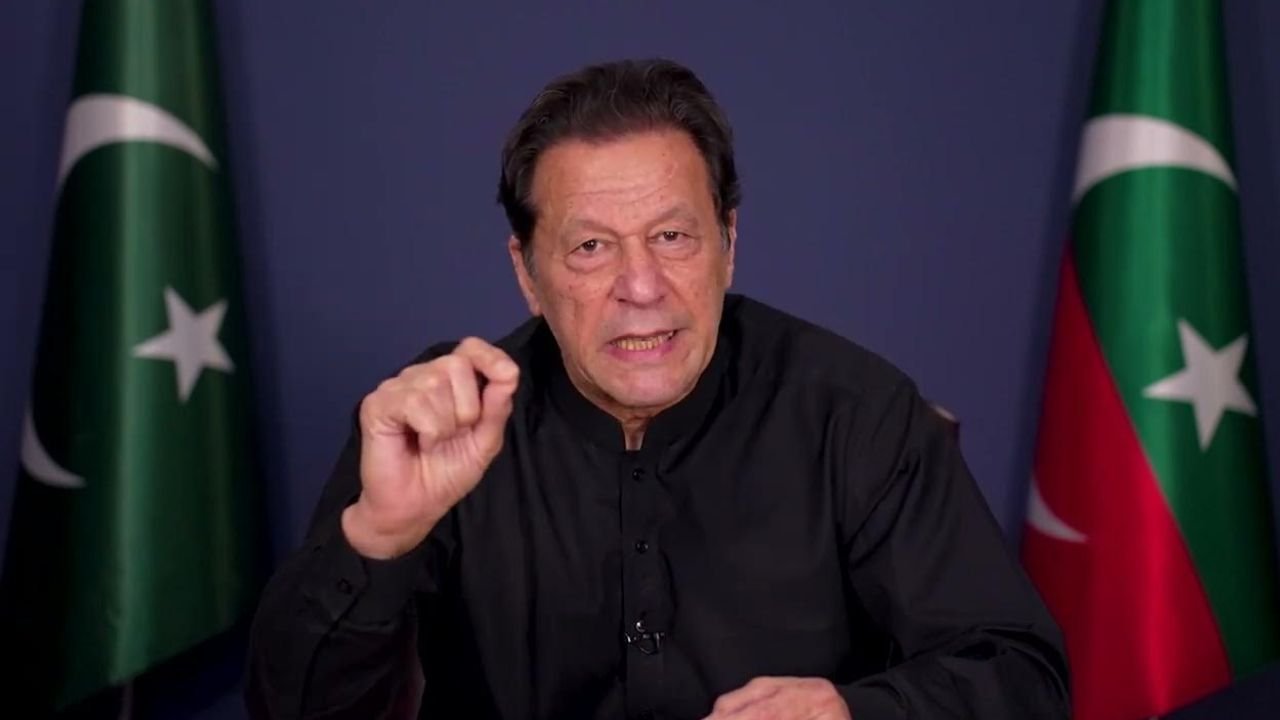
    In a message to the nation released from Adiala Jail, the Founder Chairman of Pakistan Tehreek-e-Insaf (PTI), Imran Khan, talked passionately about the upcoming general elections, highlighting the significance of February 8 as a day that symbolizes the dichotomy between freedom and slavery.

    Expressing confidence in the resilience of the nation, Khan stated, “I believe that my people stand united with the cause of freedom. Through their votes, they will safeguard Pakistan’s liberty.”

    Drawing attention to electoral manipulation on February 8, the Chairman voiced concern that a faction seeks to shackle the nation in chains of slavery.

    He pointed out that under what he calls the London Plan, a certified criminal was brought back to the country unjustly, wreaking havoc on the judicial system and trampling on the principles of justice and the constitution.

    Khan emphasized that efforts to manipulate the electoral process and undermine the rule of law have jeopardized the nation’s democratic foundations.

    Khan lamented that despite snatching the ‘bat’ from PTI to accommodate rivals, worst rigging is happening.

    Acknowledging the resilience and courage displayed by mothers, sisters, daughters, and party workers in facing injustice, the Chairman pledged to defeat all criminals within the bounds of the law and constitution, with the support of Allah and the nation.

    From his jail cell, the Chairman asserted that, with the blessings of Allah and the support of the people, all these criminals would be defeated, maintaining the integrity of the legal system.

    He urged citizens to exercise their right to vote on February 8, endorsing the movement for governance by law, supremacy of the constitution, and the restoration of democracy.

    The former Premier cautioned against unconstitutional forces attempting to subjugate the nation, warning that if these anti-constitutional powers succeed on February 8, they will establish a regime of theft and plunge the country further into turmoil.

    He called upon the people to exercise their voting power on February 8, making a decisive choice between freedom and slavery.

    “I want every individual in the nation to prepare, cast their votes, and ensure the protection of their votes, securing Pakistan’s path to constitutional governance on February 8,” Khan said.

  • ‘Imran Khan was offered a two-third majority by Bajwa to end protests in August 2022’, Aleema Khan

    ‘Imran Khan was offered a two-third majority by Bajwa to end protests in August 2022’, Aleema Khan

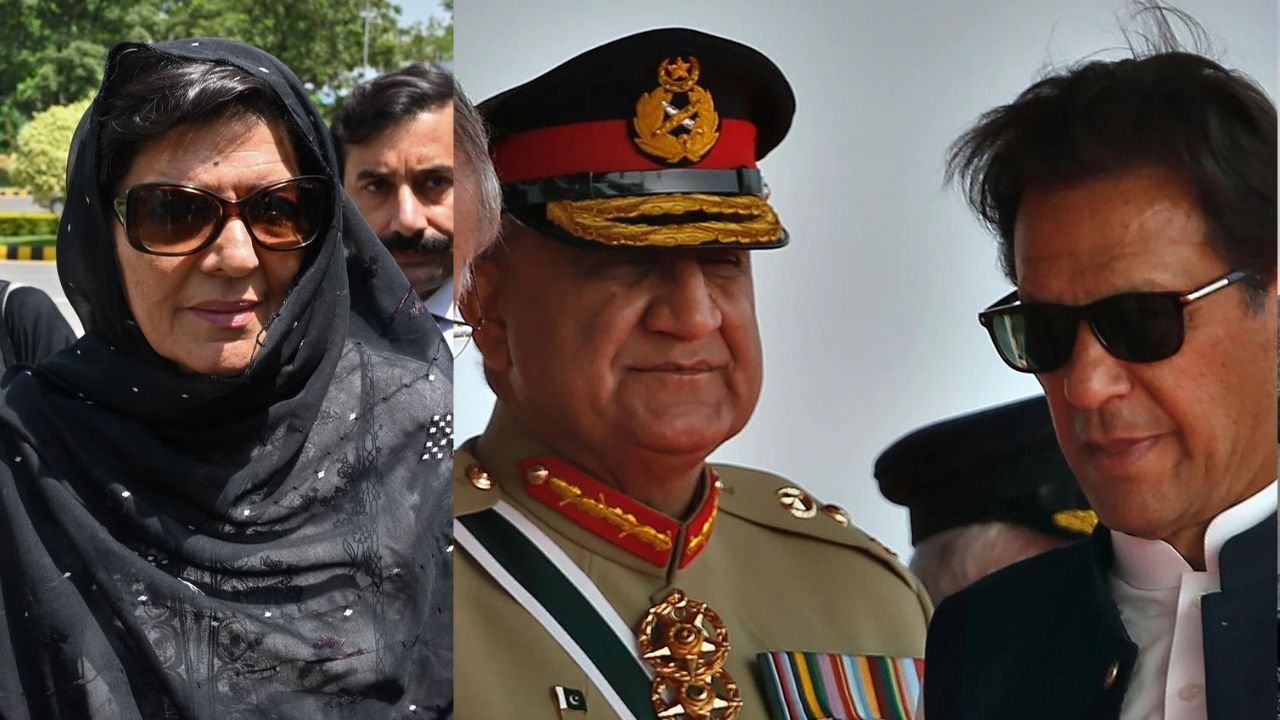
    Aleema Khan, the sister of former Prime Minister Imran Khan disclosed on Wednesday that her brother had once previously, received a message from the then Chief of Army Staff (COAS), General (retd) Qamar Javed Bajwa.

    The message reportedly offered a two-thirds majority in the National Assembly to Imran’s political party, Pakistan Tehreek-e-Insaf (PTI), if he agreed to end the nationwide protest he initiated after his ouster from the Prime Minister’s Office.

    PTI USA’s official account on X (former Twitter) posted, “In August 2022, General Bajwa, who was the COAS at the time, asked Imran Khan that if he stops talking about the conspiracy of regime change operation, which overthrew Khan’s government in April 2022, then PTI will be “allowed” to form a majority government in the upcoming elections. However, if Imran Khan doesn’t agree to stay quiet, then PTI will be reduced to only 30 seats.”

    Imran Khan launched a countrywide protest in April 2023, becoming the first prime minister in Pakistan’s history to be removed through a no-confidence vote.

    Despite governing the country for over three-and-a-half years, PTI faced challenges as allies defected, aligning with opposition parties that collectively sought to overthrow the PTI government.

    The former PTI chief had previously asserted that the conspiracy against his government originated within Pakistan, a departure from his earlier stance in which he had blamed the United States for his removal.

    During a media interaction after meeting Imran Khan at Adiala Jail, Aleema Khan shared the details of the alleged offer. She quoted her brother, saying, “In August 2022, General Bajwa approached me with an offer that if PTI ceased protests against regime change, a two-thirds majority for the party would be ensured in the National Assembly.”

    Imran Khan, according to Aleema Khan, expressed his unwavering commitment to principles, stating, “Our parents were born in a slave country; we are free, and I will not bow before anyone except God. We should face death than to accept slavery in a free country.”

    Aleema Khan also shed light on the challenges Imran faces in jail. She criticized the lack of an open trial in Adiala Jail, asserting that the cases against Imran Khan lacked substance. She further claimed that new cases are being brought up whenever he secures bail in an old case, suggesting a deliberate effort to keep the former prime minister incarcerated.

  • No more NAB cases against Sharif Family

    No more NAB cases against Sharif Family

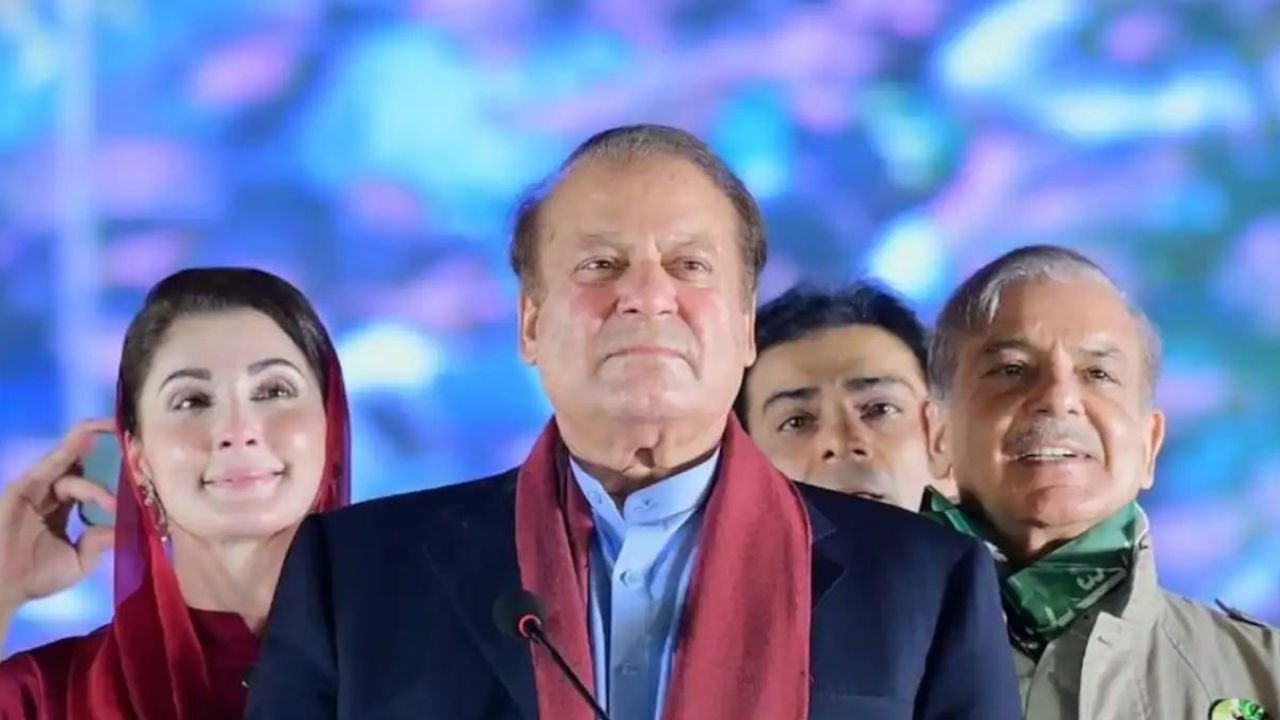
    National Accountability Bureau’s (NAB) Executive Board, chaired by the NAB Chairman, approved the closing of an investigation into the Sharif Trust case involving Sharif’s family including Pakistan Muslim League Nawaz (PML-N) supremo Nawaz Sharif.

    The meeting convened on January 1 to approve the closure of corruption cases, including those against PML-N leader Nawaz Sharif and his family.

    The meeting approved shutting down six corruption cases, notably a 24-year-old case against Nawaz Sharif and his family in the Sharif Trust case. This decision brings relief to the former premier and his family members.

    Among the closed cases was an inquiry into Islamabad Inspector General Akbar Nasir in the Safe City corruption case. Additionally, the board decided to conclude the investigation into the Park Enclave Housing Society, involving officers of the Capital Development Authority (CDA). Another inquiry against federal officers for alleged preferential recruitment was also approved for closure.

    Furthermore, the NAB board approved to close an inquiry against Shahid Malik and Shahbaz Yasin Malik, the CEO of Hilton Pharma.

    The investigation into the Sharif family regarding the Sharif Trust Case was initiated on March 31, 2000, based on allegations of receiving funds through illicit means, lack of audits, misappropriation of funds, and benami property acquisition by the Sharif family in the name of the Trust.

    The Panama Papers Joint Investigation Team (JIT) report, submitted to the Supreme Court, had criticized NAB for delays in the investigation and urged prioritization.

    Under the recently amended National Accountability Act 2002 by the previous PDM government, the NAB has concluded the Sharif Trust investigation under Section 31-B.

    This decision by the NAB’s Executive Board marks a significant development in the ongoing legal proceedings against the Sharif family, as they receive a respite from multiple longstanding corruption cases.

  • Imran Khan casts doubt on election legitimacy in an article written from jail

    Imran Khan casts doubt on election legitimacy in an article written from jail

    In a recent article for The Economist, Imran Khan, the founder and former chairman of Pakistan Tehreek-e-Insaf (PTI), currently incarcerated, has expressed apprehensions about the legitimacy of the upcoming elections in Pakistan.

    Khan argues that the caretaker governments in place at both the federal and provincial levels are constitutionally illegal due to their failure to hold elections within 90 days of dissolving parliamentary assemblies.

    While the public is anticipating elections on February 8, Khan, who has faced various challenges since a vote of no confidence in April 2022, raises skepticism about the electoral process.

    He points to the election commission’s actions, which he claims include defying the Supreme Court, rejecting PTI nominations, hindering internal party elections, and initiating contempt cases against PTI leaders for criticizing the commission.

    “The country’s election commission has been tainted by its bizarre actions. Not only has it defied the top court but it has also rejected my Pakistan Tehreek-e-Insaf (PTI) party’s nominations for first-choice candidates, hindered the party’s internal elections and launched contempt cases against me and other PTI leaders for simply criticising the commission,” he wrote.

    Khan contends that since his government’s removal, orchestrated by what he terms as “the establishment”—comprising the army, security agencies, and civil bureaucracy—the playing field for PTI has been anything but level. He alleges external interference, specifically from the United States, citing a State Department message urging his removal from the prime minister’s seat.

    Despite subsequent protests and electoral victories in by-elections, Khan argues that the administration that replaced his government led to economic downturns, inflation, and currency devaluation within 18 months. He emphasizes the contrast between PTI’s governance, which garnered international praise, and the subsequent administration’s economic performance.

    Khan claims that various measures have been taken to sideline him politically, including assassination attempts, abductions of party members, and legal harassment. Despite facing nearly 200 legal cases and being denied a normal trial, Khan states that PTI remains popular, with a 66 per cent approval rating, according to a recent poll.

    The former prime minister also raises concerns about the return of Nawaz Sharif, a convicted former prime minister, speculating that Sharif may have struck a deal with the establishment for support in the upcoming elections.

    Khan, who remains incarcerated on charges including treason, expresses doubt about the fairness of the electoral process, claiming that PTI is being denied its basic right to campaign.

    He concludes by advocating for fair and free elections, “The only viable way forward for Pakistan is fair and free elections, which would bring back political stability and rule of law, as well as ushering in desperately needed reforms by a democratic government with a popular mandate. There is no other way for Pakistan to disentangle itself from the crises confronting it. Unfortunately, with democracy under siege, we are heading in the opposite direction on all these fronts.”

    The Economist added an Editor’s Note stating, “The Pakistani government and the U.S. State Department deny Khan’s allegations of American interference, and Khan faces charges under the Official Secrets Act.”

  • Imran Khan kitnay ameer hain?

    Imran Khan kitnay ameer hain?

    It’s that time of the electoral season when we find out just how rich are the people who rule us.

    Financial details in nomination papers reveal a noteworthy surge in the assets of former Prime Minister and founding Chairman of Pakistan Tehreek-e-Insaf (PTI) Imran Khan, a rise of a whopping Rs277 million over the past five years.

    According to the documents, Imran Khan’s assets, which were valued at Rs38.694 million in 2018, have now exceeded Rs315.95 million as per the nomination papers submitted for the upcoming elections in 2023.

    Imran Khan has made public the possession of a seven kanal eight marla house in Zaman Park, Lahore, with an associated construction expenditure of more than Rs48.6 million.

    At the same time, the PTI founder also owns another piece of land in Islamabad, much smaller in size though – six kanals and 16 marlas- with a stated market value of over Rs 5 million.

    Additionally, he has disclosed ownership of a 300-kanal land in Bani Gala received as a gift.

    Notably, the former PTI chairman does not own any vehicles, as indicated in his documents.

    Other assets in Islamabad include a Rs120m shop and a two-bed apartment which has been priced at Rs34m.

    According to the documents, the items bought from Toshakhana – the infamous pieces that resulted in a case and disqualification – are valued at over Rs11.8m.

    On the other hand, the PTI founding chairman says his wife – Bushra Bibi – is the owner of 698 kanal in Deepalpur and Pakpattan besides another three-kanal house located at Banigala.

    The financial trajectory showcases a substantial increase in Imran Khan’s wealth.

    He mentioned the value of his assets at Rs38.694m in the 2018 general elections’ nomination papers, which has now reached Rs315.95m, representing a massive jump, out which over Rs60m are in cash deposited with different banks of Islamabad.

    In 2021, he declared assets valued at over Rs141 million to the Federal Board of Revenue, which further rose to over Rs320 million in 2022.

    The Federal Board of Revenue (FBR) certificate attached to his nomination papers for the upcoming elections in 2023 verifies that the current value of Imran Khan’s assets is over Rs315.9 million.

    This revelation holds significance as Imran Khan, the jailed former Prime Minister, gears up to contest the upcoming elections. The submitted details to the Election Commission of Pakistan (ECP) depict a considerable financial evolution over the specified five-year period.

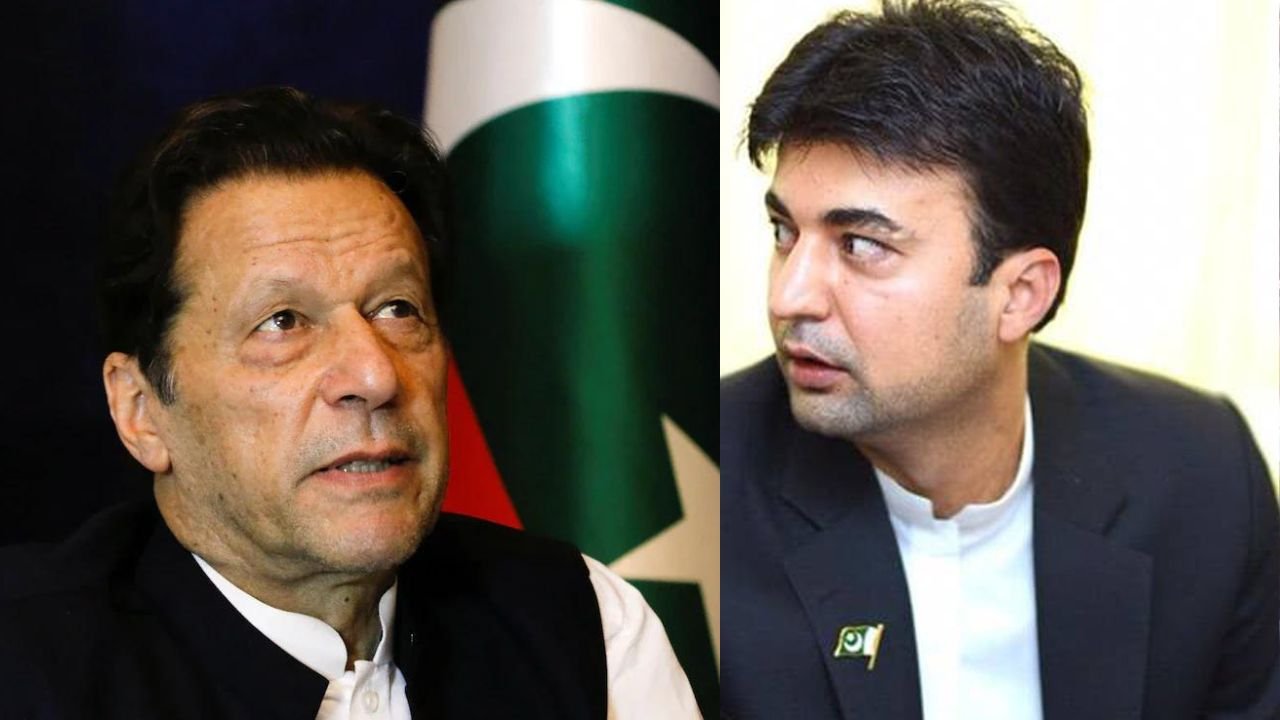
  • Murad Saeed’s papers rejected; Imran Khan to pay two lac fine

    Murad Saeed’s papers rejected; Imran Khan to pay two lac fine

    The Returning Officer (RO) for NA-4 on Friday rejected the nomination papers of Pakistan Tehreek-e-Insaf (PTI) leader Murad Saeed as the candidate was on the absconder’s list.

    Murad Saeed has been absconding since the May 9 incidents.

    PTI’s lawyer has said that he has completed all the documents required by the Election Commission of Pakistan (ECP) and will appeal against the verdict in Peshawar High Court (PHC).

    Meanwhile, the Provincial election commissioner in Khyber Pakhtunkhwa has directed returning officers across different districts to recover unpaid fines from various political leaders, including former Prime Minister Imran Khan, as per Dawn.

    These fines, imposed by the Election Commission of Pakistan (ECP), are under scrutiny as part of the nomination paper review process for the upcoming February 8 elections.

    A letter dated December 28, issued by the provincial election commissioner and obtained by Dawn.com, reveals that a total of 62 political figures from Khyber Pakhtunkhwa (KP) and Punjab have outstanding fines ranging from Rs5,000 to Rs50,000.

    The fines are linked to violations committed during election campaigns, with the severity of the violations determining the penalty amount.

    According to the letter, Imran Khan faces a substantial debt of Rs200,000 to the ECP, making him the highest debtor on the list.

    The former premier allegedly committed four separate violations in March 2022, each resulting in a fine of Rs50,000. Notably, these violations occurred just a month before Imran Khan’s removal through a parliamentary vote.

    Other prominent figures on the list include former Chief Minister of KP Mahmood Khan, who owes Rs150,000 for three violations, and ex-federal minister Murad Saeed, facing a fine of Rs100,000 for two violations.

    Several members of the Pakistan Tehreek-e-Insaf (PTI) and Jamiat Ulema-e-Islam (JUI-P) are also included, with outstanding amounts ranging from Rs50,000.

    The ECP letter states, “Candidates and public office holders [in the past] violated the code of conduct during election campaigns of various previous elections… fines were imposed upon them under Section 234 sub-section (3) of the Election Act 2017.”

    It further notes that some individuals failed to deposit the fines and others filed appeals that were rejected by the ECP.

    The competent authority has directed returning officers to share the list of defaulters and ensure the recovery of unpaid fines during the scrutiny of nomination papers. The deadline for scrutinizing nomination papers is December 30, with the process commencing on December 24.

    The Election Commission of Pakistan (ECP) said on Friday that it will display the final list of the candidates’ list on January 23 (Tuesday).

    According to the electoral watchdog, the candidates will be able to withdraw their nomination papers until Monday, January 22.

    The ECP is expected to display the candidate list on January 20. The appellate tribunals will decide on the appeals until January 19.

    The appeals against RO’s verdict on the special seats can be filed until January 16.

    The electoral watchdog had revised the election schedule for the special seats. The scrutiny of the nomination papers of women and minorities candidates will continue until January 13.
  • Mureeds of Shah Mehmood Qureshi protest against ‘ill-treatment’ by police

    Meher Bano Qureshi, daughter of Pakistan Tehreek-e-Insaf (PTI) Vice Chairman Shah Mahmood Qureshi, said that the treatment being handed out to her father is unbearable for his “mureeds.”

    She was a guest on a podcast on the digital channel of Hum News.

    The mureeds of Shah Mehmood Qureshi protested on Thursday against the ill-treatment of police and the ‘bogus’ case against him.

    “The people of Umarkot came out of fear. Peaceful protest of Ghousia Jamaat followers and Pakistan Tehreek-e-Insaaf workers in Umarkot against the humiliation and bogus arrest of Makhdoom Shah Mehmood Qureshi by the Rawalpindi police.”

    @ik.imrankhan00 عمرکوٹ کی عوام خوف کے بت توڑ کر نکل آئی۔ کل راولپنڈی پولیس کی جانب سے مخدوم شاہ محمود قریشی کی تذلیل کرنے اور بوگس گرفتاری کے خلاف عمرکوٹ میں غوثیہ جماعت کے مریدین اور پاکستان تحریک انصاف کے کارکنان کا شہر میں پر امن احتجاج #ReleaseSMQ#releaseimrankhan #سیاسی_انتقام_بند_کرو #PakistanUnderFascism #foryou ♬ original sound – pti offical

    “The people of Khipro on the streets against oppression! Full peaceful protest of Ghousia Jamaat Khipro on ill-treatment of Shah Mehmood Qureshi and arrest in the bogus case.”

    @teamsmq کھپرو کے عوام ظلم کے خلاف سڑکوں پر! شاہ محمود قریشی کے ساتھ ناروا سلوک اور بوگس مقدمے میں گرفتاری پر غوثیہ جماعت کھپرو کا بھرپور پرامن احتجاج۔ #ReleaseSMQ ♬ original sound – riShi

    Makhdoom Shah Mahmood Qureshi is the Sajjada Nasheen of Shrine Hazrat Bahauddin Zakariya (R.A).

    After Hur and Sarwari Jamaats, the Ghousia Jamaat has the most influence in Sindh.

    Pir Pagara is the Sajjada Nashin for Hur Jamaat and Makhdum Amin Fahim for Sarwari Jamaat.

    Their “gaddis”- religious centers- are in Pir Jo Goth and Hala.

    While the gaddi for Qureshi’s followers is in Multan, the city used to be a part of Sindh till 1818 when Maharaja Ranjit Singh captured it. Hence, a large number of Bahauddin Zakariya’s followers are from Sindh.

    A few former parliamentarians in Sanghar, Hyderabad, and Tando Allahyar districts are diehard followers of Ghosia Jamaat, who were elected in the 2008 elections because of their influence in the community.

    Besides Tharparker, Sanghar, Tando Allahyar, Ghotki, Umerkot, Larkana, Kamber Shahdadkot, Shahdadpur, Mirpurkhas, Badin, Thatta and Jacobabad districts also have a large following of the Ghousia Jamaat.