
Tag: Ijazul Haq

  • Nawaz signed NRO to go to London, claims ex-minister

    Nawaz signed NRO to go to London, claims ex-minister

    The establishment allowed former prime minister Nawaz Sharif to go to London for medical treatment as a part of an NRO [National Reconciliation Ordinance] deal struck between the two parties, claimed Ijazul Haq, former minister and son of military dictator Gen Ziaul Haq.

    In an interview with Samaa, the ex-minister claimed the change in platelets count was an NRO deal. “Certainly, there was establishment involved,” Haq claimed.

    Haq claimed that he knew the “platelets and blood report of Sharif was changed to facilitate his escape from Pakistan”.

    “I know that the platelet or blood report was something else and the report on paper was something else,” he said. Haq said the information is “authentic” and he has “proof” to substantiate his claim, reported Samaa.

    It may be noted that the former premier was rushed to hospital from jail after a drastic decrease in his platelets. Subsequently, he was allowed to go abroad for treatment in Nov 2019 after submitting an assurance in the court.

    Former prime minister Nawaz Sharif is in London for more than one year due to medical reasons and his passport is also expired.

    The government has refused to renew his passport, saying it could issue an emergency travel document on his request for returning back to the country.

    However, the Pakistan Tehreek-e-Insaf (PTI) has tried all means to bring Nawaz back but without any success. PM Imran had announced that he would go to the UK himself to bring Nawaz back.

    His statement was followed by Interior Minister Sheikh Rasheed saying that only Allah can bring Nawaz Sharif back. But eventually, the government decided that it won’t renew the passport of the ex-PM in an attempt to force his hand.
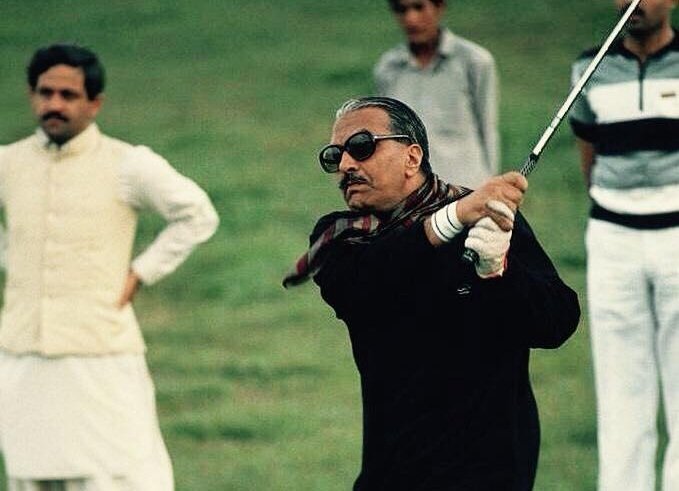
  • Zia’s son believes ex-army chief played ‘suspicious role’ in father’s death

    Zia’s son believes ex-army chief played ‘suspicious role’ in father’s death

    Muhammad Ijazul Haq, son of former military ruler and the country’s longest-serving head of state Ziaul Haq, has said that ex-army chief General Mirza Aslam Beg and former national security advisor (NSA) General Mahmood Ali Durrani had a “suspicious role” to play in his father’s death.

    According to a report in The Hindu, Ijaz has said that as per the evidence he has collected, Indian and Israeli spy agencies were also involved in his father’s plane crash in August 1988.

    “The plane came down due to spraying of nerve gas in the cockpit that maimed pilots,” he said and confirmed to the Indian English daily the presence of explosives in mango crates, besides claiming that a projectile had also hit the plane.

    Talking to The Hindu, Ijaz said he believed that Generals Beg and Durrani were somehow involved because “some of the doctors who were working in CMH Multan informed Zia’s family probably a month or two after the incident that they received orders from higher-ups to no do the autopsy of the body parts that were found after the crash.

    “Later on, some of them told us that they were transferred from Multan to far-flung places, which was obviously done to cover it up. When the autopsies were done on Brigadier General Herbert M Wassom, who was the United States (US) military attache, then why not the Pakistanis? I asked Gen Beg directly and indirectly but he never responded. The orders to transfer the doctors to far-flung places didn’t come from their immediate bosses; only the GHQ could have done it.”

    ZIA’S DEATH:

    Zia died in a plane crash on August 17, 1988. After witnessing a US M1 Abrams tank demonstration in Bahawalpur, Zia had left the small town by C-130B Hercules aircraft. The aircraft departed from Bahawalpur Airport and was expected to reach Islamabad International Airport. Shortly after a smooth takeoff, the control tower lost contact with the aircraft.

    Witnesses who saw the plane in the air, afterwards claimed it was flying erratically, then nosedived and exploded on impact. In addition to Zia, 31 others died in the plane crash, including then chairman of Joint Chiefs of Staff Committee (JCSC) Gen Akhtar Abdur Rahman, close associate of Zia, Brigadier Siddique Salik, the American Ambassador to Pakistan Arnold Lewis Raphel and General Herbert M Wassom, the head of the US Military aid mission to Pakistan.

    Conditions surrounding his death have given rise to many conspiracy theories. There is speculation that the US, India, the Soviet Union (in retaliation for Pakistani support of the mujahideen in Afghanistan) or an alliance of them and internal groups within Zia’s military were behind the incident.

    A board of inquiry was set up to investigate the crash. It concluded that “the most probable cause of the crash was a criminal act of sabotage perpetrated in the aircraft”.