Tag: illegal repatriation plan

  • Government aims to send back million ‘illegal aliens’ in second phase, says Balochistan’s Information Minister

    Government aims to send back million ‘illegal aliens’ in second phase, says Balochistan’s Information Minister

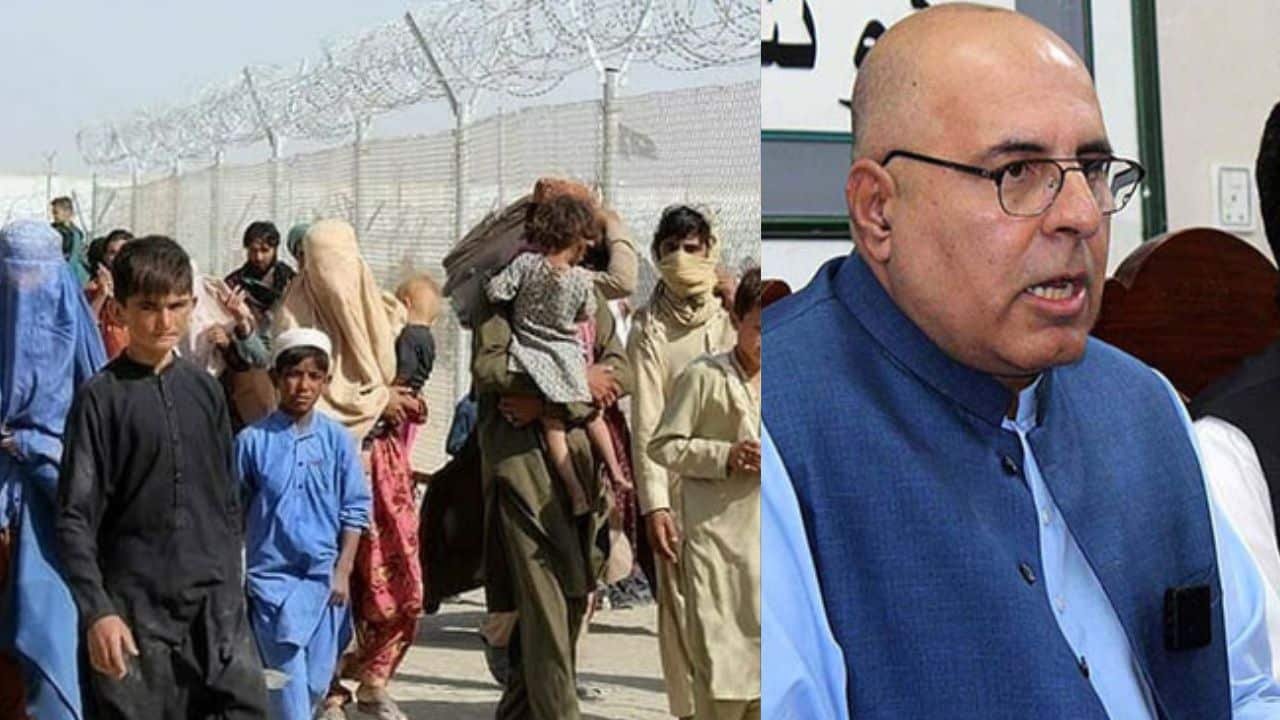
    Jan Achakzai, Balochistan’s caretaker Information Minister, has said that the second phase of repatriation of Afghan refugees has begun. In this phase the government aims to repatriate a million undocumented immigrants back to their countries by 2024.

    The minister said in a press conference that over 2,000 illegal Afghans have already been sent back to Afghanistan through Chaman border after getting arrested, reports Dawn.

    “The government has now launched a ‘stop and search policy’ under which police and other law-enforcement agencies will stop and check the national identity card of any suspected person,” Mr Achakzai said.

    Mr Achakzai said that around one million Afghan refugees got themselves registered with UNHCR in Quetta where they were issued Proof of Registration (POR) cards. He said that 200,000 fake cards were issued in Balochistan which have now been blocked by National Database and Registration Authority (NADRA).

    Mr Achakzai said that all concerned institutions and agencies were coordinating with each other while implementing orders issued to them by the federal government about illegal immigrants in the country, adding that no one would be allowed to stay illegally in the country.

  • Husband and wife about to be separated amidst Afghan deportation

    Amidst the deportation of Afghan refugees from Pakistan, the media is uncovering instances of families getting ripped apart.

    One such story is that of Bilal and Rabia in Karachi, who are now facing the risk of separation after 15 years of marriage, Geo has reported.

    Bilal, born to immigrant Afghan parents in 1988, has lived all his life in Karachi. Rabia, originally from DG Khan, used to live in the same locality as Bilal. The two fell in love.

    Bilal talked to his parents to ask for her hand in marriage, however, his brothers threatened to cut all ties with him if he married a Pakistani girl. Unfazed by their sentiments, he married Rabia. Bilal’s brothers left for Afghanistan and Rabia’s family gave them their consent and blessings.

    Fifteen years on, the two are happy and Bilal is also taking care of his widowed mother-in-law and a divorced sister-in-law. In the wake of Afghan expulsion from the country, fear is looming over the couple’s minds constantly. Despite every effort to get Bilal a CNIC, he has not got one in all these years and the couple is determined to get it through a legal route.

    Addressing this predicament, Bilal said, “I heard about the directive from the Peshawar High Court to grant identity cards to Afghan nationals married to Pakistani citizens. I joined the struggle in light of this landmark judgment. Unfortunately, it did not yield results. I regret not taking this matter more seriously at first. I was unaware that lacking an identity card in Pakistan could lead to separation from our families. My roots are in this country, and I have a deep affection for it. Regardless of legal decisions, our financial commitments are in Pakistan, and even if we are deported, our homeland will remain Pakistan.”

    Rabia said, “My husband’s brothers have not accepted us in the fifteen years of our marriage. They even threatened us, saying if you return, we will harm you. I am worried for my husband because he is my only support. As for myself, why should I go anywhere? I am a Pakistani. They are not my people, and neither is Afghanistan my homeland.”

    The couple, parents to five children, urged the government to review its decision or reconsider its policies regarding cases like their own.