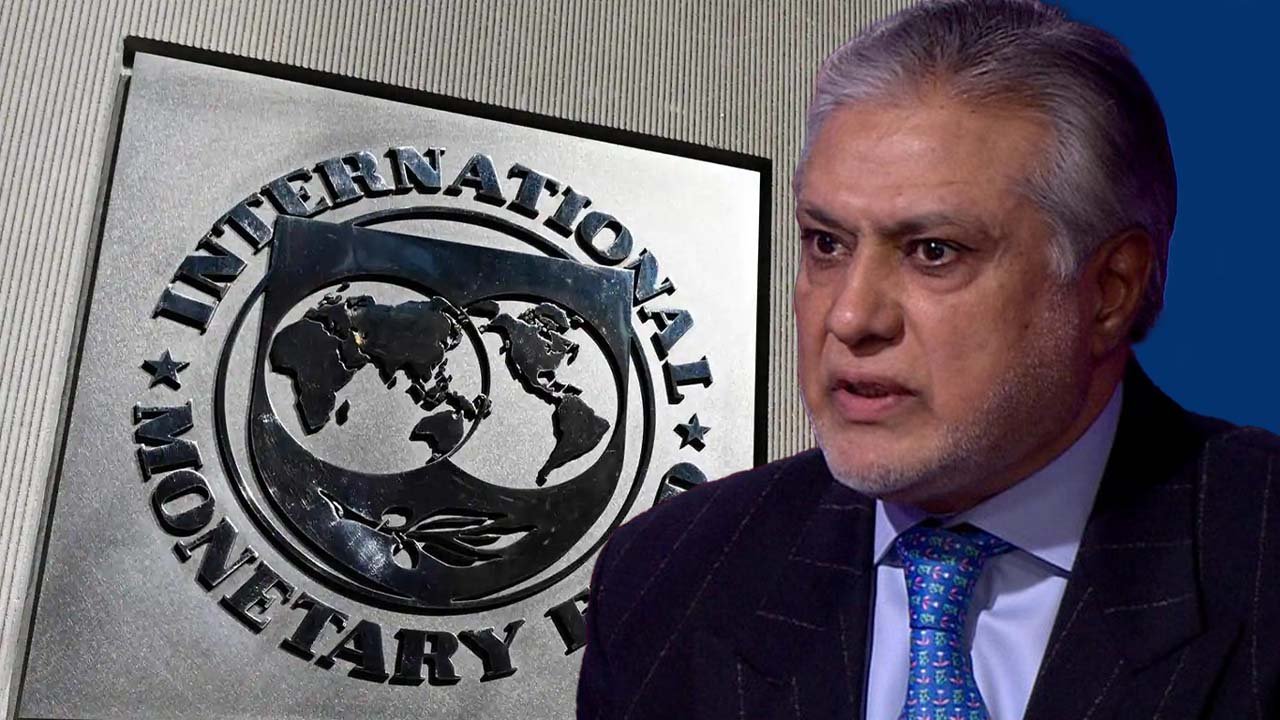
Pakistan’s Finance Minister, Ishaq Dar, has voiced his opposition to the idea of entering into a new International Monetary Fund (IMF) bailout programme without the consent of the incoming government.
Speaking at a press conference, Dar emphasised the need for democratic fairness and stated that any future IMF agreement should be the prerogative of the government elected after the ongoing programme concludes on June 30.
The minister also highlighted Pakistan’s efforts in meeting IMF requirements and expressed hope for the successful completion of the ninth review before the programme’s conclusion.
Government’s efforts and budget transparency
During the press conference, Minister Dar reassured journalists that the coalition government had provided the IMF with budgetary information and expressed confidence that the budget numbers shared were without objection.
He revealed that Prime Minister Shehbaz Sharif had agreed to share the numbers, and there were no issues concerning the figures presented. This transparency is a crucial step in unlocking the ninth review and securing the remaining funds from the IMF’s Extended Fund Facility.
IMF’s conditions and economic challenges
Under the current IMF programme, Pakistan has been required to implement several challenging measures, including the removal of energy subsidies, allowing the rupee to float against the US dollar, raising taxes and duties, and restricting imports.
These measures aim to address Pakistan’s balance-of-payments crisis and reduce its external debt burden. However, the country’s economic challenges, combined with political uncertainty and a decline in foreign investment, have made the task more difficult.
Esther Perez Ruiz, the IMF’s resident representative for Pakistan, stated that there is only enough time for one final board review before the scheduled end of the $6.5 billion Extended Fund Facility.
Ruiz emphasised the need for Pakistan to restore the proper functioning of the foreign exchange market, present a budget for FY24 aligned with programme objectives, and secure credible financing commitments to close the $6 billion funding gap. These actions will pave the way for the final review and release of remaining funds.
The call for ‘democratic’ decision-making
Finance Minister Ishaq Dar emphasised the importance of democratic principles in determining Pakistan’s involvement in any future IMF programmes. He stressed that the decision to enter into a new programme should rest with the government elected after the ongoing programme concludes, rather than being imposed on a new administration.
Dar’s stance reflects the need to ensure that any commitments made align with the vision and policies of the elected government, fostering a fair and democratic approach.
Pakistan’s Finance Minister Ishaq Dar has voiced his opposition to the undemocratic imposition of a new IMF bailout programme. He said that any future agreement should be the prerogative of the incoming government, allowing them to shape policies and commitments in alignment with their mandate.
As Pakistan works towards meeting the IMF’s requirements and unlocking the remaining funds, it is crucial to balance economic stability with democratic decision-making to ensure sustainable growth and development.