Tag: IMF Conditions

  • Relief plan for electricity bills to be revealed in 48 hours: PM Kakar

    Relief plan for electricity bills to be revealed in 48 hours: PM Kakar

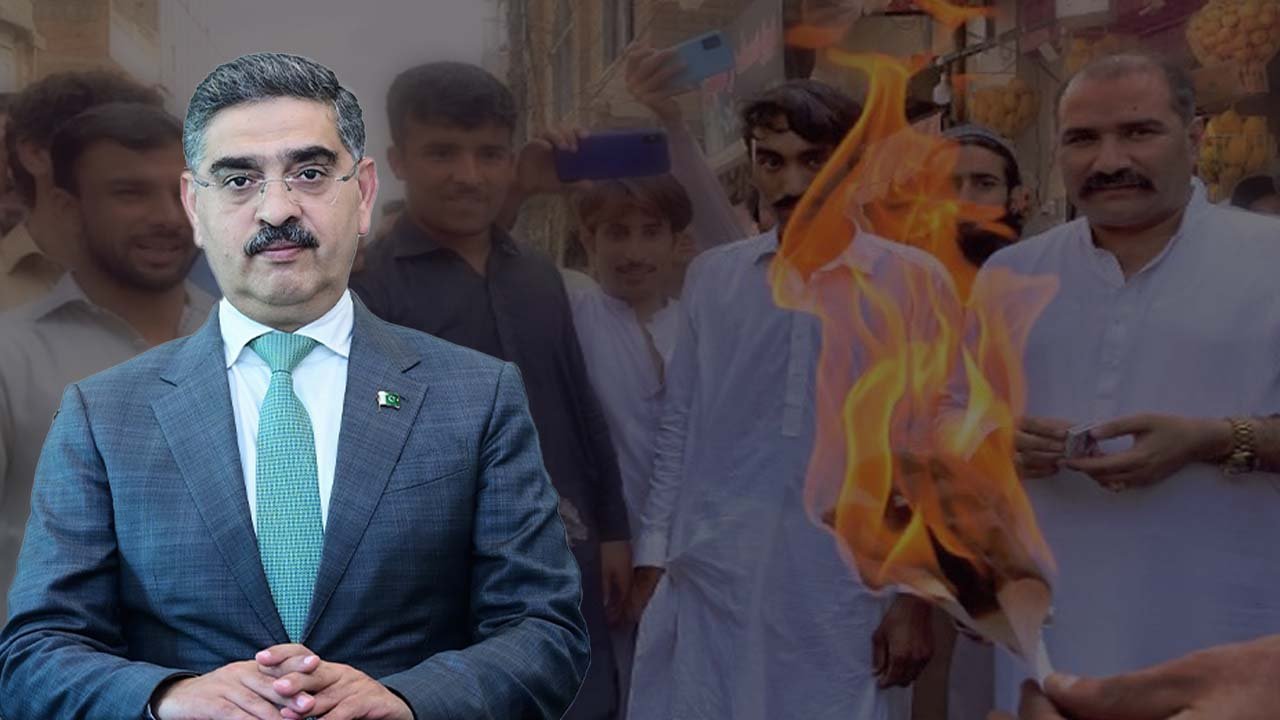
    Caretaker Prime Minister Anwaar ul Haq Kakar made an announcement on Thursday, revealing that his administration will unveil a relief plan for addressing the widespread protests triggered by escalating electricity bills within 48 hours.

    PM Kakar informed me that his government conducted an exhaustive review of electricity bills spanning the last two months. He highlighted that all institutions were questioned regarding their utilisation of complimentary electricity and stressed that the issue of exorbitant electricity bills needed a measured perspective.

    According to Geo, the caretaker prime minister underscored that while the electricity bills must be settled, it is imperative to comply with the terms outlined by the International Monetary Fund (IMF). He attributed the surge in electricity bills to independent power producers (IPPs) and transmission line losses, emphasising that collaboration with the IMF was underway to address the matter. Despite the prevalent inflation, PM Kakar argued against an extensive strike.

    In addressing the allocation of free electricity units, PM Kakar assured that the military does not avail itself of free electricity; rather, it is funded through the defence budget.

    Additionally, he clarified that the judiciary does not enjoy complimentary electricity, and in the Wapda sector, only certain employees from grades 1 to 16 benefit from this provision. Employees in grades above 17 receive free units.

    PM Kakar expressed his perspective that most protests originate from employees in grades 1–16. He suggested redirecting financial assistance towards officers in grades 17 to 22 instead of offering free electricity. He emphasised the need for stakeholders to formulate a policy within the following 48 hours.

    Regarding the impending general elections, PM Kakar assured that the elections would occur as scheduled, with the understanding that the Election Commission of Pakistan holds the authority in this matter. He asserted that adherence to the interpretation of the law by the Supreme Court is essential and should be respected.

    Frustrated citizens, grappling with soaring inflation, have been participating in demonstrations against substantial increases in electricity tariffs and heightened taxes nationwide.

    In light of the ongoing public outcry over exorbitant electricity bills, the caretaker government is contemplating the possibility of allowing individuals burdened by inflation to settle bills for up to 400 units in six-month installments. This proposal emerged following discussions held during a cabinet meeting, which also addressed the influence of IMF conditions on elevated energy costs.

    During the session, caretaker Finance Minister Dr Shamshad Akhtar updated the attendees about ongoing negotiations with the IMF, highlighting its pivotal role in the escalated energy tariffs.
  • IMF and Pakistan discuss circular debt and energy sector losses in virtual meeting

    IMF and Pakistan discuss circular debt and energy sector losses in virtual meeting

    Pakistan and the International Monetary Fund (IMF) recently discussed the country’s energy sector losses and efforts to reduce circular debt during a virtual meeting. The government is committed to adjusting fuel prices and quarterly tariffs to eliminate circular debt accumulation.

    According to The News, a new plan called the Circular Debt Management Plan (CDMP) was shared with the IMF. This plan involves revising fuel price adjustments and quarterly tariffs upward to counter circular debt growth. The IMF expressed concerns about the plan’s sustainability due to slower recoveries.

    The government was advised to create an effective strategy to tackle this issue. The meeting took place virtually on a technical level. The newly appointed Finance Minister, Dr Shamshad Akhtar, is expected to hold a virtual meeting with the IMF team soon.

    The IMF’s first review is scheduled for October or November and will be based on economic data from the initial quarter (July–September) of the current fiscal year.

    Pakistan and the IMF signed a $3 billion bailout package under the Standby Arrangement in July 2023. Pakistan has already received $1.2 billion, with two more reviews planned to release the remaining $1.8 billion by March or April 2024.

  • Amended Finance Bill 2023: How much tax will you pay on your income?

    Amended Finance Bill 2023: How much tax will you pay on your income?

    The National Assembly has passed an amended Finance Bill 2023, marking a significant milestone in the country’s ongoing financial saga. With the revised bill meeting the rigorous conditions set forth by the International Monetary Fund (IMF), hopes are high that this last-ditch effort will unlock a vital infusion of bailout funds.

    The IMF had previously voiced its disappointment with the country’s initial budget, deeming it a missed opportunity to implement a more progressive and comprehensive tax framework.

    However, determined to rectify this setback, Finance Minister Ishaq Dar introduced a series of new taxes and expenditure cuts, which were instrumental in garnering the Assembly’s approval.

    Undoubtedly, the standout feature of this momentous bill is the introduction of fresh taxation measures projected to generate an impressive Rs215 billion in revenue.

    In a bold move towards fairness and equity, the Finance Bill also sanctions an increase in tax rates for higher income brackets within both the salaried and non-salaried classes.

    Outlined below are the revised income tax slabs for the year 2023, reflecting a more balanced approach to income taxation:

    Taxable income range Tax rate
    Not exceeding Rs600,000 0% (Tax-free)
    Rs600,001 – Rs1,200,000 2.5% of the amount exceeding Rs600,000
    Rs1,200,001 – Rs2,400,000 Rs15,000 + 12.5% of the amount exceeding Rs1,200,000
    Rs2,400,001 – Rs3,600,000 Rs165,000 + 22.5% of the amount exceeding Rs2,400,000
    Rs3,600,001 – Rs6,000,000 Rs435,000 + 27.5% of the amount exceeding Rs3,600,000
    Exceeding Rs6,000,000 Rs1,095,000 + 35% of the amount exceeding Rs6,000,000

    1. Tax-free threshold:

    Individuals with a taxable income not exceeding Rs600,000 are exempt from income tax obligations.

    2. Progressive tax rates:

    For those with taxable incomes exceeding Rs600,000 but not surpassing Rs1,200,000, a tax rate of 2.5 per cent will be levied on the amount exceeding Rs600,000.

    3. Unchanged tax rate for salaried individuals:

    Salaried individuals with taxable incomes ranging from above Rs1,200,000 to Rs2,400,000 will continue to face a tax rate of Rs15,000 plus 12.5 per cent of the amount exceeding Rs1,200,000.

    4. Moderate income brackets:

    Taxpayers with taxable incomes exceeding Rs2,400,000 but not surpassing Rs3,600,000 will experience a tax rate of Rs165,000 plus 22.5 per cent of the amount exceeding Rs2,400,000.

    5. Higher income brackets:

    Individuals falling within the income range of Rs3,600,000 to Rs6,000,000 will face a tax rate of Rs435,000 plus 27.5 per cent of the amount exceeding Rs3,600,000.

    6. Top earners:

    Those with taxable incomes exceeding Rs6,000,000 will be subject to a tax rate of Rs1,095,000 plus 35 per cent of the amount exceeding Rs6,000,000.

    With this bold and progressive tax structure, the Finance Bill 2023 promises to forge a more equitable financial landscape.

    As the nation eagerly awaits the release of the much-needed bailout funds, this resolute step taken by the National Assembly stands as a testament to the government’s determination to safeguard the country’s economic well-being and chart a path towards sustainable growth.

  • Govt expected to increase petrol price by up to Rs14 per litre for the next fortnight

    Govt expected to increase petrol price by up to Rs14 per litre for the next fortnight

    Petroleum prices are expected to jump by approximately Rs10-14 per litre for the upcoming two weeks. Credible industry sources suggest that the government may contemplate increasing the prices of petroleum products in response to the increasing oil prices in the global markets.

    If the government considers compensating for exchange rate losses, as opposed to the previous review where the authorities did not transfer the impact of rupee devaluation to the public, the hike in prices could increase to as much as Rs14 per litre.

    The ex-depot price of petrol in the country is currently Rs272 per litre, and according to the workings of the oil sector, it is expected to reach Rs286.77 per litre in the next review if the government passes on the impact of global oil prices and exchange rate losses. However, even if the government does not adjust for exchange losses, petrol prices are still likely to increase due to higher global oil prices. The anticipated increase in the price of petrol is based on the current rate of taxes, with the government levying an Rs50 per litre charge on petrol and zero general sales tax.

    The expected rise in petrol prices is based on the Rs5 per litre exchange loss adjustment of Pakistan State Oil (PSO), which the government did not include in the past to keep petrol prices low. The prices of petroleum products would have been higher following the massive depreciation of the rupee against the dollar in the last two and a half months when, under International Monetary Fund (IMF) conditions, the market-based exchange rate was allowed.

    On the other hand, the price of high-speed diesel (HSD) is expected to remain unchanged in the next review of prices, as the current ex-depot price of HSD is the same as the expected price for the next fortnightly period. The anticipated unchanged price of HSD is based on the Rs17.50 exchange loss adjustment of PSO, which was pending when the dollar price increased massively in the last few weeks. Sources suggest that if the government does not adjust for exchange rate losses, the diesel price may decrease by Rs15 per litre.

    The government raised the petroleum levy on HSD to Rs50 per litre under IMF conditions in the last review of prices and charged no GST on it. According to sources, while the oil sector’s workings reflect a rise in petrol prices and no change in HSD, it is up to the government to decide. In the current scenario, the government has no option but to increase the price of petrol, as its financial space is already squeezed. Additionally, the government is making desperate efforts to revive the IMF program to shore up forex reserves.

  • What to expect from the upcoming budget 2022-23

    What to expect from the upcoming budget 2022-23

    Pakistan is escalating efforts in order to revive the stalled loan from International Monetary Fund (IMF) programme, as the prerequisites are steadily being completed.

    The revival of the bailout will provide much-needed relief in order to keep Pakistan’s economy afloat and avoid default as Pakistani currency has plummeted 9 per cent in the last month, recording the poorest performance among Asian currencies.

    According to Geo, the key policy rate was recently raised by 150 basis points to 13.75 per cent, while the price of fuel has now risen by Rs60 a litre in less than a month and is being sold at from Rs209 to Rs212 (depending on the area).

    In an interview with a private channel, the finance minister discussed the government’s decision to raise petroleum product pricing, saying that despite the difficult decision, the government is still losing money on gasoline and diesel.

    These moves are highly affecting the masses, but they are essential as the IMF programme is crucial to fix the country’s economy. Also, petroleum prices are projected to continue to rise along with power tariff.

    Increase in income tax

    An increase in income tax is a major policy recommendation from the international lender in the approaching budget for the fiscal year 2022-23.

    All suggestions are expected to enhance Pakistan’s tax income.

    The IMF issued the following rules for Personal Income Tax (PIT) in its February conditions:

    1. Lower the number of tax bands.
    2. Cut tax credits and allowances (excluding disabled and old persons, as well as Zakat receipts).
    3. Implement special tax processes for very small taxpayers.
    4. Increase the number of people who pay taxes. As the change maintains the present PIT threshold, low-income households will be safeguarded (almost three times income per capita).

    If these policy recommendations for the forthcoming budget are enacted, the tax system will be simplified and the income tax regime will be more progressive.

    These recommendations are anticipated to increase the country’s tax revenue. It will also make the system more progressive, as people with higher incomes will be required to pay more.

    Salaried class

    The burden on the salaried class, which is already heavily under pressure, may be increased. It will make working less appealing because a large portion of the wage will be devoted to direct personal income tax.

    The IMF proposed taxing the upper-middle class and wealthy individuals with monthly incomes ranging from Rs104,000 to Rs1 million at a uniform rate of 30 per cent.

    The idea demonstrates inequality in taxation, and if approved, it might leave the majority of salaried workers worse off in the face of double-digit inflation.

    On the other hand, Federal Minister for Finance and Revenues Miftah Ismail categorically stated last month that the government would not add to the burden on the salaried class and pensioners in the coming budget. 

    According to sources, the maximum rate of 30 to 35 per cent for salaried and business class individuals earning Rs20 million per year could be increased.

    Special tax proposal for small taxpayers

    Imposing a tax on small taxpayers can overcome the long-term structural problems and correct internal and external imbalances. Our tax-to-GDP ratio has remained below 11 per cent, which is lower than regional standards.

    Two-thirds of our overall taxation is made up of indirect taxation. This level of indirect taxation is not only excessive, but it also makes the system less progressive.

    Currently, a labourer pays the same amount of GST as the country’s richest man.

    Agriculturalists and real estate barons are the most important import consumers. As a result, the lack of taxation in agricultural and real estate contributes to the underlying imbalances in the external sector.

    Low-income households

    Low-income households are expected to be protected from policy interventions after the government publishes the upcoming budget, as the Personal Income Tax (PIT) threshold of three times per capita income would stay in place.

    Genuine taxpayers can also decrease their tax payments by clever investments under the Income Tax Ordinance 2001, taking into account all of the foregoing.

    In the fiscal year 2022-23, policymakers must aim to increase the tax net and the tax-to-GDP ratio as there is no chance for the country to progress without it.

    Pakistan must pay $21 billion in foreign debt payments by next year, according to the Finance Minister, while the current account deficit is $10-12 billion.

    He said, “We will also try to tilt away from the wealthy elite towards to low incoming masses, I will impose more taxes on the wealthy, but no taxes will be levied on the salaried class”.

    The wealthy and capable must prepare to pay their fair share of taxes, or the country will soon be back on the IMF’s doorstep.