Tag: IMF Executive Board

  • Uncertainty surrounds Pakistan’s $7 billion IMF bailout as approval date still not confirmed

    Uncertainty surrounds Pakistan’s $7 billion IMF bailout as approval date still not confirmed

    Pakistan’s much-anticipated $7 billion bailout package has not yet been scheduled for review by the International Monetary Fund (IMF) executive board, with the agenda extending only until August 30, according to the IMF’s recently released calendar.

    In July, Pakistani authorities and the IMF reached a staff-level agreement, potentially paving the way for a 37-month Extended Fund Facility (EFF) valued at SDR 5,320 million (approximately $7 billion).

    However, this agreement hinges on the approval of the IMF Executive Board, which is contingent upon Pakistan securing necessary financing assurances from its development and bilateral partners.

    The proposed programme is designed to build on the hard-won macroeconomic stability achieved in the past year. It aims to strengthen public finances, reduce inflation, rebuild external reserves, and eliminate economic distortions to foster private sector-led growth.

    Despite five weeks having passed since the staff-level agreement, Pakistan has yet to bridge an external financing gap of up to $5 billion.

    This delay has prevented the country from signing the Letter of Intent (LoI) required to formally request the IMF executive board’s approval of the $7 billion package under the EFF programme.

    The LoI is a critical step in requesting the IMF’s endorsement of the 37-month, $7 billion EFF programme. Without this approval, Pakistan cannot proceed with the much-needed financial support.
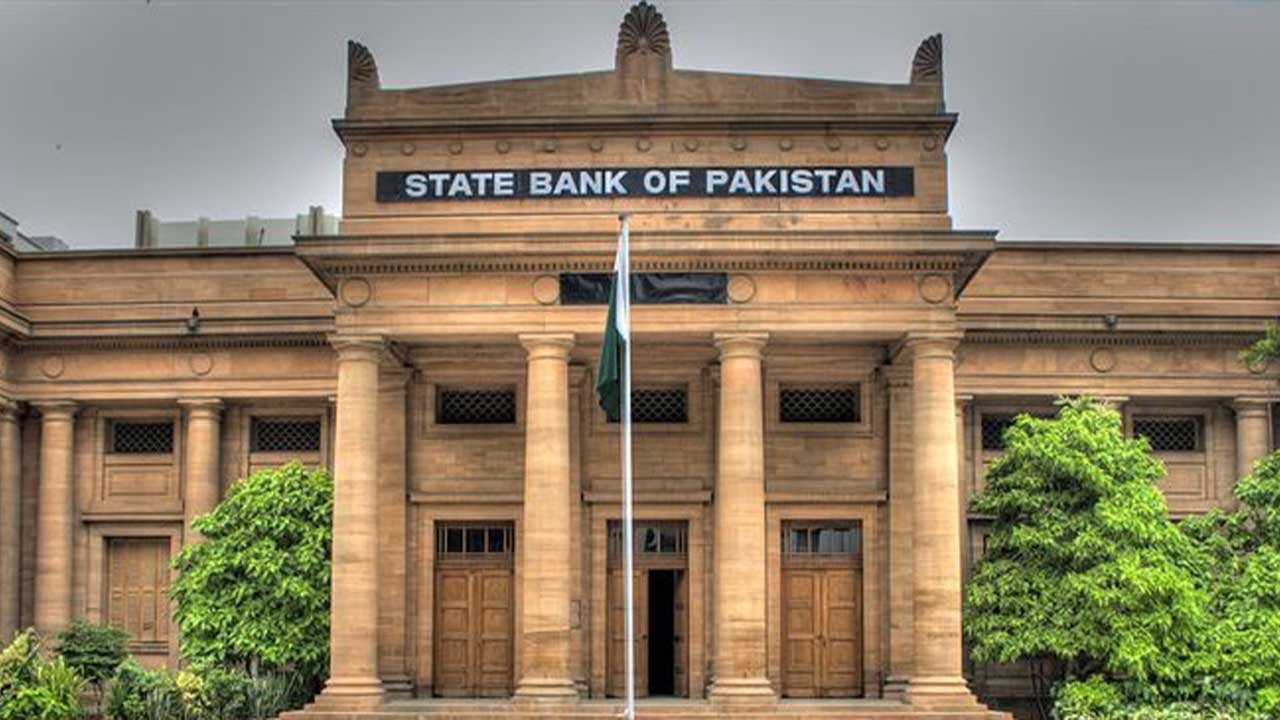
  • Pakistan plans to secure $4.5 billion from diverse sources in current fiscal year

    Pakistan plans to secure $4.5 billion from diverse sources in current fiscal year

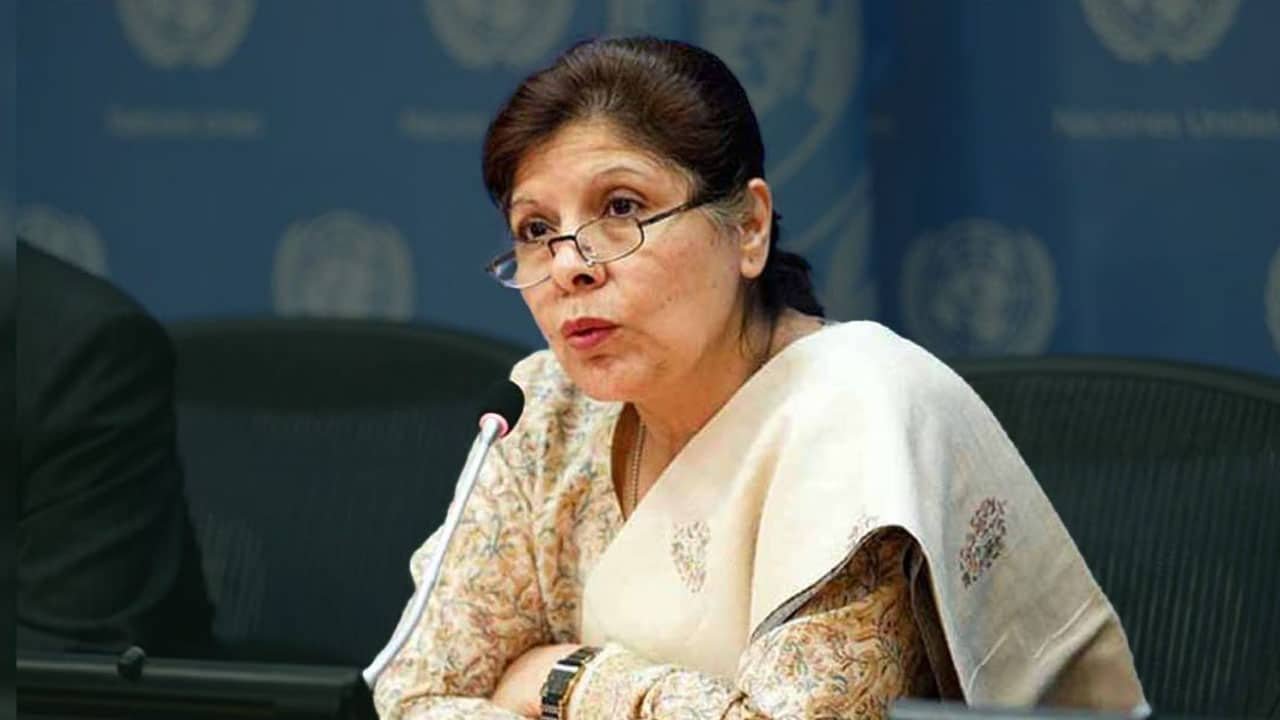
    Caretaker Minister for Finance, Dr Shamshad Akhtar, has outlined Pakistan’s financial projections for the current fiscal year (2023–24), highlighting an anticipated mobilisation of approximately $4.5 billion from both multilateral and bilateral sources, excluding the International Monetary Fund (IMF).

    Minister Akhtar disclosed that the government foresees receiving over $1.6 billion in the second quarter (Q2) from sources such as the Asian Development Bank (ADB), the World Bank, and the Asian Infrastructure Investment Bank (AIIB).

    She clarified that these inflows encompass funds allocated to both project-based and programme-based initiatives.

    Highlighting progress in negotiations, the minister revealed the completion of discussions for certain programme loans, with impending disbursements expected.

    She reassured that Pakistan remains committed to meeting its debt obligations promptly, both currently and in the future.

    Regarding the International Monetary Fund (IMF) programme, Minister Akhtar reported the successful conclusion of the first review of the Standby Agreement, resulting in the attainment of a Staff Level Agreement (SLA).

    Pending approval by the IMF’s Executive Board, this agreement will grant Pakistan access to $700 million.

    Commenting on the prevailing economic situation, Minister Akhtar acknowledged the challenges faced domestically and globally during FY2023.

    Despite these hurdles, she asserted that fiscal and external sector stability have been achieved through the implementation of various stabilisation measures and structural reforms.

  • State Bank of Pakistan’s forex reserves decline to $7.02 billion amidst debt repayments 

    State Bank of Pakistan’s forex reserves decline to $7.02 billion amidst debt repayments 

    During the week ending December 1, 2023, the State Bank of Pakistan (SBP) witnessed a decline of $237 million in its foreign exchange reserves, bringing the total to $7,020.2 million. This reduction is attributed to debt repayments.  

    As of the same date, the country’s overall liquid foreign reserves amounted to $12.1 billion. Commercial banks held net foreign reserves totaling $5.08 billion. 

    Notably, the central bank’s reserves received a boost in July of the current year when Pakistan secured the initial tranche of approximately $1.2 billion from the International Monetary Fund (IMF).  

    This was part of a newly approved $3 billion stand-by arrangement (SBA). Additionally, inflows were received from Saudi Arabia and the UAE. 

    Despite these positive developments, the SBP’s reserves have been under pressure due to ongoing debt repayments, increased import payments following eased restrictions, and a lack of new inflows. 

    In a significant development, the IMF announced last month that a staff-level agreement (SLA) had been reached between its team and Pakistani authorities regarding the first review of the SBA.  

    However, the approval of the IMF Executive Board is required for this agreement to take effect. 

    Upon approval, approximately $700 million (SDR 528 million) will become available, bringing the total disbursements under the programme to almost $1.9 billion. 

    Addressing the media after the SLA with the IMF, Caretaker Finance Minister Dr Shamshad Akhtar expressed confidence that external financing would not be a concern.  

    The government anticipates inflows in December 2023, which are expected to contribute to an increase in foreign exchange reserves. 

  • SBP reports second consecutive weekly decline in forex reserves

    SBP reports second consecutive weekly decline in forex reserves

    During the week ending on November 17, 2023, the State Bank of Pakistan (SBP) experienced a decline of $217 million in its foreign exchange reserves, settling at $7,180.0 million, as revealed by data released on Thursday.

    The total liquid foreign reserves for the country amounted to $12.3 billion, with commercial banks holding net foreign reserves of $5.1 billion.

    The central bank attributed this reduction in reserves to debt repayments. In a statement, the SBP explained, “During the week ended on November 17, 2023, the SBP’s reserves decreased by US$ 217 million to US$ 7,180.0 million due to debt repayments.”

    This marks the second consecutive week of a decline in the dollar stockpile, following a $115 million decrease in the previous week.

    It’s noteworthy that in July of this year, the central bank’s reserves received a significant boost as Pakistan received the initial tranche of approximately $1.2 billion from the International Monetary Fund (IMF).

    This followed the approval of a new $3 billion stand-by arrangement (SBA). Additional inflows were received from Saudi Arabia and the UAE.

    However, the SBP’s reserves have been facing pressures due to ongoing debt repayments, increased import payments following the relaxation of restrictions, and a lack of fresh inflows.

    In a positive development, the IMF announced last week that its staff and Pakistani authorities had reached an agreement on the first review of the SBA.
    The staff-level agreement is pending approval by the IMF Executive Board.

    The IMF stated, “The IMF team has reached a staff-level agreement (SLA) with the Pakistani authorities on the first review of their stabilisation programme supported by the IMF’s US$3 billion (SDR2,250 million) SBA.”

    Upon approval, approximately US$700 million (SDR 528 million) will become available, bringing the total disbursements under the programme to nearly US$1.9 billion.

    Caretaker Finance Minister Dr Shamshad Akhtar, speaking to the media after the SLA with the IMF, expressed confidence that external financing would not be an issue, anticipating increased inflows in December 2023, which would contribute to boosting the foreign exchange reserves.

  • IMF and Pakistan seal agreement on $3 billion SBA, await board approval

    IMF and Pakistan seal agreement on $3 billion SBA, await board approval

    In a significant development, the International Monetary Fund (IMF) declared on Wednesday that its team and Pakistani authorities have successfully concluded the initial review of the $3 billion, nine-month Stand-By Arrangement (SBA).

    This staff-level agreement awaits the approval of the IMF Executive Board.

    Upon endorsement, approximately US$700 million (SDR 528 million) will be accessible, contributing to a cumulative disbursement of nearly US$1.9 billion under the programme.

    A delegation from the IMF, led by Nathan Porter, conducted discussions in Islamabad from November 2–15, 2023, focusing on the inaugural review of Pakistan’s economic programme supported by the IMF SBA.

    The nascent recovery, supported by international partners and enhanced confidence indicators, is attributed to the stabilizing policies outlined in the SBA.

    The disciplined implementation of the FY24 budget, ongoing adjustments in energy prices, and increased inflows into the foreign exchange (FX) market have alleviated fiscal and external pressures.

    The IMF anticipates a decline in inflation in the upcoming months, driven by diminishing supply constraints and modest demand.

    Nevertheless, Pakistan remains exposed to significant external risks, including heightened geopolitical tensions, escalating commodity prices, and potential tightening in global financial conditions.

    It is imperative to persist in efforts to enhance resilience in the face of these challenges, according to the international lender

  • Govt expected to hike gas prices by 50%, electricity by Rs4 per unit for IMF deal

    Govt expected to hike gas prices by 50%, electricity by Rs4 per unit for IMF deal

    Pakistan is expected to increase gas sale prices by 45-50 per cent and electricity base tariffs by Rs3.50 to over Rs4 per unit for the fiscal year 2023-24.

    These adjustments must be notified before the upcoming meeting of the International Monetary Fund’s (IMF) Executive Board on July 12.

    According to reports, this increase in energy prices is necessary to pave the way for the $3 billion programme agreed upon under the Stand-By Arrangement (SBA) with the IMF at the staff level.

    Earlier, the Oil and Gas Regulatory Authority (Ogra) announced an increase of 50 per cent (Rs415.11 per MMBTU) for consumers of the Sui Northern Gas Pipeline Limited (SNGPL), bringing the subscribed gas price to Rs1,238.68 per MMBTU.

    Additionally, the regulator raised the gas price by 45 per cent (Rs417.23 per MMBTU) for consumers of the Sui Southern Gas Company Limited (SSGCL) for the fiscal year 2023-24. However, the government has yet to officially notify the increase in gas prices for the upcoming financial year.

    The SNGPL has an accumulated shortfall of Rs560.378 billion up to FY23, while Sui Southern has a shortfall of Rs97.388 billion. The federal government had previously notified the increase in gas sale prices based on different categories from January 1, 2023.

    As per the existing policy, high-end consumers subsidise the gas prices for low-end consumers. It is likely that the government will continue this policy, with high-end consumers paying the gas price for low-end consumers starting from July 1, 2023.

    According to The News, the entire energy sector is currently burdened by circular debt, which amounts to over Rs4,300 billion. This debt is divided between the oil and gas sector, with Rs1,700 billion, and the power sector, with Rs2,600 billion.

    The IMF emphasises the need for Pakistan to make the energy sector viable and sustainable, which requires increasing the base tariff for the fiscal year 2023-24.