Tag: IMF funding

  • US dollar surges against Pakistani rupee for eighth consecutive day in interbank market

    US dollar surges against Pakistani rupee for eighth consecutive day in interbank market

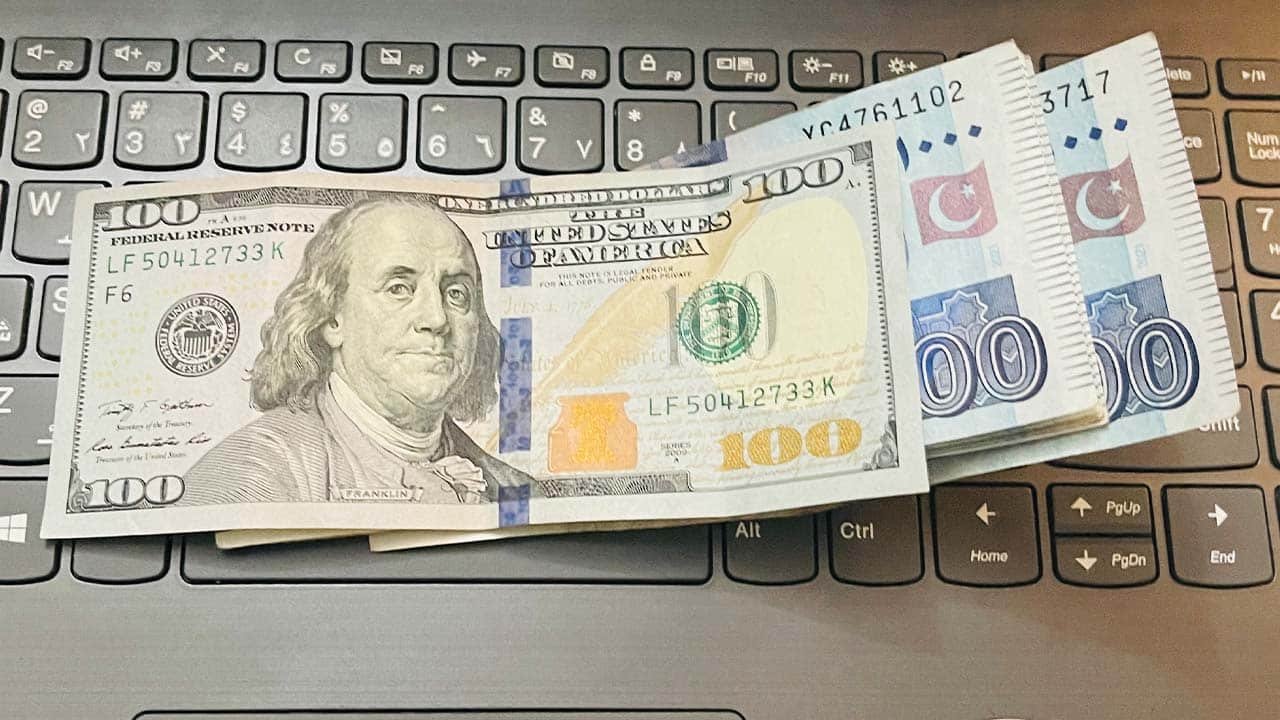
    The US dollar has been steadily appreciating against the Pakistani rupee for eight consecutive days, showing a continued upward trend in its value. On Tuesday, the currency further strengthened in the interbank market.

    At the start of the daily trading session in the interbank market, the American currency gained Rs1.8, reaching a value of Rs289 against the local currency. Over the course of the last eight days, the US dollar has gained Rs12.50 against the rupee in the interbank market.

    Interestingly, on Monday, despite receiving financial support from the International Monetary Fund (IMF) and other friendly countries, the Pakistani rupee depreciated even further against the US dollar.

    According to the State Bank of Pakistan (SBP), the dollar’s rate increased by Rs1.1 on Monday, with a closing rate of Rs287.92. In comparison, it had closed at Rs286.81 on Friday, showing a 0.39 per cent decline in the value of the rupee against the US dollar.

  • Pakistani rupee gains Rs15 versus US dollar during intraday trade

    Pakistani rupee gains Rs15 versus US dollar during intraday trade

    In the aftermath of securing last-minute funding from the International Monetary Fund (IMF), the Pakistani rupee exhibited a substantial gain of Rs15 against the US dollar in the interbank market on Tuesday.

    As reported by the Forex Association of Pakistan, the local currency’s exchange rate appreciated to Rs271 around 10 am. It is worth noting that the rupee had closed at 285.99 against the dollar on June 27, with trading activities suspended due to the Eid holidays last week and a bank holiday on Monday.

    This positive development follows a previous record-high exchange rate of Rs290.93 reached on May 11. Since then, the dollar has experienced a considerable decline of more than Rs23.

    The anticipated 3 per cent appreciation of the rupee has been realised, but the sustainability of these gains will be verified in the days ahead. The government has indicated that the partial funds from the IMF deal will be disbursed by mid-July.

    Additionally, the government has expressed confidence in securing approximately $4 to $5 billion from Saudi Arabia, the United Arab Emirates, and the Islamic Development Bank. These additional funds would contribute to resolving the dollar liquidity issues.

    The strength and stability of the rupee are likely to be maintained if these payments materialise. However, any delays could potentially increase pressure on the currency.

    According to the government’s projections, Pakistan’s reserves are expected to increase to $14 billion by August. Should this estimation hold true, it is anticipated that the rupee will stabilise around the range of 270 to 280, as suggested by experts.

  • Pakistan’s inflation expected to rise due to policy decisions and economic uncertainty, warns Finance Ministry

    Pakistan’s inflation expected to rise due to policy decisions and economic uncertainty, warns Finance Ministry

    Finance Ministry has warned that inflation in Pakistan is set to rise further due to a second-round effect of policy decisions made earlier this year to raise energy and fuel prices, the central bank’s policy rate, and the depreciation of the rupee to secure IMF funding.

    The recent political and economic uncertainties in the country are causing inflationary expectations to rise. The short-term rate of inflation measured by the Sensitive Price Indicator (SPI) hit a record 46.65 per cent last week, while monthly inflation recorded by the Consumer Price Index (CPI) reached 31.6 per cent in February – the highest in six decades.

    The ministry expects inflation to stay at an elevated level due to market frictions caused by the relative demand and supply gap of essential items, exchange rate depreciation, and recent upward adjustments of administered prices of petrol and diesel. Production losses due to floods have not yet been fully recovered, especially those of major agricultural crops. The shortage of essential items has persisted due to these factors.

    Moreover, the delay of stabilisation program has exacerbated economic uncertainty, due to which inflationary expectations have remained strong. The Economic Adviser’s Wing of the finance ministry has also conceded ineffective policy measures and the haplessness of the authorities in containing the inflationary spiral.

    A report from ministry warns that bulk buying during Ramzan might cause the demand-supply gap and result in escalation of essential items prices, although the government is taking steps to ensure a smooth supply of essential items. The report also warned that being largely dependent on prevailing climatic conditions, as witnessed last year, the delay in rains and early heatwave forecast by the Pakistan Met Office in April and May could adversely impact wheat production.

    On a positive note, the report said that despite challenges and uncertainties, the economy was showing continuous signs of resilience as depicted through contained fiscal and current account deficits during the current fiscal year.