Tag: IMF loan

  • IMF finally greenlights $7 billion loan for Pakistan, first tranche expected by September 30

    IMF finally greenlights $7 billion loan for Pakistan, first tranche expected by September 30

    The International Monetary Fund’s (IMF) Executive Board has finally approved the long-delayed $7 billion Extended Fund Facility (EFF) for Pakistan.

    The initial tranche of $1.1 billion is now expected to be released by the global lender on September 30.

    As per recent reports, this loan also carries an interest rate of less than 5 per cent.

    IMF is likely to release the second installment of loan within the ongoing fiscal year.

    It is worth noting that this bailout, according to Prime Minister Shehbaz Sharif, would be Pakistan’s loan from the IMF.

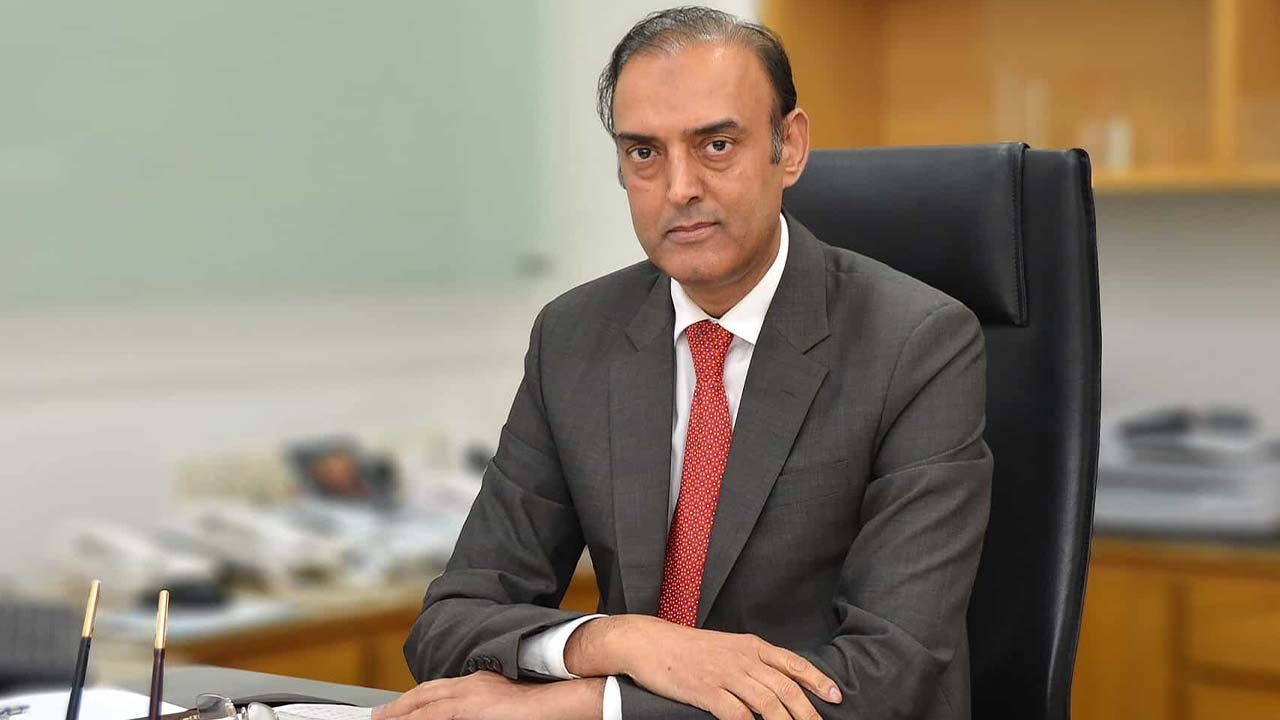
    The Governor of the State Bank of Pakistan (SBP) Jameel Ahmed confirmed the approval from th IMF and saod that the country would get first installment soon as Islamabad has met all demands set by the lender.

    The approval of EFF follows confirmation of bilateral loans from China, UAE, and Saudi Arabia, totalling $12 billion.

    Pakistan and the IMF had reached an agreement on the 37-month bailout programme in July but it was repeatedly delayed as Islamabad was not included on the international lender’s agenda multiple times.

  • Pakistan on verge of finalising $7 billion IMF loan deal, FinMin updates on progress

    Pakistan on verge of finalising $7 billion IMF loan deal, FinMin updates on progress

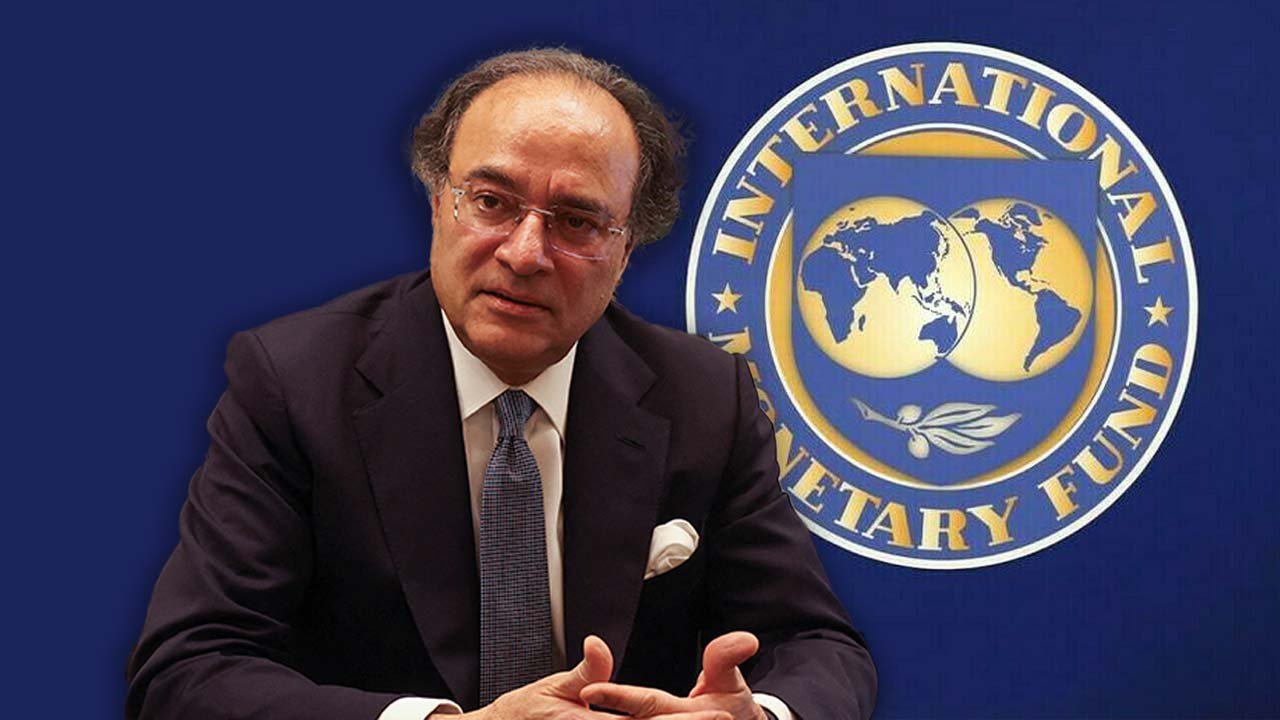
    Federal Minister for Finance and Revenue, Senator Muhammad Aurangzeb, announced on Tuesday that the government is nearing the finalisation of external financing assurances, a crucial step toward securing the $7 billion loan from the International Monetary Fund (IMF).

    Speaking at a briefing, Aurangzeb expressed confidence that the IMF’s Executive Board would approve the programme soon, acknowledging the support from provincial governments.

    Aurangzeb reiterated Prime Minister Shehbaz Sharif’s assertion that this would be Pakistan’s last programme with the IMF, underlining the necessity of implementing structural reforms to ensure long-term economic stability.

    In July, Pakistan and the IMF reached a staff-level agreement on a 37-month Extended Fund Facility (EFF) worth around $7 billion. However, the programme’s approval by the IMF’s Executive Board is contingent on Pakistan securing financing assurances from its development partners, a process that is still ongoing.

    Pakistan is actively working to secure a rollover of $12 billion in loans from key allies, including China, Saudi Arabia, and the UAE. Additionally, the country has requested an extra $1.2 billion loan from Saudi Arabia to address a $2 billion financing gap.

    Aurangzeb highlighted improvements in economic indicators, noting that the government has cleared all pending payments, including import letters of credit and profit remittances.

    He pointed out that inflation has decreased to 9.6 per cent in August 2024 from 23.7 per cent in the same period last year, leading to a gradual reduction in the policy rate, which is providing relief to the industrial sector.

    The Minister also cited improvements in Pakistan’s credit ratings by agencies like Fitch and Moody’s as evidence of the economy’s positive trajectory.

    On tax collection, Aurangzeb emphasised the government’s determination to increase revenue, noting that a significant portion of the economy contributes minimally to the tax base. He stressed the need for broader tax compliance and assured that the Federal Board of Revenue (FBR) has simplified the tax filing process.

    Despite a shortfall of Rs 98 billion in tax collection during the first two months of the fiscal year, he reaffirmed the government’s commitment to not delay necessary processes.

    Aurangzeb also addressed rightsizing the federal government and introduced plans for a new subsidy mechanism aimed at enhancing transparency.

    He reassured stakeholders that any decisions regarding the Utility Stores Corporation (USC) would be made with employee and stakeholder interests in mind, emphasising the government’s commitment to protecting jobs and well-being.

  • Pakistan eyes up to $4 billion from Middle Eastern banks by 2026, says SBP governor

    Pakistan eyes up to $4 billion from Middle Eastern banks by 2026, says SBP governor

    Pakistan plans to raise up to $4 billion from Middle Eastern commercial banks by the fiscal year 2026, according to the Governor of the State Bank of Pakistan (SBP), Jameel Ahmad.

    In his first interview since assuming office in 2022, Ahmad revealed that Pakistan is also in the final stages of securing an additional $2 billion in external financing, which is essential for the approval of the $7 billion bailout programme from the International Monetary Fund (IMF).

    The IMF and Pakistan reached a preliminary agreement on the loan in July. However, the agreement still needs approval from the IMF’s executive board and confirmation of financing assurances from Pakistan’s development and bilateral partners.

    Ahmad expressed confidence that Pakistan’s financing needs will be met smoothly in the next fiscal year and in the medium term. Historically, Pakistan has depended on long-time allies like China, Saudi Arabia, and the UAE to extend loans rather than demand immediate repayment. Ahmad expects similar support for the next three years, giving the government more time to stabilise its finances.

    Read more: Exchange rates for Tuesday: PKR gains 9.6 paisa against US dollar, 37 paisa against Euro

    He also mentioned that Pakistan’s financing needs might be lower than the 5.5 per cent of GDP projected by the IMF. This is because the country’s external financing requirements have been declining, and the IMF’s projections were based on a higher current account deficit than what has materialised.

    Regarding monetary policy, Ahmad noted that recent interest rate cuts have successfully reduced inflation, which stood at 11.1 per cent in July, down from over 30 per cent in 2023. He emphasized that future interest rate decisions would be based on economic developments. Pakistan’s central bank had reduced interest rates from a record high of 22 per cent to 19.5 per cent and will review its monetary policy again on September 12.

    Ahmad, reflecting on his first year as governor, described it as challenging but expressed optimism that the situation has improved, with a focus now on growth, digitalisation, and financial inclusion.

  • Pakistan proposes Rs300 billion cut in govt expenditures to IMF

    Pakistan proposes Rs300 billion cut in govt expenditures to IMF

    Pakistan has presented a comprehensive plan to the International Monetary Fund (IMF) aimed at reducing government expenditures by Rs300 billion in the next fiscal year, including a stringent ban on development schemes. 

    According to sources cited by ARY News, this cost-cutting strategy includes several significant measures. One of the key components is the cessation of establishing new universities by the federal government, with provincial governments expected to bear the responsibility of funding existing universities under their jurisdiction.

    Additionally, a new contributory pension scheme will be introduced for all government departments, excluding defence and police personnel. This move aligns with the IMF’s recommendation for Pakistan to overhaul its pension system.

    The sources also mentioned the possibility of a complete ban on development schemes funded by parliamentarians in the next fiscal year. Moreover, the federal government will cease funding ongoing projects that are in cooperation with provincial governments.

    Another notable measure under consideration is the elimination of positions from grade 1 to 16 that have been vacant for over a year, further contributing to the reduction in government expenditure.

    The IMF has urged Pakistani authorities to impose taxes on monthly pensions exceeding Rs100,000 as part of the stringent economic reforms required for the new loan programme. The proposed reforms also include legislation aimed at taxing wealthy pensioners to secure the financial aid.

    These proposed measures are a part of Pakistan’s efforts to meet the IMF’s demands and secure the much-needed financial support to stabilise its economy.

  • IMF team set to visit Pakistan to discuss new programme before budget finalisation

    IMF team set to visit Pakistan to discuss new programme before budget finalisation

    An International Monetary Fund (IMF) mission is set to visit Pakistan in May to discuss a potential new financial programme, the IMF announced on Sunday.

    This visit comes as the Pakistani government begins crafting its annual budget for the next financial year with the aim of stabilising the economy and implementing necessary reforms.

    The announcement follows the completion of a short-term $3 billion programme last month, which helped Pakistan avoid a sovereign default.

    Prime Minister Shehbaz Sharif’s government is now seeking a more comprehensive and longer-term agreement with the IMF to ensure sustained economic recovery and growth.

    “A mission is expected to visit Pakistan in May to discuss the FY25 budget, policies, and reforms under a potential new programme for the welfare of all Pakistanis,” the IMF stated in an email response to Reuters.

    However, the exact dates of the visit and the specifics of the programme were not disclosed.

    Pakistan’s fiscal year runs from July to June, and the budget for fiscal year 2025 must be presented before June 30.

    The IMF emphasised the importance of accelerating reforms, stating that the size and duration of the new programme would be determined by the reform package and the country’s balance of payments needs.

    Pakistan’s economy, which is valued at around $350 billion, has shown signs of stabilisation following the last IMF programme, with inflation decreasing from a record high of 38 per cent in May 2023 to about 17 per cent in April 2024.

    However, the country still faces significant fiscal challenges and a high deficit, and growth has stagnated due to strict import controls.

    The current growth rate is expected to be around 2 per cent this year, a slight improvement from the negative growth rate experienced last year.

    In a recent interview with Reuters, Finance Minister Muhammad Aurangzeb expressed optimism about reaching an agreement on a new IMF programme in May. Pakistan is expected to seek at least $6 billion in additional financing from the IMF, including funding under the Resilience and Sustainability Trust.

    The forthcoming IMF visit is crucial for Pakistan as it prepares its budget and seeks to implement reforms to strengthen the economy.

    The discussions are likely to focus on fiscal discipline, economic growth, and the welfare of all Pakistanis, with an emphasis on achieving long-term stability and sustainability.

  • Survey: Imran Khan emerges as top choice for financial experts to revive Pakistan’s economy

    Survey: Imran Khan emerges as top choice for financial experts to revive Pakistan’s economy

    In a recent Bloomberg survey conducted among Pakistani finance professionals, incarcerated former Prime Minister Imran Khan emerged as the leading choice to oversee the country’s economic recovery.

    Despite being barred from contesting the upcoming February 8 election, Khan’s enduring popularity was cited as a crucial factor by respondents, who believe he could implement market-focused reforms in the long term.

    The survey, which included 12 traders, economists, and analysts from major brokerages, placed three-time former premier Nawaz Sharif in the second position. Respondents acknowledged Sharif’s experience in government and speculated that his alignment with the powerful military contributed to his standing.

    Bilawal Bhutto Zardari, a member of the influential Bhutto clan, secured a distant third place, with some survey participants expressing reservations about dynastic politics.

    Bloomberg Economics conducted an analysis of Pakistan’s misery index, combining inflation and unemployment rates, revealing that Sharif’s party had a better track record in managing the economy over the past three decades compared to rivals, including Khan.

    Despite Khan’s three court convictions and election disqualification, questions about the legitimacy of the upcoming polls are surfacing among independent observers and voters.

    With almost 129 million eligible voters set to cast their ballots, concerns are growing about the electoral system’s integrity in the absence of the country’s most popular politician.

    Pakistan’s National Assembly has completed a full term only three times in its 76-year history, and political observers note rising discontent with the electoral system in Khan’s absence.

    Khan, convicted of graft in August, received another jail sentence on Tuesday for his involvement in publicising a classified diplomatic cable. On Wednesday, he and his wife, Bushra Bibi, were sentenced to 14 years in jail for a case related to the illegal selling of state gifts.

    As Khan faces legal challenges, Sharif and his Pakistan Muslim League-Nawaz are gaining support from voters. Sharif’s return from exile last year, widely seen as a deal with the military, has boosted his popularity, particularly in Punjab, Pakistan’s most populous province.

    The respondents to the Bloomberg survey unanimously agreed that Pakistan’s economic survival hinges on a new International Monetary Fund (IMF) loan. Half of them believe the country can withstand six months without a bailout, while the ongoing nine-month IMF programme is set to conclude in March, with about $1 billion in dollar-denominated debt due in April.

    Key findings from the January survey include expectations of 2.65 per cent economic growth in the fiscal year starting July, the government’s estimate of 2 per cent to 2.5 per cent expansion in the current fiscal year, a forecasted moderation of inflation to 25.05 per cent by the fiscal year ending June (currently at about 30 per cent), and a consensus that Pakistan cannot survive for more than a year without an IMF bailout.

  • Gold prices in Pakistan wrap up first week of 2024 on a decline

    Gold prices in Pakistan wrap up first week of 2024 on a decline

    The gold prices in Pakistan concluded the initial week of 2024 on a downward trajectory, witnessing a notable drop in the value of 24-karat gold.

    According to reports from the Karachi Sarafa Association, the price of 24-karat gold plummeted by Rs2,000 per tola, settling at Rs218,000.

    Contrary to this trend, the association noted that 24-karat gold experienced a gain of Rs1,000 per tola in today’s trading session, offering a glimmer of positivity in an otherwise challenging week.

    The closing figures for the last trading session revealed that 10-gramme 24-karat gold reached Rs186,900, showcasing an increase of Rs857.

    Similarly, the price of 10-gramme 22-karat gold stood at Rs171,325, marking a rise of Rs786.

    Investors in the domestic bullion market enjoyed substantial returns in 2023, with the yellow metal delivering an impressive 19.63% yield for the year.

    The concluding price of 24-karat gold in 2023 stood at Rs220,000 per tola, a notable surge compared to Rs183,900 per tola in the same period last year (SPLY).

    Adding to the dynamics of the market, the Pakistani Rupee (PKR) extended its winning streak, appreciating by an additional 46 paisa against the US dollar.

     This marks the eighth consecutive appreciation for the Pakistani rupee, driven by positive market sentiments.

    Analysts attribute this positive trend to the anticipation of the approval of the second loan tranche worth $700 million by the International Monetary Fund (IMF).

    Pakistan’s inclusion in the IMF’s meeting agenda for January 11, 2024, has heightened expectations of economic support.

    It’s essential to recognise the intricate relationship between domestic gold prices and the local currency.

    As gold is denominated in US dollars, any appreciation of the Pakistani rupee against the greenback tends to result in a decline in the value of gold.

    In conclusion, the first week of 2024 has been a mixed bag for the gold market in Pakistan, with fluctuating prices and external factors influencing the dynamics.

    Investors are likely to keep a close eye on both international economic developments and local market conditions as they navigate the complexities of the gold trade.

  • IMF’s $700 million tranche approval crucial for Pakistani rupee’s recovery

    IMF’s $700 million tranche approval crucial for Pakistani rupee’s recovery

    The Pakistani Rupee (PKR) is expected to rebound against the US dollar this week, with this revival contingent on the approval of the next tranche by the International Monetary Fund (IMF).

    Last week, the PKR weakened by 1.78 rupees (0.6 per cent), closing at Rs280.57 against the US dollar, marking a second consecutive week of decline. On the last trading day, it reached a high of Rs280.5 and a low of Rs280.15 against the greenback.

    In the open market, the rupee depreciated by 50 paisa, closing at Rs279.5 for buying and Rs292.8 for selling, compared to Rs279 and Rs282 a week ago.

    The rupee’s decline is attributed to expectations of the IMF’s approval for the next $700 million tranche of its $3 billion loan. Geopolitical tensions in the Middle East and decreased export receipts have also played a role.

    Despite hopes for recovery post-IMF approval, concerns linger about its long-term stability, with Goldman Sachs predicting a short-lived strong performance.

    The rupee’s fate remains tied to the 280 level until the IMF’s decision. The upcoming weeks and months hold uncertainty amid global economic challenges and geopolitical issues.

    Economists and financial experts are closely watching events, especially the IMF’s decision, which will significantly impact Pakistan’s economic stability as it strives to restore economic health and growth.

  • Fitch and Moody’s: IMF loan provides temporary relief for Pakistan, but risks remain

    Fitch and Moody’s: IMF loan provides temporary relief for Pakistan, but risks remain

    Fitch Ratings and Moody’s Investors Service issued warnings on Monday regarding Pakistan’s financial sustainability, despite the recent acquisition of a much-needed $3 billion lifeline from the International Monetary Fund (IMF).

    Last week, Pakistan signed a short-term (nine-month) loan programme worth $3 billion with the IMF, as the previous $7 billion programme was prematurely ending on the same day.

    The objective of the new loan programme is to provide the necessary foreign exchange to reopen imports, support listed companies in gradually resuming partially closed production, and stimulate economic activities within the country.

    Additionally, this programme serves as a signal to other donor agencies and friendly nations, which had pledged $9 billion at a Geneva meeting in January 2023, to extend new financing to Islamabad.

    However, the two global rating agencies caution that risks persist for Pakistan’s economy, particularly as the government faces a daunting $25 billion debt repayment challenge in the upcoming year starting in July.

    Krisjanis Krustins, Fitch’s Director of Sovereigns for APAC, emphasised that Pakistan will require significant additional financing beyond IMF disbursements to meet its debt obligations and support an economic recovery.

    While the IMF likely sought and received assurances for such financing, there remains a risk that it could prove insufficient, especially if current account deficits widen again.

    In order to secure the initial agreement with the IMF, Pakistan had to implement measures such as tax increases, spending cuts, and raising its primary interest rate to a historical peak.

    Although the markets responded positively to this initial agreement, leading to a significant surge in stocks and improved performance of dollar bonds, it still awaits approval from the IMF Executive Board.

    Moody’s analyst Grace Lim, based in Singapore, expressed doubts about Pakistan’s ability to secure the full $3 billion IMF financing during the stand-by period of the loan programme. Lim stated that it remains uncertain whether the Pakistani government will be able to secure the complete amount.

    Furthermore, she highlighted that the government’s commitment to implementing ongoing reforms will be tested as the country approaches elections scheduled for October 2023.

    It is worth noting that Pakistan had previously obtained a $1.1 billion loan in August, which was subsequently halted due to Islamabad’s failure to comply with certain stipulated conditions.

    According to Moody’s, the towering $25 billion debt repayment comprises both principal and interest, amounting to nearly seven times Pakistan’s foreign exchange reserves.

    Lim further added that only after the elections will it become clear whether the country will be able to enter into another IMF programme.

    Until a new programme is agreed upon, Pakistan’s ability to secure loans from other bilateral and multilateral partners in the long term will be severely limited, she cautioned.