Tag: IMF program

  • PM Shehbaz foresees three-year IMF programme continuation

    PM Shehbaz foresees three-year IMF programme continuation

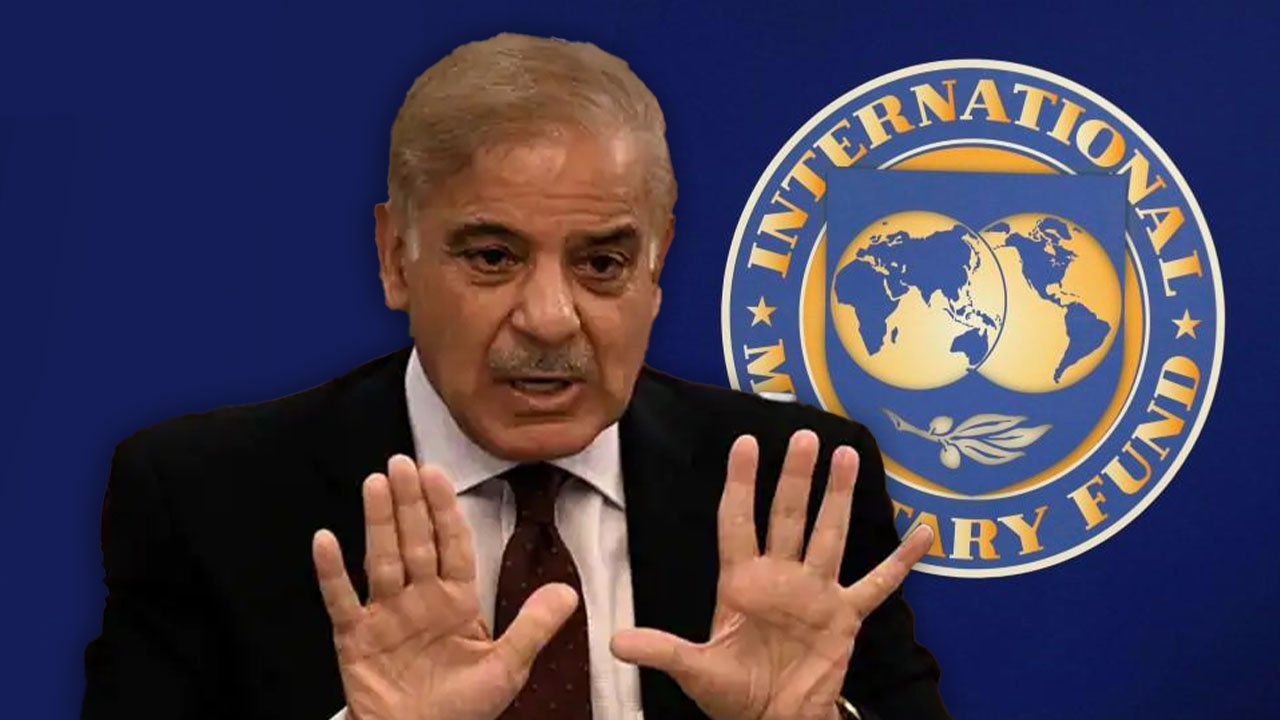
    Prime Minister (PM) Shehbaz Sharif has indicated that the new International Monetary Fund (IMF) programme is expected to extend for three years.

    Addressing the session of the Special Investment Facilitation Council’s (SIFC) apex committee, attended by both civil and military leadership on Thursday, the PM mentioned that a new installment of the loan from the IMF is anticipated in a few days. However, he underscored the necessity for another programme.

    He highlighted the unity displayed by the civil-military leadership and elected lawmakers from various political parties in today’s session, emphasising their collective commitment to the country’s development and prosperity.

    Regarding the economic challenges, the Prime Minister stressed the importance of the SIFC in facilitating foreign investments and acknowledged its significant role over the past eight months. He credited Chief of Army Staff (COAS) General Syed Asim Munir for his pivotal role in establishing the SIFC.

    Prime Minister Shehbaz emphasised the imperative of implementing reforms under the IMF programme to attain macroeconomic stability. He noted the shortfall in revenues, highlighting the need to increase them to Rs13 to 14 trillion from the current Rs9 trillion.

    Furthermore, he outlined the government’s plans to digitise the Federal Board of Revenue (FBR) to address issues such as electricity theft, which annually costs the national exchequer Rs400 billion. During the caretaker government’s tenure, measures were taken to save Rs87 billion in electricity expenses.

    PM Shehbaz also highlighted the pressing issue of circular debt in electricity and gas, which has surged to Rs5 trillion.

    He underscored the importance of unity among the federal and provincial governments to address these challenges collectively.

    Shehbaz Sharif urged the expedited privatisation of loss-making state-owned entities, citing Pakistan International Airlines (PIA), burdened with a debt of Rs825 billion, as an example.

    Acknowledging the need for tough decisions, the Prime Minister admitted that subsidies had been disproportionately allocated to the elite segments of society, emphasising the importance of redistributing the financial burden to those capable of bearing it.
  • Moody’s cautions on Pakistan’s fiscal challenges despite recent stability

    Moody’s cautions on Pakistan’s fiscal challenges despite recent stability

    Moody’s Investors Service, a global credit rating agency, stated on Tuesday that Pakistan’s credit rating could see an upgrade if the government successfully reduces liquidity and external vulnerability risks.

    Despite this potential, Moody’s maintained Pakistan’s credit rating at ‘Caa3’ for long-term issuer rating with a stable outlook in its periodic review.

    The credit profile of Pakistan reflects significant liquidity and external vulnerability risks, attributed to low foreign exchange reserves insufficient to meet high external financing needs in the near to medium term, according to Moody’s.

    The agency also highlighted the country’s very weak fiscal strength and elevated political risks as constraints on its credit profile.

    Moody’s expressed uncertainty regarding the new government’s ability to swiftly negotiate a new International Monetary Fund (IMF) programme after the ongoing programme concludes in April.

    While acknowledging Pakistan’s large economy and moderate growth potential, the agency emphasized the nation’s high liquidity and external vulnerability risks, despite economic stability maintained by the caretaker government and recent reforms.

    The agency recognised the government’s efforts to unlock financing from the IMF and other partners, resulting in a modest accumulation of foreign exchange reserves.

    However, it cautioned that, despite meeting external debt obligations for the fiscal year ending June 2024, there is limited visibility on sources of financing to address high external financing needs post-the current IMF stand-by arrangement.

    Moody’s rationale for the stable outlook at the Caa3 rating level is based on the assessment that pressures on Pakistan align with this rating, with broadly balanced risks.

    The agency suggested that continued IMF engagement beyond the current programme could attract additional financing from other partners, reducing default risk.

    Nonetheless, it emphasised the substantial external financing required and low reserve position, indicating potential default risks with funding delays.

    Moody’s indicated that an upgrade in Pakistan’s rating could occur with a substantial and sustained reduction in liquidity and external vulnerability risks, coupled with increased foreign exchange reserves and fiscal consolidation.

    Conversely, a downgrade might be likely if Pakistan defaults on debt obligations with significant losses to creditors.

    The agency expressed uncertainty regarding the new government’s ability to negotiate a new IMF programme swiftly after the ongoing one expires in April, citing high political risks following the controversial general elections held on February 8, 2024.

    Moody’s warned that without a new programme, Pakistan’s ability to secure loans from other partners would be severely constrained.

  • Pakistan’s credit rating maintained by Fitch at ‘CCC’ amidst financing challenges

    Pakistan’s credit rating maintained by Fitch at ‘CCC’ amidst financing challenges

    Fitch Ratings, a US-based credit rating agency, has maintained Pakistan’s Long-Term Foreign-Currency Issuer Default Rating (IDR) at ‘CCC,’ according to a statement released on Wednesday.

    The ‘CCC’ rating indicates significant external funding risks due to elevated medium-term financing requirements, notwithstanding some stabilisation and Pakistan’s commendable performance on its current standby arrangement (SBA) with the International Monetary Fund (IMF), as explained by Fitch.

    While anticipating scheduled elections in February and prompt negotiation for a subsequent IMF programme after the SBA concludes in March 2024, Fitch cautioned about potential delays and uncertainties regarding Pakistan’s ability to achieve this.

    Fitch emphasised the potential vulnerability of recent reforms and the prospect of renewed political volatility in the wake of the upcoming elections. Regarding the ongoing IMF programme, Fitch expressed confidence in the unproblematic approval of the recent staff-level agreement (SLA) by the IMF board.

    Fitch’s assessment highlighted the positive outcomes of the programme review, including sustained fiscal consolidation, energy price reforms despite public backlash, and strides towards adopting a more market-driven exchange rate regime.

    However, Fitch also pointed out risks associated with policy implementation, citing a historical pattern of parties across the political spectrum in Pakistan failing to implement or reversing reforms agreed upon with the IMF.

  • More imports, less exports: Pakistan’s trade gap grows in October

    More imports, less exports: Pakistan’s trade gap grows in October

    Recent trade data for Pakistan reveals a monthly trade deficit increase of $0.6 billion, primarily driven by an $0.8 billion surge in imports.

    However, on an annual basis, the trade deficit is gradually shrinking at a modest rate of 4 per cent.

    This is not necessarily negative news, as import restrictions have been lifted as part of the İnternational Monetary Fund (IMF) programme while the economy is experiencing an uptick in demand.

    The encouraging aspect lies in the positive signs displayed by the export sector. The Pakistani rupee (PKR) has depreciated by approximately 35 per cent year-on-year, falling from PKR 220/USD to PKR 280/USD.

    Last year, exporters faced challenges in importing raw materials, machinery, and intermediate goods.

    Consequently, the 14 per cent year-on-year growth in exports, rising from $2.4 billion to $2.7 billion, is a heartening development, provided this trajectory continues.

    Recent measures by the State Bank of Pakistan (SBP) aimed at promoting exports, including competitive gas rates for exporters, reflect a positive intent.

    While industries reliant on gas may require more regionally competitive energy rates, the direction is favorable.

    Moreover, the alignment of open market and interbank exchange rates may encourage a shift from official channels.

    To address Pakistan’s economic challenges, two key corrections are imperative, among many others: increasing tax revenues and enhancing value-added exports.

    Depreciation of the currency alone cannot serve as the sole remedy for stimulating growth.

    To achieve a comprehensive economic framework, it is essential to boost the exports-to-GDP ratio beyond the current 8 per cent.

    This should encourage capitalists to prioritise exports and foreign direct investment (FDI) over property, fixed income, currency, and trading, ensuring sustained double-digit growth over the next five years.

  • Slow economic growth and inflation challenges persist in Pakistan: ADB Outlook Report

    Slow economic growth and inflation challenges persist in Pakistan: ADB Outlook Report

    During the last fiscal year, Pakistan faced the twin challenges of low economic growth and high inflation, in contrast to other South Asian countries.

    According to the Asian Development Bank (ADB), to foster economic improvement, Pakistan must continue implementing reforms under the new IMF programme.

    However, the ADB’s Outlook Report predicts that the economic growth rate in the upcoming financial year is expected to remain sluggish, similar to the performance observed in the previous fiscal period.

    The primary reasons for the slow economic growth were last year’s floods and the implementation of strict monetary and fiscal policies.

    The ADB’s report also highlights that inflation in Pakistan exceeded expectations during the past year. This inflationary pressure was further exacerbated by increased demand for commodities.

    In comparison, India is projected to experience a growth rate of 6.7 per cent, Sri Lanka 1.3 per cent, and Bangladesh at a rate of 6.5 per cent.

  • State Bank announces aggressive policy rate hike to 22% in response to inflation risks

    State Bank announces aggressive policy rate hike to 22% in response to inflation risks

    During an emergency meeting convened on Monday, the State Bank of Pakistan (SBP) made the decision to raise the policy rate by 100 basis points (bps), resulting in a new rate of 22 per cent.

    The announcement was made subsequent to a gathering of the bank’s Monetary Policy Committee (MPC).

    The SBP clarified that the MPC acknowledged a heightened potential for upward risks to the inflation outlook compared to its previous meeting held on June 12.

    The committee highlighted that these risks primarily stem from the implementation of new measures in the fiscal and external sectors, which hold significant importance in the context of concluding the ongoing programme with the International Monetary Fund (IMF).

    “MPC noted that today’s action is necessary to keep the real interest rate firmly in positive territory on a forward-looking basis that would help in bringing down inflation towards the medium-term target of five to seven per cent by the end of fiscal year 25,” the SBP said.

  • Govt expected to present Rs13-15 trillion budget for FY23-24 amidst economic uncertainties

    Govt expected to present Rs13-15 trillion budget for FY23-24 amidst economic uncertainties

    The government is anticipated to present a budget ranging from Rs13-15 trillion for the fiscal year 2023-24, according to a budget preview report by Topline Securities. This substantial increase is attributed to the record-high markup cost caused by the soaring interest rates. The proposed budget target of Rs9-9.2 trillion marks a 21 per cent surge compared to the current fiscal year’s target of Rs7.5 trillion.

    Notably, if implemented, the tax target for the upcoming financial year would be 29 per cent higher than the projected tax collection for the outgoing FY23. However, the brokerage house highlights the challenging nature of formulating a budget amidst stagflation and uncertainties surrounding the upcoming elections and Pakistan’s ability to bridge its external account funding gap.

    The report emphasises the prevailing nervousness in currency, bond, and stock markets due to the uncertainty surrounding the financing of the US dollar funding gap. Furthermore, it states that revenue targets have historically deviated by an average of 8 per cent from the actual targets in the past five years, and a similar trend is expected in FY24 due to the economic slowdown.

    The non-tax revenue target for FY24 is estimated at Rs2.5 trillion (2.4 per cent of GDP), compared to Rs1.6 trillion (2 per cent of GDP) for FY23. The report predicts several taxation measures, including tax on undistributed reserves, continuation of the super tax, a shift from the final tax regime to the minimum tax regime, asset/wealth tax, higher tax on non-filers, tax on rental income, and taxes on banks, tobacco, and beverages.

    Regarding development spending, the Federal Public Sector Development Programme (PSDP) is projected to amount to Rs0.9 trillion for FY24. However, due to fiscal constraints, significant cuts are expected in this area. The consolidated PSDP (federal and provincial) is anticipated to reach Rs2.6 trillion (2.5 per cent of GDP) in FY24.

    With the Pakistan Tehreek-e-Insaf (PTI) party being sidelined, there is a possibility of a weak coalition government coming to power in the upcoming elections. The report highlights the importance of an aggressive and competent new setup to tackle the ongoing economic crisis.

    To create a favorable perception, the government may set unrealistic revenue targets in order to allocate more spending in the budget. The report suggests that it is unlikely for the government to complete the current International Monetary Fund (IMF) program on time and urges Pakistan to enter another, potentially larger, IMF program.

    In light of the economic slowdown and high inflation, the government may introduce expansionary policies in the budget to appease the public, such as direct cash subsidies for the underprivileged and an increase in minimum wages. However, the brokerage firm warns against excessive spending without substantial tax collection measures.

    In terms of its impact on the stock market, the upcoming budget is expected to be neutral to positive. Sectors such as oil and gas exploration, chemicals, pharmaceuticals, consumers, tobacco, technology and communication, textile, cement, fertilizers, and oil marketing companies may experience a neutral effect. Conversely, the budget might have a neutral to negative impact on banks and autos, while steel and independent power producers could experience a neutral to positive effect, according to the research.

    As the budget is unveiled, stakeholders and citizens alike will closely monitor the government’s strategies to address the economic challenges and promote stability and growth in Pakistan.

  • IMF chief wants the poor people of Pakistan to be protected

    IMF chief wants the poor people of Pakistan to be protected

    In a recent interview with an international broadcaster, Kristalina Georgieva, the Managing Director of the International Monetary Fund (IMF), called for Pakistan to distribute subsidies more fairly, redirecting resources from the wealthy to those in need. Georgieva urged the country to increase tax revenues from those who are making good money, both in the public and private sectors, to contribute to the economy.

    The IMF is keen for Pakistan to function effectively as a country and avoid dangerous levels of debt, which could lead to the need for debt restructuring. Georgieva expressed concern for the people of Pakistan, who have been devastated by floods affecting one-third of the population.

    The IMF has recommended that Pakistan broaden its narrow tax base, with only 3.5 million return filers out of a population of over 200 million. The lender has also called for the removal of untargeted subsidies and the redirection of resources towards the poor, including the Benazir Income Support Programme (BISP), for which the government has increased the allocation from Rs360 billion to Rs400 billion to protect the poorest from inflationary pressures.

    The IMF’s review mission has made it clear that Pakistan must undertake tax revenues from all those who possess income to contribute to the national kitty.

    Pakistan faces a looming balance of payment (BoP) crisis, with external debt servicing of $27 billion required in the next financial year. The ongoing IMF programme of $6.5 billion under the Extended Fund Facility (EFF) is due to expire on June 30, 2023, and there is no possibility of any further extension in the ongoing EFF arrangement.

    The IMF could help Islamabad overcome the crisis by ensuring that the country can pay its debt obligations without plunging into default. The revival of the IMF programme will be a pre-requisite step for seeking any debt restructuring, so the government is currently focusing on it.