Tag: IMF Tranche

  • State Bank confirms Pakistan has received initial $1.03 billion tranche from IMF

    State Bank confirms Pakistan has received initial $1.03 billion tranche from IMF

    The State Bank of Pakistan (SBP) announced on Friday that it has received the much-anticipated first tranche of Special Drawing Rights (SDR) worth 760 million, equivalent to USD 1.03 billion, from the International Monetary Fund (IMF).

    In a statement, the SBP said, “Following the approval of the IMF Executive Board of a 37-month Extended Fund Facility amounting to US$7 billion, the State Bank of Pakistan (SBP) has received the first tranche of SDR 760 million (equivalent to USD 1.03 billion) from the IMF today.”

    The central bank confirmed that these inflows would be reflected in the SBP’s liquid reserves, which are scheduled to be released on Thursday, October 3, 2024.

    The IMF’s Executive Board granted approval for the 37-month, $7 billion Extended Fund Facility (EFF) for Pakistan on Wednesday, marking a significant financial lifeline for the country.

    Pakistan and the IMF initially reached a staff-level agreement on the EFF, worth SDR 5,320 million (roughly USD 7 billion), on July 12, 2024, paving the way for today’s disbursement.
  • SBP governor says debt rollovers will ease Pakistan’s FY25 financial burden

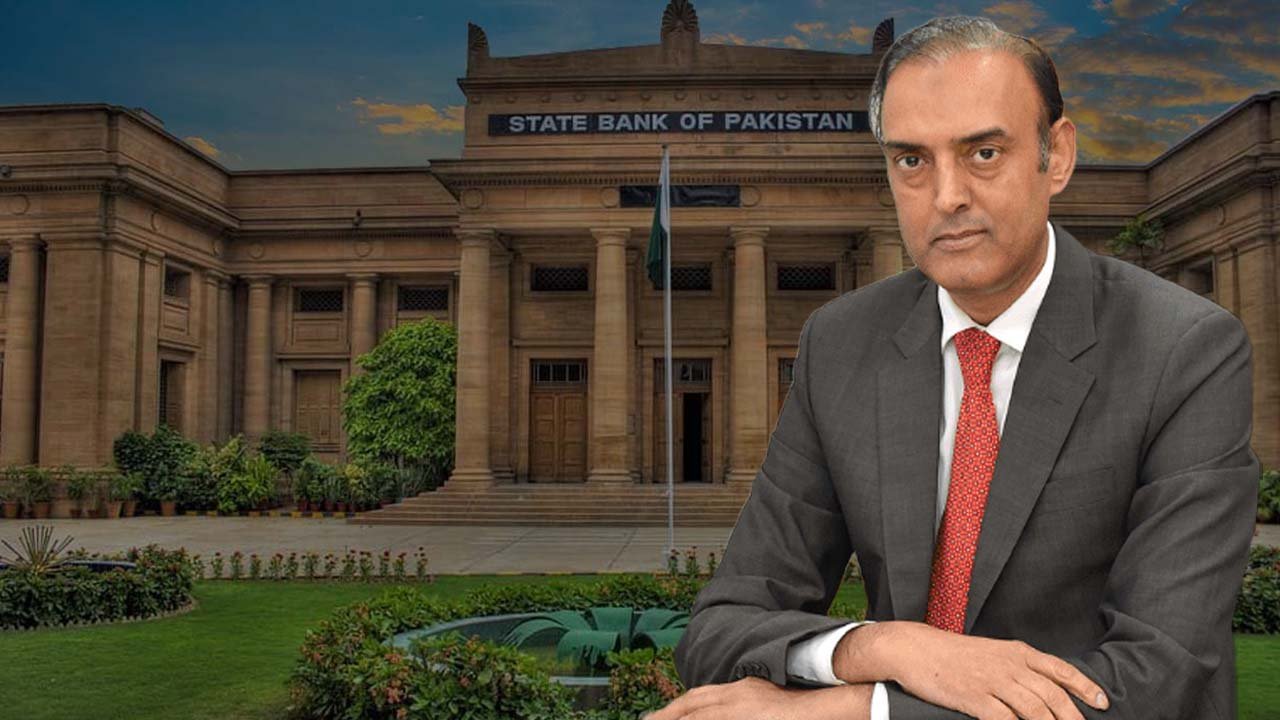
    SBP governor says debt rollovers will ease Pakistan’s FY25 financial burden

    State Bank of Pakistan (SBP) Governor Jameel Ahmad assured the public on Wednesday that friendly nations will roll over nearly $16 billion of the country’s outstanding debt for the fiscal year 2025.

    This crucial support is expected to provide the government with significant breathing room amid ongoing financial challenges.

    In his testimony before the National Assembly Standing Committee on Finance and Revenue, chaired by MNA Naveed Qamar, Ahmad revealed that Pakistan’s total debt obligations for FY25 amount to $26.2 billion. Following the planned rollovers, the remaining debt to be settled by June next year will be reduced to $10 billion.

    Ahmad also highlighted that the central bank has already repaid $1.5 billion in debt last month, leaving an outstanding amount of $8.5 billion for the rest of the fiscal year.

    Secretary of Finance Imdad Ullah Bosal added that Pakistan is set to receive its first tranche from the International Monetary Fund (IMF) following the rollover of approximately $4 billion in Chinese commercial loans. Additionally, $4.4 billion is expected from the Asian Development Bank and the World Bank.

    The SBP Governor further stated that there is no immediate pressure on external payments, which should contribute to the stability of the Pakistani rupee. He projected that foreign exchange reserves could reach $13 billion by the end of the fiscal year.

    With improved economic conditions, further reductions in the policy rate are anticipated. However, he warned that inflation might rise to 13.5 per cent this fiscal year due to budgetary policies and energy price fluctuations.

    In his presentation, Ahmad outlined a comprehensive five-year plan to the Finance Committee. The plan focuses on restoring price stability, managing the current account deficit, ensuring that foreign exchange reserves cover three months of import needs, and achieving greater financial stability and transparency.

    He noted that GDP growth has been constrained to 3.5 per cent over the past decade and emphasised the need to boost exports by 10 to 15 per cent. Ahmad also assured that there are no restrictions on imports, aiming to foster a more balanced economic growth.

  • Pakistan expected to sign IMF agreement this week

    Pakistan expected to sign IMF agreement this week

    Pakistan is poised to finalise a staff-level agreement with the International Monetary Fund (IMF) this week.

    The anticipated agreement with the IMF is expected to pave the way for Pakistan to receive the final installment of $1.1 billion under the SBA agreement.

    Additionally, it has been reported that Pakistani officials, in discussions with the IMF, have pledged to implement an increase in electricity tariffs effective July 1. Moreover, consumers will bear periodic fuel adjustments on a monthly, quarterly, and annual basis for cost recovery purposes.

    Highlighting the imperative of safeguarding beneficiaries enrolled in the BISP programme, the IMF delegation emphasised to Pakistani authorities the importance of maintaining stringent monetary policies and stable market exchange rates.

    The ongoing visit of the IMF delegation to Pakistan pertains to the second review under the SBA loan programme.

    In an earlier development, sources revealed that the Pakistani government rebuffed the IMF’s request to revisit the National Finance Commission (NFC) Award. 

    The IMF had urged Islamabad to reconsider the NFC Award allocation with the provinces during the second review talks within the framework of the $3 billion loan programme under the SBA, citing a shortfall in federal funds.

  • SBP sees surge of over $17 million in forex reserves

    SBP sees surge of over $17 million in forex reserves

    The latest data released by the State Bank of Pakistan (SBP) revealed a notable rise in the country’s foreign exchange reserves. During the week ending March 8, 2024, SBP’s reserves increased by $17.2 million, marking a 0.22 per cent growth, reaching a total of $7.91 billion.

    Additionally, Pakistan’s overall reserves experienced a surge, ascending by $131.3 million, or 1.01 per cent, week-on-week (WoW), to a sum of $13.15 billion. This increase was further complemented by a rise in reserves held by commercial banks, which climbed by $114.1 million, or 2.23 per cent, to reach $5.24 billion.

    In a significant development, the second review of the stand-by arrangement (SBA) with the International Monetary Fund (IMF) is slated to take place from March 14 to 18, 2024. This review holds particular importance as it marks the final assessment under the SBA. Upon reaching a staff-level agreement, the final tranche of $1.1 billion will be disbursed, subject to approval by the Executive Board of the IMF.

    It is noteworthy that in the current fiscal year, Pakistan has witnessed a substantial increase in its total liquid foreign reserves, amounting to $3.99 billion, or 43.57 per cent. Similarly, the ongoing calendar year has seen a rise of $0.48 billion, or 3.77 per cent.

  • Pakistan’s forex reserves rebound: SBP gains $77 million in a week 

    Pakistan’s forex reserves rebound: SBP gains $77 million in a week 

    According to data released on Thursday, the State Bank of Pakistan (SBP) witnessed a weekly increase of $77 million in its foreign exchange reserves, reaching $7.26 billion as of November 24.  

    The total liquid foreign reserves for the country amounted to $12.39 billion, with commercial banks holding net foreign reserves at $5.13 billion. 

    During the week ending on November 24, 2023, SBP’s reserves increased by $77 million, reaching $7,257.0 million. Contrastingly, the previous week saw a decrease of $217 million in Pakistan’s central bank reserves. 

    In July of this year, the central bank’s reserves received a boost as Pakistan obtained the initial tranche of approximately $1.2 billion from the International Monetary Fund (IMF) following the approval of a new $3-billion Stand-By Arrangement (SBA).  

    This boost was complemented by inflows from Saudi Arabia and the UAE. 

    However, the SBP reserves faced pressure due to debt repayments, a surge in import payments after the easing of restrictions, and a lack of fresh inflows. 

    In a significant development, the IMF announced last week that its staff and Pakistani authorities had reached an agreement on the first review of the SBA.  

    The staff-level agreement is pending approval by the IMF Executive Board. 

    The IMF team reached a staff-level agreement (SLA) with the Pakistani authorities on the first review of their stabilization program supported by the IMF’s $3 billion (SDR2,250 million) SBA.  

    Upon approval, approximately $700 million (SDR 528 million) will become available, bringing total disbursements under the program to almost $1.9 billion. 

    Following the SLA with the IMF, Caretaker Finance Minister Dr Shamshad Akhtar expressed confidence that external financing would not be an issue, anticipating inflows in December 2023 to contribute to an increase in foreign exchange reserves. 

  • IMF’s $700 million tranche approval crucial for Pakistani rupee’s recovery

    IMF’s $700 million tranche approval crucial for Pakistani rupee’s recovery

    The Pakistani Rupee (PKR) is expected to rebound against the US dollar this week, with this revival contingent on the approval of the next tranche by the International Monetary Fund (IMF).

    Last week, the PKR weakened by 1.78 rupees (0.6 per cent), closing at Rs280.57 against the US dollar, marking a second consecutive week of decline. On the last trading day, it reached a high of Rs280.5 and a low of Rs280.15 against the greenback.

    In the open market, the rupee depreciated by 50 paisa, closing at Rs279.5 for buying and Rs292.8 for selling, compared to Rs279 and Rs282 a week ago.

    The rupee’s decline is attributed to expectations of the IMF’s approval for the next $700 million tranche of its $3 billion loan. Geopolitical tensions in the Middle East and decreased export receipts have also played a role.

    Despite hopes for recovery post-IMF approval, concerns linger about its long-term stability, with Goldman Sachs predicting a short-lived strong performance.

    The rupee’s fate remains tied to the 280 level until the IMF’s decision. The upcoming weeks and months hold uncertainty amid global economic challenges and geopolitical issues.

    Economists and financial experts are closely watching events, especially the IMF’s decision, which will significantly impact Pakistan’s economic stability as it strives to restore economic health and growth.

  • State Bank of Pakistan’s forex reserves dip by $220 million in weekly report 

    State Bank of Pakistan’s forex reserves dip by $220 million in weekly report 

    The State Bank of Pakistan (SBP) witnessed a notable decline in its foreign exchange reserves, with a weekly reduction of $220 million, bringing the total to $7.5 billion as of October 20th, according to the data released on Thursday. 

    The overall liquid foreign reserves of the country now stand at $12.6 billion, while the commercial banks hold net foreign reserves of $5.1 billion.  

    The decrease in SBP’s reserves was attributed to debt repayments during the week that ended on October 20, 2023, leading to a decrease of $220 million and bringing the total to $7,494.2 million. 

    Last week saw a modest increase of $67 million in Pakistan’s central bank reserves. Notably, Pakistan’s central bank received a significant boost to its reserves in July of this year.  

    This boost was a result of the initial installment of approximately $1.2 billion from the International Monetary Fund (IMF), following the approval of a new $3-billion stand-by arrangement by the IMF. Additionally, Pakistan received inflows from Saudi Arabia and the UAE. 

    Nevertheless, the central bank’s reserves have come under pressure due to a combination of factors, including ongoing debt repayments, increased import payments after the easing of restrictions, and a lack of substantial new inflows. 

  • Pakistan’s forex reserves surge by $67 million to reach $7.7 billion

    Pakistan’s forex reserves surge by $67 million to reach $7.7 billion

    The State Bank of Pakistan (SBP) reported a notable weekly surge in foreign exchange reserves, with an increase of $67 million, reaching $7.7 billion as of October 13, as per the latest data release on Thursday.

    In total, the nation’s readily available foreign reserves amounted to $12.9 billion, with commercial banks holding $5.2 billion in net foreign reserves. The central bank did not provide a specific explanation for this increase.

    During the week concluding on October 13, 2023, the SBP’s reserves climbed by $67 million, reaching a total of $7,714.0 million, according to the SBP’s statement. This follows a previous week’s increase of $31 million.

    Notably, in July of this year, the central bank’s reserves received a significant boost when Pakistan received an initial disbursement of approximately $1.2 billion from the International Monetary Fund (IMF), following the approval of a new $3-billion stand-by arrangement. Additionally, inflows from Saudi Arabia and the UAE contributed to this increase.

    Nevertheless, the central bank’s reserves have faced pressure due to ongoing debt repayments, increased import expenditures following the easing of restrictions, and a lack of fresh inflows.

  • Pakistan’s foreign exchange reserves increase by $31 million, reaching $7.64 billion

    Pakistan’s foreign exchange reserves increase by $31 million, reaching $7.64 billion

    The State Bank of Pakistan (SBP) reported an increase of $31 million in its foreign exchange reserves on a weekly basis, reaching a total of $7.64 billion as of October 6, according to data released on Thursday.

    The overall liquid foreign reserves of the country amounted to $13.03 billion, with commercial banks holding net foreign reserves of $5.39 billion.

    The central bank did not provide a specific explanation for the increase in reserves.

    In its report, the SBP stated, “During the week ending on October 6, 2023, the SBP’s reserves rose by $31 million, reaching $7,646.7 million.”

    Notably, the previous week witnessed a decrease of $21 million in Pakistan’s central bank reserves.

    In July of this year, the SBP’s reserves received a significant boost when Pakistan received the first tranche of approximately $1.2 billion from the International Monetary Fund (IMF) after the approval of a new $3-billion stand-by arrangement. Additionally, inflows from Saudi Arabia and the UAE contributed to the growth of reserves.

    However, it’s worth mentioning that the central bank’s reserves have been under pressure due to ongoing debt repayments, an increase in import expenditures following the relaxation of restrictions, and a lack of fresh inflows.