Tag: IMF

  • Pakistan is making desperate efforts to revive IMF programme before deadline

    Pakistan is making desperate efforts to revive IMF programme before deadline

    Pakistan is facing a critical situation as it seeks to revive its stalled Extended Fund Facility (EFF) programme with the International Monetary Fund (IMF). The $6.5 billion programme is set to expire on June 30, and negotiations for the ninth review, due last November, have not been successful.

    Efforts to reach a Staff Level Agreement (SLA) with the IMF have been ongoing, but disagreements persist regarding the conditions set by the Fund. The SLA must be signed before Pakistan unveils its 2023-24 budget on June 9, or the current programme will fail.

    According to The News, two options are being considered. The first involves signing the SLA immediately, requesting approval from the IMF Executive Board for the next $1 billion tranche, and extending the EFF programme for a few months to complete the 10th and 11th reviews. The second option is to combine the 9th and 10th reviews, share budgetary figures with the IMF, and sign the SLA after the budget announcement. If approved by parliament, the IMF’s Executive Board could then grant an extension for the completion of the 11th Review by July or August 2023.

    However, finding a solution is proving challenging. Maintaining the status quo will not lead to any breakthroughs, and consensus must be reached between Pakistan and the IMF. Political uncertainty, inadequate economic management, and the inability to secure sufficient external financing have hindered progress.

    Without an IMF programme, Pakistan’s options are limited. The risk of default would increase, and reserves would remain weak. Although there are options available, such as striking the SLA in the next few days or combining reviews, they are becoming increasingly difficult. Life without the IMF would require seeking financing from other sources at higher costs.

    It is crucial for Pakistan to resolve its differences with the IMF and secure the continuation of the EFF programme. Failure to do so would have severe consequences for economic stability and future financing prospects.
  • Pakistan’s forex reserves decline to $4.31 billion, covering less than a month’s worth of imports

    Pakistan’s forex reserves decline to $4.31 billion, covering less than a month’s worth of imports

    The State Bank of Pakistan (SBP) has experienced a continuous decline in foreign exchange reserves for the third consecutive week. This decline is attributed to the country’s ongoing struggle to secure a deal with the International Monetary Fund (IMF).

    The central bank’s statement indicates that the reserves decreased by $72 million to reach $4.31 billion as of May 12, primarily due to external debt payments. This amount is sufficient for less than a month’s worth of imports.

    In contrast, commercial banks in Pakistan hold net foreign reserves amounting to $5.62 billion, which is $1.01 billion higher than the central bank’s reserves. Therefore, the country’s total liquid foreign reserves amount to $9.93 billion.

    Pakistan’s economy is currently facing significant challenges, exacerbated by financial difficulties and the delay in reaching an agreement with the IMF. Such an agreement is crucial as it would provide much-needed funding to mitigate the risk of default.

    Earlier, on May 11, the State Bank of Pakistan (SBP) witnessed a decline of $74 million in foreign exchange reserves within a week, resulting in reserves amounting to $4.38 billion. Additionally, commercial banks held net foreign reserves of $5.6 billion.

    Reports indicate that the IMF remains skeptical and is urging Islamabad to take further actions to unlock the loan program, despite assurances from friendly countries regarding external funds for Pakistan.

    Pakistan has been asked to present a repayment plan for a $3.7 billion loan to the IMF in June and demonstrate stronger support from friendly nations to fulfill its commitments.

  • Pakistan reaffirms commitment to $6.5 billion IMF bailout, dismissing rumors of retraction

    Pakistan reaffirms commitment to $6.5 billion IMF bailout, dismissing rumors of retraction

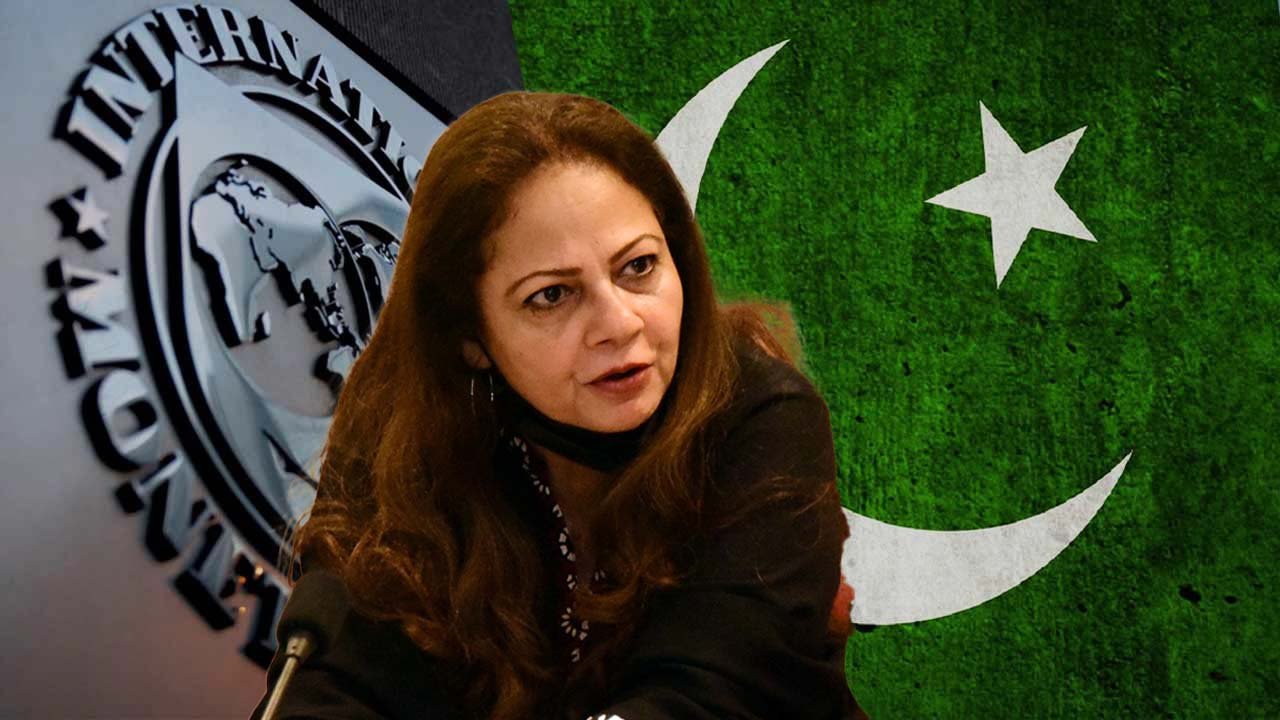
    On Wednesday, Minister of State for Finance and Revenue, Dr Aisha Ghaus Pasha, dismissed rumours of Pakistan retracting from the anticipated $6.5 billion bailout programme with the International Monetary Fund (IMF).

    According to Geo, Pasha clarified that discussions were ongoing between the Federal Board of Revenue (FBR) and the Finance Division, emphasising that Pakistan remained engaged with the IMF. Speculation arose when reports suggested that Pakistan had taken a firm stance against the IMF and refused to share details of the upcoming budget.

    This led to concerns that the financially strained nation was reneging on the deal originally agreed upon by the Imran Khan-led Pakistan Tehreek-e-Insaf (PTI) government.

    Pasha expressed the government’s commitment to continuing the IMF programme, acknowledging the political sacrifices made by the coalition government to meet the Fund’s conditions. Negotiations with the IMF have been aimed at restarting the $6.5 billion bailout programme, which is crucial for Pakistan to avert default.

    During a meeting with journalists after the Senate Standing Committee on Finance, Pasha revealed that the coalition government would present its second budget in the first week of June, marking the second year since assuming power in April. The Finance Bill 2023-24 is scheduled to be presented in the National Assembly on June 9, while the Economic Survey 2022-23 will be released on June 8, according to sources.

    Assuring the public during the briefing, Pasha affirmed that the government would strive to alleviate the burden on the masses amidst these challenging times, as the budget figures were being finalized. However, she cautioned that the situation would remain difficult until the tax-to-GDP ratio reached double digits, emphasizing the necessity of expanding the tax base.

    The state minister disclosed the Ministry of Finance’s plan to transition from indirect taxes to direct taxes, stating that such a shift would reduce the burden on the general population. She reiterated the government’s intention to introduce direct taxes in the upcoming budget for the fiscal year 2023-24, expressing concern over the negative impact of tax concessions on the economy.

    Meanwhile, FBR Chairman Asim Ahmed briefed the committee on the capital value tax, disclosing that the revenue generated from this tax during the current financial year amounted to Rs9 billion.

    Addressing the concerns of senators regarding the implementation of capital valuation tax on domestic and foreign assets, Ahmed clarified that this measure aimed to include the wealthier individuals in the tax net. He also noted that the revenue board was registering new individuals with foreign assets while maintaining records of those already registered.

  • ‘When will Pakistan meltdown?’ Question shocks Pak minister, might approach China for help

    ‘When will Pakistan meltdown?’ Question shocks Pak minister, might approach China for help

    Pakistan is actively exploring alternative measures to prevent a full-fledged eruption of its balance of payment crisis, as the International Monetary Fund (IMF) continues to prolong the revival of the already-delayed $6.5 billion bailout programme.

    According to The News, Pakistan may have no choice but to turn to China to devise a mechanism for rescuing its ailing economy.

    “Amid the deepening political and economic crisis in the country, the IMF has adopted a wait-and-see policy, but this approach cannot be sustained indefinitely,” sources informed the publication. “Either the IMF programme must be revived through the completion of the ninth review, or the programme will be abandoned. We will not share any further data with the IMF until the ninth review is completed,” the sources asserted.

    Multiple reports indicate that Pakistan has already urged the Fund staff to conclude the review, warning that the budgetary framework for 2023-24 will not be shared otherwise.

    Sources recounted an incident where a diplomat from a Western capital questioned a minister about the expected economic meltdown in Pakistan. “This direct question from the dignitary shocked the minister, who assured the visiting diplomat that Pakistan would never default,” the sources narrated.

    It is noteworthy that the diplomatic community has also begun inquiring about “domestic political affairs.”

    Considering these developments, independent economists are now recommending that the government make last-ditch efforts to revive the IMF programme or turn to China for a potential bailout to support the struggling economy.

    Renowned economist Dr Hafiz A Pasha, a former finance minister, expressed that if the IMF fails to make progress, Pakistan would have no alternative but to request China’s assistance in devising a mechanism to avert a full-fledged crisis. He suggested utilizing the Asian Infrastructure Investment Bank (AIIB) as a potential instrument to aid Islamabad in navigating the balance of payment crisis, acknowledging that it falls outside the AIIB’s mandate but emphasizing the need for an institution to assume the role of an Asian IMF.

    When approached, Dr Khaqan Najeeb, a former finance ministry adviser, acknowledged the efforts taken by the country to achieve macro stabilization and pave the way for the completion of the ninth review. However, he pointed out the IMF’s cautious stance due to Pakistan’s weak State Bank reserves, which currently stand at just $4.38 billion, and the precarious balance of payment position. The IMF is taking extra care to ensure that financing needs are more than adequately met, despite efforts by authorities to convince the lender in this regard.

    Dr Najeeb also highlighted the relaxation of imports, with the IMF keen for Pakistan to build reserves and ease administrative restrictions. Notably, Pakistan’s imports in April (year-on-year) have been halved to $2.9 billion, as reported by the Pakistan Bureau of Statistics.

    “The advisable solution is for the IMF to show consideration, as a staff-level agreement can facilitate commercial and multilateral inflows,” Najeeb commented, adding that Pakistani authorities could do more to ensure a robust financing plan.

    He concluded that if an agreement is not reached, the country would have to persist with heightened import restrictions, a constrained economy, and borrowing and rollovers from friendly countries wherever possible. “This is not Pakistan’s preferred option to sustain a thriving economy,” he emphasised.

  • IMF denies seeking $8 billion fresh financing from Pakistan in bailout talks

    IMF denies seeking $8 billion fresh financing from Pakistan in bailout talks

    The International Monetary Fund (IMF) has denied recent reports that it is seeking fresh financing from Pakistan, stating that Pakistan’s external financing requirements have remained unchanged throughout talks with the Fund.

    The clarification comes after a report by the Express Tribune suggested that the IMF had increased its demand for additional financing to $8 billion, up from an unmet condition of $6 billion, in order to ensure debt repayments for the May-December 2023 period.

    According to Reuters, IMF Resident Representative Esther Pérez Ruiz confirmed that the country’s external funding requirements had not changed, and that discussions were centered around a review to unlock $1.1 billion in financing as part of a $6.5 billion IMF package.

    Despite ongoing talks, a staff-level agreement on the review has been delayed since November, and the IMF has reiterated that commitments on external financing from friendly countries will be necessary before it can release bailout funds.

    Pakistan’s central bank reserves currently stand at $4.38 billion, equivalent to barely a month’s worth of imports.

  • Pakistan moves forward with budget planning despite delayed IMF programme

    Pakistan moves forward with budget planning despite delayed IMF programme

    The government is expected to present an overall budget deficit of 5.1 per cent of the GDP for the fiscal year 2023-24, as stated in the delayed Budget Strategy Paper (BSP) to be presented before the federal cabinet. A recent report by The News highlighted that the paper will be tabled amid the government’s failure to revive the stalled International Monetary Fund (IMF) programme.

    The budget-making process has already been affected by uncertainty on both the IMF and political fronts. Nonetheless, the government has decided to present the next budget on June 9. Despite failing to reach a staff-level agreement with the IMF, the government will present the BSP for a medium-term period of three years. The proposed federal government budget deficit stands at 6.4 per cent of the GDP, while the overall deficit of the country is estimated to be lowered to 5.1 per cent of the GDP for the next financial year.

    In addition, the BSP for the upcoming fiscal year has proposed an allocation of Rs1.7 trillion for the defence budget compared to Rs1.56 trillion in the outgoing fiscal year. The overall primary surplus of budget deficit is estimated to be 0.3 per cent of the GDP for the next fiscal year, up from the previous projection of 0.2 per cent for the outgoing year.

    The Federal Board of Revenue (FBR) has been set a target of Rs9.2 trillion for the next budget, and the finance ministry suggests this is on the higher side. The FBR estimates that it could collect Rs7.2 trillion in the outgoing fiscal year against the targeted Rs7.64 trillion. In the next budget, the FBR could collect up to Rs8.6 trillion, subject to import restrictions being lifted, which could boost revenue collection. The government is projecting a GDP growth rate of 3.4 per cent for the next fiscal year, while inflation is expected to hover around 21 per cent.

    According to the IMF’s latest press briefing, the country may experience stagflation, which means low growth and higher inflation rates. If stagflation continues, it could lead to rising poverty and unemployment in Pakistan. The current account deficit is estimated to be approximately $8 billion for the next budget, and there is hope that import restrictions will be gradually lifted during the next financial year.

    The BSP has to be approved by the federal government under the Public Finance Management Act, which states that the paper must contain quantified macroeconomic and fiscal projections for the medium-term, be approved by April 15 of each year, and published on the Finance Division’s official website. Upon approval, the Finance Division will issue indicative budget ceilings to ministries and divisions.

    The minister for finance will also discuss the budget strategy paper with the Standing Committees for Finance and Revenue in the Senate and the National Assembly. The government may extend the deadline mentioned in Sub-section (1) of the PFM Act in case of an extreme requirement.

  • Pakistan commits to IMF bailout deal without fuel subsidy scheme

    Pakistan commits to IMF bailout deal without fuel subsidy scheme

    Pakistan has informed the International Monetary Fund (IMF) that it will not be implementing a fuel subsidy programme during ongoing negotiations for a $1.1 billion bailout for the country.

    The IMF has stated that it will continue to engage with the government on the loan, despite increasing political tensions.

    Prime Minister had previously proposed a fuel subsidy scheme in March, which would charge higher rates to affluent consumers to subsidise prices for the poor who have been hit hard by inflation.

    However, the government has now committed not to implement this programme in the current fiscal year or beyond. Instead, it will not introduce new tax exemptions and will allow a market-based exchange rate for the rupee currency.

    The IMF has said that Pakistan needs significant additional financing to complete the long-delayed ninth review of its bailout package.

    Obtaining commitments of significant additional financing is essential before the IMF approves the release of pending bailout funds that are crucial for Pakistan to resolve an acute balance of payments crisis.

    According to Dawn, the State Bank of Pakistan’s reserves fell to $4.38 billon on Thursday, which is barely a month’s worth of imports. The IMF has emphasised that Pakistan faces stagflation, large financing needs, and has been affected by several shocks, including severe floods.

  • Gold price increases to Rs240,000 per tola amid political turmoil and IMF loan delay

    Gold price increases to Rs240,000 per tola amid political turmoil and IMF loan delay

    On Wednesday, the price of gold surged massively in Pakistan due to political turmoil following the arrest of the former prime minister and Pakistan Tehreek-e-Insaf (PTI) Chairman, Imran Khan.

    According to the All Pakistan Sarafa Gems and Jewellers Association (APSGJA), the price of gold (24 carats) rose by Rs9,900 per tola and Rs8,487 per 10 grams to reach Rs240,000 and Rs205,761, respectively.

    However, there was no increase in the international market price, which remained at $2,031 per ounce. The primary reason for the increase in gold’s price is the latest political storm that has caused violent protests across the country and led to the army’s deployment in three provinces.

    People in Pakistan are purchasing gold to protect themselves against inflation and currency depreciation, as the economy is already in dire straits. Furthermore, the delay in the revival of the International Monetary Fund (IMF) program, which negatively impacts the currency market, is bolstering the demand for gold.

    According to Brecorder, the rupee also fell to a fresh low of Rs290.22 against the US dollar in the interbank market on Wednesday, after losing Rs5.38 or 1.89 per cent. The APSGJA also reported that the price of silver reached a new high, rising by Rs100 per tola and Rs85.75 per 10 grams to settle at Rs3,100 and Rs2,657.7, respectively.

  • IMF asks for more effort from Pakistan, loan programme in jeopardy

    IMF asks for more effort from Pakistan, loan programme in jeopardy

    Despite assurances from friendly countries regarding external funds for Pakistan, the International Monetary Fund (IMF) remains unconvinced and is asking Islamabad to make additional efforts to unlock a loan programme.

    According to sources, Pakistan has been requested to present a repayment plan for a $3.7 billion loan to the IMF in June and to demonstrate stronger support from friendly nations to fulfill this obligation.

    However, the IMF has not yet accepted a proposal to exchange reserves worth between $11 to $12 billion, equivalent to two months’ revenues. The Ministry of Finance has stated that the government has imposed Rs170 billion in taxes through a mini-budget to secure a staff-level agreement with the IMF, which was initially scheduled for February 9th.

    It is noteworthy that the IMF has not included Pakistan in any agenda until May 17th. The budget-making process may also be affected if transactions with the IMF are not concluded, as funding will not be available from international financial institutions without a staff-level agreement.

    Last month, the staff-level agreement between Pakistan and the International Monetary Fund was postponed due to the lender’s new demand.

    Finance Secretary Hamid Yakoob’s meeting with the International Monetary Fund in the United States did not yield positive results as the lender requested the arrangement of $1 billion from commercial banks to unlock the loan program.

    The staff-level agreement, originally scheduled for February 9th, was delayed due to the IMF’s demands.

  • ADB recommends targeted subsidies and tax reforms for Pakistan’s economic recovery

    ADB recommends targeted subsidies and tax reforms for Pakistan’s economic recovery

    The Asian Development Bank (ADB) has recommended that Pakistan implement targeted subsidies to alleviate inflationary pressures and improve the tax-to-GDP ratio in order to emerge from the current state of economic uncertainty.

    Yevgeniy Zhukov, Director General of the Central and West Asia Department, and Yong Ye, Country Director of the Pakistan Resident Mission, emphasised the significance of targeted subsidies to help the most vulnerable segments of society, as well as the mobilization of domestic resources to bolster the national economy. They also suggested strengthening the Benazir Income Support Programme (BISP) and improving its verification process to ensure that the assistance reaches only those who require it.

    Zhukov noted that the ADB has been providing financial assistance to the government to strengthen social security through the BISP programme since 2016. The ADB has provided $600 million in conditional cash transfers for health and education since 2021, and an additional $1.5 billion under the Countercyclical Support Facility.

    A significant portion of this funding will be directed to the BISP to provide necessary assistance to those most affected by ongoing difficulties. Zhukov further suggested that Pakistan should improve its revenue collection, as its tax-to-GDP ratio of 10 per cent is one of the lowest in the region. He cautioned that if the government is only collecting 10 per cent, it may not have adequate resources to provide support and boost income.

    Yong Ye indicated that the ADB, World Bank, European Union, and United Nations had pledged assistance to Pakistan after devastating floods last year, and a second meeting of the Geneva conference was scheduled to take place soon to discuss progress. Zhukov expressed sympathies for flood victims and stated that the ADB had approved a $1.5 billion programme for Pakistan before the floods to address the negative impact of the Russia-Ukraine war on the country’s economy, which was then repurposed to provide social protection for the flood-affected people.

    The ADB has approved additional emergency assistance, including a $175 million loan and $5 million in grants, to rehabilitate damaged infrastructure and develop a stronger infrastructure that can withstand future floods. The bank is working with Pakistan and other partners, such as the International Monetary Fund and the World Bank, to introduce important structural reforms in public finance management, domestic resource mobilization, and energy sector reforms. The ADB is committed to collaborating with its partners and the Pakistani government to ensure that the reform agenda is advanced.