Tag: IMF

  • IMF demands approval for subsidies as Pakistan struggles to secure tranche

    IMF demands approval for subsidies as Pakistan struggles to secure tranche

    Pakistan has been negotiating an agreement with the International Monetary Fund (IMF) since January 2023. The IMF has specified that Pakistan must receive prior approval before providing any additional subsidies.

    Negotiations have hit a snag over a plan announced by Prime Minister Shehbaz Sharif in March to charge wealthy fuel consumers more to subsidise prices for the poor who have been severely impacted by inflation.

    Despite meeting almost all of the Fund’s conditions, the government is struggling to convince the lender to release the tranche. On a separate issue of securing confirmation on the external financing gap of $5 billion by June 2023, the Kingdom of Saudi Arabia and the United Arab Emirates have provided over $2 billion and $1 billion respectively.

    The formal agreements with these countries are expected to be signed soon. The Pakistani authorities are complaining that the IMF has placed prior actions before signing the staff-level agreement, which was not done in the past.

    According to The News, the IMF asks for confirmation from commercial banks before signing the agreement, while banks are asking for IMF’s board approval and the revival of the Fund program to refinance loans worth $2-3 billion.

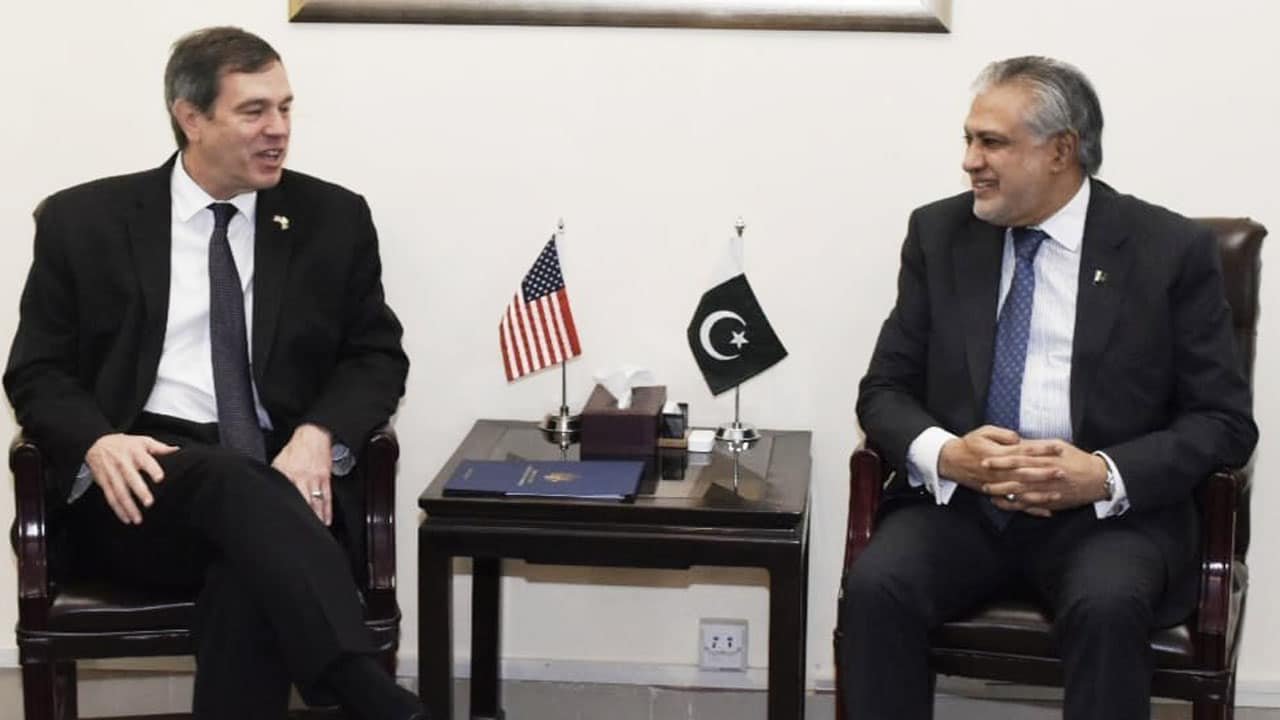
    Finance Minister Ishaq Dar has assured US diplomat Andrew Schofer that the government is committed to completing the ongoing IMF program.

  • Pakistan’s history of IMF bailouts: A look at 75 years of economic challenges

    Pakistan’s history of IMF bailouts: A look at 75 years of economic challenges

    Pakistan is currently facing yet another economic crisis, a recurring issue that has caused the country to repeatedly seek help from the International Monetary Fund (IMF) for financial assistance.

    Unfortunately, most of the previous 13 bailouts granted since the late 1980s were left unfinished, as Pakistan failed to implement any meaningful structural changes to rein in government spending or boost revenue.

    The country’s current government, led by Prime Minister Shehbaz Sharif, is currently in talks to revive its latest $6.5 billion loan programme as a result of the ongoing economic downturn, exacerbated by last year’s devastating floods and continued political instability. However, the implementation of the necessary belt-tightening measures may prove to be challenging, given the upcoming national elections planned for later this year.

    Pakistan and the IMF had agreed to a $6 billion bailout program in 2019, but disputes over monetary policies have prevented the release of over $1 billion. Furthermore, donors and lenders have demanded structural reforms before providing any further financial aid to Pakistan.

    Pakistan’s traditional partners have made it clear that their assistance is conditional upon the revival of the IMF program and the successful implementation of reforms, including the expansion of tax collection.

    Based on the prevailing Special Drawing Rights (SDR), also known as XDR, rates, the International Monetary Fund (IMF) has approved loans totaling $31.629 billion for Pakistan.

    It is worth noting, however, that not all of the approved funds have been disbursed, with only one out of 22 loans having been fully transferred to Pakistan. This highlights the complex political and economic dynamics that underlie IMF programs.

    Pakistan’s history of borrowing from the IMF

    Pakistan has a history of borrowing from the International Monetary Fund (IMF), which can be divided into four distinct periods. The early years of borrowing spanned from 1950 to 1988, followed by the Benazir and Nawaz Sharif era from 1988 to 1999. The third period was marked by the Musharraf and Zardari administrations from 2000 to 2013. The current period is led by Nawaz Sharif and Imran Khan.

    During these periods, each government worked with the IMF differently, especially in the past two decades. While the Benazir and Nawaz Sharif administrations alternated in seeking IMF programs in the 1990s, the Musharraf government, despite experiencing substantial foreign currency inflows, also had to turn to Washington for financial assistance.

    The Zardari administration, on the other hand, abandoned the largest-ever IMF program when it deemed it expedient to do so. This trend illustrates how Pakistan’s borrowing from the IMF has been characterised by inconsistency and shifting priorities.

    2013-2022

    Pakistan’s recent history of borrowing from the IMF has been marked by different governments seeking assistance in their own unique ways. While the Imran Khan government initially refused to seek assistance from the IMF, it eventually sought an Extended Fund Facility (EFF) loan worth SDR4.268 billion in July 2019. This was due to the country’s financial deterioration and instability, which had eroded the stability gains made since late 2016.

    Under Imran Khan’s government, the IMF disbursed a total of SDR3,159.5 million to Pakistan in four tranches. However, talks for the fourth tranche proved challenging and the government sought help from the US Assistant Secretary of State Donald Lu. Despite receiving SDR750 million in February 2022, then-Prime Minister Imran Khan announced a subsidy on petrol and diesel, effectively breaking the agreement with the IMF. As a result, the IMF suspended Pakistan’s $6 billion loan programme in March 2022.

    Negotiations for the revival of the fund facility did not commence until May, when Shehbaz Sharif of the PML-N took over the government. Talks on reviving the fund facility were concluded in late June, but only after the government took some harsh decisions, including withdrawing tax relief for salaried individuals. The next tranche will only be released after the IMF Executive Board takes up the combined 7th and 8th reviews.

    2000-2013

    During Pervez Musharraf’s government, Pakistan received significant foreign aid in the form of military and civil assistance, resulting in a low reliance on IMF loans for financial support. However, Pakistan did receive two IMF loans in the first two years of Musharraf’s regime, totaling SDR520 million. The first loan was a stand-by arrangement of SDR465 million, of which SDR150 million were disbursed, and the second was an extended credit facility of SDR1.033 billion, of which only SDR315 million were disbursed. Pakistan did not require IMF assistance from 2001 to 2008, as foreign aid prevented a balance of payment crisis.

    However, the aid failed to boost Pakistan’s forex reserves, which experienced a sharp decline between 2006 and 2008. In 2008, the Pakistan Peoples Party government negotiated with the IMF for the largest-ever loan of SDR7.235 billion, also the largest stand-by arrangement. Only SDR5.2 billion were disbursed between 2008 and 2010 in three tranches. Afterward, the PPP government did not complete the program as it received funds under the Kerry-Lugar program until 2013, when the United States ceased funding. The PPP government was unable to implement tough reforms demanded by the IMF due to impending elections.

    1989-1999

    During the 1990s, Benazir Bhutto and Nawaz Sharif sought eight bailouts from the IMF due to the consequences of the Soviet-Afghan war and political instability in Pakistan. In 1988, Bhutto signed up for two IMF packages, totaling SDR655 million. The IMF made two payments of SDR122.4 million and SDR189.5 million in 1991 and 1992. In 1993, Nawaz Sharif negotiated a loan of SDR265.4 million, with the IMF paying SDR88 million that year.

    Bhutto’s government signed three IMF programs of SDR379 million, SDR606 million, and SDR562 million between 1994 and 1995, with lower disbursements of SDR123 million, SDR133 million, and SDR107 million before being removed in 1996. Sharif then negotiated two loans in 1997 of SDR682.4 million and SDR454.9 million, respectively, with SDR250 million disbursed before his government was toppled in 1999. Bhutto negotiated a total of five programs of SDR2.2 billion, receiving SDR676.26 million, while Sharif signed up for three programs of SDR1.4 billion, with Pakistan receiving only SDR608 million. The instability of the government prevented the implementation of IMF reforms, which often led to increased tariffs and taxes, causing a negative perception of the IMF in the country.

    1958-1988

    The Zia-ul-Haq government received the largest amount of foreign aid from the International Monetary Fund in Pakistan’s history, surpassing the sum of all seven previous programs approved since 1958. In 1980, the IMF granted SDR1.268 billion to the government, followed by another program of SDR919 million in 1981. The Zia-ul-Haq administration received SDR1.079 billion out of the total SDR2.187 billion approved by the IMF.

    Before that, Zulfikar Ali Bhutto signed four loan programs with the IMF between 1972 and 1977 for a total of SDR330 million, of which SDR314 million was withdrawn. In 1958, Ayub Khan initiated Pakistan’s first loan from the IMF, seeking only SDR25 million, and in 1968 and 1969, two more programs of SDR37.5 million and SDR75 million were approved, respectively. The Ayub government received SDR112 million of the total SDR137.5 million approved.

    Pakistan has received a total of SDR23.656 billion in IMF-approved programs, of which SDR14.189 billion was disbursed. Pakistan was offered three long-term Extended Credit Facilities, five medium-term Extended Fund Facilities, at least 12 short-term Standby Arrangement loans, and one Structural Adjustment Facility over 63 years.

    This news story was created by compiling information from various news platforms as well as the IMF website.
  • US expresses confidence in Pakistan’s economic policies and offers support for bilateral relations

    US expresses confidence in Pakistan’s economic policies and offers support for bilateral relations

    On Wednesday, Finance Minister Senator Ishaq Dar reaffirmed the federal government’s commitment to the International Monetary Fund (IMF) programme during a meeting with US Embassy Charge’d Affaires Andrew Schofer at the Finance Division.

    Dar informed Schofer about the ongoing programme and assured him that the government was dedicated to completing it. Schofer expressed his confidence in Pakistan’s economic policies and programs and offered his support to strengthen economic and trade relations between the two nations.

    The finance minister also discussed the current economic challenges and policy decisions taken by the government to stabilize and promote sustainable and inclusive growth. Both parties exchanged their views on the notable bilateral relations between the US and Pakistan.

    Dar thanked the US Charge’d Affaires and reiterated the government’s desire to expand bilateral trade and investment ties. The meeting followed a report published by The News that stated the IMF and Pakistani authorities were holding each other responsible for the delay in reviving the stalled programme.

    It is still uncertain how Pakistan will proceed to accomplish the current IMF programme, which expires on June 30, 2023.

  • Pakistan’s IMF bailout programme revival delayed: blame game between Pakistani authorities and IMF

    Pakistan’s IMF bailout programme revival delayed: blame game between Pakistani authorities and IMF

    Pakistani authorities and the International Monetary Fund (IMF) are blaming each other for the delay in reviving the IMF bailout programme. The IMF approved a $6.5 billion bailout package for Pakistan in 2019, of which $1.1 billion is still outstanding.

    However, issues related to fiscal policy adjustments have delayed the release of the funds since November. The delay has raised concerns as Pakistan has less than a month’s worth of foreign exchange reserves and needs the IMF package to avert defaulting on external payment obligations.

    With the expiry of the existing IMF programme on June 30, 2023, Pakistan’s options for reviving the IMF programme are shrinking with every passing day.

    While Pakistani authorities argue that the IMF is playing politics, IMF sources say they are still waiting for confirmation on the remaining $2 billion from the World Bank and Asian Infrastructure Investment Bank, as well as seeking commercial loans from banks.

    According to Geo, Dr Khaqan Najeeb, former adviser Ministry of Finance, has called for short-term measures, such as funding from friendly countries, the revival of the IMF programme, clarity on programme completion dates, and work on the budget for 2023-24 to be undertaken to avoid Pakistan being near the brink of default.

  • Delayed IMF deal, depreciating rupee push gold price to Rs219,500 per tola

    Delayed IMF deal, depreciating rupee push gold price to Rs219,500 per tola

    As the economic crisis in Pakistan persists and the International Monetary Fund (IMF) programme remains in limbo, the price of gold has surged to new heights. The All Pakistan Sarafa Gems and Jewellers Association (APSGJA) reports that the rate of gold (24 carats) has increased by Rs800 per tola and Rs686 per 10 grams, reaching a settlement of Rs219,500 and Rs188,186, respectively. Similarly, the international market witnessed a $6 increase in the price of gold, bringing it to $1,990 per ounce.

    This steady uptrend in gold prices can be attributed to the weakening of economic fundamentals, the depreciation of the rupee, and the record-high inflation rates. During times of economic uncertainty, individuals often turn to precious metals like gold to protect themselves against inflation and currency depreciation.

    The delay in the IMF agreement has further exacerbated the economic crisis, leading to a negative impact on the currency market and increased demand for gold. Without a much-needed economic bailout, the country risks defaulting, adding to the already tense economic situation.

    While the price of silver remains stable at Rs2,600 per tola and Rs2,229.08 per 10 grams, the rise in gold prices highlights the growing economic concerns in Pakistan.

  • US urges Pakistan to implement IMF reforms as economic crisis deepens

    The United States has urged Pakistan to take urgent action to implement the necessary reforms required by the International Monetary Fund (IMF) to address the country’s rising economic crisis. Inflation has been a major issue for Pakistan, and discussions between the two parties have been ongoing since January to find a consensus on multiple conditions before signing a deal that includes external financing from friendly nations.

    Elizabeth Horst, the State Department official in charge of Pakistan, stressed the importance of Pakistan’s compliance with the IMF’s agreed-upon reforms to ensure the country’s financial stability and avoid falling further into debt. She emphasised that although the reforms may not be easy, they are essential for the growth of Pakistan’s economy.

    Horst also expressed the US government’s concern over Pakistan’s economic situation and promised support for the country, particularly in policy, business, and transparency. She pointed out that the trade relationship between the two countries is already worth over nine billion dollars and will continue to increase.

    Highlighting the close cooperation between the US and Pakistan in areas such as trade and investment, climate change, and security, Horst revealed that the Pakistan-US Green Alliance has been initiated to further enhance these relations. She emphasised the importance of Pakistan’s sovereignty and that it is free to make its own choices.

    The State Department official also emphasised that both countries are working together to ensure regional security, counter-terrorism, and counter-narcotics. She expressed concern over the rising number of terrorist incidents in Pakistan and stressed the importance of continuing cooperation between the two countries to prevent Afghanistan from becoming a haven for terrorists.

    Horst concluded by stating that a peaceful and stable Afghanistan is in the interest of both Pakistan and the US. She emphasised the importance of pushing the Taliban to fulfill their promises for peace and stability, as thousands of lives have already been affected by terrorism.

  • Saudi Arabia and UAE pledge $3 billion to Pakistan as IMF agreement nears

    Saudi Arabia and UAE pledge $3 billion to Pakistan as IMF agreement nears

    On Monday, Finance Minister Ishaq Dar stated that Pakistan has fulfilled all conditions set by the International Monetary Fund (IMF). He expressed hope that the IMF would soon sign the staff-level agreement, which would allow for the release of the $1.1 billion tranche.

    Since February, the two parties have been negotiating various conditions and external financing from friendly nations before signing the agreement. Speaking to Geo News, Dar stated that Saudi Arabia and the United Arab Emirates (UAE) have informed the IMF of their commitments to provide $3 billion to Pakistan.

    Riyadh has pledged $2 billion, while Abu Dhabi has promised $1 billion. The IMF has also been notified of this, according to Dar. The finance minister emphasized that all conditions for the staff-level agreement have been met, and he expressed optimism that the IMF’s Executive Board would approve it soon.

    The country’s foreign exchange reserves have dwindled to cover barely a month of imports since the IMF funding stalled in November. Pakistan must resume the bailout package, which was agreed upon in 2019 and is worth $6.5 billion, to avoid risking default on external payment obligations.

    Pakistan had to take several steps demanded by the IMF, including reversing subsidies in its power, export, and farming sectors, raising energy and fuel prices, imposing a permanent power surcharge, among other measures.

    These moves have pushed Pakistan’s inflation to its highest level ever, rising to over 35 per cent YoY in March. The IMF programme will disburse another tranche of $1.4 billion to Pakistan before it ends in June, and it will unlock other bilateral and multilateral financing for the cash-strapped country.

    In recent weeks, neighbouring China has rolled over $2 billion and refinanced another $1.3 billion.

  • Pakistan shares plan with IMF to bridge $3 billion financing gap

    Pakistan shares plan with IMF to bridge $3 billion financing gap

    The coalition government of Pakistan has revealed its plan to the International Monetary Fund (IMF) for obtaining an additional $3 billion to fill the financing gap as it tries to persuade the lender to release the next loan tranche.

    In order to conclude talks with Pakistan regarding its delayed bailout, the IMF required “necessary” financing guarantees as soon as possible. Pakistan was asked to raise $6 billion in external financing, which is required by the country until June to avoid a potential default.

    This figure was determined on the assumption that the current account deficit would remain at around $7 billion in the current fiscal year. The IMF welcomed the recent announcement of financial support from key bilateral partners, but this support is inadequate for Pakistan’s requirements.

    Islamabad informed the IMF about its plan to secure a $450 million second Resilient Institutions for Sustainable Economy (RISE-II) budget support loan, as well as its plans to obtain $1 billion from the Asian Infrastructure Investment Bank (AIIB) and other commercial banks, and to materialise pledges made at the Geneva moot. According to sources, once the staff-level agreement is signed with the IMF, it will become easier for Pakistan to obtain financing.

    Pakistan’s foreign exchange reserves have fallen to cover barely a month of imports following the stall in IMF funding in November, which was later complicated by snags over fiscal policy adjustments after officials from the lender visited Islamabad for talks in February. The fiscal policy adjustments were part of the ninth review exercise on a bailout package agreed upon in 2019, whose resumption is crucial for Pakistan to avoid the risk of defaulting on external payment obligations.

    Pakistan will receive another disbursement of more than $1 billion from the IMF programme before it ends in June, which will unlock other bilateral and multilateral financings for the country, helping to ease its financial difficulties.

    Programme loans from other multilateral agencies await completion of the IMF review, as reported by central bank governor Jameel Ahmad during the spring meetings of the lender and the World Bank in Washington.

  • ‘Election won’t be held on May 14’: Rana Sanaullah

    Contrary to the Supreme Court’s (SC) order to hold elections in Punjab on May 14, federal Minister for Interior, Rana Sanaullah has said that polls will not be held on the said date.

    The Pakistan Muslim League-Nawaz (PML-N) leader said that elections would be “held together” throughout the country, under a caretaker setup.

    “If elections are not held in May, then October is not too far away either,” said Sanaullah.

    Calling Khan a “fitna”, Sanaullah said that he had been brought to power through a “conspiracy”. “Their [PTI’s] policies over four years created a crisis for the country.”

    “It was [Imran Khan’s] government that signed the agreement with the IMF, not us. The difficulties are only due to the previous government’s agreement.”

    Sanaullah also said that party supremo Nawaz Sharif would reach the country as soon as electoral preparations begin, adding that he would supervise the party’s election campaign.

    “The PML-N has always taken the country out of the crisis,” he emphasized.

  • Pakistan to receive $2 billion deposit from Saudi Arabia in State Bank within next few days

    Pakistan to receive $2 billion deposit from Saudi Arabia in State Bank within next few days

    Muhammad Jawad Sohrab Malik, the Special Assistant to the Prime Minister, had a meeting with Nawaf bin Said Al-Malki, the Ambassador of the Kingdom of Saudi Arabia to Pakistan, in Islamabad. The objective of the meeting was to discuss the ways to enhance bilateral collaboration between the two countries.

    During the meeting, Jawad expressed gratitude for Saudi Arabia’s consistent support for Pakistan. He thanked the ambassador for confirming that the $2 billion pledged by the Kingdom would be deposited within the next seven working days in the SBP account. Both parties showed a commitment to strengthening bilateral ties between Pakistan and Saudi Arabia.

    The SAPM highlighted the significance of Saudi Arabia’s assistance and stated that the $2 billion loan would help Pakistan overcome the current financial crisis. He further explained that this would pave the way for securing similar assurances not only from the IMF but also from other friendly countries such as the United Arab Emirates, Qatar, and others, which would lead to the much-awaited staff-level agreement (SLA) with the IMF and unlock multilateral disbursements.

    Nawaf bin Said Al-Malki emphasized the Kingdom’s commitment to building long-term, sustainable investment transactions between Saudi Arabia and Pakistan. He reiterated Saudi Crown Prince Mohammed bin Salman’s pledge to increase Saudi Arabian investments in Pakistan’s energy and IT sectors to $10 billion within the next few years.

    The Saudi envoy expressed keen interest on behalf of the Saudi government in recruiting more manpower from Pakistan during the current and next year for various sectors of the kingdom. He stated that the Saudi labor market is continuing to expand, mainly due to the launch of several mega projects under Saudi Vision 2030.

    While highlighting the diverse business landscape in Pakistan, the SAPM expressed that Pakistan has a lot to offer in both the goods and services sectors. He commended the Kingdom’s commitment to providing enhanced employment opportunities for the Pakistani workforce in its future development ventures, as well as the valuable contributions of Saudi FDI in boosting the country’s economic outlook.

    During the meeting, both dignitaries engaged in fruitful discussions on the further strengthening of bilateral business relations, recruitment of more workforce from Pakistan, and enhancing FDI in potential sectors of the economy. Both the Saudi Ambassador and SAPM Jawad Sohrab Malik expressed confidence that their discussions would pave the way for a new era of deeper and more meaningful collaboration between Pakistan and Saudi Arabia.