Tag: IMF

  • IMF seeks further assurances from Pakistan despite Saudi Arabia and UAE confirmation

    IMF seeks further assurances from Pakistan despite Saudi Arabia and UAE confirmation

    The International Monetary Fund (IMF) is seeking further assurances from Pakistan, despite confirmation of financial assistance from Saudi Arabia and the United Arab Emirates (UAE), to ensure that Pakistan has met the condition of arranging $6 billion financing in order to reach a staff-level agreement.

    Nathan Porter, the IMF’s Mission Chief to Pakistan, welcomed the announcement of financial assistance from the two “key” friendly countries, stating that the IMF supports the efforts of the Pakistani authorities. A Pakistani delegation is currently in Washington attending the Spring meetings of the IMF to discuss the revival of the loan programme. Pakistan’s Finance Minister Ishaq Dar was unable to attend due to domestic issues.

    Pakistan had been asked to arrange $6 billion in external financing, which it needed from now until June to avoid default. Saudi Arabia has pledged $2 billion, while the UAE has committed $1 billion, thus reducing the now-required amount to $3 billion. Pakistan’s foreign exchange reserves have fallen to cover barely a month of imports after the IMF funding stalled in November, hit by snags over fiscal policy adjustments after officials of the lender visited Islamabad in February for talks. The IMF programme will disburse another tranche of over $1 billion to Pakistan before it concludes in June.

    IMF’s Director of the Middle East and Central Asia Department, Jihad Azour, during a press conference, briefed the media about the current status of the $6.5 billion programme with Pakistan, saying that Pakistan is at a critical juncture and decisive actions are required to stabilise the economy. Azour emphasized the need for Pakistan to address inflation, reduce the constraints on trade and export, and maintain macroeconomic stability. He also stated that financing is required, and the financing needs are about what is currently in the programme, and the IMF is working with the authorities and bilateral supporters of Pakistan to ensure that the financing needs for the programme and beyond are assured.

    Central bank governor Jameel Ahmad told investors in Washington at the spring meetings of the lender and the World Bank that programme loans from other multilateral agencies await completion of the IMF review. Pakistan is at a critical juncture, and decisive actions are required to stabilise the economy.
  • IMF receives assurance of $1 billion from UAE to support Pakistan’s economy

    IMF receives assurance of $1 billion from UAE to support Pakistan’s economy

    In a significant development towards reviving the stalled bailout programme, the authorities in the United Arab Emirates (UAE) have pledged to provide $1 billion in bilateral support to Pakistan, according to Finance Minister Ishaq Dar.

    Dar tweeted, “UAE authorities have confirmed to the IMF for their bilateral support of $1 billion to Pakistan.” He also stated that the State Bank of Pakistan is currently in the process of completing the necessary documentation to receive the deposit from the UAE authorities.

    Pakistan was required to provide assurance that its balance of payments deficit is fully financed for the remaining period of the IMF programme, which has been stalled since November last year. Last month, the IMF’s Director of Strategic Communications, Julie Kozack, emphasised that “timely financial assistance from external partners will be critical to support the authorities’ policy efforts and ensure the successful completion of the review [with Pakistan].” She added, “Ensuring that there is sufficient financing to support the authorities is the paramount priority. A Staff Level Agreement (SLA) will follow once the few remaining points are closed.”

    Earlier this month, Saudi Arabia also pledged to provide a $2 billion loan to Pakistan, according to Pakistan’s Minister of State for Finance Aisha Ghaus Pasha. The country’s economic situation has been further exacerbated by months of political and economic turmoil, crippling floods last year and record inflation. Pakistan has been grappling with a debt crisis and foreign exchange reserves have fallen to less than four weeks of imports.

    In an effort to ease the situation, China has agreed to refinance $2 billion, of which $1.7 billion has already been credited to Pakistan’s central bank. China also rolled over a $2 billion loan last month, providing relief during Pakistan’s acute balance of payments crisis. However, talks with the IMF for a delayed $1.1 billion loan tranche, part of the bailout agreed in 2019, have been ongoing.

  • Pakistan’s sustainable policy framework crucial to avoid default risk, says IMF

    Pakistan’s sustainable policy framework crucial to avoid default risk, says IMF

    Whilst serving as Finance Minister, Ishaq Dar has repeatedly assured the public that Pakistan has not defaulted and will not do so in the future. Kristalina Georgieva, Managing Director of the International Monetary Fund (IMF), has endorsed Dar’s views and stated that Pakistan has not yet reached the level of default.

    Speaking at a news conference during the spring meeting of Breton Wood Institutions at the Fund’s headquarters in Washington, Georgieva said that the Fund was seeking confirmation from international partners to meet Pakistan’s financing gap requirements. Responding to a question about Pakistan’s looming default risk, she stated that the country had not yet reached that level, but required a sustainable policy framework to avert such risks.

    Georgieva emphasized that the lender has been working closely with the authorities in Pakistan, within the context of the current programme, to ensure that the country has the policy framework in place to prevent reaching the point of unsustainable debt. Pakistan has less than a month’s worth of foreign exchange reserves and is awaiting a $1.1 billion bailout package from the IMF that has been delayed since November due to issues related to fiscal policy adjustments.

    Georgieva expressed hope that, with the goodwill of all parties involved and the implementation of what has already been agreed upon by the Pakistan authorities, the current programme can be completed successfully. Islamabad is required to provide assurance that its balance of payments deficit is fully financed for the fiscal year ending in June in order to unlock the next tranche of IMF funding.

    During the IMF-World Bank spring meetings, Dar attended via Zoom from Islamabad with IMF Deputy Managing Director Antoinette Moniso Sayeh. Sources report that Sayeh stated that Pakistan has yet to meet its external financing gap of $6 billion, of which $3 billion would need to be financed before striking a staff-level agreement.

    At this point, the State Bank of Pakistan’s Jameel Ahmed, who is presently in Washington, reportedly told participants that the United Arab Emirates (UAE) had shared a draft agreement for the provision of an additional $1 billion deposit to meet the requirement for signing the staff-level agreement. A top official expressed hope that the UAE deposit would be confirmed shortly and suggested that it may be confirmed as early as next week.

    Regarding the cross-fuel subsidy, the IMF was informed that it was only an idea floated by a relevant ministry and would be implemented only after an agreement on the salient features of the scheme. The Pakistani authorities agreed with the IMF that the scheme appeared good on paper but its transparent implementation would be challenging.

  • Pakistan to receive written guarantee from UAE for $1 billion loan

    Pakistan to receive written guarantee from UAE for $1 billion loan

    Pakistan is making progress towards securing a loan from the International Monetary Fund (IMF) with a $1 billion financing pledge from the United Arab Emirates (UAE) expected this week. Sources suggest that the UAE will provide written confirmation of the financing to the IMF through the Finance Secretary during the current annual meeting in Washington.

    To secure external financing for this fiscal year, the IMF has asked Pakistan to seek assurances from friendly countries and multilateral partners for funding its balance of payment gap. In addition to Saudi Arabia’s $2 billion pledge, the agreement with the IMF is also contingent on the UAE’s $1 billion commitment.

    According to sources within the Ministry of Finance, the UAE has finalised the agreement, and as soon as Pakistan receives a written guarantee from the Gulf state, the IMF will also be informed. This development follows requests from Pakistan’s Prime Minister and Finance Minister to UAE officials to complete the necessary prerequisites for the Fund.

    Pakistan is currently facing one of the most severe economic crises in its history, with consumer prices at a record high and interest rates raised to an all-time high. Due to a dollar shortage, the IMF has revised its growth forecast for Pakistan to 0.5% from the earlier estimate of 2%, causing supply chain disruptions and companies to halt production.

    The IMF is also assessing the coalition government’s proposed fuel discount for lower-income groups, which is planned to be financed by raising fuel prices for wealthier motorists. The finance minister has assured that the IMF has received all the required information.

    The finance minister had cancelled his scheduled in-person meetings with IMF officials in Washington but has repeatedly claimed that the staff-level agreement with the lender would be reached soon. Islamabad has been hosting an IMF mission since January to negotiate policy measures and secure $1.1 billion in funding for the cash-strapped economy, which is on the verge of collapse.

    The funds are part of a $6.5 billion bailout package approved by the IMF in 2019, which analysts argue is crucial for Pakistan to avoid defaulting on external payment obligations. The deal will also unlock other financing options to shore up Pakistan’s foreign exchange reserves, which have fallen to four weeks’ worth of import cover and help resolve the balance of payment crisis.

  • Gold price soars to an all-time high of Rs217,700 per tola amid economic tensions

    Gold price soars to an all-time high of Rs217,700 per tola amid economic tensions

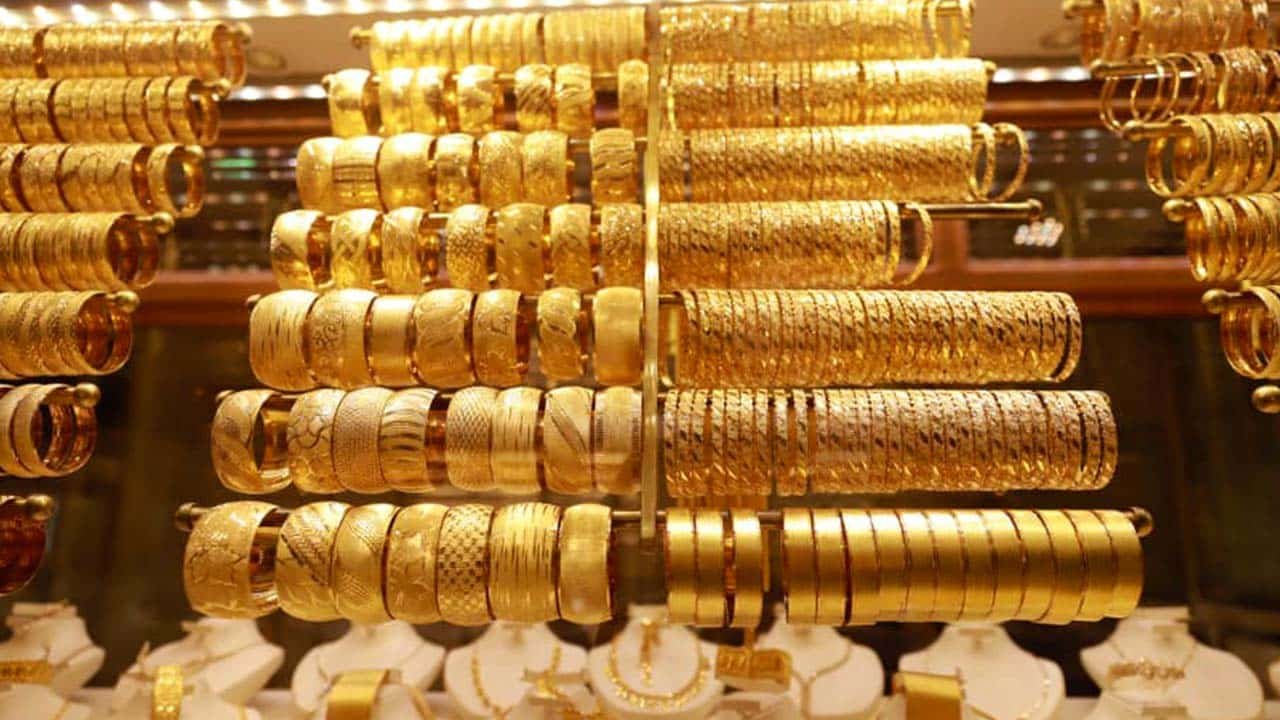
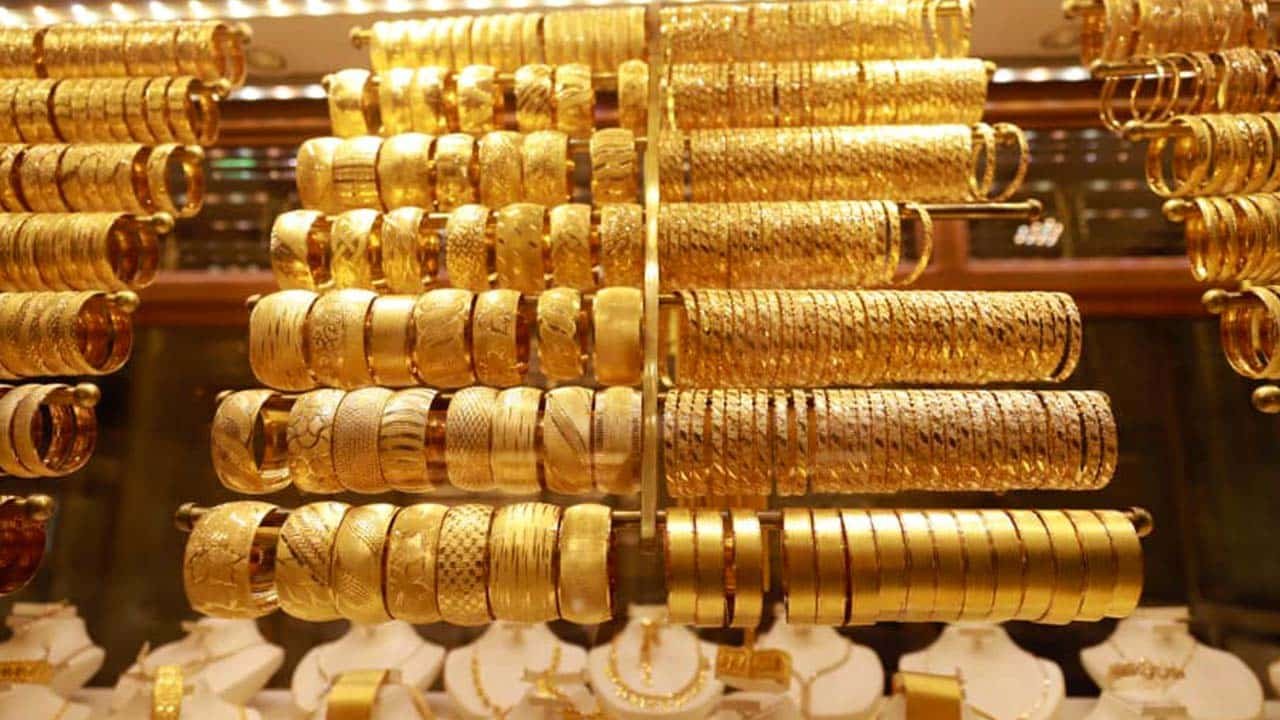
    The price of gold has soared to an all-time high following a significant slump in the rupee against the dollar, with the country struggling to secure external financing. The data released by the All-Pakistan Sarafa Gems and Jewellers Association (APSGJA) shows that the price of gold (24 carats) has spiked by Rs3,100 per tola and Rs2,656 per 10 grammes, settling at Rs217,700 and Rs186,643 respectively.

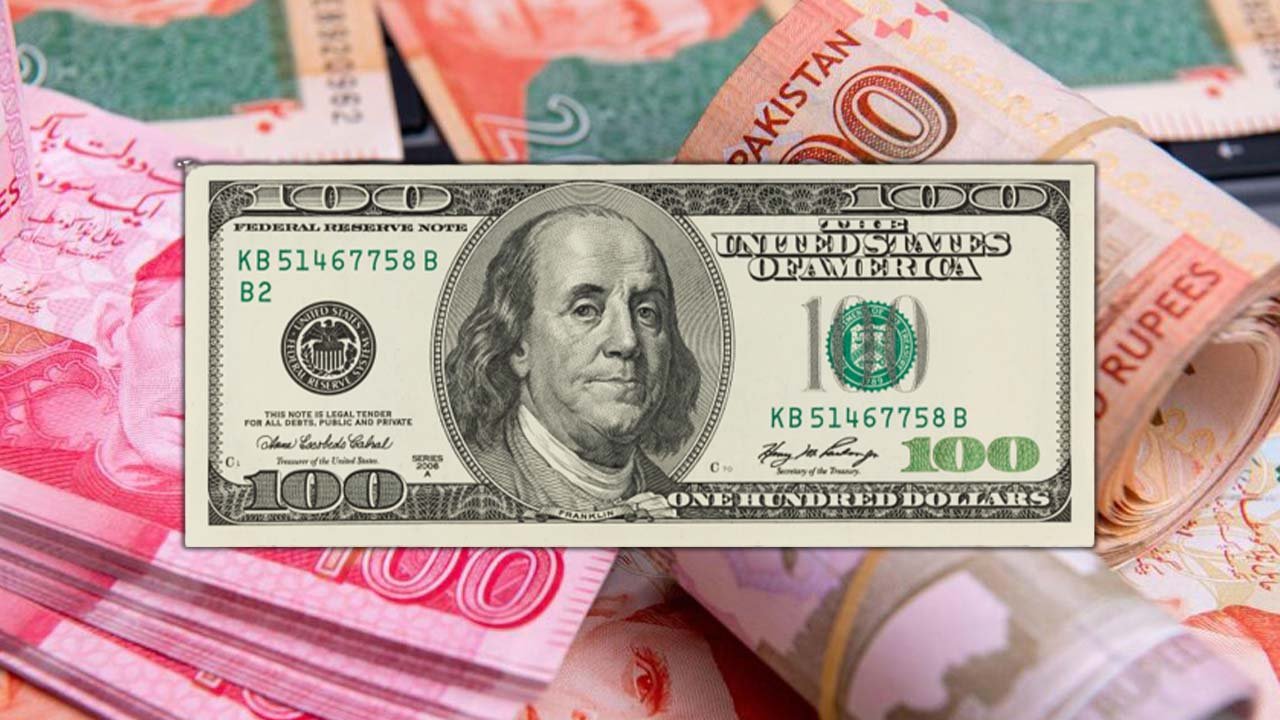
    The gold rush is in line with the movement of the rupee, which has fallen 2.44 or 0.85 per cent against the US dollar in the interbank market, and an increase in weekly inflation. Inflation has shot up 0.92 per cent week-on-week and 44.49 per cent year-on-year during the seven-day period that ended on April 6th. Prices of sugar and chicken have surged due to Ramzan, and hoarding has caused a likely uptick in inflation.

    Gold is often seen as a hedge against inflation, increasing in value as the purchasing power of the dollar declines. Plus, it’s the season of Ramzan, which brings with it a surge in demand for the precious metal. Investors’ attention has shifted towards gold as economic tensions continue to rise, with the International Monetary Fund (IMF) reviewing external financing commitments from friendly countries before it releases bailout funds. The delay in the revival of the program has negatively impacted the currency market, which is boosting demand for gold.

    The APSGJA also noted that the price of gold in Pakistan is Rs5,000 per tola “undercost” compared to the Dubai market. Thus, the Pakistani gold market is cheaper than the global market. Meanwhile, silver prices in the domestic market have also jumped to historic highs, increasing by Rs30 per tola and Rs25.72 per 10 grams to settle at Rs2,480 and Rs2,126.20, respectively.

    In the international market, the price of gold dropped $6 per ounce, settling at $2,002. Nevertheless, gold’s rise in Pakistan is set to bring a lot of excitement to the local market.

  • World Bank and IMF spring meetings to address global economic uncertainties and climate change

    World Bank and IMF spring meetings to address global economic uncertainties and climate change

    On Monday, the 2023 spring meetings of the World Bank Group and the International Monetary Fund (IMF) commence in the US capital to examine the “uncertainties and risks weighing heavily” on the global economy. The meetings, which run from April 10 to 16, will take place at the IMF and World Bank headquarters and will focus on the impact of climate change, which is endangering lives and livelihoods worldwide.

    Finance ministers and central bank governors from around the world will attend the meetings to reconnect with international financial leaders, and some may hold one-on-one meetings with officials from the US Treasury and State Department. Pakistan will be represented at the meetings by the secretaries of finance and economic affairs, as well as the State Bank governor, in place of Finance Minister Ishaq Dar.

    An official statement outlining the issues to be discussed at the meetings indicated that “stubborn inflation, the cost-of-living crisis, and slower growth effects” are causing harm to the poor and most vulnerable. The statement further highlighted that record-high debt is impeding the progress of developing countries, and that the consequences of climate change are threatening lives and livelihoods globally. According to Dawn, experts are urging the World Bank and the IMF to create a comprehensive strategy to address the challenges that developing nations are facing.

    A picture on the UN Foundation’s website illustrates the widespread devastation caused by last year’s floods in Pakistan, prompting international financial institutions to devise a new mechanism to “assist communities affected by (climate change) catastrophes.” The caption beneath the photo emphasised that “many lives were lost, and millions lost their homes, with one-third of the country submerged.”

    According to a World Bank study released shortly after the floods, “Pakistan urgently requires substantial investment in climate resilience to safeguard its economy and reduce poverty.”

  • Ishaq Dar cancels trip to the US for IMF and World Bank spring meetings

    Ishaq Dar cancels trip to the US for IMF and World Bank spring meetings

    Finance Minister, Ishaq Dar, has cancelled his scheduled trip to the United States next week to meet with the International Monetary Fund (IMF) and World Bank. The reason cited for the pull-out is the “domestic state of affairs” in the country, as the deepening political uncertainty has made it difficult for Dar to attend the World Bank-IMF spring meetings that were supposed to take place in Washington from April 10 to 16.

    Dar’s original plan was to address concerns about the government’s continuity, future economic plans, and bridging the trust deficit with multilateral lenders. However, with his withdrawal, the Minister of Economic Affairs, Sardar Ayaz Sadiq, will also not travel to the United States. The government will now be represented by Finance Secretary Hamed Yaqoob Sheikh and Economic Affairs Secretary Kazim Niaz at the WB-IMF spring meetings.

    The decision by the finance minister to withdraw may also result in the cancellation of meetings with his Saudi Arabian counterpart and the UK state minister for development. Dar was supposed to begin his trip on Monday with a meeting with Nathan Porter, the IMF’s Mission Chief in Pakistan, which was critical as Pakistan and the IMF were no longer actively negotiating following the government’s decision to announce petrol subsidies.

    Besides the IMF and WB, Dar was scheduled to meet with representatives from the three international credit rating agencies that had downgraded Pakistan. The finance ministry had also scheduled meetings with foreign commercial banks to persuade them to release loans.

    However, the Pakistan delegation may still get to meet with IMF’s deputy managing director Antoinette Sayeh, who follows Pakistan closely. It is uncertain whether a meeting with Managing Director Kristalina Georgieva would take place or not. Some reports have cited diplomatic protocol issues that prevent low-ranking dignitaries from meeting presidents/directors/leaders of various multilateral institutions and finance ministers from various countries.

  • Pakistan’s hopes for IMF agreement rise as Saudi Arabia confirms $2 billion in additional deposits

    Pakistan’s hopes for IMF agreement rise as Saudi Arabia confirms $2 billion in additional deposits

    The International Monetary Fund (IMF) has informed Pakistan that Saudi Arabia has confirmed $2 billion in additional deposits, which has rekindled hopes of an early agreement signing. Since January, Islamabad has been negotiating with the IMF for the release of $1.1 billion from a $6.5 billion bailout package that was agreed upon in 2019.

    To unlock the funding, the Pakistani government has cut back on subsidies, removed an artificial cap on the exchange rate, added taxes, and raised fuel prices. However, assurances from friendly nations for additional funds have delayed the agreement.

    The lender has informed Pakistani authorities of the development and the Fund staff is reportedly satisfied with the latest confirmation. The report states that the Saudi authorities are set to make a public announcement, possibly during the upcoming visit of Prime Minister Shehbaz Sharif to the kingdom.

    The Saudi envoy in Pakistan had also hinted in a recent interview that his country had always supported Pakistan in critical situations and that good news would be shared soon. The sources have stated that all eyes are focused on the UAE for getting confirmation on another $1 billion deposit from them, which may pave the way for striking the staff-level agreement (SLA) with the IMF.

    Finance Minister Ishaq Dar is expected to visit UAE on his way to the US where he will hold talks on the release of funds. However, there is still another stumbling block in the way of signing the SLA with the IMF. The Ministry of Petroleum, in consultation with the PM Office, had announced an unplanned cross-fuel subsidy for owners of motorcycles and cars up to 800cc, which needs to be scrapped at this stage.

    The government has not yet withdrawn the proposed cross-fuel subsidy, which cannot be implemented in a half-baked manner. Such schemes were considered in the past during the tenure of former finance minister Shaukat Tarin and even during the era of the PDM-led government when Miftah Ismail had the charge of the Ministry of Finance.

    Even Miftah Ismail had allocated Rs48 billion on the eve of the last budget in the name of Sasta Petrol, but it could not be implemented because such schemes could not be designed properly. The announcement of a half-baked cross-fuel subsidy had provided an excuse to the IMF for delaying the SLA signing, as they were still raising questions for getting more details to ascertain how the scheme was going to be implemented in a transparent manner.

  • Gold price in Pakistan hits new record high of Rs214,500 per tola

    Gold price in Pakistan hits new record high of Rs214,500 per tola

    Tuesday saw a historic moment for Pakistan as the price of gold soared to an all-time high, hitting Rs214,500 per tola (11.66 grammes). The cause of this surge was multifaceted, with the global market’s uptrend playing a part, alongside the rupee’s historic low against the US dollar in the interbank trade.

    The rupee had plummeted to a never-before-seen low of Rs287.29 against the US dollar in the interbank market, and the surge in gold prices was a reflection of this movement. The ripple effect was felt across the country as traders scrambled to adjust to the new reality of the local bullion market.

    In a surge that grabbed headlines across Pakistan, the price of 24-carat gold soared to an all-time high on Tuesday, hitting Rs214,500 per tola and Rs183,900 per 10 grams, according to the All-Pakistan Sarafa Gems and Jewellers Association (APSGJA). It was a clear reflection of the rupee’s movement, which had plummeted to a historic low of Rs287.29 against the US dollar in the interbank market, as well as an uptrend in global markets.

    As inflation rates in Pakistan reached a nearly all-time high of 35.4 per cent in March, people felt the pinch of rising consumer prices on their budgets, prompting them to turn to gold. This precious commodity has always been considered a hedge against inflation, with its value increasing as the purchasing power of the dollar declines. During the two-day period from Monday to Tuesday, gold gained Rs5,200 per tola.

    Economic tensions have been on the rise, with the International Monetary Fund (IMF) scrutinizing external financing commitments from friendly countries before releasing bailout funds. The delay in the revival of the program had a negative impact on the currency market, which, in turn, fueled demand for gold. Investors’ attention turned to this precious commodity as a safe haven in these uncertain times.