Tag: IMF

  • World Bank lowers Pakistan’s growth forecast tighter financial conditions

    World Bank lowers Pakistan’s growth forecast tighter financial conditions

    Pakistan’s current-year growth forecast has been significantly reduced by the World Bank due to tighter financial conditions and limited fiscal space. The country’s economy is now expected to grow only 0.4 per cent in the current year, compared to the October 2022 forecast of 2 per cent growth.

    This bleaker forecast assumes that an agreement is reached with the International Monetary Fund for bailout funds. Pakistan’s fiscal year runs from July to June, and the country expects its economy to grow 2 per cent in FY23, although the country’s central bank chief has warned that this forecast could face downward pressure.

    Pakistan has been in economic turmoil for months, with an acute balance of payments crisis. Talks with the IMF to secure $1.1 billion in funding as part of a $6.5 billion bailout agreed upon in 2019 have not yet yielded fruit. Lower economic output and high prices in Pakistan have led to stampedes and looting at flour distribution centres set up across the country. The World Bank attributed the greater food insecurity for South Asia’s poor to elevated global and domestic food prices.

    The World Bank also lowered its 2023 regional growth forecast to 5.6 per cent from 6.1 per cent in October, citing rising interest rates and uncertainty in financial markets as putting downward pressure on the region’s economies. Most countries have raised interest rates at a rapid pace since the war in Ukraine last year led to choking supply chains and stoked inflation globally.

    Sri Lanka’s economy is forecast to contract by 4.3 per cent this year, reflecting the lasting impact of the macro debt crisis, with future growth prospects heavily dependent on debt restructuring and structural reforms. In January, President Ranil Wickremesinghe said Sri Lanka’s economy could contract by 3.5 per cent or 4.0 per cent in 2023 after shrinking by 11 per cent last year.

    The World Bank also lowered its forecast for India’s economic growth in the current fiscal year to 6.3 per cent from 6.6 per cent, due to the expected negative impact of higher borrowing costs on consumption. The current fiscal year began on April 1.
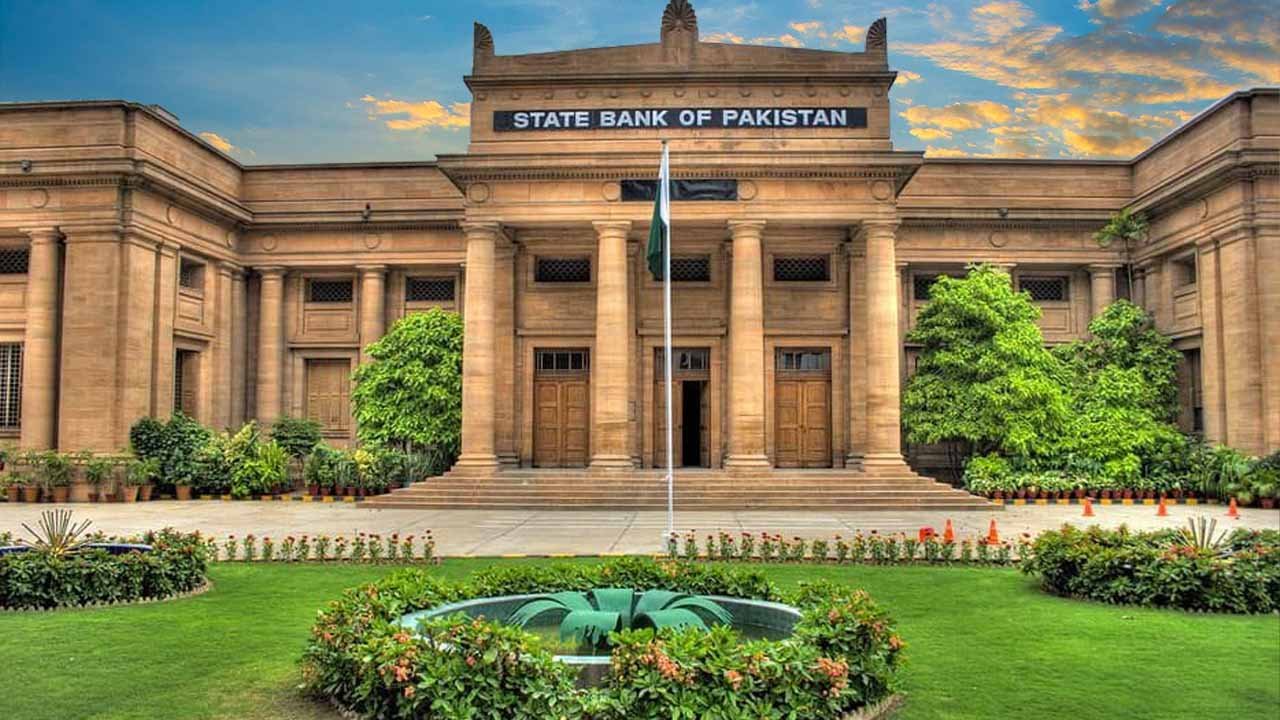
  • State Bank of Pakistan expected to raise key policy rate to record-high

    State Bank of Pakistan expected to raise key policy rate to record-high

    The State Bank of Pakistan (SBP) is expected to raise its policy rate by a significant 100-200 basis points in light of the country’s economic situation and historically high inflation reading. Financial analysts anticipate the Monetary Policy Committee to increase its key policy rate to 21-22 per cent at the review today (April 4) to curb inflation. This decision is expected to discourage private-sector borrowing since an increase in currency in circulation can drive inflation up.

    In March, the central bank raised its key rate by a massive 300 basis points to a record-high level of 20 per cent, surpassing market expectations to meet the International Monetary Fund’s requirements for the release of its pending bailout funds. The country recorded historic high inflation at 35.4 per cent in March on an annualized basis, with core inflation, excluding energy and food prices, increasing to 18.6 per cent in urban areas and 23.1 per cent in rural areas.

    The market’s reaction to surging inflation is evident from the recent rise in bond market rates driven by investors’ bullish outlook. According to a survey conducted by Arif Habib Limited, 57.7 per cent of respondents expect the policy rate to increase. Of these respondents, 30.8 per cent are predicting a rate hike of 100bps and 26.9 per cent foreseeing a rate hike of 200 bps. Meanwhile, 42.3 per cent of respondents believe that the policy rate will remain unchanged at 20 per cent.

    The expected increase in the policy rate will make bank financing even more expensive, reduce demand for foreign financing for imports, and help address the fast decline in foreign exchange reserves, which have dropped to critically low levels at $4.2 billion. The cash-strapped country is undertaking key measures to secure IMF funding, including raising taxes, removing blanket subsidies, and artificial curbs on the exchange rate. While the government expects a deal with the IMF soon, media reports suggest that the agency expects the policy rate to be increased.

    Initially, the MPC meeting was scheduled for April 27, according to the six-month advance calendar issued by the central bank in December 2022. However, the SBP called an off-cycle review last month and brought forward the April meeting. The revival of the IMF loan program will help attract $3-4 billion from multilateral and bilateral creditors, including the IMF, and stabilize foreign exchange reserves over the short term.

  • Pakistan’s petrol relief proposal fails to convince IMF, causing further delays

    Pakistan’s petrol relief proposal fails to convince IMF, causing further delays

    The International Monetary Fund (IMF) has asked Pakistani authorities to provide additional information about a petrol relief package, which has caused further delays in the signing of a staff-level agreement.

    The petroleum ministry’s cross-fuel subsidy proposal was initially rejected by the Fund, which argued that more details are needed to verify its sustainability.

    The Ministry of Finance has distanced itself from the plan, which was announced without the IMF review mission’s knowledge, and has advised the Ministry of Petroleum to withdraw the proposal and work with the Ministry of Finance to iron out the policy details before approaching the IMF for the next review.

    According to The News, Minister of State for Finance, Dr Aisha Ghaus Pasha, has reportedly called the petrol subsidy plan “not workable” and clarified that there is no suggestion of subsidies on petroleum products. The Petroleum Division had suggested cross-subsidies on petroleum products, which is not feasible, she said.

    The talks with the IMF are ongoing, with the only remaining issue being the lender’s confirmation of external financing from bilateral countries, including Saudi Arabia and the UAE, which is currently underway.

    Pasha indicated that financial assistance is expected from bilateral friends soon, which will help finalize the staff-level agreement with the IMF.

  • Pakistan awaits financial support confirmation from Saudi Arabia and UAE to sign IMF agreement

    Pakistan awaits financial support confirmation from Saudi Arabia and UAE to sign IMF agreement

    The signing of the staff-level agreement (SLA) between Pakistan and the International Monetary Fund (IMF) is dependent on confirmation of financial support from the Kingdom of Saudi Arabia (KSA) and the United Arab Emirates (UAE). Once support confirmation is received from KSA and UAE, the SLA will be signed with the IMF.

    Finance Minister Ishaq Dar reportedly informed diplomats in Islamabad at an Iftar dinner on Sunday that the issues with the IMF will be settled soon. However, it has been 46 days since the IMF and Pakistan concluded review talks in Islamabad on February 9, and the staff-level agreement is yet to be secured.

    There have also been dissenting views within the Finance Ministry on the issue of cross-fuel subsidy. While some bureaucrats from the ministry have opposed the scheme, the government went public with it, which has caused concern.

    Officials who spoke on the condition of anonymity told The News, that such schemes would jeopardize the revival of the IMF program, and it remains to be seen how the ministry will satisfy the global lender on the subsidy. The status of the 10th and 11th reviews, which were due on February 3 and May 3, respectively, is also unknown at this time, even if the IMF program is revived.

    The situation highlights the importance of financial support from KSA and UAE to Pakistan, as well as the potential impact of domestic policy decisions on the country’s relationship with the IMF. Despite Finance Minister Dar’s assurances, it is unclear when the SLA will be signed, and how the subsidy issue will be resolved.

    As the reviews remain in question, the situation underscores the need for Pakistan to address economic challenges and seek support from its allies to maintain its financial stability.

  • Weekly inflation jumps over 46% as wheat flour prices reach all-time high in Pakistan

    Weekly inflation jumps over 46% as wheat flour prices reach all-time high in Pakistan

    The price of wheat flour has hit an all-time high, and this has caused weekly inflation to surge by 1.80 per cent week-on-week and 46.65 per cent year-on-year.

    The Pakistan Bureau of Statistics has attributed this rise in the sensitive price indicator to the increase in prices of several items, including wheat flour, tomatoes, potatoes, and bananas, among others. On the other hand, the PBS has noted a decrease in the prices of chicken, chilli powder, and LPG, among others.

    The increase in the price of wheat flour is due to the government’s change in subsidy mechanism, shifting from general subsidy to a targeted subsidy through the Benazir Income Support Programme. This change has led to a 42 per cent increase in the price of a 20kg bag of wheat flour, which has now reached an all-time high of Rs2,586. As we head into Ramadan, food prices are expected to continue rising, and the March 2023 CPI is expected to come in at 35.5 per cent on a YoY basis.

    Sticky inflation numbers, along with the stalled International Monetary Fund programme, have pushed the State Bank of Pakistan to raise its benchmark interest rate by 300 basis points to a 26-year high. The central bank is expected to raise the policy rate by another 100bps to 21 per cent in its upcoming monetary policy committee meeting on April 4. This rate hike is expected to spread massive poverty among the population.

  • China approves rollover of $2 billion SAFE deposits for Pakistan

    China approves rollover of $2 billion SAFE deposits for Pakistan

    China has given approval for the rollover of $2 billion State Administration of Foreign Exchange (SAFE) deposits for a year. Pakistan’s Finance Minister, Ishaq Dar, confirmed, stating that the rollover was a requirement of the International Monetary Fund (IMF).

    The IMF had requested the rollover of Chinese SAFE deposits to fulfill external financing needs and move towards a staff-level agreement. The agreement involves filling nine tables under the Memorandum of Economic and Financial Policies (MEFP), including a table related to the Net International Reserves (NIR) as an indicative target.

    This target cannot be met without incorporating the external financing needs of the program period until the end of June 2023. The IMF has asked Pakistan to bridge the gap of $6 billion to ensure its credibility and avoid default. This condition was put forth largely because representatives of Gulf countries on the Executive Board had made commitments before the approval of the seventh and eighth reviews for providing financial assistance to Islamabad in various forms.

    Now, the IMF is seeking the support of Saudi Arabia, the UAE, and Qatar to help Pakistan’s struggling economy. The Fund has warned Islamabad that its credibility would be at stake if the staff-level agreement is finalised, and Pakistan fails to materialize its commitment from the bilateral partners, which could lead to default.

    The IMF is investigating why Pakistan’s bilateral partners are not fulfilling their earlier commitments. China is the only country that has come forward to rescue Islamabad by fulfilling its commitments on the re-financing of its commercial loans as well as the rollover of its SAFE deposits.

  • SBP expected to increase interest rates again on IMF insistence

    SBP expected to increase interest rates again on IMF insistence

    The State Bank of Pakistan (SBP) is reportedly considering increasing the interest rate by 2 per cent during the upcoming Monetary Policy Committee (MPC) meeting in a bid to unlock the International Monetary Fund (IMF) programme.

    This follows failed negotiations between the Shehbaz Sharif-led government and the IMF, with the latter demanding that Pakistan raise the interest rate by 4 per cent due to its belief that inflation is lower in Pakistan as per the interest rate.

    The SBP had already increased the interest rate by 2 per cent, but now the IMF is reportedly pressuring Islamabad to raise it again by 2 per cent. The MPC is scheduled to meet on April 4 to review the interest rate as per the IMF’s demand.

    According to The News, the SBP has reportedly agreed to raise the interest rate by 2 per cent in accordance with the Fund’s demands. On March 2, the SBP raised the monetary policy rate by 300 basis points to 20 per cent due to a deterioration in inflation outlook and expectations amid recent external and fiscal adjustments.

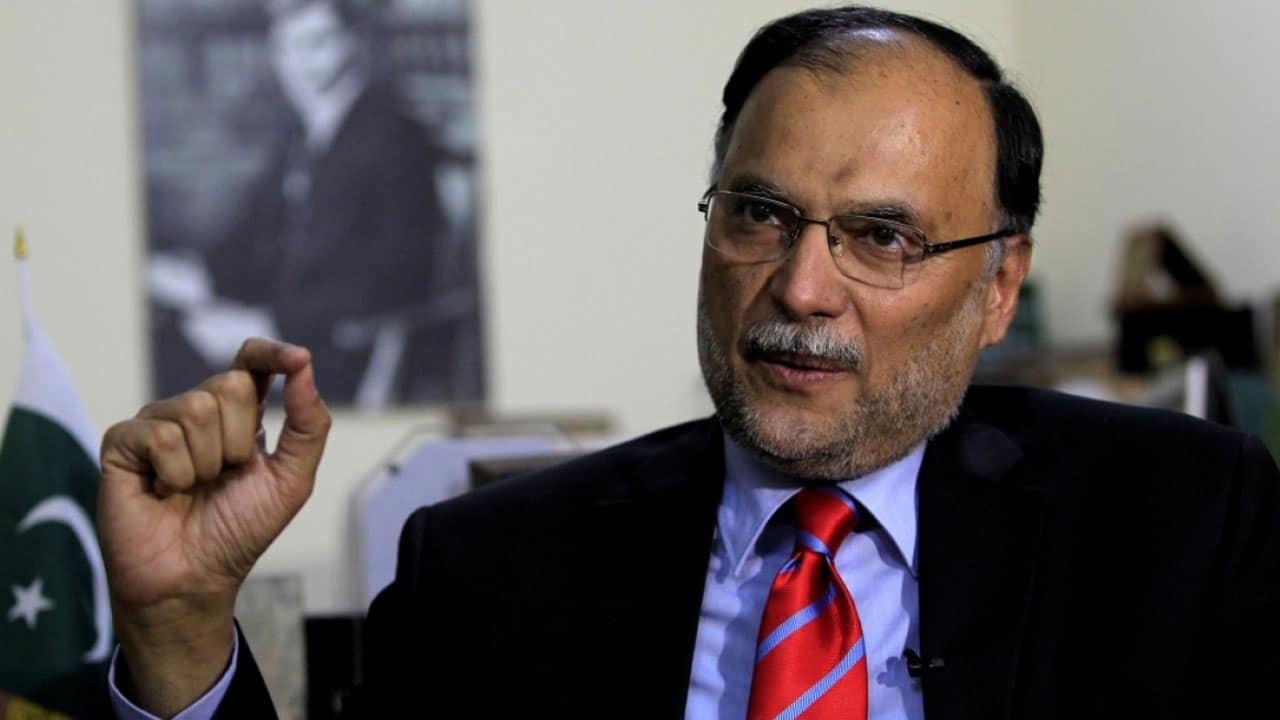
  • Pakistan likely to receive economic assistance from friendly countries soon, says Minister Ahsan Iqbal

    Pakistan likely to receive economic assistance from friendly countries soon, says Minister Ahsan Iqbal

    On Tuesday, Minister for Planning and Development Ahsan Iqbal announced that Pakistan is likely to receive confirmation of economic assistance from friendly countries in the coming days. This confirmation is the last condition of the International Monetary Fund (IMF) and will be followed by a staff-level deal with the Fund.

    According to Iqbal, Pakistan has fulfilled nearly all conditions previously agreed upon with the IMF by the previous government. Currently, the Fund is requesting confirmation from the friendly countries providing assistance to Pakistan. Once received, the IMF deal will come on track.

    During the US-Pakistan Diaspora and Private Sector for Flood Recovery and Rehabilitation Conference, three Memoranda of Understanding (MoUs) were signed with a Pakistan-based US company and US-Pakistani diaspora entities, mobilizing $78 million. The conference was organized by the US Agency for International Development (USAID).

    When questioned about the IMF’s objection to the fuel subsidy announced by the government for the poor segment of society, Iqbal clarified that this was an internal adjustment within the fuel price and no new subsidy was being announced. He expressed hope that the IMF would have no objection to the government’s move.

    Iqbal urged the US-Pakistan Diaspora to support the government’s efforts in recovering and rehabilitating millions of flood-affected people. He appreciated the United States’ pledge of $200 million for flood relief efforts but emphasized that Pakistan needs much more for the complete rehabilitation of millions of people affected by floods.

    In his remarks, United States Ambassador Donald Blome highlighted the contributions of the US-Pakistani diaspora and private sector in building back better for flood-affected communities in Pakistan. He reaffirmed the US government’s commitment to supporting flood relief and recovery efforts, disaster resilience, and food security.

    The conference continued the momentum built at the previous conferences in Islamabad where USAID signed six MoUs mobilizing $75 million. The discussions held in those conferences led to additional contributions and investments to help populations and areas affected by floods. More than 200 participants attended the Building Back Better Conference, including members of the US-Pakistani diaspora, prominent local business leaders, US business representatives, and Pakistani officials. They discussed ways to help the flood-affected population and communities.

    Ambassador Blome emphasized the longstanding US-Pakistan partnership in advancing Pakistan’s economic growth and social and humanitarian causes. He highlighted the need to strengthen climate resilience through the US-Pakistan “Green Alliance” framework and expressed the United States’ commitment to helping the US-Pakistani diaspora and Pakistan-based private companies find opportunities to pursue energy transformation and foster economic growth and development outcomes.

  • Pakistan did not consult IMF regarding discounted petrol for low-income people: Esther Perez

    Pakistan did not consult IMF regarding discounted petrol for low-income people: Esther Perez

    According to the International Monetary Fund (IMF), Pakistan’s government did not seek advice from the multilateral lender regarding the discounted petrol for the low-income group.

    The government’s plan to increase fuel costs for more affluent drivers to pay for a subsidy for those with lower incomes, according to Esther Perez, the IMF’s resident representative for Pakistan, was not discussed with the international lender.

    “Fund staff are seeking greater details on the scheme in terms of its operation, cost, targeting, protections against fraud and abuse, and offsetting measures, and will carefully discuss these elements with the authorities,” said Perez.

    Earlier, the federal government announced that it would reduce the price of petrol up to Rs100 for motorcycle riders and owners of vehicles up to 800 cc in order to lessen the impact of rising petrol costs on people who are already suffering from inflation. According to Malik, Prime Minister Shehbaz Sharif has ordered that low-income individuals receive petrol subsidies of up to Rs100 per liter instead of Rs50.

    Under a comprehensive strategy, cheap petrol will be offered to motorcyclists and owners of vehicles up to 800 cc, while owners of vehicles beyond 800 cc will be charged full price. The minister made it clear that this is not a subsidy but a cross-subsidy.

    According to Malik, “the owners of big vehicles will pay more for petrol.” The rich will pay Rs100 more for petrol, while the poor will pay Rs100 less. 210 million people are poor in a population of 220 million, and we stand with poor Pakistanis.”

    He said the decision to provide fuel at lesser rates will be implemented within six weeks.

  • Pakistan’s nuclear program not linked to loan negotiations, says IMF representative

    Pakistan’s nuclear program not linked to loan negotiations, says IMF representative

    The International Monetary Fund (IMF) has refuted allegations that it imposed any conditions on the revival of a loan program that had been suspended for several months despite ongoing discussions between the two parties.

    Pakistan has been in discussions with the IMF since early February to negotiate the terms of the deal, which includes the adoption of policies aimed at addressing its fiscal deficit ahead of the annual budget in June. The funds are part of a $6.5 billion bailout package that the IMF approved in 2019, and which experts believe is critical for Pakistan to avoid defaulting on its external debt obligations.

    The delay in reaching a staff-level agreement with the IMF had prompted veteran politicians, Senator Raza Rabbani and former foreign minister Shah Mahmood Qureshi, to express concerns about whether the delay was due to the country’s strategic assets, including its nuclear and missile programs. They have called on the government to clarify this issue.

    In response, IMF resident representative in Islamabad, Esther Perez Ruiz, released a statement on Sunday denying any involvement in Pakistan’s nuclear program, stating that there was “absolutely no truth” to the rumors that program discussions with the authorities may have covered the issue.

    Ruiz further clarified that the discussions had focused exclusively on economic policies aimed at resolving Pakistan’s economic and balance of payments problems, in line with the Fund’s mandate for promoting macroeconomic and financial stability.