Tag: IMF

  • Dar says assurance of funding from friendly countries is the final hurdle in securing IMF deal

    Dar says assurance of funding from friendly countries is the final hurdle in securing IMF deal

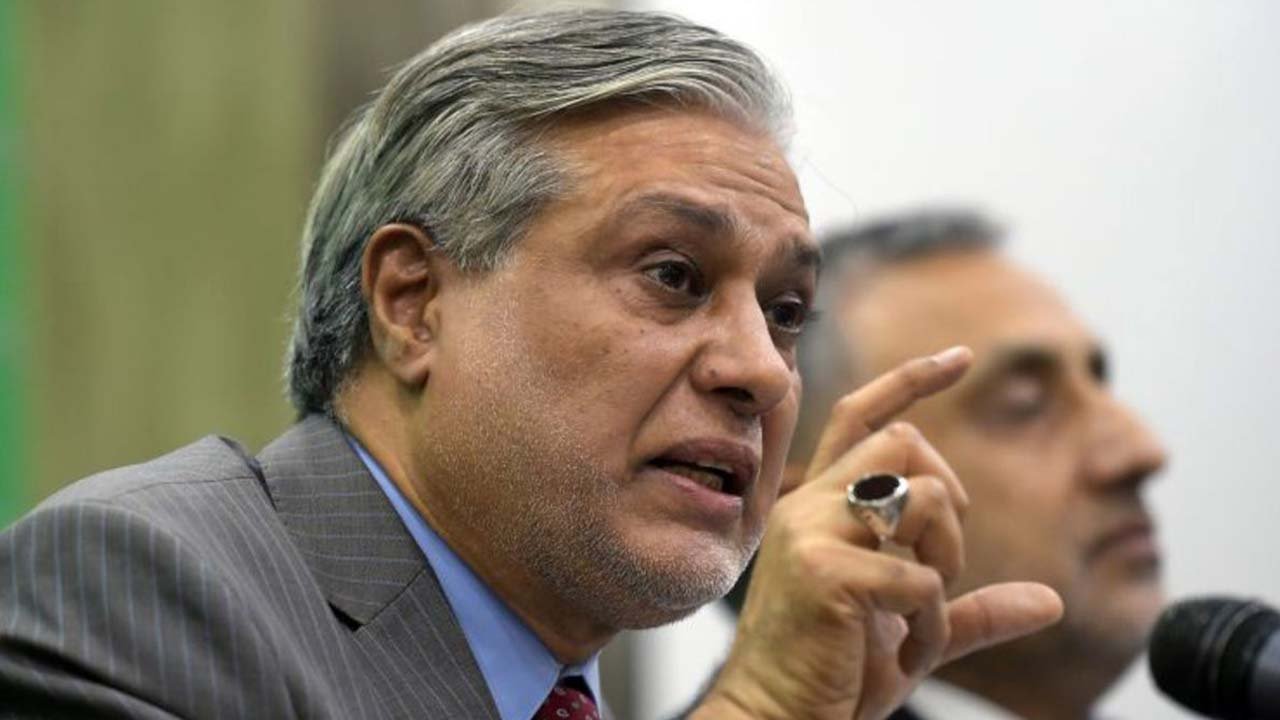
    On Thursday, Finance Minister Ishaq Dar announced that the assurance of funding from “friendly countries” was the final obstacle to securing an IMF deal that would provide critical support to Pakistan’s struggling economy and prevent an economic crisis.

    During a session of the country’s upper house of parliament, Dar revealed that several countries had previously made commitments to support Pakistan during IMF reviews, and the IMF was now requesting that these commitments be fulfilled.

    The delay in securing the deal, which involves a $1.1 billion bailout package from the IMF, has been ongoing since November due to issues surrounding fiscal policy adjustments. The package is part of a larger $6.5 billion bailout approved by the IMF in 2019, which is crucial for Pakistan to avoid defaulting on external payment obligations.

    The deal would also allow Pakistan to access other financing avenues to bolster its foreign exchange reserves, which currently only cover four weeks’ worth of imports.

    The IMF has asked Pakistan to secure assurance of up to $7 billion to cover this year’s balance of payments gap, while Dar believes that $5 billion would suffice.

    An IMF mission has been present in Islamabad since February to negotiate a set of policy measures for Pakistan’s struggling economy, ahead of the annual budget due in June.

    Prime Minister Shehbaz Sharif stated that all of the IMF’s conditions had been met, and expressed hope that a staff level agreement would be reached soon.

  • Pakistan’s nuclear and missile programmes will not be compromised for IMF deal, says Finance Minister

    Pakistan’s nuclear and missile programmes will not be compromised for IMF deal, says Finance Minister

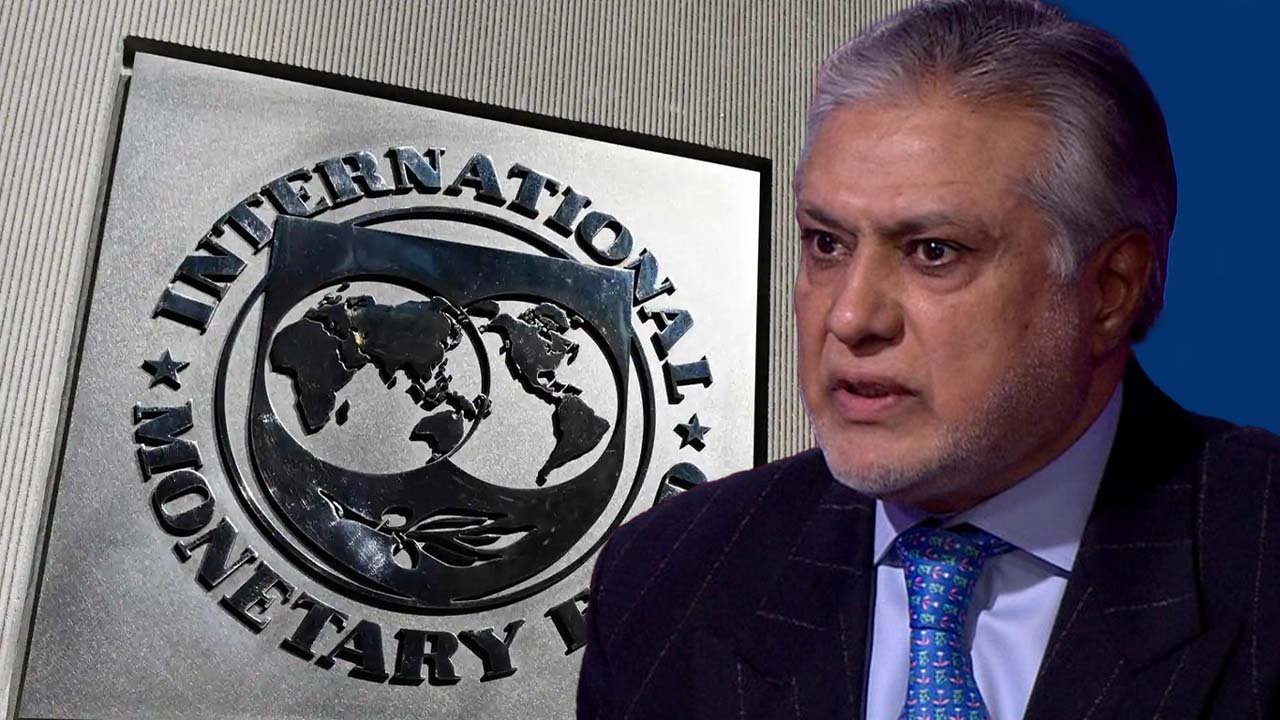
    During a session of the Senate on Thursday, Pakistan’s Finance Minister Ishaq Dar stated unequivocally that there would be no compromise on the country’s nuclear and missile programs. The assurance came in response to questions posed by PPP Senator Raza Rabbani, who had raised concerns about the delay in Pakistan’s agreement with the International Monetary Fund (IMF). Rabbani had suggested that the delay might be due to pressure being exerted on Pakistan’s nuclear program.

    In response to Rabbani’s questions, Dar stated that the delay was not due to any action by the current government, but rather to the fact that the IMF had requested that certain friendly countries fulfill commitments they had made to support Pakistan. According to Geo, Dar promised that once the staff-level agreement and the Extended Fund Facility program were finalized, the details would be posted on the finance ministry’s website.

    Dar also expressed his belief that Pakistan’s nuclear program was a matter of national security and emphasized that no one had the right to tell Pakistan what range of missiles or nuclear weapons it could have. He argued that the country’s nuclear and missile programs were essential for deterrence and for guarding Pakistan’s national interests.

    The delay in the IMF agreement has been a cause for concern, as it is seen as critical to taming a balance-of-payments crisis. The agreement, which was approved by the IMF in 2019 and is worth $6.5 billion, includes $1.1 billion that would be released once the agreement is signed. Dar had previously blamed the delay on the previous government, which he said had failed to meet commitments and created a trust deficit. Despite the delay, Dar stated that Pakistan was “very close” to signing the agreement.

  • Chinese bank to provide Pakistan with another $500 million loan soon

    Chinese bank to provide Pakistan with another $500 million loan soon

    A Chinese bank has committed to provide Pakistan with another refinanced $500 million loan within the next few days. This brings the total of commercial loans to $1.7 billion out of the committed amount of $2 billion.

    Pakistani authorities are currently seeking 100 per cent confirmation from friendly donor countries and multilateral creditors before moving towards an agreement with the International Monetary Fund (IMF). The IMF has set an unwritten condition that Pakistan must secure refinancing of commercial loans and a rollover on deposits from China during the program period, which is set to expire in June 2023.

    A top official from the Finance Division confirmed that another $500 million commercial loan from a Chinese bank is on its way and will be completed soon. Chinese banks have already provided refinancing of $1.2 billion in commercial loans in the past few weeks, and Beijing has given assurance on another $500 million in loan refinancing in the next few days. Pakistan has also requested a rollover on the Chinese SAFE deposit of $2 billion within the ongoing month.

    All these factors are prerequisites for moving towards the signing of a staff-level agreement between the IMF and Pakistan. The Pakistani authorities are waiting for confirmation from Saudi Arabia, UAE, and Qatar, as well as from the World Bank and the Asian Infrastructure Investment Bank, to fulfill the external financing needs of $6 billion until the end of June 2023. The guarantees for securing external financing are crucial for the sustainability of the IMF program.

    Brent crude and WTI are both down in the international market, which is good news for Pakistan’s economy. However, the IMF has secretly launched “Inclusive growth in the MENA region” at NUST. The IMF high-ups argued that state-owned enterprises (SOEs) possessing a major footprint resulted in the crowding out of the private sector. Pakistan’s budget makers have also assured the IMF that they will prepare gender-based budgeting in the next financial year.

    To meet the IMF’s demands, the CPI-based and SPI-based inflations have risen to unprecedented levels of 31.5 per cent every month and 42.3 per cent every week. The development budget of the federal government, known as the Public Sector Development Program (PSDP), has been slashed by 50 per cent for the current fiscal year in line with the Fund’s demand to curtail the budget deficit target.

  • PM Shehbaz expresses concern over IMF conditions burdening people

    PM Shehbaz expresses concern over IMF conditions burdening people

    The Prime Minister, Shehbaz Sharif, has shown worry that the terms set by the International Monetary Fund (IMF) will result in an increased burden on the citizens.

    During an appearance on the Geo News program Capital Talk, the Prime Minister attributed the stringent conditions to the previous government, alleging that they had breached their commitments to the IMF.

    Consequently, the IMF is insisting that Pakistan fulfills all of the conditions regardless of the cost, according to the Prime Minister. He acknowledged that many people in Pakistan are having trouble putting food on the table, purchasing medication, and paying for their children’s education.

    The Prime Minister claimed that former Prime Minister Imran Khan almost defaulted on Pakistan and damaged the country’s relations with numerous friendly countries. However, he stated that his government had provided relief to underprivileged individuals through the Benazir Income Support Program.

    He further stated that inflation was caused by the increased cost of imported goods as commodity prices rose due to the Russia-Ukraine conflict. In Pakistan, inflation is expected to reach its highest level in nearly 50 years.

    Additionally, Pakistan is struggling to obtain funding from friendly nations, resulting in a delay in the IMF bailout. The IMF Managing Director, Kristalina Georgieva, recently urged Pakistan to increase tax revenues and distribute subsidies only to those who truly require them. She emphasized that the IMF is dedicated to protecting the impoverished people of Pakistan.

  • Donald Blome assures Pakistan of US cooperation on IMF deal

    The US Ambassador to Pakistan, Donald Blome, expressed hope for a deal between Pakistan and the International Monetary Fund (IMF), stating that Washington was prepared to support the country’s efforts to resume its stalled $6.5 billion bailout program.

    Speaking at an event on Tuesday, Blome assured journalists that the IMF bailout package for Islamabad would take its final shape in a couple of days. He added that the United States was ready to cooperate with Pakistan to help address the issue and expressed a willingness to help Islamabad with its ongoing terrorism challenges.

    Blome recently visited important cities in Pakistan to meet with groups from different walks of life and noted that there had been significant progress in diplomatic relations between the two countries.

    Pakistan and the IMF have been in discussions regarding a stalled bailout package since late last year, with the country seeking a $1.1bn tranche to address its worsening balance of payments crisis and to enable friendly affluent capitals to provide assistance to overcome ongoing financial complexities.

    Both sides are engaged in negotiations to reach a mutually agreeable package that would help the cash-strapped nation come out of its ongoing economic turmoil.

    Interestingly, Finance Minister Ishaq Dar had previously stated that Pakistan would strike a staff-level agreement (SLA) with the IMF in a few days, as the government remained committed to completing the loan program signed in 2019.

    However, after failing to convince the lender, Dar had reportedly contacted the US envoy earlier this week to get “lenient treatment” from the Fund, which has been persistent with its demands.

  • Pakistan reaches out to US for assistance in obtaining IMF deal

    Pakistan reaches out to US for assistance in obtaining IMF deal

    Pakistan has requested assistance from the United States to obtain “lenient treatment” from the International Monetary Fund (IMF) due to a delay in signing the staff-level agreement (SLA).

    The international lender has asked Pakistan to confirm external financing needs of $6 to $7 billion from Saudi Arabia, the United Arab Emirates, Qatar, and multilateral creditors until the end of June 2023.

    However, Pakistan has been unable to persuade the lender to sign the agreement and has requested assistance from Washington and its western allies.

    According to The News, Minister for Finance Ishaq Dar has contacted the US diplomatic corps based in Islamabad for help in ending the stalemate.

    The IMF considers that the loan facility’s “sustainability” could not be guaranteed without full assurance of external financing.

    Furthermore, the IMF has demanded a permanent abolition of power sector subsidies, which the government had only committed to until the end of the next financial year 2023-24.

    The IMF demanded changes in the wording of the Memorandum of Economic and Financial Policies (MEFP) during the last meeting held in the previous week.

    The IMF and Pakistani sides are yet to decide on further proceedings, with each side holding the other responsible for the delay in signing the SLA.

  • Pakistani rupee reverses marginal gains, closes at Rs281.61 against US dollar

    Pakistani rupee reverses marginal gains, closes at Rs281.61 against US dollar

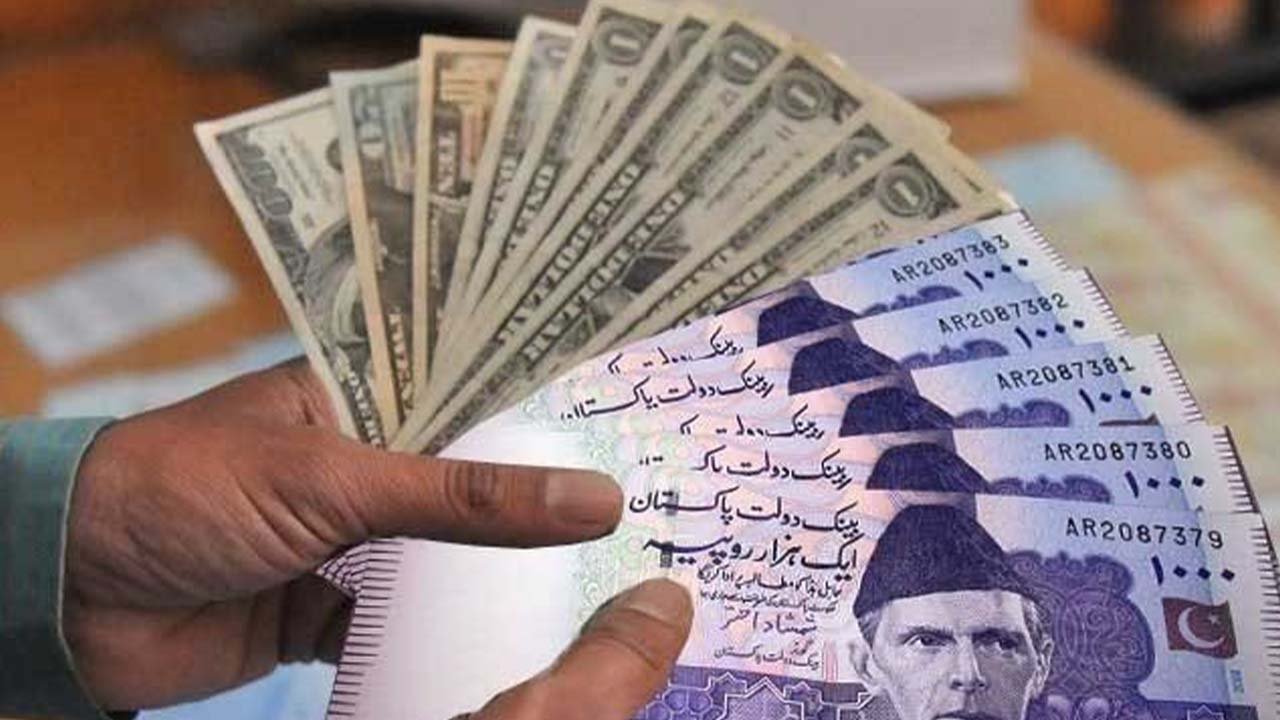
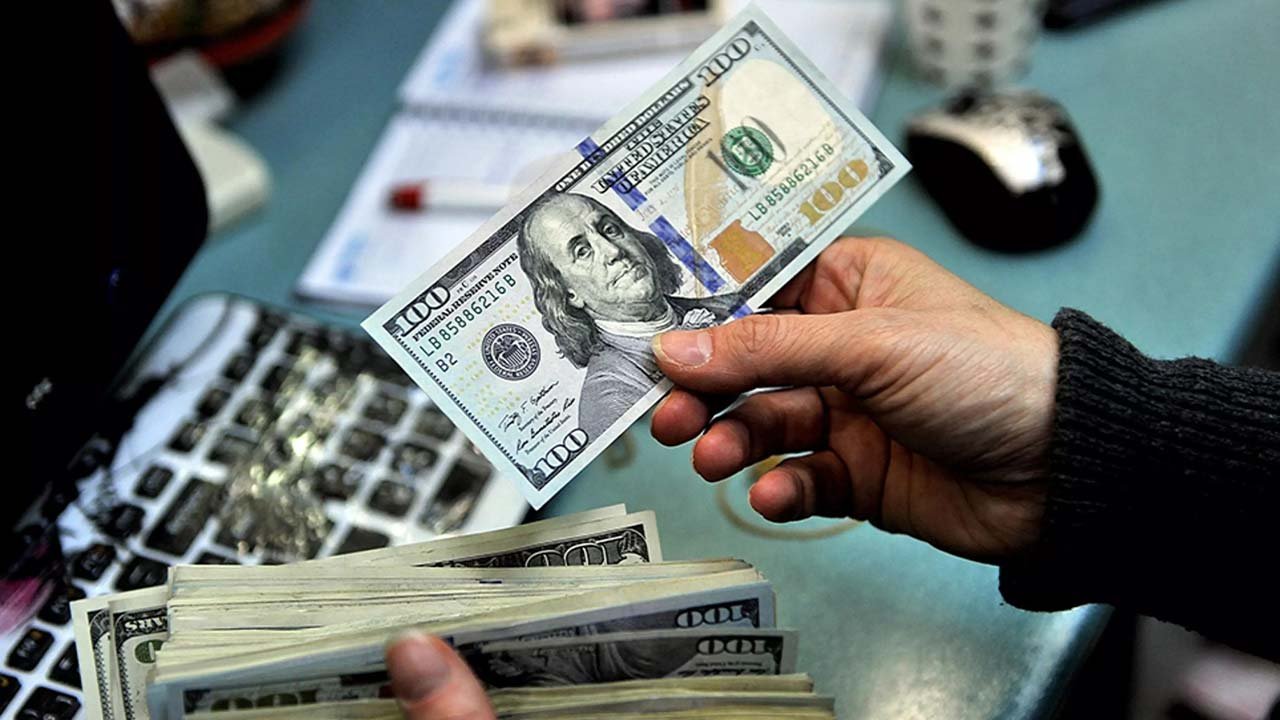
    On Monday, the Pakistani rupee faced renewed pressure against the US dollar, declining by 0.30 per cent in the inter-bank market after posting marginal gains on Friday. According to the State Bank of Pakistan (SBP), the rupee settled at Rs281.61, representing a decrease of Re0.84.

    Despite the rupee having found some relief on Friday with a 0.54 per cent appreciation in the inter-bank market, the currency had depreciated by 0.82 per cent against the US dollar during the previous week.

    The SBP has received inflows from China, which have provided support to critical levels of foreign exchange, but concerns over the delay in the International Monetary Fund (IMF) programme have continued to impact sentiment.

    Miftah Ismail, former Federal Finance Minister, suggested on Sunday that Pakistan should ensure 15 per cent tax on Gross Domestic Product (GDP) and 15 per cent exports to GDP in order to avoid the need for IMF programs.

    Internationally, the US dollar experienced a sharp decline on Monday due to the sudden collapse of Silicon Valley Bank (SIVB). The US government announced various measures on Monday to mitigate the impact of the bank’s collapse, including ensuring access to deposits for SVB customers and depositors of New York’s Signature Bank.

  • Toyota IMC increases car prices by up to Rs2 million due to GST hike

    Toyota IMC increases car prices by up to Rs2 million due to GST hike

    Indus Motor Company (IMC) has increased the prices of all Toyota vehicles in Pakistan due to the recent hike in the General Sales Tax (GST) from 18 per cent to 25 per cent by the Federal Government. The models affected by the price hike include Toyota Yaris, Toyota Corolla Altis X, Toyota Hilux Revo (IMV III), and Toyota Fortuner (IMV IV).

    According to a circular released by the company, the economic uncertainties and extreme volatile situation of Pakistani rupee against US dollar have adversely impacted the cost of manufacturing for IMC. The company has therefore been compelled to pass on some impact to the market.

    The government of Pakistan has also enhanced the rate of Sales Tax to 25 per cent on all CKD vehicles with an engine capacity of 1400cc and above, except for IMV-I Single Cabin.

    Toyota Pakistan has stated that the mentioned car prices are subject to change and the prevailing prices at the time of delivery shall be applicable on all orders. Any change in Government levies and taxes, tariff, fiscal policies, import policies, forex, etc. will be on account of the customer.

    Here are the new prices of all Toyota cars after tax hike:

    Toyota Corolla Altis X latest prices

    Model Old price (Rs) New price (Rs) Hike (Rs)
    Toyota Corolla 1.6 MT 5,576,000 6,169,000 593,000
    Toyota Corolla 1.6 CVT 6,111,000 6,769,000 658,000
    Toyota Corolla 1.6 Special Edition 6,716,000 7,429,000 713,000
    Toyota Corolla 1.8 CVT 6,423,000 7,119,000 696,000
    Toyota Corolla 1.8 CVT SR 6,998,000 7,759,000 761,000
    Toyota Corolla 1.8 CVT SR BLK 7,039,000 7,799,000 760,000

    Toyota Yaris latest prices

    Model Old price (Rs) New price (Rs) Hike (Rs)
    Toyota Yaris 1.3 GLi MT 4,316,000 4,499,000 183,000
    Toyota Yaris 1.3 GLi CVT 4,588,000 4,789,000 201,000
    Toyota Yaris 1.3 ATIV MT 4,558,000 4,759,000 201,000
    Toyota Yaris 1.3 ATIV CVT 4,790,000 4,999,000 209,000
    Toyota Yaris 1.5 ATIV X MT 4,911,000 5,429,000 518,000
    Toyota Yaris 1.5 ATIV X CVT 5,213,000 5,769,000 556,000

    Toyota Hilux Revo latest prices

    Model Old price (Rs) New price (Rs) Difference (Rs)
    Hilux Revo STD 10,316,000 11,439,000 1,123,000
    Hilux Revo G MT 11,184,000 12,409,000 1,225,000
    Hilux Revo G AT 11,728,000 13,019,000 1,291,000
    Hilux Revo V 12,969,000 14,389,000 1,420,000
    Hilux Revo V AT ROCCO 13,675,000 15,179,000 1,504,000

    Toyota Fortuner latest prices

    Model Old Price (Rs) New Price (Rs) Hike (Rs)
    Toyota Fortuner G 4x2L 14,230,000 15,809,000 1,579,000
    Toyota Fortuner V 4×4 16,297,000 18,099,000 1,802,000
    Toyota Fortuner Sigma 17,175,000 19,079,000 1,900,000
    Toyota Fortuner Legender 18,112,000 20,129,000 2,017,000
  • Pakistan ‘very close’ to signing staff-level agreement with IMF, says Finance Minister

    Pakistan ‘very close’ to signing staff-level agreement with IMF, says Finance Minister

    Finance Minister Ishaq Dar has reaffirmed his team’s commitment to completing Pakistan’s $7 billion Extended Fund Facility programme with the International Monetary Fund (IMF).

    Speaking at a seminar organised by the Finance Ministry in Islamabad, Dar acknowledged the need for swift implementation of measures to reach an agreement with the IMF as the country has reserves barely sufficient for three weeks of essential imports.

    He noted that the government had inherited an economy that was “in a shambles” and that it had decided to honour the commitments made by the previous administration, despite a serious trust deficit with the lender.

    According to Dawn, the minister also confirmed that Pakistan was “very close” to signing a staff-level agreement with the IMF, which would unlock inflows from friendly countries and lead to a disbursement of $1.2 billion. The prerequisites by the lender are aimed at ensuring Pakistan reduces its fiscal deficit before its annual budget around June. The country has already taken most of the other prior actions, including hikes in fuel and energy tariffs, the withdrawal of subsidies in export and power sectors, and generating more revenues through new taxation in a supplementary budget.

    Furthermore, Dar highlighted the need for all stakeholders to contribute to overcoming the challenges facing the country, including the implementation of austerity measures. These measures, which include cabinet members forgoing their salaries, paying their own bills, banning the purchase of luxury vehicles from 2024, and slashing current expenditure by 15 per cent, have already been implemented and notified to the Finance Ministry.

    Dar also noted that Pakistan’s economic difficulties were compounded by the devastating 2022 floods, which affected 33 billion people and caused physical and economic losses of nearly $30 billion.

    Despite fiscal constraints and limitations, Dar pledged that the federal and provincial governments had jointly allocated Rs452 billion for relief and rehabilitation work of flood affectees. International agencies have calculated that around $16 billion would be required for reconstruction and rehabilitation work in Pakistan in the next two years, half of which will be met by Pakistan from its own resources.

  • Pakistani rupee’s three-day winning streak ends due to delayed IMF deal

    Pakistani rupee’s three-day winning streak ends due to delayed IMF deal

    The value of the Pakistani rupee (PKR) decreased 0.45 per cent against the US dollar following a three-day period of gains due to prolonged delays in critical funding from the International Monetary Fund (IMF).

    During the interbank session held today, the PKR depreciated by Rs1.3 to settle at Rs279.12 per USD, compared to yesterday’s closing of Rs277.87 against USD.

    Throughout the session, the local unit traded within a range of Rs1.75, reaching a high bid of Rs278.75 and a low offer of Rs277.5. In the open market, the PKR was traded at Rs277/Rs280.5 versus USD.

    On the other hand, the local unit gained Rs5.1 against the Pound Sterling, with the day’s closing quote at Rs329.98 versus GBP, while the previous session closed at Rs335.11 per GBP.

    Furthermore, the PKR’s value also strengthened by Rs2.9 against the EUR, which closed at Rs294.19 at the interbank today.