Tag: IMF

  • IMF predicts modest 3.5% growth for Pakistan amid global economic uncertainty

    IMF predicts modest 3.5% growth for Pakistan amid global economic uncertainty

    The International Monetary Fund (IMF) has forecasted a 3.5 per cent growth rate for Pakistan’s economy in the fiscal year 2024-25 (FY25), slightly below the government’s target of 3.6 per cent.

    This comes after Pakistan’s economy grew by 2.4 per cent in the fiscal year 2023-24, missing the government’s target of 3.5 per cent.

    Pakistan’s economic challenges are compounded by chronic mismanagement, the aftermath of the COVID-19 pandemic, the war in Ukraine, inflationary pressures from supply chain disruptions, and severe flooding in 2022.

    The IMF’s World Economic Outlook (WEO) update warns of modest global growth over the next two years, influenced by cooling activity in the US, stabilization in Europe, and stronger consumption and exports from China, but significant risks remain.

    Globally, the IMF has maintained its 2024 growth forecast at 3.2 per cent and slightly increased its 2025 forecast to 3.3 per cent. IMF Managing Director Kristalina Georgieva has expressed concern over these tepid growth rates. The US growth forecast for 2024 has been revised down to 2.6 per cent, reflecting slower consumption, while the 2025 forecast remains at 1.9 per cent due to a cooling labor market and moderated spending.

    The IMF has raised China’s 2024 growth forecast to 5.0 per cent, reflecting a rebound in private consumption and strong exports, but recent data showing lower-than-expected GDP growth poses a downside risk.

    The IMF also highlighted persistent risks to inflation due to high services prices and wage growth in labor-intensive sectors, alongside potential trade and geopolitical tensions that could exacerbate price pressures. Additionally, the IMF warned of the impact of economic policy shifts from upcoming elections, which could lead to increased protectionism and fiscal irresponsibility.

    The IMF advised policymakers to restore price stability, gradually ease monetary policy, rebuild fiscal buffers, and implement policies to promote trade and productivity growth.

  • IMF deal to improve Pakistan’s financial outlook, but continuous reforms are essential: Moody’s

    IMF deal to improve Pakistan’s financial outlook, but continuous reforms are essential: Moody’s

    Moody’s Investors Service has stated that Pakistan’s recent staff-level agreement with the International Monetary Fund (IMF) enhances the nation’s funding prospects.

    However, the global rating agency stressed the necessity of sustained reforms to mitigate liquidity risks.

    On 12 July, Pakistani authorities and the IMF reached a staff-level agreement on a 37-month Extended Fund Facility (EFF) worth approximately $7 billion. This agreement still awaits approval from the IMF Executive Board, with no specific date set for the vote.

    Moody’s commented that once the loan deal is approved, which is highly anticipated, it will significantly boost Pakistan’s funding prospects. The new IMF program is expected to provide reliable financing from the IMF and attract additional funding from other bilateral and multilateral partners, addressing Pakistan’s external financing needs.

    Nonetheless, Moody’s cautioned that the government’s ability to consistently implement reforms will be crucial to maintaining continuous financial support throughout the IMF program, ultimately reducing liquidity risks.

    The new IMF EFF requires Pakistan to undertake extensive reforms, including broadening the tax base, eliminating exemptions, timely managing and privatising energy enterprises, phasing out agricultural support prices and related subsidies, advancing anti-corruption measures, enhancing governance and transparency, and gradually liberalising trade policy.

    Moody’s also warned that rising social tensions, driven by the high cost of living—which could be exacerbated by increased taxes and future energy tariff adjustments—might hinder reform implementation. Furthermore, the coalition government may struggle to maintain sufficient electoral support to implement these challenging reforms consistently.

    An IMF report published in May highlighted Pakistan’s external financing needs, estimated at $21 billion for fiscal year 2025 (ending June 2025) and approximately $23 billion for fiscal years 2026-2027.

    Moody’s noted that Pakistan’s external position remains precarious, with substantial external financing requirements over the next three to five years.

    The country remains vulnerable to policy slippages, weak governance, and high social tensions, which could impair the government’s ability to advance reforms, complete IMF program reviews, and secure external financing.

  • IMF and Pakistan reach agreement on $7 billion extended fund arrangement

    IMF and Pakistan reach agreement on $7 billion extended fund arrangement

    In a significant development, Pakistani authorities and the International Monetary Fund (IMF) team have reached a staff-level agreement on a 37-month Extended Fund Arrangement (EFF) worth SDR 5,320 million or $7 billion, as per a statement issued by the IMF.

    This agreement is contingent upon approval by the IMF’s Executive Board and the timely confirmation of necessary financing assurances from Pakistan’s development and bilateral partners.

    The programme aims to build on the macroeconomic stability achieved over the past year by further strengthening public finances, reducing inflation, rebuilding external buffers, and removing economic distortions to promote private sector-led growth.

    In response to a request from Pakistani authorities, an IMF team led by Nathan Porter, IMF’s Mission Chief to Pakistan, held discussions from May 13-23, 2024, in Islamabad and virtually thereafter on IMF support for Pakistan’s medium-term policy and reform plans.

    The key policy goals of the programme include:

    1. Sustainable public finances: This will be achieved through gradual fiscal consolidation by broadening the tax base and removing exemptions, while increasing resources for critical development and social spending. The authorities plan to increase tax revenues by 1.5% of GDP in FY25 and 3% of GDP over the programme duration. The FY25 budget targets an underlying general government primary surplus of 1% of GDP (2% in headline terms). Revenue collection will be enhanced through simpler and fairer direct and indirect taxation, including properly taxing net income from the retail, export, and agriculture sectors.

    2. Fiscal balance between federal and provincial governments: A National Fiscal Pact has been signed to rebalance spending in line with the 18th constitutional amendment. This will see provincial governments taking on higher spending responsibilities for education, health, social protection, and regional public infrastructure. Provinces will also increase their tax collection efforts, particularly sales tax on services and agricultural income tax. From January 1, 2025, all provinces will harmonise their Agriculture Income Tax regimes with federal tax regimes.

    3. Reducing inflation and building external buffers: Monetary policy will focus on supporting disinflation to protect real incomes, especially for the vulnerable. The State Bank of Pakistan (SBP) will maintain a flexible exchange rate and improve the functioning and transparency of the foreign exchange market to build reserves and buffer against shocks. Financial stability will be enhanced by deepening access to financing, strengthening financial institutions, addressing undercapitalised banks, and upgrading the crisis management framework.

    4. Energy sector reforms: The authorities aim to restore energy sector viability and minimise fiscal risks through timely adjustment of energy tariffs, decisive cost-reducing reforms, and avoiding unnecessary expansion of generation capacity. Targeted subsidy reforms will replace cross-subsidies to households with direct BISP support.

    5. Private sector and export dynamism: Efforts will be made to improve the business environment, create a level playing field for businesses, and remove state distortions. This includes improving the operations and management of State-Owned Enterprises (SOEs), prioritising profitable SOEs for privatisation, and enhancing transparency and governance of the Pakistan Sovereign Wealth Fund.

    Additionally, incentives for Special Economic Zones will be phased out, agricultural support prices and subsidies will be reduced, and no new regulatory or tax-based incentives will be introduced that could distort the investment landscape.

    6. Anti-corruption and governance reforms: The authorities have committed to advancing anti-corruption measures, governance, and transparency reforms, and gradually liberalising trade policy.

    “The IMF team is grateful to the Pakistani authorities, private sector, and development partners for their hospitality during the visit to Islamabad and for the fruitful discussions,” the statement reads.
  • Milk prices in Karachi higher than cities in France, Netherlands, Australia

    Milk prices in Karachi higher than cities in France, Netherlands, Australia

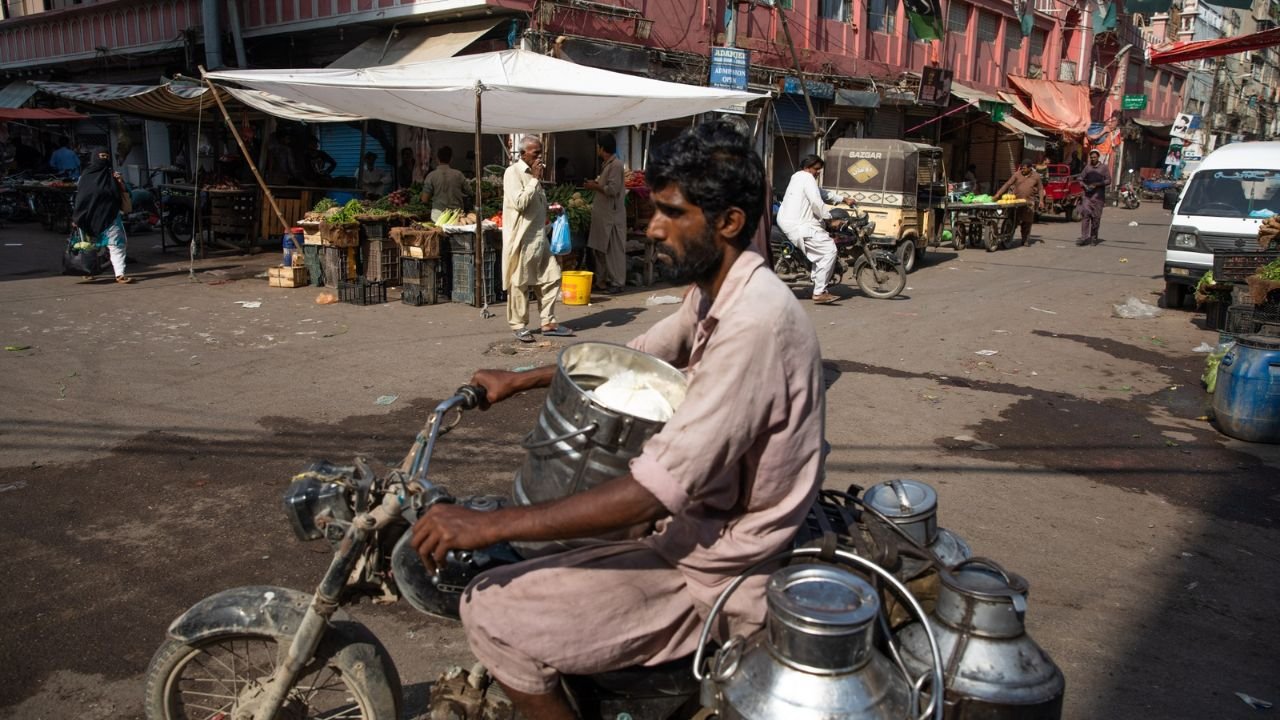
    Milk has become more expensive in Pakistan as compared to many countries of the world, Bloomberg has reported.

    According to the report, the price of boxed milk in Pakistan is 370 rupees per liter, while the same milk is available in Paris, the capital of France, for 342 rupees per liter. The price of milk in the Netherlands has also been declared cheaper than Pakistan.

    The report states that milk is available at Rs 358 per litre in Amsterdam and in Australia for Rs 300 per litre, while the price of canned milk in Pakistan is Rs.370.

    “Ultra-high temperature, or UHT, milk now costs 370 rupees ($1.33) a litre in supermarkets in Karachi. That compares with $1.29 in Amsterdam, $1.23 in Paris, and $1.08 in Melbourne, according to data collected by Bloomberg.” the report highlights.

    Bloomberg says that more than 60 percent of children in Pakistan are suffering from anaemia and increasing the price of milk is akin to putting the lives of sick children at stake.

  • Fixed electricity rates increased for industrial, commercial, agricultural consumers

    Fixed electricity rates increased for industrial, commercial, agricultural consumers

    The government has further increased the price of electricity by five rupees 72 paise per unit, starting July 1.

    Fixed charges will apply to electricity consumers. For non-protected consumers, the new rates are as follows: Up to 100 units, the rate is Rs. 23.73; for 201 to 300 units, the rate is Rs. 32.98 per unit.

    Monthly fixed charges for industrial electricity consumers have risen by 184 per cent, and fixed charges for commercial electricity consumers have increased by 150 per cent.

    Agricultural tubewell customers will see a 100 per cent increase in monthly fixed charges.

    The federal cabinet has approved the increase in fixed electricity charges, as per sources.

    Industrial customers’ monthly fixed charges have reportedly increased from Rs. 440 to Rs. 1250.

    Fixed charges for commercial users have risen from Rs. 500 to Rs. 1250, while fixed charges for agricultural tubewell users have increased from Rs. 200 to Rs. 400, sources report.

  • Oil prices likely to increase by Rs 20 per litre in budget

    Oil prices likely to increase by Rs 20 per litre in budget

    Despite a global decrease in petroleum product prices, Pakistanis should not expect any relief.

    For the federal budget of 2024-25, government is considering an increase in levy sales tax on petroleum products and the petroleum levy in the upcoming financial year. Media reports suggest the possibility of increasing the petroleum levy by up to 20 rupees per litre to boost federal income.

    Additionally, it has been proposed that sales tax be imposed on petroleum products in the next financial year.

    Reportedly, the levy could be raised from Rs. 60 to Rs. 80 per litre.

    Currently, the government is already receiving a petroleum levy of Rs. 60 per litre on both petrol and diesel, in line with commitments made to the International Monetary Fund (IMF) on petroleum products during the current financial year. A target of collecting 869 billion rupees has been set.

  • Pakistan’s forex reserves decline by $63.3 million to $9.09 billion

    Pakistan’s forex reserves decline by $63.3 million to $9.09 billion

    The State Bank of Pakistan (SBP) has reported a marginal decline in the nation’s foreign exchange reserves, indicating a decrease of $63.3 million or 0.69 per cent week over week (WoW) to $9.09 billion, according to data released on Thursday.

    The central bank attributed this downturn primarily to debt repayments. In a statement issued by the SBP, it was highlighted that during the week ending May 24, 2024, SBP reserves experienced a $63 million decrease to reach $9.09 billion, primarily due to external debt repayments.

    Similarly, Pakistan’s overall reserves witnessed a decrease of $270 million or 1.85 per cent WoW, amounting to $14.32 billion. Furthermore, commercial banks saw a decline in reserves by $206.7 million or 3.81 per cent WoW, totaling $5.22 billion.

    Despite these fluctuations, the current fiscal year has seen a remarkable increase in SBP-held reserves, amounting to $4.63 billion or 103.6 per cent.

    This surge follows Pakistan’s attainment of the International Monetary Fund’s (IMF) Stand-By Arrangement (SBA) of approximately $3 billion by the end of June last year.

    This arrangement not only bolstered the nation’s reserves but also facilitated access to additional multilateral and bilateral funding.

    Furthermore, the ongoing calendar year has witnessed a notable increase of $872.5 million or 10.61 per cent in reserves, reflecting continued efforts to stabilise and strengthen Pakistan’s economic position.

  • IMF says bijli aur gas mazeed mehngi karu

    IMF says bijli aur gas mazeed mehngi karu

    The International Monetary Fund (IMF) has told the Pakistani authorities of its plan to release the next bailout package under specific conditions which Pakistan would have to fulfil like increasing revenue and curtailing government expenditure.

    “The government will have to hike electricity and gas tariffs in coming July and August 2024 to strike a deal with the IMF,” Geo news reported.

    If approved, the fresh bailout package through climate finance would range from $6 to $8 billion.

    The government would also have to present an aligned budget and secure its approval from the parliament.

    The IMF has asked the government to raise the power tariff by jacking up fuel price adjustments and quarterly tariff adjustments. The tariff on gas will also be increased.

    On solar net metering, the government has decided to hire a Chinese consultant and others to study it independently because the net metering system is reportedly causing harm to distribution grids.

  • IMF team engages in talks with Pakistan for new $8 billion programme

    IMF team engages in talks with Pakistan for new $8 billion programme

    The International Monetary Fund (IMF) confirmed that it is in discussions with Pakistan regarding a 24th bailout programme under the Extended Fund Facility (EFF), signalling a significant development in the country’s ongoing economic negotiations.

    IMF Communication Director Julie Kozack, during a press briefing, refrained from commenting directly on the status of a staff-level agreement, suggesting that the talks are still in progress.

    She stated, “A mission team led by Nathan Porter is currently meeting with Pakistani authorities to discuss the next phase of our engagement.”

    Kozack elaborated on recent IMF activities in Pakistan, noting that on April 29th, the IMF Executive Board completed the second review of the stand-by arrangement for Pakistan, enabling a disbursement of approximately $1.1 billion.

    “The completion of this review reflects the authorities’ robust policy efforts during the stand-by arrangement, which contributed to stabilising the economy,” she explained.

    Addressing further queries, Kozack indicated that the mission is actively working on the ground and that their findings would be communicated upon the mission’s completion. 

    Pakistan is seeking a substantial $6 to $8 billion bailout package from the IMF over a three- to four-year period to address its financial difficulties.

    The IMF’s technical team arrived in Pakistan on May 10 to engage in discussions regarding the new loan programme and budget preparations.

    These talks come at a critical time for Pakistan, which is grappling with considerable economic challenges, including the failure of a tax amnesty scheme proposed by the IMF. The outcome of these negotiations will be pivotal in determining Pakistan’s economic stability and future financial policies.

  • Pakistan’s total debt skyrockets to Rs 81 trillion

    Pakistan’s total debt skyrockets to Rs 81 trillion

    Bad news for Pakistanis as the country’s total debt and liabilities increased to a record of nearly Rs 81 trillion in the past year.

    Pakistan is currently going through a severe and difficult economic crisis as it tries to increase revenue generation and reduce all its debts, however, no silver lining yet.

    The collective debt and liabilities are approximately 15 percent of the nation’s GDP, higher than the statutory limit defined in the Fiscal Responsibility and Debt Limitation Act.

    The reason for such a stark increase in the debt is due to a lack of major foreign investment in the country even though Pakistan secured yet another IMF bailout package.

    Austerity measures have so far remained theoretical as the government has failed to cut off unnecessary expenses of the bloated government. For instance, Prime Minister Shehbaz Sharif earlier approved grants to provide awards to officers of the Prime Minister’s Office and Defence Production.

    Meanwhile, additional funds have also been allocated for the renovation of the PM’s Office and for providing subsidies to Azad Jammu & Kashmir.