Tag: IMF

  • ‘Not a Banana republic’: Ahsan Iqbal hits out at people saying that Pakistan is going to default

    ‘Not a Banana republic’: Ahsan Iqbal hits out at people saying that Pakistan is going to default

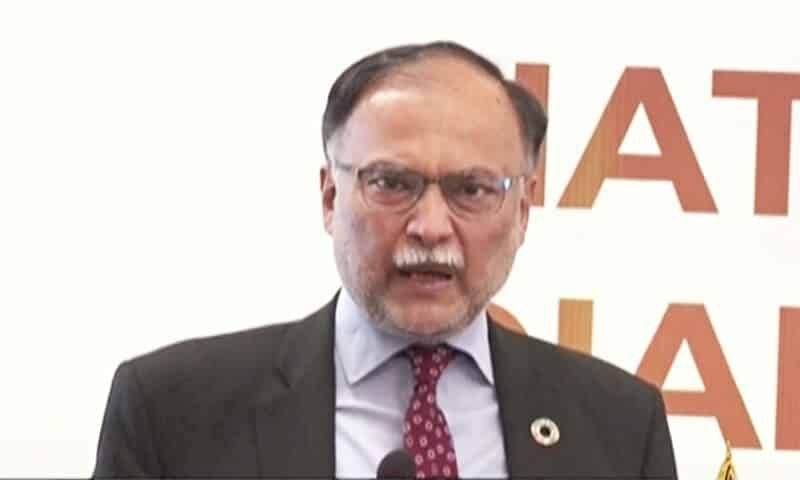
    Federal Minister for Planning Ahsan Iqbal has hit out at speculation that Pakistan is going to default.

    Talking to Geo News’ programme ‘Aaj Shahzeb Khanzada kay Sath‘, he said, “Pakistan is not Africa’s banana republic. We have a large economy. Voices saying that the country is heading towards default shouldn’t come from inside of Pakistan.”

    The federal minister said that when people were saying Pakistan is going to default in two weeks, the coalition government took tough decisions to pull the country out of danger.

    He also took a jibe at the rival party— Pakistan Tehreek-e-Insaf (PTI)— accusing the former ruling party of building the narrative that Pakistan is going to default.

    “Even India is not speculating about Pakistan’s financial crisis but PTI and Imran Khan have launched a war against the country,” he pointed out.

    The federal minister also claimed that 80 per cent of Pakistan’s total debt was taken during Imran Khan’s tenure, which the current government has to handle now.

    He reiterated his government’s commitment to the International Monetary Fund (IMF) programme but added that the administration is trying to minimise the burden on people as inflation is already at a historic high and Pakistan has just suffered a natural disaster that caused damages worth $30 billion.
  • SBP-held foreign exchange reserves drop to 8-year low

    SBP-held foreign exchange reserves drop to 8-year low

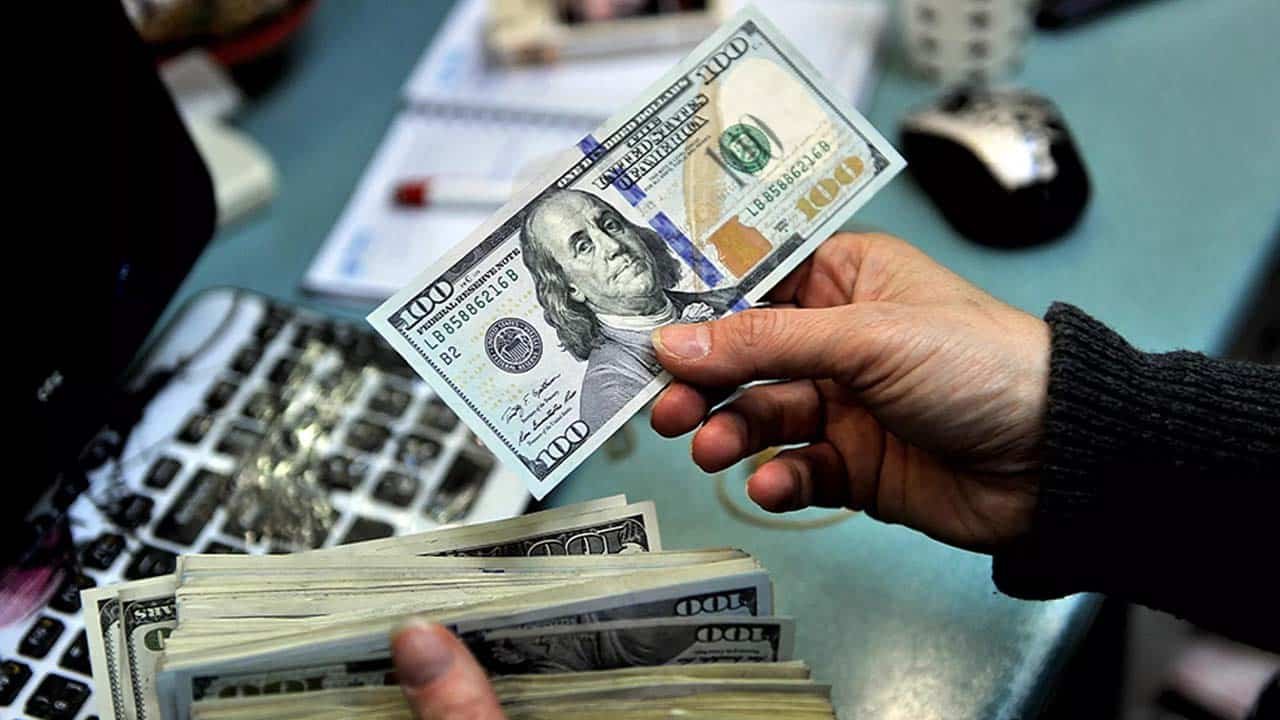
    The foreign exchange reserves held by the State Bank of Pakistan (SBP) continued their declining spree, plunging by $584 million to reach $6.1 billion as of December 16.

    According to SBP, this is the lowest level of reserves since April 2014.

    SBP’s reserves have decreased by $11.6 billion over the past 12 months. The central bank’s reserves, which were $17.7 billion in December 2021 and are now at $6.1 billion, hardly cover a month’s worth of imports.

    Pakistan’s total liquid foreign reserves are currently $12 billion, with $5.9 billion of that amount held by commercial banks as net foreign reserves.

    The lack of foreign assistance along with a delay in the IMF program’s revival, a greater trade imbalance, and rising foreign debt payments severely depleted the reserves.

    The Fund’s criticism over an elevated budget deficit is said to be the reason why the ninth review discussions have been postponed.

    While the IMF urges that the government must stabilize the economy, the government seems unwilling to levy more taxes in order to raise income.

  • S&P Global lowers Pakistan’s credit rating to CCC+

    S&P Global lowers Pakistan’s credit rating to CCC+

    Pakistan’s long-term sovereign credit rating was downgraded by S&P Global from “B” to “CCC+” to reflect the continuous deterioration of the country’s external, fiscal, and economic metrics.

    According to S&P, Pakistan’s already meagre foreign exchange reserves would continue to be under pressure through 2023 without a drop in oil prices or an improvement in international aid. The nation also faces significant political risks that could alter its future course of policies.

    According to the report, Pakistan’s economic and fiscal results are predicted to be negatively impacted by this year’s devastating floods, skyrocketing food and energy prices, and rising global interest rates, with refinancing issues over the medium term.

    The agency maintained its outlook at “stable”.

    With barely enough reserves to pay one month’s worth of imports, a dollar shortage, and a delay in its loan programme with the International Monetary Fund, Pakistan is in the midst of an economic catastrophe. Despite the payment of a $1 billion bond this month, long-term dollar bonds continue to trade at distressed prices, reflecting investors’ lack of confidence in Pakistan’s capacity to meet its international debt commitments.

    Following the terrible floods that hit the country earlier this year, Moody’s lowered Pakistan’s sovereign credit rating by one notch, from B3 to Caa1, citing heightened government liquidity and external vulnerability risks.

  • Aanay waalay dinon mein koyi barra toofaan barpa ho sakta hai: Hamid Mir

    Aanay waalay dinon mein koyi barra toofaan barpa ho sakta hai: Hamid Mir

    Senior journalist Hamid Mir has warned that all is not well in Islamabad and a big storm may hit the corridors of power in the near future.

    While speaking on Geo News’ programme Geo Pakistan, Mir said, “Maujooda haqoomti ittehaad mein sab kuch acha nahin hai aur Islamabad mein honay waali siyaasi garma garmi aanay waalay dinon mein koyi barra toofaan barpa kar sakti hai” (All is not well within the incumbent coalition government. The political heat in Islamabad could create a big storm in the coming days).

    Mir said that if Pakistan Tehreek-e-Insaf (PTI) Chairman Imran Khan dissolves the Khyber Pakhtunkhwa (KP) and Punjab Assembly, then the heat in Islamabad can create a huge storm.

    He was of the view that junior coalition parties could also force Prime Minister (PM) Shehbaz Sharif’s government to hold general elections.

    Separately, differences can also be seen within Pakistan Muslim League-Nawaz (PML-N) as Finance Minister Ishaq Dar and his predecessor Miftah Ismail put forward their conflicting views on the state of Pakistan’s economy.

    While Dar argued that the country’s performance criteria are up to the mark and “complete” for the International Mone­tary Fund’s (IMF) ninth review, Ismail insisted that the default risk wouldn’t subside unless the Fund came to the table.

    Mulk mein default ka khatra hai, says Miftah Ismail

    Miftah Ismail said on Tuesday that there is still a threat of the country defaulting until the government completes the IMF ninth review. On the contrary, Dar said that he was not concerned whether the IMF team arrived or not for the ninth review, asserting that the IMF could “not dictate” the government.

    Appearing on Geo News’ programme ‘Aaj Shahzeb Khanzada Kay Saath”, Miftah rang alarm bells, stating that Pakistan is in jeopardy. “It has gone back in jeopardy and as long as IMF is not back on the table, the threat of default will remain high,” he emphasised.

    Moreover, he believed that the path Pakistan is on might take the country toward default urging the incumbent government to take steps to prevent that from happening.

    On the show, the former minister blamed Khan for the ongoing economic crisis. He said, “Khan is responsible for pushing Pakistan towards default; he is the one who broke his promise with the IMF; Khan is the one who wanted to derail the IMF programme when we tried to revive it under PM Shehbaz Sharif’s leadership.”

    When asked that the incumbent finance minister Ishaq Dar has said several times that IMF is being unreasonable, Miftah responded that first we need to take a good look at ourselves.

    “When the IMF gives you a loan, this means they are helping you out. We need to look at ourselves, why did we go to the IMF previously. Dealing with the IMF is not an easy task,” Miftah said. He reiterated that if the IMF didn’t come to the table, “It will be very difficult to save Pakistan from a default”.

    He stressed that the country needed to take action on certain matters to bring the IMF mission to Pakistan, saying that funds from neighbouring countries could only last the country for weeks.

    Earlier this month, Pakistan ended its immediate default risk when the State Bank of Pakistan (SBP) made a payment of $1 billion for sukuk bond.

  • IMF expected to reach staff-level agreement with Pakistan soon

    IMF expected to reach staff-level agreement with Pakistan soon

    The country representative for the International Monetary Fund (IMF), Ester Perez, has called the conversations with the Pakistani government regarding the ninth review “productive.”

    “Discussions have enabled a revision to the macroeconomic outlook post floods as well as an in-depth evaluation of fiscal, monetary, exchange rate, and energy policies adopted since the completion of the combined seventh and eighth reviews,” said Perez.

    The chief of the IMF in Pakistan stated that the international lender is eager to continue discussions about policies that effectively address the requirements for assistance and recovery after the floods while also maintaining external and fiscal sustainability based on the available resources.

    Furthermore, a senior member of the Pakistani administration told The News that the IMF negotiations were doing well and that a staff-level agreement will likely be reached soon.

    The ninth review was scheduled for November 3, 2022, according to the IMF seventh and eighth review documents, which were published on the website at the end of September 2022.

    After discussions with Pakistani officials that ended on November 18, 2021, the executive board approved the sixth review on February 2, 2022. This delay was brought on by the inability to meet the ‘prior’ conditions.

    The proposed dates for the seventh and eighth reviews were set for March 4 and June 3, respectively, in the staff report that was made public following the approval of the sixth review. However, after talks that ended on May 25, 2022, the IMF executive board accepted the seventh and eighth reviews under the EFF on August 29. This delay was once again caused by the failure to meet the ‘prior’ standards.

  • Pakistan is committed to completing IMF programme while meeting debt repayments on time: Ishaq Dar

    Pakistan is committed to completing IMF programme while meeting debt repayments on time: Ishaq Dar

    Pakistan is committed to completing the International Monetary Fund (IMF) programme while meeting external debt repayments on time, Finance Minister Ishaq Dar said on Tuesday during a meeting with the ambassador of its top bilateral lender, China.

    The country is in desperate need of external financing as the IMF’s review for the disbursement of its next tranche of funding has been on hold since September, according to Reuters.

    Ishaq Dar, the finance minister, stated last week on local television that the IMF was “behaving abnormally” by not finishing the ninth review even though all targets had been met.

    “The Finance Minister … apprised the Chinese Ambassador that the Government remains committed to completing the IMF program while meeting all external debt repayments on time,” the finance ministry said in a statement.

    The IMF programme is “back on track,” according to a separate statement released by the finance ministry on Tuesday, and preparations for the ninth review were well underway.

    An Extended Fund Facility (EFF) bailout for Pakistan in 2019 included a $6 billion bailout that was later increased by $1 billion.

    Dar said that Pakistan’s government has a “realistic plan” for handling the costs associated with rehabilitating the areas damaged by devastating flooding a few months ago during his meeting with the Chinese Ambassador. Official estimates place the cost of flood damage at $40 billion.

    Pakistan is dealing with a balance of payments issue and a growing current account deficit. Dar announced last week that a $3 billion loan from a friendly nation will be used to bolster Pakistan’s foreign reserves, which have fallen to $7.5 billion.

    According to the finance ministry, the government has implemented austerity measures to cut non-essential spending and has prioritised energy conservation to lower its import expenses.

  • IMF asks Pakistan to reduce expenses before loan talks

    IMF asks Pakistan to reduce expenses before loan talks

    The International Monetary Fund (IMF) has asked Pakistan to reduce expenses before talks on the ninth review of a $7 billion loan programme.

    Discussions between Pakistan and the IMF are still underway, but no party has reached a broad agreement on a revised macroeconomic framework for the current fiscal year.

    According to The News, the ninth review’s conclusion and the distribution of the $1 billion tranche might not happen until the following calendar year 2023 as a result of the ongoing negotiations.

    The discussions went on for weeks, but the two parties were unable to agree to begin policy-level discussions to wrap up the approaching ninth review by the end of November.

    Although both Pakistan and the international lender are keeping quiet and refusing to make any public statements, rumours in the background indicate that the talks broke down due to disagreements over the revised macroeconomic and fiscal framework that Islamabad had prepared and shared with the IMF.

    Pakistan must now put in a lot of effort to finish the review by the first week of December 2022. If the negotiations are successful next month, the IMF will ultimately release the next tranche in January 2023 because the Christmas and New Year holidays start after that date. The Executive Board of the multilateral lender will meet the following year to approve Pakistan’s next tranche.

    The News had approached both IMF and Finance Ministry officials to inquire about the exact schedule for the conclusion of the pending review. One close aide of Minister for Finance Ishaq Dar stated that “discussions were going on Zoom. Insha Allah soon (the review will be concluded).”

    The new macroeconomic and fiscal framework for 2022–23 is being contested by the IMF because it thinks the goals are unattainable and at odds with actual conditions.

    The government anticipated nominal growth in the range of 25 per cent, with real GDP growth of 2 per cent and an average inflation rate of 23 per cent, however, the other numbers did not line up with the revised nominal growth estimates.

    The government has not revised the $7.47 trillion yearly objective set by the Federal Board of Revenue (FBR). The IMF, however, thinks that the reduction of imports may result in a shortfall for the tax collector. Second, assuming FBR met its goal, the tax-to-GDP ratio would decline even lower because it did not equal the nominal growth statistics of 25 per cent. Third, the aim of Rs2 trillion in non-tax revenue also might not be met.

    The government had set a target of Rs855 billion before the next budget, therefore the IMF highlighted that the petroleum development levy may not completely materialise. Because the government was unable to impose a fee of Rs50 per litre on diesel and because the consumption of petroleum products fell by 21 per cent, the levy target may now be reduced downward to Rs500 billion.

    Another obstacle to reaching agreement was the government’s failure to pass legislation and reforms to the energy industry.

    Given that the State Bank of Pakistan’s (SBP) reserves currently stand at $7.8 billion, the delay in finalising the IMF agreement could exacerbate the economic problems already plaguing the nation.

  • Nomura warns seven countries including Pakistan are at high risk of currency crisis

    Nomura warns seven countries including Pakistan are at high risk of currency crisis

    The biggest brokerage and investment bank in Japan, Nomura Holdings, has issued a warning that seven nations, including Egypt, Romania, Sri Lanka, Turkey, the Czech Republic, Pakistan, and Hungary, are now at high risk of experiencing currency crisis.

    According to Reuters, the Japanese bank reported that 22 of the 32 nations covered by its internal “Damocles” warning system had witnessed an increase in risk since its last update in May, with the Czech Republic and Brazil experiencing the biggest rises.

    It indicates that since May, the total of the model’s scores for all 32 grew significantly from 1,744 to 2,234 points.

    “This is the highest total score since July 1999 and not too far from the peak of 2,692 during the height of the Asian crisis,” Nomura economists said, calling it “an ominous warning sign of the growing broad-based risk in EM currencies”.

    The model computes an overall score based on eight important variables, including a nation’s foreign currency reserves, exchange rate, financial soundness, and interest rates.

    Nomura calculates that a score above 100 implies a 64 per cent likelihood of a currency crisis in the next 12 months based on data from 61 prior EM currency crises that have occurred since 1996.

    Egypt currently has the lowest score at 165 after devaluing its currency significantly twice already this year and applying for an IMF programme.

    Romania, which has been using interventions to support its currency, is listed next on page 145. Both Turkey and Sri Lanka, which frequently has currency crises due to default, have ratings of 138, while the Czech Republic, Pakistan, and Hungary receive scores of 126, 120, and 100, respectively.

    The Damocles model was also applied by Nomura to the G7 group of advanced countries. The results showed that all but Japan now had Damocles scores over the 100-point barrier, with the United States and Britain leading the way.

    EM economies continue to be increasingly fragile. Due to their incomplete recovery from the COVID-19 epidemic, the majority of countries are currently dealing with high inflation, a finite amount of fiscal room, negative real interest rates, a weakened balance of payments, and reduced FX reserve cover.

    “It is somewhat surprising that there have not been more full-blown EM currency crises this year,” Nomura added.

    “Then again, EM challenges are far from over… The late Professor Rudiger Dornbusch once said, A crisis takes a much longer time coming than you think, and then it happens much faster than you would have thought”.

  • Mazeed mehnga petrol: Oil prices may go up by Rs4 per litre

    Mazeed mehnga petrol: Oil prices may go up by Rs4 per litre

    The government is expected to marginally increase the price of petroleum products for the next two weeks in order to collect revenue from local consumers.

    According to an official of the Petroleum Division, price increases for petroleum products may range from Rs3 to Rs4 per litre.

    He noted that in order to fulfill its promise to the International Monetary Fund, the government was anticipated to adjust tariffs on petroleum goods (IMF). In an effort to increase revenue, it has already increased the petroleum duty on petrol and high-octane blending component (HOBC) to Rs50 per litre.

    The petroleum charge on Super and HOBC is at an all-time high, yet there is no general sales tax on petroleum goods.

    According to sources in the petroleum industry, oil products’ ex-refinery prices could decrease marginally during the next two weeks. According to them, the price of gasoline might drop by about Rs1.6 per litre and the price of high-speed diesel (HSD) by Rs3, although they said that these figures did not account for exchange rate loss adjustments. As a result, given that the government skipped it the last time, there might be an addition of around Rs 4 to the price of HSD per litre.

    Additionally, they noted that the previous oil price revision had resulted in a negative Inland Freight Equalisation Margin (IFEM) of roughly Rs 5 per litre for HSD consumers; however, it was anticipated that this would change in the new price announcement.

    In addition to this, changes in the petroleum levy on HSD and the imposition of general sales tax on both gasoline and HSD also affect price revision.

    Oil prices had previously been held steady for the seven days of November 1–15.

    For the first week of November, it was anticipated that the price of gasoline would decrease by Rs2.86 per litre and the price of HSD would increase by Rs3.70 per litre in accordance with the Platts trading platform and exchange rate movement. The government, however, refused to lower the price of petrol for the public.

    HSD currently costs Rs235.30 per litre, while a litre of petrol costs Rs224.80. Light diesel oil costs Rs186.50 per litre, while kerosene costs Rs191.83 per litre.

  • Petroleum prices to remain unchanged for next fortnight

    Petroleum prices to remain unchanged for next fortnight

    For the upcoming two weeks, the government has decided to keep petroleum product prices unchanged.

    Ishaq Dar, the finance minister, made the announcement during a press conference.

    This means that the price of petrol will remain unchanged at Rs224.80 per liter, high-speed diesel (HSD) at Rs235.30, light diesel oil (LDO) Rs186.50, while kerosene will be sold at Rs191.83.

    It is important to note that the administration did not change the prices during the most recent fortnightly review. The government refused to lower the price of gasoline for the general population by raising the petroleum development levy (PDL) by Rs14.84.

    Dar also stated that the government will clear the outstanding letters of credit (LCs) after speaking with the State Bank of Pakistan (SBP), with the cap increasing to $100,000 from the existing $50,000 as of November 1.

    Despite the relief, locals are forced to buy petrol for their daily commute at outrageously high costs. Contrarily, it is anticipated that CNG stations in Punjab and Sindh may be closed for longer than four months, which has made the issues of the populace much worse.