Tag: IMF

  • Oil sales fell by 11 per cent as prices rose to highest levels

    Oil sales fell by 11 per cent as prices rose to highest levels

    In June 2022, overall sales of petroleum and lubricants were 1.93 million tonnes, down 11 per cent from the previous month but unchanged from the previous year.

    Petrol and high-speed diesel (HSD) sales both experienced significant monthly declines, falling by 12 and 16 per cent, respectively.

    Sales of all oil products rose by 16 per cent YoY to 22.595 million tonnes during FY22 from 19.45 million tonnes during the same period in FY21.

    Analyzing the data demonstrates that expansion was seen in all categories, with offtake increasing to 8.95 million tonnes, 8.87 million tonnes, and 4.04 million tonnes, respectively, up by 9 per cent, 15 per cent, and 35 per cent on YoY compared to the same period last year.

    Ismail Iqbal Securities analyst Abdullah Umer stated, “We believe that significant rise in both diesel and petrol prices are the main reason behind the decline in retail sales.”

    According to the brokerage house, “Healthy economic activity, robust agricultural activity, upbeat automobile sales, and curb of HSD smuggling remained major drivers behind such stupendous growth.”

    Although the current government has chosen to manage petroleum product prices by levying a Petroleum Development Levy (PDL) and sales tax even if international oil prices decline, the brokerage house anticipated a further slowdown in diesel and gasoline sales going forward.

    In the coming months, retail fuel demand is likely to be further impacted by an increase in carpooling, increased use of public transportation, a change in consumer behaviour (moving from passenger cars to two-wheelers), high inflation, and a general slowdown in economic activity.

    “We expect RFO sales to remain intact due to a likely decline in RLNG & imported coal-based power generation.”

    The government announced a late-night price increase for petroleum products on Thursday, raising the ex-depot price of gasoline to Rs248.74 per liter (after an increase of Rs14.85) and diesel to Rs276.54 (after a hike of Rs13.23).

    Diesel was previously priced at Rs263.31 per litre and petrol at Rs233.89.

    The pricing structure included a Rs10 petroleum levy on gasoline. The cost of high-speed diesel, kerosene, and light diesel oil has also increased by Rs5 per litre.

    Finance Minister Miftah Ismail announced the government’s decision, stating that these prices would go into effect at midnight in order to make up for the Rs-230 billion loss experienced during the fiscal year that ended on June 30th, 2022.

    According to him, the country’s budget deficit, which reached a historic high of Rs5 trillion, made the increase in these prices inevitable.

  • Petroleum levy of Rs50 per liter approved in Finance Bill 2022–23

    Petroleum levy of Rs50 per liter approved in Finance Bill 2022–23

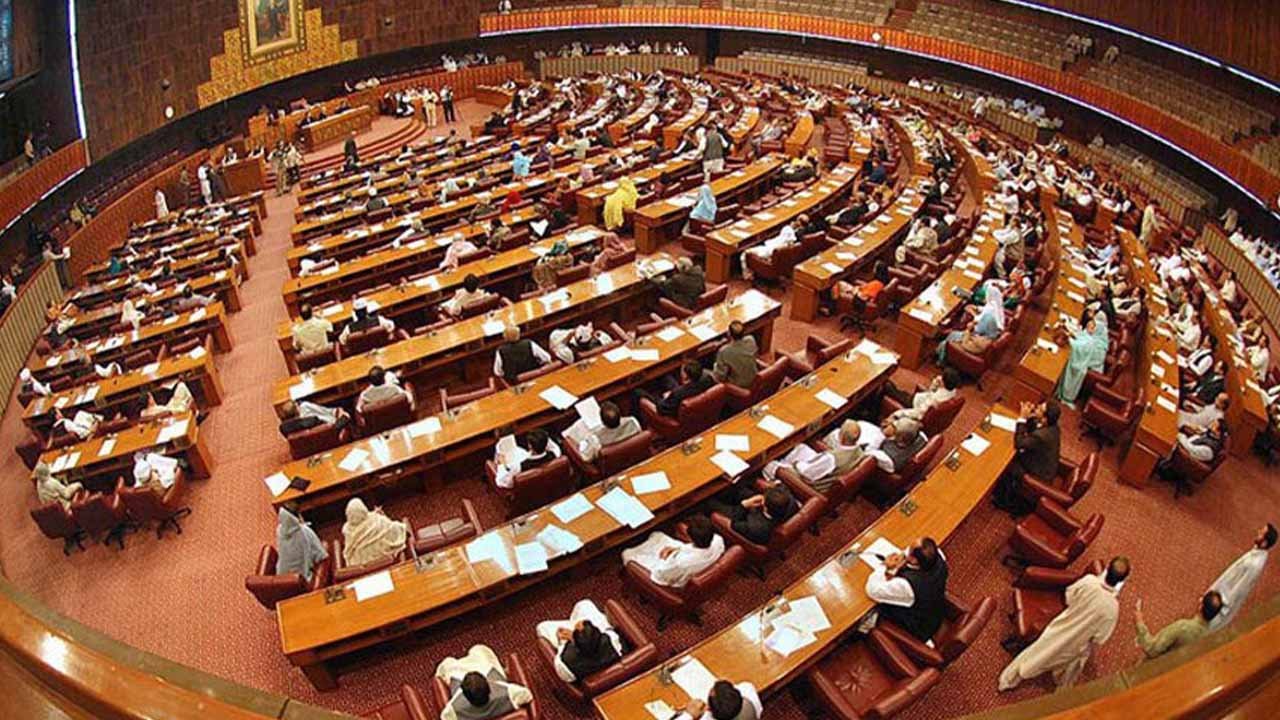
    On Wednesday, the National Assembly approved an amendment to the Finance Bill 2022 that will allow the government to increase the fuel levy to Rs50 per liter.

    During the National Assembly session held to discuss the amendments to Finance Bill 2022, Finance Minister Miftah Ismail made it clear that the amendment grants the government the authority to impose a tax of no more than Rs50 per liter. The levy will not be implemented instantly, he said.

    He went on to say that the levy had been temporarily kept at zero by the government. Throughout the upcoming fiscal year, the levy will be gradually implemented.

    According to The News, about 80 per cent of the amendments to the finance bill, according to State Minister for Finance and Revenue Ayesha Ghous Pasha, were tax-related.

    She emphasised that the government’s objective was to burden the wealthy while sparing the rest of us.

    The participants also agreed to impose a 5 per cent tax on the services of IT and software consultants in addition to the collection of sales tax through shopkeeper utility bills.

    Additionally, a change to revoke the salary class’s relief was approved. Individuals earning between zero and Rs600,000 annually would not be subject to income tax, per the initial budget proposals (where salary income exceeds 75 per cent of taxable income). The following slab would have had a nominal deduction of Rs100 per year (those earning between Rs600,000 and Rs1.2 million per year).

    With the new rates, those making between Rs0.6 and Rs1.2 million annually will now be required to pay 2.5 per cent in income tax.

    Furthermore, a 10 per cent super tax on 13 high-income sectors was approved by the National Assembly. The 10 per cent super tax on large industries was announced by Prime Minister Shehbaz Sharif on Friday in his “bid to relieve the general public of tax pressures.”

    “The revenue generated by this tax will be used to alleviate poverty in Pakistan, and it will be funded by high-income earners,” he said following a meeting with the government’s economic team.

    The tax will be levied on the cement, steel, sugar, oil and gas, fertiliser, LNG, textile, banking, automobile, beverages, chemicals, and tobacco industries. Later, Miftah Ismail, the finance minister, added airlines to the list, bringing the total to 13 sectors.

    Miftah went on to explain that the indirect tax (super tax) was intended to help the state accumulate funds under the heading of tax collection and reduce the budget deficit. He also stated that the fee was a one-time levy.

    The government’s proposed 1-4 per cent super tax on high-income individuals’ salaries was also approved by the National Assembly.

    The leadership levied a 1 per cent tax on those making up to Rs150 million annually, a 2 per cent tax on those making up to Rs200 million annually, a 3 per cent tax on those making up to Rs250 million annually, and a 4 per cent tax on those making up to Rs300 million annually.

    Additionally, a change was approved that imposes a tax on imported mobile phones that ranges from Rs100 to Rs16,000 depending on their value.

    Late Tuesday night, new amendments were added to the Finance Bill, 2022, including a potential reduction in the sales tax rate on the import of pharmaceutical raw materials from 17 per cent to 1 per cent, a tax exemption for theatres and production companies, and a change in the definition of “deemed rental income” by replacing the words “immovable properties” with “capital assets” and other changes.

    Under the revised Finance Bill 2022, the FBR also decreased the capital value tax (CVT) on vehicles from 2 per cent to 1 per cent.

  • ‘Ultimate goal is self-reliance’: PM Shehbaz on Pakistan receiving $2bn from IMF

    ‘Ultimate goal is self-reliance’: PM Shehbaz on Pakistan receiving $2bn from IMF

    Prime Minister (PM) Shehbaz Sharif was informed by Finance Minister (FM) Miftah Ismail that Pakistan could receive Rs2 billion from the International Monetary Fund (IMF).

    “Miftah Ismail sent a message this morning saying that Pakistan will receive not $1 billion but $2 billion from the IMF. I told him in response, Alhamdulillah, but our ultimate goal is self-reliance,” said PM Shehbaz while addressing the “Turn Around Pakistan” conference.

    The premier’s address comes shortly after Ismail confirmed Pakistan has received the Memorandum of Economic and Financial Policies (MEFP) from the IMF for the seventh and eighth reviews.

    The draft MEFP is a prerequisite to paving the way toward striking a staff-level agreement.

    PM Shehbaz said that although the Opposition created much political drama in recent weeks, he will ask whether it is the “choosers” that are now going to receive $2 billion or “the other word”, referring to beggars from the phrase “beggars can’t be choosers”.

    “There is no shortage of anything in Pakistan and there are experts in every field,” said PM Shehbaz, before lamenting that “billions of dollars are buried in Reko Diq but we have not earned a single penny”.

    “It is a pity that the country’s development and prosperity have not been achieved,” he said.

    Addressing the conference before PM’s speech, Ismail said that when he messaged Prime Minister Shehbaz Sharif about the development, he replied: “Well done. But remember our ultimate goal is self-reliance. That will be our legacy,” Miftah said, quoting PM Shehbaz.

  • NEPRA announces increase of Rs7.90 per unit in power tariff

    NEPRA announces increase of Rs7.90 per unit in power tariff

    An additional increase in the price of power of Rs7.90 per unit was announced by the National Electric Power Regulatory Authority (NEPRA) on Monday.

    After hearing the Central Power Purchasing Agency’s (CCPA) argument today, the power regulatory authority made the final hike announcement, according to ARY News.

    It is worth noting that life consumers and K-Electric are protected from the tariff increase and that the amount would be paid in July’s bills.

    In response to a request from CPPAG for a raise of Rs7.96 per unit, the increase was granted under fuel adjustment costs (FAC) for the month of May 2022, according to a notification released by the power regulating authority.

    Additionally, after a substantial increase of Rs7.91 per unit, the National Electric Power Regulatory Authority has just set the power rate at Rs24.82 per unit for the fiscal year 2022–23.

    The authority approved a Rs5.27 per unit increase in electricity rates for K-electric customers on June 24.

    According to a handout provided by NEPRA, K-Electric requested an increase in the electricity rate of Rs5.25 to account for fuel adjustment charges for April.

    Earlier, The Economic Coordination Committee (ECC) of the cabinet approved an increase in power costs for K-Electric customers of 57 paisa per unit.

    However, ECC deferred making a decision on a different proposal that called for charging K-Electric customers a surcharge of Rs1.45 per unit in order to recover Rs113.1 billion in past-due amounts related to quarterly rate increases. 

  • Govt raises tax rates for salaried class on IMF demands

    Govt raises tax rates for salaried class on IMF demands

    In response to the International Monetary Fund’s (IMF) recommendation to eliminate relief provided on June 10, the coalition government on Friday announced amended tax deduction rules for the salaried class.

    The News reported on Saturday that the Federal Board of Revenue’s (FBR) target for tax collection for the fiscal year 2022–23 has been raised to Rs7,470 billion, an increase of Rs466 billion.

    In order to raise the collection, the government had to take harsh measures, such as boosting the tax rates for high earners to raise Rs120 billion for fighting poverty and Rs35 billion for the salaried class.

    For the upcoming fiscal year 2022–2023, the government imposed a 10 per cent super tax on 13 high-earning sectors, which will cost Rs80 billion in income.

    The government increased the Personal Income Tax (PIT) by Rs80 billion by abolishing tax relief worth Rs47 billion and then increasing the tax amount by Rs35 billion. As a result, the FBR was expected to collect Rs235 billion from the salaried class in the upcoming budget, up from Rs200 billion in the preceding fiscal year.

    The PTI-led government had promised to raise the tax revenue by Rs335 billion by increasing the tax slab rates for the salaried class, but the PDM-led coalition government persuaded the IMF to accept Rs100 billion less than the amount the PTI-led government had promised to raise.

    The government suggested a tax rate of 2.5 per cent for the salaried class for income brackets of Rs50,000 to Rs100,000. The proposed tax rate increased to 12.5 per cent for income earners who make between Rs100,000 and Rs300,000 per month.

    The FBR proposed raising the tax rate from 17.5 per cent to 20 per cent in cases where the taxable income is greater than Rs3,600,000 but not greater than Rs6,000,000. The FBR tax rate is proposed to rise from 22.5 per cent to 25 per cent where the taxable income exceeds Rs6,000,000 but does not exceed Rs12,000,000.

    The FBR will charge a tax amount of Rs2,004,000 plus 32.5 per cent of the amount exceeding Rs12,000,000 on an annual basis where the taxable income exceeds Rs12,000,000. The FBR suggested a 35 per cent tax rate for the aforementioned income.

  • Pakistani rupee fell by 34 per cent in FY 2021-22: Report

    Pakistani rupee fell by 34 per cent in FY 2021-22: Report

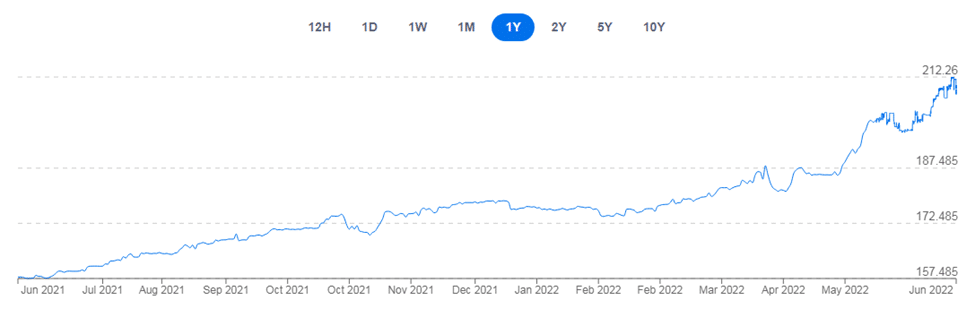
    Pakistan’s fiscal year starts on July 1st and ends on June 30th. The rupee to US dollar exchange rate was Rs158.06 at the beginning of fiscal year 2021-2022, and it reached an all-time high of Rs212.103 in the inter-bank market on June 21, 2022. This represents a depreciation of more than 34 per cent in less than a year.

    The graph below demonstrates how the PKR to USD exchange rate varied over time:

    During the fiscal year 2020-2021, the local currency plunged 17.47 per cent from Rs158.062 to Rs184.159 in 9 months, from July 1, 2022 to April 11, 2022, under the PTI regime. Since PDM took over, the rupee has lost nearly 14.31 per cent of its value in just three months.

    The table below compares PKR to dollar values over time, as well as the government in power at the time:

      PKR to Dollar Government
    July 2021 158.062 PTI
    August 2021 162.571 PTI
    September 2021 166.872 PTI
    October 2021 170.997 PTI
    November 2021 170.92 PTI
    December 2021 176.042 PTI
    January 2022 176.214 PTI
    February 2022 176.736 PTI
    March 2022 177.573 PTI
    April 2022 184.159 PTI and PDM
    May 2022 185.794 PDM
    June 2022 197.744 PDM
    June 23 2022 207.516 PDM

    Dollar demand remains strong in the market, pushing the greenback’s value higher against the rupee. The local currency is likely to remain volatile until the IMF agrees to disburse the next tranche of loans to Pakistan.

  • ‘IMF programme will be revived soon’: Miftah Ismail

    ‘IMF programme will be revived soon’: Miftah Ismail

    Pakistan and the International Monetary Fund (IMF) evolved a broader agreement on the budget 2022-23 to revise upward the Federal Board of Revenue (FBR) target and slash down the expenditures to achieve a revenue surplus in the next fiscal year.

    Federal Minister for Revenue and Finance Miftah Ismail had already indicated the revival of the agreement with IMF within a day or two.

    “I am very hopeful that the IMF programme will be revived soon,” said the finance minister. “Pakistan and the IMF locked the budget details and achieved substantial progress on finalising budgetary targets for 2022-23.”

    “Now the Memorandum of Economic and Financial Policies (MEFP) will be shared by the IMF soon,” the minister said.

    “Discussions between the IMF staff and the authorities on policies to strengthen macroeconomic stability in the coming year continue, and important progress has been made over the FY23 budget,” Esther Perez Ruiz, the IMF’s resident representative in Islamabad, told Reuters.

    Miftah said that the government would target raising 96 billion rupees from privatisation in 2022/23. In the current fiscal year, the government did not raise any funds from privatisation.

  • US agrees to help Pakistan negotiate a deal with IMF

    US agrees to help Pakistan negotiate a deal with IMF

    The United States (US) has agreed to help Pakistan negotiate a deal with the International Monetary Fund (IMF).

    According to media reports, Pakistan’s Ambassador to the United States Masood Khan met Assistant US Trade Representative (USTR) for South and Central Asia Christopher Wilson to discuss expanding trade relations between the two countries and encouraging US investments in Pakistan.

    Pakistan has not yet received the first draft of a memorandum of financial and economic policies (MEFP) from the IMF as targeted earlier because certain matters remained unsettled. “We are working very closely with the IMF and will soon reach some conclusion,” a top finance ministry official told Dawn.

    Pak govt asks US to help with IMF deal

    Last week, Pakistan asked for the support of the US for the revival of the IMF programme, reports Shahbaz Rana for The Express Tribune.

    The Shehbaz-led government’s economic team met with US Ambassador Donald Blome and sought Washington’s support and acknowledgement of the actions taken.

    According to the news outlet, Finance Minister Miftah Ismail and Minister of State for Finance Dr Aisha Pasha met with the US envoy. 

    The government is making all-out efforts to revive the programme and has taken many unpopular steps, but still remains short of the IMF’s expectations.

    The IMF not only wants a reversal of the cut in the income tax rates for the salaried class but is seeking to pass on an additional burden of Rs125 billion on the salaried people. The government has now worked out a new proposal that entails reversing Rs47 billion tax relief and then passing on an additional burden of Rs18 billion to the salaried class, reports Shahbaz Rana.

    The Tehreek-e-Insaf (PTI) led- government had committed to increasing the taxes on the salaried class with effect from July and also agreed to share the draft of the personal income tax reforms with the IMF by end of February 2022. However, PTI did not fulfil its commitments.

    Minister of State for Finance Dr Aisha Pasha said that there was now more clarity to the IMF on the new budget, hoping to sign a deal very soon.

    On Wednesday, the federal government increased the price of all petroleum products, including Rs24 per litre for petrol and Rs59.16 per litre for high-speed diesel (HSD). In less than a month, this is the third hike.

    Miftah Ismail criticised the previous PTI government for reaching an erroneous agreement with the IMF, which tied the incumbent’s hands and forced it to raise oil prices to get the economy back on track.

  • ‘Free and fair’ elections, demands Khan

    ‘Free and fair’ elections, demands Khan

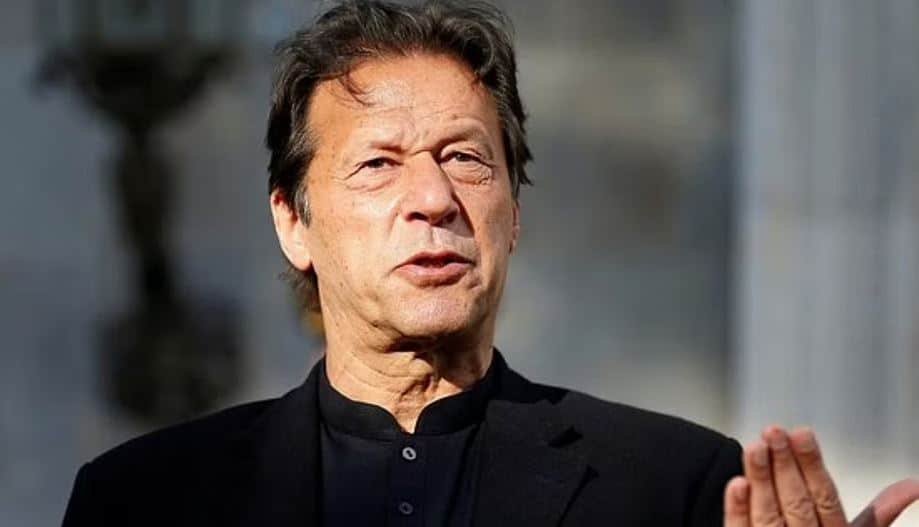
    Chairman Pakistan Tehreek-e-Insaf (PTI) Imran Khan on Sunday demanded free and fair election and revealed that he expects match-fixing in Punjab by-elections.

    PTI took out countrywide protests against rising inflation at Khan’s call on Sunday. Khan addressed his supporters via video-link.

    On Monday, Khan thanked his supporters for coming out across Pakistan yesterday, especially those “who braved difficulties & in some cities rain, to join our protest against massive inflation & clearly reject Imported Govt of crooks imposed by US regime change conspiracy”.

    No free lunch, warns Khan

    Imran Khan warned that Pakistan can become the next Sri Lanka. He said that Finance Minister Miftah Ismail has asked for the support of the United States (US) for the revival of the International Monetary Fund (IMF) programme. “I want to tell Miftah Ismail and Shehbaz Sharif that the Americans have a philosophy, which is that there is no free lunch. Everything has a price. The US will extract our sovereignty as a price.” Khan said that the new government seems ready to pay this price.

    Recognising Israel part of foreign conspiracy agenda: Khan

    Khan also mentioned Pakistan People’s Party (PPP) Senator Saleem Mandviwalla’s statement on the potential of Pakistan having diplomatic ties with Israel. “This is part of the same agenda due to which there was a regime change. The agenda is to follow what Israel, India and the US want,” said Khan.

    However, Mandviwalla clarified on Sunday that his words were being taken out of context. “I never wanted Pakistan to further ties with Israel or indulge in trade with it,” said Mandviwalla, adding that recognising Israel was not in Pakistan’s interests.

    Match-fixing in Punjab by-polls on the cards

    “We have to struggle together. Get ready. I will soon give another call for protest, which will continue until we are given a date for free and fair elections. Not just elections but free and fair elections,” said Khan.

    He reiterated that there is a plan of rigging by-elections in Punjab through ‘match-fixing’. By-polls in Punjab are set to take place next month in July.

    Imran Khan’s full address can be seen here:

  • DG Khan Cement to export 50,000 tonnes of cement to the United States

    DG Khan Cement to export 50,000 tonnes of cement to the United States

    Following long and complex certification processes, D.G. Khan Cement Company Limited (DGKCL), one of Pakistan’s largest cement producers, is set to export 50,000 tonnes of the building material to the sophisticated US market.

    This is a positive development for Pakistan, which is struggling to boost exports in the face of a burgeoning trade deficit that has steered the rupee to historic depths. The process took almost ten months for the renowned industrial group to complete the necessary certifications for delivering cement to US markets after winning the contract. TXDOT, LDOT, NCDOT, and SCDOT are among the certifications available.

    According to Brecorder, the company’s CFO, Inayat Ullah Niazi, stated that a ship was currently loading cement at a port in Karachi for delivery to Houston.

    It was not easy for the company to meet the contract for a monthly supply of 100,000 tonnes of cement to Texas. In August of last year, DG Khan Cement signed a contract with a US company for the year 2021.

    Since the United States lacks cement production, it imports it from Mexico, Canada, and Turkey.

    Finally. a Pakistani cement supplier has entered the US market for the first time, as demand for the construction material has risen dramatically, with buyers looking for other options in the wake of President Joe Biden’s $6 trillion infrastructure package.

    All of the mega infrastructure in the United States, including roads, bridges, and other structures, would be rebuilt as they were nearly a century ago under the announced package.

    Pakistan exported 4.971 million tonnes cement in the first 11 months of the current fiscal year (July-May), a negative growth of 43.32 per cent, according to export data. Cement exports to Afghanistan were only 813,493 tonnes during this time, a negative 65.04 per cent increase.

    With only 1.478 million tonnes exported, exports to other countries experienced negative growth of 27.2 per cent.

    As per industry insiders, after DG Khan Cement began discovering the US market for cement exports, other larger players began the certification process for their goods.

    According to the latest figures released by the Pakistan Bureau of Statistics (PBS), the country’s exports declined by 10.22 per cent on a monthly basis in May 2022, falling to $2.6 billion from $2.897 billion in April 2022.

    D.G. Khan Cement, one of Pakistan’s largest cement producers, earned Rs4.1 billion in the nine-month period ending March 31, 2022, a 26 per cent increase in profit. In the same period of 2020-21, the company made Rs3.25 billion in profits.

    It is worth noting that the business also received orders for cement export to the Philippines back in 2020.

    With a nearly 50 per cent (Rs300 per bag) increase in the last 12 months, more price increases would be required to offset the coal cost impact.