Tag: IMF

  • What to expect from the upcoming budget 2022-23

    What to expect from the upcoming budget 2022-23

    Pakistan is escalating efforts in order to revive the stalled loan from International Monetary Fund (IMF) programme, as the prerequisites are steadily being completed.

    The revival of the bailout will provide much-needed relief in order to keep Pakistan’s economy afloat and avoid default as Pakistani currency has plummeted 9 per cent in the last month, recording the poorest performance among Asian currencies.

    According to Geo, the key policy rate was recently raised by 150 basis points to 13.75 per cent, while the price of fuel has now risen by Rs60 a litre in less than a month and is being sold at from Rs209 to Rs212 (depending on the area).

    In an interview with a private channel, the finance minister discussed the government’s decision to raise petroleum product pricing, saying that despite the difficult decision, the government is still losing money on gasoline and diesel.

    These moves are highly affecting the masses, but they are essential as the IMF programme is crucial to fix the country’s economy. Also, petroleum prices are projected to continue to rise along with power tariff.

    Increase in income tax

    An increase in income tax is a major policy recommendation from the international lender in the approaching budget for the fiscal year 2022-23.

    All suggestions are expected to enhance Pakistan’s tax income.

    The IMF issued the following rules for Personal Income Tax (PIT) in its February conditions:

    1. Lower the number of tax bands.
    2. Cut tax credits and allowances (excluding disabled and old persons, as well as Zakat receipts).
    3. Implement special tax processes for very small taxpayers.
    4. Increase the number of people who pay taxes. As the change maintains the present PIT threshold, low-income households will be safeguarded (almost three times income per capita).

    If these policy recommendations for the forthcoming budget are enacted, the tax system will be simplified and the income tax regime will be more progressive.

    These recommendations are anticipated to increase the country’s tax revenue. It will also make the system more progressive, as people with higher incomes will be required to pay more.

    Salaried class

    The burden on the salaried class, which is already heavily under pressure, may be increased. It will make working less appealing because a large portion of the wage will be devoted to direct personal income tax.

    The IMF proposed taxing the upper-middle class and wealthy individuals with monthly incomes ranging from Rs104,000 to Rs1 million at a uniform rate of 30 per cent.

    The idea demonstrates inequality in taxation, and if approved, it might leave the majority of salaried workers worse off in the face of double-digit inflation.

    On the other hand, Federal Minister for Finance and Revenues Miftah Ismail categorically stated last month that the government would not add to the burden on the salaried class and pensioners in the coming budget. 

    According to sources, the maximum rate of 30 to 35 per cent for salaried and business class individuals earning Rs20 million per year could be increased.

    Special tax proposal for small taxpayers

    Imposing a tax on small taxpayers can overcome the long-term structural problems and correct internal and external imbalances. Our tax-to-GDP ratio has remained below 11 per cent, which is lower than regional standards.

    Two-thirds of our overall taxation is made up of indirect taxation. This level of indirect taxation is not only excessive, but it also makes the system less progressive.

    Currently, a labourer pays the same amount of GST as the country’s richest man.

    Agriculturalists and real estate barons are the most important import consumers. As a result, the lack of taxation in agricultural and real estate contributes to the underlying imbalances in the external sector.

    Low-income households

    Low-income households are expected to be protected from policy interventions after the government publishes the upcoming budget, as the Personal Income Tax (PIT) threshold of three times per capita income would stay in place.

    Genuine taxpayers can also decrease their tax payments by clever investments under the Income Tax Ordinance 2001, taking into account all of the foregoing.

    In the fiscal year 2022-23, policymakers must aim to increase the tax net and the tax-to-GDP ratio as there is no chance for the country to progress without it.

    Pakistan must pay $21 billion in foreign debt payments by next year, according to the Finance Minister, while the current account deficit is $10-12 billion.

    He said, “We will also try to tilt away from the wealthy elite towards to low incoming masses, I will impose more taxes on the wealthy, but no taxes will be levied on the salaried class”.

    The wealthy and capable must prepare to pay their fair share of taxes, or the country will soon be back on the IMF’s doorstep.
  • Khan or Shehbaz: Who should be blamed for the massive petrol bomb?

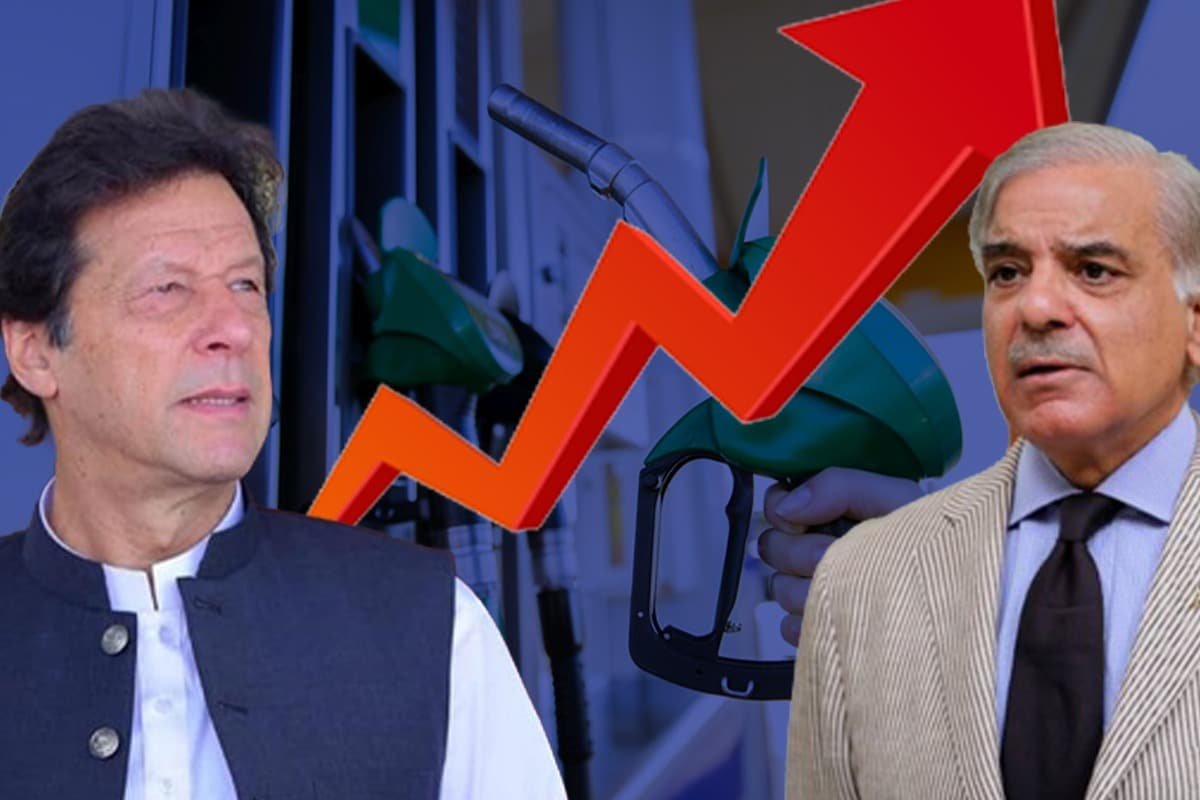
    Khan or Shehbaz: Who should be blamed for the massive petrol bomb?

    The incumbent government on Thursday unleashed another massive gasoline bomb on the country after another hike of Rs30. In less than a month, the price of petrol has risen by Rs60 to Rs209.86. The recent hike has been made to meet the International Monetary Fund’s (IMF) conditions.

    The latest petrol price hike came just hours after the National Electric Power Regulatory Authority (NEPRA) approved a power tariff hike of Rs7.91 per unit.

    The question remains who should the Pakistanis blame for the burden the governments of the past and present putting them?

    The interfering ex-prime minister is distracting the government with his constant threats

    The Economist magazine in its recent article titled, “Imran Khan is jeopardising Pakistan’s attempts to fix its economy” has blamed the former Prime Minister (PM) Imran Khan as the reason for what is happening in Pakistan.

    “The reserves are at their lowest level since 2019, when Pakistan last sought help from the IMF. Only half the $6bn bail-out agreed at the time has been disbursed. Mr Khan, then prime minister, originally agreed to cut subsidies and reform the economy but reduced fuel prices instead. The country is running deficits on both its budget and its current account. It needs some $37bn worth of financing for the fiscal year beginning in June, reckons the finance minister,” writes The Economist.

    The Economist further writes about how the federal capital witnesses a protest once every year where the state gets questioned and those in power are demanded answers. But this time it was a former premier whose continuous marches and threats are creating instability. “The interfering ex-prime minister is distracting the government with his constant threats.”

    “Mr Khan does not appear to be giving up hope. He is petitioning the Supreme Court to guarantee safe passage for potential follow-up marches. The coming spate of painful economic moves will supply him with plenty of excuses to paint the government as American stooges and enemies of the people. The appointment of a new army chief, due in November, will add yet more uncertainty to the political balance. To fix its economy, Pakistan badly needs stability. It will spend the coming months with anything but,” writes The Economist.

    Hesitation to get cheap oil from Russia

    The Current reached out to Pakistan Tehreek-e-Insaf’s (PTI) Spokesperson on Economy and Finance, Muzzammil Aslam and he said, ” First international markets, second lack of planning by the current government, and the hesitation to get cheap oil from Russia is the reason for the recent petrol bomb.”

    “The price pass-through could be lower if they cut the refinery margins. Lastly, it is not necessary to raise prices, one can make up subsidies by imposing windfall taxes, wealth taxes etc,” says Aslam.

    Read more: Fact Check: Imran Khan did not arrange a 30% cheaper oil deal with Russia

    Decreasing prices was a selfish political move by PTI, but PMLN led-govt should have fixed it immediately

    The Current reached out to Geo News’ Anchorperson Shahzad Iqbal to ask for his point of view on the present conditions being faced by the people. Commenting on the issue Iqbal said, “Decreasing prices was a selfish political move by the PTI government to either survive or to create hurdles for the incoming government. But Pakistan Muslim League-Nawaz (PML-N) led government should have fixed it immediately.”

    “The delay by the sitting government cost Pakistan Rs150 billion,” said Iqbal.

  • Petrol quota for ministers, govt officials in Sindh lowered by 40 per cent

    Petrol quota for ministers, govt officials in Sindh lowered by 40 per cent

    Sindh Chief Minister (CM) Murad Ali Shah lowered the petrol allotment of ministers and government officials by 40 per cent this week as part of his moderation campaign following another spike in petroleum prices.

    Keeping in view a substantial spike in POL prices within the last few days, the decision was made to limit spending and decrease the strain on the national kitty.

    “The rise in petrol price should not be a burden on the exchequer,” Sindh CM Murad Ali Shah said, increasing the treasury’s load entails intensifying the burden on individuals.

    To meet the International Monetary Fund’s (IMF) conditions, the government has unleashed another big gasoline bomb on the country after another hike of Rs30. In less than a month, the price of petrol has risen by Rs60 to Rs209.86.

    The latest petrol price hike came just hours after the National Electric Power Regulatory Authority (NEPRA) approved a power tariff hike of Rs7.91 per unit.

    The price hike sparked riots in Karachi, with protesters wrecking a petrol pump and torching tyres on University Road. Despite expressing their dissatisfaction with the situation, the general public has requested that the government tightens its belt instead of putting the weight on the populace.

    Senator Mustafa Nawaz Khokar, a top PPP lawmaker, also shared this attitude, suggesting a 50 per cent wage cut for politicians, generals, judges, and senior bureaucrats.

    “Why should common folk shoulder the failures of the political, military and judicial elite? This joke has to end”.

    If the average citizen is compelled to narrow his belt, Khokar believes that politicians, generals, judges, and top bureaucrats’ income should be halved and all amenities, including free utilities, should be removed.

    The administration warned on June 2 that it would raise fuel prices by Rs30 for the second time in ten days, as an attempt to obtain the remaining funds from IMF.

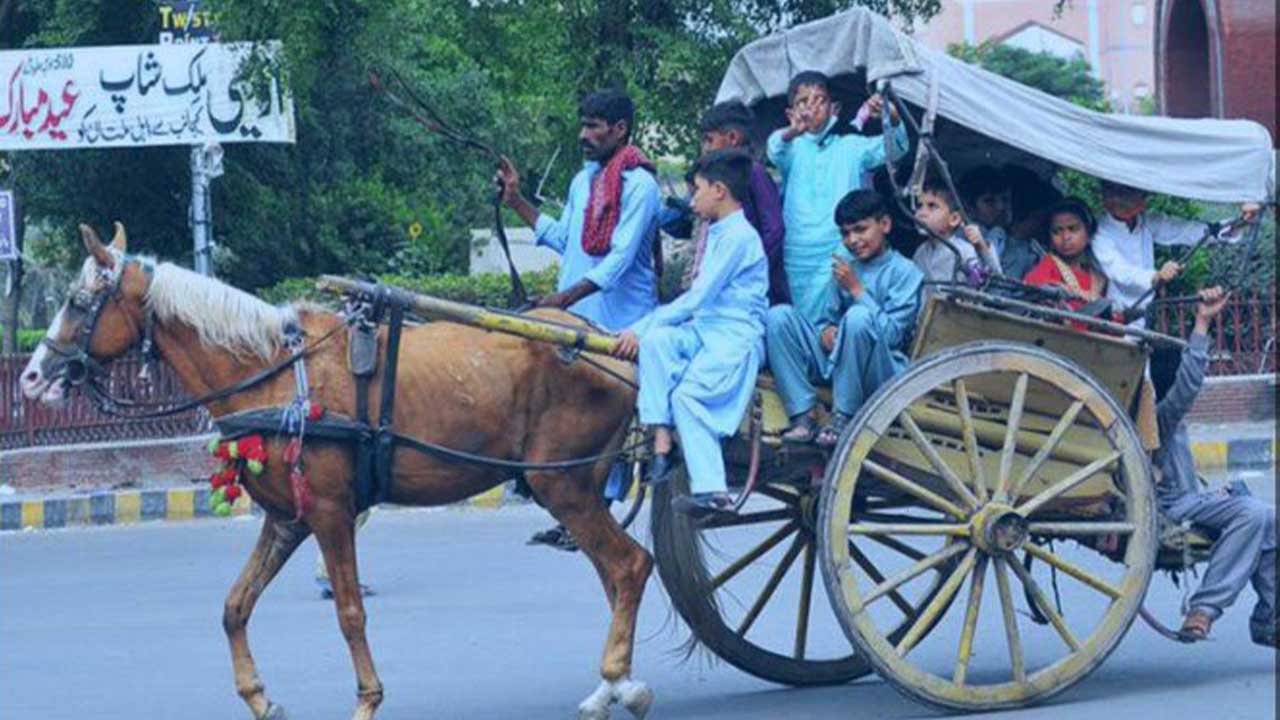
  • Netizens want ‘tangas’ back on roads as petrol hits Rs209.86

    Netizens want ‘tangas’ back on roads as petrol hits Rs209.86

    To meet the International Monetary Fund’s (IMF) conditions, the government has unleashed another big gasoline bomb on the country after another hike of Rs30. In less than a month, the price of petrol has risen by Rs60 to Rs209.86.

    The latest petrol price hike came just hours after the National Electric Power Regulatory Authority (NEPRA) approved a power tariff hike of Rs7.91 per unit.

    In an attempt to save money, a large number of people rushed to nearby petrol pumps to fill up their tanks before midnight. Numerous two-wheelers, as well as sedans and full-fledged SUVs, formed long lines outside gas stations.

    Several traffic bottlenecks were observed in key areas of Lahore, Karachi and Islamabad due to long queues of automobiles.

    Netizens expressed their displeasure on social media platforms, alleging that petrol had become out of reach for the general public.

    Despite hefty price increases that would unleash a strong wave of inflation, Pakistan is still far from reaching an agreement with the IMF which requires a budget agreement for fiscal year 2022-23.

    Petrol now costs Rs209.86 per litre, high-speed diesel (HSD) costs Rs204.15, kerosene oil costs Rs181.94 and light diesel oil costs Rs178.31, thanks to the rise.

    The Finance Minister, Miftah Ismail went on to say that the government is holding talk with the IMF on a daily basis. “We cannot accede to all of their requests, but we must agree on certain aspects”.

    He insisted that the petroleum subsidy announced by former Prime Minister Imran Khan had to be rescinded to avoid financial losses.

    Journalist Kazmi Wajahat described the chaotic scene outside gas stations just before the higher rates went into effect at 12 am.

    The decision to remove the gasoline subsidy should have been made sooner, according to economists, who also warned that the worst is still to come.

    One-unit price of electricity has increased from Rs16.91 to Rs24.82 as a result of the new raise. The hike has been reported to the federal government by Nepra. According to a statement, the increased tariffs will take effect after the government issues its final notification. Recent hike in tariffs has been attributed to the rupee’s depreciation and increased oil prices on the foreign market.

  • Moody’s lowers Pakistan’s rating to Negative after IMF delay

    Moody’s lowers Pakistan’s rating to Negative after IMF delay

    On Thursday, Moody’s Investors Service (Moody’s) lowered Pakistan’s rating from stable to negative. It confirmed the Government of Pakistan’s B3 issuer and senior unsecured debt ratings in local and international currencies.

    “The decision to change the outlook to negative is driven by Pakistan’s heightened external vulnerability risk and uncertainty around the sovereign’s ability to secure additional external financing to meet its needs,” read the statement.

    This grade indicates that the entity is suffering financial instability or has insufficient cash reserves compared to its business needs, debt, or other financial obligations.

    Rising inflation, which puts downward pressure on the current account, currency, and depleting foreign exchange reserves, has exacerbated Pakistan’s external vulnerability risk, according to the ratings agency, especially in the context of heightened political and social risk.

    “Pakistan’s weak institutions and governance strength adds uncertainty around the future direction of macroeconomic policy, including whether the country will complete the current IMF Extended Fund Facility (EFF) programme and maintain a credible policy path that supports further financing,” it stated.

    In a recent report, Brecorder reported, that despite the above-mentioned risks, Moody’s maintained a B3 rating, indicating that Pakistan will complete the seventh review under the IMF Extended Fund Facility (EFF) programme by the second part of this calendar year. “Additional financing from other bilateral and multilateral partners” will result as a result of this.

    “In this case, Moody’s assesses that Pakistan will be able to close its financing gap for the next couple of years,” it said. On the back of rising global commodity prices, Moody’s forecasts Pakistan’s current account to continue under substantial strain through 2022 and 2023.

    For fiscal 2022 (ending June 2022), Moody’s forecasts a current account deficit of 4.5-5 percent of GDP, somewhat higher than the government’s forecast. It anticipates the current account deficit to reduce to 3.5-4 percent of GDP in 2023 as global commodity prices steadily decrease and local demand moderates. Its expectations for fiscal 2022 and 2023 are higher than previous (early February 2022) projections of 4% and 3%, respectively.

    Given Pakistan’s limited foreign exchange reserves, the country’s growing current account deficits highlight the need for further external finance.

    Pakistan is now negotiating the sixth review of the EFF programme with the IMF.

    “Conclusion of the seventh review, and further engagement with the IMF, will also help Pakistan secure financing from other bilateral and multilateral partners. In this scenario, Moody’s expects Pakistan to be able to fully meet its external obligations for the next couple of years.

    “However, Moody’s assesses that the balance of risks is on the downside. An agreement with IMF could take longer than expected, as the government may find it difficult to reduce fuel and power subsidies given rising inflation.”

    According to Moody’s, if Pakistan is unable to get additional funding before the end of the year, its foreign exchange reserves will continue to be depleted, raising the likelihood of a balance of payments crisis.

    Pakistan’s foreign exchange reserves are currently less than $10.1 billion, posing a threat to the country’s balance of payments as rising oil costs and a ballooning import bill put pressure on the currency.

    At the same time, increased political upheaval, including calls by Pakistan Tehreek-e-Insaf Chairman Imran Khan for early elections, and a delay in the IMF program’s reactivation have all contributed to the country’s economic troubles.

    Moody’s Investors Service and B3 rating

    Ratings are the indicators of the creditworthiness of the ratee. For “obligations considered speculative and exposed to significant credit risk,” Moody’s assigns a B3 grade. This grade indicates that the entity is suffering financial instability or has insufficient cash reserves compared to its business needs, debt, or other financial obligations.

    The bond credit rating division of Moody’s Corporation is known as Moody’s Investors Service, or just Moody’s. It is the company’s traditional line of business and historical moniker. Moody’s Investors Service conducts global financial research on corporate and government bonds. The Big Three credit rating agencies are Moody’s, Standard & Poor’s, and Fitch Group. It’s also on the list of Fortune 500 companies to watch in 2021.

    How Entities are Rated?

    The organisation uses a standardised ratings scale to rate borrowers’ creditworthiness, which gauges potential investment loss in the case of default. Moody’s Investors Service assigns ratings to debt securities in a variety of bond markets. Government, municipal, and corporate bonds; managed investments such as money market funds and fixed-income funds; financial entities such as banks and non-bank finance firms; and structured finance asset classes are all examples. Securities are rated from Aaa to C in Moody’s Investors Service’s ratings system, with Aaa being the highest quality and C being the lowest.

  • Govt considers imposing special levy in the upcoming budget

    Govt considers imposing special levy in the upcoming budget

    The government is considering imposing a specific levy or increasing the tax burden on paid and non-salaried classes earning more than Rs20 million per year in the upcoming budget 2022–23.

    Prime Minister Shehbaz Sharif presided over a high-level meeting to discuss the next budget’s essential components. The premier will have to decide whether to increase tax revenue and thus increase subsidies or cut the tax revenue objective.

    The administration is considering increasing the tax burden on the rich and affluent instead of increasing the percentage of indirect taxes. Top government officials admitted, “Yes, we are considering hiking taxes on the rich.” One of the proposals is to impose a tax modelled after the super tax, which was originally imposed at a rate of 5% on income earners earning Rs50 million per year but was gradually reduced and then repealed.

    For the approaching budget 2022-23, PM Shehbaz will have to choose either increasing subsidies and increasing the FBR’s tax collection target or reducing subsidies and lowering the FBR’s tax collection target.

    The government will have to choose between these two options in order to comply with the IMF’s proposed fiscal framework.

    After talks with the international lender ended inconclusively the day before, Pakistan’s government increased local fuel prices on Friday to meet a major condition imposed by the International Monetary Fund for resuming its bailout programme.

    Miftah Ismail, Pakistan’s finance minister, said on Tuesday that if offered, Pakistan would buy oil and food at reduced costs from Russia, if Moscow did not impose sanctions on Islamabad. He added, though, that Russia had not made such an offer so far.

    Mr Ismail told CNN’s Becky Anderson that Moscow had not responded to the previous government’s letter requesting cheaper oil from Russia.

    The finance minister also stated that if the economy had let it, the current government would have called early elections, but that in the current situation, the government’s first priority is to stabilise the country’s finances.

  • Miftah Ismail says no response by Russia for buying oil at discounted rates

    Miftah Ismail says no response by Russia for buying oil at discounted rates

    Finance Minister Miftah Ismail on Tuesday in an interview with CNN’s Becky Anderson said that he does not know where former premier Imran Khan gets his numbers from, refuting Khan’s claims that Russia has not offered a 30 per cent discount on oil or wheat.

    “Let’s be clear. I don’t know where Khan gets these numbers from,” said Miftah.

    “Khan just makes it up as he goes along. He is the guy who was saying we (PDM) were brought in through an American conspiracy. And now he has come up with this new thing. If Russia was selling him cheap wheat and oil, then why didn’t he buy it? He did not,” said Miftah.

    Difficult for me to imagine buying Russian oil

    Miftah said that Western sanctions have made importing oil from Moscow impossible despite the Pakistani government’s request to buy wheat from Russia and Ukraine.

    “Russia has not offered us any oil either. It is difficult for me to imagine buying Russian oil,” said the finance minister.

     Raising oil prices was ‘a trap for us

    Talking about talks with the International Monetary Fund (IMF), Miftah said, “We have had talks with the IMF in Doha recently. We are talking to the IMF and particularly the IMF is looking at the budget that I am going to present in early June and after that, I am hoping that we will reach an agreement with the Fund.”

    He said the IMF was looking for Pakistan to reverse the subsidies on oil, petrol and diesel in particular “that the previous government had given”.

    Miftah added that the IMF also wanted Islamabad to reverse electric tariff subsidies that the previous government had done.

    “Then it is looking at the budget that I will present. So, I am pretty confident that we should be able to get an agreement with the Fund but there would be some austerity in the budget, some measures to increase taxation in the next budget.”

    The minister said that raising oil prices by the previous government was “a trap for us”.

    “Imran Khan in the last days of his government did a few things to violate all these agreements with the IMF, including giving these unsustainably high subsidies. And he knew we could not sustain this.”

    “And when we came to power, he is now going city to city, trying to rally the people with his theories about conspiracies and all that for putting a lot of political pressure on us.”

    The new government, he said, was finding it difficult to raise the prices right away, but it took a very important step last week.

    Moscow had not even responded to the previous government’s letter

    Ismail said that Moscow had not even responded to the previous government’s letter seeking to buy oil at a discounted price from Russia.

    “The two sides had talked about it, but since Russia is under sanctions, and they have not yet responded to the request sent by the Pakistan Tehreek-e-Insaf (PTI) government, there was no movement on this front.”

    However, he said Islamabad had approached both Ukraine and Russia, “whichever country is willing to sell us wheat we would be happy to buy it”.

    Hammad’s claims

    Former Energy Minister Hammad Azhar said, “Miftah sahib is claiming on national tv that no letter or proof exists of Russian oil talks. And who he should speak to. Russia was enthusiastic on selling discounted oil to us and he should have spoken to Energy Minister of Russia.”

    Miftah’s response:

    Miftah responded to Hammad Azhar’s tweet: “Bhai please listen to my interview again. I did say your govt wrote a letter. But I said no response ever came.”

    He added, “I didn’t say that you waited more than a month after IK’s visit to write the letter & then too when you knew you’d lose the VNC & that it was only done for politics.”

  • Pakistani rupee gains ground for the third consecutive day

    Pakistani rupee gains ground for the third consecutive day

    Pakistani rupee (PKR) gained 60 paisas after closing in the inter-bank market on May 31, as a return of clarity on the economic front and a reduction in domestic political turmoil boosted it for the third consecutive day.

    According to the State Bank of Pakistan (SBP), the local currency closed at Rs198.46 after gaining 60 paisas (0.30 per cent) in the day. The local currency concluded at Rs199.06 on Monday, up 70 paisas, or 0.35 per cent, from its previous closing.

    On the other hand, oil prices, a key indicator of currency parity, rose on Tuesday as the EU decided to cut Russian oil imports, fueling fears of a tighter market already stressed for supply ahead of the peak summer driving season in the US and Europe.

    The appreciation arrived as European Union leaders decided to slash 90 per cent of Russian oil imports by the end of this year, breaking a deadlock with Hungary over the bloc’s heaviest sanctions against Moscow since the invasion of Ukraine.

    The rise in oil prices is another bad news for Pakistan, which has seen its import bill increase, putting strain on external payments while increasing market demand for dollars.

  • 40-50 per cent hike expected in gas tariff

    40-50 per cent hike expected in gas tariff

    The government plans to hike the system gas tariff by up to 50 per cent as part of its efforts to gain access to the International Monetary Fund (IMF) bailout.

    The Ministry of Energy anticipates the Oil and Gas Regulatory Authority (OGRA) determining the revenue requirement for the coming fiscal year in June. As per The News, which cited sources, the tariff increase will take effect on July 1, 2022.

    Sui Southern Gas Company Limited (SSGC) and Sui Northern Gas Pipelines Limited (SNGPL), according to an Energy Ministry official, have suffered massive combined losses of Rs550 billion in recent years.

    Both are losing money since the system gas rate has not been raised in a long time. SNGPL is expected to lose Rs350 billion, while SSGC is expected to lose roughly Rs200 billion.

    OGRA will now calculate the system gas tariff under the modified OGRA statute. The IMF has encouraged the government to ensure that gas firms do not lose money as a result of the gas tariff’s stagnation, as well as to follow the modified OGRA law in its entirety.

    It’s worth noting that the government raised the price of petroleum goods by Rs30 per liter last week after the IMF stated that the bailout package would not be resumed unless the country ended petroleum product subsidies.

  • Inclusion of Rs28 billion relief package in upcoming budget: PM Shehbaz

    Inclusion of Rs28 billion relief package in upcoming budget: PM Shehbaz

    Prime Minister (PM) Shehbaz Sharif said that the government would include a Rs28 billion package in the upcoming budget to provide relief to the masses. He was addressing the nation yesterday (May 27).

    PM Shehbaz said that aside from the relief package, the government would immediately provide Rs2,000 for around 85 million people to help them fight the effects of inflation.

    “This is aside from the Benazir Income Support Programme (BISP) monetary assistance they are already getting. This relief package will be included in the next fiscal budget,” the premier said.

    The premier added that he has directed the Utility Stores Corporation (USC) to provide 10kg of wheat to people for Rs400.

    ‘It was you who signed tough deals with IMF, not us’

    Criticising ex-PM Imran Khan and Pakistan Tehreek-e-Insaf (PTI) government, PM Shehbaz said it was Khan who struck a deal with the IMF, not the current government.

    “We did not agree to the strict conditions laid forth by the IMF; you burdened the masses with heavy inflation, not us; you buried the country under heavy debts, not us; international institutions said that corruption increased during your tenure, not ours; electricity load shedding was brought back during your tenure and you are responsible for the economy’s suffering.”

    If Imran Khan thinks his “ego” is bigger than the state, then it is his misconception

    PM Shehbaz said if Imran Khan thinks his “ego” is bigger than the state, then it is his misconception as Pakistan will function in line with the Constitution and not upon following the direction of one person.

    Without naming Imran Khan or the PTI directly, he said one man had fabricated an international conspiracy on the basis of foreign correspondence, even though the National Security Committee (NSC) and Pakistan’s ambassador to the US had repeatedly refuted such claims.

    “For his personal political gain, he is harming Pakistan’s diplomatic relations. Pakistan will be governed by the constitution, not one man’s whims,” the PM asserted.

    “Due to the faulty policies of the previous government, our friendly countries are upset. We will restore fraternal relations with them,” he said, adding Pakistan wanted peace in South Asia and urged India to withdraw its Aug 5, 2019 decision on Kashmir and then sit with Pakistan for dialogue to resolve all issues.

    Khan has repeatedly blamed the US for backing the no-confidence motion that leads to his ousting and has refused to accept the newly-elected government.

    Shehbaz added that Khan claimed that the US Assistant Secretary of State for the Bureau of South and Central Asian Affairs Donald Lu had threatened Pakistan’s ambassador for removing his government.

    “This person, when Pakistan was progressing under prime minister Nawaz Sharif, staged dharnas. At that time, Chinese President Xi Jinping had to come to Pakistan, but due to [Khan’s] arrogance, the agreement that was scheduled to take place was delayed.”

    The prime minister said that taking up the challenge of coming into power was not easy as the country’s situation was gloomy, and the nation was plagued with hatred during the previous government’s tenure.

    ‘PTI govt announced petroleum subsidy for political gains’

    Explaining the reason for the increase in petroleum prices, Shehbaz said,” From oil-producing countries to developed countries, everyone was gripped with economic turmoil. But for political gains, the previous government announced a petrol subsidy for which there was no room in the national exchequer,” the premier said.

    Govt to provide targeted subsidies to 14 million families, says Miftah Ismail

    Finance Minister Miftah Ismail said that the government would provide targeted subsidies to 14 million deserving families as announced by PM Shehbaz Sharif in his address to the nation.

    Addressing a press conference in Islamabad, Miftah shared the criteria for availing of the ‘Sasta Petrol, Sasta Diesel’ relief package.

    “Women, whose household income was less than Rs40,000 per month, could text their Computerised National Identity Card (CNIC) numbers on 786 or call that number to receive Rs2,000”, said Miftah.

    “We cannot provide complete relief as we do not have the resources but we will do all we can to dress the wounds [of poor people].”

    Miftah further added: “7.3 million beneficiaries of Benazir Income Support Programme (BISP) are already getting Rs2000, and the government is planning to add 7 million more people to the database who would receive Rs2,000 in terms of fuel subsidy.”

    Pakistan People’s Party’s (PPP) Senator Mustafa Nawaz Khokhar tweeted, “The decision to go to IMF should be taken by a government with a fresh mandate.”

    Agreeing with Khokhar, Miftah said, “He is right, the new government will strike a new deal with the IMF after taking a fresh mandate next year, but this is a coalition government and our priority is to steer the country out of economic crisis and maintain an economic stability.”

    “Therefore, we are continuing with the previous IMF programme, which was finalised by the PTI government,” he said.