Tag: IMF

  • PM Shehbaz to meet IMF mission for new loan deal

    PM Shehbaz to meet IMF mission for new loan deal

    Prime Minister Shehbaz Sharif is expected to meet the International Monetary Fund (IMF) mission next week to talk about a new loan programme, ARY News reported on Monday. 

    Sources in ARY claimed that the prime minister is expected to talk about getting more money from lenders, and reassure the Fund about meeting targets in the new loan programme.

    They will discuss continuing stringent economic policies in the budget for the upcoming year.

    Pakistan is seeking a $6 to $8 billion bailout package from the international lender for three to four years to address its financial woes.

  • IMF urges gas sector reforms to curb circular debt

    IMF urges gas sector reforms to curb circular debt

    The International Monetary Fund (IMF) highlighted the significance of prompt gas tariff determinations and notifications, crucial in curbing the escalating gas circular debt, while safeguarding vulnerable households.

    Stressing the necessity of adhering to the mandated 40-day window, the IMF underscored the urgency to initiate these measures commencing with the June 2024 semiannual adjustment.

    In its latest report, the IMF conducted its second and final review within the stand-by arrangement framework, released on Friday.

    It noted a slight decrease in natural gas circular debt to Rs2,083 billion (equivalent to 2.0 per cent of GDP) as of January 2024, attributing this decline to the resumption of gas tariff adjustments, albeit with some delay, aligned with cost recovery objectives.

    The Fund recommended a continued trajectory towards eliminating captive power usage, advocating for the prioritization of cheaper natural gas for the most efficient power plants.

    Additionally, it proposed efforts to standardize gas prices for all fertilizer companies, aligning with plans to implement a weighted average cost of gas (WACOG) across Pakistan, ensuring uniformity while facilitating cost recovery.

    Acknowledging Pakistan’s recent 24 per cent gas tariff increase on February 15, the report highlighted its progressive rate structure protecting residential consumers, while enhancing and equalizing prices for fertilizer companies.

    Furthermore, it recognized Pakistan’s adherence to the Structural Benchmarks (SBs) concerning the notification of the semiannual gas tariff adjustment.

    The report also shed light on the increasing prominence of Regasified Liquefied Natural Gas (RLNG) within Pakistan’s gas mix, driven by dwindling natural gas supplies exacerbated by years of under-pricing.

    Consequently, RLNG has been diverted to domestic users at subsidized rates, underscoring the complexity of the gas sector dynamics.

  • Bilawal Bhutto not in favour of privatising PIA

    Bilawal Bhutto not in favour of privatising PIA

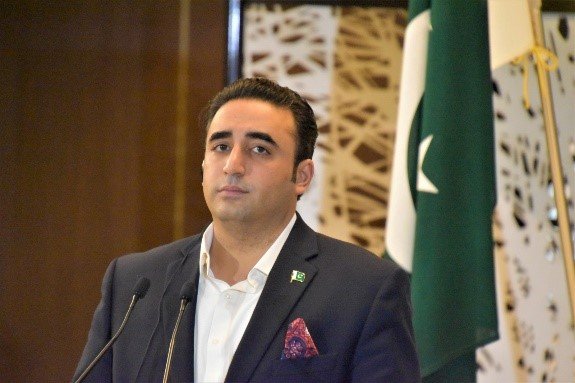
    Pakistan Peoples Party (PPP) chairman Bilawal Bhutto Zardari has expressed his opposition to the Shehbaz Sharif-led government’s privatisation policy for Pakistan International Airlines (PIA) and Pakistan Steel Mills (PSM).

    The PPP chairman said at a Labour Day event in Karachi that his party will try to convince Finance Minister Muhammad Aurangzeb to revive PIA through a public-private partnership instead of privatising it.

    On the other hand, the International Monetary Fund (IMF) urged the Pakistani government to privatise state-owned enterprises to revive the country’s economy.

    However, the finance minister has laid emphasis many times on the importance of privatising state-owned enterprises, including PIA and PSM, for the betterment of the economy.

    Bilawal Bhutto Zardari also said that it will be an “unconstitutional step” if the federal government privatises PIA.

    Former senator Raza Rabbani further clarified that the government’s agenda of privatisation was “unacceptable” to the PPP.

  • Pakistan receives final installment of IMF’s $3 billion SBA

    Pakistan receives final installment of IMF’s $3 billion SBA

    Pakistan has received the final tranche of $1.1 billion from the International Monetary Fund (IMF) as part of its $3 billion Stand-By Arrangement (SBA), the State Bank of Pakistan (SBP) announced on Tuesday.

    The disbursement follows the IMF’s successful completion of its final review of Pakistan’s economic reform programme supported by the 9-month SBA.

    The SBP said in its statement that the Special Drawing Rights (SDR) of 828 million, equivalent to approximately $1.1 billion, had been received on April 29, 2024, and would be reflected in the central bank’s foreign exchange reserves for the week ending May 3, 2024.

    As of April 19, the central bank’s foreign exchange reserves stood at $7.981 billion.

    Prime Minister Shehbaz Sharif welcomed the latest disbursement, stating that it would contribute to greater economic stability in Pakistan.

    He highlighted that the SBA was critical in preventing the country from defaulting on its external liabilities. 

    Pakistan’s government is now focused on securing a larger and longer Extended Fund Facility (EFF) to achieve sustained macroeconomic stability.

    The prime minister has already signalled his intention to pursue another IMF programme to ensure the continuity of economic growth and fiscal discipline.

    On Sunday, Prime Minister Shehbaz Sharif met with IMF Managing Director Kristalina Georgieva on the sidelines of the World Economic Forum Special Meeting in Saudi Arabia.

    During the meeting, the prime minister reiterated his government’s commitment to implementing structural reforms, maintaining strict fiscal discipline, and following prudent policies that would support macroeconomic stability and sustainable economic growth.

    Pakistan is seeking additional support to maintain the economic gains made during the current SBA and to continue its positive economic growth trajectory.

  • Pakistan’s inflation eases with further decline expected in coming months

    Pakistan’s inflation eases with further decline expected in coming months

    Pakistan’s headline inflation is expected to range between 18.5 per cent and 19.5 per cent in April 2024, with further deceleration projected in the coming months.

    The Finance Division’s ‘Monthly Economic Update and Outlook’ attributes the downward trend to a favourable base effect, improved domestic supply chains, and administrative measures.

    In March, headline inflation stood at 20.7 per cent, down from 23.1 per cent in February. Despite this easing, the government faces challenges, such as rising crude oil prices on the international market, leading to increased domestic gasoline prices. To offset this, the government has lowered wheat flour prices and imposed stricter controls.

    The Finance Division notes moderate recovery during the first nine months of the fiscal year, with growth in agriculture, a decrease in inflationary pressures, and stability in external accounts. The large-scale manufacturing (LSM) sector also shows positive signs, thanks to improved agricultural output and export demand.

    However, the report acknowledges challenges in fiscal management due to rising expenditure pressures from higher markup payments. To maintain stability, fiscal consolidation is required.

    The State Bank of Pakistan’s Monetary Policy Committee (MPC) recently kept the key policy rate at 22 per cent, citing ongoing risks to inflation from global oil prices and anticipated budget measures. The MPC’s goal is to bring inflation down to 5-7 per cent by September 2025.

    Pakistan’s broader economic struggles include pressure on external accounts and low foreign exchange reserves.

    The International Monetary Fund’s (IMF) $3-billion Stand-By Arrangement (SBA) has provided some relief, but Pakistan is seeking a longer-term programme with the IMF for economic stability and growth.

  • SBP likely to hold interest rate at record 22% amid IMF negotiations

    SBP likely to hold interest rate at record 22% amid IMF negotiations

    The State Bank of Pakistan (SBP) is expected to maintain its record 22 per cent interest rate at its upcoming policy meeting on Monday.

    This marks the seventh consecutive meeting with rates held steady, as Pakistan navigates discussions with the International Monetary Fund (IMF) for a new long-term funding arrangement.

    The central bank’s decision comes ahead of an IMF Executive Board meeting to discuss a $1.1 billion disbursement, the final tranche of a $3 billion Stand-By Arrangement.

    A Reuters poll of 14 analysts predicts the SBP will hold its rate, though there are mixed forecasts within the group.

    Four analysts anticipate a 100-basis-point (bps) cut, while two expect a 50-bps cut. Eight believe the SBP will cut rates before securing a new IMF programme.

    The central bank’s next Monetary Policy Committee (MPC) meeting is scheduled for June 10, potentially before Pakistan’s expected new IMF agreement.

    Finance Minister Muhammad Aurangzeb mentioned that discussions with the IMF for a longer-term programme will begin next month, aiming for a staff-level agreement by early July.

    Pakistan’s last rate hike was in June 2023 to combat inflation and meet IMF requirements. Consumer Price Index (CPI) data for March showed a 20.7 per cent increase from the previous year, with a peak of 38 per cent in May.

    However, inflation is slowing, partly due to the “base effect,” with April’s CPI expected to be around 17.5 per cent, according to businessman Arif Habib.

    The SBP’s monetary policy decisions will consider various factors, including inflation trends and geopolitical tensions affecting fuel prices.

    Tahir Abbas, head of research at Arif Habib Limited, suggests rates won’t be cut until a new IMF programme is in place.

    Looking ahead, Mustafa Pasha, Chief Investment Officer at Lakson Investments, predicts a small rate reduction in the current quarter, with significant cuts in the September quarter.

    According to Business Recorder, this is driven by the need to roll over approximately 6.7 trillion rupees in domestic treasury bills in late 2024 and expected stabilization in inflation and foreign exchange inflows.

    He forecasts that the interest rate could settle around 17 per cent by December.

  • Study reveals foreign aid to Pakistan fails to drive economic growth

    Study reveals foreign aid to Pakistan fails to drive economic growth

    A report by the Pakistan Institute of Development Economics (PIDE) reveals that foreign aid to Pakistan, despite commitments exceeding $200 billion, has failed to deliver sustainable economic growth.

    The report, titled “Foreign Aid Donors and Consultants Analysing Pakistan’s Foreign Aid Inflows and Their Outcomes,” highlights that while about $155 billion has been disbursed from the committed amount, there’s little evidence that these funds have significantly improved Pakistan’s economy.

    PIDE finds that the aid has not met key criteria for effective foreign aid, as outlined in the influential Millikan-Rostow report.

    These criteria include the ability to transfer resources without creating future liabilities, avoiding source-tied aid, promoting sustainable economic development, increasing the marginal savings rate to drive capital formation, and supporting development programmes that enable productive use of additional capital.

    The PIDE report notes that Pakistan’s aid programmes fail to meet these benchmarks.

    According to Mettis Global, the research acknowledges some positive outcomes in specific sectors, such as the United Nations-led vaccination efforts, which have improved public health.

    However, it also points out that this success has led to greater dependency on external sources for vaccines, raising questions about the long-term sustainability of such programmes.

    Overall, the report suggests that despite the significant amount of foreign aid received, Pakistan’s economy has not experienced the desired transformation.

    Even when examining Official Development Assistance (ODA) by sector, the improvements are marginal and do not lead to substantial aggregate economic growth.

    This finding raises concerns about Pakistan’s reliance on foreign aid and underscores the need for more effective and sustainable economic policies.

  • Critical IMF meeting scheduled for April 29 to approve $1.1 billion for Pakistan

    Critical IMF meeting scheduled for April 29 to approve $1.1 billion for Pakistan

    The Executive Board of the International Monetary Fund (IMF) is scheduled to meet on April 29 to deliberate on the approval of a $1.1 billion funding tranche for Pakistan.

    This amount represents the final installment of a $3 billion stand-by arrangement (SBA) with the IMF that is due to expire this month.

    The anticipated funding comes at a critical time for Pakistan’s economy, which has been struggling with a chronic balance of payments crisis.

    The country has nearly $24 billion in debt and interest repayments due over the next fiscal year, which is approximately three times more than its central bank’s foreign currency reserves.

    Meanwhile, Pakistan’s Finance Minister, Muhammad Aurangzeb, has indicated that the government is seeking a new long-term, larger loan from the IMF. Discussions are underway, with a staff-level agreement expected by early July.

    Islamabad is reportedly aiming for a multi-year agreement to promote macroeconomic stability and implement long-overdue structural reforms. However, the finance minister has not disclosed the exact loan size Pakistan is seeking.

    If approved, this would mark the 24th IMF bailout for Pakistan. The ongoing negotiations reflect the country’s continued reliance on international financial assistance to navigate its economic challenges.

    Pakistan’s economy is projected to grow by 2.6 per cent in the current fiscal year ending in June, according to the finance ministry.

    Despite this modest growth, the country continues to face high inflation, which is expected to average around 24 per cent this fiscal year, down from a record high of 38 per cent in May 2023.

    As Pakistan navigates these economic hurdles, securing the final tranche of the IMF’s stand-by arrangement and potentially a new loan agreement could provide much-needed relief and lay the groundwork for longer-term stability.

  • Pakistan’s forex reserves expected to reach $9-10 billion by year-end

    Pakistan’s forex reserves expected to reach $9-10 billion by year-end

    The Federal Minister for Finance and Revenue, Muhammad Aurangzeb, said on Tuesday that Pakistan’s foreign exchange reserves held by the State Bank of Pakistan (SBP) are expected to close the fiscal year at around $9-10 billion mark.

    This news comes amid growing optimism about the country’s financial stability and the potential for a new agreement with the International Monetary Fund (IMF).

    Speaking at the 7th Leaders In Islamabad Business Summit, themed “Collaborating for Growth,” Minister Aurangzeb outlined several positive developments in Pakistan’s economic landscape.

    The country’s central bank currently holds just over $8 billion in reserves, despite a recent $1-billion bond payment.

    Aurangzeb highlighted the dramatic increase from last year’s reserves of $3.4 billion, which covered just 15 days of imports, to over $8 billion.

    The finance minister indicated that once the IMF disburses its final tranche by the end of this week, the foreign exchange reserves would exceed $9 billion.

    He projected that by the end of June, the reserves could reach between $9-10 billion, offering about two months’ worth of import coverage.

    In his address, Minister Aurangzeb also addressed concerns about the IMF’s involvement in Pakistan’s economic recovery.

    He said that the current IMF programme is not solely driven by the international body, but is also a reflection of Pakistan’s own strategies for overcoming economic challenges.

    “This is our requirement as a country if we want to get out of the trap we are in,” he said, adding that the government had productive discussions with the IMF in Washington, D.C., to establish a broader and longer-term programme.

    The IMF mission is set to visit Pakistan in mid-May, with staff-level agreements expected by June or early July, contingent on progress with the country’s privatisation plans.

    Aurangzeb stressed that the IMF should be seen as a means to an end, rather than the end itself, emphasising that Pakistan’s long-term economic stability requires a commitment to market-driven reforms and sustainable growth opportunities.

    The summit’s inaugural session provided a platform for the finance minister to discuss the government’s efforts to stabilise the economy, promote growth, and attract international investment.

    The anticipated agreement with the IMF and a more robust foreign exchange reserve position signal a hopeful outlook for Pakistan’s economic recovery.

  • IMF raises questions over PM Shehbaz giving huge bonuses to staff

    IMF raises questions over PM Shehbaz giving huge bonuses to staff

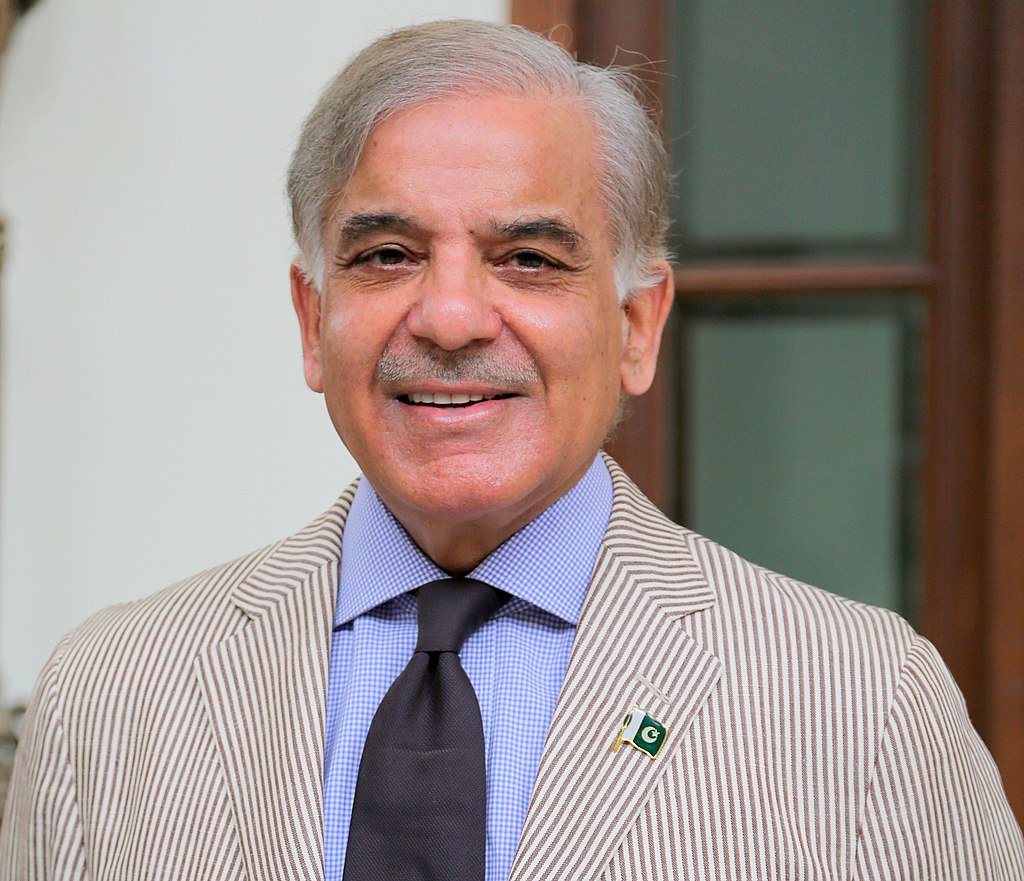
    The International Monetary Fund (IMF) has reportedly raised questions on Pakistan’s Prime Minister’s decision to grant huge financial awards to the officers of his office, as reported by Express Tribune.

    The supplementary grants amounted to Rs. 24 billion, which the PM approved, amidst a severe economic crisis.

    The global lending body IMF took up the issue, asking about the Economic Coordination Committee (ECC) of the Cabinet decisions to approve awards for the PM’s office staff.

    The Express Tribune reported that the IMF questioned the source of funding for these awards.

    IMF’s Resident Representative Esther Perez did not respond to a request for a comment on the matter even after two weeks, according to the news outlet.

    However, despite IMF questioning, Prime Minister Shehbaz Sharif and Finance Minister Muhammad Aurangzeb have not reversed this decision.