Tag: IMF

  • IMF urges FBR to collect Rs7.2 trillion in the upcoming budget

    IMF urges FBR to collect Rs7.2 trillion in the upcoming budget

    The International Monetary Fund (IMF) urged the Federal Board of Revenue (FBR) to collect Rs7.2 trillion in taxes in the upcoming budget, with personal income tax (PIT) and GST harmonisation being prioritised.

    “Discussions are ongoing as the FBR pitched up its tax collection target in the range of Rs6.9 trillion, but the IMF insists on stretching the FBR’s tax collection target in the range of Rs7.2 trillion in the coming budget for 2022-23,” top official sources confirmed on May 26.

    When contacted for comment, FBR Chairman Asim Ahmed stated that work in this area was still ongoing.

    Total tax collection would be expanded to Rs7.2 trillion in the upcoming budget, up from Rs5.9 to Rs6 trillion in the previous fiscal year, according to revised estimates. The government was also having difficulty meeting its non-tax revenue target for the current fiscal year because the State Bank of Pakistan (SBP) did not provide its estimated Rs200 billion quarterly profit to the Ministry of Finance following the passage of the new SBP Amendment Act 2022. This sum may be provided in the next fiscal year, but the SBP found it difficult to provide it before June 30, 2022.

    Personal income tax (PIT) would be markedly restructured, with the taxable cap likely to be raised from the present level of 0.6 million to Rs1-1.2 million, and the amount of slabs lowered from 13 to six. The IMF also suggested significantly raising tax rates.

    Former Finance Minister Dr. Hafiz A Pasha stated that the maximum tax rate was imposed on an annual income ceiling of Rs 5 million, which was 300 per cent higher than Pakistan’s per capita income. He proposed that those earning Rs20 million or more per year be subject to the full tax rate.

    He furthermore recommended that the duration and rate of capital gains on stock shares be assessed and modified in order to collect more taxes.

    Via: Islamabad Post

  • PM to address the nation, likely to announce relief package

    PM to address the nation, likely to announce relief package

    Prime Minister (PM) Shehbaz Sharif will announce a relief package for the poor in an address to the nation today (Friday).

    According to media reports, PM will explain the government’s decision to remove subsidies on petroleum products and also take the nation into confidence over the prevailing economic situation in Pakistan.

    Last night, the government announced a massive hike of up to Rs30 in the prices of petroleum products for the revival of the $6 billion International Monetary Fund (IMF) loan programme.

    Lambasting the Shehbaz Sharif-led government for the hike in petrol prices, Pakistan Tehreek-e-Insaf (PTI) Chairman Imran Khan said that the nation would “suffer another massive dose of inflation at the hands of this cabal of crooks”.

    Meanwhile, Pakistan Business Council has supported the government’s decision.

  • ‘Pakistan is likely to receive $1 billion from Saudi Arabia’: PM Shehbaz

    ‘Pakistan is likely to receive $1 billion from Saudi Arabia’: PM Shehbaz

    Prime Minister (PM) Shehbaz Sharif on Friday said that Pakistan is likely to receive an investment worth $1 billion from Saudi Arabia.

    During his speech, the PM asked businessmen to speak about their problems and said: “We need to analyse the economic situation with patience.”

    The premier then requested the business community to provide solutions as the local currency has lately been fluctuating significantly against the United States (US) dollar. “I am not here for political point-scoring,” PM Shehbaz clarified.

    “When I took the oath on April 11, the rate of United States (US) dollar against the Pakistani currently was 189,” said Shehbaz.

    “The Rs. 60-65 increase in the rupee value against the greenback wasn’t the coalition government’s fault,” Shehbaz said, adding that when the former government speculated that they would be ousted, they reduced the petroleum prices despite a price hike in the international market, thus going against the conditions of the International Monetary Fund (IMF).

    “During the Pakistan Tehreek-e-Insaf’s (PTI) tenure loans worth Rs22,000 billion were taken which shows an 80 per cent increase from 2018,” he said, adding that “powerful echelons” in the country supported their “favourite” person.

    Shedding light on his decision regarding the ban imposed on the import of luxury and non-essential items, PM Shehbaz said that while he banned the import of certain items for some time, he did not increase the duties because the “elite class would have still purchased imported items after paying duties.”

    The premier said: “Pakistan cannot afford to purchase gas worth $20 billion; we have to slowly and gradually move towards solar and wind energy.”

    “If green energy comes to Pakistan, we will save Pakistan’s funds,” said PM Shehbaz.

    The premier arrived in Karachi earlier today on a day-long visit.

  • Economic crisis: Finance minister in Doha to hold talks with IMF

    Economic crisis: Finance minister in Doha to hold talks with IMF

    Finance Minister Miftah Ismail along with his team left for Doha on Tuesday to hold talks with the International Monetary Fund (IMF).

    The ministry said that talks with the IMF mission started today (May 18).

    The review talks are expected to continue for a week and will focus on striking a staff-level agreement for the release of a $1 billion tranche under the Extended Fund Facility (EFF).

    It has been reported that Pakistan will have to convince the IMF to revive the stalled $6 billion programme at a time when the government had not started eliminating the unfunded fuel subsidy after making a commitment with the forum.

    The dollar rate is at its peak in the country. Currently, the rupee touched 200 against the US dollar in the open market. This spell of the dollar’s persistent rise against the rupee began last week.

  • Pakistani rupee crashes to historic low of Rs194 against US dollar

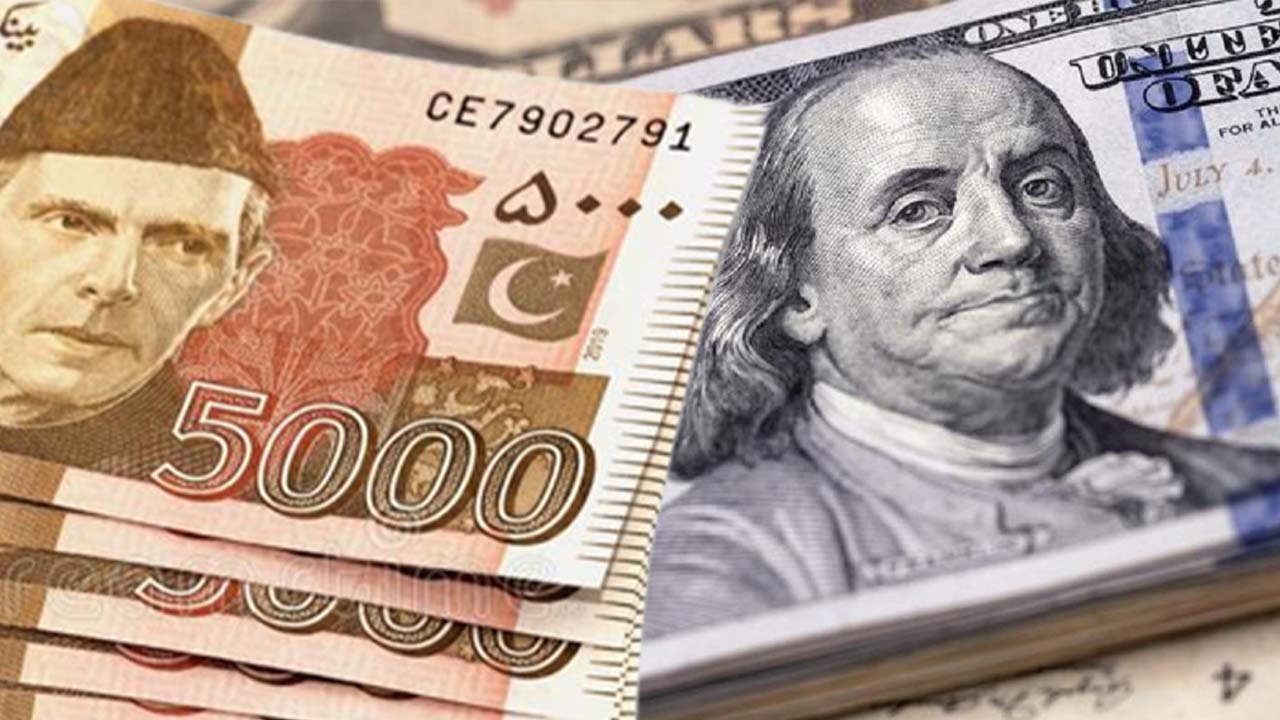
    Pakistani rupee crashes to historic low of Rs194 against US dollar

    During the trading session on Monday, the Pakistani rupee (PKR) maintained its declining trend, touching Rs194, its worst rate versus the US dollar. At the interbank, the greenback strengthened by Rs1.47 during the trading hours.

    The General Secretary of the Exchange Companies Association of Pakistan, Zafar Paracha said that the greenback climbed by Rs11.07 since the new government took government, while debt has increased by Rs1,400 billion due to the disparity.

    Pakistani currency lost 3.1 per cent of its value against the US dollar in the previous week in the interbank market, with Pakistan’s currency hitting new record lows to end the week at Rs192.53, its worst closing in history.

    Read more: Pakistani Rupee crashes to a record low against US dollar 

    The local currency fell in value across the board as concerns about the economy, declining foreign currency reserves, and worsening trade imbalance intensified. Concerns over the International Monetary Fund (IMF) programme have also caused fear and speculation in the market.

  • ‘Please don’t go out in the heat to get tanks filled’: Miftah Ismail

    ‘Please don’t go out in the heat to get tanks filled’: Miftah Ismail

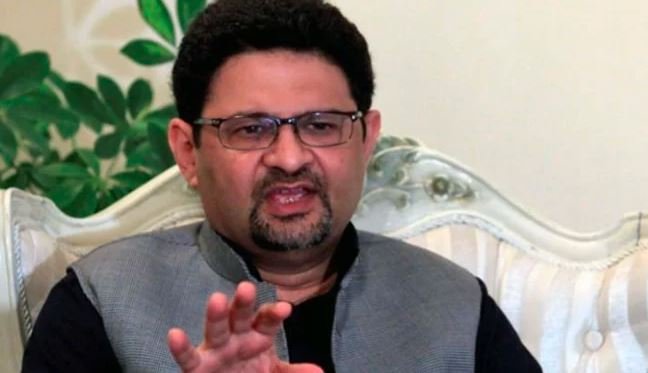
    Finance Minister Miftah Ismail said on Sunday that the government has no plans to raise the price of petroleum goods for the time being.

    Addressing a press conference, the finance minister said that Prime Minister Shehbaz Sharif had rejected the proposal of increasing petroleum prices today, adding that the government could not burden the people any further.

    “We are not increasing prices today. Please do not go out in this heat to get your tanks filled,” said Miftah Ismail.

    However, Miftah later tweeted, “But due to changing circumstances and international oil prices, we may have to revisit our decision soon.”

    The finance minister stated that he will be part of a delegation travelling to Qatar for talks with the International Monetary Fund (IMF) next week and he hoped the negotiations would be productive for the country.

  • Pakistan may receive $2.5 billion loan from Asian Development Bank

    Pakistan may receive $2.5 billion loan from Asian Development Bank

    The Asian Development Bank (ADB) has hinted at providing $2.5 billion in additional loans to Pakistan. However, the government must obtain a good economic health certificate from the International Monetary Fund (IMF) in order to receive the loan. Following a meeting between Minister of State for Finance and Revenue Dr Aisha Ghous Pasha and ADB Country Director Yong Ye, a statement was released.

    “The ADB indicated the additional support of $2.5 billion for the next fiscal year, from which $1.5 billion to $2 billion can be available in the ongoing calendar year,” said the Ministry of Finance in a statement.

    The ADB has suggested that it could lend $1.5 billion under the Counter Cyclical Finance Facility and another $400 million via energy sector policy loans, according to sources in the finance ministry.

    On May 3, the ADB board of directors authorised the Counter Cyclical Finance Facility with Pakistan receiving a combination of concessional and commercial financing. However, the ADB board’s approval of the $1.5 billion loan will be conditional on Pakistan’s debt burden being manageable and the country’s fiscal policies not being reckless – two factors that will necessitate frantic efforts to meet.

  • PML-N’s agrees on not holding early elections

    PML-N’s agrees on not holding early elections

    Prime Minister Shehbaz Sharif, along with his key cabinet members and party leaders, had a meeting with Pakistan Muslim League-Nawaz (PML-N) supremo Nawaz Sharif and it has been decided that there will be no early elections and the main focus of the current government should be on providing economic relief to the masses and also taking tough but long-term economic decisions, reports The News.

    Federal Minister for Information and Broadcasting Marriyum Aurangzeb said that PM Shehbaz and ministers in his delegation presented a full report on Pakistan’s socio-economic and political situation to Nawaz Sharif.

    Aurangzeb further stated that the meeting deliberated upon the IMF conditions and how the people of Pakistan were affected by them.

    Marriyum Aurangzeb said there was nothing surprising in the London meeting.

    “Nawaz Sharif is our Quaid. The meeting between Nawaz Sharif and Shehbaz Sharif was long overdue. We have inherited today’s Pakistan in a written-off situation and we needed to review the whole situation to formulate a plan. This was a private delegation.”

    When asked about early elections, she said that the current government’s “mandate is till next year and we are here to give relief to the people of Pakistan. It’s the history of Nawaz Sharif to take Pakistan out of economic crisis and if there is one person who can deliver, that’s Shehbaz Sharif. Only the PML-N has the right strategy.”

  • ‘Gen Bajwa should be saluted or should he be criticised?’ Zardari

    ‘Gen Bajwa should be saluted or should he be criticised?’ Zardari

    Pakistan Peoples Party (PPP) co-chair Asif Ali Zardari said on Wednesday said that the army was “apolitical” for the first time, asking whether the situation warranted saluting Chief of Army Staff (COAS) General Qamar Javed Bajwa or “fighting” with him.

    “Should Chief of the Army Staff (COAS) General Qamar Javed Bajwa be saluted for [keeping] the army apolitical or shall he be criticised?” asked Zardari, adding that the government will try to make sure “they” remain apolitical and neutral in the future.

    Faiz Hameed has been khuddi laen (sidelined)

    When asked whether he would salute former Inter-Services Intelligence (ISI) chief Lt Gen Faiz Hameed, Zardari replied, “he has been khuddi laen (sidelined).”

    Talking about the judiciary, which has been criticised by Pakistan Tehreek-e-Insaf (PTI) Chairman Imran Khan, Zardari said he had never run a campaign against them.

    “[Former military ruler] Pervez Musharraf kept me in jail for five years but we did not attack his house and I have said internationally, I want to see Musharraf alive.”

    “I think we should let the institution do its work and help them.”

    General elections only after the government introduces electoral reforms

    Asif Ali Zardari said that Pakistan would move towards general elections only after the government introduces electoral reforms.

    “Electoral and NAB (National Accountability Bureau) reforms are included in our game plan,” the ex-president said during a a meeting with journalists, noting that if polls are held before reforms, then any government that comes into power will face the issues that the past and present regimes are facing.

    “We have to change laws and improve them and then go to elections. Whether it takes three or four months, we have to work on implementation of policies and improving the electoral process,” Zardari said at a press conference in Karachi.

    He said he had consulted Pakistan Muslim League-Nawaz (PML-N) Mian Nawaz Sharif and “made him understand that as soon as our reforms and low-hanging fruit targets are complete [we can go to polls]”.

    When will the new army chief be appointed?

    Defence Minister Khawaja Asif in a recent interview said that there was a possibility of holding elections before November. In response, Zardari said the PML-N leader had his own thoughts and was bound to listen to his party’s directives.

    “The PML-N decided with me that until electoral reforms were brought, there would be no [talk] about the new army chief’s appointment.” Once the electoral reforms had been introduced and the economic situation had improved and the parliament believes it is time to go for elections, polls can then be held, he added.

    ‘Out of box solutions to fix economy’

    Speaking on the economy, Zardari said, “We did not take any votes from the PTI’s dissident lawmakers,” he said, adding that he has come to power to know the prices of “aaloo, tamatar, unlike Khan.”

    Zardari also called for “out of the box” solutions to fix Pakistan’s economy as the country faces an uphill task on the fiscal front.

    He maintained that the new government will take some time to control the situation. Asif Zardari said that the nation will have to face problems until the International Monetary Fund (IMF) programme is finalised.

    He said he had a lot of “out-of-the-box thought processes”, including about the State Life Insurance Corporation. “It is an investment of more than Rs100 billion. Give 26 per cent of it to a business house with a good track record and float 26pc [of its shares] in the market. You will get at least Rs8 to 10bn.”

     There is no such thing. He (Imran) has created a political myth:

    Zardari, while responding to a question, said he had not read the cable that Imran claimed contained proof of a “foreign conspiracy” to oust him.

    “I do not believe any [US] State Department official is irresponsible enough to [say] what you have read out to me. There is no such thing. He (Imran) has created a political myth. What need does the US have [to interfere]?”

    The former president said Pakistan needs to correct its policies and portray itself as a safe haven so the international community would consider it as a partner.

    He slammed Imran for labelling his opponents as Mir Jafars and Mir Sadiqs. “If anyone can run the country, it is us, not him. His own friends left him because they (PTI) could not fulfil their political commitments.”
  • Dr Murtaza Syed assumes charge as the new Governor State Bank of Pakistan

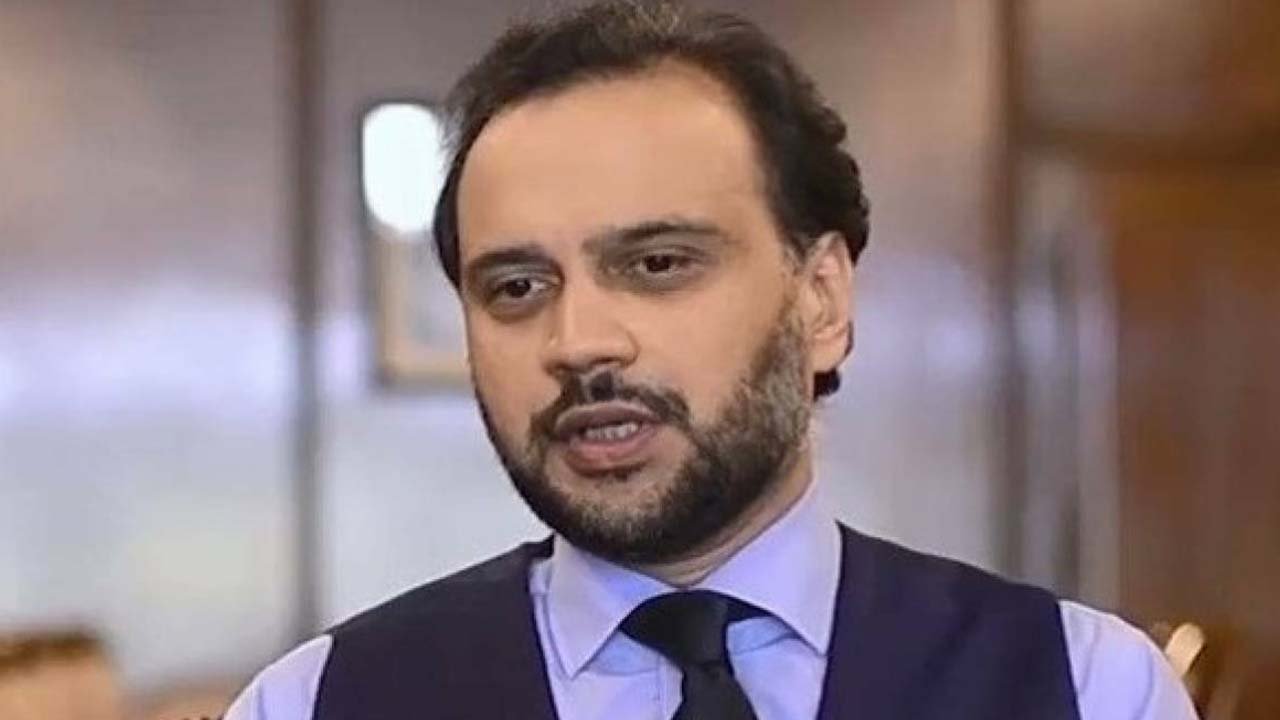
    Dr Murtaza Syed assumes charge as the new Governor State Bank of Pakistan

    With effect from May 5, Dr Murtaza Syed, the senior-most Deputy Governor and a former Deputy Resident Representative of the International Monetary Fund (IMF), became the new acting Governor of the State Bank of Pakistan (SBP).

    Prior to this, the federal government named Dr Syed as the Deputy Governor of the SBP for three years on January 27, 2020.

    Dr Syed has taken up the position in light of Section 10(2) of the State Bank of Pakistan (SBP) Act 1956 (amended), and has therefore succeeded Dr Reza Baqir, whose term ended on May 4, according to the notification.

    He holds a Ph.D. in Economics from the University of Oxford’s Nuffield College and has more than 20 years of experience in macroeconomic research and policymaking, including 16 years at the IMF. He worked on IMF initiatives and monitoring of emerging markets and advanced economies such as the Eurozone, Japan, and Korea. Dr Syed also handled IMF training and technical support projects around the world, and between 2010 and 2014, he was the IMF’s Deputy Resident Representative in China.

    Dr Syed started his career as a Senior Policy Analyst at the Human Development Center in Islamabad, where he worked under former Finance Minister D. Mahbub ul Haq. Afterward, he worked for the Institute for Fiscal Studies (IFS), a London-based public policy think tank, where he did research on company investment and employment behaviour, as well as evaluating Latin American anti-poverty programmes.

    Read more: Pakistan’s foreign currency reserves down by $328 million

    Dr Syed has produced papers on a multitude of macroeconomic topics, including fiscal and monetary policy, financial stability, economic crises, investment, demographics, poverty, and inequality, in addition to teaching public policy at the universities of Cambridge and Oxford.