Tag: IMF

  • Another Rs8 hike in petroleum prices on the cards, again

    The government is likely to increase petroleum prices by up to Rs8 per litre for the next 15 days if it decides not to increase existing tax rates, reports Dawn.

    On the basis of existing tax rates, the Oil & Gas Regulatory Authority (OGRA) and Petroleum Division have worked out about Rs6 per litre increase in the price of petrol and of high speed diesel (HSD) by about Rs8 per litre. The increase for other products, which includes kerosene and light diesel oil, was also estimated to be in the same range.

    An official said the government was considering an increase of petroleum levy by Rs4 per litre, either on Sunday or November 16. This would depend on its engagements with the International Monetary Fund (IMF) for the revival of its programme.

    However, no official decision has been made yet. The official announcement would be made after consultations with Prime Minister (PM) Imran Khan on Sunday.

    Currently, the government is charging about Rs5.62 per litre petroleum levy on petrol and Rs5.14 per litre on HSD. In addition, it is also charging about Rs9.29 per litre and Rs8.81 per litre customs duty on petrol and HSD respectively besides Rs9 and Rs13 per litre GST on these two products.

    Energy Minister Hammad Azhar had said that the government was coming under pressure for giving up taxes on petroleum products.

    At present, the price of petrol stands at Rs137.79 per litre and the price of HSD is at Rs134.48 per litre.

    Earlier, the Finance Ministry of Pakistan warned the public about increasing the prices and transportation costs in the country.

  • ‘Inflation is happening all over the world, reason unknown’: Shaukat Tarin

    ‘Inflation is happening all over the world, reason unknown’: Shaukat Tarin

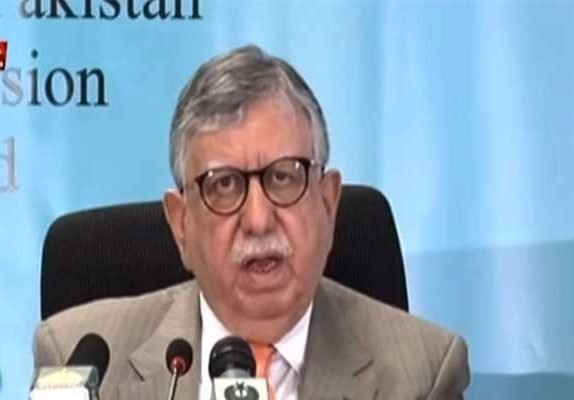
    Speaking at a press conference in Washington, Finance Minister Shaukat Tarin said that other items, including oil, are becoming more expensive all over the world and the reason why they are happening is not known, reports Geo News.

    Tarin said, “If the effects of the Covid pandemic reduce, inflation will come down and targeted subsidies of 40 per cent will be given to the country’s population.”

    He added that one billion dollars are to be expected from International Monetary Fund (IMF), which will be confirmed in the next two days.

    Moreover, the government on Friday decided to appoint Shaukat Tarin as the Adviser to Prime Minister on Finance, as his six-month tenure as the financial adviser is expiring today, sources told Geo News.

    The finance minister was supposed to get elected as a senator — a prerequisite to continue as finance minister — as the six-month time limit to elect him as a member of parliament expires today.

  • Fifth-lowest growth rate in South Asia as inflation continues to rise in Pakistan: Asian Development Bank

    Fifth-lowest growth rate in South Asia as inflation continues to rise in Pakistan: Asian Development Bank

    The Asian Development Bank (ADB) on Wednesday projected that inflation in Pakistan would remain the highest in the region at 7.5 per cent, and the economy would grow by 4 per cent – the fifth-lowest growth rate among seven South Asian nations, contradicting the government’s claim of lowest prices in the country, reported Shahbaz Rana for The Express Tribune.

    Pakistan’s “economy is expected to continue recovering in the fiscal year 2021-22, with real GDP projected to rise by 4 per cent”, according to the ADB report.

    It was the fifth-lowest economic growth rate in the region as the economic growth rate in the Maldives (15 per cent) and India (7.5 per cent) remain the highest in the region. Bangladesh is projected to grow at 6.8 per cent and Nepal at 4.1 per cent in 2022, according to the ADB.

    The ADB said that the 4 per cent growth rate was contingent on the resumption of structural reforms later in the year in an ongoing programme under the International Monetary Fund (IMF) Extended Fund Facility.

    “The economic outlook is clouded, however, by high uncertainty because it is closely tied to the course of the pandemic in Pakistan and globally.”

    The ADB has also cautioned about a further increase in prices in Pakistan, provided the Pakistan-IMF deal collapses.

    “Risk of inflation higher than forecast derives from any unusual increase in oil prices or from potential currency depreciation in the wake of any early winding down of the ongoing IMF programme,” said the ADB.

  • ‘No increase in tax rate of mobile phone calls, SMS, internet’: Shaukat Tarin

    ‘No increase in tax rate of mobile phone calls, SMS, internet’: Shaukat Tarin

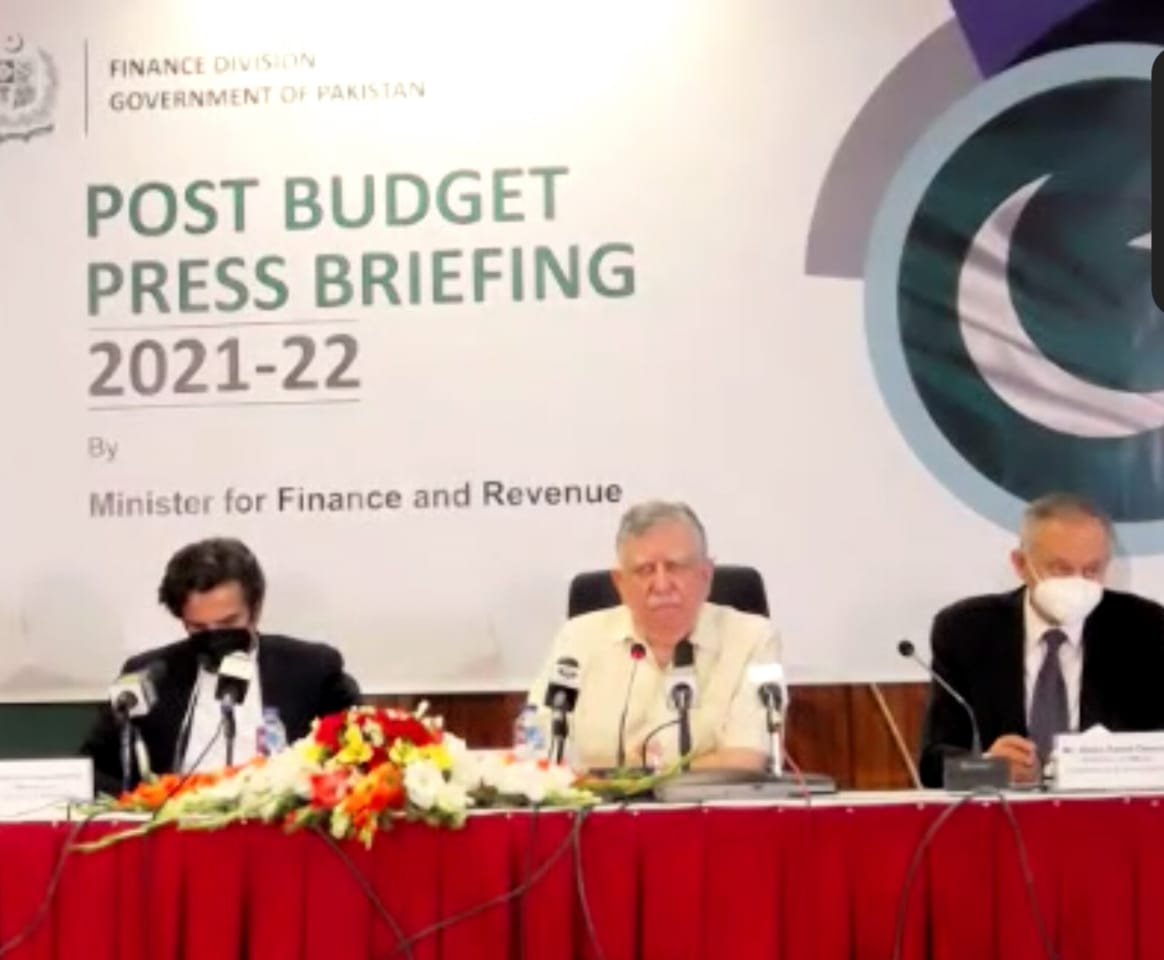
    Addressing a post-budget press conference in Islamabad, Finance Minister Shaukat Tarin said that ” Prime Minister Imran Khan and the cabinet opposed the imposition of tax on mobile phone calls, internet data, and SMS. “Now there will be no increase in the tax rate for all these services.”

    The original decision, if it had been implemented, would have affected over 98 million people.

    Tarin said the government has presented a total growth budget and their challenge is to stabilise growth.

    Tarin said that additional tax of Rs500 billion will be collected in the next financial year. “We have to earn dollars by increasing exports and add an additional tax of Rs500 billion in the next financial year.”

    The finance minister said that Pakistan had to go to the International Monetary Fund (IMF) for help when its position is weak.

    “We need 20 per cent growth in exports. Our savings rate is 15 per cent and our investment rate is up to 16 per cent. If we do not have revenue, how will we achieve growth?”

    Tarin said that the poor in the country have not received loans and training for the last 70 years. Loans up to Rs 2 million will be given to build a roof and loans to poor farmers will go up to Rs 500,000. Pakistan has become a food deficient country and we are now importing what we used to export, Tarin said, adding that the country is importing pulses, wheat, and sugar.

    “We did not pay attention to our crops, but now we will pay attention to it,” he assured.

    “We should not play politics with the poor,” he added.

    Tarin unveiled the Budget 2021-22 yesterday. The total expenditure of the budget had been kept at Rs 8,478 billion and had set the tax collection target at Rs 5,829 billion. 

  • Shaukat Tarin presents the Pakistan Economic Survey 2020-21

    Shaukat Tarin presents the Pakistan Economic Survey 2020-21

    Finance Minister Shaukat Tarin presented the Pakistan Economic Survey 2020-21 at a press conference in Islamabad on Thursday. However, the document did not have the latest figures on poverty and unemployment.

    Tarin revealed that the industrial and services sectors had helped the country post-Gross Domestic Product growth of 3.94 per cent in the first nine months of the fiscal year [FY](July to March), significantly higher than the target of 2.1 per cent.

    “The agriculture and manufacturing sectors helped the economy grow to 4.4%, laying stress on the need for sustainable growth in Pakistan in the years to come,” added Tarin.

    Coronavirus Pandemic

    The minister opened his press briefing by speaking highly of Prime Minister Imran Khan’s policies in combating the coronavirus pandemic.

    “The government itself had set [GDP] growth will be 2.1pc and the IMF predicted even lower. But the decisions by this government such as incentivising manufacturing and textiles, construction, and interventions in agriculture have helped the economy recover,” said Tarin.

    He said many people lost their jobs when the pandemic hit Pakistan, however, due to PM’s visionary policy of not imposing a complete lockdown across the country, millions of people who were unemployed were hired again. 

    “The economy is recovering,” he said. 

    Remittances

    Tarin said Pakistan’s remittances had broken records, adding that they had crossed $26bn. He said that lately imports, especially food in the form of wheat and sugar, were increasing as Pakistan’s economy was growing at the same time. 

    “We were net exporter of food but now, we have become a net importer,” he said. “Our exports registered a growth but our remittances increased manifold,” he added. 

    Ehsaas Programme

    Tarin spoke highly of the Ehsaas programme, adding that the World Bank had described it as “one of the best and the largest” poverty alleviation initiatives across the globe. 

    “Full credit goes to Sania Nishtar,” he said, adding that handing out cash to 15 million people was not a small achievement.

    Growth rate

    Tarin said he had told the prime minister it was time to focus on sustainable growth “until we go to 5-8pc GDP growth”.

    “We will do interventions and take care of the poor. The poor man has been crushed in this stabilisation phase because the dreams we have shown them have been of a trickledown economy. And this can only happen when growth is sustainable and continuous for 20-30 years,” he said.

    “Countries which had sustainable growth, they grew continuously for 20-30 years. What have we done? Every time we grow by borrowing money, which is credit-based growth.”

    Current Account

    According to the survey, during FY 2021, while the world was reeling from the economic impact of the pandemic, Pakistan’s “external sector appeared as a key buffer for resilience.”

     “The main driver of improvement in current account balance was the robust growth in remittances,” it stated.

    Trade Deficit

    “During July-March FY 2021, export of goods grew by 2.3 percent to $18.7 bn as compared to US$ 18.3 bn the same period last year. Import of goods grew by 9.4pc to $37.4 bn as compared to US$ 34.2 bn last year. Consequently, the trade deficit increased by 17.7per cent to $18.7bn as compared to $15.9bn last year,” the survey said.

    Inflation

    The finance minister said the government wanted to control inflation “but prices are still high and affecting the common man”.

    “So the way to solve this is by increasing production and that is why we have focused on agriculture in this budget,” Tarin said.

    Federal Board of Revenue (FBR)

    Speaking about the FBR, Tarin said he would end the practice of people being harassed by the bureau. “FBR will not audit [businesses or persons] but a third-party audit will be conducted,” he said. 

    International Monetary Fund (IMF)

    Tarin said Pakistan’s negotiations with the IMF were ongoing, adding that the international money lender had asked the government to hike tariffs and increase taxes. 

    The finance minister said Pakistan and the IMF want the same thing; sustainable growth, adding that the country cannot afford to increase taxes or hike tariffs so that the poor and the salaried class do not feel additional burden of inflation. 

    “This is a red line for the prime minister,” he said. “We will not further burden the poor,” he added. 

    Energy Sector

    Tarin said Pakistan’s economy was burdened due to the overcapacity in the power sector, saying that “it was a very big challenge and a black hole” for Pakistan. 

    Privitisation

     Tarin said it was fair to ask how he can privatise state-owned enterprises when all others, before him, promised to do the same but failed to. 

    “Nawaz Sharif used to shout the same slogan during the first time [when he was prime minister] and then for a second time [when he again became the prime minister] and then a third, but nothing happened,” he said. 
  • ‘Will not increase electricity tariffs, told IMF,’ says Tarin

    ‘Will not increase electricity tariffs, told IMF,’ says Tarin

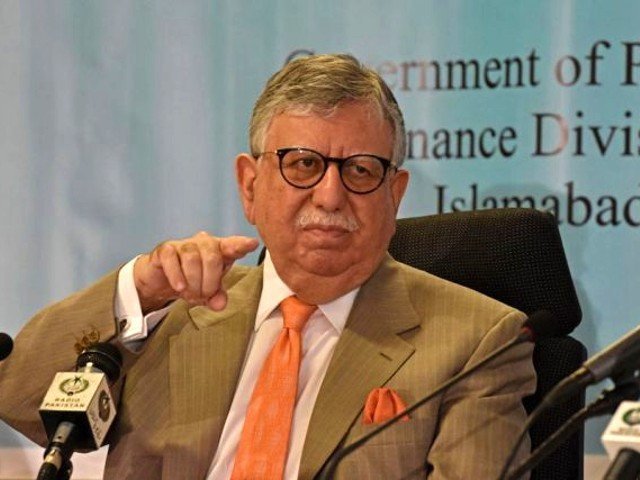
    The Federal Minister for Finance Shaukat Tarin predicted that the economy of Pakistan would grow by six per cent as the incumbent government has dealt with COVID-19 in a better way.

    “Growth rate is projected at five percent this year and would move further upwards to six percent during the next fiscal year. The government has developed short and long-term plans to achieve the target,” Tarin said while addressing a virtual press conference.

    “The government of Pakistan is doing long-term planning not just to stabilise the economy but to push economic growth,” he added.

    The strategy is divided into short, medium, and long-term planning for almost 12 sectors, and the plan will be presented to Prime Minister (PM) Imran Khan for approval by the end of May. Shaukat Tarin made these strategies after taking over again as finance minister.

    In addition, Pakistan is going through food scarcity and has to import from outside. Tarin blamed the lack of agriculture industry behind food shortage.

    By paying attention and taking action against people who are profiting and hoarding food, these issues are addressable. “We will tackle this through the creation of strategic reserves and dump food wherever people try to profit,” Tarin said.

    On the financial sector, he said that we will bring more people into the tax net. Besides, people should be encouraged to deposit money into banks so it could be used productively, and the money can be spent on all provinces rather than “nine cities”.

    While responding to a question about power tariffs, he said the government would not increase tariffs to prevent further burden on the people, and the same would follow for taxes.

    He said the International Monetary Fund (IMF) had been told that money would instead be collected through other “innovative ways” and he had “full hope” that the IMF would give space.

    He also explained that Pakistan had fulfilled most of the Financial Action Task Force’s conditions with one or two “transactional items” left so he said the government was hopeful of a favourable response in the meeting in June.

  • ‘Govt to renegotiate programme with IMF’: Finance Minister

    ‘Govt to renegotiate programme with IMF’: Finance Minister

    The new Federal Minister for Finance and Revenue, Shaukat Tarin has said that the government of Pakistan is trying to renegotiate the terms of the International Monetary Fund (IMF) programme.

    Tarin said this during the National Assembly Finance and Revenue meeting on Monday. He said he is trying to convince IMF that price hikes in electricity tariffs will only create problems for the people, as the country is already deeply impacted by the COVID-19 pandemic.

    “We have assured IMF of reducing circular debt but the demand of increasing tariff is not understandable,” he said.

    Tarin further added that the terms and conditions can also be fulfilled if the government “curtails circular debt through other means instead of increasing the tariff.”

    “Financial and monetary wallets are open all over the world but the IMF’s sword is only hanging over us,” Tarin maintained.

    In addition, the State-Owned Enterprises (SOEs) cannot be managed by the government, and they must be privatised.

    “The 17 per cent General Sales Tax (GST) rate is very high, and a mechanism has been prepared for its reduction,” he said.

    On stabilising Pakistan’s economy, the finance minister said that the four to five per cent economic growth is enough for Pakistan, and the government will now focus on achieving the above-stated targets.

    He regretted that the government is spending 85 per cent revenue on only nine cities and rarely invests in education and health.

    Unless the country moved to higher economic growth, nothing would improve, and if we continue with stabilisation that has been in place for over two years, neither revenue collection would go up, nor job opportunities would be available to people, he explained.

    He said the government would increase the Public Sector Development Programme (PSDP) in the next budget and provide equal growth opportunities to all provinces.

    As the country lacks proper planning, Tarin said that he had selected 10 to 12 sectors on which economic experts had already started working so that they could come up with long-term planning for areas such as price stability, agriculture, industry, revenue, housing, social protection, national services, debt management and privatisation of loss-making state-run entities.

    The committee chairman assured the finance minister of all cooperation by committee members.

  • Pakistan commits to IMF Rs1.27 trillion hike in taxes

    Pakistan commits to IMF Rs1.27 trillion hike in taxes

    Pakistan has committed to increasing Federal Board of Revenue (FBR) taxes by Rs1.272 trillion (almost 2.8 per cent of GDP) and a price increase of Rs4.97 per unit in the remaining three months of the current fiscal year (FY).

    IMF released a document, and it says that the government of Pakistan has agreed to continuous adjustments in electricity tariffs from next year on a monthly, quarterly and annually basis.

    The documents also state that the government would also increase the price of petroleum and oil products (maximum of Rs30).

    The petroleum levy target for the coming year is Rs607bn. The provinces have given an undertaking of Rs570bn cash surplus to the federal government and increase it by Rs729bn next year.

    The government has also set a target of Rs5.963tr (against Rs4.691tr revised target of current FY) in the next year budget for FBR. Additional Rs500bn tax generation through General Sales Tax (GST) and personal income tax reform for FY 2022 budget is also under consideration.

    The government has also given an undertaking to make adjustments in gas tariff and will not consider any tax exemptions or amnesties in the future.

    Also, IMF made detailed audits are a must for the fund allocation to combat COVID-19, which includes contracts and beneficial ownerships of bidding results and medical supplies.

    IMF’s mission chief for Pakistan Ernesto Ramirez Rigo said that despite the hard economic conditions amid COVID-19, critical adjustments in energy tariff are inevitable. The rising circular debt is detrimental to public finance and economic growth.

    He said that these unpleasant changes are necessary and the solution lies in cost recoveries, loss reduction and system improvement.

  • Government in 2016 provided inaccurate government guarantees data to IMF

    Government in 2016 provided inaccurate government guarantees data to IMF

    The International Monetary Fund (IMF) has said that the Government of Pakistan provided inaccurate data on guarantees dating back to fiscal year (FY) 2016.

    According to a press release by IMF, the revised data indicates non-observance of the performance criteria given by the government at the end of September 2019 by a margin of Rs347 billion (about 0.9 per cent of the GDP). 

    Deputy Managing Director and Acting Chair of the IMF Antoinette Sayeh, while speaking about the development said: “The non-complying purchase arose as a result of a lack of inter-agency coordination in the compilation of government guarantees provided by the federal government to state-owned enterprises that contributed to incorrect estimates of government guarantees starting as far back as the fiscal year 2016.”

    This act is a non-complying purchase and breach of obligations under Article VIII, Section 5 of the IMF Articles of Agreement. 

    However, the government met the performance criteria with a margin of Rs 55 billion (0.1 per cent of the GDP) by the end of-September 2019

    The IMF also noted that Pakistani authorities had taken strong corrective steps to address the institutional and technical shortcomings that have resulted in the inaccurate reporting of information.

    IMF has created a group to reconcile and cross-check guarantees and debt data, announcing additional functions for the Debt Policy Coordination Office (DPCO).

    The groups will also act as the custodian of all the guarantees issued by the federal government and publishing a semi-annual debt bulletin that consolidates key debt statistics.

    Besides, the authorities are also committed to including a list of all the new guarantees expected to be issued in the FY 2022 budget submitted to Parliament.

    The IMF stated that the Pakistani authorities have continued to make satisfactory progress under its supported program which has been an important policy anchor during an unprecedented period.

  • New pro-IMF State Bank law would leave country bankrupt, lead to Pakistan’s collapse: prominent economist

    Renowned economist Dr Kaiser Bengali has warned that the State Bank of Pakistan (SBP) Ordinance, which is likely to be introduced soon, is anti-national and could lead to no accountability of central bank officials besides ultimately resulting “in the collapse of the country”.

    Speaking to a private media outlet, he said that the law would leave the federal government and subsequently the state paralysed.

    “There would be no money to pay salaries because the top priority would be paying back loans for which new loans will be sought,” Dr Bengali said.

    To a query by host Asma Shirazi, he said the law had no parallel in the modern world, however, a similar one dating back to the Ottoman Era played a key role in the downfall of the House of Osman.

    “They didn’t have any money to fight wars or deal with the rebellion after handing control of all the money to the central bank.”

    “This would dissolve Pakistan because there won’t even be enough money to pay the police,” Dr Bengali maintained, adding that it was a bleak picture.

    “The opposition alliance should put its other demands on hold and work towards stopping this legislation,” he concluded. The same was stated by him in a tweet as well.

    Earlier, Pakistan Muslim League-N (PML-N) Secretary General Ahsan Iqbal also claimed the government was enacting such a law which would hand over the State Bank of Pakistan’s (SBP) control to the International Monetary Fund (IMF) and other international financial institutions.

    Addressing a press conference, he said that with the new legislation, the SBP would not be accountable to the parliament, the prime minister or any institution of the country and it would only be answerable to the international institutions.

    He said National Accountability Bureau (NAB), Federal Investigation Agency (FIA) or any other institution would not be able to ask the SBP governor and other officials for any corruption.

    “If the prime minister of Pakistan can appear before NAB, then why can’t the SBP governor?” Ahsan said adding it was only to mortgage Pakistan’s economy with the international institutions.