Tag: IMF

  • GDP growth in 2021: Pakistan likely at par with Nigeria at 1.5%; India at 11.5%, China at 8.1%

    GDP growth in 2021: Pakistan likely at par with Nigeria at 1.5%; India at 11.5%, China at 8.1%

    The International Monetary Fund (IMF) has raised its forecast for global economic growth in 2021 but warned that there was still “extraordinary uncertainty” about the outlook.

    According to the latest World Economic Outlook forecast, the IMF projects global growth at 5.5%, which is higher than their previous forecast in October. Global growth will moderate to 4.2% growth in 2022, the IMF said.

    As per the forecast, Pakistan’s gross domestic product (GDP) growth in the ongoing year will stand at 1.5% that it shares with Nigeria, while neighbouring India and China are likely to stand at staggering 11.5% and 8.1%, respectively.

    GDP is the total monetary or market value of all the finished goods and services produced within a country’s borders in a specific time period. As a broad measure of overall domestic production, it functions as a comprehensive scorecard of a given country’s economic health.

    Malaysia’s growth is likely to stand at 7%, Turkey: 6%, Spain: 5.9%, France: 5.5%, the United States (US) 5.1%, Indonesia: 4.8%, the United Kingdom (UK): 4.5%, Mexico: 4.3%, Brazil: 3.6%, Canada: 3.6%, Germany: 3.5%, Japan: 3.1%, Russia: 3%, Italy: 3%, while the GDP growth of Saudi Arabia has been predicted to stand at 2.6%.

    The upgrade for this year reflects the positive effects from the start to vaccinations in some countries, additional fiscal support in the US and Japan, and at least a partial return to business and consumer normality as the health crisis wanes.

    “Much now depends on the outcome of this race between a mutating virus and vaccines to end the pandemic, and on the ability of policies to provide effective support until that happens,” said IMF chief economist Gita Gopinath in a blog post accompanying the updated forecast.

    The global economy contracted by 3.5% in 2020, the worst peacetime contraction since the Great Depression of the 1930s, the agency said.

    Close to 90 million people are expected to enter extreme poverty in 2020 and 2021, reversing the trends of the past two decades, the IMF said.

    Altogether, the COVID-19 pandemic will cost the global economy $22 trillion over 2020-2025 relative to pre-pandemic projected levels.

  • Govt plans to mortgage Islamabad’s biggest park to get loan

    In order to meet its financial requirements, the federal government has decided to mortgage the F-9 park in Islamabad to a get loan of about Rs500 billion through issuing bonds.

    The F-9 park, also known as Fatima Jinnah Park is spread on 759 acres of land, making it one of the largest covered green areas in Pakistan.

    According to a report in Dawn, the Capital Development Authority (CDA) has already issued a no-objection certificate in this regard. The proposal to mortgage the park has been included in the agenda of the meeting of the federal cabinet to be held on Tuesday.

    This is not the first time that a government is planning to mortgage a national asset to get loans through national and international bonds.

  • ‘Good news for market’: IMF programme to restart soon, says SBP chief

    Pakistan is in talks with the International Monetary Fund (IMF) to put the fiscal support programme back on track, State Bank of Pakistan Governor Dr Reza Baqir said on Monday.

    Baqir said he was optimistic about the economic outlook despite the fallout from the coronavirus pandemic and the central bank was eyeing 1.5pc to 2.5pc GDP growth in the current fiscal year.

    With dwindling foreign exchange reserves and a struggling economy, Pakistan entered a three-year $6 billion IMF bailout programme in 2019, but is yet to have its second review approved, which has been pending since early last year.

    “We hope to have good news for the market and the world that we are putting the programme back on track,” Baqir said in an interview on Monday at the Reuters Next conference.

    Last year, staff from the IMF and Pakistani authorities reached an agreement to pave the way for a disbursement of $450 million in IMF funds pending approval from the global lender’s executive board, which is yet to take place.

    Baqir said there was no disagreement on the end goal between the two sides, and that Pakistan needs to increase its low tax-to-GDP ratio.

    Pakistan and the IMF have been working to implement IMF-supported economic reforms, in particular tax collection, aimed at stabilising the economy and shoring up a yawning fiscal deficit.

    Though the bailout programme is still pending, Pakistan received $1.4 billion in emergency financing from the IMF to allow it to fund targeted and temporary spending increases aimed at containing the pandemic and mitigating its economic impact.

    Authorities are counting on the IMF bailout package to bolster Pakistan’s fiscal position and increase global confidence in its economy.

    “Pakistani authorities and the IMF team remain closely engaged, discussions are going on, both teams are working very hard and non-stop to bring the programme review to positive conclusion,” IMF’s Resident Representative to Pakistan, Teresa Dabn Sanchez, told Reuters.

    Baqir also said he is more optimistic about the outlook even as Pakistan battles a second wave of the coronavirus outbreak.

    “We are prepared for the challenges that may come about. We are already in the middle of Covid without any vaccine and once the vaccine comes, it will only makes this better,” he said.

    Baqir added that an economic recovery is underway and the bank’s job is to support the rebound until a vaccine is available.

    1.5 to 2.5% GDP GROWTH:

    Pakistan is aiming to achieve 1.5pc to 2.5pc GDP growth in the current fiscal year, Baqir said. “I think the next two or three years should bring some good news on the economic front.”

    Pakistan’s economy contracted 0.4% in the last fiscal year ended June 30, 2020, as the pandemic hit. Baqir added that an economic recovery was under way and the bank’s job was to support the rebound until a vaccine was available.

    “I think the next two or three years should bring some good news on the economic front,” he said.

    Baqir said Pakistan’s growth in its foreign exchange reserves from $7 billion to $13 billion in recent months was not due to borrowing.

    He said Pakistan needed “a rollover of the support” of friendly countries that had parked money in the bank to shore up reserves, but did not need new loans.

    Among those countries is Saudi Arabia, which recently asked Pakistan to repay $2 billion of its loan. Islamabad returned $1 billion to Riyadh in December last year and was to pay another $1 billion this month.

  • Govt mulls Rs3.3 hike in power tariff to meet IMF demand

    Govt mulls Rs3.3 hike in power tariff to meet IMF demand

    The government is likely to hike power tariff by Rs3.30 per unit in line with the International Monetary Fund (IMF) conditions to get the programme rolling that has been suspended since Feb 2020.

    Daily Jang quoted a senior government official, saying the increase in the power prices will be made before the start of the next year and the government will take measures to take the masses into confidence over the move.

    The IMF bailout was availed by the Pakistan Tehreek-e-Insaf (PTI) in 2019 to provide crucial support to fast depleting foreign exchange reserves. But the package was suspended at the start of this year.

    Pakistan has to return $4.4 billion on account of foreign commercial loans during the current fiscal year for which it desperately needs the money from the monetary fund. It has also already returned $2bn to Saudi Arabia and will return $1bn soon to clear the Saudi debt.

    Earlier this week, Pakistan secured a $1.7 billion (Rs272 bn) debt relief agreement to help offset the financial headwinds sparked by the coronavirus pandemic.

    The deal provided a moratorium on debt payments for large swathes of the current fiscal year and help ease the cash-strapped country’s massive financial obligations.

    “The Government of Pakistan has successfully negotiated and concluded rescheduling agreements with 19 bilateral creditors, including members of the Paris club,” the Ministry of Economic Affairs said in a statement.

  • Pakistan, IMF and our economic future

    Pakistan, IMF and our economic future

    Pakistan is looking to resume the IMF’s $6 billion programme to bring in some much-needed foreign exchange. The programme was earlier suspended due to the government’s unwillingness to increase power tariffs and bring in a mini-budget. The negotiations for programme resumption were further delayed due to COVID-19 but IMF came to the government’s rescue with $1.4 billion emergency financing, which helped the country sail through tough times.

    But now we are back to square one, and it’s time to take some hard decisions.

    Reportedly, IMF is expecting Pakistan to significantly increase electricity prices, bring in additional revenue measures and introduce a few legal amendments. Pakistan was expecting an IMF mission in December to negotiate the conditions, but it seems that IMF is expecting some solid prior actions by the government, before it plans a review mission.

    There is no doubt that an electricity price increase is inevitable to reduce the mounting circular debt, and new tax measures are critical to help the government reach the ambitious Rs4.9 trillion revenue target. But the government is worried on two counts: not only will these measures be unpopular and further strengthen the opposition’s narrative around inflation but will also make a dent in government’s efforts to stimulate the economy. The prime minister has already given a nod to the electricity price increase; however, it is not clear if this increase is enough and how soon the government will be able to pass this on to consumers.

    However, irrespective of whether the government ends up taking these unpopular yet necessary measures or if the IMF ends up showing some flexibility, it remains to be seen if we can keep on relying on these ad hoc measures, pushing electricity tariffs up for the paying consumers and squeezing the existing taxpayers to meet the ever-increasing targets.

    Pakistan has availed 21 IMF programmes over the past 60 years; however, these programmes failed to bring in any sustainable improvement in Pakistan’s worsening conditions. Pakistan’s repeated boom-bust episodes are now a characterising feature of its economy, where sprouts of growth are inevitably followed by prolonged slumps.

    All political governments start in the midst of a balance-of-payment crisis, necessitating going for an IMF programme. IMF brings in foreign exchange to avoid a default but also fiscal and monetary tightening, which slows down growth. As soon as the IMF goes away, the country takes no time in coming back to its expansionary fiscal and monetary policies, owing to political reasons and mostly to win the next election. This in turn increases the demand for imports, increasing the trade deficit, and the country is pushed into yet another balance-of-payments crisis and the cycle starts all over again.

    But every time, Pakistan’s economic indicators sink a bit further than the previous episode. It is clear that we are on an unsustainable economic trajectory, but our political shortsightedness prevents us from seeing what’s written on the wall.

    What can break this vicious cycle? The answer is actually not that difficult. What we need is a serious dose of structural reforms, where we expand the tax net, do away with the exemptions enjoyed by powerful lobbies, control power thefts and line losses, stop the bleeding by state-owned enterprises, rationalise the ever-growing subsidies and strengthen and diversify our exports base. But these reforms require paying high political costs and compromising on short-term gains for the longer-term future.

    IMF is also no stranger to these solutions. Almost all recent IMF programmes have stressed these reform areas, but every time they end up being content on short-term corrective measures rather than the so-called structural benchmarks.

    A research paper by Harvard Kennedy School in 2015 highlighted that IMF ironically adopts a serial lending pattern. More than one-fourth of IMF member countries were part of an IMF programme for fifty percent of the duration since they became a member. Another 37 per cent have been on IMF programmes for 40 per cent of the time or more. This makes it quite evident that Pakistan, like many other developing economies, has ended up being addicted to this repeated dose of IMF money, without ever fixing the underlying problems.

    Recent months, however, have shown some positive signs, with the government mulling over restructuring plans for SOEs like Pakistan Steel Mills and PIA, announcing ambitious and futuristic power sector reforms, re-negotiating contracts with Independent Power Producers (IPPs), stimulating export industries, and even taking stock of the massive subsidy stock.

    The market-based exchange rate regime adopted by the government has already put in place an auto-corrective measure, whereby any significant current account imbalance will lead to currency devaluation, making imports expensive, reducing demand and narrowing the trade deficit.  However, the government needs to follow through on its plans and build further on this groundwork.

    These measures will undoubtedly be hard to put in place, but sooner or later someone has to go this road. If the present government pushes through on these reforms, it can help the country break out of this vicious cycle and can create a name for itself in Pakistan’s economic history. If not, we’ll be knocking on IMF’s doors yet again in another 4-5 years, but in a much worse condition.
  • FBR achieves five-month tax target

    FBR achieves five-month tax target

    The Federal Board of Revenue has collected Rs1.690 trillion during the first five months (July-Nov) of the fiscal year 20-21, collecting Rs17 billion more than the collection target set for the required period.

    According to media reports, the overall collection could further increase to Rs1.694 billion after book adjustment.

    Profit reported that the department had collected Rs350bn revenue in November, witnessing a growth of 4.4 per cent against last month’s 3.7 per cent.

    According to a report in Express Tribune, the five-month target was set at a low level, which was equal to 33.7 per cent of the annual target and considered very low.

    The report claimed that the FBR could not achieve the monthly target for the fourth successive month and the five-month target was achieved only due to the better performance of Pakistan Customs.

    It is pertinent to mention that the government had fixed Rs4.963 trillion as tax target for the current fiscal year after consultation with the International Monetary Fund.

  • NAB elected head of SAARC Anti-Corruption Forum

    NAB elected head of SAARC Anti-Corruption Forum

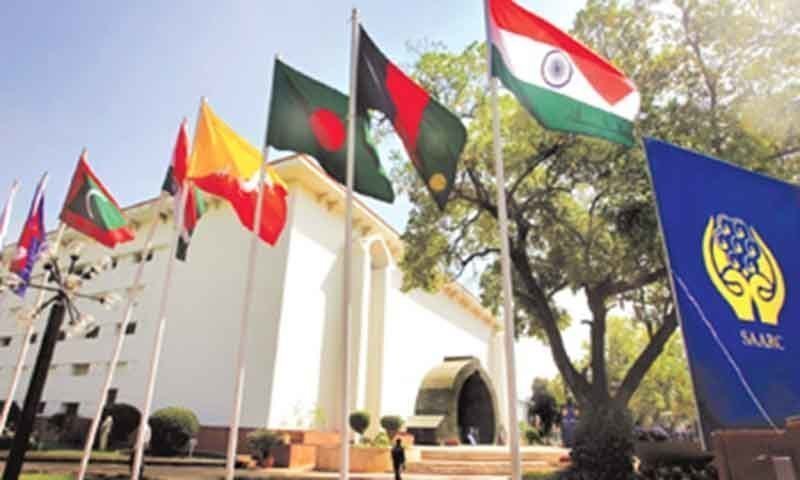
    The National Accountability Bureau (NAB) has been elected as the head of the Anti-Corruption Forum of South Asian Association for Regional Cooperation (SAARC).

    An official press release issued by NAB said the anti-graft watchdog was the “role model” not only for Pakistan but also for entire SAARC countries as NAB had been unanimously elected as chairman of the organisation’s Anti-Corruption Forum, which was a great achievement for Pakistan.

    NAB’s performance is lauded by SAARC countries, national and international organisations like Transparency International (TI), World Economic Forum (WEF), Pildat and Mishal Pakistan.

    In addition, “Pakistan is the only country with whom China has signed a memorandum of understanding (MoU) for eradication of corruption,” the press release said.

    From the beginning, NAB has managed to recover Rs328bn and returned the money to affected people, government and private departments without keeping a single rupee of its share, deposited all recoveries in the national exchequer, says the press release.

    NAB has established its own research academy for the capacity building of investigation officers (IOs) on modern lines. Moreover, it has also established a forensic science laboratory at its Rawalpindi office for scrutinising of documents, analysing fingerprints and digital data.  

    NAB has also established an anti-money laundering cell in its headquarters.

  • Govt to impose extra Rs900 billion taxes: report

    Govt to impose extra Rs900 billion taxes: report

    Pakistan’s former finance minister Dr Hafeez Pasha has said that under an ongoing deal with the International Monetary Fund (IMF), the government will impose taxes worth Rs900 billion in the upcoming budget, The Express Tribune reported.

    “The government has assured the IMF that it will impose Rs700 billion in additional taxes in the first year, Rs900 billion in the second year and Rs1,200 billion in the third year. We don’t have an option but to renegotiate with the IMF since our team was not able to prepare things properly,” Pasha said.

    “It is high time to bring radical tax reforms through tough decisions in the upcoming budget and those who can bear taxes should now take the burden since Pakistan has to pay Rs2 trillion in debt servicing this year; this amount will further increase to Rs3 trillion next year,”

    Economist Dr Qais Aslam said that Pakistan could not enter the 21st century “while having a mindset and policies of the 19th century”. “We have to uplift our institutions with a clear message to our bureaucracy that things will no longer materialise with their mindset.”

    He pointed out that the small-scale industry accounted for only 1% of Pakistan’s economy whereas in the modern world it was considered the backbone of any country. “We have to fix these issues, or else it will be impossible to give employment to the people.”

    “The country has lost one million jobs in the past one year and during the same period about two million youngsters have qualified for jobs… we have to create employment opportunities for them,” he said.

  • ‘IMF putting Pakistan on path of stability’ says Dr. Reza Baqir

    ‘IMF putting Pakistan on path of stability’ says Dr. Reza Baqir

    Dr Reza Baqir, the governor of State Bank of Pakistan (SBP) has said that the International Monetary Fund (IMF) is the government’s partner in reforming the country’s current economic system, Pakistan Today reported.

    In a briefing of the Public Accounts Committee (PAC) on Tuesday, chaired by Rana Tanvir Hussain, the SBP governor said that the relationship of Pakistan and the IMF was based on common interests.

    However, he assured the house that “inflation will go down and the general public will feel the relief.”

    Baqir says that the SBP’s monetary policy committee had decided to keep the policy rate unchanged at 13.25 per cent. “The monetary policy committee stance is appropriate to bring inflation down to the medium-term target range of 5-7pc over the next six to eight quarters.”

    Right now, reducing the interest rate would affect the people who have kept their savings in the banks. However, he admitted that higher interest rate created difficulties for the borrowers.

    “The national savings rate is already very low and if the people are discouraged, then the country will have to borrow the required money from international agencies, and that will raise our current account deficit,” he further added.

    “The main focus of the SBP is to maintain foreign exchange reserves in the country.”

    Baqir also noted that if the foreign reserves would grow, Pakistan would not have to approach international agencies for borrowing.

    The SBP governor said due to higher interest rates in the past, manufacturing had almost ended, but after reforms carried out by the incumbent government, manufacturing activities were once again on the rise despite higher policy rates.

    “The present government did not take loans from the SBP due to which inflation is now being controlled. However, the state bank, at the same time, is making efforts to restore the confidence of foreign and local investors.”

  • New fuel taxes burden masses with additional Rs25 billion

    New fuel taxes burden masses with additional Rs25 billion

    The taxes imposed by the Federal government has burdened people with additional Rs25 billion per month who are already burdened with inflation, Pakistan Today reported.

    In comparison with a decline in global oil prices, the government did not provide any relief to the masses. They said the government had reduced per litre prices of petroleum products by Rs 5 instead of Rs15 litre. The government had fixed petroleum levy (PL) — imposed tex — on high-speed diesel at Rs25 per litre, which had failed to provide relief to the masses.

    Tax on petrol has increased by 106pc, if the taxes weren’t increased, petrol prices could have decreased by Rs 9 per litre. Instead of giving any relief, the government has imposed an additional tax of Rs6 per litre on kerosene oil.

    Furthermore, the government was likely to earn Rs60 billion per month from the taxes imposed on different petroleum products.

    According to the report, the government has increased taxes to meet the demand of the International Monetary Fund (IMF)