Tag: IMF

  • ‘Women participation in economic activities on the rise in Pakistan,’ says IMF

    IMF’s new report “Women in the Labour force: The role of fiscal policies” highlights an average of 2pc rise of the female workforce in Pakistan and 1pc decrease in India, DAWN reported.

    According to the IMF’s staff report, women in most countries do not have the same opportunities to participate in economic activities as men have. This gender inequality has reduced to a good extent, but the average of female labour participation is below the male rate.

    Globally, about on-quarter of countries experienced a decline in female force participation. Countries such as India and Sri Lanka facing an average annual decrease of one per cent between 1990 and 2018, whereas Pakistan, Peru and Spain experienced an average annual increase of 2pc.

    READ: Want to know how much money the PSL winning team will take home?

    The report also says “Many countries have adopted fiscal policy measures to promote gender equality since the mid-1980s. Countries use tax and expenditure policies to address gender inequality and the advancement of women in areas such as education and economic empowerment. Fruthermore, in 2018, at least 80 countries have used gender-responsive fiscal policy interventions to reduce gender inequality.

    READ: Kaala Jadu: Jemima shares poster of herself, PM Imran and Bushra Bibi

    Women’s economic empowerment is the key to growth and productivity. Greater participation of women in the labour force also brings greater diversity that can foster new ideas for production and management, boosting aggregate productivity.

  • ‘Smart performance’: Pakistan’s debt falls to 84.7pc of GDP

    ‘Smart performance’: Pakistan’s debt falls to 84.7pc of GDP

    Pakistan’s general government debt, including guarantees and the International Monetary Fund (IMF) loan, have declined to 84.7 per cent of the GDP, Dawn reported.

    According to details, a recently published IMF report has revealed that the decline in debts was a consequence of the government’s smart performance in reducing expenditures, registering primary budget surplus and increasing tax and non-tax revenues during the first five months of the current fiscal year.

    “In the first quarter of 2019-20, budget execution by the incumbent government improved considerably, registering a primary surplus of 0.6pc of GDP and an overall deficit of 0.6pc – about 1pc of GDP better than programmed,” the report added.

    It said the over-performance was driven by stronger than expected non-tax revenues, accompanied by double-digit growth in tax revenue net of refunds.

    At the same time, due to import compression, customs receipts and other external sector-related taxes have suffered (up only 6pc year-on-year), the report said, adding that spending, including by the provinces, has remained prudent.

    However, the document observed that in FY19, the budget registered a primary deficit of 3.5pc of GDP and an overall deficit of 8.9pc, against its target of 1.8pc and 7pc, respectively.

    Revenue collection at the federal level came in at 2pc of GDP, lower than expected, while total expenditures and provincial fiscal balances were in line with projections, it added. Around three-fourth of the revenue shortfall were due to one-off factors, which are not expected to carry over into FY20.

    In particular, delays in renewing telecom licences, a temporary delay in the sale of state assets, and weaker than expected amnesty proceeds contributed around 1pc of GDP, while a shortfall in the transfer of State Bank profits to the budget, stemming from losses related to the exchange rate depreciation in late FY19 added an additional 0.5pc of GDP.

    As a consequence of the fiscal slippages and the exchange rate depreciation, but also the government’s decision to increase cash deposits considerably to provide a financing cushion against potentially unfavourable market conditions, government debt (including guarantees and IMF borrowing) rose to 88pc of GDP.

    With respect to government’s performance in revenue collection, the report observed that with 34pc nominal growth, compared to 1QFY19, total revenue over-performed the programmed projections by 0.2pc of GDP.

    On account of tax policy measures implemented at the beginning of FY20, the domestic component of tax revenue collected by the FBR, recorded robust growth of 25pc.

    Growth was particularly strong in sales and direct taxes, where most measures were targeted (including removal of tax exemptions, zero and reduced rates). At the same time, taxes collected at the import stage were impacted by substantial import compression, with a decline in all revenue categories except of sales tax.

    Given that more than 40pc of total tax revenue in Pakistan is collected at the import stage, this shortfall had a notable impact on overall tax revenue performance 0.2pc of GDP lower than programmed.

    One-off tax revenue inflows (around Rs30bn) also contributed to the overall result and are related to tax advances and tax amnesty receipts that were not collected at the end of FY19 but were realised in the first quarter of 2019-20 instead. Tax revenues collected at provincial level were also strong, increasing by 18pc.
  • Imran govt admits obtaining $10 billion loan within over a year

    Imran govt admits obtaining $10 billion loan within over a year

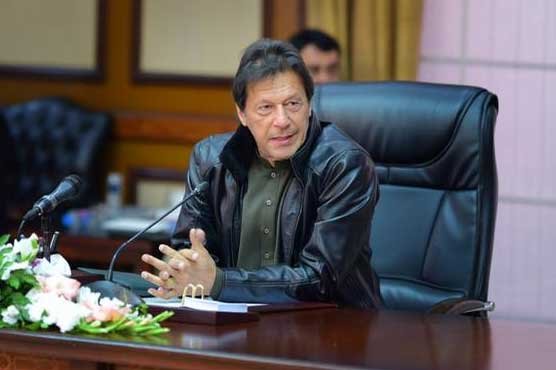
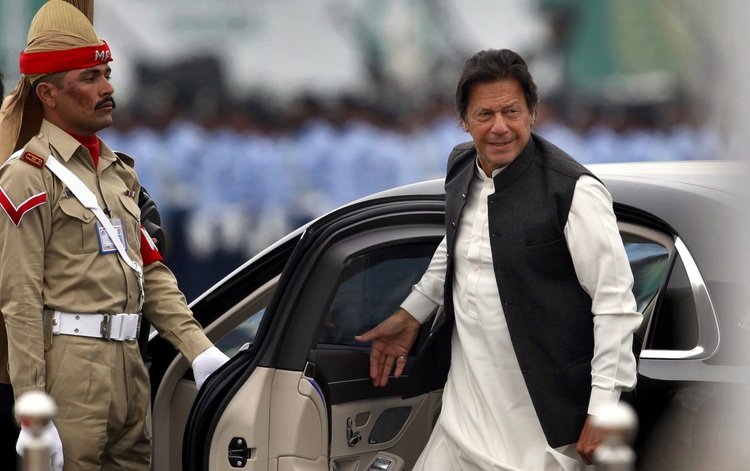
    The Prime Minister (PM) Imran Khan-led government has admitted to have obtained a total of $10.37 billion debt from different countries and international lenders up until September 30, this year.

    In a written reply to a question in the National Assembly, Minister for Economic Affairs Hammad Azhar said the Pakistan Tehreek-e-Insadf (PTI) government secured $10.37 billion from various governments and international institutions from August 14, 2018 to September 30, 2019.

    The government, during this period, received $1.54 billion from China, $151.79 million from Saudi Arabia, $68.6 million from France, $0.4 million from Germany, $62.48 million from Japan and $0.01 million from Kuwait.

    It also obtained a total of $991.2 million loan so far from International Monetary Fund (IMF) during this period.

    The government received a total $2.751 billion from multilaterals including $997.45 million from Asian Development Bank (ADB), $23 million from Asian Infrastructure Investment Bank (AIIB), $155.04 million from International Bank for Reconstruction and Development (IBRD), $556.05 million from International Development Association (IDA), $6.14 million form Islamic Development Bank (IDB), $922.84 million from IDB (short terms), $42.24 million from International Fund for Agricultural Development (IFAD), $8.36 million from Organisation of Petroleum Exporting Countries (OPEC Fund), and $39.8 million form ECOT/BANK.

    The government obtained $4.805 billion loan from commercial banks including $365 million from Ajman Bank, $2.235 billion from Consortium of Chinese banks (ICBC, CDB, BOC), $150 million from Citibank, $410 million from DIB/Noor, $195 million from DIB, $500 million from Emirates NBD, $300 million from ICBD and $650 million from Credit Suisse.

  • ‘Ask me about samosa, pakora prices, not IMF’

    ‘Ask me about samosa, pakora prices, not IMF’

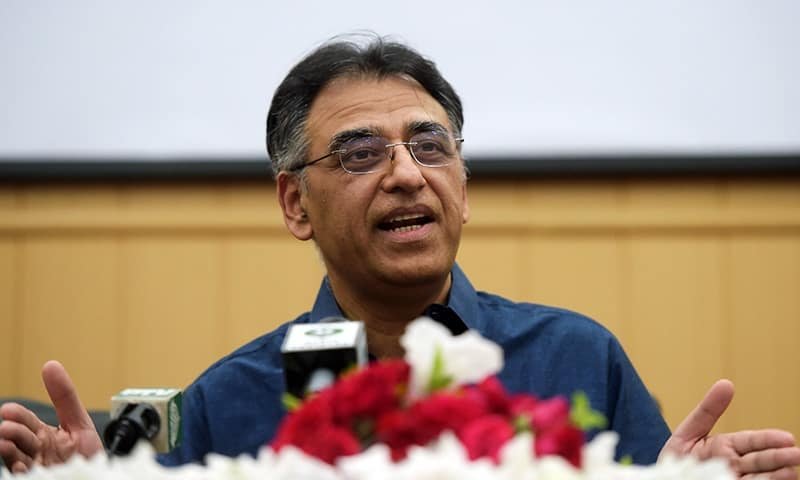
    Former finance minister Asad Umar has reportedly refused to comment on the financial bailout package by the International Monetary Fund (IMF), saying he doesn’t have anything to do with it anymore.

    “Ask me about samosa and pakora prices instead,” he said when questioned about the IMF programme during a recent media interaction.

    The former minister said he was no longer a part of the government and was only a Pakistan Tehreek-e-Insaf (PTI) member. “So whatever is happening, ask about it from advisers and ministers concerned,” he added.

    “What does it have to do with me now?”

    Pakistan and the IMF on Sunday reached an agreement under which the global lender would provide $6 billion to Islamabad over a period of three years. The loan is to help the country make its way out of the prevailing economic crisis.

    Umar had played an important role in negotiating the deal as the finance minister. However, on April 18, he had announced to quit his portfolio after being told to do so by Prime Minister (PM) Imran Khan.