Tag: IMF

  • Imran Khan to write letter to IMF asking not to give loan to Pakistan over poll rigging

    Imran Khan to write letter to IMF asking not to give loan to Pakistan over poll rigging

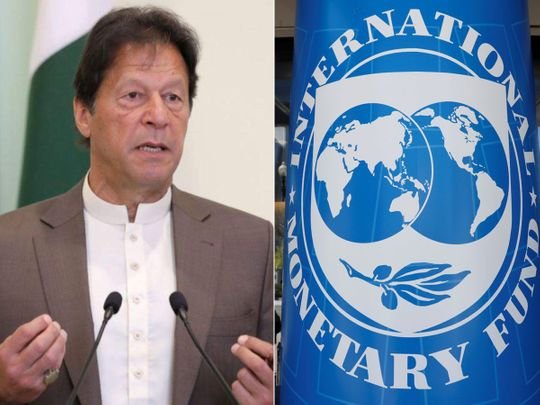
    Pakistan Tehreek-e-Insaf (PTI) leader Barrister Ali Zafar said on Thursday that PTI founder Imran Khan will write a letter to the International Monetary Fund (IMF) to bring attention to alleged rigging in the general elections held on February 8.

    “IMF, European Union, and other organisations have their charter that says these organisations will work in a country where there is good governance. For good governance, a country needs to have democracy that requires free and fair elections,” Ali Zafar said while speaking to media outside Adiala Jail.

    The PTI leader and lawyer also alleged that the people’s mandate was stolen, and those who were losing on February 8 were declared winners the next morning.

    “Democracy cannot be run with this fake mandate,” he said, adding that “no organization can give loans to a country where elections are rigged.”

    The prominent lawyer also said that, through a letter, the PTI founder will request that the IMF to send a monitoring team to look at the matter of poll rigging first and then give loans to Pakistan.

    He also mentioned that “any loan to the government that doesn’t have people’s mandate will not be in favour of Pakistan.”

  • Pakistan may enter fresh IMF loan programme, stricter conditions expected

    Pakistan may enter fresh IMF loan programme, stricter conditions expected

    In the wake of the completion of its current loan programme, Pakistan is poised to sign a new loan agreement with the International Monetary Fund (IMF), reports indicate. 

    The forthcoming Extended Fund Facility programme, anticipated to span three years, will see Islamabad share budget proposals for FY 2024–25 with the IMF. 

    Sources suggest that before finalising the agreement, Pakistan will provide assurances to the IMF regarding further increases in electricity and gas prices, as well as a commitment to reduce subsidies. 

    Finance ministry sources have disclosed that the conditions for the new loan programme are expected to be more stringent compared to the current Standby Agreement (SBA) programme. 

    Earlier discussions hinted at Pakistan securing another loan package from the IMF following the conclusion of the ongoing standby agreement. 

    The caretaker government has commenced consultations for the upcoming IMF programme, with talks expected to commence this month. 

    Officials from the finance ministry have indicated that the measures initiated by the caretaker government will be continued by the elected government in discussions with the IMF.

  • Pakistan’s forex reserves witness a dip of $127 million

    Pakistan’s forex reserves witness a dip of $127 million

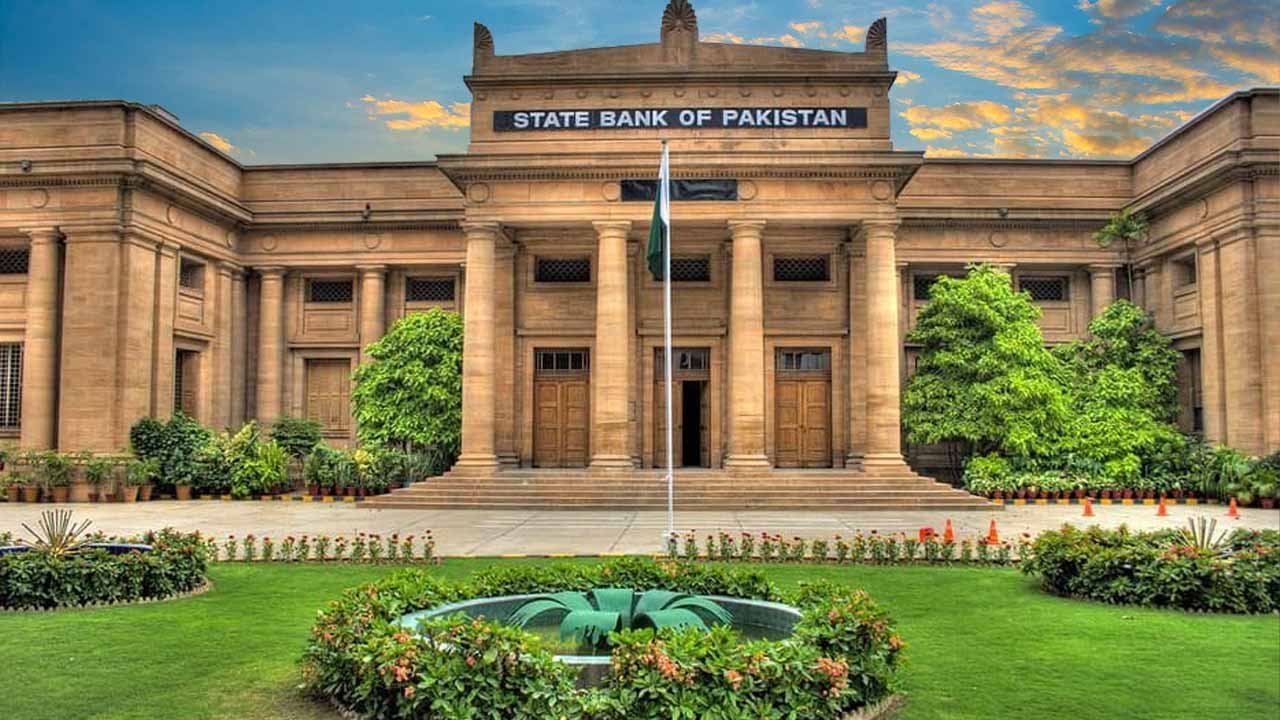
    In a recent report, it was revealed that the foreign exchange reserves held by the State Bank of Pakistan (SBP) experienced a decline of $127 million during the week ending January 12, settling at $8.03 billion.

    The country’s total liquid foreign reserves, including those held by commercial banks, amounted to $13.15 billion. Specifically, commercial banks held net foreign reserves of $5.12 billion.

    The SBP attributed the reduction in reserves to debt repayments, stating, “During the week ending on January 12, 2024, the SBP’s reserves decreased by US$ 127 million to US$ 8,027.4 million due to debt repayments.”

    Notably, the previous week had also seen a decrease in Pakistan’s central bank reserves, amounting to $66 million.

    In a significant development, Pakistan received a tranche of $705.6 million from the International Monetary Fund (IMF), as confirmed in a statement by the SBP on Wednesday.

    The central bank stated, “The SBP has received SDR 528 million (equivalent to $705.6 million) on January 16, 2024, from the IMF following the successful completion of the first review by the Executive Board of the IMF under Standby Arrangement (SBA).”

    The impact of this disbursement will be reflected in the central bank reserves for the week ending January 19.

  • SBP receives second IMF installment, total disbursements reach $1.9 billion

    SBP receives second IMF installment, total disbursements reach $1.9 billion

    The State Bank of Pakistan (SBP) announced today that it has successfully received the second installment of SDR 528 million, equivalent to $705.6 million, from the International Monetary Fund (IMF).

    This disbursement, slated to be reflected in SBP reserves for the week ending on January 19, 2024, marks a significant step in the ongoing financial collaboration between Pakistan and the IMF.

    The latest disbursement brings the total disbursements under the stand-by arrangement (SBA) to a substantial $1.9 billion.

    It is noteworthy that the remaining $1.1 billion is expected to be received after another comprehensive review scheduled for February 2024.

    As of January 5, 2024, the State Bank of Pakistan’s total reserves stand at $8.15 billion, showcasing the positive impact of the financial support received through the IMF programme.

    To recall, Pakistan secured a $3 billion SBA from the IMF towards the end of FY23, crucially preventing the nation from defaulting on its sovereign debt.

    The disbursement of the IMF funds has been phased out over two installments, subject to meticulous reviews.

    On January 11, 2024, Pakistan successfully completed the first review of the economic reform programme, a significant milestone in ensuring the country’s financial stability.

    Following the board’s approval, the IMF highlighted that economic activity has stabilised, though acknowledging that the outlook remains challenging and is contingent on the implementation of sound policies.

    Pakistan’s 9-month SBA aims to provide a robust policy anchor for addressing both domestic and external balances, serving as a framework for continued financial support from multilateral and bilateral partners.

    This financial collaboration with the IMF is instrumental in navigating Pakistan through economic challenges, providing a solid foundation for sustained growth and stability in the region.

    The country remains committed to implementing prudent economic policies as outlined in the reform programme, with the ongoing support of international partners.

  • IMF analysis reveals AI’s potential to disrupt 40% of jobs globally

    IMF analysis reveals AI’s potential to disrupt 40% of jobs globally

    In a recent comprehensive analysis, the International Monetary Fund (IMF) sheds light on the extensive impact of artificial intelligence (AI), unveiling its potential to disrupt nearly 40 per cent of all jobs worldwide.

    Kristalina Georgieva, the Managing Director of the IMF, expresses deep concerns about the consequences of widespread AI adoption, emphasising the likelihood of exacerbating existing inequalities.

    Georgieva underlines the urgency for policymakers to address this alarming trend, cautioning that unchecked deployment of AI could further widen social disparities and intensify tensions.

    The analysis indicates that the influence of AI on employment is expected to be particularly pronounced in advanced economies, with an estimated impact on approximately 60 per cent of jobs.

    While in about half of these cases, employees are poised to benefit from AI integration by enhancing their productivity and work capabilities, in other instances, AI may assume critical roles traditionally performed by humans.

    This shift in labour dynamics could lead to reduced demand for human workers, potentially affecting wages and, in some cases, resulting in job displacement.

    Contrary to the more significant impact projected for advanced economies, the IMF’s projections suggest that low-income countries may experience a comparatively lower impact, with AI affecting only around 26 per cent of jobs in these regions.

    Ms. Georgieva points out that many of these nations lack the necessary infrastructure or skilled workforces to harness the benefits of AI, raising concerns that the technology could exacerbate inequality among nations over time.

    This analysis aligns with a 2023 report by Goldman Sachs, estimating that AI has the potential to replace the equivalent of 300 million full-time jobs.

    However, the report also highlights the possibility of new job opportunities emerging along with a substantial increase in productivity.

    As the rapid proliferation of AI continues to spark intense debate, the global community faces the critical challenge of balancing the benefits and risks associated with this transformative technology.

  • IMF greenlights $700 million for Pakistan’s economic stabilisation programme

    IMF greenlights $700 million for Pakistan’s economic stabilisation programme

    In a significant development, the International Monetary Fund (IMF) successfully concluded its first review of Pakistan’s economic reform programme on Thursday.

    This programme, backed by a $3 billion and-by a arrangement (SBA), has now received a boost with the immediate approval and disbursement of $700 million, as confirmed by the finance ministry.

    According to an official statement from the ministry, the completion of the first review by the IMF’s Executive Board, coupled with the payment of $528 million in special drawing rights, has elevated the total disbursements under the SBA to $1.9 billion.

    The infusion of funds from the IMF, combined with recent inflows from multilateral lenders, is anticipated to contribute to the stability of the Pakistani rupee, which has demonstrated relative steadiness over the past few months.

    The finance ministry highlighted that this fresh tranche would play a crucial role in facilitating rollovers from allied countries, including the United Arab Emirates, China, and Saudi Arabia.

    Additionally, it is expected to alleviate external debt repayment pressures faced by Pakistan.

    This positive development traces back to June 2023, when the IMF Executive Board granted approval for a much-needed nine-month arrangement with Pakistan to support its economic stabilisation program.

    The initial disbursement of $1.2 billion was promptly released in July, with the remainder subject to two quarterly reviews over the programme’s duration.

    The current IMF programme is slated to conclude in the second week of April, with the recent disbursement marking a significant step towards its successful execution.

    Notably, a staff-level agreement was reached in November 2023 between the IMF staff and Pakistani authorities, paving the way for the first review under Pakistan’s SBA.

    This agreement was contingent upon subsequent approval by the IMF’s Executive Board.

    Looking ahead, Pakistan is poised to receive the remaining amount in March under the $3 billion SBA.

    Despite facing challenging conditions, particularly persistently high inflation, which rose to 29.7 per cent in December from 29.2 per cent in the preceding month, Pakistan remains committed to navigating through these economic challenges with the assistance of international financial institutions.

  • Pakistan grapples with massive Rs63.4 trillion debt

    Pakistan grapples with massive Rs63.4 trillion debt

    In November 2023, Pakistan’s total debt soared to an alarming Rs63.399 trillion, marking a significant increase from Rs50.959 trillion in the same month of the previous year. 

    According to details, this surge comprises Rs40.956 trillion in domestic loans and Rs22.434 trillion in international loans.

    The recent development follows Pakistan’s commitment to the International Monetary Fund (IMF) for a new loan programme. 

    As outlined in the Memorandum of Economic and Financial Table, Pakistan has pledged to boost foreign reserves to $13.6 billion in FY2024–25, facilitating access to the IMF’s financial assistance.

    To support its financial strategy, Pakistan is planning to roll over a $6.34 billion loan in the upcoming fiscal year, coupled with a targeted increase of $1.31 billion in foreign investments, as highlighted by the MEFPT. 

    These measures aim to navigate the country through its evolving economic landscape.

  • Pakistani rupee gains 20 paisa against US dollar

    Pakistani rupee gains 20 paisa against US dollar

    The Pakistani rupee (PKR) extended its positive trajectory against the US dollar for the sixth consecutive session, appreciating by 0.07 per cent in the inter-bank market on Tuesday.

    According to the State Bank of Pakistan (SBP), the rupee concluded at Rs283.01, marking an increase of Re0.20.

    In the previous session, the rupee saw a marginal gain, settling at Rs283.21 against the US dollar.

    Meanwhile, in a noteworthy development, Pakistan secured $4.285 billion from various financing sources in the first five months (July–November) of the current fiscal year 2023–24.

    This represents a decrease from the $5.114 billion borrowed during the corresponding period in 2022–23, as disclosed by data from the Economic Affairs Division (EAD).

    On the global front, the US dollar experienced a 0.3 per cent decline against the yen, maintaining its position close to a four-month high of 140.95 reached last week.

    Additionally, the greenback lingered near approximately five-month lows against the Australian and New Zealand dollars.

    This was attributed to the strength of risk-sensitive currencies, driven by the anticipation that the US Federal Reserve might initiate interest rate adjustments as early as the beginning of next year.

    In the realm of commodities, oil prices stabilised on Tuesday as investors assessed the potential repercussions on oil supply arising from attacks by Yemen’s Iran-aligned Houthi militants on ships in the Red Sea.

    These attacks have disrupted maritime trade, compelling companies to reroute vessels. Notably, crude prices surged nearly 2 per cent on Monday due to concerns about trade disruptions through the Suez Canal, a vital shipping route that accounts for approximately 15 per cent of global shipping traffic.

    Brent crude declined by 12 cents to $77.83 per barrel.

    The US West Texas Intermediate crude for January, set to expire on Tuesday, experienced a decrease of 62 cents, reaching $71.85. In contrast, the more active February contract only incurred a marginal loss of 3 cents.