Tag: IMF

  • Pakistani rupee appreciates 0.02% against US dollar to close at Rs283.21

    Pakistani rupee appreciates 0.02% against US dollar to close at Rs283.21

    In a continuing upward trend, the Pakistani rupee demonstrated resilience in the inter-bank market by securing gains against the US dollar for the fifth consecutive session, appreciating by 0.02 per cent on Monday.

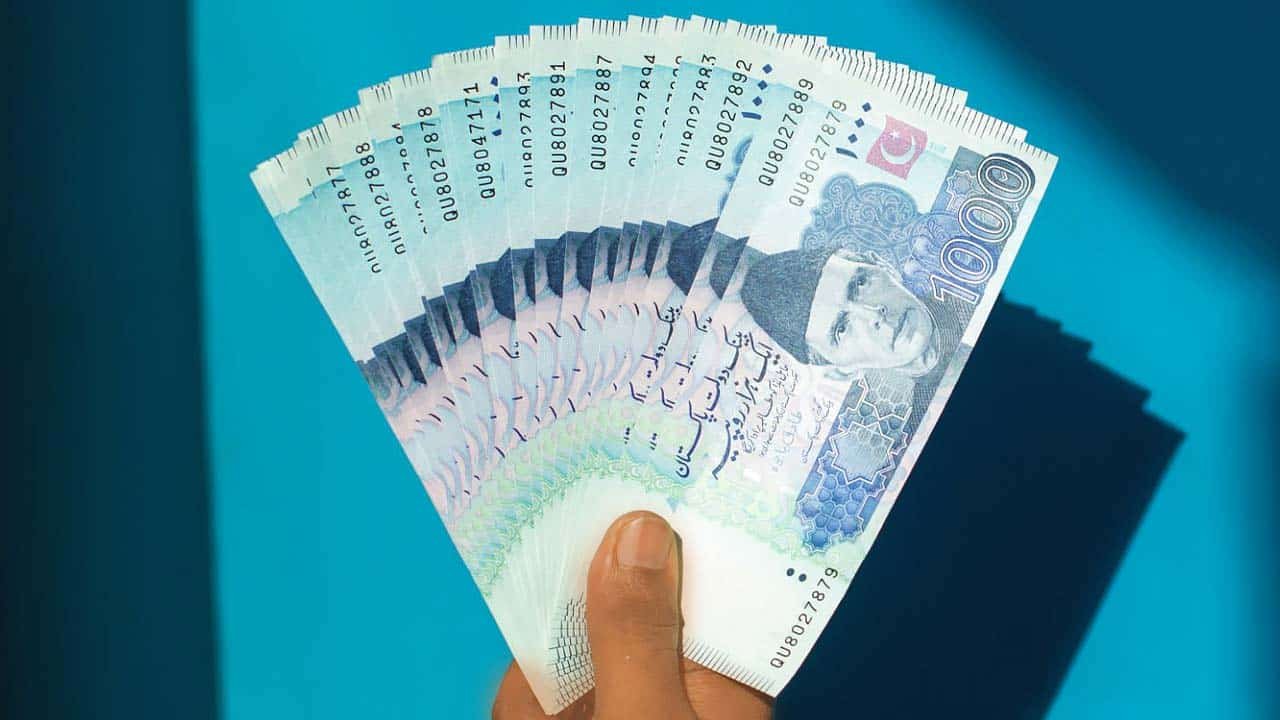
    According to the State Bank of Pakistan (SBP), the rupee closed at Rs283.21, marking an increase of Re0.05.

    Throughout the preceding week, the rupee exhibited a noteworthy appreciation, gaining Re0.61 or 0.21 per cent to settle at Rs283.26 against the US dollar in the inter-bank market.

    This marks the fifth consecutive week of the rupee’s advancement against the dollar, a momentum attributed to the recent announcement of a staff-level agreement (SLA) between Pakistan and the International Monetary Fund (IMF) concerning the first review of the $3 billion Stand-by Arrangement (SBA).

    Since the revelation of the SLA on November 15, the local currency has strengthened by Rs4.88, or 1.7 per cent, against the greenback.

    Meanwhile, on a global scale, currencies commenced the week with caution following significant fluctuations in the previous week, driven by various central bank meetings, including rate decisions from the Federal Reserve, the European Central Bank (ECB), and the Bank of England (BoE).

    The greenback, which had been bolstered throughout most of 2022 and 2023 by aggressive rate hikes from the Fed and expectations of prolonged higher rates, experienced a notable decline of approximately 1.3 per cent against a basket of currencies last week in response to the outcomes of the Fed’s policy meeting.

  • Pakistan expected to increase petroleum levy to get IMF loan 

    Pakistan expected to increase petroleum levy to get IMF loan 

    Pakistan has reportedly provided assurances to the International Monetary Fund (IMF) regarding an augmentation of the petroleum levy in the fiscal year 2024–25, aligning with its intentions to embark on a new loan programme. 

    According to documentation cited by sources within the finance ministry, Pakistan has committed to elevating the petroleum levy to Rs1,065 billion in FY2024–25, anticipating a revision of the current levy target from Rs869 billion to Rs918 billion.  

    The attainment of the revised target is contingent upon an uptick in the consumption of petroleum products. 

    The sources additionally revealed that the caretaker government would have implemented a Presidential Ordinance if adjustments were to be made to the current petroleum levy target. 

    Earlier revelations indicate that Pakistan is poised to secure another financial assistance package from the International Monetary Fund (IMF) subsequent to the conclusion of the existing standby agreement. 

    The caretaker government has initiated consultations in preparation for the forthcoming IMF programme. 

    Sources have indicated that talks between the government and the IMF for the new loan programme are likely to commence this month.  

    Finance ministry officials underscored the commitment of the elected government to advance the measures established by the caretaker government. 

  • IMF board’s January meeting to shape future disbursements for Pakistan

    IMF board’s January meeting to shape future disbursements for Pakistan

    The International Monetary Fund’s (IMF) Executive Board is scheduled to convene on January 11 to endorse the Staff-Level Agreement (SLA) with Pakistan, marking the inaugural review of the $3 billion Stand-By Arrangement (SBA).

    In June, the IMF Executive Board granted approval for a crucial nine-month arrangement with Pakistan, aimed at supporting its economic stabilisation programme.

    This approval facilitated an immediate disbursement of $1.2 billion, with the remaining funds to be disbursed over the programme’s timeline, contingent upon two quarterly evaluations.

    Following negotiations between IMF staff and Pakistani authorities on November 15 in Islamabad, the SLA was successfully reached, paving the way for Pakistan to access SDR 528 million (approximately $700 million).

    This latest disbursement brings the cumulative total under the nine-month $3 billion SBA to nearly $1.9 billion.

    While the initial plan had tentatively slated the IMF Board meeting for December 7 to approve the initial tranche, the confirmed date is now set for January 11.

  • IMF praises Pakistan’s economic progress and stability efforts 

    IMF praises Pakistan’s economic progress and stability efforts 

    The Executive Director at the International Monetary Fund (IMF), Bahador Bijani, acknowledged a positive trend in the economic landscape of Pakistan, highlighting the effective measures taken by the authorities. 

    The statement was made during an event hosted by Masood Khan, Pakistan’s Ambassador to the US, bringing together representatives from key international financial institutions (IFIs) such as the IMF, International Finance Corporation (IFC), World Bank, and Multilateral Investment Guarantee Agency (MIGA) at Pakistan House. 

    Expressing optimism, Bijani highlighted Pakistan’s significance regionally and globally, asserting that the nation merits enhanced prospects.  

    This observation coincides with Pakistan’s current status under a caretaker government while participating in an ongoing IMF programme. 

    Nathan Porter, IMF Mission Chief to Pakistan, addressed the assembly of over 40 IFI representatives, expressing contentment with the recently concluded staff-level agreement.  

    Porter praised the interim government’s actions and policies, underscoring their dedication to steering the country towards stability. He expressed the hope that this foundation would enable the pursuit of reforms for a more robust, prosperous, and inclusive Pakistan. 

    Porter further commended the State Bank of Pakistan (SBP) for its cooperative efforts and policies aimed at ensuring fiscal stability in the country.  

    Athanasios Arvanitis, Deputy Director of the Middle East and Central Asia Department at the IMF expressed optimism that the upcoming elections in February would bring about the necessary reforms for Pakistan’s progress. 

    Syed Ali Abbas, Advisor Mission Chief UK, European Department at the IMF, echoed similar sentiments, anticipating a more enduring approach following the successful completion of the electoral process. 

    Ambassador Masood Khan underscored the transformative impact of Pakistan’s economic digitization, emphasising the emergence of new opportunities for the youth and professionals in steering the nation towards a promising future. 

    Khan asserted that Pakistan, as a nation of talented individuals, has the potential for significant accomplishments.  

    The statement aligns with earlier commendations from Kristalina Georgieva, Managing Director of the IMF, who lauded the Pakistani government for its adept handling of economic stability and timely implementation of reforms earlier this month. 

  • IMF proposes solutions for streamlining Pakistan’s budget through digitisation 

    IMF proposes solutions for streamlining Pakistan’s budget through digitisation 

    The Caretaker Minister for Finance recently presided over the inaugural meeting with the International Monetary Fund (IMF) Technical Assistance Mission, focusing on the digitisation of the budgetary process.  

    The mission, led by Fazeer Rahim and Sybi Hida, senior economists from the Public Financial Management Division, along with IMF Resident Representative in Pakistan, Esther Pérez Ruiz, discussed strategies for enhancing the efficiency of the budget-making process through digitisation. 

    During the meeting, the minister highlighted the importance of tailoring the IMF’s recommendations to the specific needs of the ministry.  

    The goal is to streamline and improve the effectiveness of budgetary procedures through the integration of digital technologies. 

    The Technical Assistance Mission is committed to providing practical and implementable solutions tailored to the ministry’s requirements.  

    This collaborative effort seeks to modernise and optimise the budgetary framework, aligning it with contemporary digital practices. 

    In related developments, discussions have surfaced regarding Pakistan’s pursuit of another loan package from the IMF upon the completion of the ongoing standby agreement.  

    The caretaker government has initiated consultations for the forthcoming IMF programme, and sources indicate that talks with the IMF are likely to commence in the current month.  

    Finance ministry officials have clarified that the elected government will carry forward the measures initiated by the caretaker government.  

    It is anticipated that the newly elected government will be responsible for finalising and signing the IMF programme, assuming governance responsibilities. 

  • Pakistan’s inflation soars to 29.2% in November, exceeding October figures

    Pakistan’s inflation soars to 29.2% in November, exceeding October figures

    In November, Pakistan’s headline inflation surged to 29.2 per cent year-on-year, as reported by the Pakistan Bureau of Statistics, surpassing the October figure of 26.9 per cent. 

    On a monthly basis, there was a 2.7 per cent increase. The average inflation for July-November reached 28.62 per cent, up from 25.14 per cent in the same period the previous year.

    CPI inflation in urban areas rose to 30.44 per cent in November 2023, compared to 25.5 per cent in the previous month and 21.6 per cent in November 2022. On a monthly basis, it increased to 4.34 per cent, reflecting a substantial jump from the previous month and November 2022.

    Conversely, rural CPI inflation stood at 27.53 per cent year-on-year in November 2023, showing a slight decrease from the previous month but an increase from November 2022.

    Anticipated by several brokerage houses, the November inflation spike, driven partly by a rise in gas tariffs, aligns with predictions. 

    JS Global and Arif Habib Limited had forecasted CPI-based inflation to be around 28.26 per cent and 28.2 per cent, respectively.

    Beyond inflation, Pakistan faces economic challenges. A recent staff-level agreement with the IMF, subject to board approval in December, will provide access to SDR 528 million. The International Monetary Fund (IMF) expects inflation to decrease in the coming months due to improved supply conditions.

    Despite maintaining a key policy rate of 22 per cent, the State Bank of Pakistan projects a downward trajectory for inflation, citing fiscal consolidation, commodity availability, and exchange rate alignment as offsetting factors against risks like global oil price volatility and increased gas tariffs.

    Caretaker Finance Minister Dr Shamshad Akhtar expressed optimism about gradual inflation reduction, attributing it to improved financial management. The government believes effective policies will contribute to an overall improvement in economic conditions.

  • Pakistani rupee predicted to decline to Rs350 against US dollar in 2024

    Pakistani rupee predicted to decline to Rs350 against US dollar in 2024

    According to BMI, a Fitch Solutions Company, the Pakistani rupee is expected to depreciate to as low as Rs350 against the US dollar by the end of 2024. Similarly, Topline Securities Ltd., a brokerage firm, predicts a fall to Rs324. 

    Despite government efforts to combat smuggling and speculation, the local currency has already experienced a 20 per cent devaluation against the dollar, with analysts predicting a continued decline, as reported by Bloomberg

    John Ashbourne, a global economist at BMI in London, remarked, “This appears to be a currency that is set to adjust downwards.” 

    “It will be very hard in the long term to convince people to use the official rate if parallel markets offer more value for a dollar,” added Ashbourne. 

    He further stated, “The authorities can push against the tide for a certain amount of time, but they are not able to do that sustainably.” 

    As of Tuesday, the local unit closed at Rs285.52 against the dollar in the interbank market. 

    According to experts, Pakistan’s currency is poised to conclude 2023 as Asia’s worst-performing country in terms of currency performance. 

    In a temporary recovery effort in September, when the rupee was at a record low of Rs300, the caretaker set-up initiated aggressive measures against the illegal purchase and sale of the greenback at a premium exchange rate. 

    However, experts caution that this recovery is expected to be short-lived. 

  • Pakistan forms new body led my three-star military general to expand tax base

    Pakistan forms new body led my three-star military general to expand tax base

    The government has established a new committee, led by a three-star military general, to oversee data integration efforts aimed at expanding the tax base.

    This move precedes the imminent arrival of a technical mission from the International Monetary Fund (IMF), tasked with assessing Pakistan’s tax system.

    Lieutenant General Muhammad Munir Afsar Chairman of the National Database and Registration Authority (NADRA), will head the technical committee, as notified by the Federal Board of Revenue (FBR).

    The newly formed committee will devise proposals for data integration to expand the tax base and formulate an IT infrastructure transformation plan.

    The eight-member committee, consisting of three senior FBR members, has been tasked with crafting a comprehensive plan for data integration. Their primary objective is to significantly increase the number of income tax return filers, aiming to elevate last year’s count of 4.9 million to 6.5 million within the next eight months, as outlined in an official notification.

    As reported by Express Tribune, Pakistan has shared an FBR restructuring plan with the IMF, outlining the integration of 145 entities into the FBR network to expand the tax base. However, the Prime Minister has withheld approval, instructing further refinement to address ambiguities and contradictions in the proposed restructuring plan.

    This strategic initiative aligns with the impending visit of an IMF technical mission to Pakistan, scheduled to commence next week.

    The mission will conduct a thorough review of the country’s tax laws and FBR’s administrative structure, ultimately delivering recommendations within two months. These suggestions may serve as a foundation for the upcoming IMF program.

  • Pakistan to receive $1.5 billion from international lenders following IMF approval

    Pakistan to receive $1.5 billion from international lenders following IMF approval

    Pakistan is poised to secure funds amounting to $1.5 billion from global lenders, contingent on the approval of the loan tranche under the $3 billion Stand-By Arrangement (SBA) by the International Monetary Fund (IMF), as highlighted by Dr Shamshad Akhtar, the caretaker finance minister, in a recent interview with a local news channel.

    It’s noteworthy that the IMF granted preliminary approval on November 15, 2023, for the disbursement of the upcoming loan tranche within the programme.

    Upon receiving approval, Pakistan will gain access to SDR 528 million, equivalent to approximately $700 million. This will contribute to the cumulative disbursements under the program reaching almost $1.9 billion.

    The agreement underscores the authorities’ commitment to advancing planned fiscal consolidation, expediting cost-reducing reforms in the energy sector, completing the transition to a market-determined exchange rate, and pursuing reforms in state-owned enterprises and governance.

    These measures aim to attract investment, support job creation, and simultaneously enhance social assistance.

    Nathan Porter remarked, “Anchored by the stabilization policies under the SBA, a nascent recovery is underway, supported by international partners and indications of improved confidence.”

    He added that the steadfast execution of the FY24 budget, ongoing adjustments of energy prices, and renewed inflows into the foreign exchange (FX) market have alleviated fiscal and external pressures.

  • SBP reports second consecutive weekly decline in forex reserves

    SBP reports second consecutive weekly decline in forex reserves

    During the week ending on November 17, 2023, the State Bank of Pakistan (SBP) experienced a decline of $217 million in its foreign exchange reserves, settling at $7,180.0 million, as revealed by data released on Thursday.

    The total liquid foreign reserves for the country amounted to $12.3 billion, with commercial banks holding net foreign reserves of $5.1 billion.

    The central bank attributed this reduction in reserves to debt repayments. In a statement, the SBP explained, “During the week ended on November 17, 2023, the SBP’s reserves decreased by US$ 217 million to US$ 7,180.0 million due to debt repayments.”

    This marks the second consecutive week of a decline in the dollar stockpile, following a $115 million decrease in the previous week.

    It’s noteworthy that in July of this year, the central bank’s reserves received a significant boost as Pakistan received the initial tranche of approximately $1.2 billion from the International Monetary Fund (IMF).

    This followed the approval of a new $3 billion stand-by arrangement (SBA). Additional inflows were received from Saudi Arabia and the UAE.

    However, the SBP’s reserves have been facing pressures due to ongoing debt repayments, increased import payments following the relaxation of restrictions, and a lack of fresh inflows.

    In a positive development, the IMF announced last week that its staff and Pakistani authorities had reached an agreement on the first review of the SBA.
    The staff-level agreement is pending approval by the IMF Executive Board.

    The IMF stated, “The IMF team has reached a staff-level agreement (SLA) with the Pakistani authorities on the first review of their stabilisation programme supported by the IMF’s US$3 billion (SDR2,250 million) SBA.”

    Upon approval, approximately US$700 million (SDR 528 million) will become available, bringing the total disbursements under the programme to nearly US$1.9 billion.

    Caretaker Finance Minister Dr Shamshad Akhtar, speaking to the media after the SLA with the IMF, expressed confidence that external financing would not be an issue, anticipating increased inflows in December 2023, which would contribute to boosting the foreign exchange reserves.