Tag: IMF

  • IMF recommends gas price hike, subsidy cuts for Pakistan

    IMF recommends gas price hike, subsidy cuts for Pakistan

    The International Monetary Fund (IMF) has reportedly urged Pakistan to address the growing concerns surrounding the power sector’s circular debt, which now stands at 4 per cent of the gross domestic product (GDP).

    Despite initial targets for debt reduction not being met, the IMF has not yet made a final decision on its recommendations.

    Sources suggest that the IMF is advocating for an additional hike in gas prices and a reduction in energy sector subsidies, aligning with its persistent calls for such measures.

    It’s noteworthy that no official decision has been reached on these proposals. Simultaneously, Pakistan and the IMF have collaborated on a comprehensive privatisation plan, focusing on state-owned entities (SOEs) that have incurred significant losses.

    This strategic move aims to address the financial challenges faced by these institutions. The Central Monitoring Unit will meticulously evaluate the extent of losses, with findings submitted to the IMF.

    A crucial aspect of the privatization plan involves transferring control of power distribution companies to the private sector. This shift is expected to mitigate losses and improve efficiency in the power sector, aligning with the IMF’s overarching demand for comprehensive reforms in the energy sector.

  • IMF, EU officers ‘routinely’ visit Khan in jail, claims Pervez Elahi

    IMF, EU officers ‘routinely’ visit Khan in jail, claims Pervez Elahi

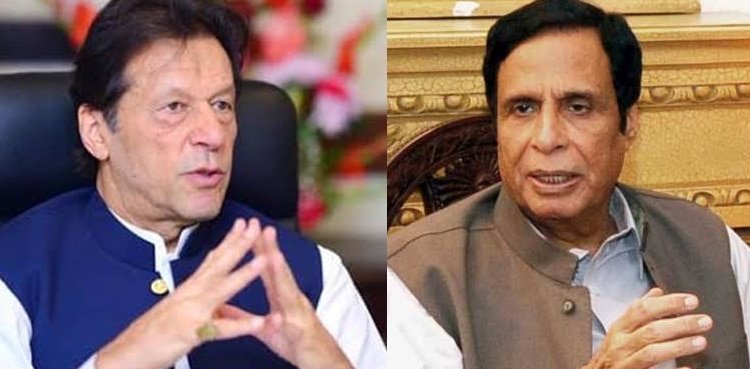
    The incarcerated Preside of Pakistan Tehreek-e-Insaf (PTI), Chaudhry Parvez Elahi, has claimed on Thursday that officers from the International Monetary Fund (IMF) and the European Union “routinely” visit party chief Imran Khan in Adiala jail in Rawalpindi.

    The claim was categorically rejected by the spokesman of Punjab prisons department, declaring it “baseless and against the facts”.

    Speaking to journalists in a courtroom in Lahore, the PTI president said that Imran Khan was locked up in a cell next to his in jail.

    “Representatives from the EU and the IMF [routinely] visit Imran,” he claimed.

    The former chief minister also said, while responding to a question about upcoming elections, that Khan will get unusual votes in the forthcoming polls.

    “There will be no rigging in this election,” he said, adding that the polls’ date was announced at the orders of the top court.

    Chaudhry Parvez Elahi further said that he is with Imran Khan and will continue to support the former prime minister.

  • IMF and Pakistan seal agreement on $3 billion SBA, await board approval

    IMF and Pakistan seal agreement on $3 billion SBA, await board approval

    In a significant development, the International Monetary Fund (IMF) declared on Wednesday that its team and Pakistani authorities have successfully concluded the initial review of the $3 billion, nine-month Stand-By Arrangement (SBA).

    This staff-level agreement awaits the approval of the IMF Executive Board.

    Upon endorsement, approximately US$700 million (SDR 528 million) will be accessible, contributing to a cumulative disbursement of nearly US$1.9 billion under the programme.

    A delegation from the IMF, led by Nathan Porter, conducted discussions in Islamabad from November 2–15, 2023, focusing on the inaugural review of Pakistan’s economic programme supported by the IMF SBA.

    The nascent recovery, supported by international partners and enhanced confidence indicators, is attributed to the stabilizing policies outlined in the SBA.

    The disciplined implementation of the FY24 budget, ongoing adjustments in energy prices, and increased inflows into the foreign exchange (FX) market have alleviated fiscal and external pressures.

    The IMF anticipates a decline in inflation in the upcoming months, driven by diminishing supply constraints and modest demand.

    Nevertheless, Pakistan remains exposed to significant external risks, including heightened geopolitical tensions, escalating commodity prices, and potential tightening in global financial conditions.

    It is imperative to persist in efforts to enhance resilience in the face of these challenges, according to the international lender

  • Pakistan expects positive outcome in talks with IMF, eyes $700 million disbursement

    Pakistan expects positive outcome in talks with IMF, eyes $700 million disbursement

    Pakistan is optimistic about the successful completion of the initial review under the $3 billion standby arrangement (SBA) with the International Monetary Fund (IMF). 

    According to reports, the ongoing negotiations, now in their final phase, are anticipated to culminate positively, marking a crucial milestone. 

    Commencing on Monday, policy-level discussions between Pakistani authorities and the IMF are scheduled to persist until November 15, spearheaded by Finance Minister Shamshad Akhtar.  

    The Pakistani delegation, including key figures such as State Bank of Pakistan Governor Jameel Ahmad and Federal Board of Revenue Chairman Malik Amjed Zubair Tiwan, along with representatives from the finance and energy ministries, has been actively engaged in the deliberations. Nathan Porter leads the IMF team in this dialogue. 

    During the latest session, the IMF delegation articulated their recommendations and requirements, while technical-level talks involved the sharing of pertinent economic data with the international lender’s team, according to The News.  

    Sources within the finance ministry assert that Pakistan has diligently fulfilled all stipulated conditions set forth by the IMF. 

    It is anticipated that the staff-level agreement will be finalised during the ongoing policy-level talks, paving the way for the disbursement of approximately $700 million to Pakistan upon the successful completion of the first review. 

    Earlier this month, the IMF review mission commended the Pakistani government for its commendable progress towards economic recovery, as stated by the finance ministry.  

    The IMF’s $3 billion loan programme, sanctioned in July, played a pivotal role in averting a sovereign debt default. The initial tranche of $1.2 billion was disbursed in July, with the remaining amount contingent on subsequent reviews. 

    Finance Minister Shamshad Akhtar has unequivocally ruled out any requests to the IMF for an extension of the SBA programme’s timeframe or an increase in its size. 

  • IMF pressures Pakistan for tax reforms, calls for intensified recovery efforts

    IMF pressures Pakistan for tax reforms, calls for intensified recovery efforts

    The International Monetary Fund (IMF) is urging Pakistan to intensify efforts towards tax recovery. 

    Specifically, the IMF calls for increased income tax collection from retailers and the real estate sector, alongside a heightened focus on agriculture income. 

    The IMF emphasises collaborative actions between the federal government and provinces to enhance tax recovery, considering the imposition of a fixed tax on retailers in case of collection shortfalls after December. 

    Additionally, the IMF recommends consultations with provinces for taxing agriculture and real estate. Proposals for tax policy amendments and addressing taxation flaws have been extended to the Federal Board of Revenue (FBR) by the IMF mission, emphasising effective taxation policies and enforcement in sectors with insufficient tax recovery. 

    The FBR has presented a revenue projection report to the IMF team for the current fiscal year, with the IMF expected to respond by Saturday. During the discussions, the FBR briefed the IMF on the task force dedicated to tax policy and administration. 

    As part of an agreement with the IMF, Pakistan commits to sharing data on tax evaders through collaboration with the FBR, banks, and NADRA, aiming to enhance overall tax collection. 

    This agreement was reportedly reached during policy review talks, facilitating the release of a $700 million loan tranche under the Standby Agreement (SBA).

  • Army gets more land for ‘agriculture’

    Army gets more land for ‘agriculture’

    The Pakistan Army is set to start agriculture farming on 41,000 acres of land in South Waziristan’s Zarmalam area.

    Peshawar Corps Commander Lieutenant General Sardar Hasan Azhar Hayat has said that the army was determined to increase agricultural farming in Khyber Pakhtunkhwa, as per Geo News.

    Lt Gen Hayat said the army has prepared a farming plan on 41,000 acres of land that had been barren for years.

    The officer was of the view that there is a vast opportunity for investment in minerals, hydropower, agriculture, and tourism in KP that can help boost the province’s resources.

    The three-star officer said the army has worked together with the civil government to bring investment in minerals, agriculture, hydropower, and tourism to the province, which is yielding positive results.

    The Pakistan Army’s decision has sparked mixed reactions among locals and experts, with some expressing concerns over the potential implications for the region.

    The move, which involves the cultivation of 41,000 acres of land, has raised questions about the long-term impact on the area’s ecosystem and implications for local communities.

    Critics argue that the project’s scale could lead to significant land and water resource depletion, impacting the livelihoods of communities dependent on the land.

    Additionally, there have been concerns about the army’s increasing involvement in civilian sectors, with some experts cautioning against potential overreach and the need to ensure civilian oversight in such initiatives.

    On October 1st this year, The Pakistan Army launched the first agriculture project under the Special Investment Facilitation Council (SIFC) to make barren lands cultivable in South Waziristan.

    The pilot project launched in the Zarmalam district of South Waziristan oversaw 1,000 acres of barren land made suitable for cultivation.

    The Pakistan Army’s decision has sparked mixed reactions among locals and experts, with some expressing concerns over the potential implications for the region.

    The move, which involves the cultivation of 41,000 acres of land, has raised questions about the long-term impact on the area’s ecosystem and the implications for local communities.

    Critics argue that the project’s scale could lead to significant land and water resource depletion, impacting the livelihoods of communities dependent on the land.

    Additionally, there have been concerns about the army’s increasing involvement in civilian sectors, with some experts cautioning against potential overreach and the need to ensure civilian oversight in such initiatives.

  • Pakistan on track to secure second IMF tranche successfully: PM Kakar

    Pakistan on track to secure second IMF tranche successfully: PM Kakar

    Caretaker Prime Minister Anwaar ul Haq Kakar expressed optimism about Pakistan’s upcoming review with the International Monetary Fund (IMF), set for this month.

    The IMF, led by Nathan Porter, will visit Pakistan from November 2–16 to discuss the first review of the country’s current $3 billion stand-by arrangement (SBA).

    Pakistan is navigating a challenging economic recovery path under a caretaker government following an IMF loan programme approval in July, which prevented a sovereign debt default. The country received the first $1.2 billion tranche from the IMF in July.

    Kakar stated that Pakistan has successfully achieved its targets, including revenue goals, and is confident about the negotiations for the second tranche.

    Regarding inflation, the interim prime minister acknowledged a decrease in inflation rates, attributing it to the Pakistani rupee’s appreciation against the dollar and a drop in petroleum prices. 

    The prime minister also encouraged journalists to analyse the impact of the Pakistani rupee’s strength on circular debt and highlighted that stringent measures against smuggling through Afghan transit trade have boosted local industry productivity.

  • IMF team to visit Pakistan next week for crucial $3 billion SBA assessment

    IMF team to visit Pakistan next week for crucial $3 billion SBA assessment

    A delegation from the International Monetary Fund (IMF) is scheduled to visit Pakistan on November 2 to initiate discussions pertaining to the inaugural assessment of the nation’s ongoing $3 billion standby arrangement (SBA). 

    Pakistan is currently navigating a complex journey towards economic recovery, operating under an interim government. 

    This endeavour follows an IMF loan programme sanctioned in July, which was instrumental in averting a potential sovereign debt default. As part of this programme, Pakistan received an initial disbursement of $1.2 billion from the IMF in July.

    Esther Perez Ruiz, the IMF’s resident representative in Pakistan, has disclosed that a delegation led by Mr Nathan Porter from the International Monetary Fund will embark on a mission to Pakistan commencing on November 2, with the primary objective being the evaluation of the current Stand-By Arrangement.

    Additionally, the finance ministry has exerted significant efforts to maintain the budget deficit within the predefined limits agreed upon with the IMF. They issued warnings to the provinces, urging them to curtail their expenditures. Recent provisional estimates indicate that both Punjab and Sindh have made notable strides in this direction.

    However, a notable challenge in the quest to contain the overall fiscal deficit lies in the escalating debt servicing requirements. These obligations are projected to surpass Rs8.3 trillion and reach Rs8.5 trillion for the current fiscal year 2023–24. This surge is attributed to the central bank’s heightened policy rate, a departure from the initial target of Rs7.3 trillion.

  • Govt approves massive gas tariff hike, raising concerns of growing financial hardship

    Govt approves massive gas tariff hike, raising concerns of growing financial hardship

    The government’s recent decision to approve a substantial increase in gas tariffs, set to take effect from November 1, 2023, has significant implications for the public and the country’s economic situation. 

    This decision was made during a meeting of the Economic Coordination Committee (ECC) of the Cabinet, led by Finance Minister Dr Shamshad Akhtar. The gas tariff increase, reaching up to 193 per cent, will have a profound impact on the already inflation-weary masses.

    This decision comes in anticipation of an impending review by the International Monetary Fund (IMF), scheduled for later in the month, which had urged Pakistan to address the escalating circular debt in the energy sector.

    The approved plan involves various changes to gas tariffs. For protected consumers, the fixed monthly charges will increase from Rs10 to Rs400, while non-protected consumers will witness a rise from Rs460 to Rs1,000, with higher slabs potentially reaching up to Rs2,000. 

    Additionally, the government has raised local gas tariffs for different consumer groups, with non-protected domestic consumers facing a 173 per cent increase, commercial users a 136.4 per cent hike, exports an 86.4 per cent increase, and non-export industries a 117 per cent tariff rise. 

    Exporters will experience an 86 per cent tariff increase, effective November 1, 2023. It’s worth noting that the tariff hike was initially proposed to begin on October 1, 2023, but it has now been scheduled for implementation in November 2023.

    The meeting also addressed other significant issues. The Ministry of Industries and Production presented a proposal to meet urea requirements for the Rabi season 2023–24, which was approved by the ECC. The committee also emphasised the need for uninterrupted gas supply to the fertiliser industry and urged provinces to play a more proactive role in sharing the importation cost.

    Additionally, the ECC reviewed a summary from the Earthquake Reconstruction and Rehabilitation Authority (ERRA), which sought approval for a Technical supplementary grant of Rs484 million. 

    This grant aims to cover pay and allowances for 415 contract and project employees from July 2023 onwards. The ECC directed the Ministry of Planning, Development, and Special Initiatives to identify sources for financing ERRA employees’ salaries.

    Lastly, the ECC approved a summary from the Ministry of Finance regarding the establishment of the National Credit Guarantee Company Limited. 

    This company will play a crucial role in supporting credit enhancement for Small and Medium Enterprises (SMEs), contributing to the development of these businesses.

    In summary, the government’s decision to increase gas tariffs significantly will impact various consumer groups and is a response to economic challenges, especially the circular debt issue. 

    The ECC meeting covered multiple important topics, including measures to address urea requirements, financial support for earthquake reconstruction, and initiatives to boost SMEs through the National Credit Guarantee Company.

  • Pakistan expected to secure second IMF tranche despite missed deadlines

    Pakistan expected to secure second IMF tranche despite missed deadlines

    Pakistan is poised to secure the next installment of its $3 billion stand-by arrangement (SBA) with the International Monetary Fund (IMF), despite potential delays in meeting certain deadlines, as indicated in a recent brokerage report. 

    Topline Securities, in its analysis, acknowledged that Pakistan had achieved the prescribed targets for net international reserves, net domestic assets, and foreign currency swap/forward positions as of the close of June 2023.  

    However, it also pointed out that Islamabad had fallen short in meeting the targets for the primary deficit, which assesses the fiscal balance excluding interest payments as well as external public debt disbursements. 

    Furthermore, the report highlighted that Pakistan had yet to implement a gas price adjustment agreed upon with the IMF, which was a prerequisite for completing the second review of the program. 

    Pakistan initially received a $1.2 billion installment from the IMF’s stand-by arrangement in July after the IMF’s Executive Board approved the bailout package to stabilise the country’s economy.  

    Under the agreement, the remaining $1.8 billion is set to be disbursed in two tranches following reviews in November and February. 

    The current IMF programme outlines nine performance criteria, four indicative targets, and ten structural benchmarks for the upcoming review. 

    In a briefing for analysts on September 14, the Governor of the State Bank of Pakistan confirmed that all quantitative performance targets related to the central bank, including net domestic assets, swaps, and net international reserves, had been met.  

    Similarly, the Finance Ministry expressed its commitment to maintaining fiscal discipline and achieving primary balance targets. 

    Despite challenges and some unmet targets related to external funding, the primary deficit, gas price adjustments, etc., Topline Securities remains optimistic about Pakistan’s chances of receiving the next IMF tranche.  

    They believe that if the government can effectively manage the current account deficit to around $4 billion for FY2024, as opposed to the projected $6.5 billion, it can meet its financing requirements, particularly given the difficulty of commercial borrowing. 

    The Ministry has projected gross external financing requirements of $28.4 billion for the current fiscal year, including the current account deficit of $6.5 billion, aligning with IMF projections outlined in the latest country report. 

    Regarding funding sources, the government plans to secure a total of $11 billion, with $5 billion coming from China and $6 billion from Saudi Arabia, primarily in the form of rollovers and an oil facility with deferred payments, according to Topline’s report.  

    The government also anticipates around $6.3 billion from multilateral creditors, including the World Bank, Asian Development Bank, Islamic Development Bank, and Asian Infrastructure Investment Bank.