Tag: immigrants

  • Indian Americans Rise In US Politics, Navigate Identity

    Indian Americans Rise In US Politics, Navigate Identity

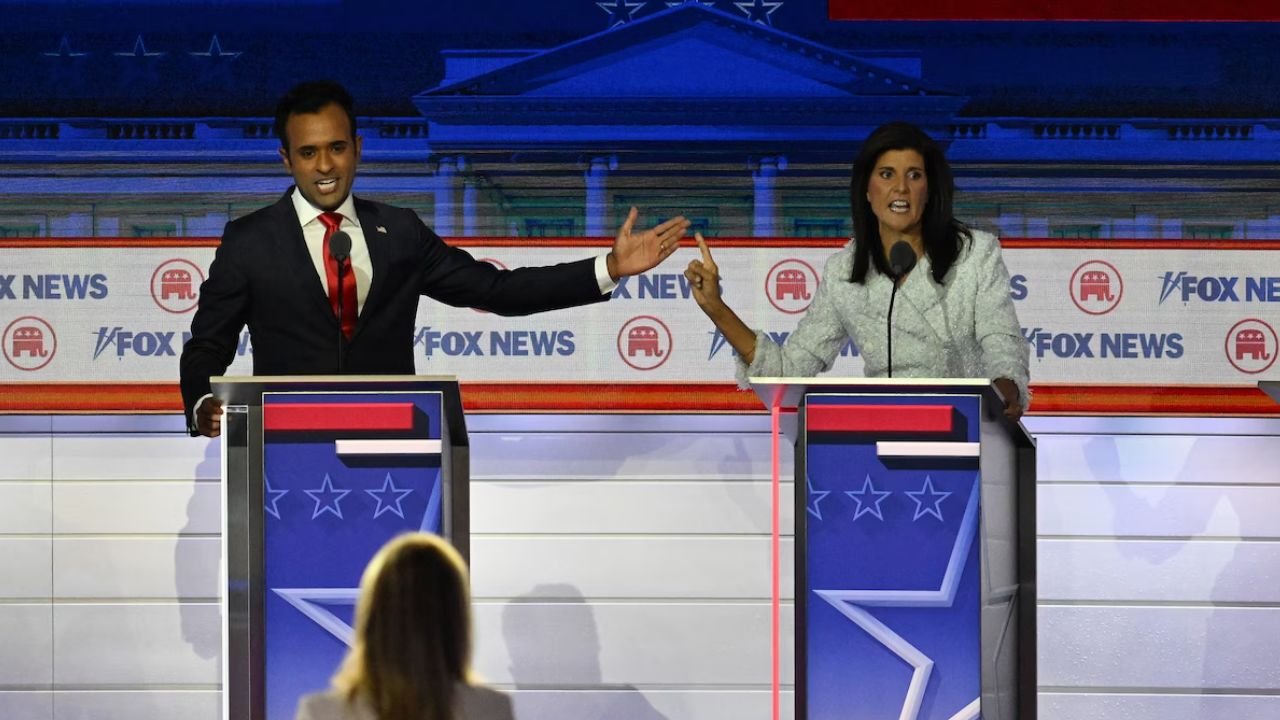
    Of the many attacks between this year’s US presidential candidates, some of the harshest have pitted Vivek Ramaswamy against Nikki Haley.

    Ramaswamy went so far as to hold up a sign at a debate calling the South Carolina former governor and UN ambassador corrupt over her corporate work — and she has hit back hard, calling him untrustworthy and berating him for mentioning her children.

    Personal attacks are routine in US politics, and both Haley and Ramaswamy, a 38-year-old entrepreneur who has never held elected office, are facing uphill climbs to wrest the Republican nomination from former president Donald Trump.

    But the two have something in common — they are children of Indian immigrants. Also expected on this year’s ballot is Democratic Vice President Kamala Harris, whose mother came from India and whose father was born in Jamaica.

    Indian Americans are split on whether the Ramaswamy versus Haley feud channels larger community tensions, but what is uncontestable is that Indian Americans are more politically prominent than ever before — and increasingly wearing their identity proudly.

    It is another sign of success for the community, whose average household income is the highest of any US ethnic group.

    Raj Goyle, a former state lawmaker in Kansas and co-founder of Indian American Impact, a South Asian American political group, said that ethnic groups in the United States historically have waited for a greater comfort level and critical mass before entering politics.

    “Indian Americans actually have had a quicker journey than other immigrant communities in terms of political success,” he said.

    He noted that Indian Americans are unusual as an immigrant group in that many arrived as educated professionals, highly regarded by other Americans.

    “When the first wave of us were elected, we had to think about how voters would react to our ethnicity,” Goyle said.

    While racism still exists, “Now, I think there’s a very good argument to make that it’s a huge plus.”

    While few give Ramaswamy much chance of winning the presidency, his candidacy marks a watershed in his embrace of his religion.

    Asked at a debate in Iowa about his religion, Ramaswamy said: “I am a Hindu. I won’t fake my identity.”

    Ramaswamy, who has made his name as a Trump-style rabble-rouser denouncing “woke” politics, has cast his Hinduism as in line with conservative Christian beliefs and has voiced opposition to gay marriage.

    He also explained to voters in farm state Iowa, which holds the nation’s first caucus, how he is a vegetarian due to his religion.

    Meanwhile, a Trump campaign aide, Chris LaCivita, told voters to “beware” of Ramaswamy’s diet, also calling him a “fraud.”

    While few give Ramaswamy much chance of winning the presidency, his candidacy marks a watershed in his embrace of his religion.

    Asked at a debate in Iowa about his religion, Ramaswamy said: “I am a Hindu. I won’t fake my identity.”

    Ramaswamy, who has made his name as a Trump-style rabble-rouser denouncing “woke” politics, has cast his Hinduism as in line with conservative Christian beliefs and has voiced opposition to gay marriage.

    He also explained to voters in farm state Iowa, which holds the nation’s first caucus, how he is a vegetarian due to his religion.

    Meanwhile, a Trump campaign aide, Chris LaCivita, told voters to “beware” of Ramaswamy’s diet, also calling him a “fraud.”

    Despite the prominence of Republicans like Haley, Ramaswamy and Jindal, the community has overwhelmingly voted Democratic.

    Dipka Bhambhani, an Indian American writer based in Washington, said the feud between Haley and Ramaswamy showed a divide within the community.

    Haley grew up helping with the bookkeeping at her parents’ clothing store, while Ramaswamy, an Ivy League graduate, was born in Ohio to an engineer father and psychiatrist mother and later married an Indian American doctor.

    “When I first saw the animus from Ramaswamy toward Haley, I knew what it was about. There are wealthy Indians out there who malign other Indians for deviating, exercising American choice in who they marry, how they worship and the like,” Bhambhani said.

    “Ramaswamy criticizing Haley has been (a source of) anguish for so many of us in the Indian community. There are enough spears thrown at people of color in this country. Do we really need an Indian man to take up arms against his Indian sister?”

    But she said the Indian American candidates at the end of the day were Americans, even as they brought Indian values such as commitment to family.

    “It would be nice to see someone in the presidency who embodies those Indian values,” she said.
  • How will Australia’s new immigration policy affect Pakistanis?

    How will Australia’s new immigration policy affect Pakistanis?

    Australia’s government has recently announced a ’10-year migration strategy’, as the country plans to reduce the number of foreigners coming in over the next two years in a bid to improve Australia’s “challenged” immigration system.

    It should be noted that according to the Australian Bureau of Statistics, the number of foreign immigrants who came to the country during the last year has been 500,000, while before the restrictions of COVID-19 were implemented, this number used to be around 250,000 annually. The government wants to halve the number now.

    The announcement was made on Monday and it is likely to affect foreign students living in Australia on temporary visas the most.

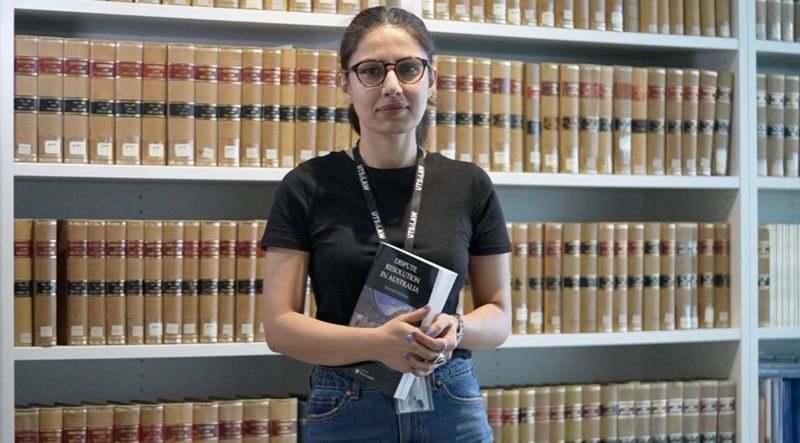
    Speaking to the BBC, Sydney-based Dr. Ayesha Jahangir, a Post-Doctoral Research Fellow at the Center for Media Transitions at the University of Technology, covered the ongoing debate on the policy and the general climate around Australia’s migration strategy. She asserted that it has been some time since the policy was announced so “there is a lot of uncertainty and people are confused.” She said that the main questions around the debate are, “They don’t understand how this policy can affect them. Will immigrants whose visas are still being processed be affected?
    What are the details of the ’10-year migration strategy’?

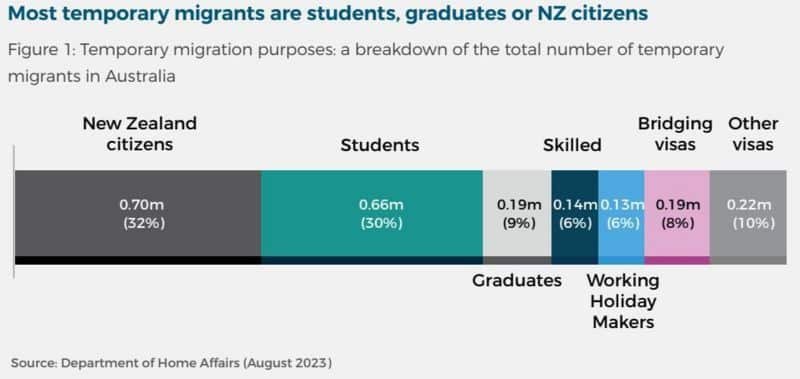
    According to official data, there are about six and a half million foreign students currently living in Australia and most of them are staying here after obtaining a second visa after the first temporary visa (student visa) expires.

    Under the new plan, visa rules for international students and low-skilled workers will be tightened even though there is still a shortage of skilled workers in the country and difficulties in bringing them into the country persist.

    Issuance of “Skills in Demand” visa

    It is for this reason that the ‘Skills in Demand’ visa will be issued in place of the earlier ‘Temporary Skills Shortage’ visa. There will be three different routes for this four-year visa.

    One route would be for people with ‘specialist skills’ and would seek to attract the most talented people from technology and energy sectors to Australia.

    Another way would be in terms of ‘core skills’, where the list of areas would be changed according to the demand of the Australian market. In this way, the manpower shortage will be met.

    A third way is in terms of ‘essential skills’ i.e. sectors such as healthcare where there is a shortage of workers. Details regarding this are still under consideration as per the policy.

    Conditions for International Students

    These new rules set stricter standards for international students in English language tests, mainly IELTS.

    Earlier IELTS band required for a graduate visa was 6, now it has been increased to 6.5. While the IELTS requirement for a student visa has been increased from 5.5 to 6.

    Additional questions will be asked of second-time visa applicants. During this time they have to prove how further studies will help them to improve their career or their education.

    Visa procedures have also been improved for immigrants with ‘special’ or ‘essential’ skills to give them a better chance of securing permanent residence.

    The new policy aims to stop the exploitation of those already living, working, and studying in the country.

    Mention of “bogus” colleges

    The Australian government has used the term ‘backdoor’ repeatedly in the 99-page strategy, implying various ‘bogus’ colleges that bring students to Australia but then return their degrees. These ‘fake’ colleges have been talked about before, from Australian local newspapers to the government level, but this time the government is signaling a concerted crackdown.

    Dr. Ayesha has also warned about them in her talk to BBC: “What happens is that these colleges or institutions help bring students to Australia, but they don’t find a place in the workforce here because the competition here is not just between the people of a town or a city, but between people from all over the world.” Ayesha further added, “These migrants usually do not fit into the system but become a burden, and the term ‘permanently transient’ is used for them.”

    Stats reveal that there is a huge number of them living in Australia and are trapped because they never got admitted to the university and are making a living by working in menial jobs.

    Rising cost of living in Australia and financial crisis for incoming students

    The cost of living in Australia has increased and rental housing has become difficult to find. Students have to live far from their place of work or study.

    Talking to BBC, a Pakistani student said that in this policy, students will now only be able to work 20 hours per week instead of 40. This is the discount that was given to them during COVID-19. He pointed out that rents have gone up in Australia. Now the problem that more students will face will be a financial crisis, they will face problems in paying their fees.

    “Earlier, we used to make at least 1500 dollars by doing any work for 40 hours a week, of which we used to save up to 1000 dollars and save 4000 dollars a month and thus pay the fees,” he added.

    An increase in rent and a reduction in work hours will affect the students badly.

    Rising hostility toward migrants

    “When governments talk about people entering the country through backdoors and taking advantage of loopholes in the system, society can see it differently,” Dr Ayesha stated.

    In the past during the years 2008 and 2009, Indian students in Australia protested crimes committed against them in the country, leading to a diplomatic gulf between Australia and India.

    Dr Ayesha says that the government should go and explain to Australians that this crackdown is not being done because it is the fault of the foreign students, but because even local small businesses are taking advantage of these loopholes in the policy.

  • More than 250,000 illegal Afghan citizens have returned to their homeland

    More than 250,000 illegal Afghan citizens have returned to their homeland

    The process of repatriating undocumented Afghan citizens to Afghanistan is underway across Pakistan.

    So far, two lacs 55 thousand and 29 illegal residents have returned from Khyber Pakhtunkhwa to Afghanistan.

    According to the Interior Department, a total of 250, 814 immigrants have gone back to Afghanistan via Torkham, while 3,516 people have returned to their homeland through Angoot Ada border and 698 people have returned to their homeland from Kharlachi border.

    According to the data of the Immigration Department, 255,029 immigrants from Khyber Pakhtunkhwa have returned to Afghanistan.

  • ‘We know where they are’ : Sarfraz Bugti finalizes plan for repatriation of illegal immigrants

    ‘We know where they are’ : Sarfraz Bugti finalizes plan for repatriation of illegal immigrants

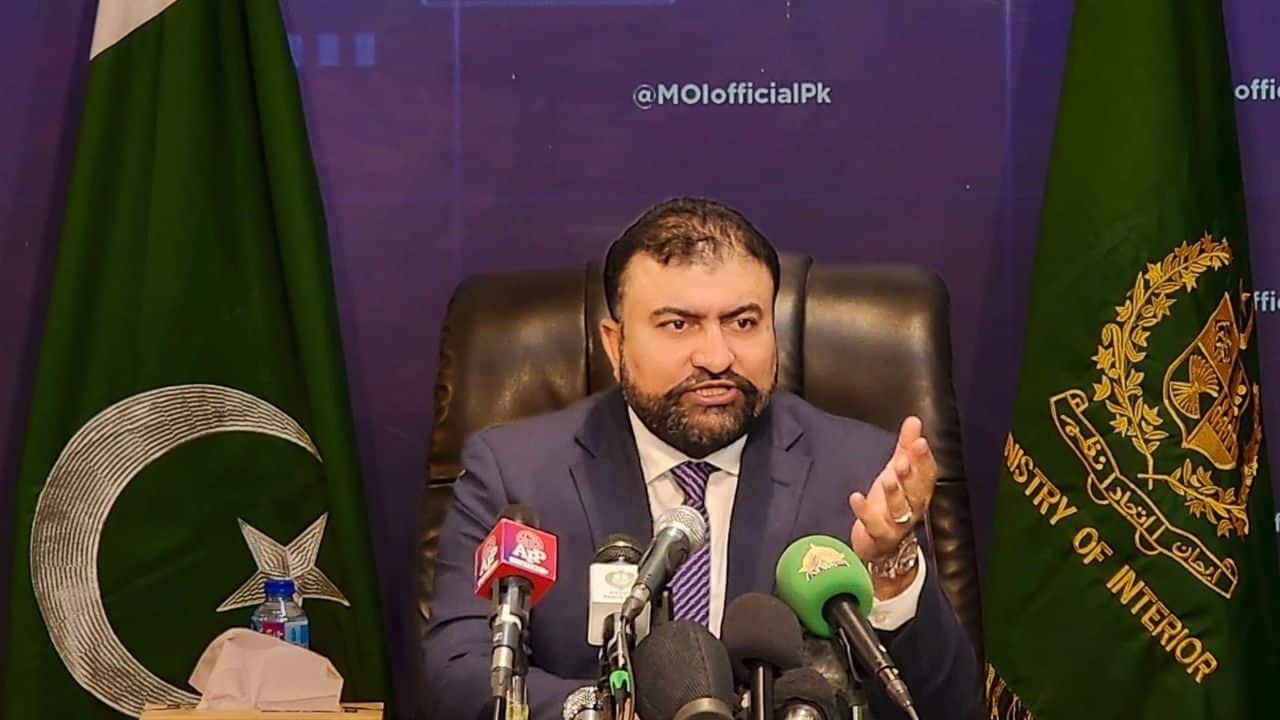
    Caretaker Interior Minister Sarfraz Bugti has confirmed the completion of the plan to repatriate illegal immigrants in Pakistan.

    With the approaching November 1 deadline, the government is set to relocate these individuals to centers within their respective provinces.

    During a press conference, Minister Bugti assured that families of illegal foreigners, including women and children, would be treated with utmost respect.

    He said that “holding centres” had been formed in the provinces as well as Islamabad, Azad Jammu and Kashmir, and Gilgit-Baltistan where illegal immigrants will be provided medical facilities and food.

    Bugti said after November 1, arrested persons will be kept in the centers. He also announced that returnees could carry a maximum of Rs50,000 with them.

    He emphasized that there would be no compromise on the issue of the return of foreigners and that those found with fake Computerized National Identity Cards (CNCs) would face consequences.

    Sarfraz Bugti said illegal properties of illegal foreigners including illegal Afghan refugees, will be confiscated, and announced action will also be taken against Pakistanis who provide facilities to the illegal aliens.

    He further said that the state had carried out geo-fencing to identify areas where illegal immigrants were residing. “We know where they are. They are in villages, in Pakistan’s metropolitan cities, in different small cities. The government has complete know-how about where they are.”

    “We are encouraging voluntary return so that they can be saved from being manhandled and arrested,” Bugti said. “I assure you that once our investigation is complete, anybody involved in this illegal work will be punished.”

    The first flight of illegal Afghan refugees to Britain for resettlement will begin today (Thursday).

    The first chartered flight carrying 230 Afghan refugees will depart from Islamabad to the UK.

    In this regard, arrangements have been completed at Islamabad International Airport.

  • ‘No compromise after November 1’, Interior Minister tells Afghan immigrants

    ‘No compromise after November 1’, Interior Minister tells Afghan immigrants

    In a recent statement, the Interim Federal Interior Minister Sarfraz Bugti has categorically stated that all illegal immigrants are to leave Pakistan before November 1. “There will be no compromise after that,” he remarked.

    He further said that it is the unanimous decision of all the stake-holders that Afghans should be given a grace period even though many of them are volunteering to leave. However, anybody who wants to leave must do that before the deadline.

    The policy is apparently for all illegal residents and is not targeted against Afghans.

    He clearly stated that illegal residents are those who do not own a visa. “Irrespective of their nationality, we are only going to send those back after the deadline,” he said.

  • Elon Musk praises Indian talent as Indian takes over Twitter

    Elon Musk praises Indian talent as Indian takes over Twitter

    Billionaire Elon Musk, Chief Executive Officer (CEO) of Tesla Motors, took to Twitter to share his admiration for the Indian talent that contributed to America’s economy as Jack Dorsey (CEO) of Twitter stepped down and announced his successor, Indian Parag Agrawal.

    Last night, Dorsey announced his resignation on Twitter and confirmed that his replacement was Indian-born Parag Agrawal. Dorsey will remain a member of the board until his term expires in May 2022 and assist Parag with the transition.

    A 37-year-old immigrant from India, Agrawal joined Twitter in 2011 as a Software Engineer and was later promoted to Chief Technical Officer (CTO) in 2017. While working as CTO, he worked as in-charge of strategy involving Artificial Intelligence, reports CNBC.

    A colleague of Agrawal, Chklovski, who worked with him from 2012 to 2014 said, “Parag is phenomenal, understands the problems, stays up late to get it done, mentors others — he’s the whole package.”

    Yoel Roth who is Twitter’s head of site integrity, tweeted, “Parag was one of the first engineers I worked with when I started at Twitter (when we were first working on timeline ranking). The rigor he brings to every decision was clear then, and I’m delighted to see it recognized today.”

    https://twitter.com/yoyoel/status/1465360091348041731?ref_src=twsrc%5Etfw%7Ctwcamp%5Etweetembed%7Ctwterm%5E1465360091348041731%7Ctwgr%5E%7Ctwcon%5Es1_&ref_url=https%3A%2F%2Fwww.cnbc.com%2F2021%2F11%2F29%2Ftwitter-ceo-parag-agrawal-key-to-dorseys-plans-to-revamp-social-media.html

    Apart from Twitter, five giant companies Google, Microsoft, Adobe, IBM, Palo Alto Networks have been headed currently by Indian-origin immigrants.