Tag: import

  • Govt bans import of ‘luxury items’ to fight economic crisis

    Govt bans import of ‘luxury items’ to fight economic crisis

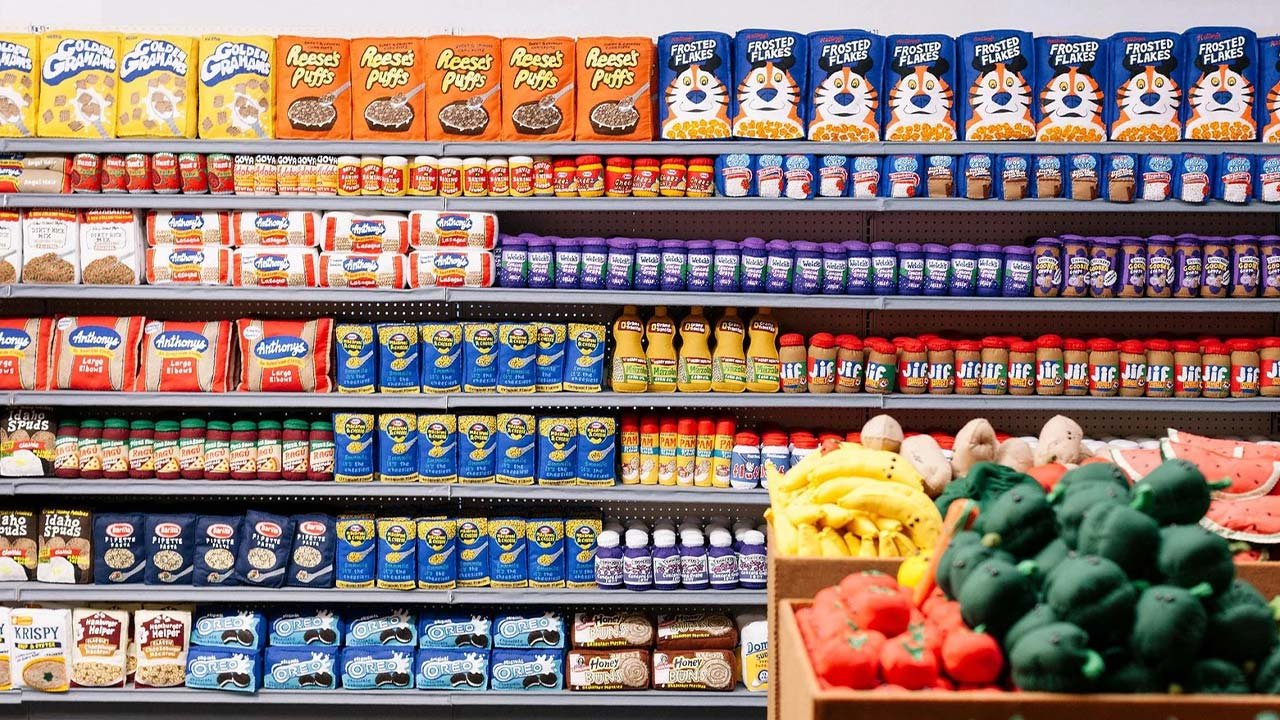
    For the first time in Pakistan, luxury or non-essential commodities have been completely banned in the country to help the nation emerge from its financial crisis. Minister of Information Marriyum Aurangzeb confirmed the economic strategy established by the federal government on Thursday.

    The Information Minister stated that this is an emergency situation and Pakistanis will have to make sacrifices under the economic plan. This will have a quick impact on foreign reserves. The ban will have an impact of $6 billion.

    Aurangzeb went on to say that the government’s priority was to cut imports, thus it was going to implement an export-oriented policy that would help local industry and producers.

    Prime Minister (PM) Shehbaz Sharif is working “day and night” to stabilise the economy, according to the information minister, and has decided to ban the import of all commodities that are not in common use.

    Food, decorating, and luxury automobiles were among the imports, according to Aurangzeb, who emphasised that the country was in a “difficult economic condition” as a result of the previous government’s policies.


    Here’s a detailed list of banned goods:

    1. Cars
    2. Mobile phones
    3. Home appliances
    4. Private weapons and ammunition
    5. Fruits and dry fruits (except Afghanistan)
    6. Crockery
    7. Shoes
    8. Chandeliers and lighting (except energy savers)
    9. Headphones and loudspeakers
    10. Sauces, ketchup etc.
    11. Doors and window frames
    12. Travelling bags and suitcases
    13. Sanitary ware
    14. Fish and frozen fish
    15. Carpets (except Afghanistan)
    16. Preserved fruits
    17. Tissue paper
    18. Furniture
    19. Shampoos
    20. Confectionary
    21. Luxury mattresses and sleeping bags
    22. Jams and jelly
    23. Cornflakes
    24. Bathroom ware/toiletries
    25. Heaters/blowers
    26. Sunglasses
    27. Kitchenware
    28. Aerated water
    29. Frozen meat
    30. Juices
    31. Pasta etc
    32. Ice cream
    33. Cigarettes
    34. Shaving goods
    35. Luxury leather apparel
    36. Musical instruments
    37. Saloon items like hairdryers etc.
    38. Chocolates

    The declaration, according to the information minister, is part of the present government’s fiscal plan to combat the PTI’s incompetent policies.

    Aurangzeb chastised the PTI for criticising the incumbent administration over the country’s economic woes, claiming that the Imran Khan-led government had raised inflation, taken historic debts, committed “economic terrorism,” and manipulated the economy by subsidising gasoline prices.

    By subsidising the price of petroleum goods, the PTI administration broke its agreement with the International Monetary Fund (IMF), according to the Information Minister.

    Via: Geo

  • Pakistan faces Rs615 billion annual deficit due to tobacco consumption

    Pakistan faces Rs615 billion annual deficit due to tobacco consumption

    Pakistan has a substantial Rs615 billion annual deficit owing to diseases caused by smoking and overall tobacco usage, with only Rs120 billion earning in tax revenue from the product.

    The government is expected to improve revenue by raising the tax on cigarettes by 30 per cent according to The Nation.

    This was voiced by speakers at a major symposium held in Islamabad on May 18. The Pakistan National Heart Association (PANAH) held a seminar on the theme ‘Harms of Tobacco Products and the Importance of Tax Policy,’ which was presided over by Patron General (R) Ashraf Khan and hosted by General Secretary Sana Ullah Ghumman.

    As per the speakers at the event, tobacco usage is a major cause of serious heart, lung, and cancer diseases in the country. A fact sheet on the health and economic costs of cigarette usage was released by the Social Policy and Development Centre (SPDC).

    According to the survey, tobacco is used by 31 million persons over the age of 15. More than 260,000 people are predicted to start smoking in the country if tobacco taxes are not raised in the budget for 2022-23.

    Engineer Iqbal Zafar Jhagra, the former governor of KP and a senior PML-N leader, was the special guest at the event. Nisar Cheema, a member of the National Assembly, was also present.

    Read more: Tobacco companies in Pakistan may bump cigarette prices

    PANAH Patron General (R) Ashraf Khan congratulated the attendees and informed them of the organization’s goals and objectives.

    Smoking was declared the primary cause of deaths from non-communicable diseases (NCDs) such as heart, cancer, respiratory, and chronic diseases, according to participants, with an estimated 163,360 persons dying in 2017.

  • Toyota Land Cruiser is now priced at Rs8 crore after a hefty price hike

    Toyota Land Cruiser is now priced at Rs8 crore after a hefty price hike

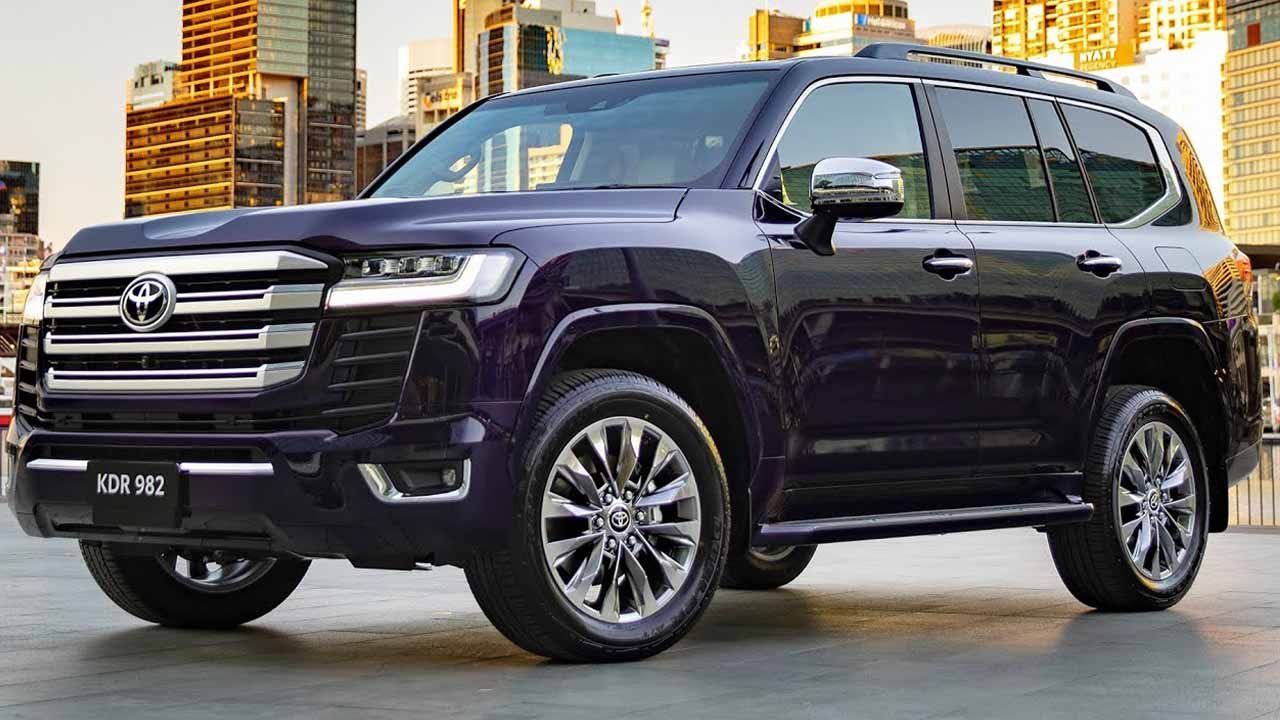
    The new Land Cruiser was unveiled in Pakistan by Toyota Indus Motor Company (IMC) at a staggering price of Rs72.50 million. The SUV is a one-of-a-kind vehicle in Pakistan, with pricing comparable to some of the most expensive German SUVs.

    Due to the depreciating Pakistani rupee, overall inflation and rising transportation costs, the Land Cruiser, like other locally built vehicles in Pakistan, has undergone a price hike of Rs7.5 million. The luxury SUV from Toyota is now available for Rs79,999,000.

    The Japanese automaker offers only one version of LC300 in Pakistan. It has a 3.5-liter twin-turbocharged V6 petrol engine with 409 horsepower (hp) and 650 Newton-meters (Nm) of torque that is sent to all four wheels via a 10-speed automatic transmission.

    Read more: Pakistani rupee reaches a new all-time low of Rs190 against the US dollar

    Considering its outrageous cost, the Land Cruiser 300 is clearly out of reach for the vast majority of Pakistanis. It is, however, a wonderful addition for aristocrats who have a garage with six to ten cars.

  • Turkey: Food prices surged by 89 per cent, transportation costs increased by 106 per cent

    Turkey: Food prices surged by 89 per cent, transportation costs increased by 106 per cent

    Turkey’s inflation rate skyrocketed to almost 70 per cent last month, creating a substantial challenge for President Recep Tayyip Erdogan, whose unusual economic strategies are frequently blamed for the country’s economic woes.

    Erdogan, defying economic conventional wisdom, insists that major interest rate cuts are essential to reduce spiralling consumer costs.

    Turkey’s consumer price index (CPI) climbed by 69.97 per cent on a year-on-year (YoY) basis in April 2022, compared to 61.14 per cent in March 2022, according to the national statistics agency, indicating a massive increase.

    The transportation industry saw the largest price rises in April, up 105.9 per cent, while food and non-alcoholic drinks cost increased by 89.1 per cent.

    Likewise, lira’s depreciation has quadrupled the cost of energy imports, and international investors are progressively fleeing the formerly emerging economy. Energy price hikes and production constraints have been worsened by Russia’s invasion of Ukraine and the coronavirus outbreak.

    According to economists, Turkey’s yearly inflation rate – the highest since Erdogan’s ruling AKP party took office in 2002 – is entirely due to Erdogan’s unusual economic thinking.

    Read more: Transporters continue to overcharge ahead of Eid-ul-Fitr

    Erdogan has pushed the supposedly independent central bank to reduce interest rates. Despite strong inflation, the bank maintained its benchmark interest rate for the fourth month in a row in April, yielding to criticism.

  • PTA records 1.73 million new 3G, 4G users in one month

    PTA records 1.73 million new 3G, 4G users in one month

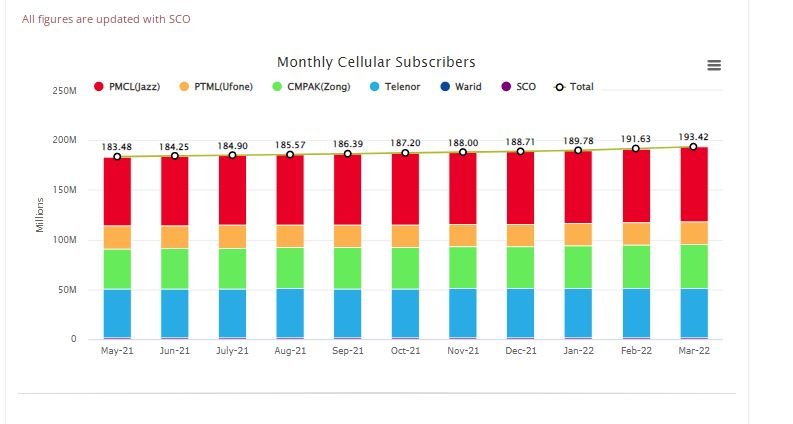
    The latest stats from Pakistan Telecommunication Authority (PTA) show that the number of 3G and 4G customers in Pakistan increased by 1.73 million to 113.11 million by the end of March 2022, up from 111.38 million at the end of February 2022.

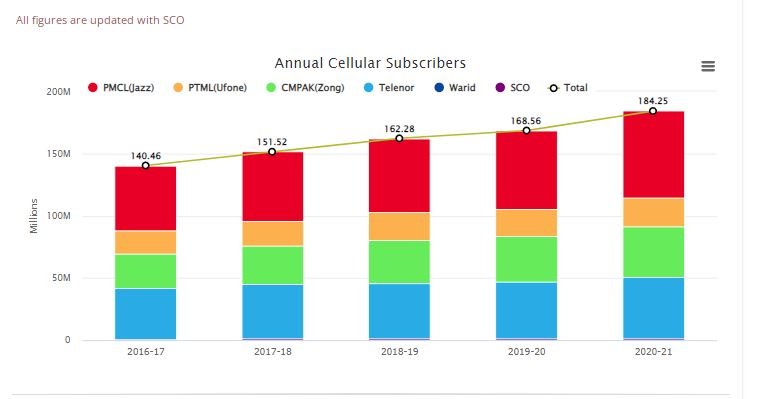
    By the end of March 2022, the number of mobile users in Pakistan had risen by 1.79 million to 193.42 million, up from 191.63 million at the end of February 2022. The cellular population climbed from 87.17 per cent in February 2022 to 87.95 per cent in March 2022.

    The entire teledensity had risen to 89.09 per cent, up from 88.31 per cent in February.

    The overall number of Jazz 3G users was 6.489 million at the end of March, down from 6.607 million at the end of February 2022, a fall of 0.118 million. By the end of March, the number of Jazz 4G users had risen from 35.822 million to 36.518 million.

    The number of Zong 3G customers fell from 3.501 million in February to 3.447 million in March, while the amount of 4G users increased from 27.483 million in February to 28.033 million in March.

    Telenor’s 3G users totaled 3.911 million at the end of March, which was the same as at the end of February. The graph, however, shows a downward trend. Its 4G subscribers increased from 20.801 million at the end of February to 21 million by the end of March 2022.

    Read more: Textile exports soared 25pc to $14.3b: PBS

    By the end of March, there were 3.809 million Ufone 3G users, up from 3.873 million at the end of February. Ufone’s 4G user base expanded from 8.099 million in February to 8.6 million by the end of March 2022, a 0.501 million growth in the time period under consideration.

  • Global oil prices climb to highest in three weeks

    Oil prices increased on Monday as fears of limited global supply intensified, with the developing crisis in Ukraine raising the risk of more penalties from the West against Russia, the world’s leading exporter.

    Brent futures were up $1.50, or 1.3 per cent, at $113.20 a barrel, while US West Texas Intermediate futures were up 98 cents, or 0.9 per cent, at $107.93 per barrel. Both contracts surged more than 2.5 per cent on April 14, ahead of the Easter weekend holidays, on news that the European Union would phase in a ban on Russian oil imports.

    Last week, EU governments said that the bloc’s executive was working on ideas to ban Russian oil, but officials said Germany was not actively backing an immediate ban.

    Those remarks came before the Ukraine situation escalated over the weekend, with the Ukrainian military defying a Russian demand to lay down arms in the pulverised port of Mariupol on Sunday. Moscow, which refers to its efforts in Ukraine as a “special operation,” said its soldiers had nearly entirely captured the city, with no sign of a truce in sight.

    Read more: Oil prices jump following Russia’s biggest production decline

    Due to sanctions or importers voluntarily rejecting Russian shipments, the International Energy Agency has warned that around 3 million barrels per day (BPD) of Russian oil might be shut in from May onwards.

  • Here’s a look at the upcoming  Honda Vezel 2023

    Here’s a look at the upcoming Honda Vezel 2023

    Honda’s mini-SUV, the HR-V is finally approaching its second generation. The upcoming model will have some significant upgrades from styling to engine performance.

    It will be bulkier, futuristic, and more powerful than the previous model, with better looks than the smaller, hybrid-only European variant introduced in 2021.

    VEZEL and HR-V confusion

    For those who may not know, the original name for ‘Honda Vezel’ is ‘Honda HR-V’. This hybrid vehicle has become quite famous in Pakistan for its good looks and impressive fuel consumption despite being an expensive completely built-up (CBU) unit. It is mostly witnessed with a ‘Vezel’ badging instead of ‘HR-V’ here.

    The Japanese automaker said that the new subcompact SUV will be based on the same platform as the international Honda Civic variants. It has a longer wheelbase than before, and the rear suspension is now independent.

    Engine and Performance

    One important thing Honda revealed about the powertrain is that it will be a more responsive engine as compared to the prior one, which might be the Civic’s 180-hp turbocharged 1.5-liter inline-four, replacing the existing HR-V’s 141-horsepower 1.8-liter inline-four.

    The HR-V’s engine for the base model could be the naturally aspirated 158-hp 2.0-liter inline-four from the Civic’s lower trim levels. Front-wheel drive will almost certainly be standard, with all-wheel drive as an option, and a CVT automatic transmission will almost certainly be the only transmission option. A hybrid HR-V is also expected to enter the lineup, though it may arrive later than the fuel-only model.

    Read more: Car sales up by 53.7 per cent in 2022, despite repeated price hikes

    Honda has not officially revealed any photographs or details of the HR-V’s interior, however, it will be exciting to see how the new platform will affect its packaging. As the fuel tank was positioned behind the front seats, the previous HR-V, like the Fit, had a surprisingly low cargo floor.

    The LX, Sport, EX, and EX-L variants from the current model are anticipated to continue over. Honda also published a video showcasing the new HR-V in a variety of colours, including red, silver, black, and white. Unfortunately, there is no official statement released by the company regarding its price and availability in other regions.

  • Pakistan’s cotton fabric trade climbed by 28.23 per cent

    Pakistan’s cotton fabric trade climbed by 28.23 per cent

    In the first eight months of the fiscal year 2021-22, Pakistan’s textile and garment exports grew to $1.65 billion. The Pakistan Bureau of Statistics (PBS) estimates that the textile and apparel sector brought in $12.607 billion this time, compared to $ 9.999 billion in exports from July to February 2020-21.

    Knitwear exports surged by 33.86 per cent to $3.302 billion on a year-over-year (YoY) basis, while non-knit readymade clothes trade increased by 25.11 per cent to $2.516 billion. Additionally, cotton yarn exports increased by 34.40 per cent to $815.375 million, up from $606.690 million the previous year.

    Cotton fabric trade climbed by 28.23 per cent in 2022, reaching $1.584 billion in value. Also, over the eight months of 2021-22, the distribution of bed clothing jumped by 20.34 per cent.

    The industry has engaged in synthetic fiber imports, which increased by 31.65 per cent from July to February 2021-22, and the cost of artificial silk yarn soared by $ 569.256 million.

    Consequently, the value of textile machinery in Pakistan has climbed dramatically over the last eight months, reaching $577.249 million.

    Read more: SBP determined to curb inflation, improve foreign exchange reserves

    For those unaware, Pakistan’s textile sector has the capacity to generate $30 billion in annual revenue. The country’s leaders and economic experts should assess the existing economic situation and devise an effective economic strategy to boost textile exports.

    To summarise, the industry has tremendous potential and can significantly contribute to the country’s economic success by providing job opportunities. Which could help the country’s GDP and GNP grow even more.

  • Pakistan’s exports grew 25% in the last nine months

    Pakistan’s exports increased by 17.3 per cent in March 2021 to $2.773 billion, up from $2.365 billion in March 2021 and 25 per cent in the last nine months.

    The Prime Minister’s Adviser on Commerce and Investment, Abdul Razak Dawood, said that exports increased by 25 per cent to $23.332 billion in the July-March fiscal year 2021-2022, compared to $18.688 billion in the same period last year, implying a $4.644 billion upsurge.

    On the other hand, according to preliminary data from the Pakistan Bureau of Statistics (PBS), exports fell 2 per cent on a month-on-month (MoM) basis to $2.77 billion in March 2022, down from $2.82 billion in February 2022.

    Dawood said in a tweet, “We are glad to share that Pakistan’s exports for Mar-2022 grew by 17.3 per cent to $2.773 billion as compared to $2.365 billion Mar-2021. For Jul-Mar 2022, our exports grew by 25 per cent to $23.332 billion as compared to $18.688 billion in Jul-Mar 2021. This is an increase $4.644 billion”.

    While talking about the target for exports he added that “We expect to achieve our yearly target. The import figures would be shared when finalised by the PBS. We would like to congratulate our exporters for maintaining the momentum of exports under these testing times in the global market”.

    Pakistan’s current account deficit (CAD) decreased by 78.46 per cent to $545 million in February from $2.531 billion in January, owing primarily to a steep drop in imports.

    Read more: FBR records 29.1% growth during July 2021 to March 2022, despite providing ‘massive tax relief’

    Surprisingly, the CAD crossed the $12 billion level in the first eight months of FY22, showing no signs of improvement in the external account. The CAD was only $34 million in February 2021.

  • FBR records 29.1% growth during July 2021 to March 2022, despite providing ‘massive tax relief’

    The provisional revenue collection data for the months of July 2021 to March 2022 of the current financial year 2021-22 have been announced by the Federal Board of Revenue (FBR).

    The net collection was Rs575 billion for the month of March 2022, up 20.5 per cent from Rs477 billion in March 2021.

    Conversely, the gross revenues, rose by 28.9 per cent in the current financial year, from Rs3,577 billion in July 2020 to March 2021 to Rs4,611 billion in July 2021 to March 2022. Furthermore, the amount of reimbursements granted in March 2022 was Rs31.9 billion, compared to Rs26.3 billion in March 2021, showing a 21.3 per cent upsurge.

    Then again, refunds of Rs229 billion were paid from July 2021 to March 2022, a 25 per cent increase over the Rs183 billion paid the previous year.

    Read more: Petrol, Diesel prices to remain unchanged till April 15

    It is worth noting that the continuous remarkable growth in revenue collection has been achieved despite the government providing ‘massive tax relief’ to the general public on a variety of vital commodities.

    For the first time in Pakistan’s history, the sales tax on all petroleum products was abolished, costing the FBR Rs45 billion in the past month.