Tag: imports

  • US remains top export destination for Pakistan in July 2024

    US remains top export destination for Pakistan in July 2024

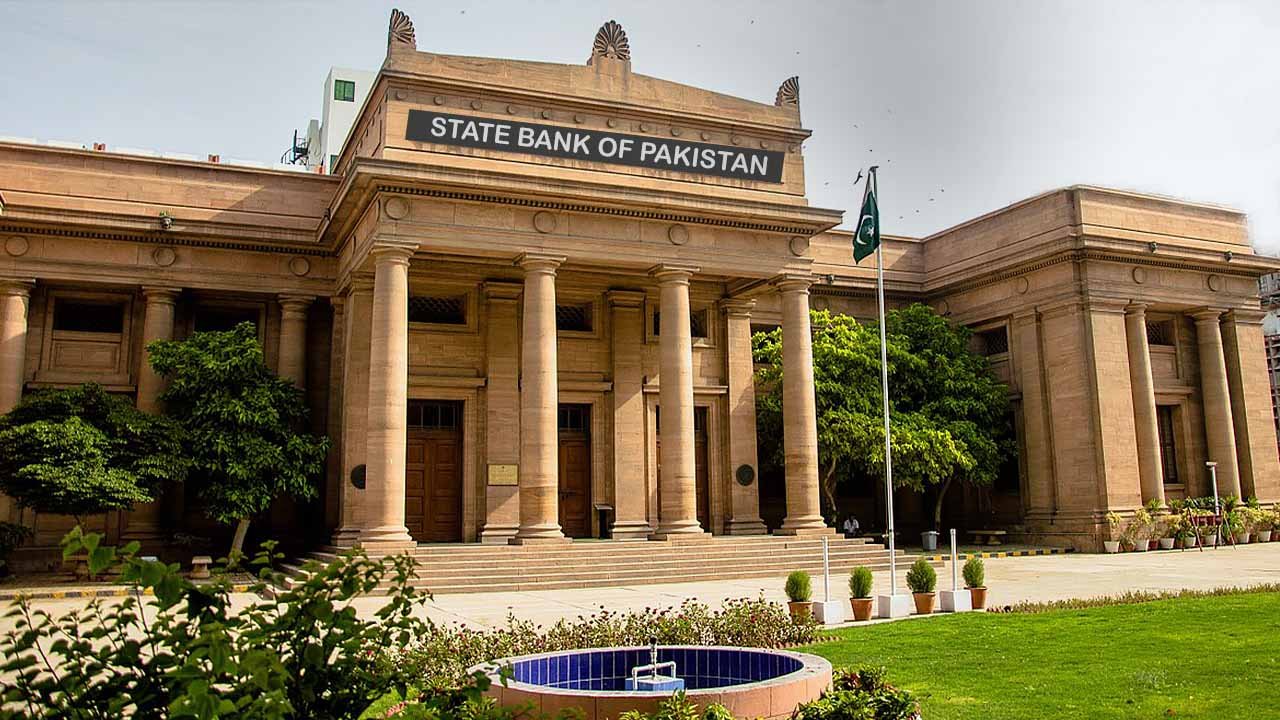
    In July 2024, the United States emerged as Pakistan’s leading export destination, with shipments totalling $476.02 million, marking an 8.2 per cent increase compared to the $439.89 million recorded in the same month last year, according to data released by the State Bank of Pakistan.

    The United Kingdom followed as the second-largest market for Pakistani goods, with exports reaching $183.3 million. This represents a 6.1 per cent rise from the $172.72 million exported to the UK in July 2023.

    The United Arab Emirates, specifically Dubai, ranked third, with export revenue amounting to $176.18 million—a significant 41.1 per cent surge from the $124.82 million earned during the same period last year.

    China stood as the fourth-largest export destination for Pakistan, with goods worth $160.1 million shipped, reflecting a 5.8 per cent year-on-year (YoY) growth.

    Germany also saw an increase in Pakistani exports, with shipments totalling $135.46 million, a 9.5 per cent YoY rise. Similarly, exports to the Netherlands grew by 15.9 per cent YoY, reaching $124.55 million.

    However, not all markets saw growth. Exports to Spain decreased by 14.4 per cent YoY, with revenue standing at $106.71 million.

    On a month-on-month (MoM) basis, exports to the United States saw a 7.3 per cent increase compared to June 2024, while exports to the UK rose by 20.9 per cent MoM. Exports to Dubai also saw a MoM increase of 6.9 per cent.

  • Pakistan’s exports surge by 8.93% to Rs22.91 billion

    Pakistan’s exports surge by 8.93% to Rs22.91 billion

    Pakistan’s export sector has shown a notable surge, with an 8.93 per cent increase recorded in the initial nine months of the current fiscal year (2023–24) compared to the corresponding period in the previous year.

    Data released by the Pakistan Bureau of Statistics (PBS) indicates that exports soared to $22.914 billion from July to March (2023–24), marking a significant rise from the $21.036 billion recorded during the same timeframe in 2022–2023.

    Conversely, imports experienced a decline of 8.65 per cent, dropping to $39.944 billion from $43.724 billion in the previous year.

    This resulted in a notable improvement in the trade deficit, which amounted to $17.030 billion for the first nine months of the current fiscal year, showcasing a substantial decrease of 24.94 per cent from the $22.688 billion recorded during the corresponding period last year.

    Analyzing the performance for March 2024 against March 2023, exports registered a notable uptick of 7.99 per cent on an annual basis, climbing from $2.366 billion to $2.555 billion.

    Conversely, imports surged by 25.86 per cent, reaching $4.726 billion compared to $3.755 billion in March 2023.

    In terms of month-to-month performance, while exports in March 2024 experienced a marginal decline of 1.08 per cent from February 2024’s $2.583 billion, imports demonstrated a noteworthy increase of 9.25 per cent from the $4.326 billion recorded in February 2024, as per PBS data.

    Pakistan, exports, trade deficit, fiscal year 2023–24, economic growth, Pakistan Bureau of Statistics, imports, March 2024, global trade, commerce, trade statistics,

  • Pakistan’s exports to China surge to $1223.5 million

    Pakistan’s exports to China surge to $1223.5 million

    In a noteworthy development, Pakistan’s export of goods and services to China experienced a substantial increase of 39.44 per cent during the initial five months of the current fiscal year (2023–24), as reported by the State Bank of Pakistan (SBP).

    According to the latest SBP data, the overall exports to China reached $1223.532 million from July to November (2023–24), marking a significant rise compared to the $877.444 million recorded during the same period last fiscal year.

    On a year-to-year basis, the exports to China showed a remarkable growth of 36.29 per cent, rising from $199.058 million in November 2022 to $271.316 million in November 2023.

    However, on a month-on-month basis, there was a slight decline in exports to China during November 2023, registering a decrease of 14.90 per cent compared to the exports of $318.842 million in October 2023, as per the SBP data.

    Meanwhile, Pakistan’s overall exports to other countries exhibited a commendable increase of 4.99 per cent in the first five months, surging from US $11.915 billion to US $12.510 billion, according to the SBP data.

    In contrast, the imports from China into Pakistan during the reviewed months amounted to US $4741.099 million, reflecting a decline of 6.03 per cent compared to the corresponding period last year (2022–23).

    On a year-on-year basis, imports from China saw a notable increase of 10.71 per cent, rising from US $906.128 million in November 2022 to US $1003.248 million in November 2023.

    On a month-on-month basis, the imports from China recorded a marginal uptick of 0.99 per cent in November 2023 compared to the imports of US $993.401 million in October 2023, according to the data.

    The overall imports into Pakistan witnessed a significant decrease of 16.02 per cent, declining from $25.341 billion to US $21.281 billion, as reported by the data.

  • More imports, less exports: Pakistan’s trade gap grows in October

    More imports, less exports: Pakistan’s trade gap grows in October

    Recent trade data for Pakistan reveals a monthly trade deficit increase of $0.6 billion, primarily driven by an $0.8 billion surge in imports.

    However, on an annual basis, the trade deficit is gradually shrinking at a modest rate of 4 per cent.

    This is not necessarily negative news, as import restrictions have been lifted as part of the İnternational Monetary Fund (IMF) programme while the economy is experiencing an uptick in demand.

    The encouraging aspect lies in the positive signs displayed by the export sector. The Pakistani rupee (PKR) has depreciated by approximately 35 per cent year-on-year, falling from PKR 220/USD to PKR 280/USD.

    Last year, exporters faced challenges in importing raw materials, machinery, and intermediate goods.

    Consequently, the 14 per cent year-on-year growth in exports, rising from $2.4 billion to $2.7 billion, is a heartening development, provided this trajectory continues.

    Recent measures by the State Bank of Pakistan (SBP) aimed at promoting exports, including competitive gas rates for exporters, reflect a positive intent.

    While industries reliant on gas may require more regionally competitive energy rates, the direction is favorable.

    Moreover, the alignment of open market and interbank exchange rates may encourage a shift from official channels.

    To address Pakistan’s economic challenges, two key corrections are imperative, among many others: increasing tax revenues and enhancing value-added exports.

    Depreciation of the currency alone cannot serve as the sole remedy for stimulating growth.

    To achieve a comprehensive economic framework, it is essential to boost the exports-to-GDP ratio beyond the current 8 per cent.

    This should encourage capitalists to prioritise exports and foreign direct investment (FDI) over property, fixed income, currency, and trading, ensuring sustained double-digit growth over the next five years.

  • Pakistan’s imports drop sharply, leading to 42% reduction in trade deficit

    Pakistan’s imports drop sharply, leading to 42% reduction in trade deficit

    Pakistan’s trade deficit for the first three months of the fiscal year 2023–24 has notably contracted by 42.25 per cent to reach $5.29 billion. This remarkable reduction is primarily attributed to a significant decrease in imports, a direct consequence of carefully administered measures.

    Data released by the Pakistan Bureau of Statistics (PBS) reveals that the trade balance, which represents the difference between exports and imports, stood at a deficit of $5.29 billion for the period spanning July to September 2023–24. This is in stark contrast to the $9.16 billion deficit recorded during the same period in the preceding year.

    Both exports and imports experienced declines in this timeframe, with imports showing a more substantial decrease compared to exports, effectively narrowing the trade deficit. During these three months of 2023–24, Pakistan’s exports contracted by 3.8 per cent to $6.9 billion, despite facing significant currency depreciation when compared to the corresponding period in the previous year.

    Conversely, imports registered a notable decline of 25.4 per cent, totaling $12.19 billion in the July–September period, down from the $16.33 billion recorded in the same period of the previous fiscal year.

    For a more granular view, the PBS reported that in September 2023, Pakistan’s trade deficit further shrank by nearly 48 per cent to $1.489 billion, compared to $2.856 billion during the same month in the previous year. 

    Exports experienced a slight improvement of 1.1 per cent, reaching $2.47 billion in September 2023 compared to $2.44 billion in the same month the previous year, while imports significantly decreased by 25.5 per cent to $3.95 billion from $5.29 billion in the corresponding month last year.

    From a monthly perspective, the trade deficit contracted by 31.5 per cent compared to August 2023, with exports increasing by 4.2 per cent to $2.47 billion in September from $2.37 billion in the preceding month of August. Simultaneously, imports decreased by 12.9 per cent, amounting to $3.95 billion from $4.53 billion in the last month.

  • Pakistan imports tea worth Rs31.64 billion in just two months 

    Pakistan imports tea worth Rs31.64 billion in just two months 

    According to data from the Pakistan Bureau of Statistics (PBS), Pakistan’s imports of food items in the first two months of the fiscal year 2023–24 amounted to Rs378.98 billion. 

    The PBS data reveals that during this two-month period, Pakistan imported tea worth Rs31.64 billion, a notable increase from Rs20.23 billion during the corresponding period in the previous year.  

    Additionally, Pakistan imported palm oil valued at Rs158.7 billion and soybean oil worth Rs13.56 billion. 

    Furthermore, Pakistan imported pulses worth Rs48.25 billion and dry fruits valued at over Rs2 billion during the same two-month period. 

    It is worth noting that in July, the State Bank of Pakistan (SBP) lifted all import restrictions as part of its efforts to meet the conditions set by the International Monetary Fund (IMF). 

    Read more: Pakistani rupee gains value, now at Rs292.78 per US dollar 

    The central bank issued a circular to abolish these import restrictions and authorised banks to facilitate remittances to clear more than 6,000 containers. 

    The SBP clarified in the circular that remittances would be made available for all imports following the implementation of the latest order. 

  • Significant decline in mobile phone imports in two months

    Significant decline in mobile phone imports in two months

    In the current financial year, the volume of imports of mobile phones was 89.93 million dollars

    In the first two months of the current financial year, a significant decline has been recorded in the imports of mobile phones.

    According to data from the State Bank of Pakistan, the volume of imports of mobile phones in July and August was 8.314 million dollars. In the same period last year, the volume of imports of mobile phones was recorded at 59.31 million dollars.

    The statistics also revealed that during the last month in August, foreign exchange was spent on the import of mobile phones worth 4.979 million dollars, which was 3.33 million dollars in June and 43.66 million dollars in August last year.

    The volume of imports of mobile phones recorded in the current fiscal year was 89.93 million.

  • SBP-held forex reserves rise by $12 million to $8.05 billion, sufficient to cover over two months’ worth of imports

    SBP-held forex reserves rise by $12 million to $8.05 billion, sufficient to cover over two months’ worth of imports

    The State Bank of Pakistan (SBP) announced a rise of $12 million in its foreign exchange reserves, reaching $8.05 billion, as detailed in a statement released on Thursday. The nation’s overall liquid foreign reserves, encompassing both SBP and commercial banks, amounted to $13.379 billion as of August 11. Among these, commercial banks held net reserves totaling $5.3237 billion, as reported by the SBP.

    While the central bank did not provide specifics on the cause behind the augmentation of foreign exchange reserves, the situation presents an upbeat stance. Nevertheless, it’s worth noting that the existing reserves would barely cover imports for a span slightly exceeding two months.

    Notably, the previous month saw a notable escalation in SBP reserves due to inflows from the United Arab Emirates, Saudi Arabia, and the International Monetary Fund (IMF), following the formalisation of a $3 billion Stand-by Arrangement (SBA) with the global financial institution.

    According to Geo, in a departure from market predictions, the SBP opted to maintain the key policy rate at 22 per cent during the preceding month. This stance diverged from expectations, particularly those guided by IMF recommendations. SBP Governor Jameel Ahmed conveyed this decision following a Monetary Policy Committee (MPC) meeting. Explaining the rationale, he stated that given the decline in inflation, there was no inclination to increase the interest rate.

    During a press conference, Governor Ahmed also shared insights into the nation’s economic trajectory. He projected a growth rate ranging from 2 per cent to 3 per cent for the upcoming year. Highlighting the government’s actions, he mentioned the complete removal of import restrictions. This move, coupled with financial inflows from the IMF and other supportive nations, led to a $4.2 billion upswing in Pakistan’s foreign exchange reserves in July.