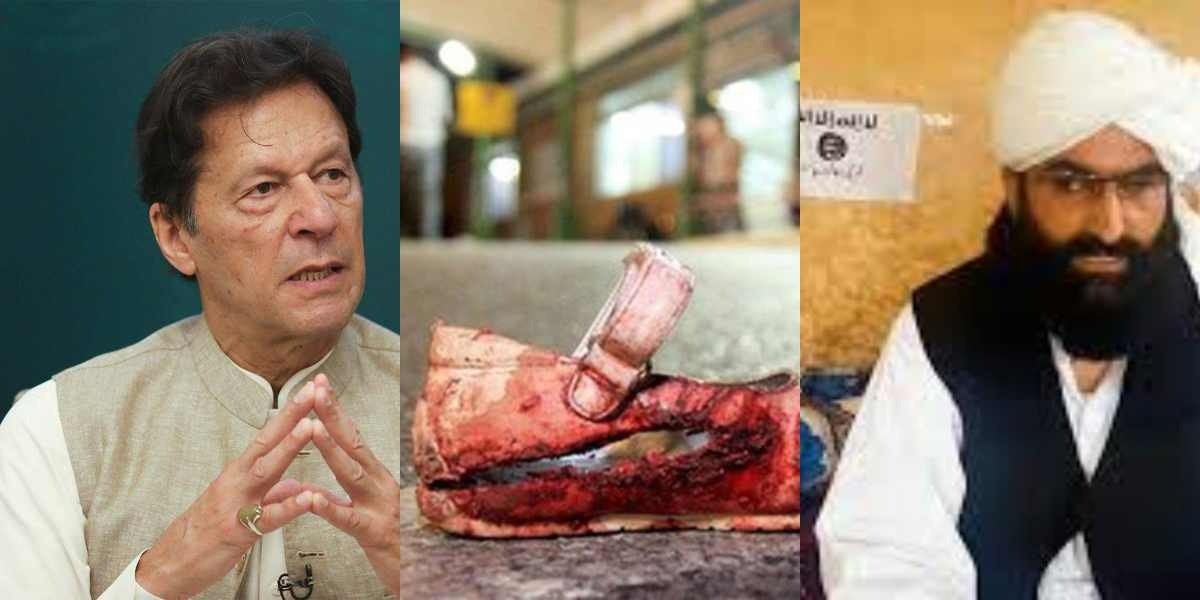
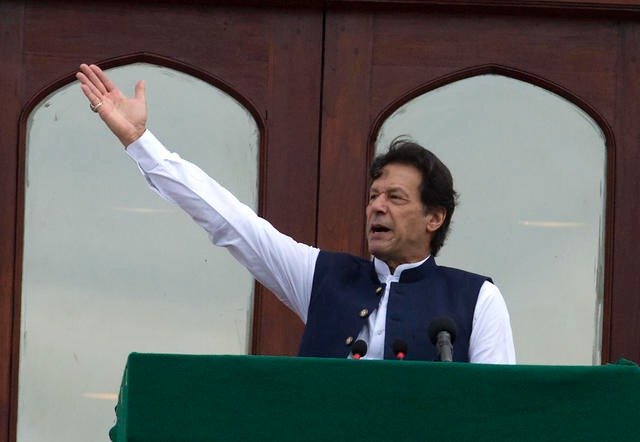
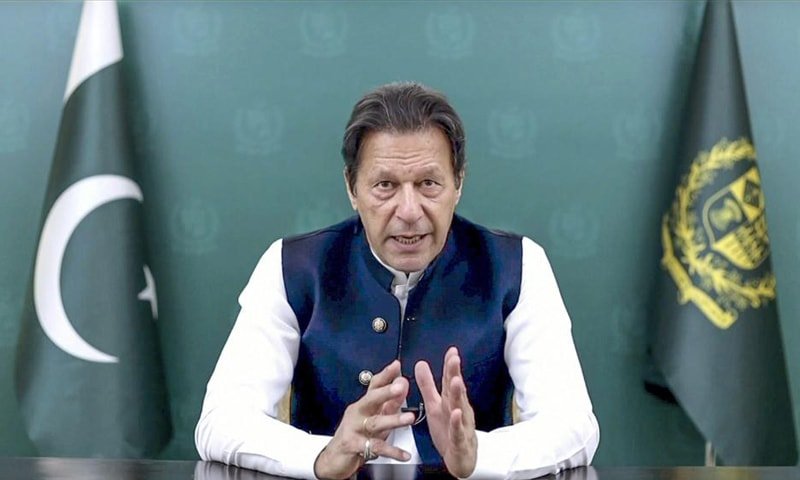
Prime Minister Imran Khan has said that the government is in talks with some groups of the banned militant outfit, Tehreek-e-Taliban Pakistan (TTP). In an interview with TRT World, PM Khan said there are different groups that form the TTP and some of them want to talk to our government for peace. “So, we are in talks with them. It’s a reconciliation process.” Before PM’s interview, both President Arif Alvi and Foreign Minister Shah Mahmood Qureshi had talked about giving amnesty to TTP members if they lay down their arms and follow the Constitution of Pakistan.
These statements warrant a lot of questions: why did the president, prime minister, and foreign minister disclose such important information in interviews to media outlets and not in parliament? TTP is no ordinary terrorist outfit. The entire country came together after the horrific APS attack in December 2014, in which more than 150 people were martyred – most of them children. All the political forces of Pakistan reached a consensus, after which the National Action Plan (NAP) came about. There was a massive crackdown on TTP and other terrorist outfits. We finally managed to eliminate the TTP in Pakistan. Those from the TTP who survived the crackdown ran away to Afghanistan. At that time, the government in Kabul was not friendly towards Pakistan.
The state told us that the TTP was supported and funded by India and Afghanistan – when Ehsanullah Ehsan first surrendered to Pakistan, he confirmed in a video that Afghan and Indian intelligence agencies [RAW and NDS] gave funds and other assistance to Pakistani Taliban to fight Pakistan. Last year, after sharing a dossier containing ‘irrefutable proofs’ of Indian funding of terrorism in Pakistan, Shah Mahmood Qureshi said: “The [specific] evidence presented by Pakistan provides a concrete proof of Indian financial and material sponsorship of multiple terrorist organisations, including UN-designated terrorist organisations Jamaat-ul-Ahrar, Balochistan Liberation Army and Tehreek-e-Taliban Pakistan.”
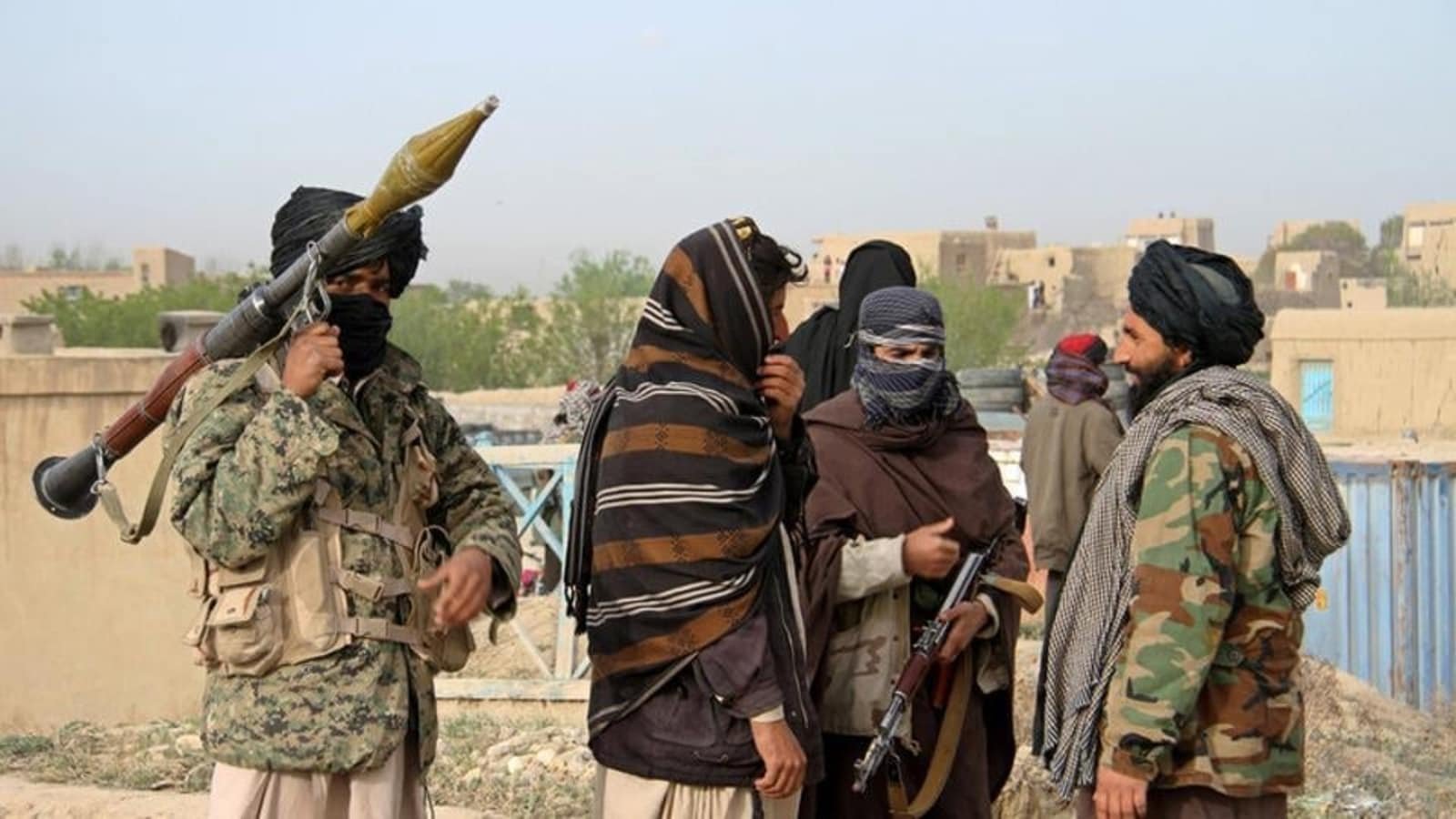
What is the reason for Pakistan to hold talks with a RAW and NDS-funded/supported terrorist outfit when we have broken its back in our country? And now that we have a friendly government in Kabul, what is the need to hold talks with an enemy outfit? Should the Afghan Taliban not help reign in the TTP and take action against those who are carrying out attacks against Pakistan from Afghan soil? Or, is it true that the Afghan Taliban and the Pakistani Taliban both have the same ideology, even if the targets of their attacks are different? The people of Pakistan – who have been killed and maimed by the TTP over the years – deserve an answer.
The government needs to be transparent. This decision cannot be taken just by the government alone. All political parties must have a debate on this issue and the people of Pakistan have to be taken on board as well. We cannot forget what the TTP did to our nation. We lost more than 70,000 lives at their hands. There must be a consensus about the talks and also the government should be transparent about the negotiations. Don’t keep us in the dark, dear government, for we were told that we will never forget their heinous crimes.
Fawad said, “The people who could not fulfill their pledge of allegiance to Pakistan want to return to fulfill this pledge.”
According to the minister, those people who wish to follow the constitution should be given a chance, adding that the government seeks to move forward with the conditions laid down by Prime Minister (PM) Imran Khan.
The information minister added that in Balochistan more than 3000 people have come back to a normal life, the ones who had ‘fallen prey to India’s conspiracies.’
The TTP said that their leaders are engaged in “secret talks” and have asked all fighters to observe a ceasefire till October 20.
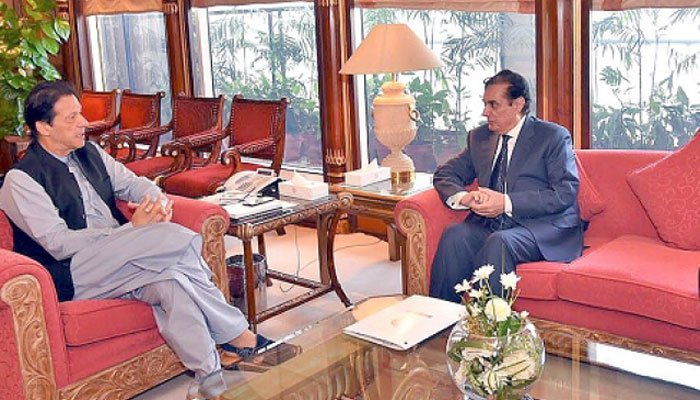
The Ministry of Law and Justice has reportedly been preparing a summary to send to the Prime Minister (PM) Imran Khan regarding the extension of sitting Chairman of the National Accountability Bureau (NAB) Justice (redtd) Javed Iqbal, reported Malik Asad for Dawn.
The four-year term of Justice Iqbal as NAB chairman will expire this month. A senior official of the ministry has confirmed that they will send the proposal to the PM soon.
However, the government hasn’t taken a final decision yet. According to an official, in the proposal, the declaration of an ordinance for giving extension has been suggested.
“In case the PM decides to grant an extension to the chairman, the law ministry will draft an ordinance to amend the National Accountability Ordinance (NAO) and forward it to the president,” the sources said.
If PM agrees, an amendment will be made in sub-section b of Section 6, which states, “There shall be a Chairman NAB to be appointed by the President in consultation with the [Leader of the House and the Leader of the Opposition in the National Assembly] for a [non-extendable] period of [four] years on such terms and conditions as may be determined by the President and shall not be removed except on the grounds of removal of Judge of Supreme Court of Pakistan.”
Earlier, Information Minister Fawad Chaudhry said, “The government has decided not to consult Opposition Leader Shehbaz Sharif for the appointment of NAB chairman since he (Sharif) is accused in several corruption references filed by the bureau.”
Later, Pakistan People’s Party (PPP) chairman Bilawal Bhutto Zardari tweeted that PPP will forcefully oppose the illegal extension in the tenure of chairman NAB.
Special Assistant to Prime Minister (SAPM), Dr Shahbaz Gill, alleged that anchorperson Kamran Shahid was asked to spread fake news and misquote facts about the United Kingdom’s (UK) court order to unfreeze Pakistan Muslim League-Nawaz (PML-N) President Shehbaz Sharif and his family’s bank accounts for lack of evidence of corruption and money laundering. A heated exchange took place between the two on Dunya News‘ programme, ‘On the Front with Kamran Shahid’.
Gill started off by reading a few statements by Kamran Shahid and gave details of the statements, which as per him were fake news and were factually incorrect.
Gill’s comments led to a heated exchange of words between Gill and Kamran.
“Sir, no one can make me misquote statements, not the prime minister or Azhar Javed [UK-based journalist working for Dunya News],” replied Kamran Shahid.
“You cannot say that I misquote my facts. I have been in journalism for the past 15 years. I am not indulging in any personal attacks against you and neither should you. No one can make me say things that are factually incorrect, not PM Imran Khan, not Shehbaz Sharif, no one,” added Shahid.
“You are wrong here, no one has the courage to make me misquote my statements or facts. Refrain from doing this.”
“Let the masses decide about your statements, seems like you are running for an election,” said Gill in response to Shahid’s answer.
“I have the right to judge the prime minister, he is my PM as well. I supported him long before your [Shahbaz Gill] career as a politician started in Pakistan Tehreek-e-Insaf (PTI),” said Shahid.
“You have a fascist regime, your party is monitoring everything, you all do one-sided reporting on Pakistan Television Network (PTV), there is no mention of the Opposition in their reporting. If you so highly support journalism why haven’t you made media independent from the information ministry,” said Shahid.
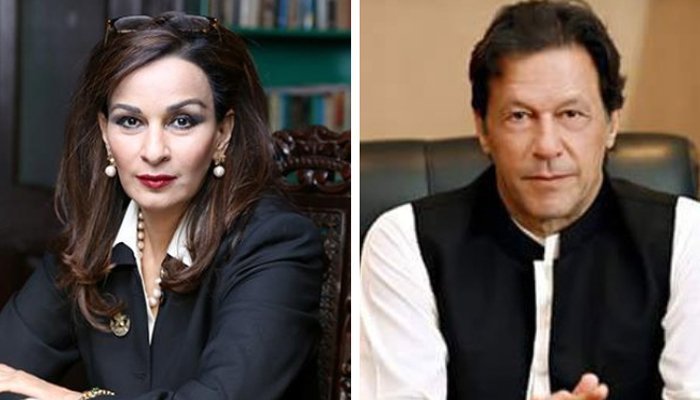
Pakistan People’s Party’s (PPP) leader Senator Sherry Rehman has said that Pakistan faces a serious threat after the hurried pullout of United States (US) forces from Afghanistan.
Sherry Rehman, lashing out at Prime Minister (PM) Imran Khan, said, “We are friends of Afghanistan, not spokesmen for any particular group. We should not make decisions that hurt the country. The PM mentions sacrifice. Yes, that is correct, but why make fun of that sacrifice by saying we will give amnesty to outfits like Tehrik-i-Taliban Pakistan (TTP) that have martyred not just our twice elected PM Benazir Bhutto but also the children of Army Public School and many of our brave soldiers.”
She said that national unity was missing and said the Pakistan Tehreek-e-Insaf (PTI) government was busy in their war narrative. The government is ignoring the Constitution and the parliament.
“If we even try to help Pakistan, we are told our leaders are corrupt. How is that helping Pakistan? Our president Asif Ali Zardari also wrote op-eds in The Washington Post. He defended the whole of Pakistan, not just his party. Read the op-eds and see how parliament was conducted to unite in moments of danger.”
“You need to pay attention to what’s going on in the Pakistan Senate, not just the US Senate. The PM of this country needs to respect the sanctity of the parliament and come here and discuss the situation instead of playing the blame game and disrupting unity. Is this how you defend the country?” she questioned.
“While it is important to engage with all countries with self-respect, particularly angry superpowers like the US that itself is in turmoil over its 20 years occupation of Afghanistan, what are we doing to empower our own selves? Instead of trying to unite the parliament around a bipartisan foreign policy, the parliament has never met on the Afghan transition, the humanitarian crisis there, and the response. All over the world, joint meetings are being held in Afghanistan but Pakistan’s government is in a state of denial over dealing with the parliament”, said Senator Sherry Rehman.
Pakistan Muslim League Nawaz (PML-N) president Shehbaz Sharif, in a press conference, said that the National Accountability Bureau (NAB) and Niazi [Imran Khan] nexus is a fixed match and Federal Investigation Agency (FIA) is also working on the government’s directions.
— President PMLN (Archived 2018-24) (@president_pmln) September 29, 2021
Talking about UK’s National Crime Agency (NCA) recent decision to unfreeze Sharif’s and his family account, he stated, “I was sent to jail twice during the last three years. The government failed to prove corruption against me and my children so they approached the agency.”
He claimed that the PTI-led government has been levelling fake allegations against him and his family for last over three years and said that the rulers had only wasted the nation’s time. “Those who are pretending themselves to be Sadiq and Ameen spent millions of rupees to defame me” he added.
According to him, the UK agency had asked the court that they wanted to end investigations and the UK court approved the request, as per Geo.
Earlier, the UK court had ordered the unfreezing of bank accounts for lack of evidence of corruption and money laundering.
Defamation case against Daily Mail
About the defamation case against UK’s newspaper, he clarified that he lodged a defamation case against the Daily Mail and asked it to provide evidence against him. But the Daily Mail is yet to submit evidence in the case.
Prime Minister Imran Khan says he was surprised to see that no mention was made of Pakistan’s sacrifices as a US ally in the war on terror for more than two decades. “Instead, we were blamed for America’s loss,” he wrote in an op-ed for The Washington Post.
“Since 2001, I have repeatedly warned that the Afghan war was unwinnable. Given their history, Afghans would never accept a protracted foreign military presence, and no outsider, including Pakistan, could change this reality,” wrote PM Khan.
PM Imran Khan lashed out at successive Pakistani governments, saying that they had sought to please the US instead of pointing out the flaws of a military-driven approach in Afghanistan.
“Pakistan’s military dictator Pervez Musharraf agreed to every American demand for military support after 9/11. This cost Pakistan, and the United States, dearly,” he stressed.
“Those the United States asked Pakistan to target included groups trained jointly by the CIA and our intelligence agency, the ISI, to defeat the Soviets in Afghanistan in the 1980s. Back then, these Afghans were hailed as freedom fighters performing a sacred duty. President Ronald Reagan even entertained the mujahideen at the White House.”
“Once the Soviets were defeated, the United States abandoned Afghanistan and sanctioned my country, leaving behind over 4 million Afghan refugees in Pakistan and bloody civil war in Afghanistan. From this security, vacuum emerged the Taliban, many born and educated in Afghan refugee camps in Pakistan,” read the opinion piece.
“Fast forward to 9/11, when the United States needed us again — but this time against the very actors we had jointly supported to fight the foreign occupation. Musharraf offered Washington logistics and air bases, allowed a CIA footprint in Pakistan, and even turned a blind eye to American drones bombing Pakistanis on our soil. For the first time ever, our army swept into the semiautonomous tribal areas on the Pakistan-Afghanistan border, which had earlier been used as the staging ground for the anti-Soviet jihad. The fiercely independent Pashtun tribes in these areas had deep ethnic ties with the Taliban and other Islamist militants,” wrote Khan.
The prime minister pointed out how, between 2005 and 2016, 16,000 terrorist attacks were conducted against Pakistan by over 50 militant groups, who saw the US and Pakistan as collaborators.
“We suffered more than 80,000 casualties and lost over $150 billion in the economy. The conflict drove 3.5 million of our citizens from their homes. The militants escaping from Pakistani counterterrorism efforts entered Afghanistan and were then supported and financed by Indian and Afghan intelligence agencies, launching even more attacks against us,” he wrote.
The premier lashed out at former president Asif Ali Zardari, referring to him as “undoubtedly the most corrupt man to have led my country”, accusing him of not worrying about the collateral damage caused by US drone strikes. He said former prime minister Nawaz Sharif was no different.
“Tragically, instead of facing this reality, the Afghan and Western governments created a convenient scapegoat by blaming Pakistan, wrongly accusing us of providing safe havens to the Taliban and allowing its free movement across our border. If it had been so, would the United States not have used some of the 450-plus drone strikes to target these supposed sanctuaries?”
“Surely Pakistan is not to blame for the fact that 300,000-plus well-trained and well-equipped Afghan security forces saw no reason to fight the lightly armed Taliban. The underlying problem was an Afghan government structure lacking legitimacy in the eyes of the average Afghan,” he wrote.
The prime minister said the “right thing” right now for the world to do would be to engage with the new Afghanistan government, adding that if assured of constant humanitarian aid, the Taliban will have a greater incentive to honour the global community’s demands.
“Providing such incentives will also give the outside world additional leverage to continue persuading the Taliban to honor its commitments,” he wrote.
“If we do this right, we could achieve what the Doha peace process aimed at all along: an Afghanistan that is no longer a threat to the world, where Afghans can finally dream of peace after four decades of conflict. The alternative — abandoning Afghanistan — has been tried before,” warned the prime minister.
I am from a country where public transport has been in shambles since the time of dinosaurs. The sitting prime minister of my country won the elections by practically convincing the people that building roads and public transport was not important. So you can well imagine moving around the cities would be some sort of hell for most of us. Being a vehicle owner myself and driving for the past 15 years, I cannot explain the amount of hate I have for driving. But I was always fascinated by the traffic post-midnight that consisted mostly of trucks. It was a different time. A different world altogether. A big giant never-ending trucks, on to a long journey, a journey not particularly entertained by what you call “human companionship”. Probably it is the very lack of human interaction that made truck driving a very fascinating world for me. I couldn’t explore it the way I wanted to because I am a woman stuck in a country where being a woman is your first crime. The rest of the crimes follow automatically but are all committed by others. Despite never truly knowing what it’s like to be a truck driver or their problems, I continued to be fascinated by the expansive and isolated journeys, the tuck shops, tarkay wali chai, and desi breakfast on a chorpoi at some deserted dhaba. Romantic, no?
This romantic trance was however broken by the movie “Milestone”. A ‘daish-drohi’ (traitor) like myself indulged in Indian cinema at the recommendation of a very dear friend. I didn’t know what I was getting into. “Milestone” reintroduced me to the word ‘melancholy’ in a way that no other tragedy of my life had. I didn’t realise I had that many feelings that I simply refused to acknowledge or feel. I often felt that even the abyss I looked into didn’t reciprocate and I kind of felt unwanted even by the abyss. Till I watched “Milestone”. This movie saw through me like no other thing or person.
Ghalib, the protagonist of “Milestone”, plays the role of a truck driver. In the quietest opening scenes of the movie, the resignation in the face of Ghalib, the expansive emptiness of his eyes, and his lingering backache, everything got me hooked to the movie in the first few minutes. Ghalib’s story slowly unrolls and makes the audience acquainted with his loneliness, not only in his personal life but professionally too. His loneliness has been depicted brilliantly through the vast emptiness of the roads, his empty apartment, and his lonely driving duties at night accompanied by nothing but melancholy. The film drops hints here and there about the circumstances of his wife’s death but mostly remains focused on Ghalib’s long journey to nowhere. But even those hints suggest that he blames his aloofness, which made his relationship bitter and then nonexistent. The feeling of homelessness that instills in the opening scenes remains with you throughout the movie.
Ghalib, a man of few words, can be witnessed getting further worn down in the movie as a young recruit threatens Ghalib’s job. The young intern was zealous about perfecting the art of truck driving but Ghalib was desperate to save the only enduring relationship he had, which was his relationship with the truck. A lot of people would comment on the commodification of labour class or discuss how capitalism traps you, especially when it comes to the labour class but for me, Ghalib saying: “I do this job because it is who I am. My misery lies in the fact that this is all I am,” was a punch in the gut. This was his entirety of life, a long road, a never-ending journey, the misery of being who he was, and the lingering feeling of being disposable.
Director Ivan Ayer has encapsulated the predicament faced by the labour class with so much melancholy. The attention to detail and the long uninterrupted scenes with fewer words keep you going as you explore layers and layers of emotions such as despair, paranoia, and loneliness. Ivan has done a tremendous job in portraying the diminishing value of human life by walking the audience through the protagonist’s life.
You might wonder if my fascination ended with the life of truck drivers? I don’t think so. I might never be able to romanticise it again but I have to say that the loneliness it offered was at the same frequency as mine. And I couldn’t thank Ivan enough for making this absolute masterpiece and giving such deep projection to the intricate emotions.
Claim: Imran Khan misquoted President Ronald Reagan’s statement at the UN General Assembly session
Fact: Imran Khan misquoted President Ronald Reagan’s statement at the UN General Assembly session
Prime Minister Imran Khan misquoted United States President Ronald Reagan’s statement, while delivering his address to the 76th session of the United Nations General Assembly (UNGA) on September 25, 2021,
PM Khan claimed that in the 1980s, former US President Ronald Reagan compared the Afghan mujahideen fighting against Soviet forces to the Founding Fathers of the United States.
Focal person to Chief Minister Punjab, Azhar Mashwani, took to Twitter and shared the video clip where the former president can be heard comparing Afghan Mujahideen as “moral equals of founding fathers of USA”.
If you watch the video attentively, you will find a minor glitch. The video is 0:48 seconds long.
At 0:37-0:45 seconds, Reagan says: “They are our brothers, these freedom fighters, who we owe them our help. You know the truth about them, you know who they are fighting and why.”
However, from 0:45 seconds to 0:48 seconds, there is a slight change in the sound of the president. The pitch of the sound is a bit higher as compared to the entire video. The words spoken by the president during these seconds are, “They are the moral equal of our founding fathers.”
Actual quote of the former US President, “In making mention of freedom fighters, all of us are privileged to have in our midst tonight one of the brave commanders who lead the Afghan freedom fighters—Abdul Haq. Abdul Haq, we are with you.”
And the non doctored, un-edited video where President Reagan describing Nicaraguam rebels (not Afghan freedom fighters) as moral equivalent of American founding fathers….
“They are our brothers, these freedom fighters, and we owe them our help. I’ve spoken recently of the freedom fighters of Nicaragua. You know the truth about them. You know who they’re fighting and why. They are the moral equal of our Founding Fathers and the brave men and women of the French Resistance,” said Reagan.
The anecdote that PM Khan shared about Ronald Reagan comparing the mujahideen to the Founding Fathers is a commonly made mistake and there is actually no truth to it. Reagan had actually compared Nicaraguan rebel fighters to the Founding Fathers, a comment which has since been wrongly connected to the mujahideen.
However, this is not the first time that the premier made this mistake. In 2019, PM Khan while speaking at an event at the Council on Foreign Relations (CFR) think tank in New York on Monday, September 23, claimed that in the 1980’s former Ronald Reagan compared the Afghan Mujahideen fighting against Soviet forces to the Founding Fathers of the United States.
Journalist Gharidah Farooqi raised this issue initially. She took to Twitter and said, “What an international embarrassment that too at the #UNGA forum this time. US Pres RonaldRegan NEVER compared ‘mujahideen’ to Founding Fathers. It’s a FAKE NEWS. PM Khan refers to a fake “news item” to launch a case at such a prestigious forum! Who wrote speech for PM Khan? Fire him.”
What an international embarrassment that too at #UNGA forum this time. US Pres RonaldRegan NEVER compared ‘mujahideen’ to Founding Fathers. It’s a FAKE NEWS. PM Khan refers to a fake “news item” to launch case at such a prestigious forum! Who wrote speech for PM Khan? Fire him. pic.twitter.com/UaSLOOkeea
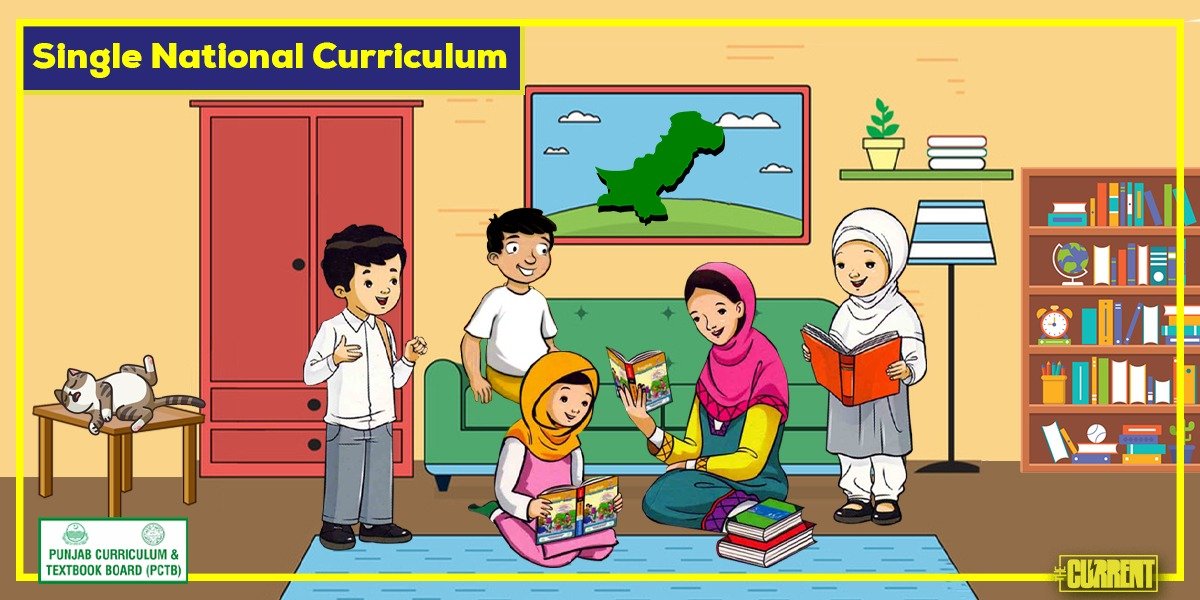
On August 16, 2021, Prime Minister Imran Khan officially launched the Single National Curriculum (SNC). The newly launched curriculum was prepared by the National Curriculum Council (NCC) and the Ministry of Federal Education, in consultation with the provinces. According to PM Khan, “SNC would transform the nation into a unified one.”
What is SNC?
According to the Ministry of Federal Education and Professional Training, the SNC is a ‘uniform’ system of education, which means the same curriculum for everyone. All public schools, private schools, and madrassas were meant to have the same curriculum so that the learning outcomes are similar and without any discrimination in teaching standards. This is not the first time SNC was imposed in Pakistan. It was previously introduced in 2006 by Former President Musharraf. Whereas the previous SNC was a curriculum-based initiative, the one introduced by the PTI government is imposing the use of the textbooks produced by the provincial boards.
Is it being implemented across the country?
No. Sindh has decided not to implement the curriculum since education is a provincial issue. Only Punjab and Khyber Pakhtunkhwa have enforced it so far. However, many schools in both provinces — including the prestigious Aitchison College, Lahore — expressed their concerns over the books in the curriculum. The Director of the National Curriculum Council (NCC), Dr Mariam Chughtai, has also said that madrassas will implement the SNC syllabus in five to six years, which undermines the reason why the government had wanted to introduce the SNC in Pakistan – to bring madrassas into the mainstream so students would be able to get jobs in other professions after they graduated.
Controversies surrounding the SNC
After the SNC syllabus was imposed on schools across Punjab, many controversies surrounding the books and the curriculum came forward. From the disparity in gender representation, the reinforcement of patriarchal gender roles, the lack of female heroes, and religious texts in the non-religious books.
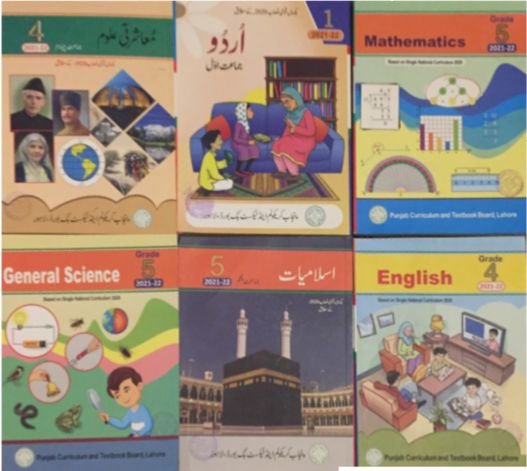
To see if the criticism is valid, The Current analysed the following books published under the Punjab Textbook Board (PTB):
Urdu books from grades 1 to 5, English books from grades 1-5, Mathematics books grades 1, 2, 4, and 5, General Science grades 4-5, Waqfiyat Aama grade 1 and 3, Social Studies 4-5, and Islamiat grade 1- 5.
Two books were not available at the time of research. Grade 3 Math and Waqfiyat Aama grade 2, which have not been included in the study.
The analysis here has been divided into two parts.
Part one comprises the data analysis of all the books included in the SNC by the Punjab Text Book board.
Part two comprises the data analysis of individual subjects being taught to the students.
We studied the total number of male and female representations in the books, a comparison of the eastern and western wear of both genders, the presence of religious (Islam and others) content in non-religious books, and studying the distribution of power roles assigned to both men and women.
Here is the list of most common criticism against the curriculum and the evidence we found:
SUMMARY OF CONTENT IN ALL SNC BOOKS
1- Disparity in Gender Representation:
One of the most debatable points in the entire SNC is the representation of men and women.
After a thorough evaluation, we found that the concerns about the disparity in gender representation are TRUE.
The study reveals that a total of 60.2 percent of the books have images of men, including boys and only 39.4 percent of the books have images of women, including girls.
2-Women represented in hijab vs non-hijab, and women in western clothes:
What the women are wearing became a source of contention in the discussion about the SNC, with critics suggesting that the women should equally represent the country in terms of the hijab, eastern clothes, and the choice to wear western wear.
It is TRUE that there is no equal representation of women’s appearance in the books.
Women’s appearance was divided into three categories.
A) Number of women wearing eastern clothes with hijab.
B) Number of women wearing eastern clothes without hijab.
C) Number of women wearing western clothes.
Our research shows that 41.6% of all women and girls in the SNC books are wearing a hijab, 28.9% are wearing eastern clothes without a hijab, and 29.4% of the images show girls wearing western wear. It is important to note that in the western wear percentage, almost all of the images are of young girls. Older women are not shown wearing western wear.
3-Men represented in eastern vs western clothes:
Since the appearance of women in eastern wear and hijab became controversial, we also studied how many times men appeared in western or eastern wear.
A massive 79.9 percent of men were seen wearing western clothes, in comparison to 20 percent dressed in eastern clothes.
4- More men in ‘power roles’ compared to women:
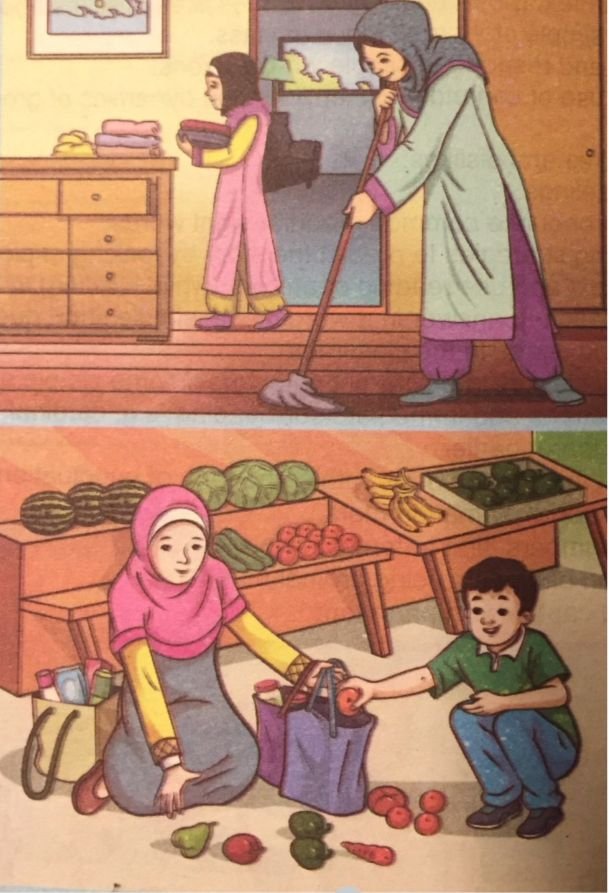
Another controversy suggested that the books did not show women in positions of ‘power’, and they were mostly listed as helpers or homemakers. While there were many images that showed women in ‘inferior roles’ to men, there were women that were shown in roles of power.
This controversy is TRUE.
We defined power roles shown in the books as doctor, pilot, lawyer, police officer, traffic warden, army sports personality, etc and after analysing all the books, we found that a men are given power roles three times more than women. The results in the graphic below are based on the total number of images shown of men and women in all the SNC Punjab books.
I
5. Religious content in non-religious books
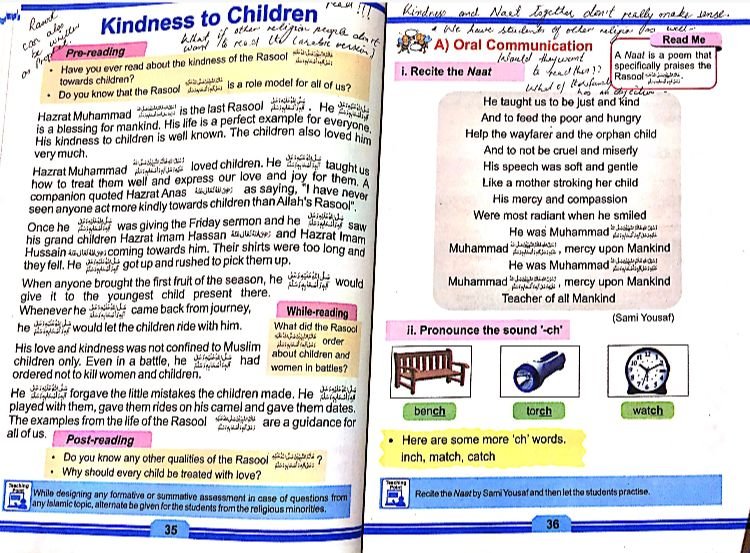
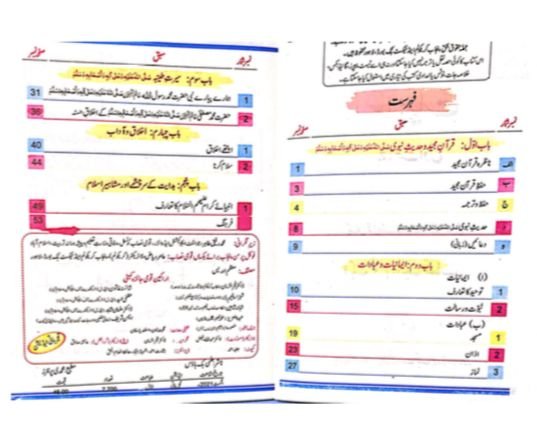
In almost all the books which were studied, we saw the presence of religious references or mentions in non-religious books. Minorities felt their rights were being compromised since books that are not for religious studies should not have references to a specific religion, which may come under the context of ‘preaching’.
In our analysis, we saw a total of 7.77 percent of religious text in all SNC non-religious books, which lends TRUTH to the fact that there is religious content in non-religious books.
Religious content is present in 7.7 percent of English, Math, Social Studies, Urdu, Science, and General Knowledge books.
7.47 percent of books have references to Islam while 0.27 percent mention other religions in all non-religious books.
Dr Mariam Chughtai, while answering a question for The Current about the religious references in non-religious books, did not provide a clear answer but stated that these are model books that require changes.
SNC BOOKS ANALYSIS – SUBJECT ANALYSIS
This section of the report comprises an analysis of individual subjects being taught to students. The subjects under study were, Urdu books from grades 1-5, English books from grades 1-5, Mathematics books grades 1, 2,4, and 5, General Science grades 4- 5, Waqfiyat Aama (General Knowledge) grades 1-3, Muashrati Uloom (Social Studies) grades 4-5.
The graphical representation of the subject-wise evaluation is as follows:
English:
In 668 pages of English books, 58.1 percent have male representation while females have 41.8 percent.
29.7 percent of women are seen with Hijab and 70.2 percent are without Hijab.
There is a total of 9.8 percent presence of religious text in English books. This is based on the total number of pages in English books.
Mathematics:
In 672 pages of the Math books, when gender representation was analysed, 51.1 percent of the books have male representation and 48.8 percent have female representation.
A total of 53.9 percent of females are seen without hijab and 46 percent are seen wearing hijab.
The Math books have a 4.1 percent presence of religious text. This is based on the total number of pages in Math books.
Urdu:
The five Urdu books comprising 791 pages. A total of 59.7 percent presence of males are seen as compared to 40.4 percent of females.
58.5 percent of women/girls are seen wearing hijab and 41.4 percent are seen without hijab.
12.8 percent of religious text is present in Urdu books. This is based on the total number of pages in Urdu books.
General Science:
Out of 310 pages, 76.8 percent have male representation as compared to 23.1 percent female representation.
64 percent of women/girls are seen without hijab and 36 percent of women/girls are seen with hijab.
The General Science books have a 0.96 percent presence of religious content. This is based on the total number of pages in Science books.
Waqfiyat Aama (General Knowledge):
49.5 percent of male images are seen in comparison to 50.15 percent of females.
23.1 percent of females are seen with hijab and 76.8 percent without hijab.
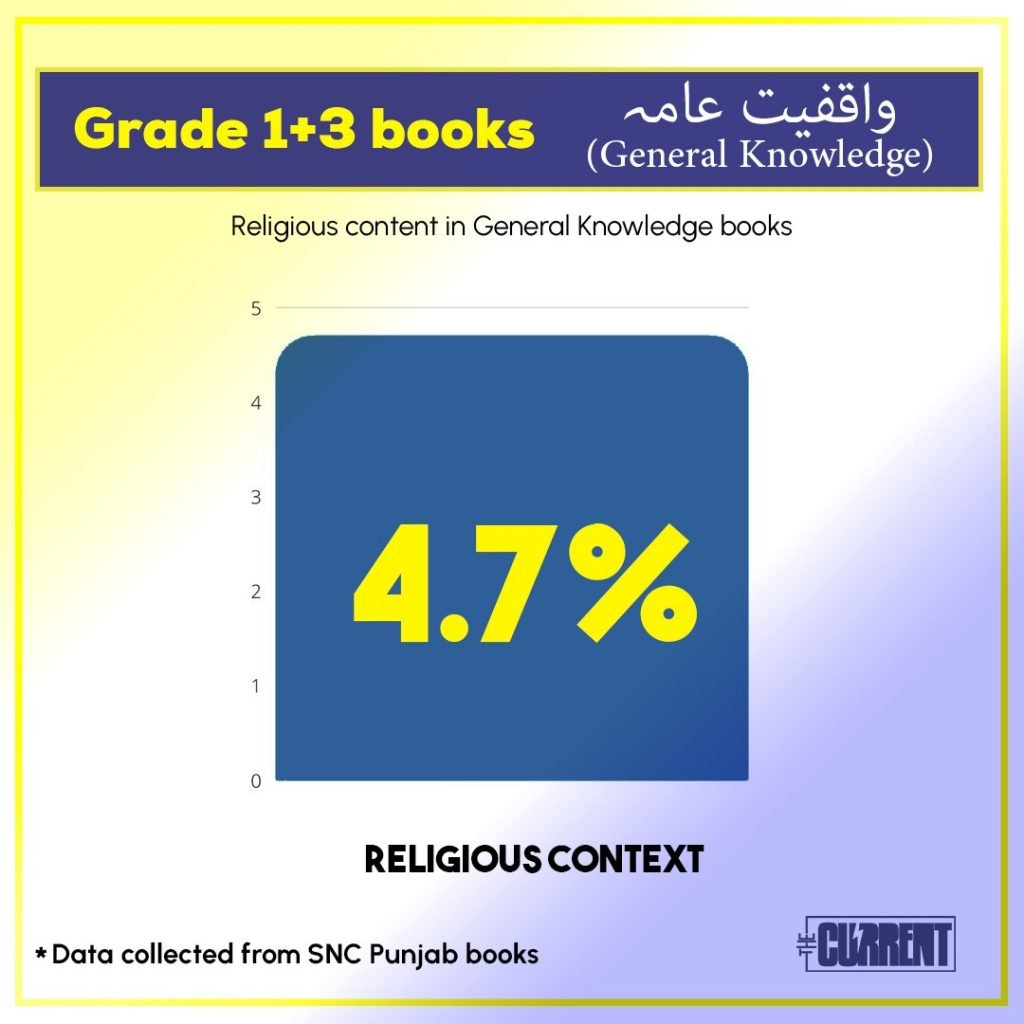
There is a 4.7 percent presence of religious text in the books studied. This is based on the total number of pages in General Knowledge books.
Muasharti Uloom (Social Studies):
From 234 pages analysed, 65.1 percent of men/boys are represented in the books and 34.8 percent of females are shown.
36.8 percent of females are seen without hijab and 63.1 percent are seen with hijab.
10.2 percent of religious content is present in the books. This is based on the total number of pages in Social Studies books.
The last portion of the report highlights the pros and cons, which we have observed in almost all the books. We have provided both positive and negative outcomes deduced from the books after careful analysis.
The positive outcome deduced from the books:
1. The books are locally published and designed. The books are affordable, with a total set for one grade set at Rs. 800 per child according to Dr Chughtai.
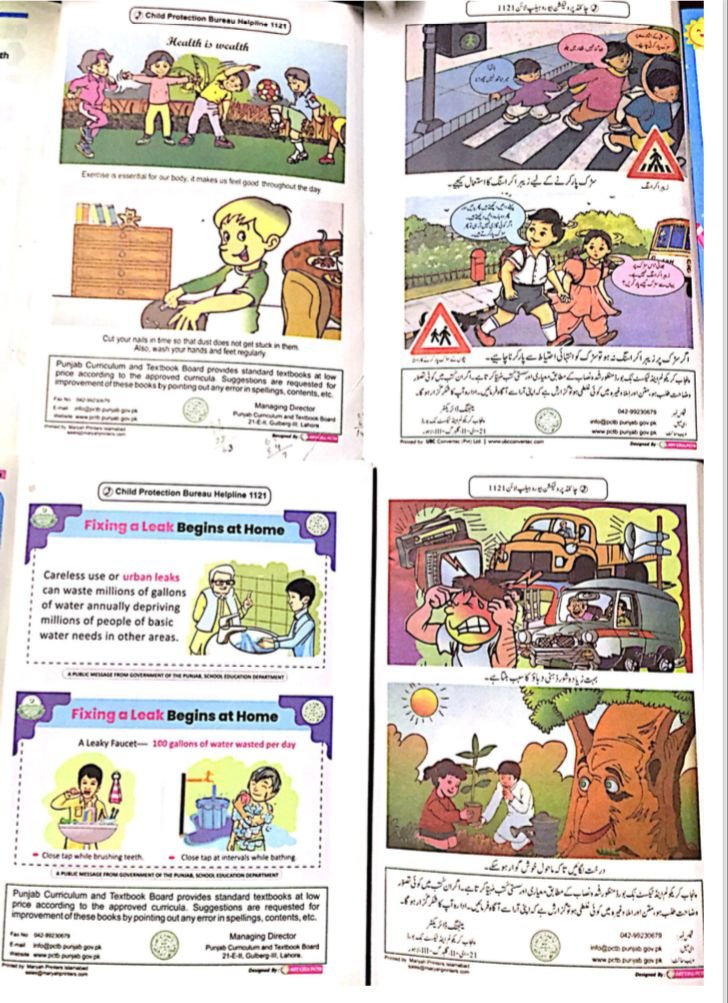
2. There is a public service message printed at the end of each book to raise awareness against talking to strangers, crossing the road, exercising, and even information about fighting dengue.
The possible negative impact of the books
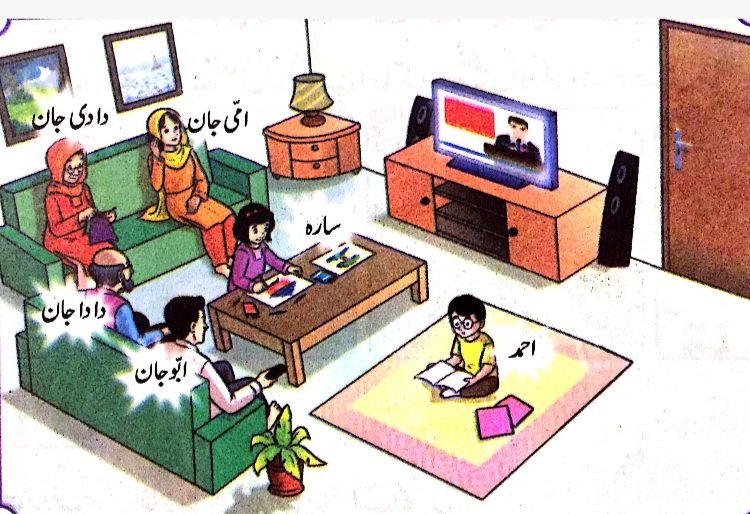
1. After analysing the books, we deduced that mostly nuclear families have been shown in the books. No representation of single parents or children being raised by guardians is seen. Moreover, the presence of both parents is seen as almost essential in all stories in the books.
2. Women are mostly shown doing domestic work, taking care of the family, and looking after their children. In stories as well, they seem to come second to their male counterparts.
3. As discussed in detail above, there is the presence of religious text in non-religious books.
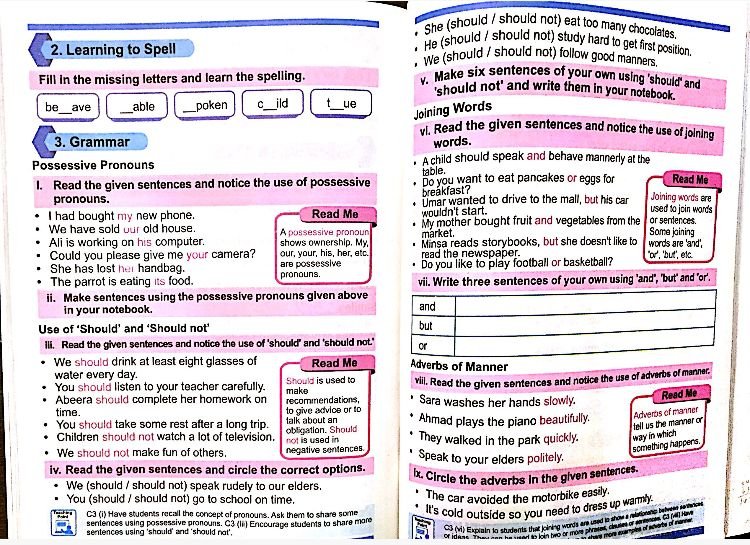
4. The stylisation of the books are difficult to understand, fonts and texts are way too clustered. The quality of the pages is not refined, making them unattractive and confusing for students.
CONCLUSION:
According to NCC director, Dr Chughtai, the curriculum is an evolving process and the books can be changed in future publications, based on the response by schools and parents. The biggest hurdle to the books is that the teachers have not been trained in teaching these new books and according to Dr Chughtai, it is up to the school to teach and implement the books. There are no worksheets given with the books and from initial student reactions, students are confused and wary of books that are laid out in a clustered fashion. There is also the subject of a language change. Where students study general knowledge, a precursor to Science, in Urdu, they switch to difficult English in grades 4-5.
While the government should be commended in trying to create a national syllabus, the forced enforcement of the books along with the lack of supplemental information and training will make this very difficult for teachers and students. Moreover, parents should be given a choice as to what they want their children to study. This implementation should be a free choice rather than that of enforcement. What would have been a practical approach is that the government should have improved the structure of the government/public schools, provided better teacher training, spent more on financially improving the conditions rather than lowering the standard for all.
*Graphics credits: Asma Ahmad (Graphic Designer)
How did we collect the data?
The percentage of male characters in the books: Divided the total number of male by the total number of characters. The percentage of female characters in the books: Divided the total number of female by the total number of characters.
The percentage of Islam: Divided the Islamic pictures or references given in the books by the number of total pages of all books. The percentage of other religion: Divided the other religions pictures or reference given in the books by the number of total pages of all books.
The percentage of female power roles: Divided the number of female by the total number of characters (female and male). The percentage of male power roles: Divided the total number of male by the total number of characters (female and male).
The same process/calculation/method was applied to the findings of each book.