Tag: Imran Khan

  • ‘Mr PM Please stop blaming the Victim’: Usman Mukhtar gets direct

    ‘Mr PM Please stop blaming the Victim’: Usman Mukhtar gets direct

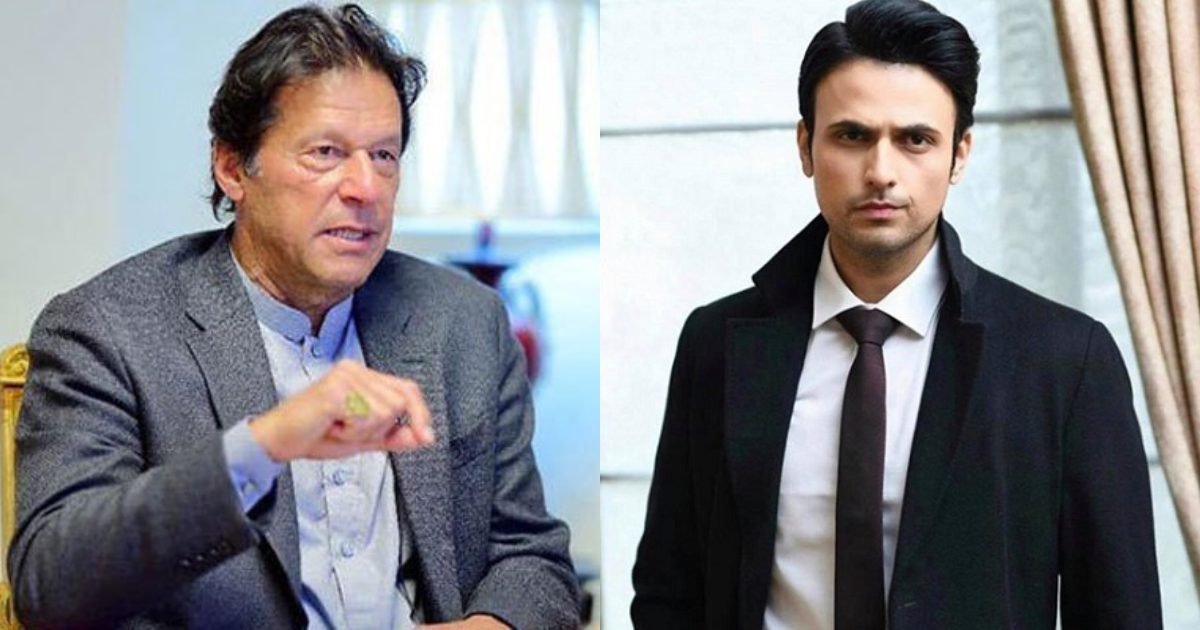
    Several Pakistani celebrities have spoken up after Prime Minister Imran Khan made controversial statements about the cause of sexual crimes in Pakistan.

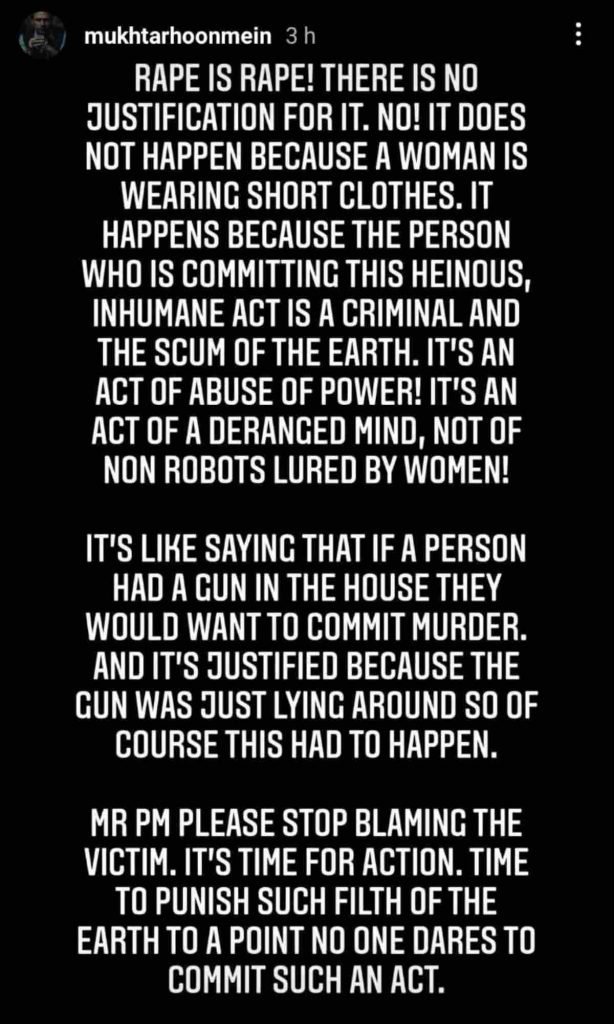
    Taking to his Instagram stories, Usman Mukhtar said that rape is rape! there is no justification for it. “It does not happen because a woman is wearing short clothes. It happens because the person who is committing it this heinous, inhumane act is a criminal and the scum of the earth,” said Mukhtar.

    “MR PM please stop blaming the victim.” he added.

  • Jemima schools PM Khan on rape, again

    Prime Minister Imran Khan’s former wife, Jemima Goldsmith has schooled him on the topic of rape again by re-sharing an old tweet.

    In an interview with “Axios on HBO” with Jonathan Swan, Prime Minister Imran Khan said that “if a woman is wearing very few clothes, it will have an impact on the men, unless they are robots”.

    Jemima quoted her old tweet with the caption, “And again. Sigh.”

    The tweet she quoted read, “I remember years ago being in Saudi Arabia and an elderly woman in an abaya and niqab was lamenting the fact that when she went out she was followed and harassed by young men,” said Jemima.

    “The only way to get rid of them was to take her face covering OFF,” said Jemima further, asserting: “The problem is not how women dress.”

    Earlier, this year in April Prime Minister Imran Khan’s comments on rape and violence against women sparked a debate upon the reasons behind such actions and how society can tackle crime against women and children, including rape.

  • Pak ready to partner for peace in Afghanistan, we will not host US bases: PM for WaPo

    Pak ready to partner for peace in Afghanistan, we will not host US bases: PM for WaPo

     Prime Minister Imran Khan, in an opinion piece for The Washington Post, wrote that Pakistan is ready to be a US partner for peace in Afghanistan, but will not host US bases and avoid risking further conflict.

    “We simply cannot afford this. We have already paid too heavy a price. Meanwhile, if the US, with the most powerful military machine in history, couldn’t win the war from inside Afghanistan after 20 years, how would America do it from bases in our country?”

    He added that Pakistan was ready to be a partner for peace in Afghanistan with the US. “But as US troops withdraw, we will avoid risking further conflict,” wrote PM Khan.

    He said that Pakistan and the US have the same interest in that long-suffering country: a political settlement, stability, economic development and the denial of any haven for terrorists.

    “We oppose any military takeover of Afghanistan, which will lead only to decades of civil war, as the Taliban cannot win over the whole of the country, and yet must be included in any government for it to succeed.”

    Highlighting how Pakistan has suffered from the wars in Afghanistan, PM Khan wrote, “More than 70,000 Pakistanis have been killed. While the US provided $20 billion in aid, losses to the Pakistani economy have exceeded $150 billion.”

    “After joining the US effort, Pakistan was targeted as a collaborator, leading to terrorism against our country from the Tehreek-i-Taliban Pakistan and other groups. US drone attacks, which I warned against, didn’t win the war, but they did create hatred for Americans, swelling the ranks of terrorist groups against both our countries,” wrote the premier.

    Arguing against giving military bases to the Central Intelligence Agency (CIA) for action inside Afghanistan, he said if the United States, with the most powerful military machine in history, couldn’t win the war from inside Afghanistan after 20 years, how would America do it from the bases in Pakistan?

    The prime minister also mentioned the benefits the region would get after peace in Afghanistan and Pakistan’s desire for increased trade and connectivity with Central Asia for an economic uplift.

    “This is why we have done a lot of real diplomatic heavy lifting to bring the Taliban to the negotiating table, first with the Americans, and then with the Afghan government,” PM Khan wrote, highlighting Pakistan’s efforts for peace.

    “We know that if the Taliban tries to declare a military victory, it will lead to endless bloodshed. We hope the Afghan government will also show more flexibility in the talks, and stop blaming Pakistan, as we are doing everything we can short of military action.”

    The premier concluded by saying that promoting economic connectivity and regional trade was the key to lasting peace and security in Afghanistan, adding that further military action was “futile”.

    “If we share this responsibility, Afghanistan, once synonymous with the ‘Great Game’ and regional rivalries, could instead emerge as a model of regional cooperation.”

  • Fawad says anyone who kills innocents is a terrorist after FM Qureshi skips question on OBL

    Fawad says anyone who kills innocents is a terrorist after FM Qureshi skips question on OBL

    Information Minister Fawad Chaudhry tweeted on Monday that there is no confusion at any level regarding anyone who kills innocents. “That is terrorism and the perpetrators are terrorists. We have suffered pain of terrorism in our own land and can understand pain of all who have lost their loved ones in these cowardly attacks.”

    In an interview with Afghanistan’s Tolo News, Foreign Minister Shah Mahmood Qureshi skipped a question when asked if Osama bin Laden was a martyr. Qureshi paused for a few seconds and then said, “I will let that pass.”

    Senior Afghan journalist Lotfullah Najafizada had originally asked Qureshi about Prime Minister (PM) Imran Khan calling Osama bin Laden a martyr. The foreign minister responded that the PM was quoted out of context. “Out of context. He was quoted out of context. And, a particular section of the media played it up.”

    Qureshi is being criticised for skipping this question and not taking a clear position.

    Last year, Prime Minister Imran Khan came under fire for calling al-Qaeda chief Osama bin Laden a “martyr” during his speech in the National Assembly.

  • ‘If a woman is wearing very few clothes, it will have an impact on men, unless they are robots,’ says PM Khan

    In an interview with “Axios on HBO” with Jonathan Swan, which aired at 3am PST on Monday morning, Prime Minister Imran Khan said that “if a woman is wearing very few clothes, it will have an impact on the men, unless they are robots”.

    Prime Minister Khan discussed various issues in his interview with Axios’ Swan ranging from US withdrawal from Afghanistan to Pak-US relationship, Uyghur Muslims in China and sexual violence in Pakistan.

    Rape and sexual violence

    Swan asked PM Khan about his previous comments pertaining to rape and vulgarity, PM said that it is “such nonsense”.

    “I said that the concept of purdah is avoid temptation in the society. We don’t have discos here, we don’t have night clubs, so it is a completely different society, way of life here. So if you raise temptation in the society to the point and all these young guys have nowhere to go, it has consequences in the society.”

    Swan asked: “Do you think that what women wear has any affect, that that’s part of this temptation?”

    “If a woman is wearing very few clothes, it will have an impact on the men, unless they are robots. I mean it’s common sense,” replied PM.

    Swan asked if this would provoke acts of sexual violence, to which PM Khan responded, “It depends which society you live in. If in a society, people haven’t seen that sort of thing, it will have an impact on them. If you grow up in a society like you, maybe it won’t on you. This cultural imperialism, whatever is in our culture must be acceptable to everyone else. It’s not.”

    “Jonathan, it’s about my society. My priority is how my society behaves, what reactions are caused in my society so when I see sex crime going through the roof, we sit down, we discuss how we are going to tackle this. It is having an impact in my society. We have to do something about it.”

    US withdrawal from Afghanistan

    Axios’ Swan asked PM Khan if he was happy that the US military is finally withdrawing from Afghanistan after 20 years. PM said, “Happy in one way because there was never going to be a military solution in Afghanistan. Anxious that they [the US] are leaving without a political settlement, there is a possibility of civil war.” When asked what would a political settlement look like, PM said that a political settlement in Afghanistan “would mean a sort of a coalition government, a government from the Taliban side and the other side. There is no other solution”.

    Swan asked if PM Khan thinks the Americans made a mistake by saying they are getting out by September 11. The PM said they got themselves in such a big mess that they had to give some sort of timeframe. “But the moment they gave a timeframe, Taliban would have considered that a victory.” PM was asked how he felt about the prospect of the Taliban effectively controlling Afghanistan and if he is happy to welcome them into the community of nations. “As far as Pakistan is concerned, whoever represents the people of Afghanistan, we will deal with them.”

    Swan asked what if they were not democratically elected and does it not concern you on some level that this group of people is accumulating power right next door to you. PM Imran Khan said, “Look, I am not a spokesman for Taliban. For me to say, you know what they are doing or what they shouldn’t be doing is pointless. In case Taliban go for an all-out victory, there is going to be incredible amount of bloodshed. And let me tell you, the country that is going to suffer the most after Afghanistan is going to be Pakistan. We already have three million Afghan refugees here. And this could lead to another exodus so that is our biggest concern. The Americans, before they leave, there must be a settlement.”

    Relationship with the United States

    Swan asked PM Imran Khan why the American CIA Director Bill Burns made an unannounced visit to Islamabad. “Ever since 9/11, there’s constantly been in touch between our intelligence agencies.” PM Khan said he did not meet the CIA director but the head of ISI met him.

    Swan said that the Americans want to have their spies and special forces based in Pakistan to keep an eye on what is happening across the border. To a question if he will allow the American government to have CIA here in Pakistan to conduct cross-border counterterrorism missions against al-Qaeda, ISIS or the Taliban, PM Khan emphatically said, “Absolutely not.” The host interjected and asked: “Seriously?”

    “There is no way we will allow any bases, any sort of action from Pakistani territory into Afghanistan. Absolutely not. Pakistan suffered 70,000 casualties, more than any other country by joining the American war. We cannot afford any more military actions from our territory. We will be partners in peace, not in conflict,” added Khan.

    Swan said that the American military is discussing doing airstrikes potentially to support the Afghan forces against the Taliban. “Would you allow the American Airforce to use your air space for those airstrikes?”

    “We are not going to be part of any conflict anymore,” replied Khan.

    But you haven’t decided yet whether you will let them use your airspace, asked Swan again. PM Khan said this has not been discussed at all. “Why would the Americans be using bombing Afghanistan after it hasn’t worked for 20 years, why will it work again?”

    Kashmir resolution

    PM Khan said he has not spoken to US President Joe Biden since he took office. “Whenever he has time, he can speak to me. But at the moment, clearly he has other priorities.” When asked what would he say to Biden when he does meet him, PM said: “The US has a big responsibility as the most powerful nation in the world. Almost 1.4 billion people are living in the subcontinent. We are held hostage to one dispute in Kashmir. A disputed territory. According to the United Nations Security Council resolutions, there should have been a plebiscite for the people of Kashmir to decide about their own future. That has never taken place. It’s festering. If the Americans have the resolve, the will, it can be sorted out.”

    Nuclear weapons

    Prime Minister Khan that the purpose of Pakistan’s nuclear weapons “is not an offensive thing”. He said that any country that has a neighbour seven times the size as Pakistan has, “would be worried”. PM Khan said he is “completely against nuclear arms. I always have been”. Ever since the nuclear deterrence, Pakistan and India have not been to war despite three wars in the past. “We have border skirmishes but we have never faced war. The moment there is a settlement on Kashmir, I believe the two neighbours will live as civilised people. We will not need to have these nuclear deterrence.”

    Uyghur Muslims in China

    Swan asked PM Khan why he does not speak about Uyghurs in China when he is so vocal about Islamophobia in the west.

    “What our conversations have been with the Chinese, this is not the case according to them. Whatever issues we have with the Chinese, we speak to them behind closed doors. China has been one of the greatest friends to us in our most difficult times. When we were really struggling, our economy was struggling, China came to our rescue so we respect the way they are,” said PM Khan. He also questioned why the people of Kashmir are ignored and how this is hypocrisy.

    “Am I going to start talking about everything? I concentrate on what is happening on my border, in my country…that concerns me more.”
  • Shehbaz Sharif finally delivers his speech in NA, uninterrupted

    Shehbaz Sharif finally delivers his speech in NA, uninterrupted

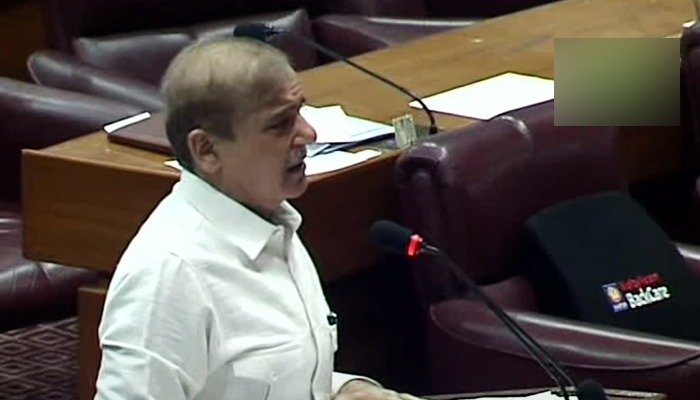
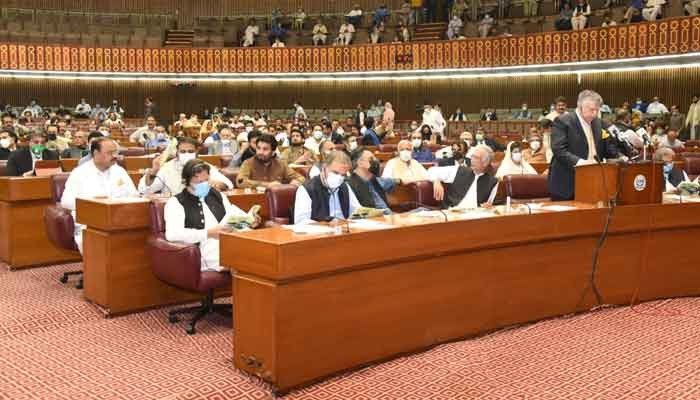
    Leader of the Opposition in the National Assembly (NA) Shehbaz Sharif on Thursday finally delivered his speech in the Lower House after three days of chaotic behaviour by lawmakers.

    Speaking on the floor of the NA today, the Opposition leader said all of the lawmakers present in the assembly were elected by 220 million Pakistanis and they were responsible for changing the nation’s future for the better.

    There was complete silence in the house during Shehbaz Sharif’s speech, who lashed out at the government and Prime Minister Imran Khan for “ruining lives of Pakistanis”

    He said that in the last three years, many taxes were imposed by the Pakistan Tehreek-e-Insaf (PTI) government because of which the “poor man’s meals have been halved.” Hunger and hopelessness had been created in the country because of previous budgets, he said, adding that Budget 2021-2022 would further increase inflation and the poor would suffer more, reports Dawn.

    The Pakistan Muslim League-Nawaz (PML-N) leader pointed out that there was a lack of trust among provinces and between the provinces and the federal government, claiming that such differences have never been seen before.

    “If only Punjab progresses and the rest of Pakistan does not, then it is not progress,” stressed Shehbaz.

    Shehbaz also criticised the PTI government’s response to the Covid-19 pandemic, saying “the entire Opposition termed Covid as a ‘national emergency’ which [they and the government] would tackle together after setting aside our differences.”

    He recalled that National Assembly Speaker Asad Qaiser had then called a conference which was also attended by Prime Minister Imran Khan. “We were all [united] on this but the prime minister left after his speech. Was there something more important than Covid?”

    “Can any nation remain alive like this with an atomic bomb on the one hand and a begging bowl on the other?” he asked.

    He stressed that the country would have to generate resources. “If we want to end dictation, then we will have to break the begging bowl.”

    Shehbaz said that while the government should help in setting up langars (soup kitchens), but its “real work” was policy-making and making sure that those who had to go to the soup kitchens were able to stand on their feet.

    “The aim is not to raise an army of beggars but an army of doers and nation builders. If agriculture and industry are destroyed and poverty and unemployment are taken forward, then nations do not progress,” he said. This was the reason that after the latest budget, people were “screaming that their pockets are empty and [asking] how to feed their children”, he added.

    Talking about Finance Minister Shaukat Tarin’s speech in the NA last week, Shehbaz recalled that “the minister said Pakistan was a very successful crop-producing country but in the very next breath he said that Pakistan had become a food importer.”

    Earlier today, Defence Minister Pervez Khattak said the government and the Opposition had come to an agreement to ensure the smooth running of National Assembly sessions.

    Speaking to the media in Islamabad alongside Information Minister Fawad Chaudhry, Khattak said a “consensus” was reached in a meeting with the Opposition and a proposal was devised, which would be elaborated upon by Qaiser later today.

    The NA was subject to disruption this week amid repeated confrontations between the treasury and Opposition benches during the budget session.

  • ‘Maryam Nawaz group wishes for chaos to ensue’: Shafqat Mahmood

    ‘Maryam Nawaz group wishes for chaos to ensue’: Shafqat Mahmood

    Minister for Education Shafqat Mahmood on Wednesday blamed the Pakistan Muslim League-Nawaz (PML-N) for the ruckus in the National Assembly.

    Speaking on Geo News’ programme ‘Aaj Shahzeb Khanzada Kay Saath’, Mahmood said there is a group within the PML-N that is “perhaps aligned with Maryam Nawaz Sahiba that wishes for chaos to ensue”.

    He claimed that when Minister for Finance Shaukat Tarin was presenting the budget in parliament, the Opposition came close to the prime minister and said words like ‘Donkey Raja’.

    Mahmood said that the Opposition itself asked for a committee to be formed to investigate the ongoing ruckus but when they were asked by the Speaker to turn in their members’ names, “they refused to do so”.

    “Then, when Shehbaz Sharif’s speech began, a member of the PML-N threw a bottle in MNA Akram Cheema’s direction and he was wounded. He was left all bloodied.”

    Speaking of the Opposition’s decision to bring a no-confidence motion, Mahmood said that they will soon “run away from the move”.

    Meanwhile, PML-N’s Rana Sanaullah said that both Speaker and Deputy Speaker are custodians of the House. It is very important that both the treasury benches and the Opposition need to have confidence in them.

    Sanaullah said that no-confidence motion against both the Speaker and the Deputy Speaker signals a trust deficit. “They have lost the confidence of the parliament.”

    He also accused the prime minister of “conspiring to diminish respect for the parliament”.

  • ‘Jaa tujhay maaf kiya’: Hira Mani on PM Imran Khan’s policy

    ‘Jaa tujhay maaf kiya’: Hira Mani on PM Imran Khan’s policy

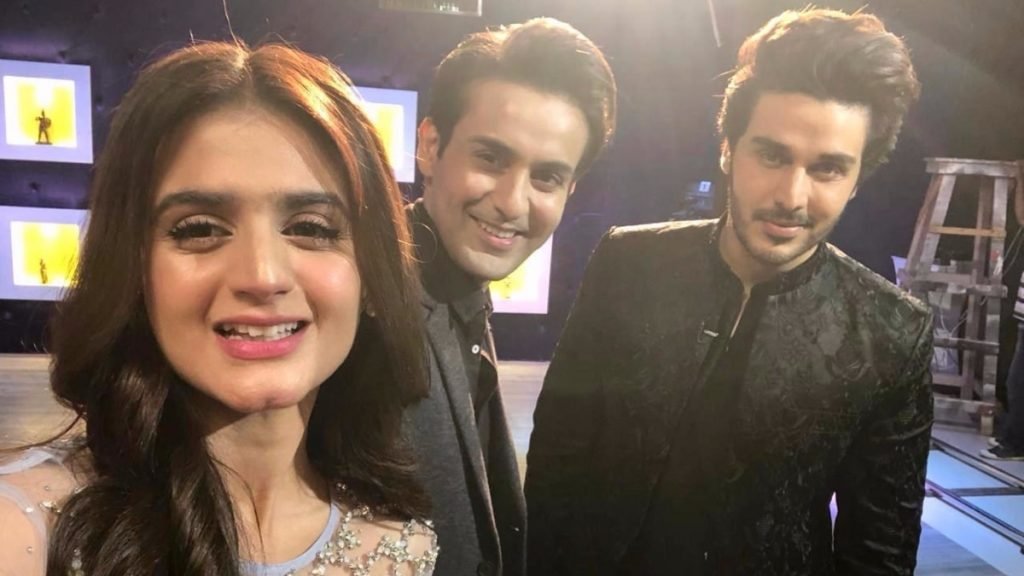
    Hira Mani is currently busy shooting for Fahad Mustafa’s next production co-starring Sami Khan and Sumbal Iqbal in Karachi. She even shared a glimpse of it on her Instagram account.

    The Mere Paas Tum Ho actress appeared on Ahsan Khan’s show where she made many interesting statements in jest. On being asked to give a message for the Prime Minister Imran Khan, Hira answered, “Haan waise jaa tujhay maaf kiya”. When the host asked her the reason of this statement she answered that she is forgiving him for his taxation policies. The phrase is from their hit OST of drama serial, Do Bol.

    Hira’s co-star from Do Bol, Affan Waheed suggested these answers to her throughout the segment. The dynamic duo is currently being seen together on HUM TV’s Yun Tu Pyar Hai Bohut.

  • ‘Muslims living in the western world are the ones who suffer from Islamophobia’: PM Khan

    ‘Muslims living in the western world are the ones who suffer from Islamophobia’: PM Khan

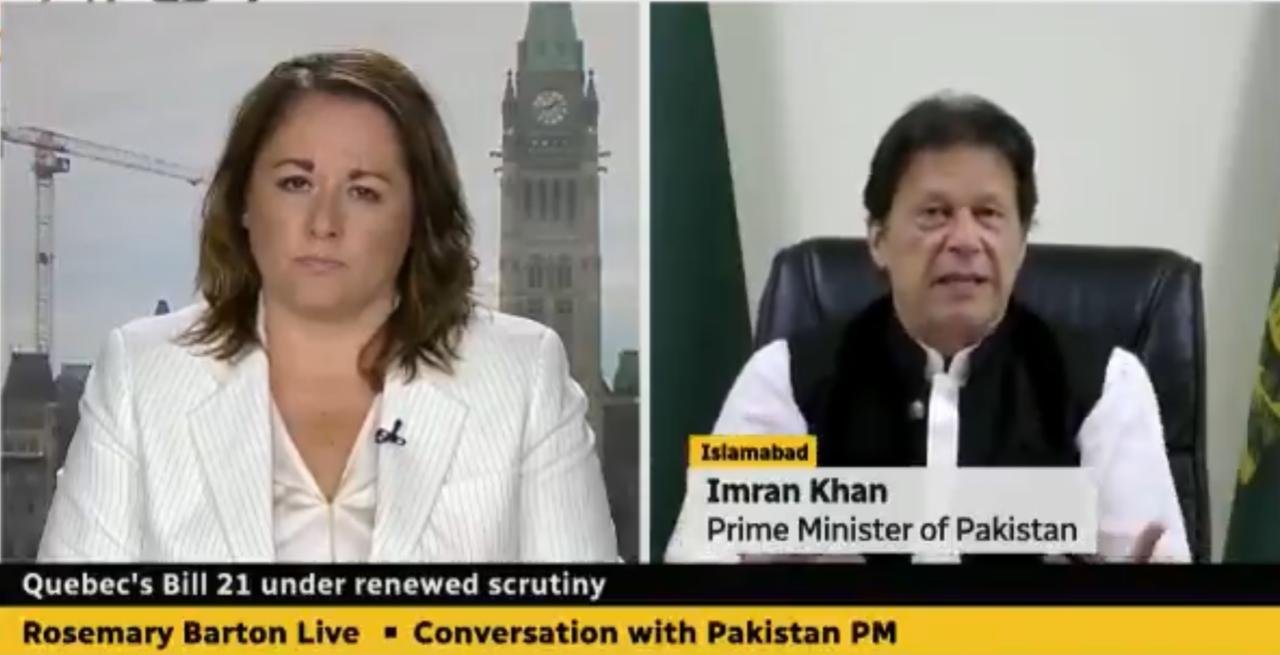
    In an interview with CBC’s chief political correspondent Rosemary Barton, Prime Minister (PM) Imran Khan said he had been trying to tell the world community that the Muslims living in the western countries are the ones who suffer from Islamophobia, and “we regularly hear about these incidents and many of them are not reported and our embassies tell us about those. So this gap needs to be closed”.

    The prime minister highlighted the grave issue of Islamophobia in the western world, which recently claimed the lives of four members of a Pakistan-origin family in Ontario last week.

    “Everyone is shocked [in Pakistan], because we saw the family picture, and so a family being targeted like that has had a deep impact in Pakistan,” PM Khan said.

    The prime minister said the use of the term “Islamic radicals” indicates there is something wrong with the religion, which radicalises people. Contrary to this, terrorism has no religion as extremists are found in every society, he added.

    Replying to a question about what should the governments do to shut down hate material, the prime minister called for strict action against online hate because such websites divide humanity by creating hatred through hate material.

    He further said that he “mostly agrees” with Trudeau and his position on extremism, but also expressed concern about some Canadian laws that he believed were contributing to Islamophobia.

    He asked as to why it became a big issue when someone wears a hijab (head scarf) or grows a beard in the west. “People objecting to hijab and a beard is quite bizarre for me. In liberal democracies, why is this an issue?”

    He described Quebec’s Bill 21 — which banned public servants, including teachers and police officers from wearing religious symbols at work — as a form of “secular extremism” that led to intolerance against Muslims.

    “I find this law secular extremism as it really is against, you see the whole idea behind secularism is liberalism, you want human beings to be basically free on how and the way they want to dress up as long as it doesn’t cause pain or hurt others. This is how I understand how liberalism is. If some cover their hair or their head, why has it become such a big issue,” he contended.

  • Demystifying Budget 2021-22

    Demystifying Budget 2021-22

    This year’s budget held special significance for the Pakistan Tehreek-e-Insaf (PTI) government, as many viewed it as the last opportunity for the incumbent government to show its mettle. The last two to three years were marred by the economic slowdown, the Covid-19 pandemic, and high inflation. If this were to continue, it could take a toll on PTI’s vote bank in the next election and therefore a course correction was in order. But no one expected that such course correction would come in so swiftly. Hafeez Shaikh was let go, apparently on his insistence on electricity tariff increase, and Shaukat Tarin was sworn in as the new finance minister.

    Soon after, this year’s growth estimates took everyone by surprise. Pakistani economy turned out to be much more resilient to the pandemic, but it is hard to ignore the role played by the Covid stimulus package, smart lockdowns and rapid vaccinations. Pakistan is once again back on the growth trajectory.

    While it was critical to sustain this rapid recovery, we were also facing tough IMF conditionalities, which if fully implemented, could very well slow down the economy once again. While no one would disagree on the need for fiscal discipline proposed by IMF, many would question its timing, scale, and modus operandi. 

    More than anyone else, it’s the politicians who clearly did not have time for a long economic cycle to run its course. They knew that they were fast running out of time and would have to go back to their voters in 2023.

    But to give credit where it’s due, the government held its end of the bargain and has come up with an excellent budget, perhaps the best that’s possible within the given constraints. It is interesting to see that so far no one has criticised the direction of the budget, and even the worst of the critique has been about the government’s ability to pull it off.   

    So what’s so great about this budget?

    First and foremost, the budget has introduced a number of proposals to support industry, businesses and investors. In particular, the budget has brought good news for construction, automobile, information technology and a number of other sectors. The budget includes reduction or exemption of duties on raw materials and inputs for various sectors such as electronics, pharmaceutical, textiles, footwear, paints, etc. Export of services for the IT sector have been zero-rated, while zero-rating has also been proposed for local supplies or import of raw materials, components, parts and plant and machinery for registered exporters authorised under Export Facilitation Scheme, 2021.

    The construction sector amnesty scheme has been extended by another six months, which will have a positive impact on cement and all construction-related industries. A number of incentives have been granted on electric vehicles including exemption of sales tax on CKD kits, while sales tax on small domestically assembled cars has been reduced. A number of generous incentives have also been introduced for the planned special technology zones. Lastly, the capital gains tax (CGT) has also been reduced on sale of securities that is likely to further support a rapid stock market recovery. 

    The budget has also introduced a number of incentives for the SMEs, which brings the spotlight on the long-ignored segment. A separate scheme of taxation is proposed for SMEs, giving them flexibility to be taxed either on their profitability or turnover. The threshold for levy of minimum tax (individuals/AOPs) has been enhanced, while the threshold for annual turnover to qualify as cottage industryhas been increased from Rs3 million to Rs10 million. The budget also includes proposals like common bonded warehousing, introducing a one-page tax return for SMEs, etc. that will have a positive impact on the small and medium-sized businesses. 

    One the taxation side, the budget 2021-22 promises to bring a major cultural transformation. After many years, we are again heading back to self-assessments, which will bode well for the businesses and will prevent harassment by tax officials. The budget also includes deletion of 12 withholding taxesincluding that on banking transactions and air travel. Electronic processing and issuance of refunds is also promised to facilitate businesses, whereas the arbitrary powers of the tax officials have been curtailed in many cases. 

    On the development side, the budget has increased the size of public sector development programme (PSDP) by a massive 38% increasing it to Rs900 billion. The national PSDP target is also set at Rs2.1 trillion (about 61 per cent higher than the last year). Such magnitude of increased spending is likely to help stimulate growth.

    Then comes the Ehsaas programme, for which the government has made a generous allocation of Rs260 billion. The government is also planning to give interest-free loans, provide free technical trainings and other initiatives for 4-6 million families at the bottom of the pyramid. The government has also allocated $1.1 billion for Covid-19 vaccination and set an ambitious target of vaccinating 100 million people by June 2022. In addition, the subsidies for power sector have been increased, aiming to minimize the need for tariff increases during the year. 

    All in all, these measures are likely to boost business confidence significantly and will stimulate growth, hopefully beyond the set target of 4.8 per cent. 

    However, there are a few things that need to be kept in mind. First is the ambitious revenue target of Rs5.8 trillion next year, which amounts to 24 per cent increase over this year. Soon after introducing the budget, the government had to retrack its proposal on taxing the cellular calls and internet usage, whichwould take away about Rs100 billion from the estimated revenues and would have to be compensated from elsewhere. In addition, the government foresees about Rs242 billion coming in from administrative measures. Although there is a plan to achieve this target through bringing e-commerce retailers within the tax net, installing POS machines at retailers and providing incentives to general public to demand sales tax receipts, this would need a strong management push throughout the year. Similarly, the public should also expect increase in petroleum prices to meet the Rs610 billion targetfor Petroleum Development Levy. Unless the global oil prices start receding, this would be passed on to the public. 

    The negotiations with IMF is another area which needs some attention. With this ambitious budget, the IMF program is likely to be affected. This in turn may impede our ability access funding from other sources. Therefore, an amicable settlement with IMF, if not immediately then in a few months, is critical. 

    Lastly and most importantly, comes the question of whether this growth is sustainable. While we’ll only get to know thisin due time, there are some good measures in place to support the industry targeting import substitution. Any consequent dip in imports, in the medium term, continued healthy remittance inflow on the back of FATF-action plan, and a realistic exchange rate will definitely help in averting a future balance of payment crisis. 

    For now, it seems that Pakistan is finally out of the woods and the next 2-3 years are going to witness some decent growth.