Tag: incentives

  • Pakistan’s pharma industry exports soar to record-breaking $713 million in FY2022-23

    Pakistan’s pharma industry exports soar to record-breaking $713 million in FY2022-23

    Pakistan’s pharmaceutical industry has experienced an impressive surge in exports, reaching an all-time high of $713 million during the fiscal year 2022-23. The remarkable boost in exports can be attributed to the increased demand for surgical and medical equipment, as well as pharmaceutical products.

    The data reveals that surgical and medical equipment exports accounted for $407 million, while drugs and pharmaceutical products contributed $306 million to the export value. Surgical equipment exports witnessed a notable increase of 6.03 per cent, while there was a substantial growth of 25.16 per cent in pharmaceutical product exports.

    Sources indicate that the volume of pharmaceutical exports witnessed a remarkable rise of 98.6 per cent during the fiscal year 2022-23. Approximately 51,964 metric tons of medicines and medical devices were exported, demonstrating the industry’s expanding reach.

    In terms of specific quantities, Pakistan exported 26,054 metric tons of medicines and medical equipment, contributing significantly to the impressive growth in the pharmaceutical sector’s export value. The notable growth of 25.3 per cent in pharma export value further highlights the industry’s success in the international market.

    Looking ahead, sources report that the pharma industry has set an ambitious export target of $1 billion for the fiscal year 2024-25, indicating the industry’s determination to continue its upward trajectory.

    According to ARY News, industry insiders attribute this substantial increase in exports to the incentives provided to the pharmaceutical sector. The government’s support and facilitation have played a crucial role in boosting the industry’s growth and enabling it to compete effectively on the global stage.

    Furthermore, sources highlight the noteworthy surge in exports of Pakistani medical equipment, particularly during the challenging times of the COVID-19 pandemic. The demand for locally produced ventilators witnessed a significant rise as Pakistan began manufacturing its own ventilators to address critical needs during the health crisis.

    The thriving pharmaceutical industry and its impressive export performance signify Pakistan’s growing influence in the global healthcare market. With continued support from the government and a commitment to innovation and quality, the country’s pharma sector is poised for further growth and success in the years to come.
  • Pilgrims paying in US dollars to receive special discount for upcoming Hajj

    According to recent reports, the government is planning to provide incentives to citizens who choose to pay their dues for the upcoming Hajj in US dollars.

    Additionally, the Ministry of Religious Affairs has allocated a 25 per cent special quota for pilgrims who deposit the amount in dollars, as per APP.

    This move is a response to the government’s efforts to strengthen the fast-dwindling foreign reserves. According to a report by SAMAA on Friday, pilgrims who pay their application fees and other charges in US dollars will receive a special discount.

    SAMAA also cited the draft of the Hajj Policy 2023, which states that pilgrims will be given the option to choose the currency in which they wish to pay. Those who choose to pay in dollars will be exempted from the balloting process under the new Hajj policy, as reported by APP.

  • Here are the latest income tax rates and slabs for salaried class

    Here are the latest income tax rates and slabs for salaried class

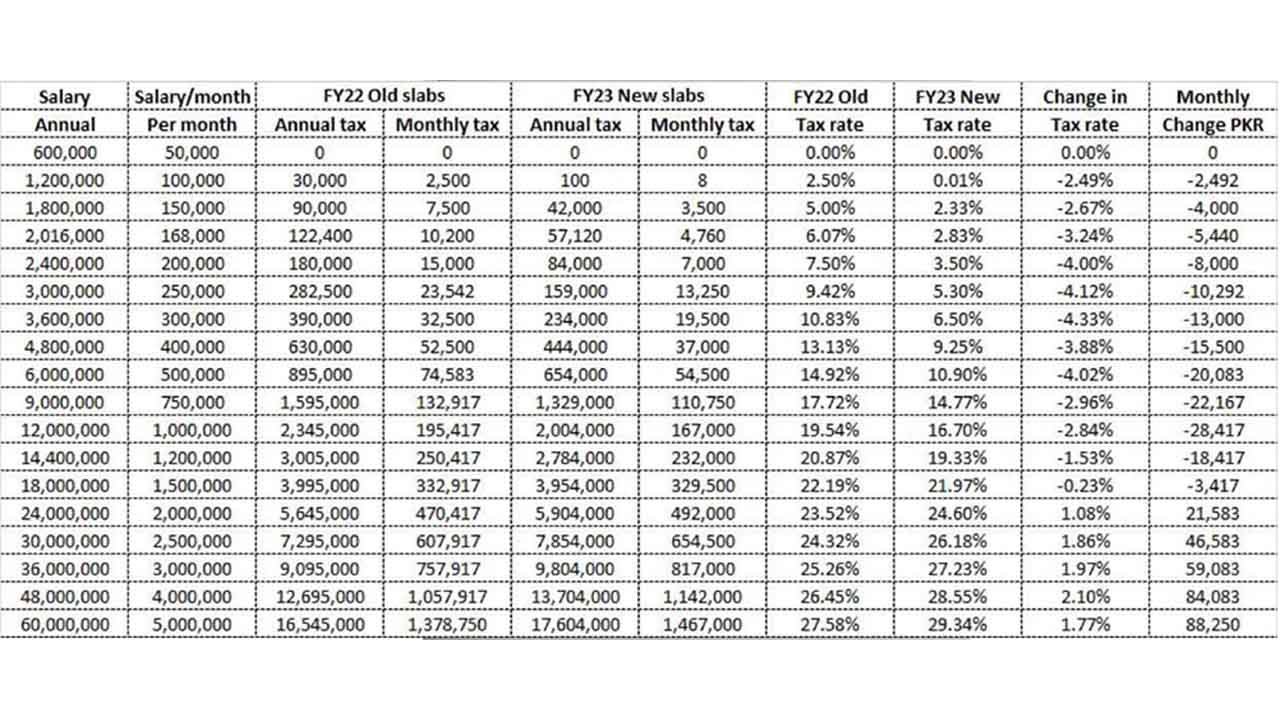
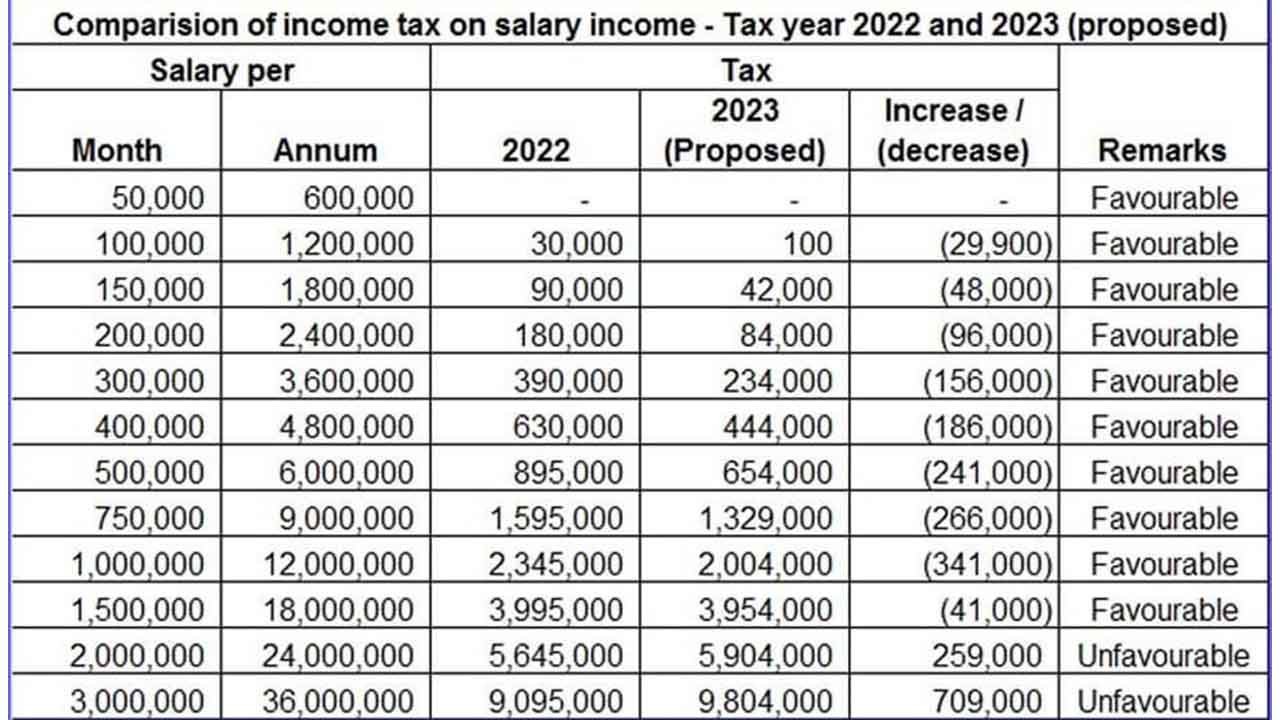
    In the budget for fiscal year 2022-23, the government has exempted those earning up to Rs100,000 per month from paying income tax, up from Rs50,000 last year.

    For the salaried income group, the latest budget is a mishmash as the government reduced tax rates and the number of slabs while eliminating available credit through the omission of deductible allowance for profit on debt and tax credit for investment in shares, health insurance, and pension funds.

    Moreover, the government has released a revamped list of income tax brackets for salaried employees. There were previously 12 slabs, which have now been shrunk to seven.

    Here are the new slabs:

    1. For annual incomes less than Rs600,000 (below Rs50,000 per month)
    2. For a yearly income of Rs600,000-Rs1.2 million (Rs50,000 to Rs100,00 per month).
    3. For annual earnings of Rs1.2m-2.4m (Rs100,000 to Rs200,000 per month)
    4. For annual earnings of Rs2.4m-3.6m (Rs200,000 to Rs300,000 per month)
    5. For earnings of Rs3.6m-6m (Rs300,000 to Rs500,000 per month)
    6. For annual earnings of Rs6m-12m (Rs500,000 to Rs10,00,000 per month)

    For annual earnings of more than $12 million (more than $100,000 per month), income tax is not to be levied on people earning between 0 and Rs600,000 per year (where income from salary exceeds 75 per cent of taxable income). A nominal amount of Rs100 will be subtracted per year from those earning between Rs600,000 and Rs1.2 million.

    Employees getting paid more than Rs1.2 million but less than Rs2.4 million per year will be levied 7 per cent of the amount that exceeds Rs1,200,000 in the third slab.

    An employee getting paid Rs1,400,000 per year will be levied 7 per cent of Rs200,000 (Rs1,400,000 minus Rs1,200,000 since that is the amount exceeding Rs1,200,000).

    As per the latest budget resolution, the government recommended an income tax rate of 20 per cent on small business earnings, 42 per cent on banking, and 29 per cent on related companies.