Rubina Ashraf is not just one of the most talented actresses to have ever graced Pakistani silver screens but also one of the smartest. The veteran star has revealed her financial acumen in a recent interview and all we can say is, she is so much better at saving than we are.
‘Hasna Mana Hai’ host Tabish Hashmi asked Ashraf on a recent episode, “So those who earn money through acting, we often see that our actors are very wealthy during their prime, with big cars and large mansions, but then suddenly there’s a decline and they’re struggling to find money for medical treatment. So, do you manage your finances wisely? Do you invest the money you earn or spend it?”
Rubina replied, “When I earn 100 rupees, I make sure to spend only 25 rupees, but due to inflation however, I save 50 percent of what I earn. I’ve been diligent about financial planning and believe in saving for the future. This has been my approach since the beginning of my career.”
We wish we had that type of discipline.
Currently Rubina Ashraf is starring in ‘Kia hai drama’ where she reviews Pakistani serials.
In a recent consumer-based study conducted by Pulse Consultant in Pakistan, concerning findings have emerged regarding the financial state of individuals across the country. The study, which encompassed 1,180+ respondents from the top 10 cities of Pakistan, aimed to understand the ability of individuals to meet their monthly expenses in relation to their current income. The results shed light on the economic challenges faced by a significant portion of the population.
The study revealed that a staggering 60 per cent of respondents reported an inability to fulfill their monthly expenses with their existing income. This indicates a considerable strain on individuals’ finances, leading them to struggle to cover their essential needs. Among these respondents, both male and female participants voiced similar concerns, with 59 per cent of males and 68 per cent of females expressing difficulties in meeting their expenses.
On the other hand, 40 per cent of the respondents claimed that their current income adequately covered their expenses. However, further analysis of this group revealed some noteworthy insights. Of those who reported their expenses were being met, only 28 per cent claimed to save money from their current income, while the remaining 72 per cent stated that they were unable to save any funds. Interestingly, female respondents seemed to face greater challenges in saving money, with 82 per cent of them reporting an inability to do so, compared to 71 per cent of their male counterparts.
Among the 60 per cent of respondents who struggled to meet their expenses, several coping mechanisms emerged. For 37 per cent of them, borrowing money became a necessity to bridge the financial gap. Notably, a higher proportion of males (39 per cent) resorted to borrowing, compared to females (29 per cent).
Additionally, 22 per cent of those facing financial difficulties reported engaging in additional part-time employment to supplement their income. This was more prevalent among males (39 per cent) who often bore the responsibility of supporting their families financially, compared to females (29 per cent).
Moreover, 40 per cent of respondents stated that reducing expenditures became their only viable option. Nearly half of the women (46 per cent) reported resorting to this measure, while 38 per cent of men followed suit.
The study’s findings paint a concerning picture of the financial landscape in Pakistan, with a significant portion of the population struggling to make ends meet. The inability to meet monthly expenses can lead to increased financial stress, limited access to basic necessities, and hindered economic growth for individuals and the nation as a whole.
Addressing these challenges will require comprehensive efforts from both the government and private sector. Policymakers should focus on initiatives that promote economic growth, job creation, and income equality. Additionally, there is a need for financial literacy programs to empower individuals with the knowledge and skills necessary to manage their finances effectively and make informed decisions.
Furthermore, it is crucial for employers to offer fair wages and employment opportunities that align with the needs of the population. By providing stable jobs and suitable remuneration, individuals can have a better chance of meeting their expenses and improving their overall financial well-being.
Ultimately, the findings of this consumer-based study highlight the pressing need to address the financial struggles faced by a significant portion of the Pakistani population. Through concerted efforts and targeted interventions, it is possible to alleviate the burden of financial hardship and foster a more financially inclusive and prosperous society for all.
Senior investigative journalist Shahid Aslam took to Twitter to announce his release from the custody of the Federal Investigation Agency (FIA) for his alleged part in leaking the personal tax data of former army chief General (retired) Qamar Javed Bajwa.
In a series of tweets, he thanked his colleagues within the media community.
He said, “Thanks everybody including the media community particularly @UmarCheema1 @AzazSyed @matiullahjan911 @Fahdshehbazkhan @AmirZia1 @AnsarAAbbasi @AsadAToor and my lawyer @MianAliAshfaq for the unprecedented support on my illegal arrest by @FIA_Agency and those who had ordered.”
After Aslam’s arrest, many journalists came forward for his defence.
جنرل باجوہ کےاثاثوں کی تفصیلات منظرعام پرآنےکامعاملہ۔
صحافی شاہد اسلم 5دن سےگرفتار۔حکومت بدل گئی مگرظاہراورغیرظاہرقوتوں کی فسطایت برقرار۔رانا ثناءکےماتحتFIAکی مجرمانہ حرکت اوراپوزیشن میں صحافتی آزادی کی دعویداروزیراطلاعات مریم اورنگزیب کی مجرمانہ خاموشی
On January 18, the Islamabad sessions court granted bail to him after being in custody for four days.
On January 14, Aslam was sent on a two-day physical remand to FIA over his alleged involvement in this matter.
‘Dehshatgardon ki tarhaan mujhe uthwaya hai’; journalist who was allegedly involved in Gen Bajwa’s tax data leak lashes out
Bol News journalist Shahid Aslam, talking to the media, has categorically said that he has nothing to do with former army chief General (retd) Qamar Javed Bajwa’s tax data leak.
The journalist directly blamed Director General (DG) Federal Investigation Agency (FIA) Mohsin Butt for picking him up from his house “like a terrorist”. According to him, 20-25 men were sent to pick him up.
“They [FIA] have mentally tortured me”, Aslam said.
Aslam alleged that Mohsin Butt was given orders from higher up that he had to bring the journalist in.
On Monday, a local court in Islamabad sent Aslam to jail on judicial remand.
Journalist who was allegedly involved in Gen Bajwa’s tax data leak is handed over to FIA
On Saturday, Aslam was sent to a two-day physical remand to FIA over his alleged involvement in this matter.
Judicial Magistrate Umar Shabbir of the District and Sessions court announced the decision to hand over the journalist to the agency. During the proceedings, the reporter denied all charges against him, saying that there is no evidence against him.
However, the prosecutor said the proof is in Aslam’s mobile phone and laptop, which he is not providing to the investigators. He claimed the journalist played the role of “facilitator” in the leak.
Earlier that day, the agency arrested Aslam from Lahore and produced him in court.
In November, a report by investigative news website FactFocus accused the army chief and his family of amassing assets worth Rs12.7 billion over the past six years. FactFocus has claimed that after the publication of the story, the traffic on its site was “disrupted” and the website had been “banned”.
At the time, Finance minister Ishaq Dar had said that the leak was “clearly violative of the complete confidentiality of tax information that the law provides”.
He also shared that he has received the interim report related to the leak of Gen (retd) Bajwa’s income tax records, adding that the authorities had traced some of the people involved in the act.
Since its launch in October 2019, e-Pay Punjab, an online payment solution developed by the Punjab Information Technology Board (PITB) and the Punjab Finance Department, has collected over Rs90 billion in tax revenue through 17 million transactions.
As per details released by the PITB on Friday, e-Pay Punjab has collected a total of Rs57 billion in sales tax, Rs11.5 billion in token tax, Rs9 billion in property tax, Rs4 billion in traffic challans, and Rs440 million in vehicle transfers.
It’s worth noting that e-Pay Punjab now accepts online payments for 23 taxes and levies from ten different departments. Its 1-Link network integration with the State Bank of Pakistan (SBP) and all scheduled banks makes it a secure and dependable payment channel.
The e-Pay Punjab application, which has over 1 million downloads, generates a unique PSID number that is accepted by banks across Pakistan through their various channels, including Internet and Mobile Banking, ATMs, and physical branch visits.
It is also a secure, smart, and fast online payment option for the annual Token Tax. Vehicle owners can use e-Pay Punjab to pay their Token Tax from the comfort of their own homes.
The app’s primary objective is to make it convenient for the government to gather revenue in the form of taxes through a simple solution. With Pakistan’s first digital tax aggregator, the app demonstrates how Pakistan and its government are rapidly integrating financial technology (fintech) into their processes.
Prime Minister (PM) Shehbaz Sharif emphasised the importance of drafting an economic strategy during the day-long Pre-Budget Business Conference on Tuesday, stating that all stakeholders should work together to develop a framework for attaining economic growth.
During his speech, the PM stressed the importance of financial management in order to boost exports and agricultural yields. The meeting was attended by senior economists, industrialists and was organised by the government to explore avenues of consensus-based economic initiatives, according to APP.
“All of us will have to move collectively. The government will need guidance from stakeholders and experts. The government will form a taskforce on agriculture and exports for formulating comprehensive plans,” he said.
PM Shehbaz stated that his government had about 15 months to implement short and medium-term economic initiatives.
He was disappointed that Pakistan was lagging behind other countries, despite the fact that the rest of the world had excelled by following their development plans. He claimed that Pakistan was endowed with talented individuals capable of replicating India’s success in the IT sector.
PM Shehbaz announced that he had assigned Minister of Information Technology Aminul Haque the objective of increasing IT exports to $15 billion in the next two years. “We cannot progress until we set ambitious targets,” he stressed.
Syed Amin Ul Haque pledged on Tuesday to increase information technology exports to $5 billion by the end of 2023.
For the coming fiscal year, several IT and telecommunications programmes have been proposed in this regard.
According to sources, these projects include 31 existing and two new ones, for which the Pakistani government would give Rs4,438.696 million and foreign aid will provide Rs1,042 million.
Budget allocation for IT sector
Reportedly, an amount of Rs100 million is proposed for IT professional certification through the Pakistan Software Export Board, while Rs80 million is planned for Crime Analytics and Smart Policing. In Azad Jammu and Kashmir and Gilgit-Baltistan, Rs50 million has been suggested for demand-driven industry, while Rs179 million has been earmarked for the building of a data centre to provide cloud-based services.
PM Shehbaz warned that development plans could not be implemented unless political stability was achieved. The premier also stressed the importance of concentrating on exports and developing the agricultural sector.
He went on to claim that he was aiming to ‘fix’ friendly country relations that had deteriorated during the previous administration’s tenure. “I have invited China, Japan, Turkey, and other countries to invest in Pakistan,” he said. He invited the corporate community to join him in this endeavour.
Meanwhile, Finance Minister Miftah Ismail stated that the government will require $41 billion in the next 12 months and that he is ‘confident’ that this can be achieved.
The Shehbaz Sharif government, he added, has re-engaged with the International Monetary Fund (IMF). “We spoke with them and are extremely optimistic that we will reach an agreement with the IMF soon. That is something we are extremely certain about”.
Moreover, he explained that the present coalition administration had made difficult measures to help the economy stabilise. “It is difficult for any prime minister to authorise a fuel price hike of twice the amount we have, but we were losing Rs84 per litre on diesel and Rs69 per litre on petrol”.
On May 15, the provincial president of the Muttahida Labour Federation (MLF) in Peshawar, Muhammad Iqbal stated that the current price hikes had made life difficult for poor workers but the government had remained silent.
He remarked that the provincial and federal governments should enhance monthly wages and the Employees’ Old-Age Benefit Institution pension in relation to the country’s current price hikes and inflation, speaking during a protest gathering staged in honour of May Day here at Shobra Chowk.
The leader was of the view that workers had played a critical part in the country’s progress, but that each subsequent government had crushed them under one excuse or another. He claimed that the government and investors had teamed up to close down industrial units in the province as part of a well-planned plot.
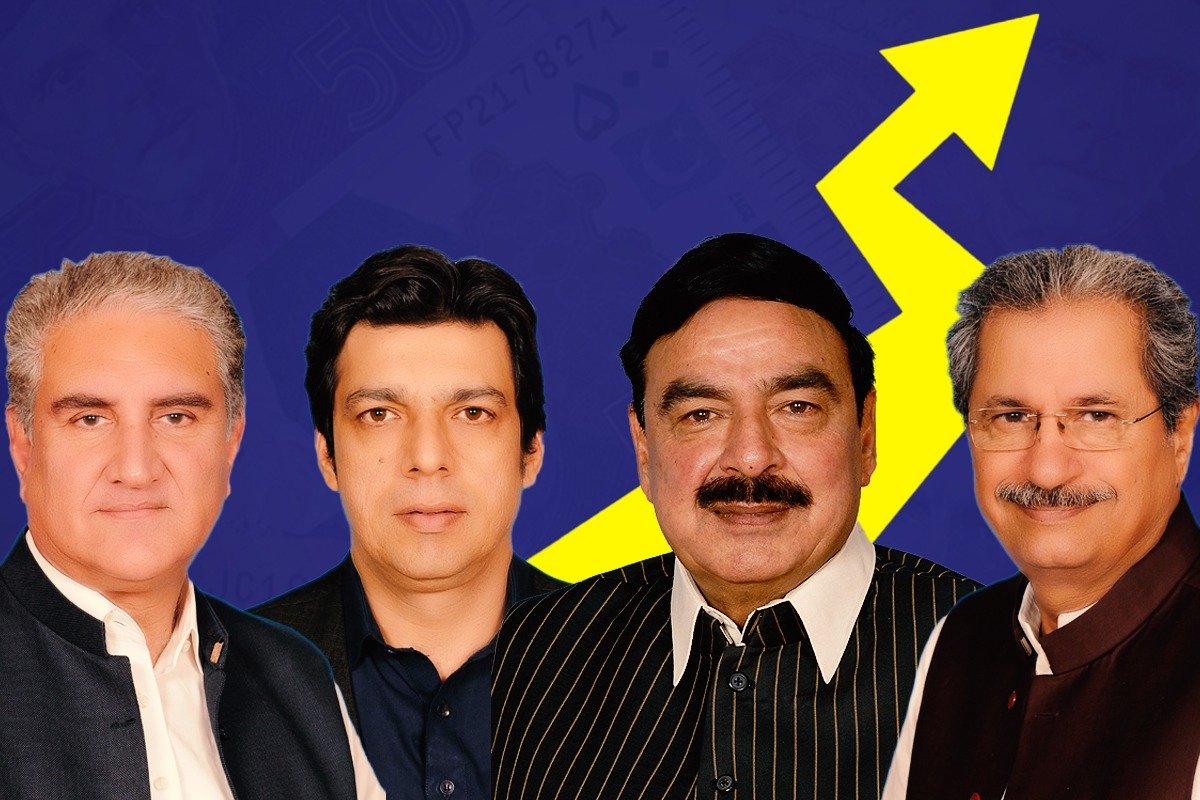
Official documents revealed that several members of Pakistan Tehreek-e-federal Insaf’s cabinet enjoyed gains in their fortunes during their term in parliament and as ministers, despite being elected on pledges of fighting corruption.
According toSAMAA TV, Shah Mehmood Qureshi and Sheikh Rasheed Ahmad, Omar Ayub Khan, Azam Khan Swati, Khusro Bakhtiar, Faisal Vawda, Shafqat Mehmood, Fehmida Mirza, Zubaida Jalal, Mahboob Sultan, and Tariq Cheema are among the listed former ministers.
Since select ministers received notices to explain their excessive wealth, the majority blamed weak wealth and asset declaration regulations, which did not contribute to increases in the valuation of assets overtime or the amalgamation of entities.
An inquiry into assets spontaneously declared before the Election Commission of Pakistan (ECP) and Pakistan’s tax authorities — primarily the Federal Board of Revenue (FBR) — by cabinet members who worked under former Prime Minister Imran Khan disclosed that plenty of of them saw a tremendous upsurge in their riches, with growth proportions primarily in the triple digits.
As per the official record, the ECP sent notices to at least six former ministers while they were still in government in 2019 and 2020, requesting them to clarify their wealth-related issues.
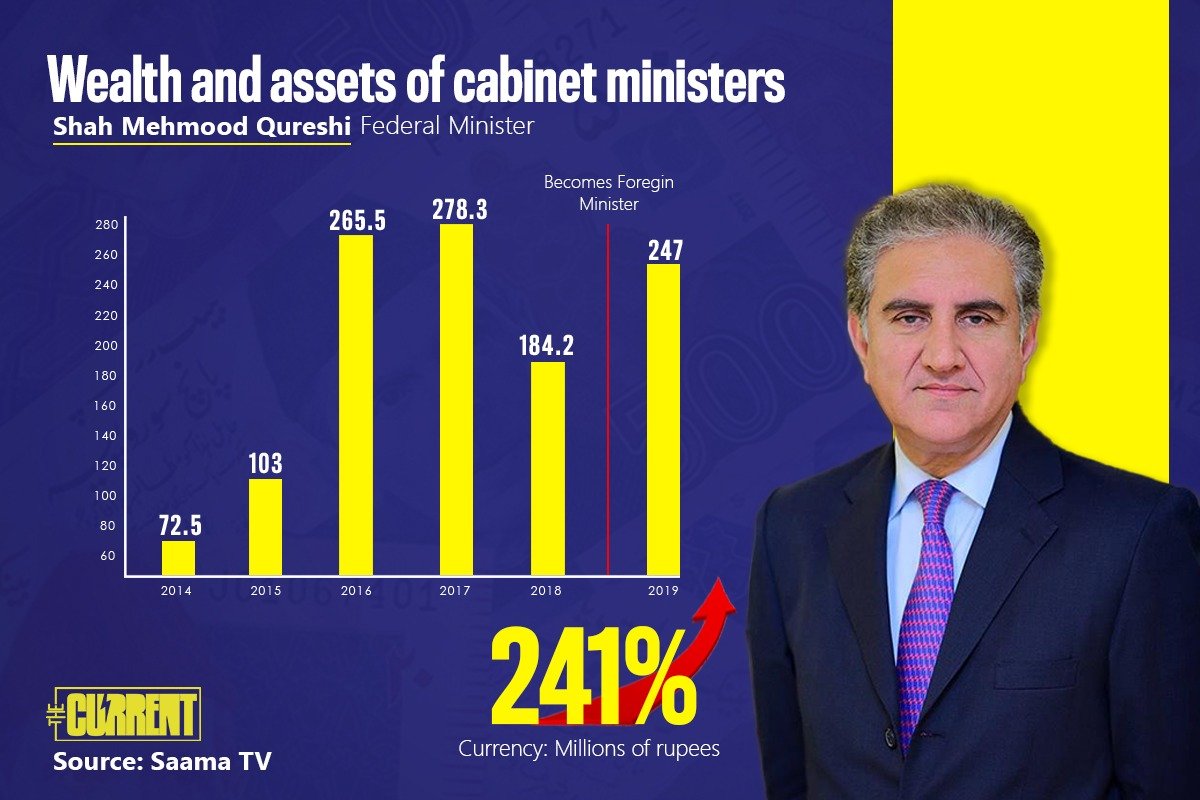
From 2014 to 2019, former foreign minister Shah Mahmood Qureshi, who has been a staple of the parliament for more than a decade and served twice in the federal cabinet in two different governments, had a 241 per cent growth in his wealth.
He and his wife held assets worth only Rs72.5 million in 2014, according to asset declarations he submitted to the ECP and the FBR. In the following three years, his assets nearly quadrupled, reaching Rs278.3 million, a 283.86 per cent increase over his wealth in 2014. Qureshi’s fortune dropped dramatically to Rs184.2 million in 2018, the year he returned to the Treasury benches, albeit with a new party, the PTI. However, while in power, it soon increased to Rs247.1 million in 2019, a rise of 240.82 per cent since 2014.
When questioned, Qureshi recounted how the worth of his assets had evolved over the years.
“The reason for the increase in assets was that during 2015-16, my wife received her share from the sale of property situated in Lahore, which had been gifted by her mother, and shares from sale proceeds of inherited property worth Rs169.6 million and Rs22.6 million,” he claimed. In October 2017, duplicates of sale deeds were handed to the ECP, according to the former minister.
“The ECP raised this observation too,” he said regarding the increase in his wealth, adding, “I and my dependent family members are all filers with the FBR”.
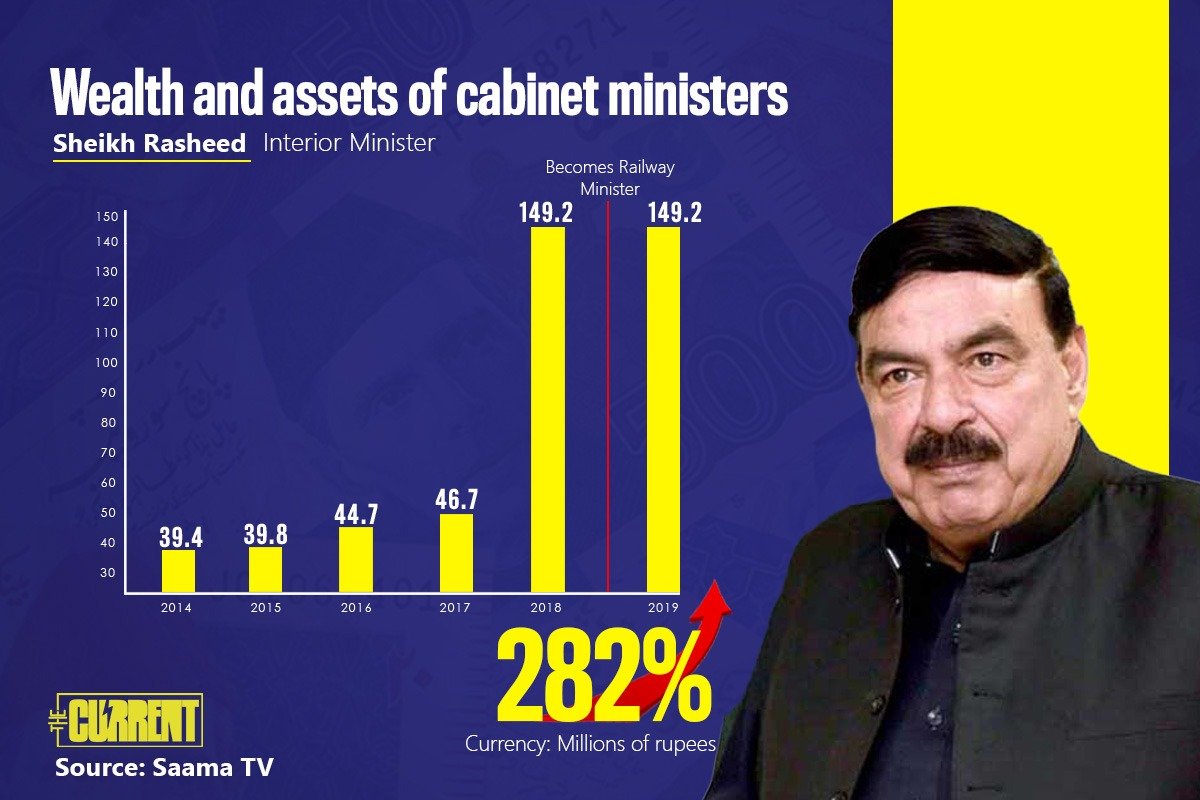
Sheikh Rashid, the former interior minister, watched his fortune increase by nearly 278.68 per cent between 2014 and 2019.
The financial disclosures for 2014 revealed that he only had Rs39.4 million in assets. Earnings climbed by Rs0.4 million to Rs39.8 million. His holdings steadily expanded over the next two years, reaching Rs44.7 million in 2016 and Rs46.7 million in 2017.
Conversely, in 2018, the time he was elected to power, his assets boosted by Rs100 million to Rs149.2 million. In 2019, there was no movement in reported assets. After inquired why his assets had suddenly changed, Rashid said that the discrepancy was due to an advance payment he had obtained for reselling a portion of land in 2018.
“I received Rs100 million as advance after making a deal of land to be sold last year, [2021],” he said, adding, “There is no such increase in my assets”. The former interior minister stated that the rise in his declarations submitted with the FBR and the ECP had been properly disclosed.
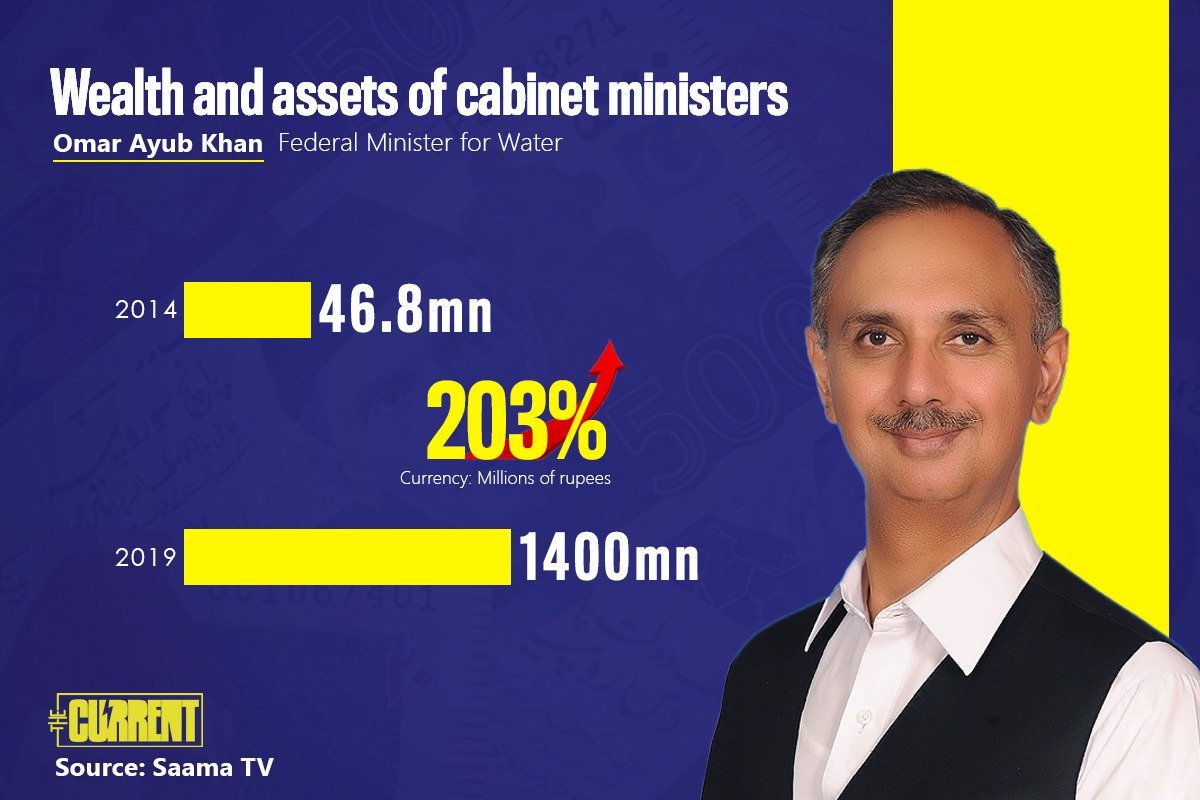
Between 2014 and 2019, the fortune of former federal minister of water Omar Ayub and his wife jumped by 203 per cent.
As per Ayub’s filings to the ECP and FBR in 2014, he and his wife held assets worth Rs461.8 million. This comprised Rs132 million in assets held by his wife and Rs329 million in assets owned by the minister. This value had risen to Rs1.4 billion by 2019. Surprisingly, while his wife’s holdings increased slightly to Rs201 million, Ayub’s assets increased to Rs1.2 billion. Each has debts worth only Rs26.3 million, according to the disclosures.
As a result, the ECP expressed concerns about Ayub’s and his family’s unexpected surge in wealth.
“It was explained to the ECP in 2019 that it [increase in wealth] is because of group formation having no cash involvement,” Ayub said, confirming that the top poll body had issued him a notice on this subject. Ayub claimed that he owned shares in Nova Synpac Ltd. and NovaGene Pharmaceuticals Ltd., which increased in value by approximately Rs1.071 billion.
“My assets have decreased (excluding this group formation) since I took an oath as a minister because I resigned from my group,” he claimed, adding that the increase was due to the consolidation of all of his businesses under the group.
“This cannot be reflected in a declaration, which is always a reflection of statements submitted to the FBR and there cannot be any difference [between them] otherwise it would have been challenged there,” he explained.
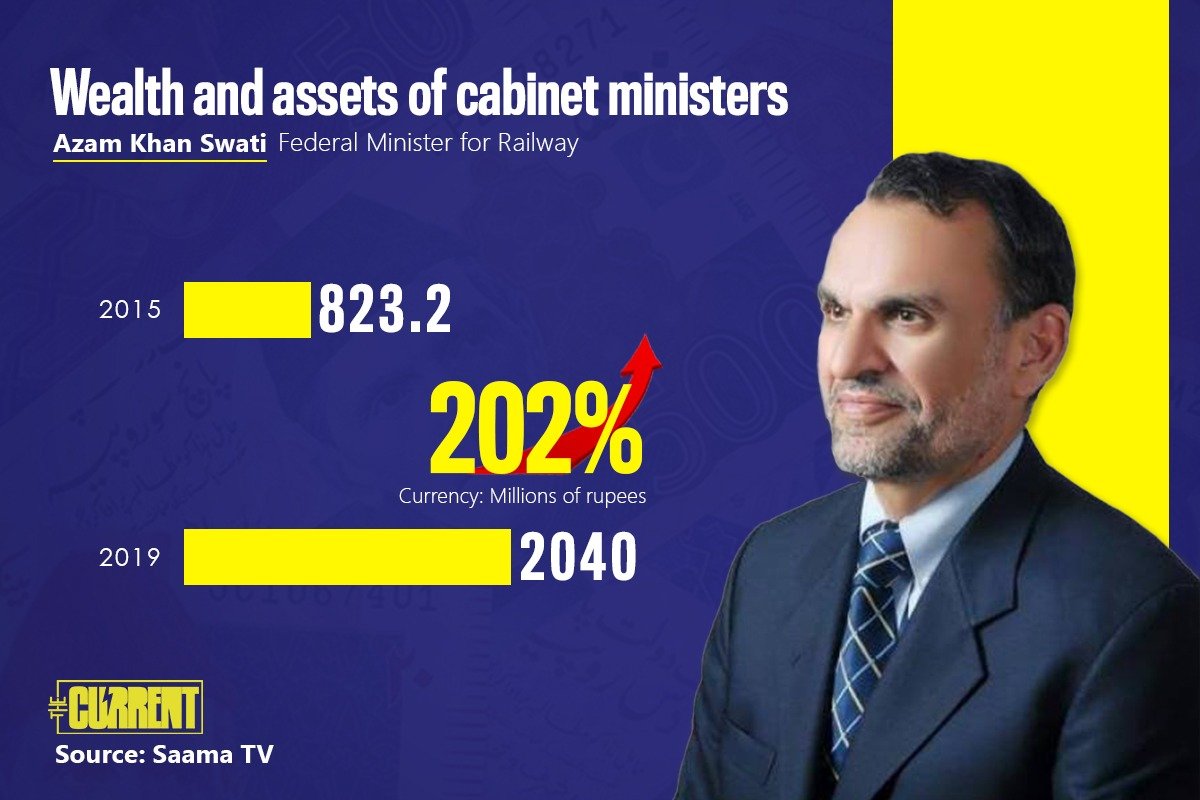
Azam Swati, the former federal railways minister, saw his fortune grow by 202 per cent from Rs823.2 million in 2015 to about Rs2.04 billion in 2019. He reported that his liabilities increased from Rs417 million in 2015 to Rs811 million in 2019.
“[Your] figures are wrong due to incomplete information being furnished before ECP by members and cabinet members owing to faulty legal requirements mentioned in ECP Act 2017,” he explained.
He further said that his situation was slightly unusual. “In Pakistan, I have no income and no business.” I am confident that our FBR wealth statement [filed] will be compared to ECP in 2019 [asset declarations],” he remarked, worried that the statistics may contain a few errors.
“ECP has no efficiency and capability to audit assets and liabilities,” he disclosed, adding, “We were making mistakes filing combined [wife and husband together]”.
“Now we have corrected the mistake and filed separately because the wife is not dependent,” Swati told SAMAA TV.
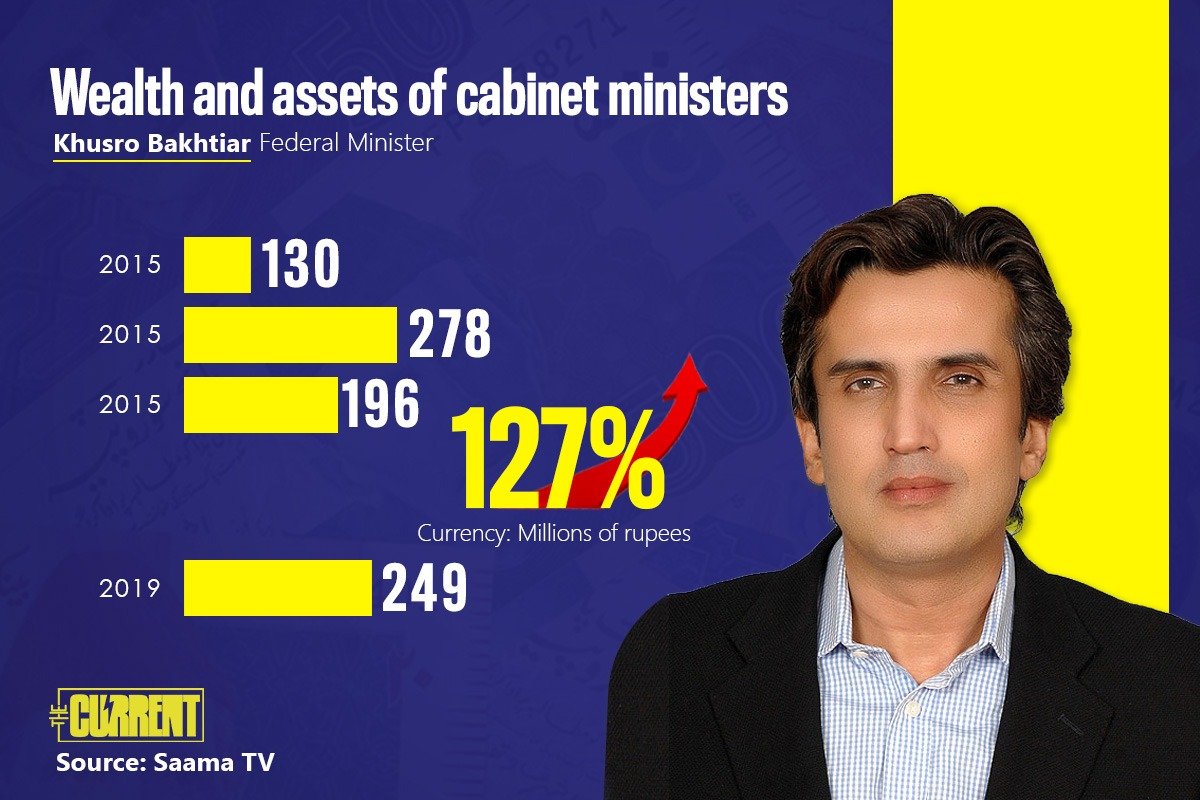
Khusro Bakhtiar, the former federal commerce minister, saw his fortune rise by 127.8% from Rs109.3 million in 2013 to Rs249 million in 2019. In 2014, he had assets of Rs130 million, which more than doubled to Rs278 million in 2015, shrank to just Rs196 million in 2016, and then surged again in the next three years.
“Increase in assets were mainly comprised of [various] sources during the year 2014 to 2019,” he told SAMAA TV, detailing that these sources included savings from agricultural income, proceeds from the sale of land worth Rs40 million, other sources which contributed Rs20 million.
Bakhtiar also claimed that he actually paid Rs27.5 million in agricultural taxes from 2017 to 2020, and that he owed Rs60 million in 2016.
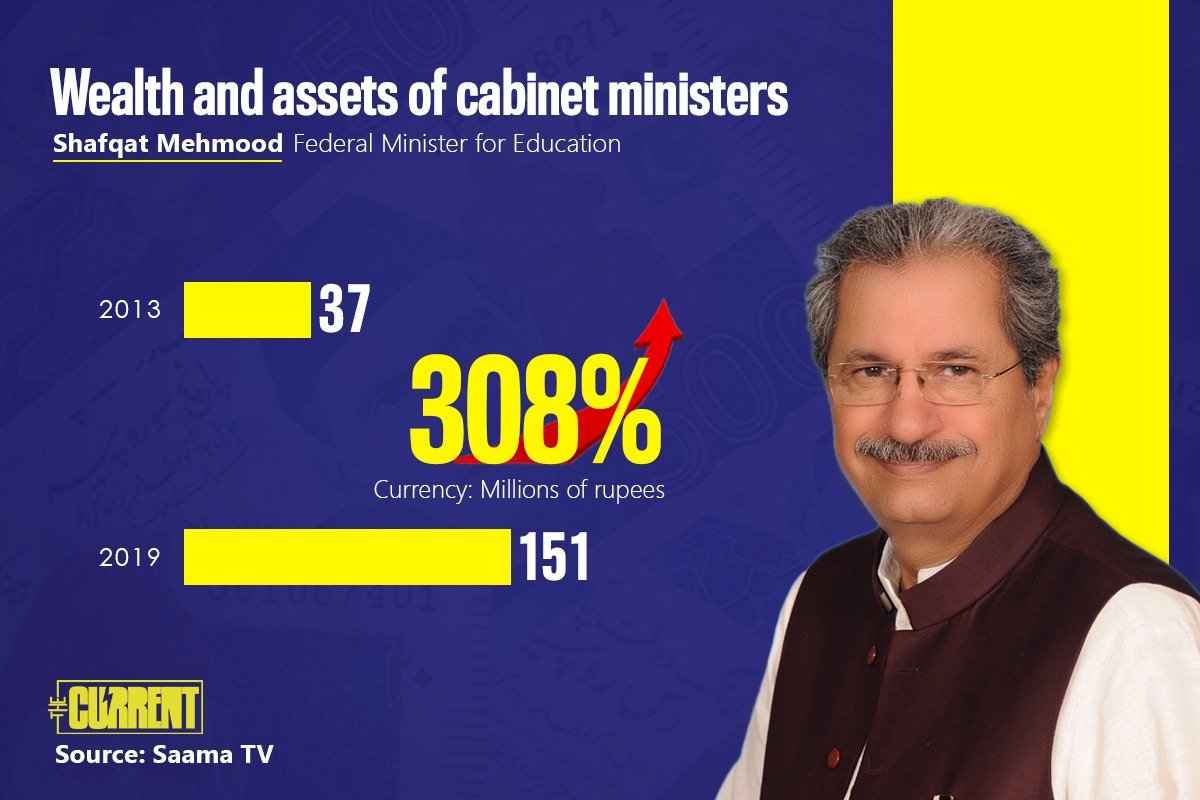
Former federal minister for education Shafqat Mahmood and his family had a 308 per cent growth in asset valuation between 2013 and 2019, making them one of the most successful federal ministers in terms of percentage increases. According to Mehmood’s filings, his and his family’s assets were valued at just Rs37 million in 2013, but had grown to Rs151 million by 2019.
“My assets have not changed since 2013 onwards,” Mehmood asserted, explaining “The change that you see is the cost re-evaluation from purchase price to market price”. The ex-minister further said that he has 360 kanals of hereditary land, a few more plots, and automobiles that he never assessed.
“There will, of course, be some variation regarding bank accounts. There will also be a slight difference in detail offered to FBR and ECP with regards to bank accounts,” he maintained. He went on to say that in his previous disclosure, he had combined the amounts in all of his bank accounts to present a single total.
“My wife is a distinct taxpayer because she works, but I have included her assets as well”, he explained.
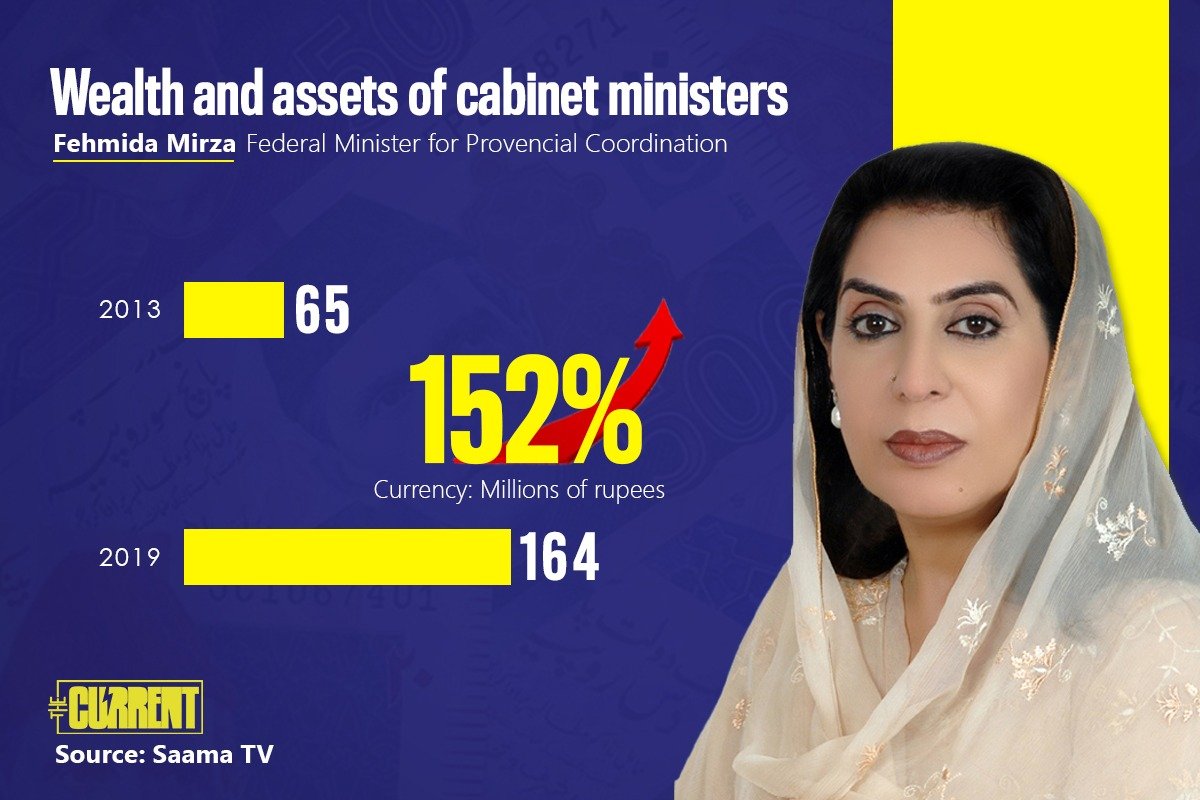
Fehmida Mirza, the former federal minister for interprovincial coordination, had a similar scenario, with her net worth rising from Rs65 million in 2013 to Rs164 million in 2019.
“I did not see any rise in my assets and wealth at all,” she told SAMAA TV. She did, although, reveal that she had sold some property in Pakistan in order to purchase a home in the United Kingdom.
“This new increase in my assets has already been declared with the FBR and the ECP,” she stated.
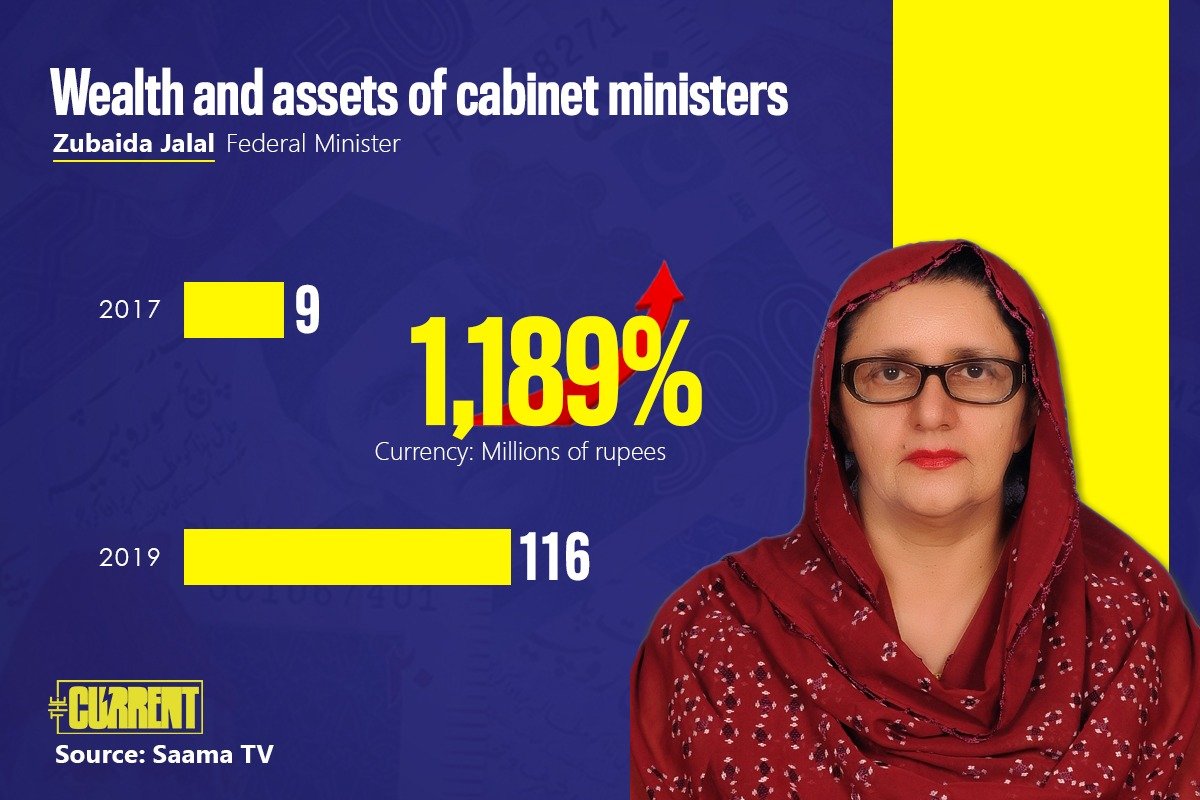
Contrary to the PTI’s cabinet’s millionaire members, one of the “weakest” members of the federal cabinet, former federal minister Zubaida Jalal and her husband, had a 1,189 per cent growth in their fortune in a short period of time. Their riches increased from Rs9 million to Rs116 million in 2019.
Jalal, on the other hand, described the quick spike in wealth as the outcome of changes in declaration requirements.
“There is no big difference in my assets’ declaration” she asserted while speaking to SAMAA TV. The value of immovable assets was not mentioned in data provided in past elections, she said, noting that the ECP declaration requirements changed over time.
“[We are] required to mention values of assets in the asset declaration for this time,” she stated. She explained that the variations in asset values were attributable to market forces working on enterprises.
“Ups and downs will keep happening [in mining operations and business],” she said, as she reminded that her husband owns the National Coal Mining Company since the 1960s.
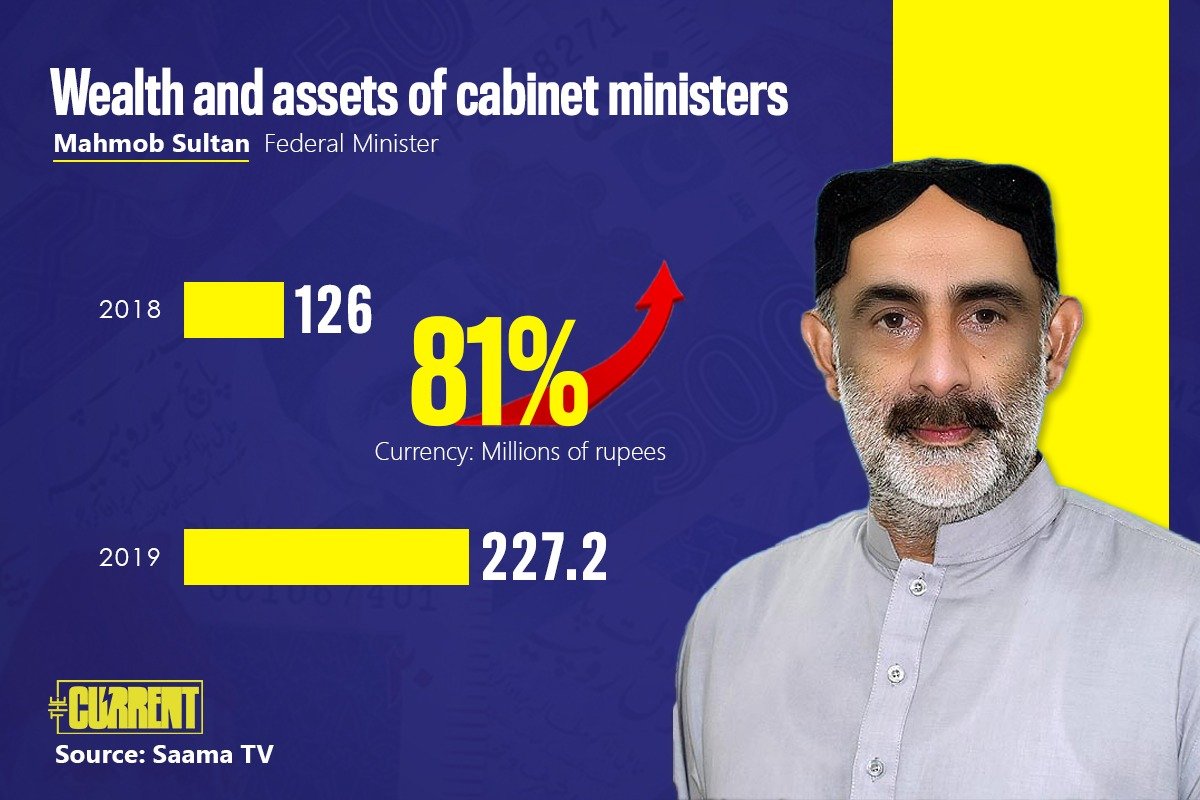
Former state minister Mahboob Sultan was one among the ministers who saw only double-digit asset growth. Only 81 per cent of his assets increased from Rs126 million in 2018 to Rs227.2 million in 2019. It’s worth noting, however, that his growth of nearly Rs100 million occurred while he was in the cabinet of ministers.
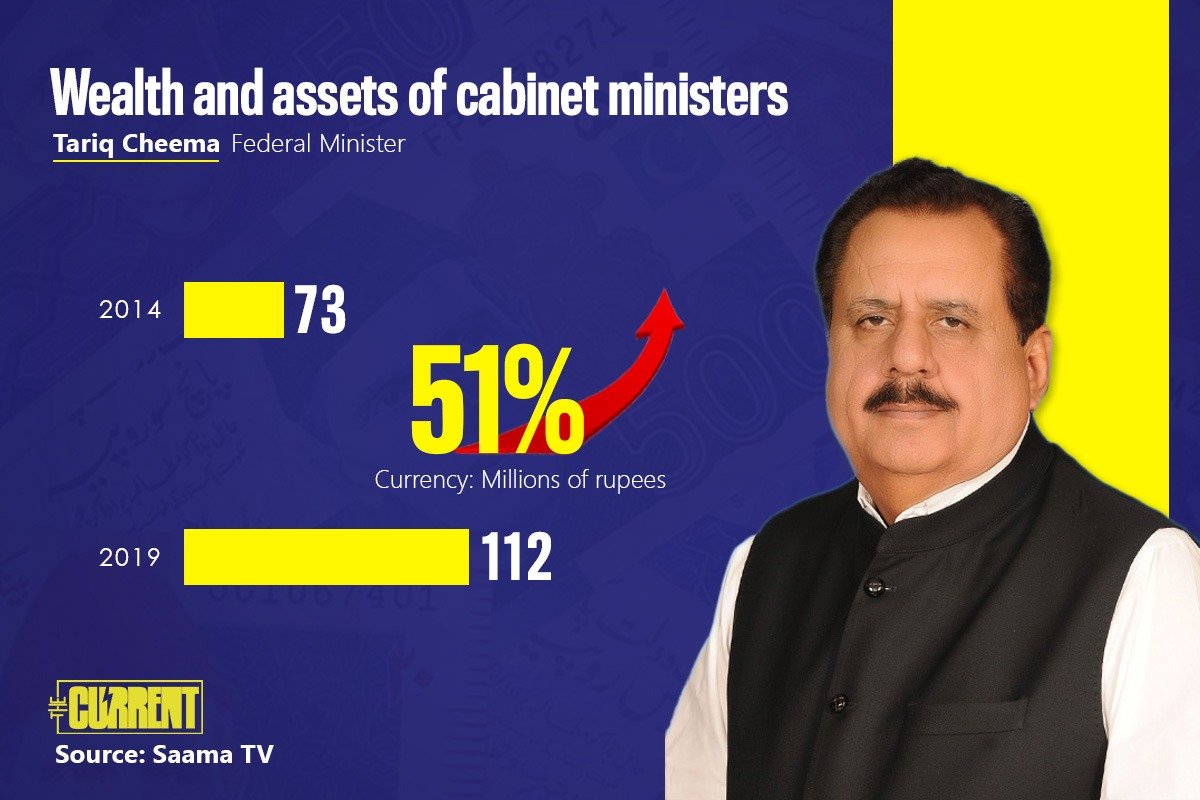
Tariq Cheema, the former federal minister for housing and infrastructure, showed the smallest growth in his wealth, going from Rs73 million in 2014 to Rs112 million in 2019. He did not, however, assess the value of his inherited assets and report them to the electoral or tax authorities.
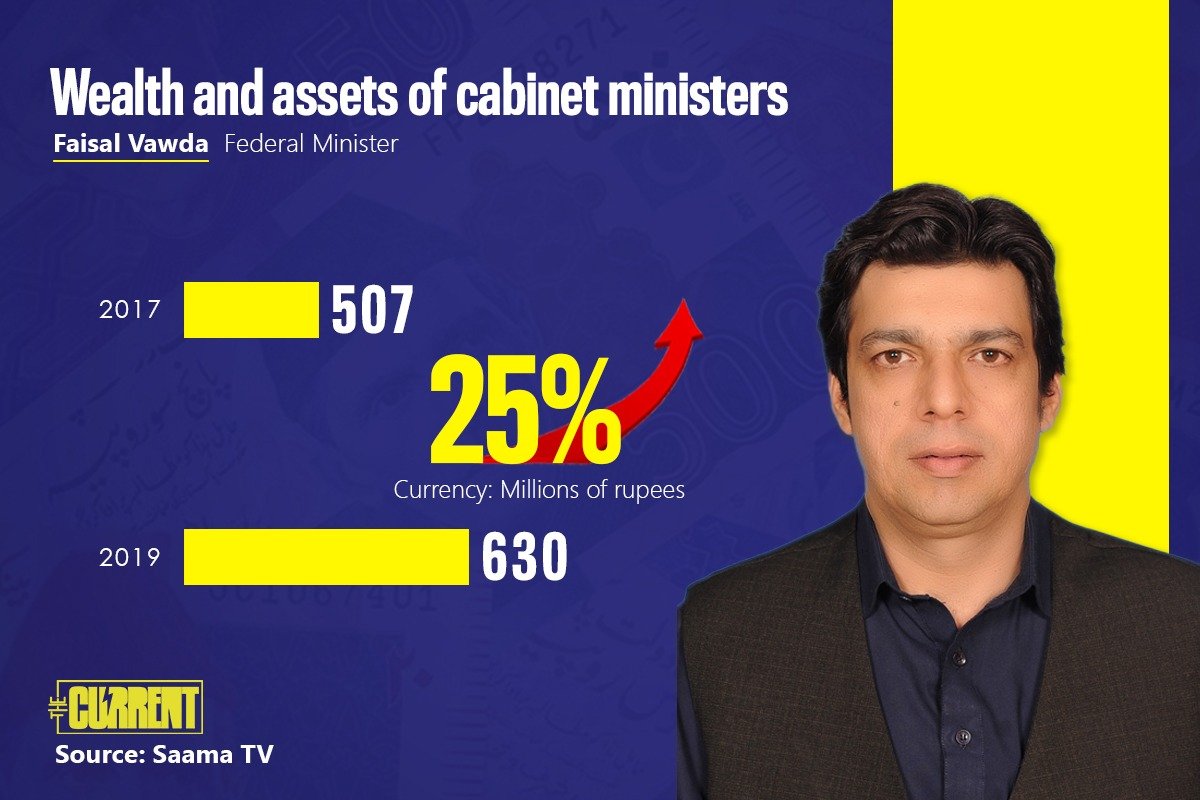
Former federal minister Faisal Vawda and his family witnessed their fortune increase by 25 per cent from Rs507 million in 2017 to Rs630 million in 2019. He was among the most controversial cabinet ministers who were eventually dismissed by the ECP.
Despite multiple requests from SAMAA TV, neither Sultan, Cheema, Vawda, nor an ECP official have commented on inquiries regarding their wealth.