Tag: India

  • Man falls in love with beggar girl while distributing food, marries her

    Man falls in love with beggar girl while distributing food, marries her

    A unique wedding has been seen in Kanpur, India where, while distributing food on the pavement, a young man fell in love with a begging girl and both of them tied the knot amid the lockdown.

    Anil, a driver from Kanpur’s Kakadeo area came across a beggar, Neelam when he went out to distribute food as per the instructions of his employer among the needy. He was attracted to Neelam that turned into true love.

    Talking to an Indian news outlet, the bride said, “My father died long ago and my mother suffered a paralysis stroke. My brother and sister-in-law used to beat me up and one day they threw my mother and I out of the house.”

    Left without a roof over her head and little resources, Neelam started begging to make ends meet.

    “He started talking to me when he came to know about my circumstances. One day, he convinced me to give up begging. We started interacting daily, and developed a friendship which blossomed into love”, said Neelam.

    Anil told reporters: “I admired her courage and guts. She was not only fending for herself but also for her paralysed mother.”

    Anil shared his feelings with his employer who guided him to take care of Neelam and her mother because the lockdown had made their life much more difficult. And then he started providing to them two times a day.

    His employer, Lalta Prasad convinced Anil’s family to let him marry the girl he loved and he finally proposed to Neelam.

  • Woman finds out she is a man during treatment

    Woman finds out she is a man during treatment

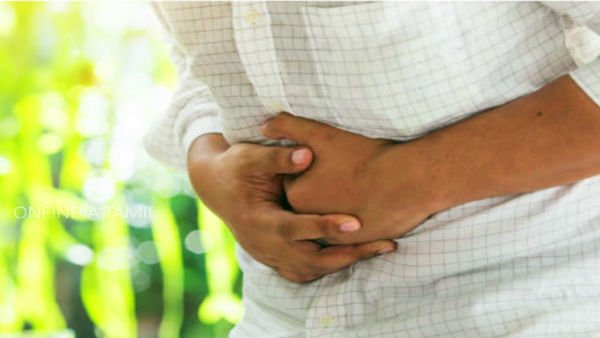
    A woman in India discovered that she was a man suffering from testicular cancer while getting treatment for abdominal pain at a Kolkata hospital.

    According to reports, the woman led a normal life with no complications for 30 years. Her 28-year-old sister, who underwent necessary tests following the revelation, was also diagnosed with ‘Androgen Insensitivity Syndrome’ — a condition in which a person is born genetically male, but has all physical traits of a woman.

    Read more – Peshawar High Court allows woman to change her sex

    The 30-year-old woman is also married for the last nine years. She visited city-based Netaji Subhas Chandra Bose Cancer Hospital with severe pain in lower abdomen a couple of months ago, following which clinical oncologist Dr Anupam Dutta and surgical oncologist Dr Soumen Das conducted her medical tests, and found out her “true identity”.

    “From her appearance, she is a woman. Starting from her voice, developed breasts, normal external genitalia, everything is that of a woman. However, uterus and ovaries have been absent since birth. She has also never experienced menstruation,” Dr Dutta said.

    It’s a very rare condition, and can be found one in every 22,000 people, he said. A biopsy was conducted, following which she was diagnosed with testicular cancer, also called seminoma.

    Currently, she is undergoing chemotherapy and her condition is stable.

    “The person has grown up to be a woman. She is married to a man for almost a decade. Currently, we are counselling the patient and her husband, advising them to continue living life as they have been.”

    Reports reveal that the couple had tried for babies a number of times but failed. The patient’s two maternal aunts were also diagnosed with Androgen Insensitivity Syndrome in the past, the oncologist said.

    “It’s probably in the genes. We have come to know that two of her aunts from the maternal side were also suffering from a similar condition,” he added.

  • Patient dies after ‘family unplugs ventilator to turn on air cooler’

    Patient dies after ‘family unplugs ventilator to turn on air cooler’

    A 40-year-old man died at a hospital after his family members allegedly unplugged the ventilator he was on to plug in an air cooler.

    Hospital authorities said a three-member committee will probe the incident.

    According to reports, the patient, who was suspected to be suffering from COVID-19, was brought to the ICU of the government-run hospital in the Kota city of India’s Rajasthan state on June 13. His test report, however, came negative later.

    The man was shifted to an isolation ward on June 15 as a safety measure after another patient in the ICU tested positive for the disease.

    Since it was very hot in the isolation ward, his family members bought an air cooler the same day. On finding no socket for the cooler, they allegedly unplugged the ventilator.

    They immediately informed doctors and medical staff, who administered CPR upon the patient, but he died.

    Hospital Superintendent Dr Naveen Saxena said the committee comprising the deputy superintendent, nursing superintendent and chief medical officer on duty will probe the incident and submit a report.

    The committee has recorded statements of medical staff in the isolation ward but the family members of the deceased patient are not responding to the panel, he alleged.

    The family members allegedly did not seek permission to plug in the cooler and when the patient died, they “misbehaved” with the medical staff and the resident doctor on duty, other hospital authorities said.

  • 21-year-old hangs himself while playing PUBG

    21-year-old hangs himself while playing PUBG

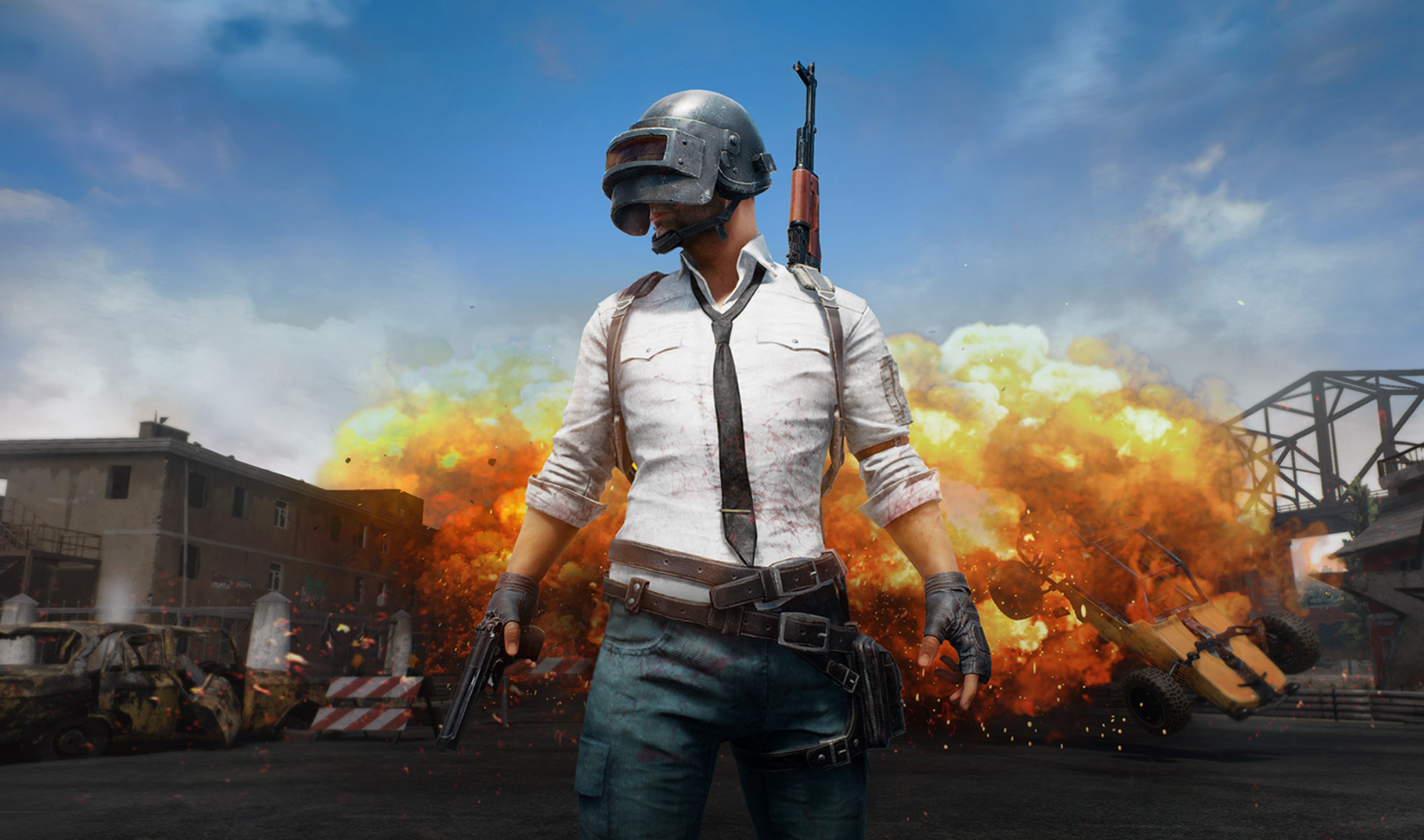
    A 21-year-old committed suicide in India’s Uttar Pradesh state while playing the popular online game Player Unknown’s Battlegrounds (PUBG).

    As per reports, a 21-year-old man named Shivam hanged himself while playing PUBG. 

    Read more – Sushant Singh Rajput’s suicide elicits three deaths

    The victim was an IT graduate who moved to Kanpur to look for a job and was living at his grandmother’s house when he took the extreme step.

    Family members of the deceased claimed that he was addicted to PUBG and used to play the online game for hours on his smartphone.

    They claimed that he was playing PUBG in his room so they were not aware when he hanged himself from the ceiling fan after which they called police.

    The post-mortem report confirmed that Shivam died of suicide.

    PUBG is is an online multiplayer battle royale game that has billions of downloads and a huge fan base. 

  • India accuses China of preparing attack on border troops

    India accuses China of preparing attack on border troops

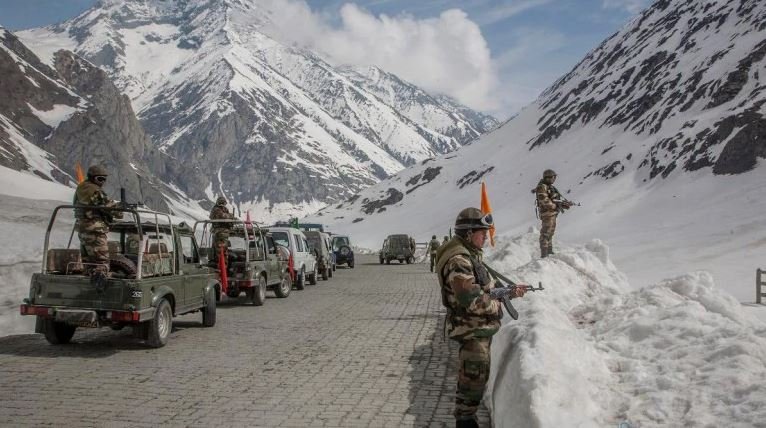
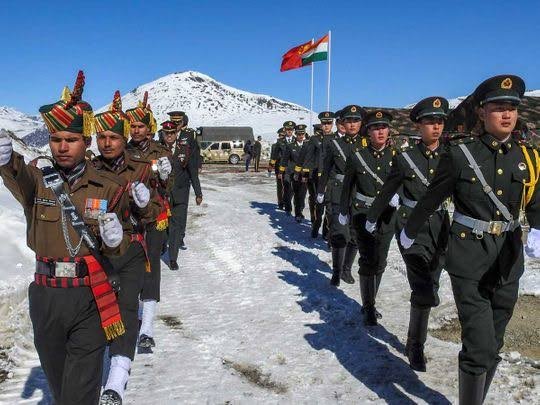
    India has accused Chinese troops of meticulously preparing an attack on its soldiers on the treacherous Himalayan border, claiming they erected a tent on the Indian side, dammed a river, brought in machinery and then lay in wait with stones and batons wrapped in barbed wire, The Guardian reported.

    The incident on Monday night, in which 20 Indian soldiers died and 76 were injured, was the worst violence between India and China in 45 years. China has not said whether it sustained any casualties.

    Ten Indian soldiers who were reportedly captured by Chinese troops during the attack were back in India on Thursday night. China said it had not seized any Indian personnel.

    Both sides continue to blame the other for the clash. China is now claiming sovereignty over the Galwan valley in Ladakh, where the attack happened, and has accused Indian troops of three times crossing into its territory. “The responsibility entirely lies with Indian side,” said Zhao Lijian, a spokesman for the Chinese ministry of foreign affairs.

    India accused China of carrying out a “premeditated and planned action” on its side of the border. Satellite images of the Galwan Valley taken by Planet Labs, an imaging company, in the days before the clash appear to show increased activity on the Chinese side, including the damming of a river and the movement of troops and machinery close to the disputed and poorly defined border.

    The Australian Strategic Policy Institute said its analysis of satellite images found there was “evidence that strongly suggests People’s Liberation Army forces have been regularly crossing into Indian territory temporarily on routine patrol routes”.

    Indian officials said commanders from the Indian and Chinese sides had met on 13 June and agreed to each retreat back two kilometres in the Galwan valley and Pangong Lake area.

    But rather than retreating, the officials said, Chinese troops erected a tent in disputed territory close to what is known as Patrolling Point 14. They said India’s 16 Bihar Regiment, led by Col Santosh Babu, dismantled the structure in an attempt to push back the PLA troops.

    According to accounts given to the Hindu newspaper, when Babu and his troops later approached the Chinese side to challenge the refusal to retreat, they were ambushed by PLA forces on the steep mountain precipice. The Chinese allegedly unblocked the dammed river, releasing a rush of water to destabilise Indian soldiers, and they attacked with stones and makeshift spiked weapons.

    Indian troops retaliated, it was reported, and reinforcements were summoned on both sides until there were upwards of 600 soldiers in hand-to-hand combat in the dark and icy conditions. No shots were fired.

    There were reports that the Indian soldiers were unarmed, but India’s external affairs minister, Subrahmanyam Jaishankar, said: “Let us get the facts straight. All troops on border duty always carry arms, especially when leaving post. Those at Galwan on 15 June did so.”

    Due to the treacherous conditions, many of the bodies of the Indian soldiers could not be retrieved until the next morning, by helicopters working with troops and border police. The injured were taken to hospitals in the Ladakh city of Leh.

    India and China have agreed to continue the process of disengagement that was first agreed on 6 June, and discussions are ongoing through political and diplomatic channels. Army generals from both sides have also had three days of talks at Patrolling Point 14. However, the Indian army and air force in Ladakh remain on high alert.

  • Projection: August likely to be the worst month for Pakistan with one million coronavirus cases

    Projection: August likely to be the worst month for Pakistan with one million coronavirus cases

    The effects of poorly managed or no lockdowns at all are raising their ugly heads as Pakistanis has reached the 14th position in the global ranking of countries most affected by the new coronavirus — COVID-19 — with 165,062 cases, while it now ranks 6th among nations with the most number of active cases around the globe, as per Worldometers.

    The World Health Organization (WHO) earlier this year warned that South Asia could become yet another new epicenter of the pandemic, however, despite the warning and rapidly increasing number of coronavirus cases, Prime Minister (PM) Imran Khan has only announced the imposition of “smart lockdowns” with only certain areas in worst-hit cities being put under restrictions.

    The decision was taken keeping in view the consequent struggles of the poor, whom the government believes might not be able to survive a complete lockdown and its effects on the already deteriorating economic conditions.

    While experts, including Dr Attaur Rahman of PM’s task force, believe the government has already failed to deal with the pandemic and is grossly under-reporting both COVID-19 fatalities and infections, the virus is yet to peak — by the end of July or August –, data suggests.

    An analysis by The Current showed that before lockdown restrictions were eased in Pakistan ahead of Eidul Fitr, the highest number of confirmed coronavirus cases stood at 24,648 during the first week of May. The figure then crawled up to 122,574 by June 11, while the number of coronavirus cases as of this moment stands past 165,000 with thousands of cases being reported every day despite a low testing capacity.

    It is estimated that the actual number of infections is very high with Lahore alone having more than 2 million cases by now.

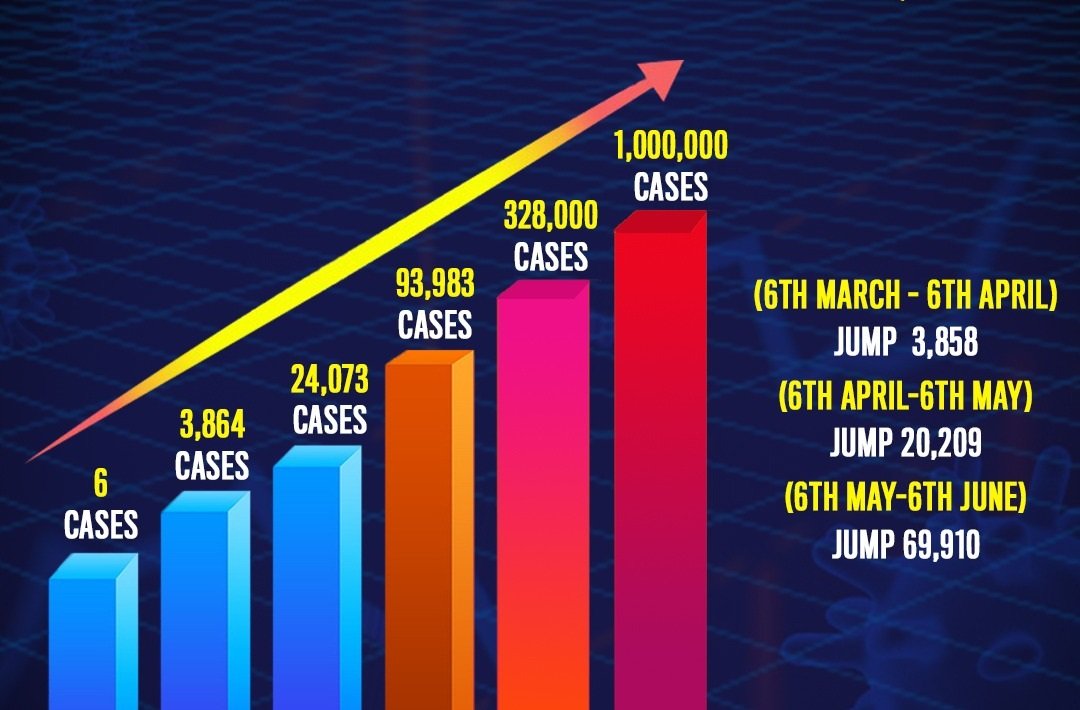
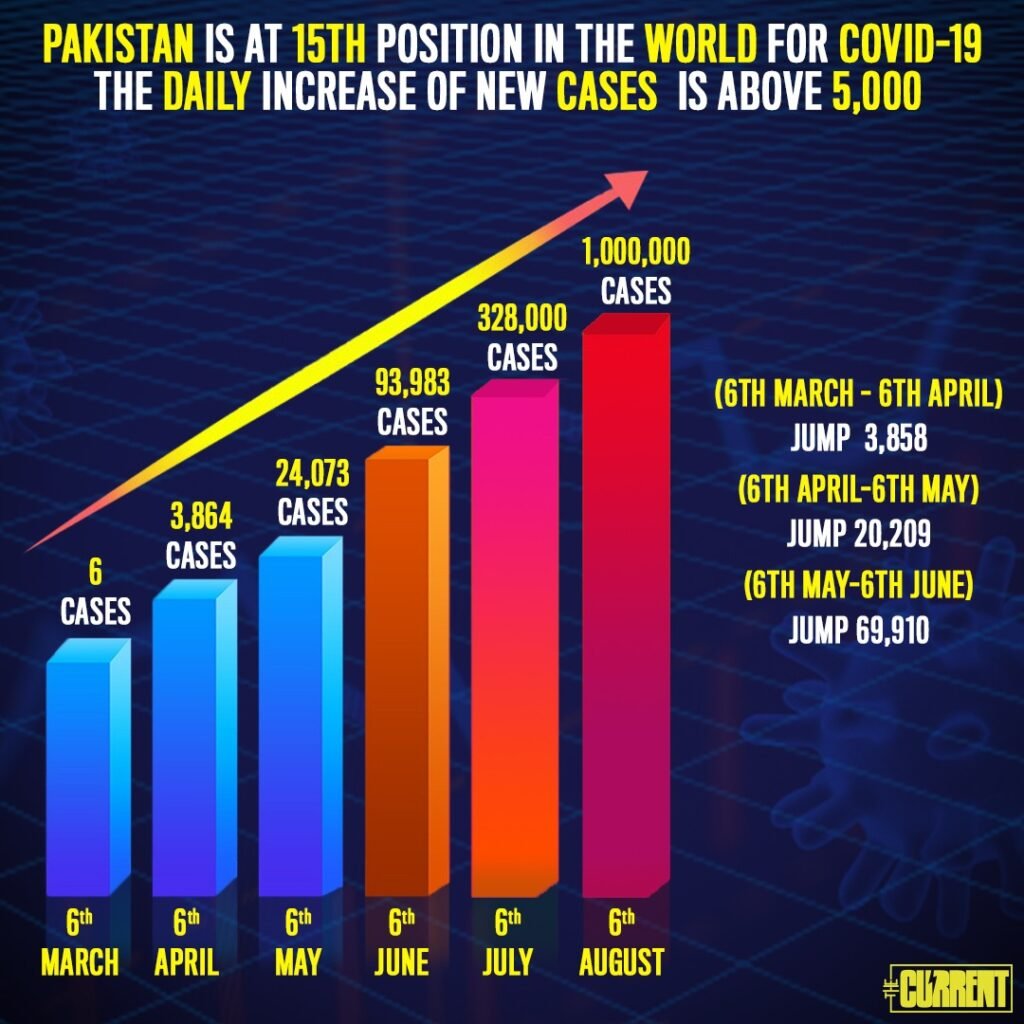
    Pakistan has experienced its largest month-wise jump since the pandemic began, with 69,910 cases being reported between May 6 to June 6. Earlier, 3,858 COVID-19 cases were recorded between March 6 and April 6 while 20,209 were reported between April 6 to May 6.

    According to projections, the figure is likely to reach a million by August 6 if strict lockdowns aren’t imposed and social distancing guidelines are not followed.

    A comparison with the best and worst managed lockdowns from across the globe also puts things into perspective.

    Country Outcome
      New Zealand
    Prime Minister Jacinda Ardern announced a strict lockdown on March 25 when 100 people had tested positive and no deaths had been reported.   After a 76-day lockdown, New Zealand lifted all restrictions, declaring the country ‘corona free’ but borders remain closed. No new case for more than two weeks has been reported in the country except three suspected ones.
    Wuhan
    The capital of Hubei province of China was the origin of the deadly virus, where 11 million residents were locked up at their homes since January. After an effective 77-day lockdown, Hubei reports zero COVID-19 infections and the country has reported zero coronavirus deaths since January.        

    On the other hand:

    Country Outcome
    India
    On March 25, India imposed a countrywide lockdown that was called a curfew by PM Narendra Modi. The development had come when 519 confirmed cases and 10 deaths had been reported across India.   A bit over two months later, with India easing lockdowns and shopping malls, restaurants as well as temples being re-opened, it has become the country with 4th highest number of coronavirus cases in the world.
    Iran
    Iran shut schools, postponed events and discouraged travel since the country reported its first COVID-19 death in February. Despite these measures, the number of deaths and infections continued to grow until a countrywide lockdown was imposed in March.   With the lockdown being eased from mid-April to May 26 when everything was reopened, including shopping malls, parks, religious shrines, restaurants and historical sites, the number of deaths has jumped to nearly 10,000 with over 200,000 infections.

    By the time this report was filed, Sindh topped the chart with most infections in Pakistan (62,269), with Punjab trailing behind at 61,678, Khyber Pakhtunkhwa (KP) at 20,182, Islamabad at 9,941, Balochistan 8,998 and Gilgit-Baltistan and Azad Jammu Kashmir (AJK) at 1,225 and 769 infections, respectively.

  • ‘Sri Lanka sold World Cup 2011 final to India,’ claims former sports minister

    ‘Sri Lanka sold World Cup 2011 final to India,’ claims former sports minister

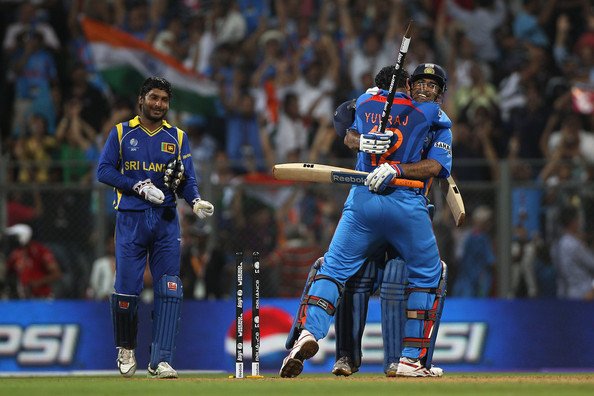
    Sri Lanka “sold” the 2011 World Cup final to India, the country’s former sports minister said on Thursday, reviving one of cricket’s most explosive match-fixing controversies.

    Mahindananda Aluthgamage, who was sports minister at the time, is the second senior figure to allege the final was fixed, after 1996 World Cup-winning skipper Arjuna Ranatunga.

    “I tell you today that we sold the 2011 World Cup finals,” Aluthgamage told Sirasa TV. “Even when I was sports minister I believed this.”

    Aluthgamage, sports minister from 2010 to 2015 and now state minister for renewable energy and power, said he “did not want to disclose” the plot at the time.

    “In 2011, we were to win, but we sold the match. I feel I can talk about it now. I am not connecting players, but some sections were involved,” he said.

    Sri Lanka lost the match at Mumbai’s Wankhede stadium by six wickets. Indian players have strongly denied any wrongdoing.

    Ranatunga, who was at the stadium as a commentator, has previously called for an investigation into the defeat.

    “When we lost, I was distressed and I had a doubt,” he said in July 2017. “We must investigate what happened to Sri Lanka at the 2011 World Cup final.”

    “I cannot reveal everything now, but one day I will. There must be an inquiry,” added Ranatunga, who said players could not hide the “dirt”.

    Sri Lanka batted first and scored 274-6 off 50 overs. They appeared in a commanding position when Indian superstar Sachin Tendulkar was out for 18.

    But India turned the game dramatically, thanks partly to poor fielding and bowling by Sri Lanka, who were led by Kumar Sangakkara.

    Sri Lankan cricket has regularly been involved in corruption controversies, including claims of match-fixing ahead of a 2018 Test against England.

    Earlier this month, the Sri Lankan cricket board said the International Cricket Council (ICC) was investigating three unnamed former players over alleged corruption.

    Sri Lanka introduced tough penalties for match-fixing and tightened sports betting restrictions in November in a bid to stamp out graft.

    Another former sports minister, Harin Fernando, has said Sri Lankan cricket was riddled with graft “from top to bottom”, and that the ICC considered Sri Lanka one of the world’s most corrupt nations.

    Former Sri Lankan fast bowler Dilhara Lokuhettige was suspended in 2018 for corruption relating to a limited-overs league.

    He was the third Sri Lankan charged under the ICC anti-corruption code, following former captain and ex-chief selector Sanath Jayasuriya, and former paceman Nuwan Zoysa.

    Jayasuriya was found guilty of failing to cooperate with a match-fixing probe and banned for two years. Zoysa was suspended for match-fixing.

  • Indian anchors fall for fake WhatsApp forward, claim 30 Chinese soldiers dead in clash

    Indian anchors fall for fake WhatsApp forward, claim 30 Chinese soldiers dead in clash

    At least 20 Indian soldiers were killed in an armed clash with China in Galwan Valley of Ladakh earlier this week.

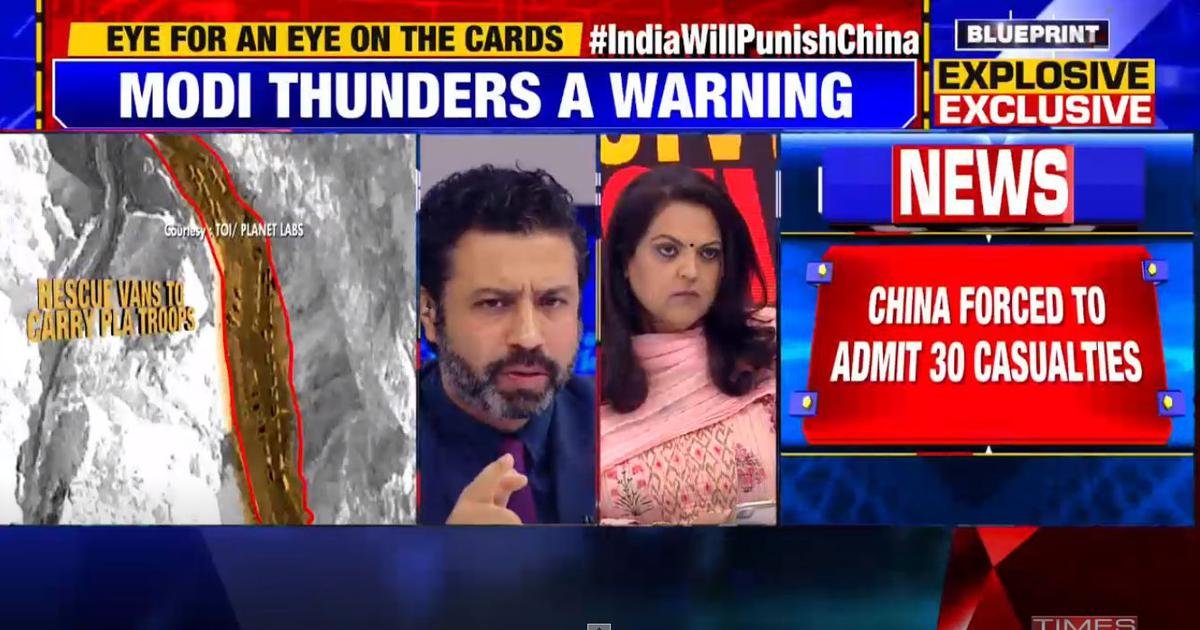
    While the number of Chinese casualties is still unclear, anchors of an Indian news channel have claimed that 30 were killed, reading out their names from a fake Whatsapp forward message.

    While the message was falsely credited to Chinese daily tabloid newspaper Global Times, there’s no evidence to support its validity.

    However, later in its bulletin, the news channel probably noticed the faux pas and mentioned that the information could be a “fake forward”.

    Following this, several Indian news outlets fact-checked this and found that no such information had been shared by Global Times. A search on the organisation’s website also led to no results while the news organisation has not shared any such information on its Twitter account as well.

    Meanwhile, Hu Xijin, editor-in-chief of Global Times, tweeted that the Chinese government had not released the official number of casualties.

    “My understanding is the Chinese side doesn’t want people of the two countries to compare the casualties number so [as] to avoid stoking public mood. This is goodwill from Beijing,” Xijin wrote.

  • China kills 20 Indian soldiers in border clash

    China kills 20 Indian soldiers in border clash

    In an armed conflict between two nuclear-armed neighbours, at least 20 Indian soldiers were killed in the Galwan Valley in Ladakh after a “violent face-off” with Chinese troops ensued.

    According to Indian media reports, both sides “have disengaged” after 17 Indian troops were injured.

    The injured troops “exposed to sub-zero temperatures in the high altitude terrain have succumbed to their injuries”, ANI reported, adding this had brought the death toll, from the earlier reported three to 20.

    According to earlier reports by Indian media, three troops, including an officer and two soldiers were among those killed near the Line of Actual Control (LAC).

    “During the de-escalation process underway in the Galwan Valley, a violent face-off took place yesterday night with casualties. The loss of lives on the Indian side includes an officer and two soldiers. Senior military officials of the two sides are currently meeting at the venue to defuse the situation,” an official statement said.

    Meanwhile, British news outlet The Telegraph, quoting Indian army sources, reported that four soldiers are currently missing and a further 32 “were handed back after being captured”.

    Indian media also reported that 40 Chinese soldiers were killed in the clash, however, the news was soon retracted.

    India and China have been locked in a standoff in the western Himalayas for weeks, though there had been no casualties on either side.

    In Beijing, Zhao Lijian, a spokesman for the Foreign Ministry, said that Indian forces had twice crossed the border illegally on Monday and attacked Chinese personnel. He said the Chinese side had “lodged strong protests” but continued to work toward resolving the tensions between the two countries.

    According to the Hindustan Times, Beijing accused the Indian army of provoking and attacking Chinese soldiers after a border meeting to de-escalate the ongoing tension led to a “physical conflict” between the two sides. Reuters’ report suggested that Beijing warned New Delhi not to take unilateral action or stir up trouble.

    The Asian giants have rival claims to vast swathes of territory along their 3,500 kilometers Himalayan border, but the disputes have remained largely peaceful since a border war in 1962.

  • ‘Hit-and-run’: Road accident in Islamabad further heightens Indo-Pak tensions

    ‘Hit-and-run’: Road accident in Islamabad further heightens Indo-Pak tensions

    • Two Indian High Commission officials detained briefly after running over pedestrian in Islamabad on Monday
    • Both officials of non-diplomat status handed back to Indian High Commission owing to diplomatic immunity while Indian reports claim they were let go off after New Delhi pressurised authorities in Pakistan
    • India had earlier claimed harassment and assault of officials and raised concerns over alleged abduction in response to expulsion of two Pakistan High Commission officials over ‘espionage’ in New Delhi

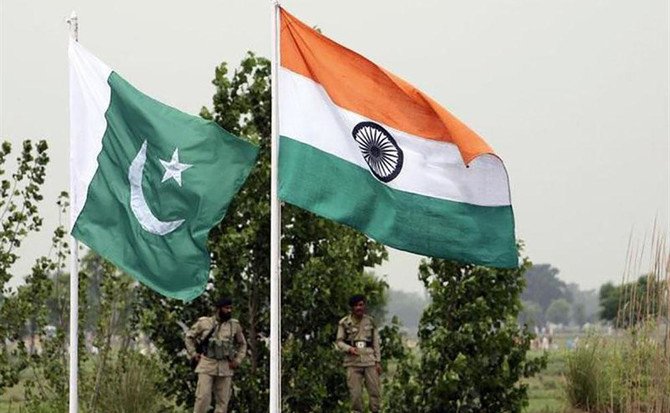
    A road accident in Islamabad has further heightened Indo-Pak tensions as diplomatic ties between the two neighbours continue to deteriorate ever since New Delhi’s abrogation of Article 370 for the annexation of held Kashmir last year in August.

    As per the details, Islamabad Capital Territory (ICT) police on Monday arrested two staff members of the Indian High Commission (IHC) over their involvement in a hit-and-run incident.

    A vehicle, reportedly a BMW, hit a pedestrian walking on the embassy road at around 8 am. The two staffers, identified as Silvades Paul and Dawamu Brahamu, tried to flee after the incident but were caught by bystanders and handed over to local police.

    The critically injured pedestrian, whose identity has still not been revealed, was shifted to a nearby hospital for treatment.

    Eyewitnesses said the car was being driven irresponsibly and had gotten out of control due to speeding on Khayabane Suhrawardy.

    While it is said that the police were initially unaware that the two accused belonged to the IHC, an FIR [First Information Report] registered at the Secretariat police station of the federal capital, a copy of which is available with this scribe, revealed that one of the officials also possessed Rs10,000 worth of counterfeit currency.

    Local police later informed the Foreign Office (FO) about the incident. However, on Monday evening the two staffers, neither of whom were diplomats, were released because they had diplomatic immunity.

    The two reportedly belong to India’s Central Industrial Security Force (CISF). A sixteen-member specialised security unit from CISF has been deployed at the Indian High Commission in Islamabad since 2009 for the protection of the high commission and diplomats posted here.

    Both were booked by the police for reckless driving, causing injury due to negligent driving, and possessing fake currency.

    It is pertinent to note that officials at the FO were initially unaware of the development, while Indian media reports claimed that the two officials had been abducted and shifted to an undisclosed location.

    Amid Indian claims that the “missing” officials were let go off after torture and New Delhi pressurising Islamabad against the alleged abduction, officials, including the assistant sub-inspector concerned, deny the claims saying it was “nothing but regular action against two people accused of hit-and-run besides possession of counterfeit currency”.

    Pakistan was further asked to return the two Indian staffers along with the official car to the high commission.

    Deputy Superintendent of Police Iqbal Khan said the Indians were detained and shifted to the police station for completing the legal process.

    The FIR also suggests the same.

    Deputy Inspector General (FIG) of Police Operation Waqaruddin Syed said that both the detained Indians were hours later released from the police custody after confirming their status from the FO.

    PAYBACK?

    “The officials were out for an official work before they went missing. The Indian government has taken up the matter with Pakistani authorities,” said Indian reports earlier in the day as they hinted at the possibility of “payback” in response to India declaring two officials of the Pakistan High Commission (PHC) in New Delhi “persona non grata requiring them to leave India within 24 hours” alleging that they had been found guilty of espionage.

    Pakistan had condemned the Indian government’s decision to expel the staff members as part of a “persistent anti-Pakistan propaganda”.

    Islamabad had said that the two staff members of the Pakistan High Commission in New Delhi were “lifted by the Indian authorities today (31 May 2020) on false and unsubstantiated charges”. They were subsequently released after the Pakistan High Commission intervened.

    “We condemn the detention and torture as well as threatening and pressuring of the diplomatic officials to accept false charges,” the FO had said.

    DIPLOMATS AND RASH DRIVING:

    Earlier this year, an SUV belonging to the United States (US) Embassy drove into a car on a main artery of the federal capital, killing a woman and injuring five members of her family.

    The police arrested the Pakistani driver of the US Embassy, named Amjad Zaman, and registered a case against him at Margalla police station.

    Accidents involving vehicles belonging to diplomatic missions, especially the US Embassy, have been frequent in recent years and in most cases the drivers got away unpunished by invoking diplomatic immunity.

    In April 2018, a motorcyclist was killed after being hit by a vehicle driven by the military attaché at the US Embassy in Islamabad.

    In Feb 2013, an SUV driven by an administrative assistant at the US Embassy hit two motorcyclists near Kohsar Complex on Margalla Avenue, killing one of them and injuring the other.

    In July 2010, an officer attached to the US Embassy’s Force Protection Department hit and killed a young man riding a motorcycle on 7th Avenue.

    In 2011, a Central Intelligence Agency (CIA) contractor, Raymond Davis, caused countrywide outrage after he killed two persons when he ran over a motorcycle in Lahore. The deadly incident had strained ties between Washington and Islamabad. Davis went scot-free after paying blood money to the families of the victims.