Tag: India

  • Delhi man hires juvenile to murder him so family can claim insurance money

    Delhi man hires juvenile to murder him so family can claim insurance money

    A man in Delhi,India hired a juvenile to kill him so that his family could get his insurance money.

    Gaurav Bansal, 37, was a grocery shop owner. He was found hanging from a tree near Kheri Baba Pul in Ranhola area of outer Delhi on June 10.

    both of his hands were found knotted so olice registered a case under Section 302 (murder) of the Indian Penal Code and an investigation was started, said Deputy Commissioner of Police, Outer, A. Koan.

    Initial probe revealed that Bansal’s family members had filed a missing complaint. “On the basis of intelligence, a suspect identified as Suraj was apprehended. During sustained interrogation, Suraj revealed that he along with two others – Manoj and Sumit – were roped in to commit killing by a juvenile, who was in contact with the deceased,” the officer said.

    Following the revelations, Manoj, Sumit and the juvenile were arrested.

    The juvenile then revealed that Bansal contacted him on social media and said that he faced some financial problems due to which he wished to die. “He told the juvenile that he would pay him for his murder as because of this, his family would get his insurance payout,” the DCP added.

    Koan also said that two agreed for a sum of around Rs60,000 to kill him. “In order to execute the killing, the juvenile roped in his friend Manoj who later involved Suraj and Sumit for this alleged contract killing.”

    “The accused persons killed the victim by hanging him from a tree. During the questioning, they revealed that they had received money for this act from the victim. Bansal had told them if they killed him, his family will get the insurance money,” the DCP said.

    Further investigation of the case  is underway.

  • ‘Our relief package is as large as your country’s GDP,’ India reacts to Imran’s offer to share Ehsaas project

    ‘Our relief package is as large as your country’s GDP,’ India reacts to Imran’s offer to share Ehsaas project

    — Islamabad regrets negative remarks by New Delhi regarding goodwill suggestion by PM Imran

    In a stinging reply to Prime Minister (PM) Imran Khan’s offer of sharing with India his government’s cash transfer project technology to help the poor amid the coronavirus crisis, New Delhi has said that the size of its economic relief package during the pandemic is as large as Pakistan’s Gross Domestic Product (GDP).

    “Pakistan would do well to recall that they have a debt problem which covers 90% of their GDP. As far as India goes, our stimulus package is as large as the GDP of Pakistan,” said Anurag Srivastava, a spokesperson for India’s Ministry of External Affairs (MEA), on Thursday.

    Imran had earlier in the day tweeted a news report published in an Indian daily highlighting the suffering of a section among the poor in India due to the economic challenges posed by the COVID-19 outbreak, saying that his government was willing to help with its successful cash transfer programme, which he boasted was recognised internationally.

    “I am ready to offer help and share our successful cash transfer programme, lauded internationally for its reach and transparency, with India,” the premier had said while sharing the report as per which 34 per cent households across India will not be able to survive for more than a week without assistance.

    He had said his government successfully transferred Rs120 billion in nine weeks to over 10 million families in a transparent manner to deal with the economic fallout of the virus.

    ISLAMABAD REACTS TO NEW DELHI’S RESPONSE:

    In response to New Delhi’s reaction to the premier’s offer, the Foreign Office (FO) regretted “negative remarks by the MEA spokesperson regarding a goodwill suggestion by the PM to share Pakistan’s successful experience in ameliorating the impact of COVID-19 on the poorest sections of the society”.

    “Remarks by the MEA spokesperson reflect an unprofessional attempt at point-scoring over a serious issue that involves the lives of millions of poor people in the subcontinent, worst affected by the COVID-19 pandemic,” read a statement issued by the FO on Friday.

    THE REPORT:

    A study titled “How are Indian households coping under the COVID-19 lockdown? Eight key findings”, carried out by experts at the University of Pennsylvania, the University of Chicago and the Mumbai-based Centre for Monitoring the Indian Economy (CMIE) reveals that nearly 84 per cent of Indian households are seeing decreases in income since the lockdown began. Nearly a third of all households will not be able to survive beyond a week without additional assistance.

    “Direct and immediate transfers of food and cash are a very high priority,” said Heather Schofield, assistant professor of medical ethics and health policy at the Perelman School of Medicine and a Wharton professor of business economics and public policy.

    When a nationwide lockdown began in late March, India’s Ministry of Labour and Employment asked private and public organisations not to terminate jobs on the pretext of prevailing conditions. But these pleas hardly made any difference and large-scale retrenchments that took place as cope with the contagion.

    However, the study found a “sharp and broad negative impact on household income” as the pandemic diminished their staying capacity, adding that the unemployment rate in the country had crossed 27 percent in early May, up nearly four-fold from levels in January-February.

    The fall in incomes affected people in the lower and middle segments of the income distribution most severely, the study found. “Households in the lowest of the five income groups had average monthly per-capital earnings of less than Rs3,800 (about $50), while those at the high end made between Rs12,374 and upwards of Rs100,000 ($167 to $1,370 and more).”

    Households in the middle-income groups are hurt disproportionately more perhaps because they are most likely to be dependent on sources of income that are hit due to the lockdown, the study’s authors stated.

    Rural households have seen disproportionately more distress than those in urban India during the lockdowns. Incomes have fallen at some 88% of rural households, compared to 75% of urban households, the study found.

    Only 30% of households are able to survive one month or more without additional assistance. “Crucially, 14% of the sample is already out of funds and risks immediate and severe deprivation if they are unable to borrow or receive additional benefits,” the report warned.

    “Rapid distribution of in-kind or cash transfers is needed to prevent a sharp increase in malnutrition and severe deprivation. Such transfers will also likely promote a more robust recovery as the country is able to reopen.”

    The need for additional resources is also affected by where the household is located. “The urban poor have the least time before their resources are depleted,” the study said.

    Nearly two-thirds of urban households that earn less than median income households will run out of resources in two weeks. Rural households in similar income groups have relatively more resilience, the study found, as 54% of them have sufficient resources for the same period of time.


  • Pakistan ready to share Ehsaas project with India: PM

    Pakistan ready to share Ehsaas project with India: PM

    Prime Minister (PM) Imran Khan has offered sharing his government’s cash transfer flagship programme that successfully dealt with the negative fallout of COVID-19 on vulnerable communities, with India.

    “I am ready to offer help and share our successful cash transfer programme, lauded internationally for its reach and transparency, with India,” the premier said in a tweet while sharing a report that 34 per cent households across India will not be able to survive for more than a week without assistance.

    He said his government successfully transferred Rs120 billion in nine weeks to over 10 million families in a transparent manner to deal with the economic fallout of the virus.

    A study titled “How are Indian households coping under the COVID-19 lockdown? Eight key findings”, carried out by experts at the University of Pennsylvania, the University of Chicago and the Mumbai-based Centre for Monitoring the Indian Economy (CMIE) reveals that nearly 84 per cent of Indian households are seeing decreases in income since the lockdown began. Nearly a third of all households will not be able to survive beyond a week without additional assistance.

    “Direct and immediate transfers of food and cash are a very high priority,” said Heather Schofield, assistant professor of medical ethics and health policy at the Perelman School of Medicine and a Wharton professor of business economics and public policy.

    When a nationwide lockdown began in late March, India’s Ministry of Labour and Employment asked private and public organisations not to terminate jobs on the pretext of prevailing conditions. But these pleas hardly made any difference and large-scale retrenchments that took place as cope with the contagion.

    However, the study found a “sharp and broad negative impact on household income” as the pandemic diminished their staying capacity, adding that the unemployment rate in the country had crossed 27 percent in early May, up nearly four-fold from levels in January-February.

    The fall in incomes affected people in the lower and middle segments of the income distribution most severely, the study found. “Households in the lowest of the five income groups had average monthly per-capital earnings of less than Rs3,800 (about $50), while those at the high end made between Rs12,374 and upwards of Rs100,000 ($167 to $1,370 and more).”

    Households in the middle-income groups are hurt disproportionately more perhaps because they are most likely to be dependent on sources of income that are hit due to the lockdown, the study’s authors stated.

    Rural households have seen disproportionately more distress than those in urban India during the lockdowns. Incomes have fallen at some 88% of rural households, compared to 75% of urban households, the study found.

    Only 30% of households are able to survive one month or more without additional assistance. “Crucially, 14% of the sample is already out of funds and risks immediate and severe deprivation if they are unable to borrow or receive additional benefits,” the report warned.

    “Rapid distribution of in-kind or cash transfers is needed to prevent a sharp increase in malnutrition and severe deprivation. Such transfers will also likely promote a more robust recovery as the country is able to reopen.”

    The need for additional resources is also affected by where the household is located. “The urban poor have the least time before their resources are depleted,” the study said.

    Nearly two-thirds of urban households that earn less than median income households will run out of resources in two weeks. Rural households in similar income groups have relatively more resilience, the study found, as 54% of them have sufficient resources for the same period of time.

  • Coronavirus: Pakistan out of list of 100 safest countries, Switzerland on top, India 56th safest, worst-hit US 58th

    Coronavirus: Pakistan out of list of 100 safest countries, Switzerland on top, India 56th safest, worst-hit US 58th

    In a detailed study of 200 countries, Switzerland has been found to be the safest place on earth to escape the ongoing coronavirus pandemic while Pakistan is no longer among the 100 safest places, falling down to the 148th rank — amongst the riskiest group of countries.

    India ranks 56th in the COVID-19 ranking by Deep Knowledge Group. The first tier comprises a list of 20 most safe countries while those in the fourth tier are amongst the riskiest lot.

    The study focuses on nations and their safety capability against the pandemic.

    Top 10 safest countries from coronavirus:

    1) Switzerland

    2) Germany

    3) Israel

    4) Singapore

    5) Japan

    6) Austria

    7) China

    8) Australia

    9) New Zealand

    10) South Korea

    The United States (US), which has the highest number of coronavirus cases in the world, was ranked 58th on the list.

    By the time this report was filed, Pakistan had a total number of 113,702 COVID-19 cases with at least 2,255 deaths.

    Punjab had the most number of infections (43,460) with Sindh trailing behind at 41,303 cases. The number of infections in Khyber Pakhtunkhwa (KP), Balochistan and Islamabad stood at 14,527, 7,031 and 5,963, respectively. Gilgit-Baltistan (GB) had a total 974 cases while the number in Azad Jammu & Kashmir (AJK) stood at 444.

  • Husband accuses wife of infidelity after both test positive for COVID-19

    Husband accuses wife of infidelity after both test positive for COVID-19

    A man in Vijayapura, India accused his wife of infidelity after he tested positive for coronavirus.

    As per reports, the husband suspected that the woman in her thirties had cheated on him, as he was not away from home for at least two weeks before testing positive.

    When the woman was shifted to the same isolation ward where her husband was being treated, he started crying and shouting at her.

    Read more – Indian man spends two days in jungle after entry to quarantine centre denied

    The man claimed, “Before I got infected, I was not in contact with my wife for over two weeks. She got infected with the virus because of an illicit relationship.”

    After doctors explained to him the nature of the virus, he accepted his mistake and apologised to his wife, which resulted in a happy ending.

  • ‘Man-eating’ tiger sentenced to a lifetime in captivity

    ‘Man-eating’ tiger sentenced to a lifetime in captivity

    A tiger accused of killing three people will spend the rest of its life in captivity, Indian officials said Sunday, saying the big cat was “too dangerous” to be allowed to roam free.

    According to AFP, the five-year-old male predator, also blamed for attacking cattle, had embarked on a trek more than 500 kilometres (310 miles) long from western Maharashtra state to central India’s Betul district in Madhya Pradesh state in 2018.

    “We gave it several chances to re-wild but it habitually went into human habitations,” said Madhya Pradesh’s chief wildlife warden, S.K. Mandal.

    “The only option left was to put it in captivity to ensure both the tiger and humans are safe.”

    The tiger — dubbed the “vagabond” or “nomad” by some local media — was first trapped in December 2018 after its long journey and held in captivity for two months.

    The big cat was eventually fitted with a tracking collar and shuttled between a tiger reserve and a national park.

    Officials however said it repeatedly strayed and hunted near human settlements, attacking cattle and endangering humans.

    Finally the tiger was tranquilised and sent to a zoo in Madhya Pradesh capital’s Bhopal on Saturday.

    Officials said the decision to capture the adult tiger was taken a few months ago, but was delayed due to the novel coronavirus lockdown.

    “It will take sometime for him to adjust to the new environment. We will be monitoring his behaviour,” Bhopal’s Van Vihar National Park director, Kamlika Mohanta shared.

    “As of now it will remain in solitary confinement. A decision to put it on display at the zoo or send it to a (fenced) safari will be taken later.”

    Human encroachment on tiger habitats have increased in recent decades in the nation of 1.3 billion people, leading to deadly conflicts with the animals.

    Nearly 225 people were killed in tiger attacks between 2014 and 2019, according to government figures.

    More than 200 tigers were killed by poachers or electrocution between 2012 and 2018, the data showed.

    India is home to around 70 percent of the world’s tigers. Last year, the government said the tiger population had risen to 2,967 in 2018 from a record low of 1,411 in 2006.

  • Indian man spends two days in jungle after entry to quarantine centre denied

    Indian man spends two days in jungle after entry to quarantine centre denied

    A labourer returned from Chennai, spent two days in jungle after allegedly being denied entry to the quarantine centre, and village in Odisha’s Ganjam district of India.

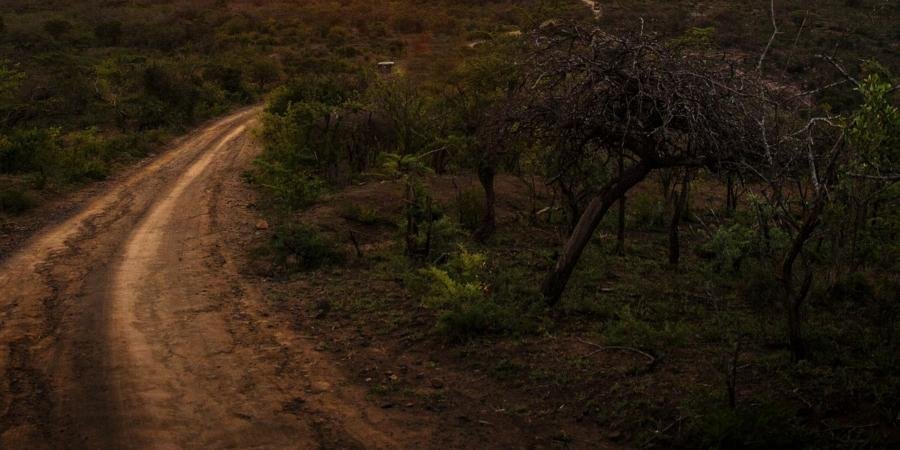
    Barik Nayak reached his village after travelling on a train and then a bus. However, when he reached his village, the local residents did not allow him to enter the village.

    According to Nayak, he spent two days in the jungle near his village after the Sarpanch and local administration did not help him get admitted to any quarantine center.

    Later, the police took him to a nearby quarantine centre.

  • Girl climbs rooftop to get better signals to attend online classes

    Girl climbs rooftop to get better signals to attend online classes

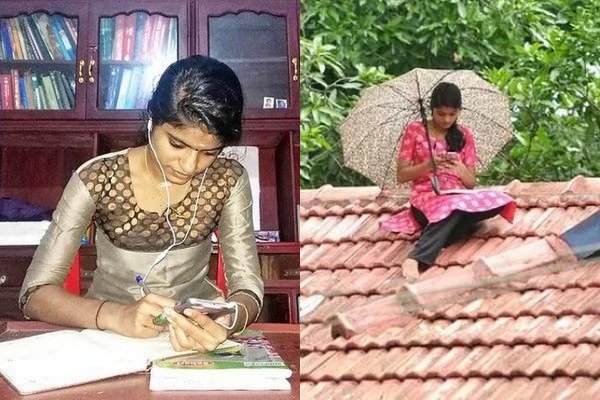
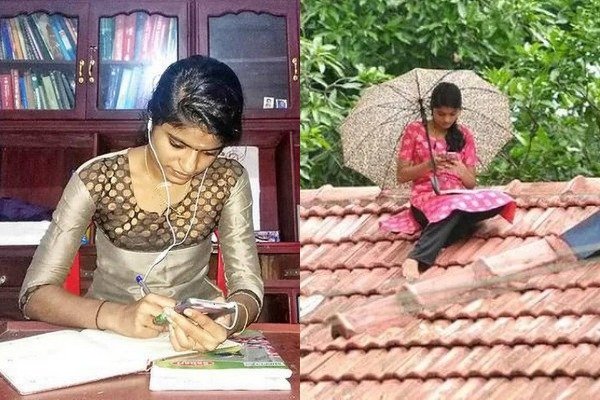
    A girl in Kerala, India broke the internet for her tireless dedication to studies against all odds. Namitha who is taking online classes during lockdown could only found find manageable signal strength for mobile data on the rooftop. She climbed the rooftop to get better signals to attend her online classes.

    As per reports, Namitha is a student of fifth semester BA English. Namitha Narayana was seeking better connectivity at her home near Kottakkal, Kerala, to attend online classes. Due to poor signal in her room, she climbed up and sat on the tiled rooftop of her house to study without a disturbance.

    Explaining why she chose the rooftop space for study, Namitha said, “We tried all places in my house, including verandas and roofs. And finally, I got fairly good signal strength on the top of our two-storey house.”

    After the pictures did rounds on social media the technical staff of the company came to her home and installed a better internet connection.

    “I am happy I can now learn from the comforts of my house,” said Namitha.

    Her elder sister Nayana too praised the positive response from the network operators and how quickly they worked it out.

    Syed Abid Husain Thangal, MLA of Kottakkal reached out to the family and said, “Namitha’s photo studying from the rooftop has become a symbol of the state’s connectivity. She is also a symbol of the perseverance displayed by the state’s student community. By setting herself an example, Namitha has become an inspiration for others.”

  • Bangladeshi man walks 2,000 KM to stop his Pakistani sweetheart from getting married

    Bangladeshi man walks 2,000 KM to stop his Pakistani sweetheart from getting married

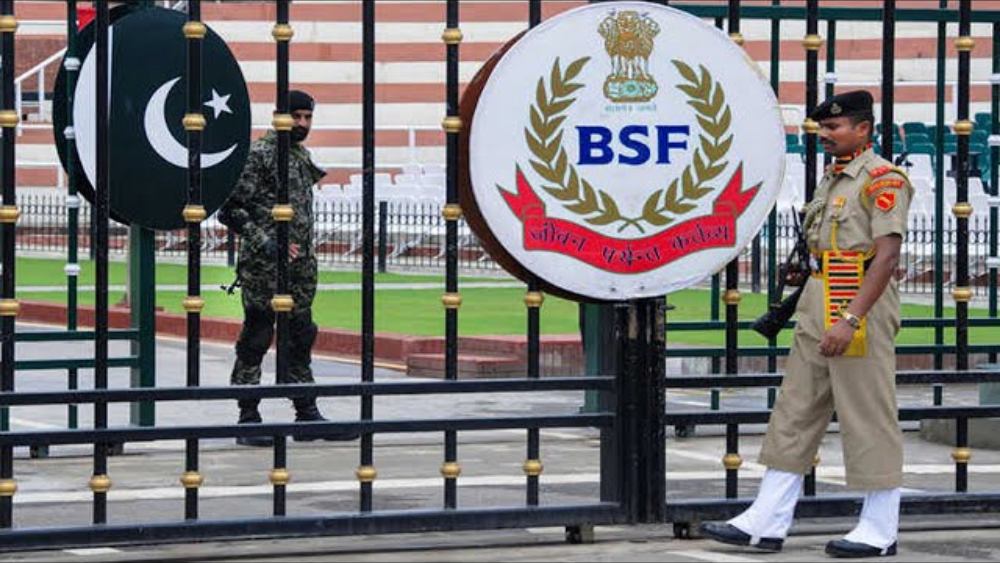
    A Bangladeshi national walked up to 2,000 kilometres amid coronavirus lockdown to see his social media friend in Karachi who was getting married to another man. He first crossed the India-Bangladesh border illegally and then found his way to Attari, Amritsar.

    Then he tried to cross the India-Pakistan border but was arrested by an Indian Border Security Force (BSF) officer.

    Identified as Nayan Mian, the 26-year-old is a resident of Shariatpur, a district in the Dhaka division of central Bangladesh. When he was arrested, he only had a mobile phone with a Bangladeshi SIM card and some Indian currency notes.

    Mian did not cross the border with bad intent, but he just wanted to meet his Pakistani friend who was getting married to another man.

    Read more – Second wife pours hot water on husband over third marriage

    During the investigation, it was revealed that the girl’s family shared ties with his family. However, they were separated after his parents shifted to Bangladesh in 1971. A few years ago, he reached her on social media and fell in love with her.

    “The girl is my cousin and we were connected through social media. We used to talk through video calls, but had been out of touch for 10 to 15 days. She had accepted my marriage proposal and that’s why I intended to visit her. I heard that many stranded Pakistanis were being repatriated these days, so I thought of taking a chance,” he said.

    Mian told the police that he first reached Kolkata, then passed through Agra, New Delhi, and then came to Punjab, mostly on foot.

  • Pregnant elephant dies after eating pineapple stuffed with firecrackers in India

    Pregnant elephant dies after eating pineapple stuffed with firecrackers in India

    A pregnant elephant died in Kerala, India after she allegedly ate a pineapple stuffed with firecrackers. The fruit exploded in her mouth badly damaging her jaw and eventually causing her death.

    The Kerala Forest Department has lodged an FIR (First Information Report) against those responsible for the death of a 15-year-old pregnant wild elephant.

    The Wildlife Warden of the Silent Valley National Park said this was a serious crime whosoever was behind it.

    “We are quite certain that we will find the perpetrators of this crime, which is in no way acceptable at all. It was on the 23rd of last month we came to know about this incident when the elephant was spotted near a water source outside the national park,” said Pachuau.

    As per reports, some people had placed firecrackers inside a pineapple and this was eaten by the wild elephant and in the process of chewing the cracker burst and injured the elephant.

    “We called a veterinarian and later on the 25th, an elephant expert David Abraham came and examined and explained to us the bad situation,” said Pachuau.

    “We informed the Forest officials that its situation was bad and two days later the elephant died in the water.”

    The next day, when we conducted the post-mortem we found a nearly two-month-old fetus. From the uterus, we could make out it was the first pregnancy of the elephant. That sight left many of us deeply sad and moved.

    Only when we conducted the autopsy, we could see that the upper and lower jaw, teeth and tongue of the elephant was badly damaged. The cause of death is due to the aspiration of the lungs as it was filled with water. It was a sad day for many of us,” said Abraham.

    Soon after the autopsy was conducted, the dead elephant was buried in the Forest.

    “Two sets of teams are probing this incident,” added Pachuau.

    Meanwhile, several Bollywood stars including Anushka Sharma and Varun Dhawan condemned the incident and called for harsher laws against animal cruelty.

    https://www.instagram.com/p/CA99hNLB9Sa/