Tag: India

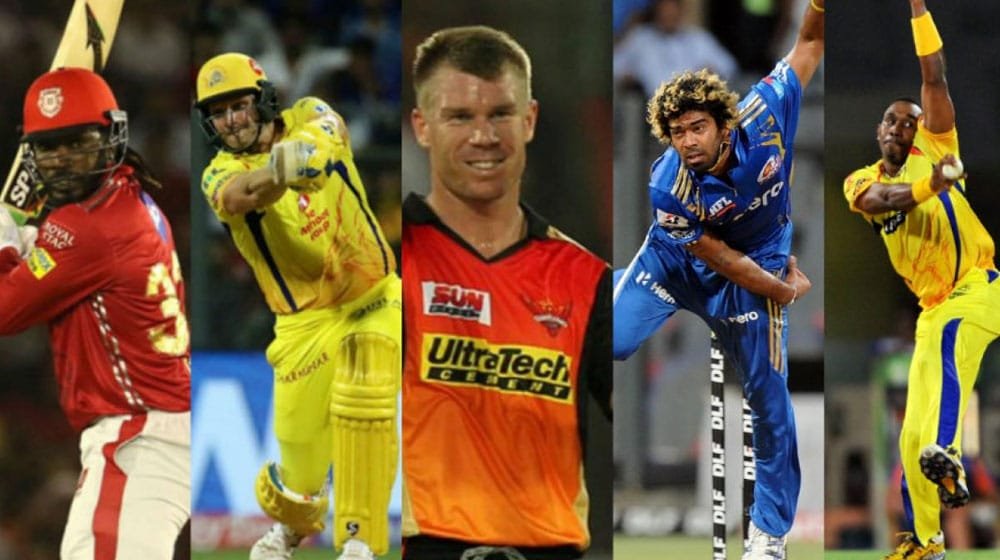
  • Coronavirus: IPL likely to begin without foreign players

    Coronavirus: IPL likely to begin without foreign players

    Chennai Super Kings Chief Executive Officer (CEO) Kasi Vishwanathan has made it clear that the fresh visa advisory from the Indian government has made it almost impossible for foreign players to join their respective teams in the 13th edition of the Indian Premier League (IPL) before April 15 unless the Board of Control for Cricket in India (BCCI) gets special permission.

    According to Indian media reports, the CEO said that most of the foreign players were booked on business visas and in such a scenario the fresh advisory sent out by the government on Wednesday said that they won’t be allowed entry till April 15, despite the cricketing tournament beginning later this month.

    “Most of the players are travelling with business visas and that is how they come and play in the IPL. So, it will be impossible for them to join the teams unless the BCCI gets special permission. As of now, it is not possible as the diktat is pretty clear and we cannot go against the government,” he said.

    Asked what could be the best way forward, he said, “The BCCI needs to sit down with the government and I mean both the central and the state governments across the board and get to some understanding on how they need to go forward. Unless special permission is given, it will not be possible for foreign players to join the teams.”

    A second meeting of the Group of Ministers — Cabinet Committee — on Wednesday had cancelled all visas, except for a few official categories, till April 15 in the wake of the growing coronavirus scare.

  • Indian political organisation plans ‘gaumutra party’ to fight coronavirus

    Indian political organisation plans ‘gaumutra party’ to fight coronavirus

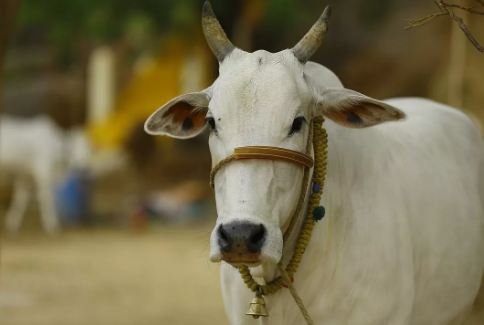
    With the sixth case of coronavirus being confirmed in India, the Hindu Mahasabha — a political organisation formed to protect the rights of the Hindu community and to safeguard Hinduism — has decided to organise a gaumutra [cow urine] party to ensure that the virus doesn’t spread in New Delhi.

    As per the details, Party President Chakrapani Maharaj has told The Print that there was a need to create greater awareness among the people on “how cow urine and cow dung, besides consuming cow products, can help eliminate coronavirus”.

    “Just like we organise tea parties, we have decided to organise a gaumutra party, wherein we will inform people about what is coronavirus and how, by consuming cow-related products, people can be saved from it,” Maharaj, who heads one of the two factions of the Mahasabha, said.

    “The event will have counters that will provide gaumutra for people to consume. At the same time, we will also put cow products like cow-dung cakes and agarbatti made from that. Upon using these, the virus will die immediately.”

    The event will be first organised at Hindu Mahasabha Bhawan in Delhi, following which such ‘parties’ will be held across the country.

    “We are in touch with gaushalas (cow shelters) across the country, who can collaborate and work with us in our mission to eliminate corona,” he said, adding that coronavirus had come to India because some ministers angered it by publicly consuming chicken.

  • Young man dies while making TikTok video

    Young man dies while making TikTok video

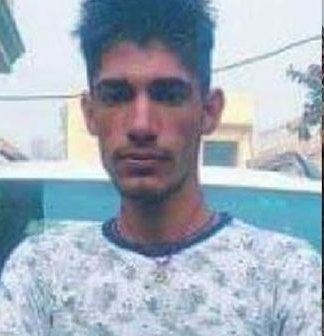
    TikTok has claimed another life in India as a young man was killed while recording a video on the railway tracks. Vikas died on the spot after he was electrocuted by the tracks.

    According to reports, the incident took place in Haryana. The 25-year-old was making a video with his friends at 4 am when he climbed up the electrical pole for a better shot. He continued to climb higher and accidentally touched one of the high voltage wires overhead. He was the only casualty in the incident.

    When he died, his friends ran away. The body was there on the wire for almost two hours. Some passersby saw the body and informed the police.

    Government Railway Police (GRP) shut off the power and took down the body. The deceased was sent to a hospital.

    Meanwhile, the police have seized his mobile phone for investigation. They suspect that Vikas and his friends had been drunk when they attempted to make the TikTok video that sadly took his life.

    Vikas lived alone with his mother. His elder brother is currently serving a prison sentence while his father has passed away.

    TikTok related deaths are not uncommon in the sub-continent. Recently a teenager in Sialkot accidentally shot himself while making a TikTok video.

  • Pressure chamber seized from Chinese ship could be for Pakistan’s nuclear weapons: Indian media

    Indian media reports have quoted Defence Research and Development Organisation (DRDO) experts as saying that the industrial autoclave — a pressure chamber used to carry out industrial and scientific processes — seized from Chinese ship Dai Cui Yun, can be used for the manufacture of very long-range ballistic missiles or satellite launch rockets.

    According to Hindustan Times, the ship on February 3 was detained by Customs at Kandla Port in Kutch District of the Indian state of Gujarat while en-route to Port Qasim in Karachi “on the basis of an intelligence tip-off” and later allowed to proceed to Pakistan on February 20 after dual-use equipment was seized.

    The autoclave was declared as an industrial dryer.

    According to top government and intelligence officials, the DRDO’s technical experts and missile scientists informed the Kandla Customs, the Ministry of External Affairs and national security planners on Tuesday morning that the seized 18 metres by 4 metres autoclave could indeed be used in the manufacture of weapons of mass destruction (WMD) platforms.

    “The autoclave can be used for the manufacture of the motor of very long-range missiles, with range upwards of 1,500 kilometres or even in the construction of a motor for the launch of satellites. Pakistan has the Shaheen-II missile in the 1,500-2,000 kilometre range and the platform was tested last May,” the report quoted an official as saying on the condition of anonymity.

    Islamabad’s nuclear missile programme is not indigenous and is based on Chinese design with Beijing helping Islamabad since the 1980s. India claims it is for no other reason that China is blocking India’s entry into the Nuclear Suppliers Group (NSG) till Pakistan is also allowed to enter the nuclear club”.

    The report added that given the seizure of the autoclave, Indian “friends” such as France and the United States (US) “could now pressure Beijing to allow India into the NSG”.

  • Delhi riots: Indian Muslims put end to decade-old land dispute with Sikhs to thank them

    Delhi riots: Indian Muslims put end to decade-old land dispute with Sikhs to thank them

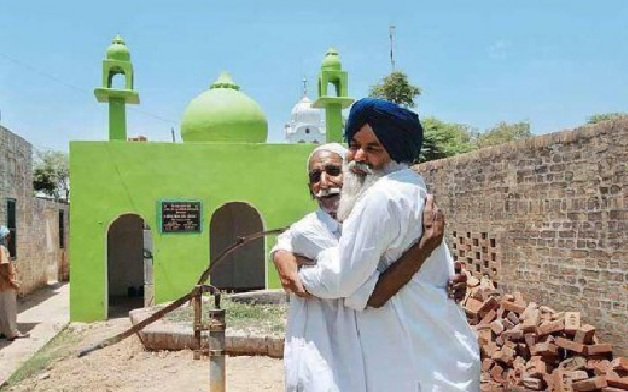
    Muslim and Sikh communities have decided to put an end to a 10-year-old land dispute that had led to riots in Saharanpur city of Uttar Pradesh (UP) back in 2014 and claimed at least three lives.

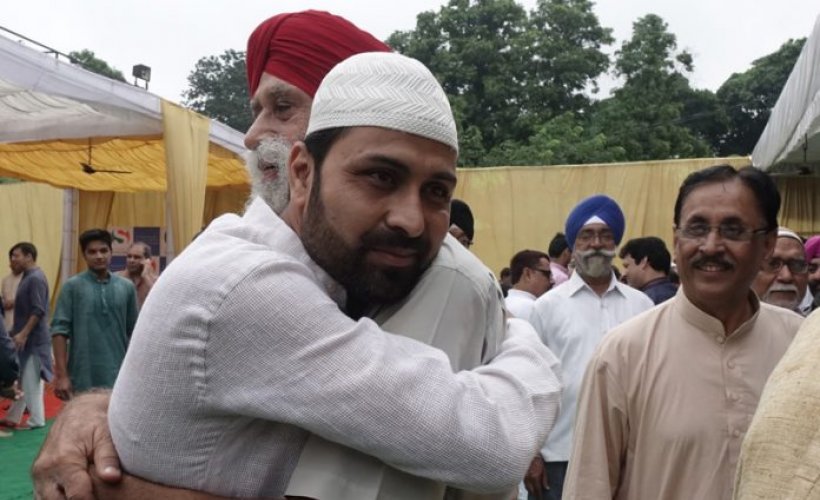
    As a gesture of gratitude for the help offered by Sikhs during Delhi riots starting last week, the Muslim community has decided to forego its claim on a piece of land that had been purchased by the gurdwara management and was a bone of contention between the two religious communities of India.

    The dispute pertains to an incident that took place two decades ago when a gurdwara committee in the Kutubsher area purchased land around an existing gurdwara with the objective of expanding the complex. After the acquisition, some old structures in the area were demolished including, allegedly, a mosque.

    Things turned violent when in July 2014 construction work to expand the gurdwara complex began. This led to large scale violence and arson which resulted in the deaths of three people and injured 33.

    The matter subsequently reached the Supreme Court of India (SCI). But now Muslims have decided to forego its claim on the piece of land. Instead, they will be allotted land at another location nearby and the gurdwara management will pay for the construction of the mosque.

    “In view of the great service and support rendered by the Sikhs to Muslims in Delhi throughout the protests and most recently during the riots in Delhi, the Masjid committee in Saharanpur decided to give up its claim over the land as a token of gratitude and thanksgiving,” Nizam Pasha, who represented the Muslim side in the Supreme Court, told The Quint.

    The petitioner, Moharram Ali, has also said that the gesture comes as a show of gratitude for the help and aid provided by the Sikh community to affected families in Delhi’s communal violence. “Sikhs stand for humanity. They help people in need. The helped people affected by the communal violence in Delhi. This is God’s work.”

  • Back to the 40s?

    Back to the 40s?

    While violence against the Muslim community of India is no longer an internal secret of our neighbour, it would be nothing less than hypocrisy to turn a blind eye towards the quality of life of minorities in Pakistan where a majority of them is equally vulnerable due to intolerance rooted in religion or ethnicity.

    When Saadat Hasan Manto finally decided to leave India amid growing communal violence back in the 40s, Indian actor Sunder Shyam Chadda wasn’t very happy with his friend’s decision.

    “Are you going to Pakistan because you think you are a Muslim?” Shyam asked Manto as the former removed the bottle of alcohol from their table.

    “I am a Muslim enough to get killed here,” Manto replied.

    Seven decades later — in the year 2020 — the world’s most populous democracy, under fascist Narendra Modi’s Bharatiya Janata Party (BJP), witnesses similar circumstances as those belonging to India’s minority communities, flee their homes in order to save their lives.

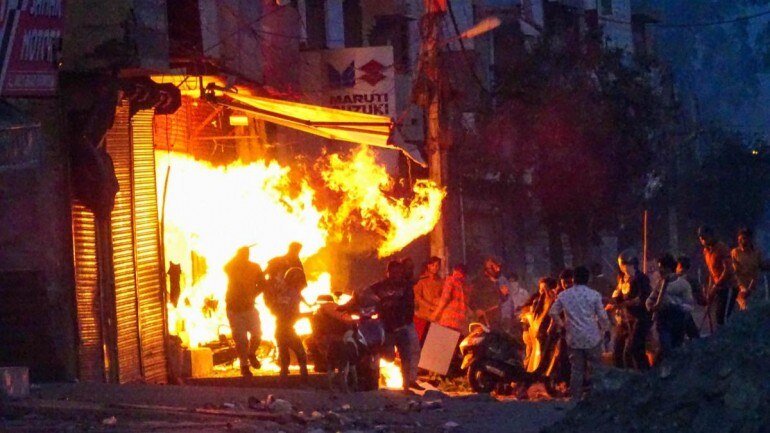
    The recent round of violence against Muslims in India by extremist Hindutva mobs has been the worst with over 40 innocent people losing their lives, mosques being set ablaze and properties of New Delhi’s Muslims being vandalised.

    The situation persisting across Pakistan’s eastern boundaries can be best explained through a mention of suzerainty, under which a single ideology asserts and maintains paramountcy or supremacy over the rest. But the problem in India is further accentuated by the fact that the state’s monopoly over violence has silently been delivered to the goons of the ruling BJP with the promise of targeting Muslims regardless of if they are at home or at a mosque.

    While violence against the Muslim community of India is no longer an internal secret of our neighbour, it would be nothing less than hypocrisy to turn a blind eye towards the quality of life of minorities in Pakistan where a majority of them is equally vulnerable due to intolerance rooted in religion or ethnicity.

    Although analyses suggest the factors that have led to the current upheaval in India are manifold, our focus, for now, will remain on religion since outside India, its importance has been rightly overshadowed by unfolding the neo-liberal agenda New Delhi is trying to implement; for which Hindutva serves as the best medium, and that too in disguise.

    It is nothing but Modi’s model from Gujarat, which is now expanding to Delhi and Ashoknagar.

    Nonetheless, the role of religion in itself cannot be undermined especially in the Indian subcontinent as both in Pakistan and India, religion has remained closely intertwined with politics since even before the partition. And from world-acclaimed statesman Gandhi to today’s fascist Modi, the combination has proved to be lethal while resulting in violence almost every time.

    The use of religion on state-level despite having a secular constitution is to achieve a purposive social order, which in other words is ‘national interest’ based on the exclusion of Muslims and inclusion of corporate and liberal values in society, surprisingly through the conservative ideology of RSS.

    Regardless of the intention behind employing religion in politics, its implications have not been desirable for the general masses, which brings into question the basic understanding of religion. Apart from politics, when religion is examined alone, the underlying principle of religion generally is expounded as that of peace and prosperity.

    Having said that, one inadvertently subscribes to the root word of religion as ‘lig’ and not ‘leg’ where the former means ‘to bind’ while the latter means ‘to gather.’

    Contrary to the broader agreement of religion to be in the greater interest of mankind by making people dependent on each other, the current predominant form of Hinduism in India is that of a certain mindset of people – the Rashtriya Swayamsevak Sangh (RSS) — coming together to serve a ‘holy purpose’ which in this case has become a national interest of BJP’s India.

    In this pretext, the use of religion on state-level despite having a secular constitution is to achieve a purposive social order, which in other words is ‘national interest’ based on the exclusion of Muslims and inclusion of corporate and liberal values in society, surprisingly through the conservative ideology of RSS, which ultimately benefits a handful of people in India by increasing their wealth and stay in power.

    Therefore, while mentioning the Citizenship Amendment Act (CAA), one should always mention its far-reaching effects in the lives of minorities other than Muslims, including Hindus with a working-class background.
  • Celebrities condemn violence against Muslims in Delhi

    Violent protests against the Citizenship Amendment Act (CAA) have been taking place in Delhi for months now but the situation appears to have worsened dramatically after shocking incidents of police brutality at universities emerged in the past couple of days.

    As per reports, over a dozen people were killed with over 200 people injured in the violence in North-East Delhi since Monday. It is pertinent to mention here that US President Donald Trump was in India during the time of these protests.

    With #DelhiBurning and #DelhiViolence trending on Twitter since Monday, many celebrities from Bollywood and Lollywood have come forward to speak out against the targeted brutality against Muslims in India.

     Hamza Ali Abbasi, who is among the most vocal actors, was the first to raise his voice.

    Hareem Farooq raised a very important question.

    Actor Mansha Pasha also wrote in a tweet, “So terrifying to see what is happening in India. Prayers for all minorities and all the people in India fighting and protesting against these bigots.”

    Sharing a picture of a burnt down mosque in India she wrote, “Secular India is going up in flames with this horrible act.”

    Armeena Khan, who has never shied away from voicing her concern on matters of public interest remarked, “We never learn, do we?”

    https://twitter.com/ArmeenaRK/status/1232387300069453826?s=20

    Many Bollywood celebrities also spoke out. Sonam Ahuja, Javed Akhtar and Swara Bhasker were among those who condemned the violence.

    A Muslim living in India gave an interview to the BBC Hindi, presenting an eyewitness account of the violence.

  • As Delhi burns, Gurdwaras open doors to Muslims fleeing violence

    As Delhi burns, Gurdwaras open doors to Muslims fleeing violence

    As New Delhi Chief Minister (CM) Arvind Kejriwal suggests calling the army amid police’s failure to quell violent communal clashes that have so far claimed at least 20 lives and left hundreds of others injured, Gurdwaras are offering help to Muslim families fleeing violence in the Indian capital.

    According to a report in India Times, members of the Sikh community are not only patrolling with their neighbours of the Indian Muslim community to ensure that no one from outside attacks the latter’s homes, but many Gurdwaras — places of assembly and worship for Sikhs — are also giving shelter to the Muslims of riot-infested Delhi.

    Novelist Nilanjana Roy tweeted that she had come across news from one part of the city wherein a Gurdwara had opened its doors to anyone who needs shelter.

    https://twitter.com/nilanjanaroy/status/1232303148766617601

    Many other people shared similar stories.

    DELHI RIOTS:

    The riots — clashes between anti and pro Citizens Amendment Act (CAA) groups, which soon took a communal colour — that began earlier this week, are the worst Delhi has witnessed in recent years.

    The controversial citizenship law has been deemed discriminatory toward Muslims, against which the Muslim minority community of India has been staging protests across the country since December last year.

    With Hindu supremacist mobs running rampage in New Delhi earlier this week, things escalated quickly.

    Violence broke out in three Muslim-majority areas in north-east Delhi on Sunday and has continued since. Protesters are split along religious lines, and each side blames the other for starting the clashes.

    But the violence has been linked to a Bharatiya Janata Party (BJP) leader, Kapil Mishra, who had threatened a group of protesters staging a sit-in against the CAA over the weekend, telling them that they would be forcibly evicted once United States (US) President Donald Trump left India.

    It merits a mention that Trump had been in the country on a two-day maiden visit. When asked about the violence during a press briefing, Trump evaded the issue, saying the incident was “up to India” to handle.

  • Pakistan declared world’s most affordable country to live in

    Pakistan has been declared the world’s most affordable country to live in, while Bangladesh is the most expensive country in South Asia and Switzerland the most expensive in the world.

    CEOWORLD — one of the world’s leading business magazines for high-level executive professionals and business leaders — has declared Pakistan the world’s most affordable country to live in, followed by Afghanistan, India, Syria, Uzbekistan, Kyrgyzstan and Tunisia, Dhaka Tribune reported.

    Source: CEOWORLD

    Meanwhile, European countries were prominent on the list of most expensive ones. Of the top 20 nations, nine were in Europe, five in Asia, one in North America and Africa each, two in the Caribbean and two in Oceania. 

    Norway ranks second in the list of the world’s most expensive countries to live in, followed by Iceland, Japan, Denmark, Bahamas, Luxembourg, Israel, Singapore and South Korea.

    A little further down in the list, there is the United States (US) at the 20th position, the United Kingdom (UK) at 27th, Saudi Arabia at 57th and Russia at 82nd.

    The rankings are based on five major metrics — cost of living, rent, groceries, eating out and purchasing power. To identify the world’s most and least expensive countries to live in, the magazine collected and reviewed data from dozens of studies, numbers of consumer price index, cost of living index and numerous national and international media reports. 

    The data was then compiled into an index, using the notoriously expensive city of New York City (NYC) as a benchmark. New York was given an index score of 100. So a country with a score higher than 100 is more expensive than New York, while below signals less expensive.

  • ‘Women participation in economic activities on the rise in Pakistan,’ says IMF

    IMF’s new report “Women in the Labour force: The role of fiscal policies” highlights an average of 2pc rise of the female workforce in Pakistan and 1pc decrease in India, DAWN reported.

    According to the IMF’s staff report, women in most countries do not have the same opportunities to participate in economic activities as men have. This gender inequality has reduced to a good extent, but the average of female labour participation is below the male rate.

    Globally, about on-quarter of countries experienced a decline in female force participation. Countries such as India and Sri Lanka facing an average annual decrease of one per cent between 1990 and 2018, whereas Pakistan, Peru and Spain experienced an average annual increase of 2pc.

    READ: Want to know how much money the PSL winning team will take home?

    The report also says “Many countries have adopted fiscal policy measures to promote gender equality since the mid-1980s. Countries use tax and expenditure policies to address gender inequality and the advancement of women in areas such as education and economic empowerment. Fruthermore, in 2018, at least 80 countries have used gender-responsive fiscal policy interventions to reduce gender inequality.

    READ: Kaala Jadu: Jemima shares poster of herself, PM Imran and Bushra Bibi

    Women’s economic empowerment is the key to growth and productivity. Greater participation of women in the labour force also brings greater diversity that can foster new ideas for production and management, boosting aggregate productivity.