Tag: India

  • Muslim couple gets married at protest against India citizenship law

    Muslim couple gets married at protest against India citizenship law

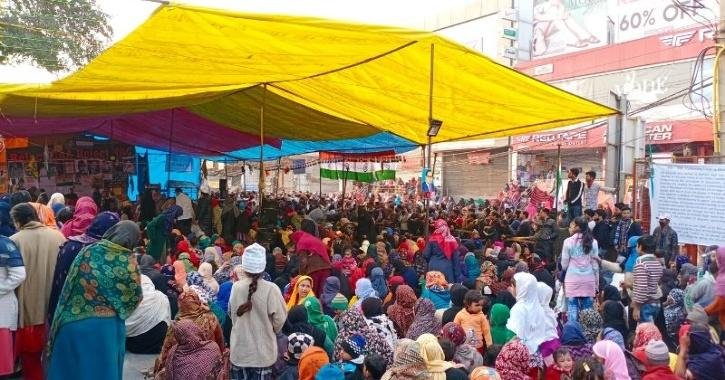
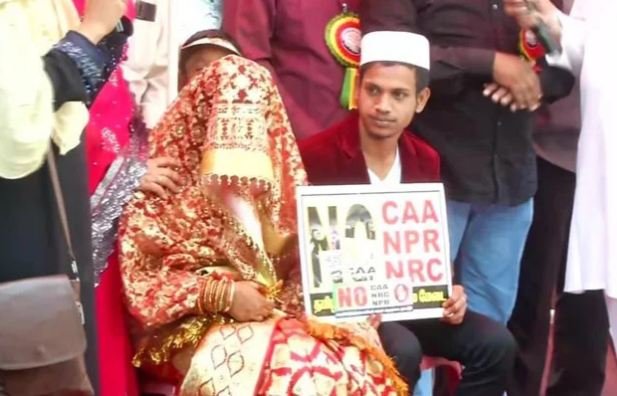
    Amidst the current protests in India, a Muslim couple tied the knot at the site of anti-CAA protest in Chennai on Monday, February 17.

    The couple had a unique wedding ceremony while holding anti-Citizenship Amendment Act (CAA) placards in hands that read: “No CAA, NPR, NRC.”

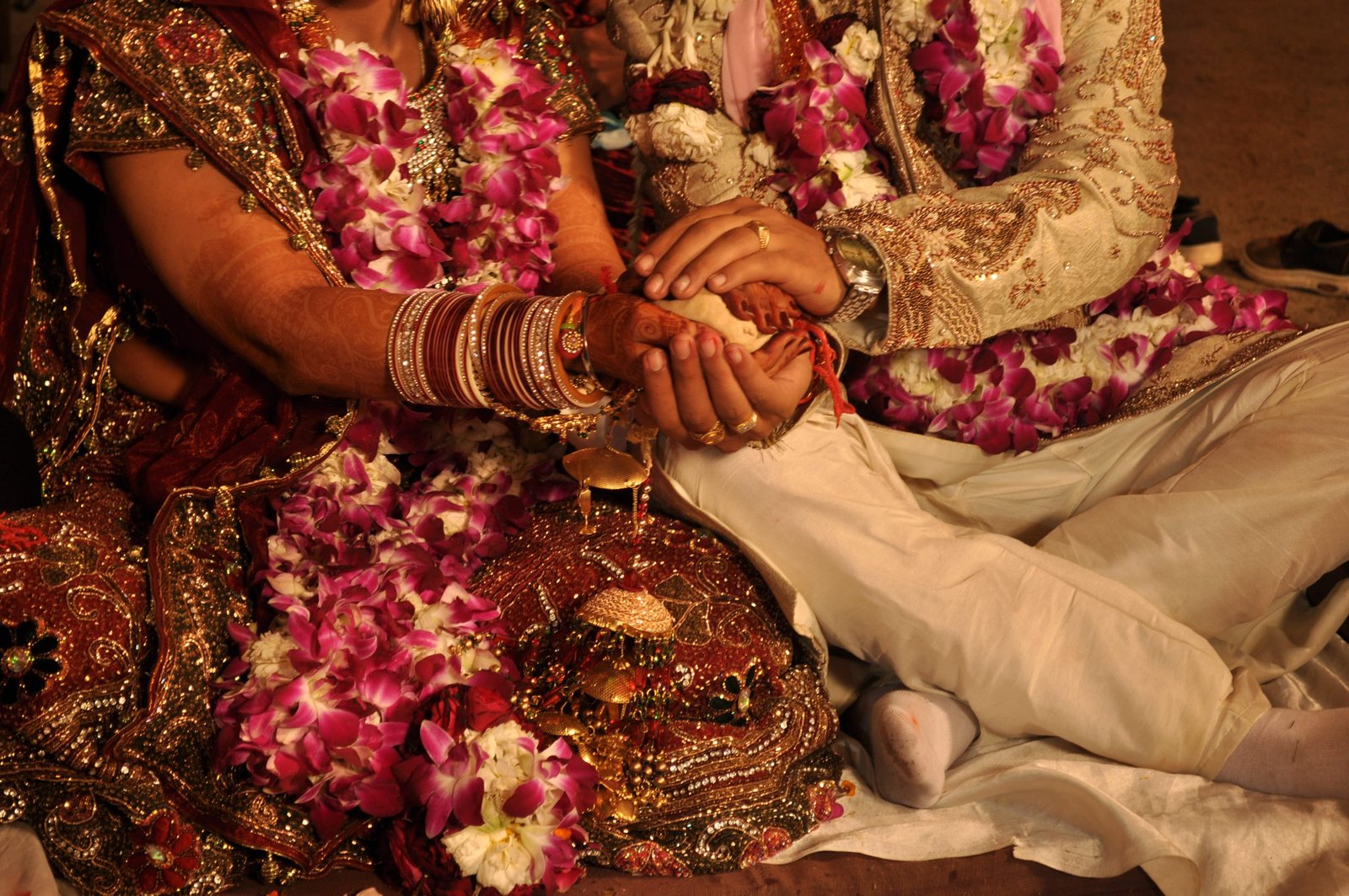
    Sumayya and Shahin Shah decided to get married at the site of a protest in the capital of Tamil Nadu. Their marriage was solemnized by an Imam among the crowd of protesters. Sumayya wore a bright red saree with heavy zari work while the groom, Shahin Shah, wore a maroon jacket.

    The couple received a warm welcome from the crowd and they received gifts and cash presents.

    https://www.youtube.com/watch?v=ZXXZcV0lkYM&feature=emb_title

    The Citizenship Amendment Act, 2019 was passed by the Parliament of India on 11 December 2019 and has caused an uproar in India and sparked protests across the country.

    Under the CAA 2019, religious minorities that have taken refuge in India till 2014 are eligible for citizenship. However, the Citizenship Amendment Bill (CAB 2019) makes it a point to exclude Muslims. The law requires Indian Muslims to prove their origins in India otherwise they stand to lose their citizenship.

  • ‘India offered to evacuate Pakistani students from coronavirus-hit China’

    ‘India offered to evacuate Pakistani students from coronavirus-hit China’

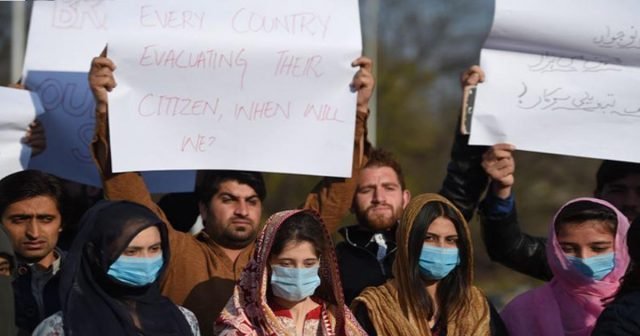
    India had offered to evacuate Pakistani students from China’s Wuhan — the epicentre of deadly coronavirus –, Minister of External Affairs S Jaishankar told Rajya Sabha [Upper House of Indian Parliament], India Today reported.

    According to reports, replying to a question posed by Bharatiya Janata Party (BJP)-nominated lawmaker Rupa Ganguly, S Jaishankar told the house that before the two Air India flights were sent in, India had offered ‘bring back all the people in our neighbourhood’.

    “At the time when two flights were going, we had told all the students and the larger community in Wuhan that we were prepared not only to bring back our own people but bring back all the people in our neighbourhood who would like to come back,” Jaishankar said.

    “This was an offer which was made to all our neighbours, but of them, seven nationals of Maldives chose to avail the offer. But the offer was made to everybody,” the minister clarified.

    Last week, two Air India flights had brought back 638 Indian nationals and seven nationals of Maldives. 80 Indian students left behind in Wuhan

    The minister of external affairs informed the fouse that despite an evacuation effort, 80 Indians — including 10 who were barred from boarding the evacuation flight as they showed symptoms of coronavirus — have remained back in Wuhan.

    Jaishankar said that the 70 Indians chose not to be evacuated, but the Indian Embassy is in constant touch with them all. “I want to assure the house and the families of those in Wuhan that the embassy is in touch with all students and is regularly monitoring their welfare,” he said.

    The minister also applauded the efforts of two embassy officials who risked their lives and traveled from Beijing to Wuhan to help in evacuation efforts.

  • Five-year-old raped inside US Embassy compound in Delhi

    Five-year-old raped inside US Embassy compound in Delhi

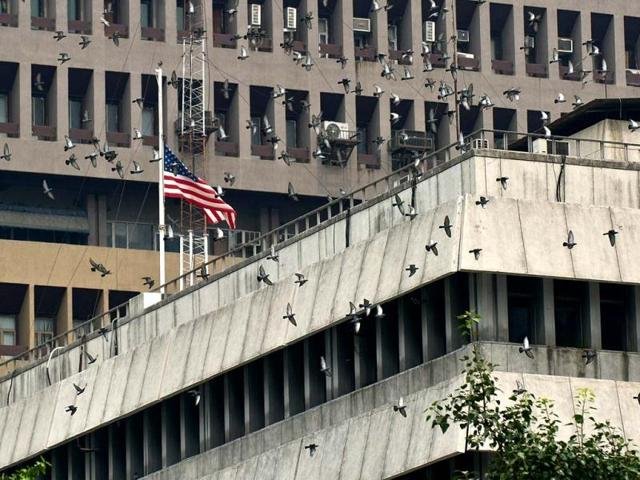
    A man has been arrested for allegedly raping a minor girl in the grounds of the United States (US) Embassy in New Delhi, CNN quoted police sources as saying.

    According to reports, the girl was playing outside the embassy’s staff quarters before she “was lured and raped by a neighbour”. Reports quoted Delhi Police Deputy Commissioner Eish Singhal as saying that the girl, who is the daughter of a housekeeper employed by the embassy, later identified the 25-year-old male suspect, who has been arrested and charged with rape.

    “She was able to identify him point blank and there is no doubt over this,” Singhal said, adding that the suspect remains in custody.

    The incident has appalled embassy staff. In a statement to CNN, a US Embassy spokesperson said they were deeply disturbed by the alleged misconduct. “We promptly took action when we were informed of the allegation, and brought this matter to the attention of the police. Of course, we are cooperating fully with them,” the spokesperson said.

    An investigation has been launched, and a court date is yet to be set. In the wake of the brutal 2012 Delhi gang rape — which brought worldwide condemnation and still haunts the collective memory of women in India’s capital –, lawmakers passed a series of amendments to the existing rape laws.

    The amended law lengthened prison terms and introduced the death penalty in cases in which the victim is younger than 12 years of age.

  • Indian police mistake wedding for anti-Modi protest, uproot tents

    Indian police mistake wedding for anti-Modi protest, uproot tents

    As anti-Citizens Amendment Act (CAA) and National Register of Citizens (NRC) protests against Prime Minister (PM) Narendra Modi’s government continue across India, Uttar Pradesh (UP) police have disrupted a wedding after mistaking it for a sit-in.

    According to India Times, UP police on Saturday uprooted a tent meant for a wedding in the Mohalla Mirdagan area of Bijnor city. The wedding was scheduled for February 4 and the bride’s father had set up the tent in a vacant land.

    All gifts and other items for the bride were kept in the tent. Police arrived on the spot and assuming that the tent was set up for anti-CAA/NRC protest without permission, started uprooting it. However, after realising the truth, they asked the family to reinstall the tent, reportedly not even helping them.

    The anti-CAA and NRC protests are ongoing protests taking place across India and overseas against the CAA that was enacted into law on December 12, 2019, and the proposals to enact a nationwide NRC. The protests began in Assam, Delhi, Meghalaya, Arunachal Pradesh and Tripura on December 4, and within a few days, spread across India, though the concerns of the protesters vary.

  • Woke students in ‘secular’ India

    The BJP coming to power has only removed the lid from the internal realities of the unsuccessful story of Indian democracy.

    Unlike Pakistan, where student unions were banned during the military rule of Ziaul Haq, in India, student unions on campuses have successfully sustained till date. In the past few years, Jawaharlal Nehru University (JNU) has been mentioned as a refrain in discussions on student politics — particularly in terms of burgeoning progressive politics — the spillover effect of which has reached not only Pakistan, but major parts of the globe as a good omen for the oppressed.

    The student union of JNU, better known as JNUSU, was recognised as a symbol of resistance, the voice of voiceless and a representative of the marginalised and vulnerable communities within India. JNUSU gained popularity across the world after its former president Kanhaiya Kumar was arrested from campus in 2016 due to his association with a protest gathering held at JNU.

    The protest was organised by some students of the varsity on February 9, 2016, in order to commemorate the judicial killing of Afzal Guru (hanged Feb 9, 2013) and also to question the violation of human rights by the Indian state in Indian occupied Kashmir (IoK).

    Consequently, the fascist Bharatiya Janata Party (BJP) government pressed charges against the students who had organised the protest, as well as Kanhaiya, who had addressed the protest gathering. Kanhaiya, Umar Khalid and Anirban Bhattacharya were the three students who were jailed following the registration of an FIR [First Information Report] against them.

    With already popular Azadi slogans taking a different tone following Kanhaiya’s arrest, students – especially Kashmiri — took a tone that went on to prove their courage at the forefront of the struggle against Indian Prime Minister (PM) Narendra Modi’s fascist regime.

    The recent wave of mass-mobilisation in India started in the aftermath of the controversial Citizenship Amendment Act (CAA) that grants the government the right to declare people, unable to produce citizenship documents, as “illegal immigrants” and allows any declared illegal immigrant, except Muslims, to become a citizen of India on the grounds of persecution in neighbouring Muslim states.

    CAA’s implementation, however, comes after forming a National Register of Citizens (NRC). NRC has been implemented in the Indian state of Assam where people, who have not made it to the register, have either already been detained in camps or are facing the threat of landing in the same since there is no way to prove which countries do these allegedly illegal immigrants belong to.

    The massive mass-scale protests in India against the discriminatory CAA law drew much attention after the December 15 protest led by students of Jamia Millia Islamia University in a Muslim locality of New Delhi. With police cracking down on these protesting students by not only baton-charging but also shooting them, and that too on campus, tables started to turn on the Indian state.

    With students of Aligarh Muslim University protesting on campus against the brutality met out to their peers from Jamia Millia Islamia University, a new wave of resistance took over India. Fierce confrontation meted out to the cops, especially by female students, in what turned out to be the defining moment for the anti-CAA movement, as more people, although largely Muslims, joined the protests, and the same still goes on.

    Outside their campuses, students of Jamia Millia and Aligarh University are much more involved in mobilising and organising the ongoing protests. However, they are subsumed by the grandiosity of JNU and its student leadership that has expressed solidarity to Jamia students by joining one of the protests outside JNU.

    Despite a huge communication gap and both Pakistan and India’s coercive forces employed to keep people away from each other, the engagement of student-political activists gives us hope that a broader united front to fight injustice and oppression will someday be built.
    While mass participation of students, youth and religious minorities in the protests against BJP’s plan of constructing a Hindu Rashtra, which according to their publicised map, is extended to Afghanistan, seems insufficient to deal with, it is important, as well as necessary, to demand that the newly-passed legislation by the parliament be rolled back.

    But would it ensure peace and security for Muslims and other marginalised communities like Dalits, who too are at risk after the promulgation of CAA and NRC? Or in other words, does the struggle for safeguarding Indian constitution in itself, guarantee protection to religious minorities?

    Apart from the popular discourse propagated around the Indian constitution that claims it is ‘secular’, the deployment of state apparatus against lower caste people within Hindus and other marginalised and religious minorities, tell a different story, which has become clearer under the BJP. The destitution of religious minorities in terms of poverty, employment, education and above all, political representation, stands in testimony to the fact that they were reduced to ‘second-class citizens’ in the largest democracy of the world even when BJP was not in power.

    The BJP coming to power has only removed the lid from the internal realities of the unsuccessful story of Indian democracy. Therefore, it becomes much more significant for the protesters from Asam to Uttar Pradesh and from Jamia Millia to Shaheen Bagh to consolidate these anti-BJP forces in one political project which possibly would push the current discourse beyond constitutionalism, instead of leaving the burden of saving constitution and secularism on the shoulders of already underprivileged Muslim community of India.

    Amid all the recent political developments in Pakistan and India, there has been a convergence of progressive ideas across the border which is largely manifested in the unconditional solidarity extended by the Progressive Students’ Collective (PSC) among other progressive student organisations in Pakistan to their counterparts in India.

    Despite a huge communication gap and both the states’ coercive forces employed to keep people away from each other, the engagement of student-political activists gives us hope that a broader united front to fight injustice and oppression will someday be built.
  • India promotes traditional remedies to fight the new coronavirus

    India promotes traditional remedies to fight the new coronavirus

    As all are paranoid after the deadly coronavirus and scientists are trying to find a cure for the virus, the Indian government said that the cure could be found in ancient homeopathy and Ayurveda remedies.

    Ayurvedic medicine that means the ‘science of life’ in Sanskrit, treats the physical and mental sources of illness through herbs in combination with yoga or massage.

    The Indian ministry that promotes the country’s growing Ayurveda, yoga, and homeopathy sectors released an advisory listing herbal oils to be rubbed into the scalp to hypothetically ease the symptoms. It also suggested ingesting Arsenicum album-30, a homeopathic treatment.

    The dose should be repeated after one month by following the same schedule in case coronavirus infections prevail,” the ministry of AYUSH (Ayurveda, Yoga & Naturopathy, Unani, Siddha, Sowa Rigpa and Homoeopathy) said in a statement.

    The ministry also advised on maintaining personal hygiene to prevent the spread of the virus. The advisory came as the Dalai Lama, in exile in Dharamsala in India, said on Facebook that followers concerned about the virus should chant a mantra that would help them in dealing with the situation.

    India claims to have natural remedies for everything from cancer to the common cold. Prime Minister Narendra Modi has said he wants the world to make Ayurveda ‘a way of life’.

  • Groom’s father and bride’s mother, who ‘eloped’, appear before police

    Groom’s father and bride’s mother, who ‘eloped’, appear before police

    Days after an Indian textile businessman, whose son’s marriage was fixed on February 13, allegedly eloped with the bride’s mother, the couple has appeared before the police to clarify the situation.

    According to The Indian Express, husband of the woman didn’t allow her back at home, following which, she went to her parents’ house. The marriage of son and daughter of the eloped couple was cancelled.

    The report quoted the family of the couple as saying that the marriage of the groom from Surat city was fixed with a bride from Vejalpore village in Navsari district. Preparations were on in full swing when the groom’s father allegedly eloped with the bride’s mother.

    Over 20 years ago, the groom’s father, now 43, who was from a poor economic background, had an affair with a woman from a rich family. The woman’s family was against the relationship and she was married off to a youngster from Navsari. The man got married to a woman from Surat.

    The family said the man met the woman, now 41, again at a funeral almost a year ago. By then their children were grownups and the man sent a marriage proposal of his son to the daughter of the woman. The girl and boy met and got engaged around eight months ago, following which the families agreed to the marriage.

    Both the families used to visit each other’s house and the couple met regularly. They were also in touch on social media, the family said.

    A few days before their elopement, the woman’s husband learnt about their relationship and had warned her, said Navsari police. Seeing no way out, the businessman, father of two sons, eloped with the woman on January 10, police said. The woman’s husband filed a missing complaint with Vejalpore police station, while another missing complaint was filed by family members of the businessman with Katargam police station and later with Kadodara police station in Surat.

    Before leaving Surat, the businessman called up his friend Raju and informed him about the same and requested him to take his bike home from Kadodadara. Raju reached Kadodara and informed the police. However, police failed to trace the couple.

    On Sunday night, the couple appeared before the police and clarified how they had left willingly.

  • Cloud kitchen startups make Indian housewives major economic force

    Cloud kitchen startups make Indian housewives major economic force

    At a time when South Asian women long to demand their basic rights in the face of hardships such as a convincing their families for proper access to education and the world for better employment opportunities, it appears that technology has transmuted their dreams into a reality.

    In India, new smartphone apps like Curryful, Homefoodi and Nanighar are tapping the skills of housewives to prepare meals for hungry urbanites and millennials who cannot manage both office and domestic work simultaneously.

    These cloud kitchen restaurants have no physical presence but they deliver delicious home-cooked food right at your doorstep.

    “Housewives were a huge untapped resource and we want to be the Uber of home-cooked food,” said Ben Mathew, who launched Curryful in 2018.

    His company has five people for the app’s daily maintenance and operations, who work with 52 women and three men. This 31-year-old web entrepreneur hopes to get one million women chefs on board by 2022.

    Here is an interesting drill that they do, they usually train employees in processes of sanitisation, cooking, prep time and packaging, and then launch them on the platform.

    With India’s cloud kitchen sector expected to reach $1.05 billion by 2023, according to data platform Inc42, other companies are also keen to get a slice of the action.

  • Groom gifts 100 books as haq mahr to his bride

    Groom gifts 100 books as haq mahr to his bride

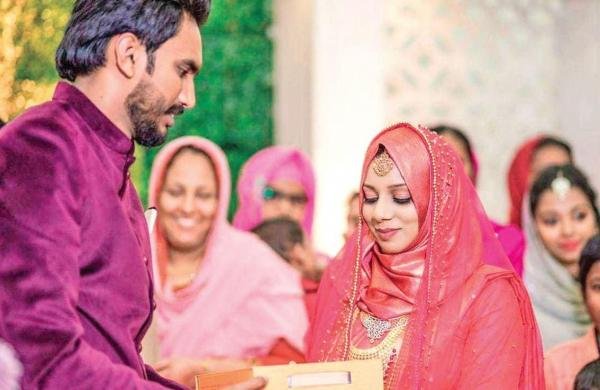
    A man from Kerala Ijas Hakim has given 100 books as ‘Haq Mahr’ to his wife. This Kerala couple and their mahr went viral on the internet.

    The bride Ajna Nizam got 100 books that she wanted to read. Ijas knew her favorite ones because she gave him a list of 100 books that she wants to read. The books included the Quran, Bible and Bhagavad Gita, Constitution of India and Khaled Hosseini’s books and some from Murakami (Murakami is a Japanese writer. His books and stories have been bestsellers in Japan as well as internationally).

    Normally mahr is either a large sum of money or valuables or property that a Muslim man gives to his bride at the time of the nikkah.

    Soon the couple and their story started doing rounds on the internet. Neither Ijas nor Ajna wanted to end up as a viral couple goal but their friends made that happen.

  • I have more money than he has hair: Shoaib Akhtar about India’s Sehwag

    I have more money than he has hair: Shoaib Akhtar about India’s Sehwag

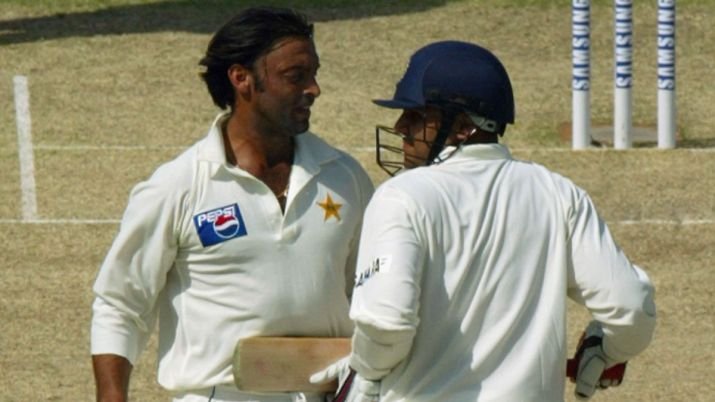
    Former Pakistani bowling star Shoaib Akhtar has dismissed former Indian batsman Virender Sehwag’s claim that Rawalpindi Express showers praise on India because “it makes business”.

    An old video, showcasing Sehwag, had recently resurfaced and made waves on social media in which the former Indian sportsman says Akhtar praises cricket rivals as it would make him a quick buck, The News reported.

    Akhtar, while speaking to a private media outlet on Wednesday, explained that the video was taken out of proportion and sarcastically remarked that he had “more money than Sehwag had hair on his head”.

    “Sehwag is a great friend of mine. He spoke these words in a light-heartened way but people were quick to take things out of context,” he said. “I mean, I have more money than he has hair on his head.”

    Furthermore, Akhtar clarified that other big names in Pakistan cricket would share kind words for the neighbours and added that “jealous” people want to divide the two cricket nations.

    “I have fans across the world, not just in India. That’s why I have the fastest growing YouTube channel. It does not mean that I’m looking to make money if I compliment them. Ramiz Raja and Rashid Latif say good things about India as well.”

    “I do think that there is a factor of jealousy, I have been targeted time and time again we are already politically divided but now people want to divide cricket as well,” he said.