Tag: India

  • India decides to pull out troops from occupied Kashmir

    India decides to pull out troops from occupied Kashmir

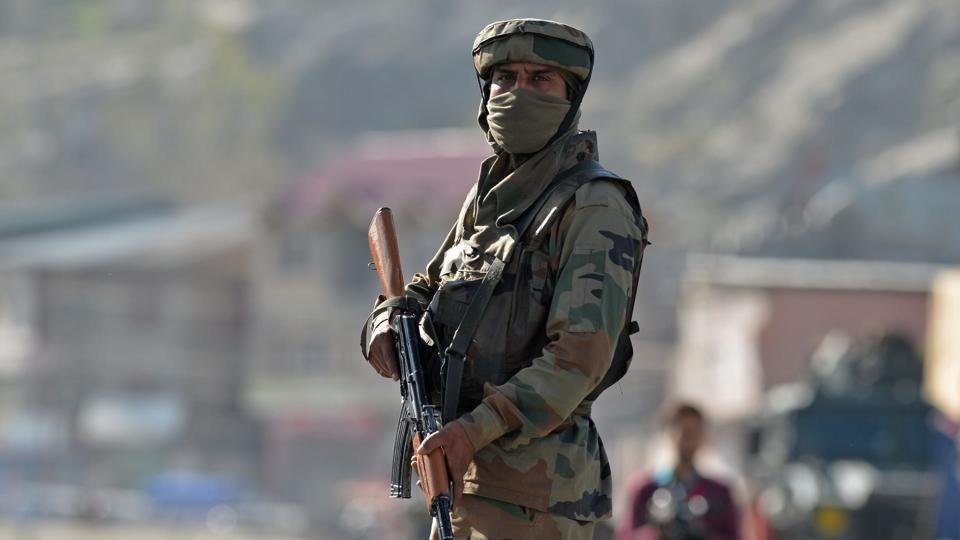
    The Indian government has decided to pull out over 7,000 para-military troops from occupied Kashmir on account of the improvement in law and order situation there and also because the troops were on short-term deployment, Times of India reported.

    According to reports, of the nearly 7,200 troops being called back from the disputed region, 2,400 are from the Central Reserve Police Force (CRPF) and 1,200 each from Border Security Force (BSF) SSB, CISF and ITBP. They were all deployed in the state in view of the government’s decision to abrogate Article 370.

    The development in August had paved way for ethnic cleansing of Muslims in Kashmir, drawing strong reactions from the international community, especially Pakistan, as Kashmiris faced isolation amid curfew.

    As widespread protests continued across the valley, Indian occupying forces had converted it into a garrison by deploying hundreds of thousands of troops and paramilitary personnel in every street, line and by-lane to stop people from staging demonstrations.

    WHAT IS ARTICLE 370?

    Article 370 was the basis of Jammu and Kashmir’s accession to the Indian union at a time when former princely states had the choice to join either Pakistan or India after their independence from the British rule in 1947.

    The article, which came into effect in 1949, exempts Jammu and Kashmir state from the Indian Constitution.

    It allows IoK to make its own laws in all matters except finance, defence, foreign affairs and communications. The article established a separate constitution, a separate flag and denied property rights in the region to the outsiders.

    That means the residents of the state live under different laws from the rest of the country in matters such as property ownership and citizenship.

    WHAT IS ARTICLE 35A?

    Article 35A is a branch of Article 370, which was introduced through a presidential order in 1954 to continue the old provisions of the territory regulations.

    The article permits the local legislature in IoK to define permanent residents of the region. It forbids outsiders from permanently settling, buying land, holding local government jobs or winning education scholarships in the region.

    While Article 35A has remained unchanged, some aspects of Article 370 have been diluted over the decades.

    WHY WERE THEY ABOLISHED?

    The ruling Bharatiya Janata Party (BJP) and its right-wing allies have challenged Article 35A which it calls discriminatory. Earlier this year, a senior BJP leader had hinted that the government was planning to form exclusive Hindu settlements in the region.

    With the special status repealed, people from the rest of India would have the right to acquire property in IoK and settle there permanently.

    Kashmiris fear the move would lead to a demographic transformation of the region from majority-Muslim to majority-Hindu, paving way for Prime Minister (PM) Narendra Modi’s hardliner BJP in the disputed territory.


  • Indian media mistakenly names Atif Aslam’s son as ‘Alhumdulilah’, apologises later

    Indian media mistakenly names Atif Aslam’s son as ‘Alhumdulilah’, apologises later

    Atif Aslam took to social media to announce the arrival of his baby boy with the caption ‘Ladies and gentlemen our new arrival Alhamdulilah. Both mother and baby are fine. Keep us in your prayers and don’t forget to say Mashallah’.

    Atif was thankful to God so he wrote Alhumdulilah. But someone who works in an Indian tabloid surely did not know what the term means.

    And soon people started trolling the post.

    However, the writer accepted the mistake and also corrected it.

    Desi Martini also posted an apology for the mistake.

  • Feroza Aziz is back with another hidden message

    Feroza Aziz is back with another hidden message

    A video by a beauty vlogger went viral on TikTok. Video of Afghan-American TikToker, Feroza Aziz has a hidden message about the Indian Citizenship Amendment Act (CAA 2109). The video starts with a skincare routine and then Feroza starts talking about Indian CAA that violates human rights.

    According to the Indian government, CAA 2019 is supposed to grant citizenship to religious minorities that have taken refuge in India till 2014. Except for the Citizenship Amendment Bill (CAB 2019) makes it a point to exclude Muslims. The law requires Indian Muslims to prove their origins in India otherwise they will lose their citizenship.

    This 17-year old TikToker made a video with the hidden message about China’s treatment of Xinjiang Uighur Muslims before.

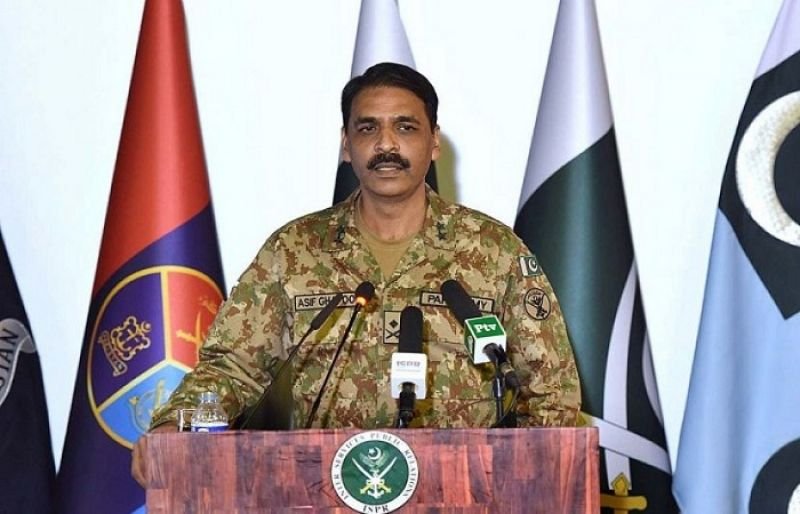
  • ‘Pakistan has got its act together’: Indian cybersecurity praises DG ISPR Gen Asif Ghafoor

    ‘Pakistan has got its act together’: Indian cybersecurity praises DG ISPR Gen Asif Ghafoor

    India’s cybersecurity chief on Saturday stressed the need for a unified public relations command for the three wings of the armed forces to ensure an upper hand in the narrative warfare with Pakistan, which, he opined, has “got its act together” through its Director General Inter Services Public Relations (DG ISPR) Major General Asif Ghafoor.

    According to a report in India Today, National Cyber Security Coordinator Lieutenant General Rajesh Pant (retd) while speaking at a seminar said the three wings of the armed forces have their own public relations officers and “they are going in different ways”.

    “When are we going to have our own equivalent of the DGISPR,” he is reported to have said, adding, “The (Indian armed forces) services have their own PRs and they are going in different ways.”

    Pant remarked that Pakistan has got “its act together” in narrative warfare because of DG ISPR.

    Elaborating further Pant said, “When they (DGISPR) conduct narrative warfare, let’s say in the case of Kashmir, the message they send to Europe is that human rights are being infringed. When they engage with Islamic nations they tell them that Islam is under threat. And what they told Southeast Asia is that there is a regional instability.”

    “So, they seem to have got their act together,” he concluded.

    Meanwhile, General Asif Ghafoor also took to social media to share his reaction.

  • BJP offers Indian citizenship to Musharraf after death sentence

    BJP offers Indian citizenship to Musharraf after death sentence

    Amid the ongoing protests across India against the controversial Citizenship Amendment Act (CAA), 2019, a senior leader of the ruling Bharatiya Janata Party (BJP) has tweeted on granting “fast track” citizenship to former Pakistan president Gen (r) Pervez Musharraf, who has been sentenced to death for treason.

    “We can give Musharraf fast track citizenship since he is from Daryaganj and suffering persecution. All self-acknowledged descendants of Hindus are qualified in a new CAA to come,” Subramanian Swamy tweeted Thursday.

    On Tuesday, a special court in Pakistan had sentenced the former military ruler to death in the long-drawn high treason case against him.

    Meanwhile, for the past one week, widespread protests are taking place across India over the newly enacted CAA that provides citizenship to Hindus, Sikhs, Buddhists, Jains, Parsis and Christians who face religious persecution in Pakistan, Bangladesh, and Afghanistan and arrived before December 31, 2014.

    The new law has been deemed anti-Muslim for being discriminatory.

  • Pakistani Hindus reject Indian offer for citizenship

    Pakistan’s minority Hindu community has rejected India’s offer to grant them citizenship under a new law, a private media outlet reported.

    Citing the harassment of minorities in Pakistan, Bangladesh, and Afghanistan, the Indian parliament recently amended its citizenship law, offering citizenship rights to Hindu, Buddhist, Christian, Parsi and Jain communities migrating from these countries.

    The law, however, excluded Muslims, triggering mass protests across the country.

    “Pakistan’s Hindu community unanimously rejects this bill, which is tantamount to dividing India on communal lines,” Raja Asar Manglani, patron of the Pakistan Hindu Council, told Anadolu Agency.

    “This is a unanimous message from Pakistan’s entire Hindu community to Indian Prime Minister [Narendra] Modi. A true Hindu will never support this legislation,” he said.

    He added that the law has violated India’s own constitution.

    Anwar Lal Dean, a Christian member of the Pakistani parliament’s upper house or Senate, also said the law is meant to pitch religious communities against each other.

    “This is a clear violation of fundamental human rights. We categorically reject it,” said Dean, a leader of the opposition Pakistan People’s Party.

    “Through such unjust and uncalled steps, the Modi government wants to pitch religious communities against each other,” he said, citing scrapping of Jammu and Kashmir’s longstanding special rights law, Indian Supreme Court’s judgment on Babri Mosque, and growing violence against minorities in India.

    Pakistan’s tiny Sikh community has also denounced the controversial law.

    “Not only Pakistani Sikhs but the entire Sikh community in the world, including those in India, also condemn this move,” said Gopal Singh, leader of the Baba Guru Nanak.

    “The Sikh community is a minority both in India and Pakistan. Being a member of a minority, I can feel the pain and the fears of the Muslim minority [India]. This is simply persecution,” he said.

    Singh urged Modi not to push minorities “back to the wall.”

    While introducing the citizenship law, Indian Home Minister Amit Shah told parliament that non-Muslim population in Pakistan has alarmingly decreased over the years.

    He said the minorities comprised 23% of Pakistan’s population in 1947, when it was formed. “But now it has decreased to a mere 3.7%,” he said, adding that this means either they have been killed, migrated or forced to convert their religion.

    The official figures available with the Pakistan Census, however, contest his claims.

    The minority population was never 23% in the then-West Pakistan (present-day Pakistan).

    According to the 1961 census, the non-Muslim population was recorded at 2.83%. A decade later in 1972, the census recorded non-Muslim population at 3.25% of the total population. That means, it increased by 0.42%.

    In the 1981 census, the non-Muslim population was 3.30%. In the next census carried out in 1998, it was recorded as 3.70% of the total population.

    Though Pakistan carried out a fresh census in 2017, its religious data has yet to be released. However, according to Pakistan Hindu Council leader Manglani, Hindus make up 4% of the total 210 million population. Nearly 80% of Hindus — Pakistan’s largest minority — inhabit the southern part of the Sindh province.

    Pakistan’s government has accused India’s government led by Bharatiya Janata Party of toeing the ideology of “Hindutva Supremacy.”

    “The Modi government continues to curb and undermine the rights of minorities in accordance with Hindutva supremacist ideology,” Foreign Minister Shah Mahmood Qureshi said in a series of tweets on Monday.

    “Illegal annexation of Kashmir, [handing over of] Babri Masjid [to Hindus], and [the] Citizenship Amendment Bill which excludes Muslims, are all targeted towards subjugation of minorities,” he added.

    Condemning the use of force against students protesting against the controversial bill in different parts of India, Qureshi said: “Concerned about the brutal and indiscriminate use of force by the state on Indian Muslim students of Jamia Millia Islamia and Aligarh Muslim University, protesting against the Citizenship Amendment Bill.”

    Pakistan’s main opposition leader Shehbaz Sharif too decried the Modi government for stifling the voice of dissent through state force.

    “Disturbing news and images emanating from India. The state fascism being perpetrated on students of Jamia Millia Islamia and Aligarh Muslim University, is a reminder that Modi’s hatred of Muslims is ideologically driven,” he said in a twitter post.

  • Bollywood reacts to Delhi violence

    As protests ravage India, more than 100 students have been injured after baton-wielding police charged at them and fired tear gas at two federally-run universities where students were holding anti-citizenship law protests.

    According to reports, students in New Delhi’s Jamia Millia Islamia (JMI) and Uttar Pradesh state’s Aligarh Muslim University (AMU) had been protesting since the new law was passed last week.

    The contentious law grants citizenship to religious minorities – Hindus, Sikhs, Buddhists, Jains and Christians – from neighbouring Bangladesh, Pakistan and Afghanistan.

    While critics say it is part of Prime Minister Narendra Modi’s Hindu nationalist agenda to marginalise the 200-million strong Islamic minority, Modi denies this, saying that the new law “does not affect any citizen of India of any religion”, while accusing “vested interest groups” of stoking the “deeply distressing” unrest.

    As the protests get bloodier, people are asking Bollywood celebrities especially Shah Rukh Khan who is an alumnus of Jamia Millia Delhi, to speak up on the matter and express their solidarity.

    https://twitter.com/artwhoring/status/1206447623839727616?s=20

    While A-lister celebrities including the Khans, Kapoors and Priyanka Chopra have remained silent on the matter, other celebs including Sidharth Malhotra, Ayushmann Khurana, Dia Mirza and Vicky Kaushal have condemned this violence.

    https://twitter.com/RajkummarRao/status/1206486037658243072?s=20

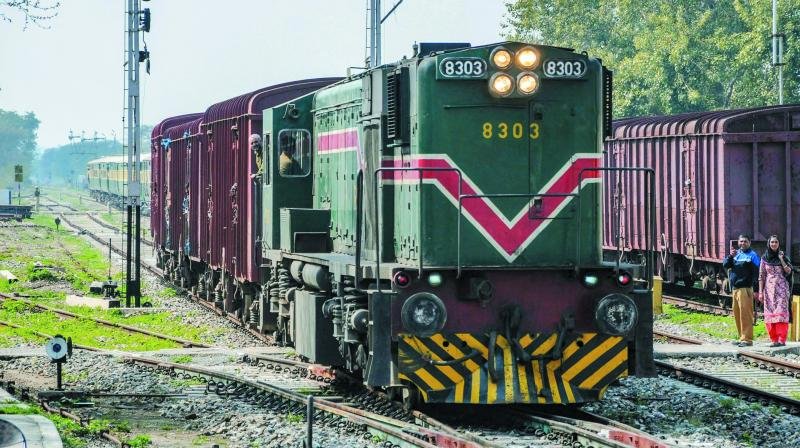
  • Lahore-Wagah train service to resume after 22 years on Dec 14

    Lahore-Wagah train service to resume after 22 years on Dec 14

    After a gap of almost 22 years, the train service, with a capacity of carrying 181 passengers, between Lahore and Wagah Railway Station will resume operations on December 14.

    According to the chief operating superintendent of Pakistan Railways Aamir Baloch, “The shuttle train will provide commute for the passengers desiring to witness the flag ceremony in the evening. Pakistan Rangers on Wagah border and Indian Border Force on the other side will manage the security affairs.”

    Baloch shared that all arrangements for running the train have been completed.

    The train will make four detours and its fare is fixed at Rs30. Two passenger coaches and the engine of the train have been overhauled and renovated using resources of the railways’ department.

    The train was operational between Wagah to Lahore since the partition till 1997 after which the service was closed due to certain operational and security reasons.

    “The train will start from Lahore railway station and will take two up-down rounds each in the morning and the evening,” Baloch said.

    Baloch said the railways decided to revive the service on a daily basis to provide convenient and affordable transportation facilities to the people coming to Jallo Park in Lahore and Wagah.

    If there is an increase in the demand, more passenger boogies could be renovated and added to the shuttle service.

    Meanwhile, plans to extend the service to Shahdara railway station, Kot Lakhpat and Kot Radha Krishan railway station for the convenience of the passengers is also being considered.

  • US, UK govts issue safety travel advisory for women citizens visiting India

    US, UK govts issue safety travel advisory for women citizens visiting India

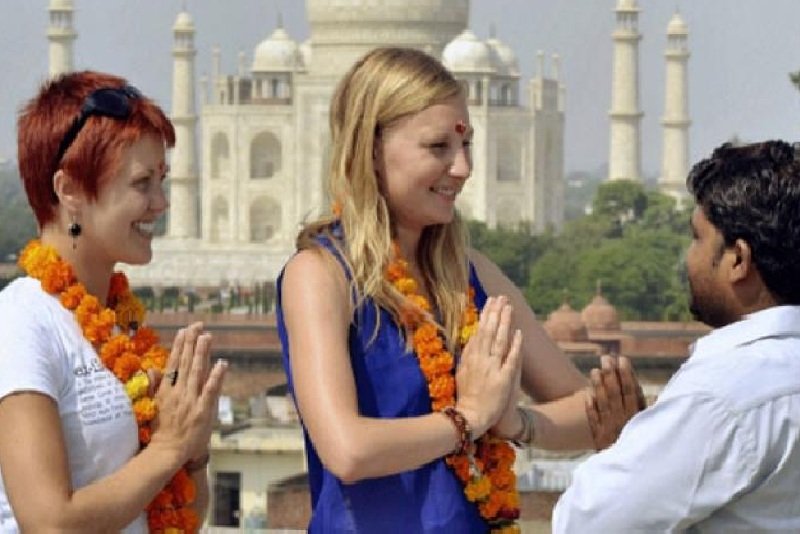
    India is fast building a reputation of being an unsafe place for women, resulting in the United States (US) and United Kingdom (UK) governments issuing a detailed information sheet for survivours of rape and sexual assault for its citizens travelling or staying in India, Times of India reported.

    The advisory by the British government to their citizens was released on its websites, and stated that rape and sexual assault survivours should insist on a police report. It also added that the police are not bound to provide an English translation, but the survivour could get the statement read and explained in English before signing it.

    Referring to this, Kartikeya Tripathi, a lecturer from University College London (UCL), said that in an unfortunate case, if a British national is sexually assaulted in India, the advisory tells them about their rights and that it needs to be dealt with by a female police officer, which many are not aware of.

    Also, the US government’s India travel advisory, which was issued earlier in March 2019 and which places India at ‘level 2’ security, advises travellers to ‘exercise increased caution’. It also stated that Indian authorities report rape as one of the fastest-growing crimes in India, and violent crime, such as sexual assault, has occurred at tourist sites and in other locations.

    The advisories have explained everything in detail, and also urge women to be aware of their rights when they are visiting India.

  • Killing of rape-murder suspects in ‘police encounter’ spark celebrations in India

    Killing of rape-murder suspects in ‘police encounter’ spark celebrations in India

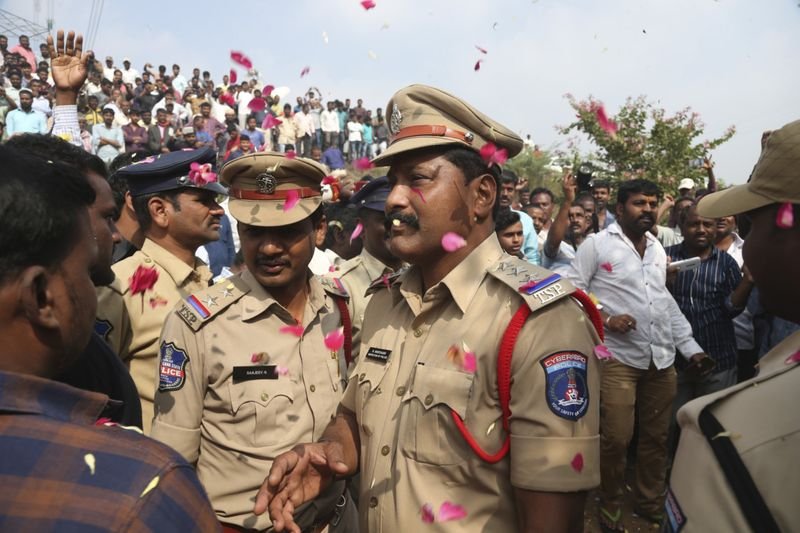
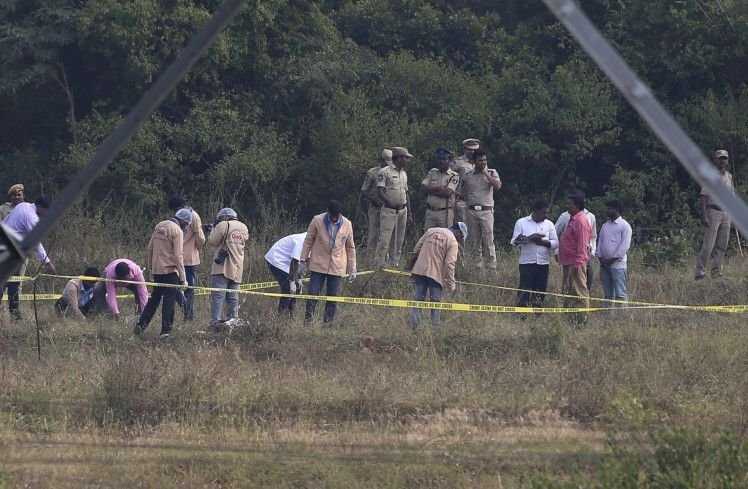
    Indian police on Friday shot dead four detained gang-rape and murder suspects as they were re-enacting their alleged crime, prompting celebrations but also accusations of extrajudicial killings.

    The men, who had been in custody for a week over the latest gruesome case of violence against women to shock India, were shot in the early morning as they tried to escape during the staged re-enactment in Hyderabad.

    Deputy police commissioner in the southern city Prakash Reddy revealed that “They were killed in crossfire. They tried to snatch weapons from the guards but were shot dead.”

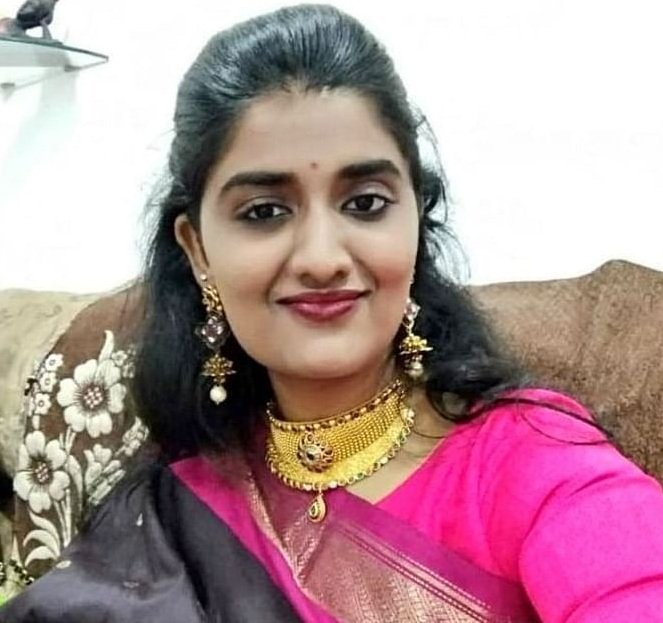
    The four were accused of gang-raping and murdering a 27-year-old veterinary doctor Dr Priyanka Reddy before setting fire to her body with petrol underneath an isolated bridge late on November 27.

    The woman had phoned her sister saying she was scared of the men before her phone went dead. She said police did not take her seriously when she said her sister was missing.

    The victim

    Like in the infamous 2012 rape and murder of a woman on a Delhi bus, the case sparked demonstrations and calls for swift and tough justice, with social media swamped with demands for them to be put to death.

    Shortly after their arrest hundreds of protesters also tried to storm the Hyderabad police station where the four accused were held. One lawmaker in the parliament called for the men to be “lynched” and another for rapists to be castrated.

    Several hundred people flocked to the scene of the men’s deaths on Friday, setting off firecrackers to celebrate and showering police with flower petals.

    The victim’s sister also welcomed the killings.

    “I am happy the four accused have been killed in an encounter. This incident will set an example. I thank the police and media for their support,” the sister told a local television station.

    Women in technology hub Hyderabad, home to Google, Apple and Microsoft, distributed sweets and tied Hindu ritual threads on the wrists of policemen to thank them.

    On the other hand rights activists were aghast with the killing – police in India are often accused of using extrajudicial killings to bypass the legal process, often as a cover-up in botched investigations or to pacify public anger.

    India’s former federal minister for women and child developement, Maneka Gandhi termed the incident as dangerous, saying killings cannot be an alternative to the process of law.

    “They would have anyway got hanging for their heinous crime, but you can’t just pick up guns and kill people because you want to. Because law is tardy, you can’t kill people. What has happened is dangerous,” Gandhi told reporters.

    A Supreme Court lawyer is reported to have said, “This is murder in cold blood. Fake encounter is not the solution, reforming criminal justice system is.”

    “Now no one will ever know who really raped and murdered the Hyderabad woman.”