Tag: India

  • Indian police raids Amnesty International’s offices to quash reporting on Kashmir

    Indian police raids Amnesty International’s offices to quash reporting on Kashmir

    Indian officials have raided the offices of renowned human
    rights group Amnesty International (AI) on trumped up charges of foreign
    funding from the United Kingdom that violate local law, Geo News reported.

    According to the details, it is widely believed that the
    investigation into the funding sources of the respected human rights group is a
    pressure tactic being employed by the government of Indian Prime Minister (PM)
    Narendra Modi to stop the group from highlighting grave human rights violations
    in Indian held Kashmir (IoK).

    Reports revals that officials from the Central Bureau of
    Investigation (CBI) raided the offices of AI India in Bengaluru and New Delhi
    after direct complaints from the home affairs ministry. Amnesty was accused of
    the same offence last year.

    The Amnesty group in a statement said, “Over the past
    year, a pattern of harassment has emerged every time Amnesty International
    India stands up and speaks out against human rights violations in India”, referring
    to their campaigns for IoK. 

    Back in September, Amnesty International had launched the “LetKashmirSpeak”
    campaign and called on Indian PM Modi to lift the inhumane military curfew in held
    Kashmir that has crippled the lives of millions of Muslims since August.

    New Delhi had earlier revoked the constitutional autonomy of
    IoK on August 5 this year and imposed a military curfew in the area,
    imprisoning millions of people. Thousands of ordinary citizens were detained
    after the move.

    The detained included former chief ministers and the mayor
    of Srinagar. Widespread allegations of torture and abuse of these detainees by
    the Indian security forces were published by the international media in the
    following weeks, as India showed no signs of easing restrictions.

  • Sindh High Court reminds PCB of players’ sheesha controversy, seeks answer

    Sindh High Court reminds PCB of players’ sheesha controversy, seeks answer

    The Sindh High Court (SHC) has resent a notice to Pakistan Cricket Board (PCB) on a petition regarding its inaction against former national team skipper Shoaib Malik and other cricketers for violating team rules, Geo News reported. 

    Prior to a crucial match against arch-rivals India at the World Cup 2019, batsman Malik was snapped at a cafe in London along with two other players — Wahab Riaz and Imamul Haq, as an unidentified person consumed sheesha on their table. 

    According to the details, petitioner Abdul Jalil Marwat had claimed that the players were spotted consuming sheesha at a cafe in England the night before the match with India on June 16. 

    He further alleged that Malik, Wahab and Imam performed poorly, perhaps as a result of their disregard for rules and regulations, which resulted in Pakistan’s loss.

    After the cricket board had failed to take any action against these players, Marwat had requested the court to direct the PCB to explain why the players were not punished for violating the team management rules and regulations.

    A division bench of the high court, headed by Justice Mohammad Ali Mazhar, observed that no one had appeared in court on behalf of the PCB despite the issuance of notice.

    The court has now resent the notice to PCB through a district and sessions judge in Lahore and adjourned the hearing of the case till a later date that is yet to be determined. 

  • Pakistan’s air traffic controller saves Indian flight from major disaster

    Pakistan’s air traffic controller saves Indian flight from major disaster

    An air traffic controller from the Civil Aviation Authority (CAA) in Pakistan on Thursday saved a plane flying from the Jaipur, India to Muscat in Oman by guiding it during an emergency.

    According to the details, the air plane, carrying 150 passengers, was flying over the Karachi region when it was caught in the middle of a weather pattern with lots of lightning that could have resulted in a major tragedy.

    Following the lightning strikes, the plane dropped down from
    an altitude of 36,000 feet to 34,000 feet almost immediately and the pilot
    initiated emergency protocol and broadcast ‘Mayday’ to nearby stations.

    The air traffic controller from Pakistan responded to the
    call of the captain of the Indian plane and directed it through the dense air
    traffic in the vicinity for the remainder of the journey in Pakistani airspace.

    Sources in the aviation authority have said that the
    aircraft had encountered abnormal weather conditions near the Chor area of the
    southern province of Sindh, Pakistan.

    It is pertinent to mention that at least 18 people were
    killed earlier in freak accidents as lightning struck various parts of Sindh.

    Islamabad has, for more than a month, restricted access of Pakistani airspace to Indian planes as its protest to the curfew in held Kashmir. Recent requests by Indian Prime Minister Narendra Modi to travel over Pakistani airspace have been rejected twice.

  • Pakistanis to face reduction in salaries in 2020: report

    The salaries across Pakistan are expected to record a substantial decrease this year due to rising inflation and depreciation of the Pakistani rupee, according to a report released on Tuesday by mobility consultancy ECA International.

    According to the details, the Salary Trend Report published by the group contends that the average real salary increase in Pakistan is expected to be negative, and employees will likely be worse off than they were last year. Lee Quane, Regional Director Asia at ECA International, has surmised these trends.

    Lee explained, “The average real salary increase in Pakistan is forecast to be -3.0%, meaning that employees will be worse off than they were last year. Despite the nominal increase staying at a relatively high 10.0%, inflation has shot up as the rupee has depreciated.”

    He also said that the Inflation in Pakistan is forecast to reach 13.0% in 2020, exceeding the nominal increase and leaving workers out of pocket compared to 2019.

    However, the same is not true for other Asia-Pacific countries, especially neighbor and arch-rival India. 

    According to the report, India topped the table for average real salary increases in Asia, but now also tops the table globally for 2020. The average real salary increase is set to be 5.4% for workers in India, which is four times the rise expected in Hong Kong. 

    “Salaries in India are set to rise significantly, with the 5.4% increase almost four times as high as the expected increase in Hong Kong. Despite inflation rising slightly from 2019 and the economy slowing slightly, though workers can still expect more increases” said Quane. 

    Workers in China are set to see a real salary increase of 3.6% in 2020, while UK workers will receive a lower real salary increase in 2020 as compared to the previous year.

    Overall, the global average salary increase stands at 1.4% and the Asia-Pacific average increase is 3.2%. 

  • Is PM Imran really related to Indian Punjab CM Amarinder Singh?

    Is PM Imran really related to Indian Punjab CM Amarinder Singh?

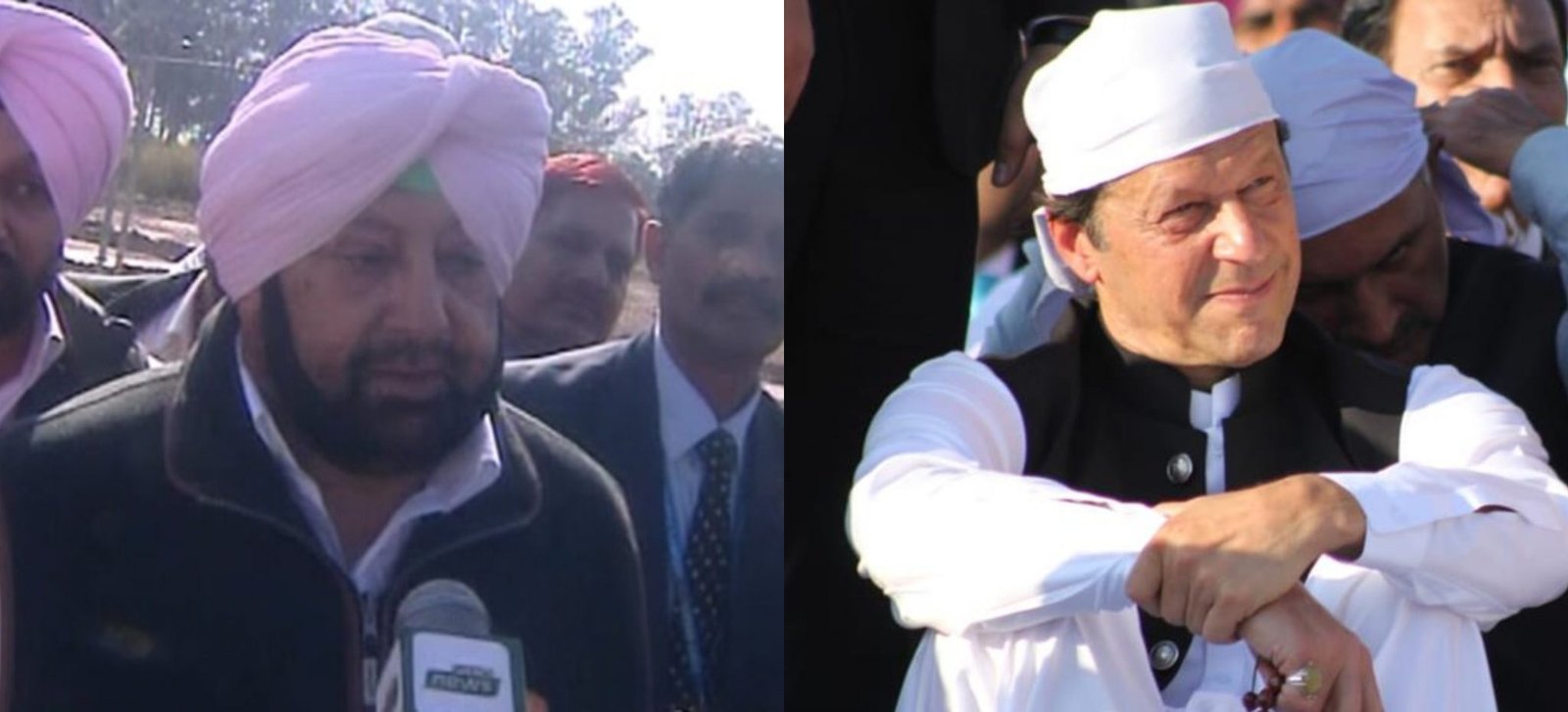
    Local media reports are headlining that Prime Minister Imran Khan and Indian Punjab’s Chief Minister Amarinder Singh share family ties. But while the two certainly do share history, they are not related.

    According to an official statement issued by Singh’s office, PM Imran and Singh on their five-minute bus ride on the inauguration of the Kartarpur Corridor discovered a ‘special connect’ between their two families even though they had not met each other before and neither did the two know each other personally.

    Read more: Sikhs demand Nobel prize for Imran over Kartarpur opening

    The statement read, “During his conversation with [PM] Imran, Captain Amarinder told the latter that his uncle, Jahangir Khan had played for Patiala, along with Mohd Nisar, Lala Amarnath, fast bowler Amar Singh and the two Ali batsmen (Wazir Ali and Amir Ali).

    “These seven players were part of the team captained by Captain Amarinder’s father, Maharaja Yadvinder Singh (the ruler of the erstwhile Patiala state) in 1934-35, for India and for Patiala.”

    Jahangir was married to PM Imran’s maternal aunt, Mubarak, and was a cricketer during the British Raj era.

    The Congress leader’s office said that the bus ride lasted less than five minutes, but, thanks to cricket, it was enough to break the ice between the two leaders.

    Read more: Sunny Deol praises Pakistan, says he received a lot of love

    The Punjab chief minister was part of the group of over 550 Indian pilgrims who were the first Indians to enter Pakistan through the Kartarpur Corridor.

    Singh shared the bus ride with the premier after he was received by PM Imran and Foreign Minister Shah Mehmood Qureshi at the Zero Point of the International Border of the Kartarpur corridor.

  • Sidhu stopped from entering Pakistan through Wagah despite having a visa

    The Indian government on Saturday stopped Congress leader Navjot Singh Sidhu from entering Pakistan through Wagah border despite having a five-day visa, a private media outlet reported.

    According to reports, Sidhu will now enter Pakistan from Kartarpur.

    The Indian government on Thursday finally allowed cricketer-turned-politician Navjot Singh Sidhu to attend the inauguration of the Gurdwara Darbar Sahib Kartarpur Corridor after the latter wrote his third letter to the Ministry of External Affairs on Thursday requesting permission to visit Pakistan.

    Pakistan has already issued a visa to Sidhu after Prime Minister Imran Khan invited him to attend the historic opening of the corridor, which has been built for Indian Sikh pilgrims travelling to the holy Gurdwara Darbar Sahib temple from a visa-free border crossing.

    Indian media, quoting official sources, reported on Thursday evening that Sidhu had been given political clearance by the government to take part in the Kartarpur Corridor inauguration ceremony on the Pakistani side.

    However, quoting sources, Indian media reported that Sidhu was granted permission only to travel as part of the first group coming from India for the pilgrimage to the Kartarpur Gurdwara, the world’s largest Sikh shrine and the final resting place of Sikhism founder Baba Guru Nanak.

    The permission from the Indian government has come through after Sidhu wrote three letters requesting to Indian External Affairs Minister Subrahmanyam Jaishankar asking for the government’s clearance for his visit.

    In his third letter, Sidhu pleaded to Jaishankar for a reply, saying he would proceed to Pakistan other Sikh devotees if the minister doesn’t respond.

    “Despite repeated reminders, you have not responded to whether or not the government has granted me permission to go to Pakistan for the inauguration ceremony of Gurdwara Darbar Sahid Kartarpur Corridor. The delay and no response is a hindrance to my future course of action,” the former cricketer wrote in his letter.

    “I categorically state that if the government has any inhibitions and say no then, as a law-abiding citizen, I will not go. But if you don’t respond to my third letter, then I will proceed to Pakistan as millions of Sikh devotees go on eligible Visa,” he added.

  • India revokes journalist Aatish Taseer’s overseas ID because of ‘Pakistani father’

    The Indian government has revoked the Overseas Citizen of India (OCI) card of journalist Aatish Taseer over his alleged attempt to “conceal information” that his father, Salmaan Taseer, was of Pakistani origin, Dawn reported.

    According to the details, the Indian Ministry of Home Affairs, in an official statement, has said that Aatish “failed to dispute the notice” it had sent, asking him to explain the lapse, however, Aatish has denied this claim.

    The statement further said that Aatish had only provided details of his mother, who is a veteran Indian journalist, Tavleen Singh.

    Disputing the government’s version, Aatish on Thursday tweeted the picture of an email exchange with the Indian consul general, wherein he had objected to the ministry’s claim.

    He said that he would not be able to travel to India now, even on a tourist visa, adding, “They have accused me of fraud. They have blacklisted me. I cannot come to India as an ordinary citizen. My grandmother is 90 years old and lives in India and I may never see her again.”

    Aatish also said that cancellation of his Indian overseas citizenship was part of a “sinister plan”. “First they ruined my reputation by getting one of their men to call me a radical Islamist and then they moved against me after leaking the story to the press,” he added.

    He said he had lived in India between the ages of two and 10, and then 26 to 35. “I have local bank accounts, a biometric identification number and have paid taxes in the country.”

    Aatish, who grew up in Delhi and studied at the Kodaikanal International School in Tamil Nadu, now lives in New York. He had received his Person of Indian Origin (PIO) card in 2000.

    PIO is a facility that provides visa-free travel to India, which in Aatish’s case, had later converted into an OCI card.

    In his OCI application, he had referred to his mother as an Indian national and his father, former Pakistani Punjab governor Salmaan Taseer, who was assassinated in 2011, as a “British national” as, to the “best of his knowledge”, his father held a British passport.

  • Viral image: Woman commando guards Indian Sikh pilgrims

    Viral image: Woman commando guards Indian Sikh pilgrims

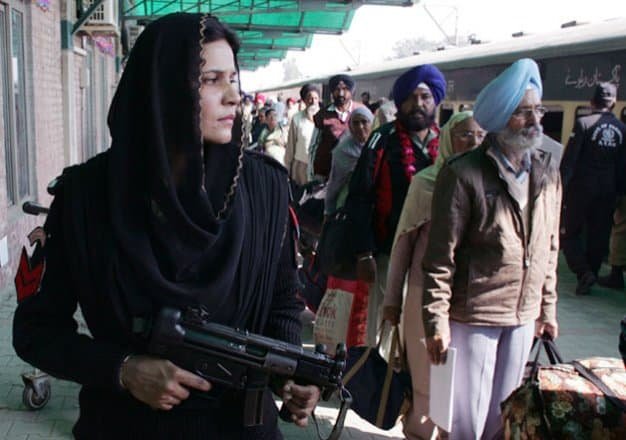
    An old image of a woman commando guarding Indian Sikhs as they arrive in Pakistan for a religious tour has gone viral over the internet.

    Captured at Wagah Railway Station back in 2015, the startling picture reflects many things, but respect is the common emotion one can feel out of it.

    Serving two purposes, while the image dissolves religious differences between the two countries, it also buries stereotypes about Pakistan regarding women.

    Thousands of Indian pilgrims arrive in Pakistan every year by a special train to participate in the three-day festival marking the birth anniversary of their spiritual leader Baba Guru Nanak, the founder of Sikhism.

    KARTARPUR CORRIDOR:

    Guru Nanak’s 550th birth anniversary is being observed this year and thousands of Sikhs from across the globe have converged in Nankana Sahib. What makes the occasion special this year is that it also marks the opening of Kartarpur Corridor between Pakistan and India.

    Notwithstanding a chill in bilateral ties over occupied Kashmir, the two countries, after tough negotiations, signed a landmark agreement last week, to operationalise the corridor allowing Indian pilgrims to visit the holy Sikh shrine.

    The three-day event will be held from November 10 to 12 in the Punjab district — the birthplace of Baba Guru Nanak — located around 80km from Lahore.

    According to The Express Tribune, it will coincide with a separate event in the border town of Kartarpur, which also houses a historic Gurdwara — Sikh house of worship — where Guru Nanak settled and died in 1539.

    The two neighbouring countries have decided that 5,000 pilgrims from India can visit this shrine daily without showing travel permits.

  • ISPR chief wishes India ‘get well soon’ over cow dung fight for ‘good health’

    In yet another trolling episode, Inter-Services Public Relations (ISPR) Director General (DG) Major General Asif Ghafoor has wished neighbouring India “get well soon” over cow dung fight for “good health”.

    As per the details, customary annual Gore Habba festival was recently held in the Gumatapura village of southern India. In a viral video, villagers were seen holding massive cow dung fights, believing it has a healing effect.

    While getting smeared in moist bovine discharge is hardly a pleasant experience for most, each year after the Diwali holiday, the villagers – and anyone willing to join them – partake in the faecal festival that is all about excrement-throwing.

    “Get well soon…” the ISPR chief tweeted while reacting to the video on Thursday.

    While it might look quite unsanitary to smear your whole body in faeces, the devotees believe it is not only harmless, but actually cures diseases.

    “Cow dung is very natural and has a lot of medicinal benefits. Others might say if we throw cow dung at each other we will get some infections or even some disease. But with the trust of our god Beereshwara, we are playing in the cow dung, so nothing happens to us,” RT quoted one of the villagers as saying.

    The villager further said that the festival was all about equality and anyone regardless of their caste or religion can participate. Still, women are barred from the excrement-throwing part, yet they are free to watch the show.

    The tradition comes from the belief that remains of a saint were placed in a pit in the village, and took the shape of a Linga (an abstract phallic representation of Shiva), which became covered by cow excrements over time. The deity of the village is believed to value cow excrements too, thus the villagers dump the substance in abundance behind the local temple.

  • Fawad Chaudhry offers to help India handle smog

    Fawad Chaudhry offers to help India handle smog

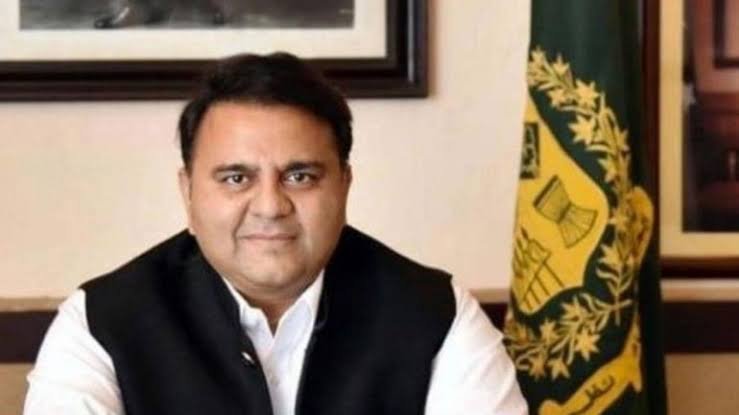
    Federal Minister for Science and Technology Fawad Chaudhry has offered to help India combat the smog problem engulfing both countries.

    Taking to Twitter, the minister suggested using a scientific solution to handle the smog.

    Fawad in his tweet said that the burning of crops in the Indian city of Jalandhar was causing chaos on both sides of the border adding to the toxicity in the air making it difficult to breathe in.

    He then offered a machine-based solution to turn the crop residue into a source of energy rather than burning it.

    A thick layer of smog has descended again on Punjab, especially hitting Lahore.

    According to the Air Visual, the Air Quality Index (AQI) in Lahore is hazardous. The toxic smog in Lahore also forced the government and private schools to remain closed on Thursday.

    Meanwhile, experts in India argue that current levels of air pollution represent a public health emergency requiring full emergency mode response from local and national authorities.