Tag: India

  • Jerusalem post article declares Imran Khan a central figure in Pak-Israel ties

    Jerusalem post article declares Imran Khan a central figure in Pak-Israel ties

    The Jerusalem Post, one of Israel’s most widely-read newspapers, has declared former Pakistani Prime Minister (PM) Imran Khan a central figure in normalising Pak-Israel ties.

    An article written by Harry Richer asserts, “Figures like Khan could very well be central in changing both public opinion and military policy” for Pak-Israel ties.

    While reviewing the state of Muslim countries trying to normalise ties with Israel for their self-interest, Richer asserted that despite Khan’s pro-Palestine stance, the former PM had hinted at shaping Pakistan’s foreign policy towards Israel.

    Richer predicted, “Normalisation with Israel would bring about significant economic benefits, including technological support in agriculture, cybersecurity, and defence.”

    Richer added, “A change in leadership would most probably also be needed for any resolution to move forward, and figures like Khan could very well be central in changing both public opinion and military policy.”

    Pakistan does not recognise Israel and has long been an ardent and very vocal supporter of Palestine. The ongoing Israeli genocide in Gaza has strengthened public opinion in Pakistan against Israel.

    As of October 7, more than 41,000 people, the majority of whom are women and children, have been slaughtered by Israel since October 7. Lancet, the respected medical journal, puts the figure at close to 180,000 dead.
  • Maulana Fazlur Rehman warns of instability if Constitution overlooked

    Maulana Fazlur Rehman warns of instability if Constitution overlooked

    The Chief of Jamiat-e-Ulema Islam- Fazl (JUI-F), Maulana Fazlur Rehman, has warned that failure to adhere to the Constitution will lead the country towards instability and unrest.

    Speaking at an event in Karachi, he talked about this year’s general elections, labeling the incumbent constituent assembly a product of the establishment.

    Responding to the government’s proposed controversial constitutional amendments, Fazlur Rehman asserted, “Neither the opposition has a draft [of the proposed amendments], nor do the people know about any such document. Here, every institution wants to interfere in the other’s mandate. These can’t be called reforms by any means.”

    The head of JUI-F suggested that institutions operate within their own paradigm and strengthen themselves and expressed a wish to see a robust parliament, judiciary, and military.

    Maulana Fazlur Rehman has been a formidable challenge for the government as he resisted the so-called twenty-sixth constitutional amendments despite having only five Senate votes, proving himself to be the decision-maker.

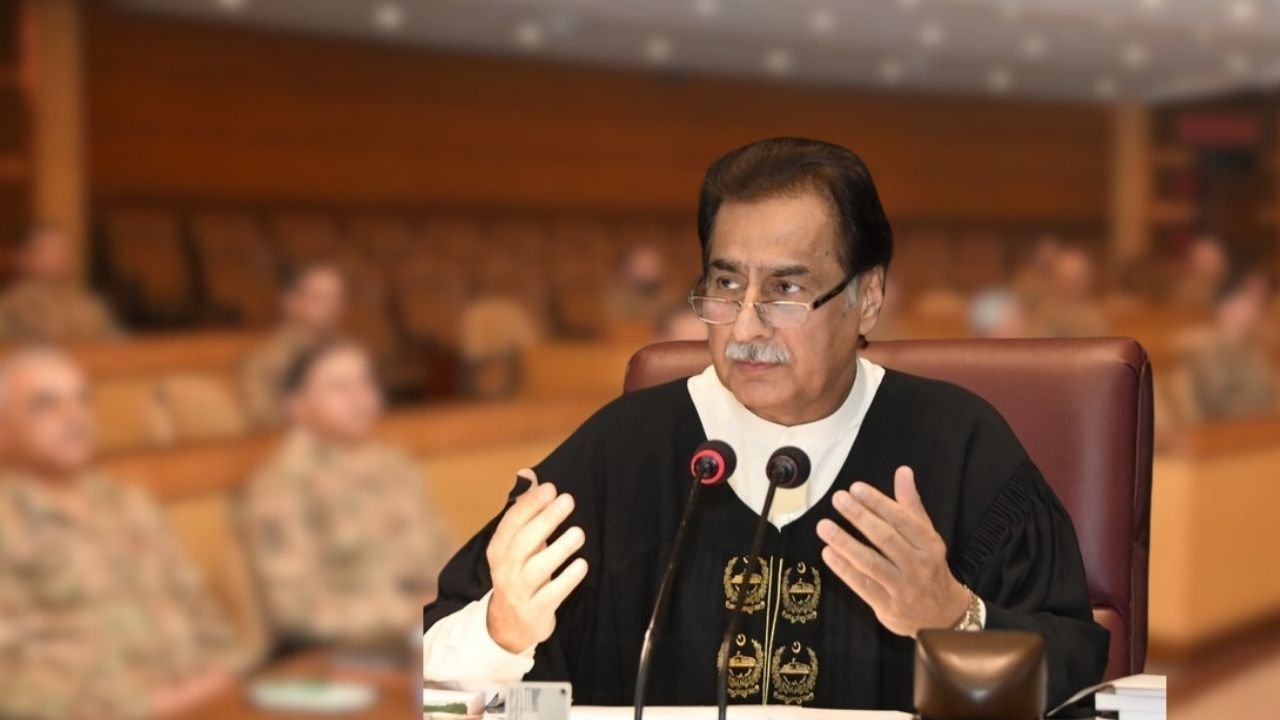
  • Speeches against the army and judiciary will not be allowed: Speaker Ayaz Sadiq

    Speeches against the army and judiciary will not be allowed: Speaker Ayaz Sadiq

    Speaker of the National Assembly Ayaz Sadiq said on Friday, “Pakistan’s constitution declares that there can be no talk against the armed forces and the judiciary; therefore, speeches against the army and the judiciary will be stopped.”

    In the past and the present, both the opposition and the government benches have discussed diverse topics, including the country’s institutions.

    Ayaz Sadiq said in an informal conversation with the Parliamentary Reporters Association (PRA) yesterday: ‘I am not talking about retired judiciary members. I am talking about the present service that we cannot talk by taking their name in this way. Speeches against the judiciary and the army will not be aired; we will cut them. We give maximum time to the opposition on our website but will cut such speeches.”

    On the topic of the recent failed attempt by the coalition government to pass the constitutional amendments, the speaker expressed ignorance over the details of the draft.

    He also stated that law enforcement agencies have no role in postponing the sessions of parliament even though, in the past, that was true.

    “In the past, we were told that the NAB Chairman could not be called into the parliament, and the session of NA used to be cancelled,” revealed Sadiq.

  • Maula Jatt release in India hangs in balance

    Maula Jatt release in India hangs in balance

    Ameya Khopkar, leader of the extremist Hindu party Maharashtra Navnirman Sena (MNS), has said that those who like Pakistani actor Fawad Khan are “Indian traitors.”

    According to Indian media reports, extremist Hindutva groups have become active to stop the release of Pakistan’s record-breaking film ‘The Legend of Maula Jatt’ in India.

    Khopkar stated, “We will not allow the release of Pakistani films, nor will we allow their artists to work in Indian films.”

    Expanding his threats, Khopkar further said: “It is most infuriating that an Indian company is leading this plan. Following Raj Saheb’s orders we will not let this film release anywhere in India.”

    Raj Thackeray is the nephew of Bal Thackeray, known for his opposition to Pakistan and Muslims.

    The blockbuster Pakistani film The Legend of Maula Jatt is set to release in Indian theaters on October 2.

    Previously, the film was scheduled for release in India in December 2022, but was stopped after strong opposition from extremist Hindu groups and the MNS.

    The Legend of Maula Jatt was released worldwide on October 13, 2022, and was a phenomenal success at the box office.

    The film, a remake of the 1979 classic Maula Jatt, stars Fawad Khan, Mahira Khan, and Humaima Malik.

  • National Assembly Secretariat declares PTI lawmakers as Sunni Ittehad Council members

    National Assembly Secretariat declares PTI lawmakers as Sunni Ittehad Council members

    The National Assembly Secretariat has issued a new list of party positions in the National Assembly (NA) and declared all Pakistan Tehreek-e-Insaf (PTI) lawmakers as Sunni Ittehad Council (SIC) members.

    According to the new list, seats in the coalition government of political parties is two hundred thirteen as Pakistan Muslim League Nawaz (PML-N), hold one hundred ten seats; Pakistan Peoples Party (PPP) has sixty-nine seats, and Muttahida Qaumi Movement Pakistan (MQM-P) has twenty-two seats.

    Meanwhile, on the opposition benches, SIC has eighty seats, Jamiat Ulema-e-Islam Fazl (JUI-F) has eight seats, and PTI independent supporters have eight members.

    Secretariat officials did not mention twenty-three reserved seats and declared them disputed.

    Earlier, Speaker Ayaz Sadiq had penned a letter to the Election Commission of Pakistan (ECP) on September 19 stating that after the Elections Act Amendments, 2024, has been passed by the parliament, the Supreme Court’s reserved seats verdict of July 12 can no longer be implemented

  • China proposes joint security plan to Pakistan

    China proposes joint security plan to Pakistan

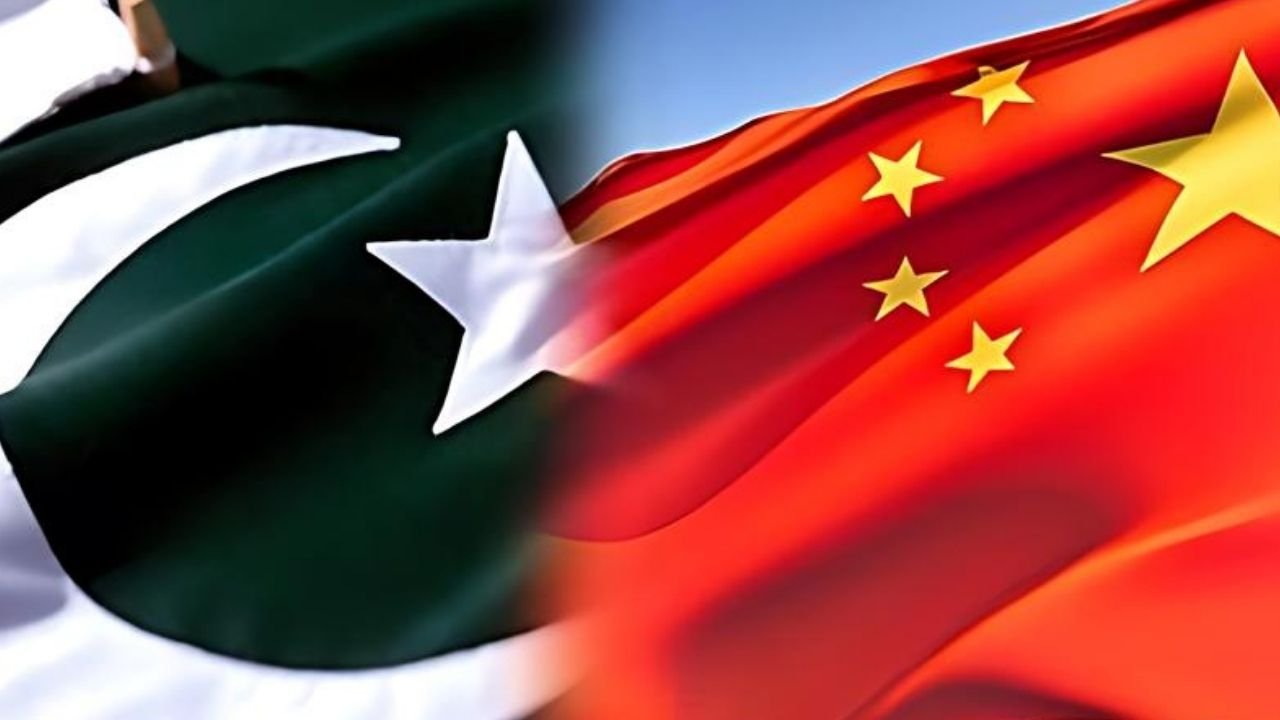
    China has offered several proposals to Pakistan, including a joint agreement to combat Chinese security concerns over terrorism.

    China has aimed to boost its multibillion dollar China Pakistan Economic Corridor (CPEC) project, transforming several CPEC Phase-1 Projects to Phase-2, government sources told Express Tribune.

    The sources further disclosed that China is proposing the establishment of a joint company to sustain its citizens’ security working in Pakistan for the CPEC project.

    Pakistan and China also vowed to combat terrorism with “zero tolerance” and stressed the need for a comprehensive approach towards security concerns in Pakistan.

    It has also proposed an agreement on the China-Pakistan earth science research project in the CPEC Phase-2.
    Chinese authorities are aiming to cooperate in infrastructure, minerals, energy, safety and security, science and technology.

  • Joe Biden appreciates Pakistan’s efforts in tackling terrorism

    Joe Biden appreciates Pakistan’s efforts in tackling terrorism

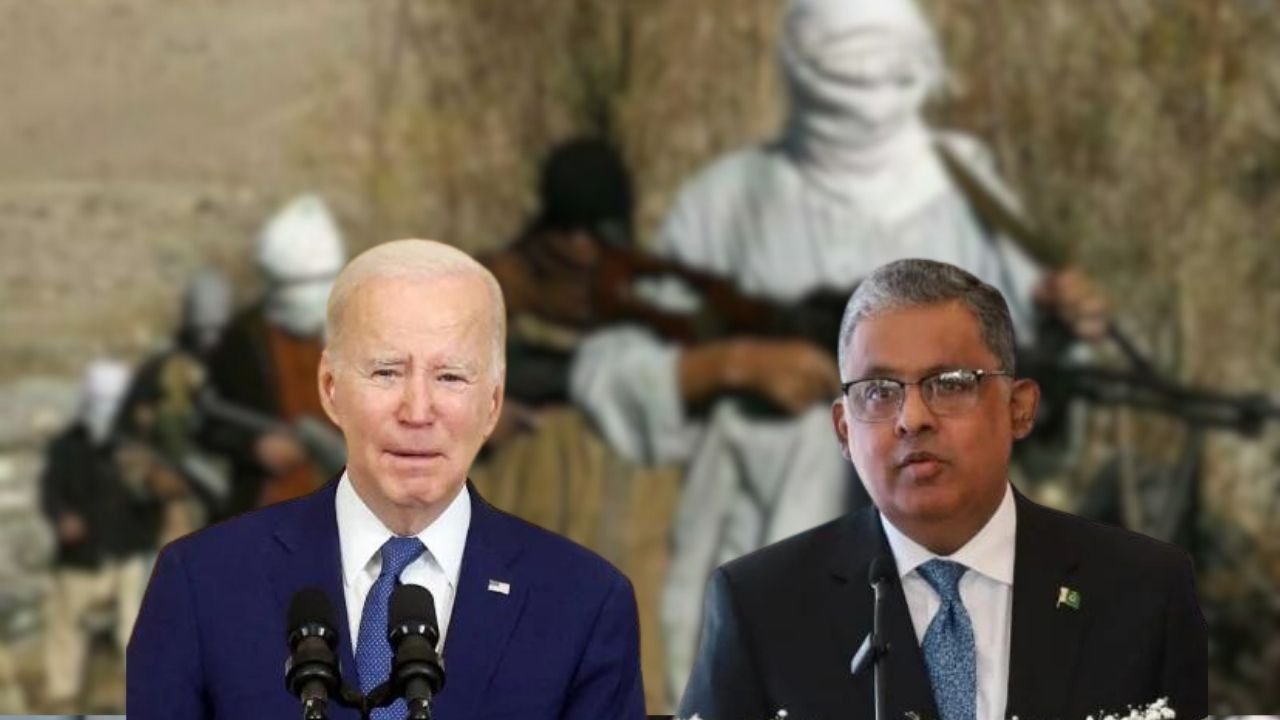
    President of the United States (US) Joe Biden has highlighted the significance of Washington’s relations with Pakistan for “regional stability and security” after he received a Letter of Credence from the Pakistan Ambassador to the US, Rizwan Saeed Shiekh.

    At a ceremony at Blair House in Washington DC, Biden said, “The relationship between our two countries remains important for regional stability and security. We appreciate US-Pakistan cooperation on countering terrorist threats,” a statement released by the Pakistan embassy in the US read.

    “The United States will continue to stand with Pakistan to tackle the most pressing global and regional challenges of our time,” he added.

    The US President’s statement comes at a crucial time when the US imposed sanctions on three Chinese companies and a Chinese research institute that had assisted Pakistan in developing the Shaheen Three and Ababeel missile systems.

    During a press briefing from Washington yesterday, US State Department spokesperson Matthew Miller had stated, “We have been clear and consistent about our concerns with Pakistan’s ballistic missile programme for many years.”

  • Russia supports Pakistan’s bid to join BRICS

    Russia supports Pakistan’s bid to join BRICS

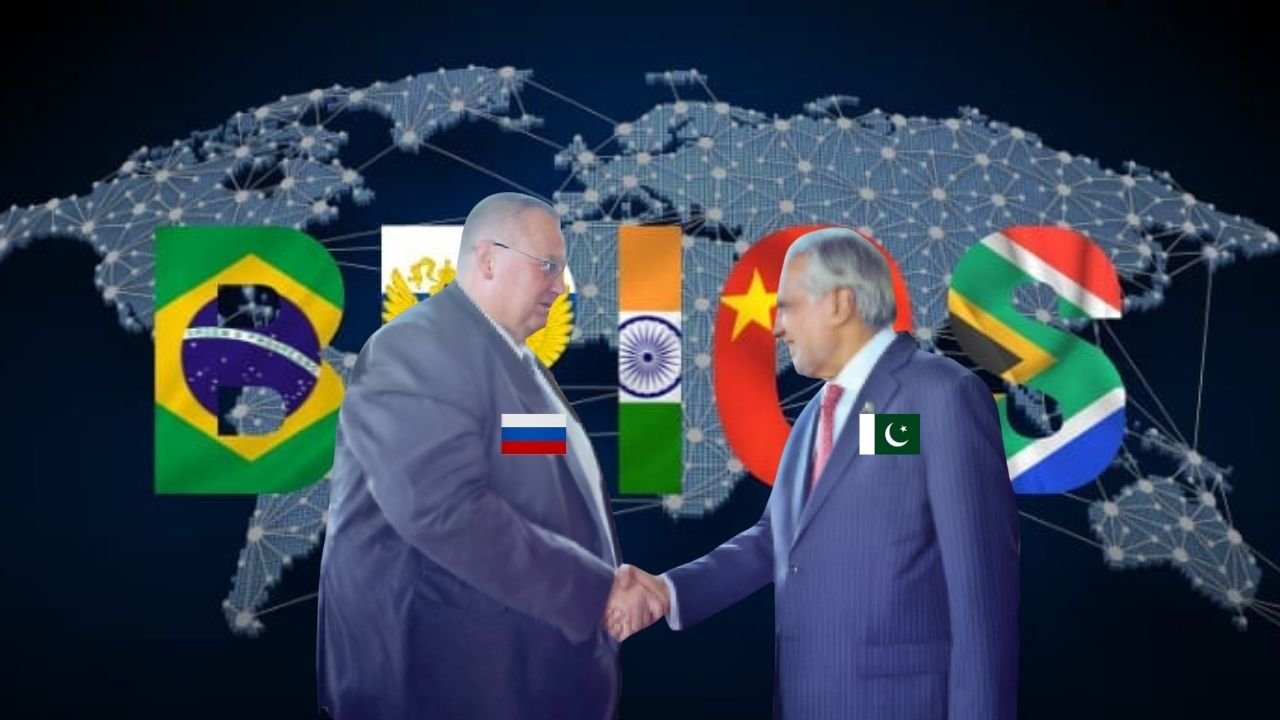
    Russian Deputy Prime Minister Alexei Overchuk on Wednesday said that his country will back Pakistan’s endeavour to join BRICS, a bloc of the world’s five major emerging economies.

    Speaking at a press conference along with Deputy Prime Minister Ishaq Dar, Overchuk said, “We would be supportive of Pakistan’s request to be part of BRICS.”

    Responding to Overchuk’s statement, Foreign Minister Ishaq Dar remarked, “Pakistan is extremely grateful for Russian support in our bid for BRICS membership.”

    Commenting on Russia’s visit to the Shanghai Cooperation Organisation (SCO) scheduled in Islamabad next month, Overchuk confirmed that Russian President Vladimir Putin will attend it.

    He also wished Pakistan to join the North-South Transport Corridor (NSTC), a Russian initiative to connect its economy with Asian countries.

    BRICS is an acronym for five of the world’s emerging economies: Brazil, Russia, India, China, and South Africa. Last year, the bloc also invited Saudi Arabia, Ethiopia, Iran, Egypt, Argentina, and the United Arab Emirates.

  • Khyber Pakhtunkhwa govt plans to remove most checkposts

    Khyber Pakhtunkhwa govt plans to remove most checkposts

    Chief Minister (CM) of Khyber Pakhtunkhwa (KP) Ali Amin Gandapur has announced the removal of several checkpoints across the province.

    Citing the convenience of the people, he stated that the KP government intends to demolish the majority of check posts and urges the public to cooperate in maintaining law and order.

    He also clarified that the government plans to reinstate the elder jirga system in KP after reaching a consensus at district-level meetings.

    In response to Afghan Acting Consul General Muhib Ullah Shakil and his aide’s refusal to stand for Pakistan’s national anthem at the Peshawar conference, Gandapur stated, “It is their policy not to stand before any anthem that includes music.”

    However, Afghan Consulate Peshawar spokesperson Shahid Ullah clarified, “The Consul General did not stand due to the music in the anthem. We have even banned our own national anthem for the same reason.”

  • US gives ridiculous justification to embargo Pakistan’s missile programme

    US gives ridiculous justification to embargo Pakistan’s missile programme

    The United States (US) has reiterated its double standards in the international world, emphasizing its stance on Pakistan’s long-range ballistic missile programme, citing the absurd reason of strengthening the international non-proliferating regime.

    In a press briefing from Washington, US State Department spokesperson Matthew Miller stated, “We have been clear and consistent about our concerns with Pakistan’s ballistic missile programme for many years.”

    “Pakistan has been a long-term partner of ours, and I think what this action shows is that there continue to be places where we have disagreement, and when we have disagreements, we won’t hesitate to act on those to protect America’s interests,” Miller added.

    Responding to Miller’s statement, Pakistan stated, “Such double standards and discriminatory practices undermine the credibility of global nonproliferation regimes, increase military asymmetries, and endanger international peace and security.”

    The US imposed sanctions on three Chinese companies and a Chinese research institute that had assisted Pakistan in developing the Shaheen Three and Ababeel missile systems.

    In a statement, the spokesperson of the State Department had cleared that these embargos were imposed under the Arms Export Control Act (AECA) and Export Control Reform Act (ECRA).