Tag: Indian Air Force

  • Indian army helicopter with Defence General Bipin Rawat on board crashes

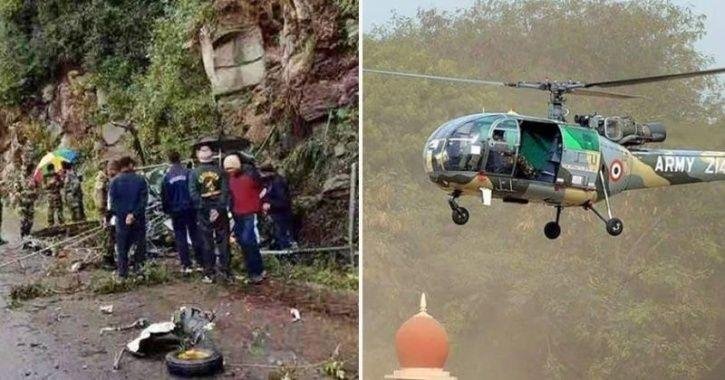
    An Indian Army helicopter with Chief of Defence Staff (CDS) General Bipin Rawat and other senior Indian defence officials on board crashed in Tamil Nadu’s Coonoor on Wednesday.

    “An IAF Mi-17V5 helicopter, with CDS Gen Bipin Rawat on board, met with an accident today near Coonoor, Tamil Nadu,” confirmed the Indian Air Force official Twitter account.

    Indian news agency ANI tweeted about the crash, saying that 14 people in total were on board the chopper, including the Indian defence assistant, IAF pilots and security commandos. 

    The latest visuals shared from the place of the crash clearly show the amount of damage done to the crash.

  • Indian Air Force’s MiG-29 fighter jet crashes 117 km from Lahore, in Jalandhar

    Indian Air Force’s MiG-29 fighter jet crashes 117 km from Lahore, in Jalandhar

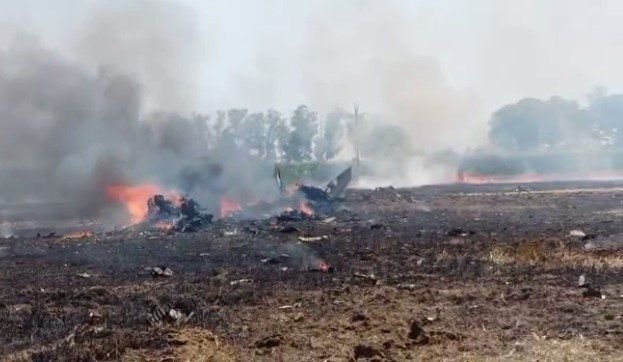
    A MiG-29 interceptor of the Indian Air Force (IAF) on Friday crashed during a training mission near Punjab’s Jalandhar — 117 kilometres (km) from the provincial capital of Pakistan province of Punjab. The pilot ejected safely and was soon taken away in a rescue helicopter, the IAF said in a statement.

    “The aircraft had developed a technical snag and the pilot ejected safely as he was unable to control the aircraft. The pilot has been rescued by a helicopter. A court of inquiry has been ordered to investigate the cause of the accident,” the IAF said.

    The MiG-29 is a Soviet-era fast interceptor that has seen action in the Kargil war in 1999. It has also been used to escort other jets on bombing missions from incoming “bandits” or enemy fighter jets.

    The IAF operates over 60 MiG-29s, all of which have been upgraded with advanced avionics and better weapons to convert them into multi-role jets that can perform air-to-air and air-to-ground missions equally well.

    The Soviet-made jet had taken off from Adampur Air Force Station near Jalandhar which is the second-largest military airbase of India. The No. 47 and No 203 Squadrons of the IAF are stationed at this base. Adampur Base played a crucial role in the Indo-Pak War of 1965 as it is within 100 km from the Indo-Pak border.

    On February 26 last year, another variant of the jet — the MiG-21 fighters were up against much more modern Pakistani jets during aerial skirmishes.

    Indian planes had crossed the line of control and claimed to have bombed what New Dehli described as a terrorist training camp near Balakot. Islamabad had denied the Indian side of the story and provided sufficient evidence to back up its argument.

    A day later, Pakistani F-16s and other planes had crossed the line of control to attack Indian forces, New Delhi claimed. Indian MiG-21s were scrambled to intercept when  Islamabad shot down two MiG-21s of the IAF. An Indian Air Force MiG-21 pilot, Wing Commander Abhinandan Varthaman, was captured by Pakistani security forces.

    He was later released as what Prime Minister (PM) Imran Khan had said was a goodwill gesture.

  • PAF exhibits wreckage of India’s MiG-21 shot down last year

    PAF exhibits wreckage of India’s MiG-21 shot down last year

    The Pakistan Air Force (PAF) has unveiled the wreckage of Indian Air Force’s (IAF) MiG-21 Bison that was shot down by Pakistan on February 27, 2019, contradicting Indian claims of shooting down a Pakistani F-16 aircraft.

    The PAF’s Director Media Affairs flanked by Assistant Chief of Air Staff (Planning) Air Commodore Syed Omar Shah gave a detailed briefing to the media on the victory of “Operation Swift Retort” here at the Air Headquarters.

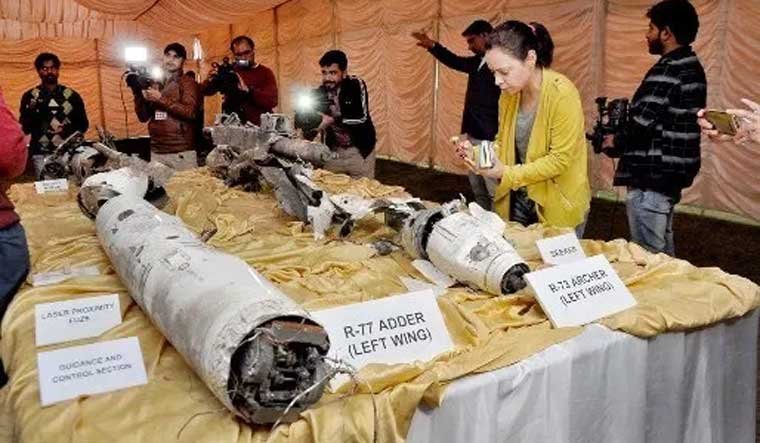
    He also showed the missiles of MiG-21 Bison recovered from the wreckage of IAF fighter being piloted by Wing Commander Abhinandan and shot down by the PAF fighter jets during the dogfight on February 27 last year.

    Air Commodore Syed Omar Shah said the MiG-21 Bison was equipped with two R-73 Archer missiles and two R-77 Adder missiles on its left and right wings, which were never fired. Since the aircraft after being hit fell on the left side that completely damaged the two missiles attached on the left wing.

    The two R-73 Archer and R-77 Adder missiles, which attached on the right wing of MiG-21, were recovered almost intact from the aircraft’s wreckage whereas the left wing missiles were damaged, particularly the R-77 Adder whose rocket motor got burnt under the rubble, he added.

    Air Commodore Shah noted that after analysis of the recovered missiles it was found that none of them was fired, rejecting the claim of IAF that Wing Commander Abhinandan had fired a R-73 Archer missile at the PAF jet before his aircraft was shot down.

    “The rocket motor has been found attached with the missile launcher that clearly proves that the MiG-21 piloted by Wing Commander Abhinandan did not fire any of its missiles and inflicted no damage on the PAF aircraft,” he maintained.

    The Operation Swift Retort, he said, would be remembered as a “chronicle of valour and heroism”, which gave a message to the international community that their quest for peace should not be misconstrued by the enemy as their weakness.

    He said though the independent sources had also denied the IAF’s claims of shooting down PAF’s F-16 fighter plane yet Wing Commander Abhinandan was awarded the highest military award by the Indian government. Moreover, the IAF chief’s claim of hitting an F-16 with a R-73 Archer missile was a question mark on the professionalism of his force, he added.

    Air Commodore Shah said when the IAF tried to violate Pakistan’s airspace it was “unilaterally perceived to be challenging the sovereignty of Pakistan”. In response to the the IAF’s violation of Pakistan’s airspace, four key targets had been locked, including Headquarters 80 Brigade Punch Sector, Headquarters 120 Brigade and two others. The PAF’s swift operation had surprised the IAF as they were unable to respond, he added.

    He said the main reason behind a year-long delay in making public the wreckage of MiG-21 Bison was a war-like situation which prevailed at the time of dog-fight.

    The PAF pilots avoided to hit the locked targets due to the rules of engagement decided by the country’s leadership, he added.

    Earlier, Pakistan had announced to celebrate ‘Surprise Day’ on February 27 as a tribute to the retaliatory attack by the PAF after India’s Balakot airstrike.
  • Pakistan to celebrate ‘Surprise Day’ on Abhinandan’s capture anniversary

    Pakistan to celebrate ‘Surprise Day’ on Abhinandan’s capture anniversary

    Pakistan has announced to celebrate ‘Surprise Day’ on February 27 as a tribute to the retaliatory attack by the Pakistan Air Force (PAF) after India’s Balakot airstrike, The Express Tribune has reported.

    On Feb 27, 2019, the PAF carried out Operation Swift Retort and shot down two Indian Air Force (IAF) fighter aircraft and dropped bombs within the compounds of Indian military facilities in occupied Kashmir – as a warning to the country’s belligerent neighbour.

    The Pakistani military had lived up to its promise to ‘surprise’ India in wake of any misadventure, saying that ‘uncalled-for aggression’ from the Indian military  ‘would not go unpunished’.

    The operation also resulted in the capture of an Indian pilot, Wing Commander Abhinandan Varthaman, after his Mig-21 was shot down. The pilot was later handed over to Indian authorities as ‘a goodwill gesture’.

    The rare aerial engagement significantly raised the stakes in the perilous standoff came a day after Delhi claimed its aircraft had launched an airstrike on what it called the “biggest training camp of Jaish-e-Muhammad” militant group inside Pakistan – a claim debunked by Islamabad.

    “The sole purpose of this [PAF] action was to demonstrate our right, will and capability for self-defence. We do not wish to escalate, but we’re fully prepared if forced into that paradigm,” the Foreign Office had said in a statement.

    The then director-general of the Inter-Services Public Relations (ISPR), Major General Asif Ghafoor, said Indian jets were shot down after PAF planes earlier struck targets across the Line of Control (LoC) in a show of strength.

    Afterwards, he said, the two Indian warplanes crossed the LoC into Pakistani airspace. They were engaged by PAF jets and downed. One fell into Azad Jammu and Kashmir (AJK), while the other crashed on the other side of the LoC, he had said.

    “In response to PAF strikes this morning, as released by MoFA, IAF [Indian Air Force] crossed [the] LoC,” he said. “[The] PAF shot down two Indian aircraft inside Pakistani airspace. One of the aircraft fell inside AJK while [the] other fell inside IOK. One Indian pilot arrested by troops on the ground.”

  • Two killed as Indian military’s helicopter crashes in Bhutan

    Two killed as Indian military’s helicopter crashes in Bhutan

    An Indian Military Training Team (IMTRAT) Cheetah helicopter crashed in eastern Bhutan, killing two Bhutanese pilots on Friday, NDTV reported.

    According to the reports, the chopper belonged to Indian Army’s 667 Army Aviation Squadron based in the Indian state of Assam. The single-engine Cheetah Helicopter was en route to Yongphulla, Bhutan, when it crashed into a hill near Khentongmani.

    Indian Army Spokesperson Colonel Aman Anand said, “The helicopter went out of radio and visual contact soon after 1pm. The helicopter was on way from Khirmu (Arunanchal) to Yongphulla on duty”.

    The accident comes days after an Indian Air Force MiG-21 crashed near the Gwalior Air Force Base in Madhya Pradesh. The aircraft was on a routine training mission on Wednesday, September 25 when it crashed. Both pilots – a group captain and a squadron leader – managed to eject safely.

    According to the Indian Minister of State for Defence, Shripad Naik, Indian Air Force (IAF) had lost 27 aircraft, including 15 fighter jets and helicopters, in crashes since 2016.

  • Another Indian MiG-21 crashes during training

    An Indian Air Force (IAF) MiG-21 aircraft has crashed near the Gwalior airbase in Madhya Pradesh on Wednesday. , Hindustan Times reported.

    According to the reports, both pilots of the MiG-21 trainer aircraft including a group captain and a squadron leader managed to eject safely before the crash.

    Crashes involving fighter planes are common in India which is in the midst of upgrading its Soviet-era military. Most of the crash incidents involve the MiGs that India bought decades ago from the Soviet Union, earning it the unflattering “flying coffin” tag.

    The IAF lost 27 aircraft, including 15 fighter jets and helicopters, in crashes since 2016, as mentioned by Indian Minister of State for Defence, Shripad Naik, in June 2019.

    Earlier on February 27, Pakistan Air Force (PAF) had also shot down MiG-21 fighter jet and captured its pilot Abhinandan Varthaman who was later handed over by Pakistan to India at the Wagah-Attari border crossing on March 1 as a peace gesture.

  • Indian MP wants Abhinandan’s facial hair declared country’s ‘national moustache’

    Indian MP wants Abhinandan’s facial hair declared country’s ‘national moustache’

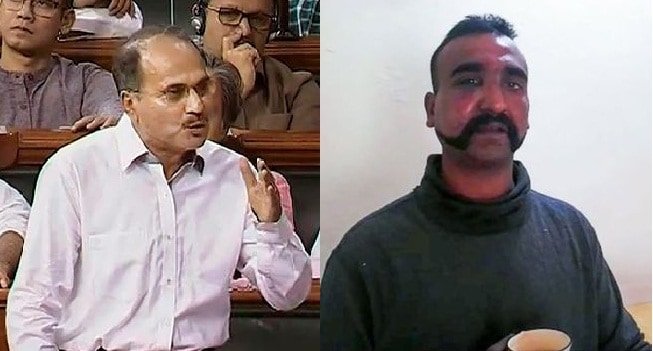
    An Indian parliamentarian has demanded that Indian Air Force (IAF) pilot Wing Commander Abhinandan Varthaman’s gunslinger moustache be declared the “national moustache of India”.

    “Wing Commander Abhinandan Varthaman should be awarded and his moustache should be made the national moustache,” Indian National Congress (INC) leader Adhir Ranjan Chowdhury was quoted as saying by India Today.

    On February 27, the IAF pilot was captured after Pakistan Air Force (PAF) shot down two Indian jets for intruding into Pakistan’s territory.

    Pakistan, as a goodwill gesture, had handed over the captured pilot to Indian authorities at Wagah border on March 1.

    According to Indian media reports, the opposition party’s leader has now argued that the pilot should be given a national honour “for his bravery”.

    Earlier, the shot down and captured Indian pilot’s facial hair had become the talk of the town as India hailed him as a “war hero”.