Tag: Indian Elections 2024

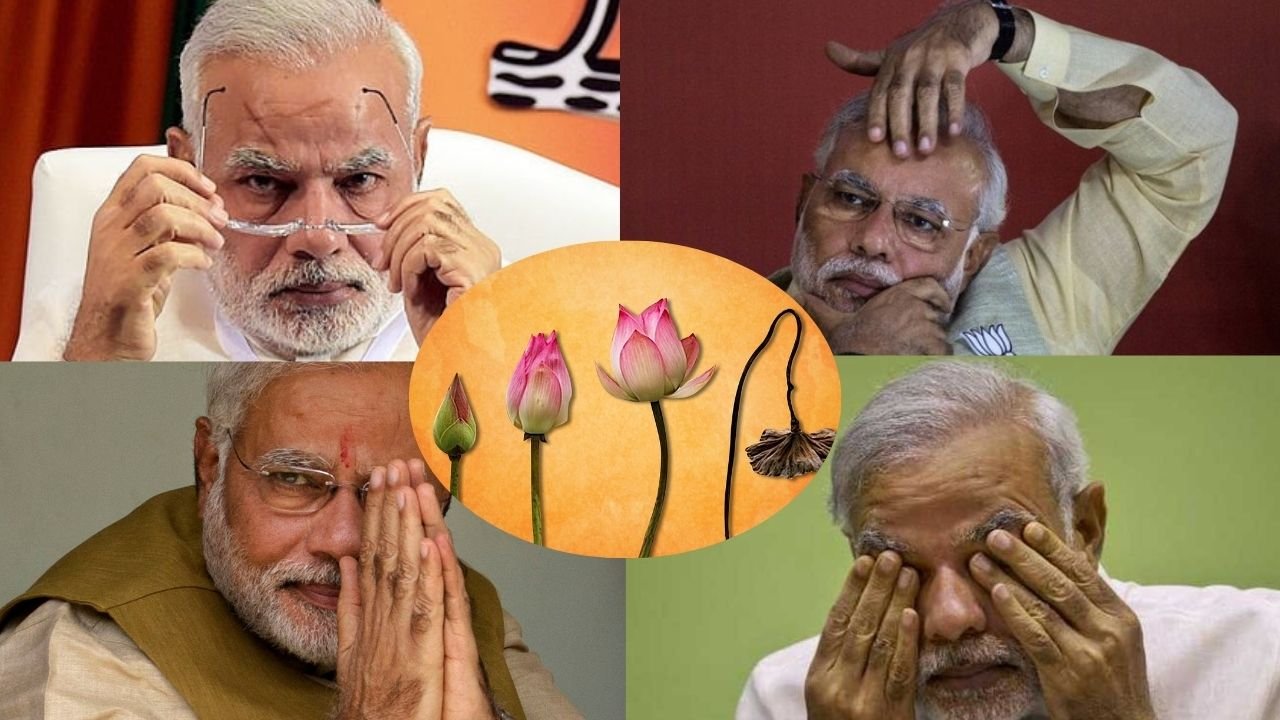
  • Ab ki baar, 400 nahin hua paar; Why did Modi falter in Indian elections?

    Ab ki baar, 400 nahin hua paar; Why did Modi falter in Indian elections?

    Elections in 2024 are surprising, to say the least. Many polls across the globe have given a jolt to political pandits, dismantling their expectations. Be it in Pakistan or in neighbouring India; the results sent a shock wave among observers. In India, particularly, the result defied exit polls and set a precedent of what is called the power of vote.

    While the expected Leader of the Opposition, Rahul Gandhi, was on a country-wide tour titled “Bharat Joro Yatra,” Prime Minister Narendra Modi and the leading party, BJP, were conniving for a change in the constitution.  Campaigning for a third time in the office, “400 paar” was the slogan Modi chanted all along. With more than 65 percent voter turnout and a six-week-long grueling process of polls amid the heatwave, the climax showcased the fruit of the exhaustive exercise. The total number of seats won by the ruling party was 240, far behind the magic number of 272, and it lost 63 seats compared to the election of 2019. Economist and author Parakala Prabhakar called this “a very clear tight slap on PM’s face,” but what led to the results?  

     In the span of the last five years, the BJP government led by Narendra Modi outrightly showed hate against minorities, especially Muslims, and promoted the saffron-tainted movement of Hindutva. It started off with the revocation of the Special Status of Kashmir, followed by the Citizen Amendment Act, and culminated with the inauguration of Ram Mandir. 

    303 seats in 2019 enabled BJP to strip Kashmiris of their statehood on August 5, 2019, because it was seen as the biggest hurdle in the drive for development in the region. However, in the garb of this modernization, the aim was to alter the disputed area’s demographics eventually.  

    With CAA, the Modi government further pushed Muslims to the periphery. This “fundamentally discriminatory” piece of law endangered the citizenship of a large number of Muslims in the country. It declared them illegal immigrants, but the Modi government remained unfazed in the face of all criticism. 

    The mishandling of the pandemic, coupled with the high unemployment rate of eight percent, proved to be a catalyst, but it was the largest farmer’s protest in Punjab that turned out to be a major blow. Millions on the road, the police crackdown on protestors, and the rigidity of the government made headlines all across the globe. Resultantly, Congress dominated the polls in Punjab with a high voter turnout of 62.80 percent.

    Islamophobic rhetoric, anti-Dalit sentiment, a spiraling economy, and unconstitutional motives of the sitting government resulted in the BJP’s defeat in Uttar Pradesh and Maharashtra, the two most significant states. 

    The party of “saffron parakeets” kept on ignoring the pulse of the nation and inaugurated Ram Mandir with glitz and glamour in Ayodhya, above the ruins of the demolished Babri Masjid. Modi proudly claimed that the Mandir will be a “temple of national consciousness”. The voters ironically consciously rejected him. Though the BJP will again form the government under the umbrella of the National Democratic Alliance, this will be a coalition government, weak at its core and unable to execute the idea of changing the system of governance from Parliamentary to Presidential.

    Although it is true to democratic traditions, the credit for this stupendous result goes to the voices of reason, who relentlessly stood in the way of Modi’s aim to establish his “taana shahi”.  YouTuber Dhruv Rathee, who has been named by renowned publications as one of the “factors,” made it his mission to create awareness of all the inconsistencies in the election process, scandals in Modi’s governance, and the wildly objectionable things Modi has said and done. His videos were watched by a whooping number of 476 million people, got screened in some areas while he flexed as the “power of the common man”. Some journalists like Rana Ayuub and Karan Thapar and writers like Arundhati Roy chose to call a spade a spade and will go down in history for being on the right side. 

    With the coalition government in place, will there be a new more introspective Modi or a rather aggressive one? It is yet to be seen, but he surely wouldn’t be the same as he was in the last five years.
  • India Commission says 642 million voted in election

    India Commission says 642 million voted in election

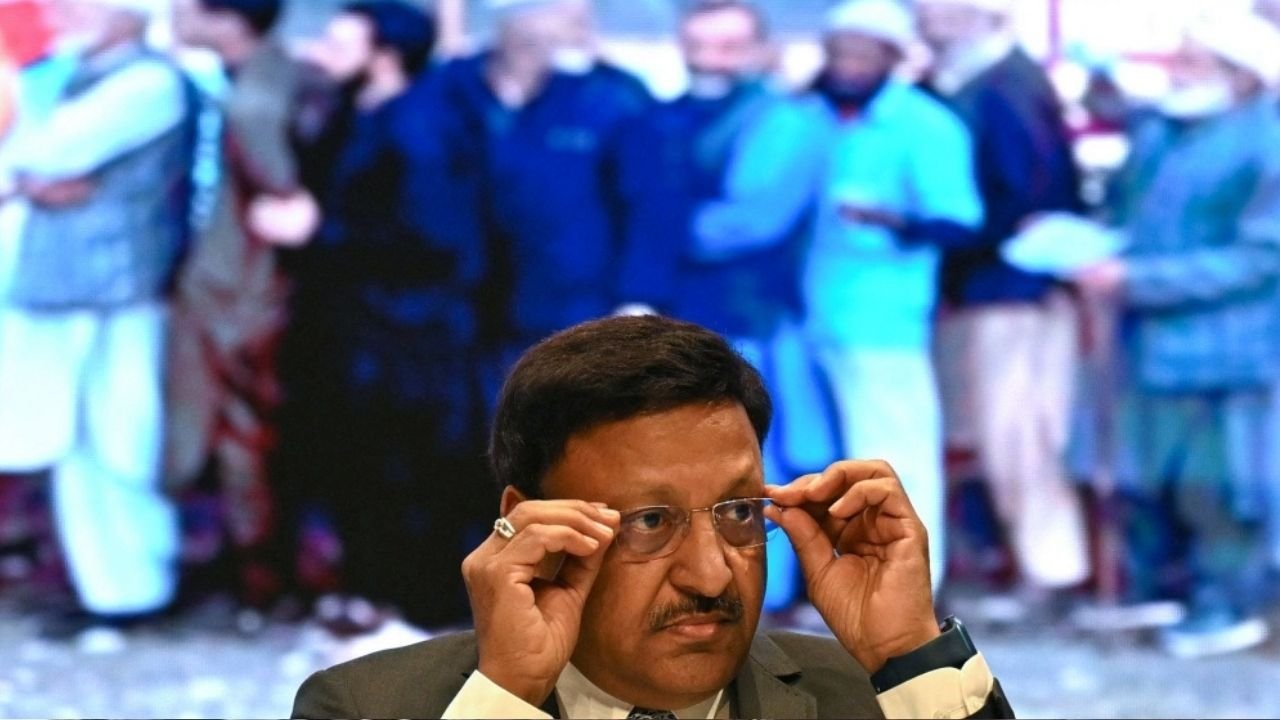
    A total of 642 million Indians voted in the just-concluded six-week-long polls, Chief Election Commissioner Rajiv Kumar told reporters on Monday, with Prime Minister Narendra Modi widely expected to win a third term.

    “We have created a world record of 642 million Indian voters, it is a historic moment for all of us,” Kumar said, adding that nearly half of those — 312 million — were women voters.

    “It shows the incredible power of voters of India,” he said.

    “People should know about the strength of Indian democracy.”

    Based on the commission’s figure of an electorate of 968 million, 66.3 percent of eligible voters turned out, slightly down on the last general election in 2019.

    Kumar said that “642 million voters chose action over apathy, belief over cynicism and in some cases, the ballot over the bullet”, the commission said, with the commissioner adding that there were “no major incidents of violence”.

    Voting in the seventh and final staggered round ended on Saturday, and counting and results are due on Tuesday.

    Exit polls show Modi is well on track to triumph, with the premier saying he was confident that “the people of India have voted in record numbers” to re-elect his government.

    India uses electronic voting machines that allow for faster counting of ballots.

    “We have a robust counting process in place,” Kumar said.

  • India’s six-week election ends with vote in Hindu holy city Varanasi

    India’s six-week election ends with vote in Hindu holy city Varanasi

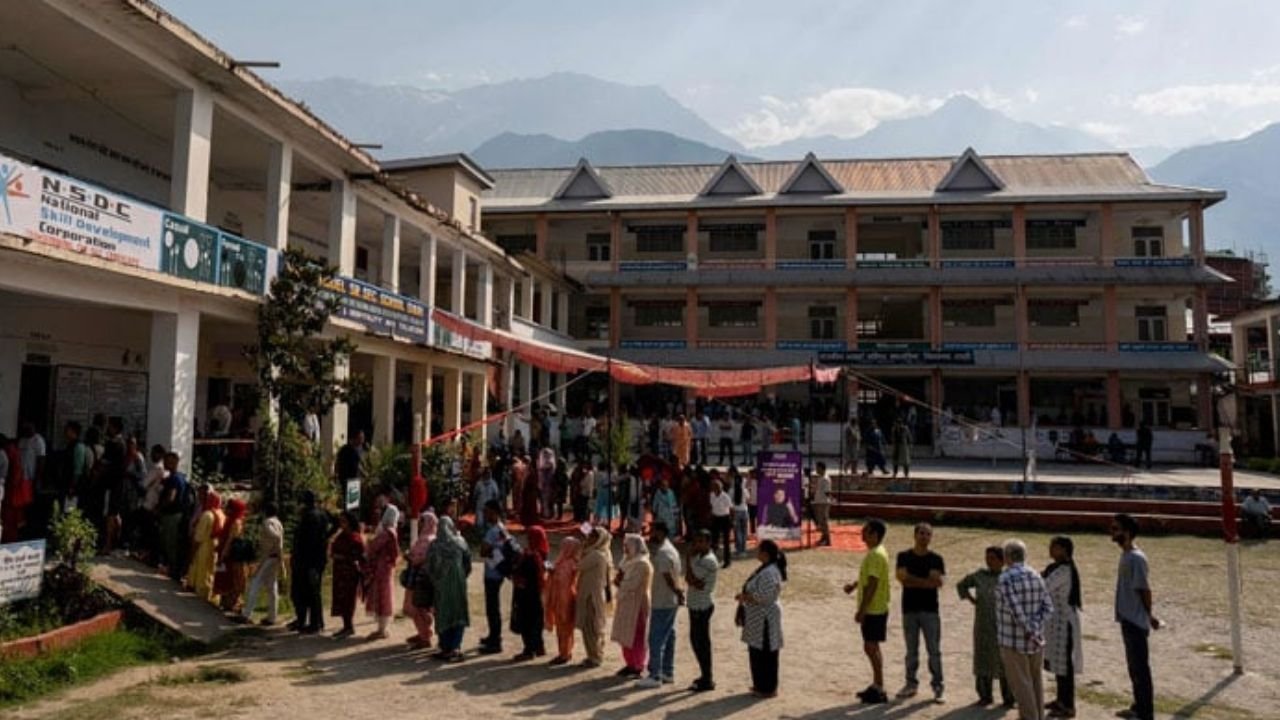
    VARANASI: Indians flocked to the polls under scorching heat in the Hindu holy city of Varanasi on Saturday as a marathon national election reached its final day, six weeks after the voting first began.

    Indian Prime Minister Narendra Modi is widely expected to win a third term in office when results are announced Tuesday, in large part due to his cultivated image as an aggressive champion of India’s majority faith.

    The 73-year-old’s constituency of Varanasi is the spiritual capital of Hinduism, where devotees from around India come to cremate deceased loved ones by the Ganges river.

    It is one of the final cities to vote in India’s gruelling election and where public support for Modi’s ever-closer alignment of religion and politics burns brightest.

    “Modi is obviously winning,” Vijayendra Kumar Singh, who works in one of the popular pilgrimage destination’s many hotels, told AFP.

    “There’s a sense of pride with everything he does, and that’s why people vote for him.”

    Modi has already led the ruling Bharatiya Janata Party (BJP) to two landslide victories in 2014 and 2019, forged in large part by his appeal to the Hindu faithful.

    This year, he presided over the inauguration of a grand temple to the deity Ram, built on the grounds of a centuries-old mosque in Ayodhya razed by Hindu zealots in 1992.

    Construction of the temple fulfilled a longstanding demand of Hindu activists and was widely celebrated across the country with back-to-back television coverage and street parties.

    The ceremony, and numerous other chest-beating appeals to India’s majority religion over the past decade, have in turn made many among the country’s 200 million-plus minority Muslim community increasingly uneasy about their futures.

    Modi himself has made a number of strident comments about Muslims on the campaign trail, referring to them as “infiltrators”.

    He has also accused the motley coalition of more than two dozen opposition parties contesting the poll against him of plotting to redistribute India’s wealth to its Muslim citizens.

    ‘Already so hot’

    India has voted in seven phases over six weeks to ease the immense logistical burden of staging an election in the world’s most populous country.

    Both counting and results are expected on Tuesday, but exit polls published after polls close Saturday are expected to give some indication of the winner.

    Turnout is down several percentage points from the last national election in 2019, with analysts blaming widespread expectations of a Modi victory as well as successive heatwaves scorching India’s northern states.

    Extensive scientific research shows climate change is causing heatwaves to become longer, more frequent and more intense, with Asia warming faster than the global average.

    A scorching sun bore down on Varanasi and its countless temples and riverside crematoriums during Saturday’s vote, with temperatures forecast to peak at 44°C (111 Fahrenheit).

    “It’s already so hot,” Chinta Devi, who arrived to cast her vote at eight in the morning, told AFP.

    “Varanasi has felt hotter than usual over the last few days,” she added. “You see all the streets and markets empty.”

    ‘A lot more respect’

    Analysts have long expected Modi to triumph against the opposition alliance competing against him, which at no point has named an agreed candidate for prime minister.

    His prospects have been further bolstered by several criminal probes into his opponents and a tax investigation this year that froze the bank accounts of Congress, India’s largest opposition party.

    Western democracies have largely sidestepped concerns over rights and democratic freedoms in the hopes of cultivating an ally that can help check the growing assertiveness of China, India’s northern neighbour and rival regional power.

    Modi’s image at home has been bolstered by India’s rising diplomatic and economic clout — the country overtook Britain as the world’s fifth-biggest economy in 2022.

    “As an Indian, I feel that he has ensured a lot of respect and prestige for India during his term,” Shikha Aggarwal, 40, told AFP while waiting to cast her vote.

    “People now look at India and Indians with a lot more respect, something not accorded earlier.”

  • Heatwave in India kills 33, including election officials

    Heatwave in India kills 33, including election officials

    Thirty-three people, including election officials on duty, died of suspected heatstroke in three major Indian states on Friday, including Bihar, Uttar Pradesh, and Odisha.

    Fourteen people died in Bihar on Thursday, including 10 people involved in organising the seven-phase national elections that are currently underway. Many election officials are usually required to stand on duty all day, many times outdoors.

    Parts of Bihar are voting in the final round of polling on Saturday as well.

    In Uttar Pradesh, nine election personnel, including security persons, died on Friday, government officials said.

    Ten deaths were reported from the government hospital in Odisha on Thursday, authorities said, prompting government to advise against outdoor activities between 11:00 am and 3:00 pm local time when temperatures heighten.

    Three people died of suspected heatstroke in Jharkhand state, neighbouring Bihar.

    India has been experiencing a record hot summer. A locality of the capital Delhi recorded the country’s highest-ever temperature at 52.9°C this week.

    While temperatures in north-western and central India are expected to fall in the coming days, the prevailing heatwave over eastern India is likely to continue for two days, according to India’s Meteorological Department (IMD), which declares a heatwave when the temperature is 4.5°C to 6.4°C higher than normal.

    The last phase of voting is scheduled to be held on Saturday and votes will be in counted on Tuesday.

    However, the deadly heatwave in the South Asian region is expected to continue until Saturday.