Tag: Indian government

  • Muslims do ‘love-jihad’, not allowed to apply henna on Hindu women in India

    Muslims do ‘love-jihad’, not allowed to apply henna on Hindu women in India

    The Uttar Pradesh (UP) Police have filed a First Information Report (FIR) against a group ‘ Kranti Sena’ in Muzaffarnagar who conducted checks at a market to ensure that no Muslim man applies Mehndi on the hands of Hindu women ahead of Hariyali Teej, an event celebrated during the holy month of Shravana on August 10, reports The Indian Express.

    In a viral video, members of the party are seen asking shopkeepers whether they have arrangements for applying henna. The video then cuts to the Kranti Sena General Secretary Manoj Saini, who says, “We have checked several shops and appealed to the owners to not employ Muslims as they indulge in ‘love jihad’ and trap our women while applying mehndi.”

    After the video went viral, the police filed an FIR against the group. While talking to The Indian Express Aprit Vijayvargia, SP City Muzaffarnagar said, “It was brought to our notice after a video was uploaded on social media. Security has been heavily deployed in public places since there are many festivals. There is no law and order situation.”

    Shopkeepers in the area said that they did not quite understand what the group wanted from them. “How can we not employ people on the basis of religion?” one of them asked.

    According to The Quint, the FIR is against 51 members of the Kranti Sena, 11 named and 40 unnamed.

    Earlier anti-Muslim slogans, calling for murder, were raised in New Delhi at an event organised by the Bharatiya Janata Party (BJP).

  • Indian government spying on PM Khan through his phone: Report

    Indian government spying on PM Khan through his phone: Report

    The Indian government targeted Prime Minister Imran Khan’s phone for surveillance, reports The Guardian. Analysis of the more than 1,000 mostly Indian phone numbers selected for potential targeting by using Pegasus spyware strongly indicates intelligence agencies within the Indian government were behind the selection.

    Among other numbers identified by the Pegasus Project, the client identified two numbers registered to or once known to have been used by PM Imran Khan. The records also included numbers of known priorities of India’s security agencies, including Kashmiri separatist leaders, Pakistani diplomats, Chinese journalists, Sikh activists, and business people who have known to be the subject of police investigations.

    Narendra Modi’s political rival and Congress leader Rahul Gandhi was twice selected as a potential surveillance target in the leaked phone number data, making him one of the dozens of Indian politicians, journalists, activists, and government critics whose numbers were identified as possible targets for the Israeli company’s government clients.

    The phone numbers of over 40 Indian journalists appeared on a leaked list of potential targets for surveillance, and forensic tests have confirmed that some of them were successfully snooped upon by an unidentified agency using Israel’s Pegasus spyware, reported The Wire.

    Forensic tests conducted as part of this project on a small cross-section of phones associated with these numbers revealed clear signs of targeting by Pegasus spyware in 37 phones, of which 10 are Indian.

    Indian ministers, government officials, and Opposition leaders also figure in the list of people whose phones may have been compromised by the spyware, claimed The Wire.

  • Indian actor thanks Pakistan for ‘bada dill’ amid COVID

    Swara Bhasker has thanked Pakistan for showing kindness to India “during this devastating times”.

    “Heartening to see Pakistani civil society and social media reach out in solidarity and kindness to India, during this devastating time,” wrote the actor on social media.

    She continued: “This despite the fact that our media and mainstream public discourse have consistently mocked and vilified Pakistanis.”

    “Thank you for your bada bada dil padosi,” she added.

    Twitter in Pakistan trended with hashtags showing solidarity to India, which also melted Kangana Ranaut’s heart, prompting her to thank Pakistan for extending prayers.

    Prime Minister Imran Khan and other cabinet members also extended their prayers for India and Faisal Edhi had also written a letter to Indian Prime Minister Narendra Modi offering help in tackling COVID-19 in India.

    Atif Aslam also extended his prayers for the neighbouring country.

    India recorded over 350,000 new COVID-19 cases in the last 24 hours ending 8 am Monday, taking the country’s total infections to over 1.73 crores. Of these, over 28 lakh cases are currently active while 1.43 crore people have recovered after testing positive. With 2,812 new fatalities, the death toll is now over 1.95 lakh, The Indian Express has reported.

    As per Indian media reports, from the first wave of COVID-19, the demand for medical oxygen had increased from 700 metric tonnes per day to 2,800 metric tonnes per day. However, in the past few days, the demand has reached nearly 5,000 metric tonnes per day.

  • Twitter censors tweets of lawmakers, filmmakers, MPs on Modi govt orders

    Twitter censors tweets of lawmakers, filmmakers, MPs on Modi govt orders

    At the request of the Modi government, Twitter has removed almost 50 tweets by influential people that criticised Modi for mishandling the COVID-19 pandemic.

    According to reports, the Indian government issued an emergency order to Twitter on Friday to censor 52 tweets.

    Among them were tweets from a lawmaker named Revnath Reddy, a minister in the state of West Bengal named Moloy Ghatak, and a filmmaker named Avinash Das.

    According to a spokesperson of Twitter, the accounts were notified in advance that their content will be withheld at the request of the Indian government.

    The spokesperson further added that the company made these tweets unable to be viewed because they violated the local law.

    Indian government cited Information Technology Act, 2020 that were violated by these Twitter accounts.

    “When we receive a valid legal request, we review it under both the Twitter Rules and local law. If the content violates Twitter’s Rules, the content will be removed from the service,” said the Twitter spokesperson. “If it is determined to be illegal in a particular jurisdiction, but not in violation of the Twitter Rules, we may withhold access to the content in India only. In all cases, we notify the account holder directly so they’re aware that we’ve received a legal order about the account.”

    Besides, this is not the first time Twitter has bowed down against the pressure of the Indian government. In February, when framers were protesting in Delhi, more than 500 Twitter accounts were removed at the request of the Indian government.

    The Indian government issued a notice of noncompliance to Twitter, and the employees could face jail time if the company refused to comply with the order.

    India is in the midst of a deadly second wave of COVID-19 cases, which has made ventilators, medicine, and oxygen scarce.

    According to the Johns Hopkins coronavirus resource centre, India reported 346,786 new cases of the coronavirus on Friday, a new record high, and 2,624 deaths, also a new record. Less than 1.5 per cent of the country’s population has been fully vaccinated.

  • Prayers for India: PM Imran, cabinet ministers tweet in solidarity

    On Saturday, Prime Minister (PM) Imran Khan tweeted:

    “I want to express our solidarity with the people of India as they battle a dangerous wave of COVID-19. Our prayers for a speedy recovery go to all those suffering from the pandemic in our neighbourhood & the world. We must fight this global challenge confronting humanity together.”

    Information Minister Fawad Chaudhry tweeted that in these difficult times, “our prayers are with people of India”.

    Foreign Minister Shah Mahmood Qureshi expressed support for the people of India in the current wave of COVID-19.

    Apart from PM Imran and cabinet ministers, Pakistanis also expressed their solidarity with India. #PakistanStandsWithIndia trended as number 1 on Twitter.

    Yesterday, Faisal Edhi wrote to Indian Prime Minister Narendra Modi offering help in tackling COVID-19 in India.

    According to BBC, India has recorded nearly a million infections in three days, with 346,786 new cases overnight into Saturday. [hyperlink

  • ‘As a neighbouring friend, we sympathise with you’: Faisal Edhi offers India help

    Managing Trustee of Edhi Foundation Faisal Edhi, in a letter to Indian Prime Minister Narendra Modi, has offered help to manage the deadly second wave of coronavirus in India.

    “We, at the Edhi Foundation, have been closely following the current impact that the COVID-19 crisis has had on the people of India,” read the letter. “We are very sorry to hear about the exceptionally heavy impact that the pandemic has had on your country, where a tremendous number of people are suffering immensely.”

    Faisal further wrote: “As a neighbouring friend, we sympathise with you greatly and during this strenuous time, we would like to extends our help in the form of a fleet of 50 ambulances along with our services to assist you in addressing, and further circumventing the health conditions.”

    “We will arrange all the necessary supplies that our team needs to assist the people of India,” added the letter further.

    “I, Faisal Edhi, Managing Trustee of the Edhi Foundation, am personally offering to lead and manage the humanitarian team from my organisation,” said Faisal.

    He continued: “Importantly, we are not requesting any other assistance from you, as we are providing the fuel, food, and other necessary amenities that our team will require.”

    “Our team consists of emergency medical technicians, office staff, drivers, and supporting staff,” stated Faisal further. “In order to implement our proposed service, we only request your permission to enter India as well as any necessary guidance from the local administration and police department.”

    “We look forward to assisting you in managing the current humanitarian crises, and hope only to provide our help in whatever way that we can, for the benefit of the people of India,” he concluded.

    On Thursday, India recorded the world’s highest daily tally of 314,835 COVID-19 infections in a single day and hospitals in India are running out of medical oxygen. As per the Indian media news outlet, In the first wave of Covid-19, the demand for medical oxygen had increased from 700 metric tonnes per day to 2,800 metric tonnes per day. However, in the past few days, the demand has reached nearly 5,000 metric tonnes per day.

  • Mumbai police files case against Kangana Ranaut for copyright violation

    Author of the book Didda: The Warrior Queen of Kashmir, Ashish Kaul has accused Kangana Ranaut of copyright violations and approached a local court in this regard after which a case has been filed against the actor by Mumbai police.

    According to a report in Gulf News, Kaul has accused Ranaut of copying content from his book for her film Manikarnika Returns: The Legend Of Didda without permission, claiming that he has exclusive copyrights to the life story of Didda, the Princess of Lohar (Poonch) and the queen of Kashmir.

    As per the complaint, the author had sent an email about the storyline of his book to Kangana, and she used some part of the story in a tweet while announcing her movie without his permission.

    “Is it believable by any stretch of imagination that a story and a book are being usurped by a renowned actor- turned-social activist?” said the writer.

    Kangana is also facing police cases in Mumbai over her allegedly provocative tweets.

    Read more – Kangana defines ‘porn singer’ for Ali Gul Pir

    This is not the first time, Kangana has made it to the news for the wrong reasons. She recently had a meltdown after Rihanna extended her support for the farmers’ protest in India.

  • Amnesty International halts operations in India after government freezes bank accounts

    Amnesty International halts operations in India after government freezes bank accounts

    The government of India has completely frozen the Amnesty International Bank accounts by alleging them for money laundering which has brought all operations of the company at a complete halt.

    Moreover, the organisation was forced to let go of staff in India and pause all its ongoing research project and campaigns on human rights.

    The official statement posted on the website of the organisation claims government actions to be the “latest in the incessant witch-hunt of human rights organisations by the Government of India over unfounded and motivated allegations.”

    Furthermore “The continuing crackdown on Amnesty International India over the last two years and the complete freezing of bank accounts is not accidental.

    The constant harassment by government agencies including the Enforcement Directorate is a result of our unequivocal calls for transparency in the government, more recently for accountability of the Delhi police and the Government of India regarding the grave human rights violations in Delhi riots and Jammu & Kashmir. For a movement that has done nothing but raise its voices against injustice, this latest attack is akin to freezing dissent,” said Avinash Kumar, Executive Director of Amnesty International India.

    More than four million Indians have supported Amnesty International India’s work in the last eight years and around 100,000 Indians have made financial contributions.

    These contributions evidently cannot have any relation with the Foreign Contribution (Regulation) Act, 2010. The fact that the Government is now portraying this lawful fundraising model as money-laundering is evidence that the overbroad legal framework is maliciously activated when human rights activists and groups challenge the government’s grave inactions and excesses.

    The attacks on Amnesty International India and other outspoken human rights organizations, activists and human rights defenders is only an extension of the various repressive policies and sustained assault by the government on those who speak truth to power.

    “Treating human rights organisations like criminal enterprises and dissenting individuals as criminals without any credible evidence is a deliberate attempt by the Enforcement Directorate and Government of India to stoke a climate of fear and dismantle the critical voices in India.

  • India continues celebrating arrival of Rafale jets that other countries dumped

    As India continues to celebrate the arrival of its Rafale jets, military experts are not only questioning its capabilities against United States (US) aircraft but are also raising questions why the Rafale jets failed to compete in the international arms markets and got dumped by a majority of nations.

    According to foreign media reports, Dassault’s Rafale was not India’s only choice as various other global firms expressed interest in the MMRCA tender. Six renowned aircraft manufacturers competed to bag the contract of 126 jets, which was hailed to be the largest-ever defence acquisition deal of India.

    The initial bidders were Lockheed Martin’s F-16s, Boeing’s F/A-18s, Eurofighter Typhoon, Russia’s MiG-35, Sweden’s Saab’s Gripen and Dassault’s Rafale.

    All aircraft were tested by the IAF and after careful analysis on the bids, two of them — Eurofighter Typhoon and Dassault Rafale — were shortlisted.

    Dassault received the contract to provide 126 fighter jets as it was the lowest bidder and the aircraft was said to be easy to maintain. After Rafale won the contract, the Indian side and Dassault started negotiations in 2012. Though the initial plan was to buy 126 jets, India scaled it down to 36, that too in fly-away condition.

    Despite boasting of awe-inspiring capabilities and selected by India after a mammoth testing & bidding process, the French origin jets didn’t see many buyers. Other than France and India, only Qatar and Egypt are using Rafale jets and that too in very limited numbers.

    As reported earlier by EurAsian Times, Russian aviation experts had claimed that Rafale jets would have been useless against the Chinese Airforce (PLAAF). The maximum speed of the Rafale jet is about Mach 1.8 compared to Chinese J-16s at Mach 2.2.

    The Rafale’s practical ceiling is also lower than the J-16s. Even in engine thrust, the Chinese J-16s aka Russian Su-35s are far superior to the French combat aircraft. Even if the Indian Air Force (IAF) was to deploy all 36 of its newly acquired jets, the technical superiority would still be on the side of China, claimed the Russian expert.

    The Rafale is one of the most expensive aircraft in the international market. India’s deal of 36 jets is worth Rs. 60,000 crores. Experts argue that the high cost is the result of many reasons including general inefficiency in the country’s defence sector, along with the small scale on which the Rafale is being produced in comparison to rival fighters such as the F-18, MiG-29 or F-35 due to which Rafale has not benefitted from economies of scale. This has contributed to its poor performance in the international markets.

    Rafale’s third buyer, India, previously proposed to acquire 126 jets under Make in India and not 36. However, it took five years for even the first five jets to arrive in India after Prime Minister Narendra Modi announced it in April 2015 during his trip to France.

    According to analysts, despite heavy marketing by the makers of Rafale, France’s relatively small and inefficient defence sector seems to have met its limit with the fighter program. The small production lines are unable to produce the aircraft quickly or efficiently and the French budget for research and development is smaller in contrast to the US or Russia.

    The aircraft is priced very steeply and most nations prefer to buy US jets not only because of the technical superiority but also to please the Americans instead of the French. The Rafales have seemingly lost the fight in the international market, despite boasting of excellent qualities.

  • Google, Facebook and Twitter threaten to shut services in Pakistan

    Google, Facebook and Twitter threaten to shut services in Pakistan

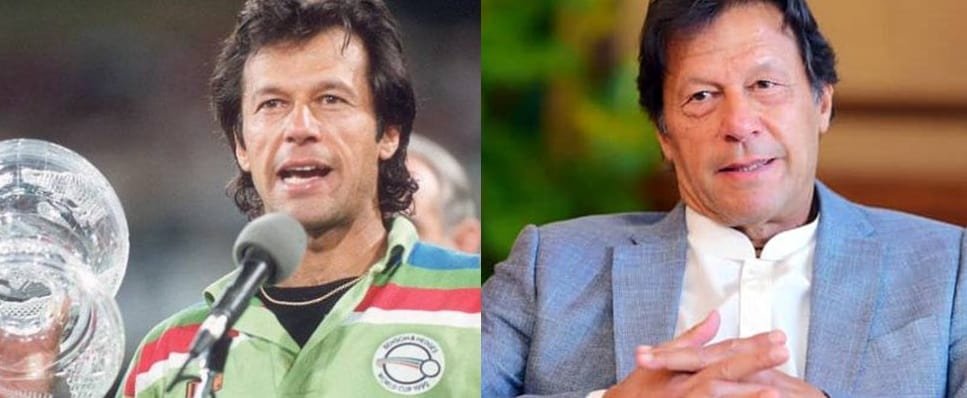
    When PTI’s government unveiled some of the world’s most sweeping censorship rules for the internet, global internet companies like Facebook, Google and Twitter threatened to shut services in the country, a step which would leave 70 million internet users in digital darkness, New York Times reported

    Through the Asia Internet Coalition, they wrote a letter to Prime Minister Imran Khan, warning him that “the rules as currently written would make it extremely difficult for AIC Members to make their services available to Pakistani users and businesses.”

    READ MORE: Punjab govt’s first-ever digital payment method collects Rs1 billion

    This undemocratic policy of PTI’s government faced severe backlash from rights groups forcing the government to retreat. Pakistani officials, this week, pledged to review regulations by doing a broad-based consultation process with all relevant stakeholders of civil society and technology companies.

    Pakistan’s digital censorship law will give power to the government to take-down a wide range of content. These laws can be easily abused by the powerful if they consider any sort of content harmful, distasteful or simply a threat to their interests.

    The unified resistance by Facebook, Google, Twitter and other tech companies in Pakistan is highly unusual. Companies often protest these types of regulations, but to leave a country is very unusual. Google pulled its search engine out of China in 2010 rather than submit to government censorship of search results.

    READ MORE: OGRA to drastically cut down petrol prices

    Under the new regulations, formally known as the Citizen Protection (Against Online Harm) Rules 2020, social media services must remove or block content within 24 hours of a request from a newly appointed officer, called the national coordinator.

    Companies must also prevent the live-streaming of any type of content the authorities say is objectionable.

    In addition, the companies must open permanent offices in Islamabad and set up servers to store data in the country. Violations of the law are subject to fines of more than $3 million, with the authorities even empowered to block services entirely.

    READ MORE: Christian youngster killed for ‘polluting’ tube-well water by bathing in it

    The new laws are a direct threat to the digital economic future for Pakistan. This will also decrease freedom of expression, increase censorship and diminish digital rights.

    What is interesting to note is that PM Khan rose to power in Pakistan in 2018 largely because of his party’s strong presence on social media. But now that he is in charge, and he is very intolerant towards online criticism.

    Pakistan’s powerful military is also averse to debates on social media platforms, especially on Twitter, which is used by critics to question human rights violations and Pak-military’s involvement in politics.