Tag: Indian Journalists

  • Principal booked in India for making students recite Iqbal’s ‘Lab pe aati hai dua’

    Principal booked in India for making students recite Iqbal’s ‘Lab pe aati hai dua’

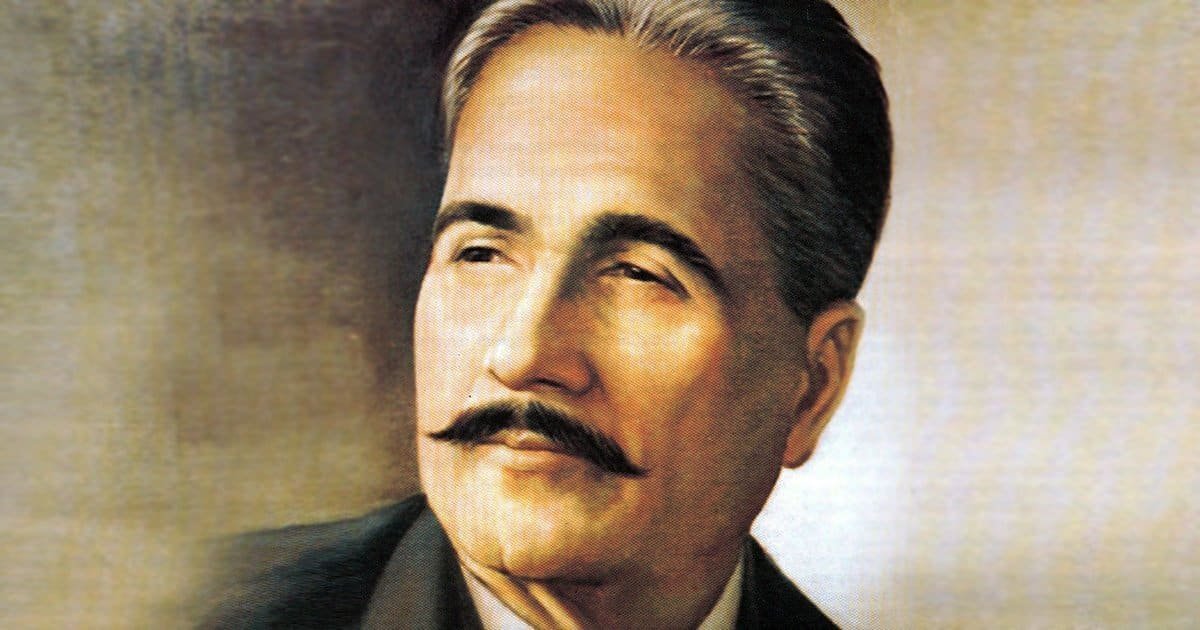
    A principal of a government school in India’s UP state has been booked for making students recite Allama Iqbal’s poem “Lab pe aati hai dua ban kay taamna meri”.

    The principal Nahid Siddiqui was booked after a video of a student reciting the poem went viral on social media. The First Hand Information (FIR) alleged that a “religious prayer” was recited at the government school in a bid to convert the students.

    The school principal has also been suspended by the Education Department. The School has 265 students enrolled in Classes 1 to 8.

    Prominent Indian Journalist Rana Ayyub while sharing the screenshot of the news report wrote, “The principal was suspended for singing this song ‘Ho Mera Kaam Garibon Ki Himayat Karna Dardmando Se Zaifon Se Mohabbat Karna.’ Me, my siblings sang it. Your hate will kill you from within you bigots.”

  • Nobel Peace Prize 2022: Muslim Indian journalist listed as unofficial favourite

    Nobel Peace Prize 2022: Muslim Indian journalist listed as unofficial favourite

    Co-founders of Indian fact-checking website Alt News, Pratik Sinha and Mohammed Zubair have been listed as an unofficial favourite for the 2022 Nobel Peace Prize, ahead of the announcement of the winner on October 7.

    TIME magazine, in a report, compiled a list of “some of the favourites to win, based on nominations that were made public via Norwegian lawmakers, predictions from bookmakers, and picks from the Peace Research Institute Oslo.”

    The list includes journalists Mr. Sinha and Mr. Zubair, who “have relentlessly been battling misinformation in India.” The Time report said that the duo has “methodologically debunked rumors and fake news circulating on social media and called out hate speech.

    Mohammed Zubair is a co-founder of fact-checking website Alt News. He is a critic of Indian Prime Minister Narendra Modi’s government, and regularly tracks and highlights anti-Muslim hate speech by Hindu right-wing activists and politicians.

    He was detained earlier this year because of a tweet from 2018 that included a screenshot from a well-known Hindi film, which authorities claim was insulting to Hindu religious beliefs.

  • Indian anchor scolds wrong guest, triggers meme fest

    Indian anchor scolds wrong guest, triggers meme fest

    A video of an Indian TV debate on Ukraine went viral after the host berated a guest live on air for more than a minute before realising he was shouting at the wrong person.

    The clip shows Rahul Shivshankar, Indian television anchor for the Indian news channel Times Now, scolding Bohdan Nahaylo, the chief editor of Ukraine’s English-language newspaper Kyiv Post.

    In the video, Shivshankar confuses Nahaylo with Daniel McAdams, the executive director of the Ron Paul Institute for Peace and Prosperity, who was the other panellist on his show.

    The viral clip shows Shivshankar telling “Daniel McAdams” to “just take a bit of a chill pill”, before launching into his rebuke and telling him to “relax”. Nahaylo hits back by saying he doesn’t want to because “my country is at war”. The Indian anchor goes on a tirade for a few minutes and is finally told loud and clear by the guest Daniel McAdams that the anchor is yelling at the wrong person

    The confusion has led to a meme fest on social media:

    https://twitter.com/FAKEJODl/status/1499427107818016768

  • Indian Muslim women ‘up for sale’ on app again

    Indian Muslim women ‘up for sale’ on app again

    BBC News Correspondent Yogita Limaye claims that Indian Muslim women find themselves ‘up for sale’ for a second time on an application called Sulli [a derogatory term used to refer to Muslim women in India] application.

    In a tweet, she said, “In the span of six months, Indian Muslim women find themselves ‘up for sale’ for a second time. The info tech minister says the content has been blocked. Perpetrators yet to be found.”

    This is not the first time that Muslim women were put up “for auction” online in India. In July, images of hundreds of women were uploaded via an auctioning app called “Sulli Deals”.

    Hana Khan, a commercial pilot whose name was on the list revealed that she was alerted to it when a friend sent her a tweet.

    Police opened an investigation but refused to say who could be behind the app.

    The experience had left women scarred. Those who featured on the app were all vocal Muslims, including journalists, activists, artists and researchers. A few have since deleted their social media accounts and many others said they were afraid of further harassment.

  • Indian government spying on PM Khan through his phone: Report

    Indian government spying on PM Khan through his phone: Report

    The Indian government targeted Prime Minister Imran Khan’s phone for surveillance, reports The Guardian. Analysis of the more than 1,000 mostly Indian phone numbers selected for potential targeting by using Pegasus spyware strongly indicates intelligence agencies within the Indian government were behind the selection.

    Among other numbers identified by the Pegasus Project, the client identified two numbers registered to or once known to have been used by PM Imran Khan. The records also included numbers of known priorities of India’s security agencies, including Kashmiri separatist leaders, Pakistani diplomats, Chinese journalists, Sikh activists, and business people who have known to be the subject of police investigations.

    Narendra Modi’s political rival and Congress leader Rahul Gandhi was twice selected as a potential surveillance target in the leaked phone number data, making him one of the dozens of Indian politicians, journalists, activists, and government critics whose numbers were identified as possible targets for the Israeli company’s government clients.

    The phone numbers of over 40 Indian journalists appeared on a leaked list of potential targets for surveillance, and forensic tests have confirmed that some of them were successfully snooped upon by an unidentified agency using Israel’s Pegasus spyware, reported The Wire.

    Forensic tests conducted as part of this project on a small cross-section of phones associated with these numbers revealed clear signs of targeting by Pegasus spyware in 37 phones, of which 10 are Indian.

    Indian ministers, government officials, and Opposition leaders also figure in the list of people whose phones may have been compromised by the spyware, claimed The Wire.

  • 40 Indian journalists were secretly spied on by their govt, Pak shows concern

    40 Indian journalists were secretly spied on by their govt, Pak shows concern

    The phone numbers of over 40 Indian journalists appeared on a leaked list of potential targets for surveillance, and forensic tests have confirmed that some of them were successfully snooped upon by an unidentified agency using Pegasus spyware, a private Israeli firm, reports The Wire.

    Forensic tests conducted as part of this project on a small cross-section of phones associated with these numbers revealed clear signs of targeting by Pegasus spyware in 37 phones, of which 10 are Indian.

    Indian ministers, government officials, and Opposition leaders also figure in the list of people whose phones may have been compromised by the spyware, claimed The Wire.

    The leaked data includes the numbers of top journalists at big media houses like the Hindustan Times, including executive editor Shishir Gupta, India Today, Network18, The Hindu, and Indian Express.
    The leaked database was accessed by Paris-based media nonprofit Forbidden Stories and Amnesty International and shared with The Wire, Le Monde, The Guardian, Washington Post Die Zeit, Suddeutsche Zeitung, and 10 other Mexican, Arab and European news organisations as part of a collaborative investigation called the ‘Pegasus Project’.

    Information Minister Fawad Chaudhry tweeted: “Extremely concerned on news reports emerging from @guardiannews that Indian Govt used Israeli software to spy on Journalists, political opponents, and politicians, unethical policies of #ModiGovt have dangerously polarised India and the region… more details are emerging.”

    The Pegasus Project, a consortium of news organisations that analysed this list, has reason to believe that the data is indicative of potential targets identified in advance of surveillance attempts. The presence of a phone number in the data does alone not reveal whether a device was infected with Pegasus or subject to an attempted hack – technical examination of the phone’s data is needed for that.

    The important factor is how the results of the forensic analysis threw up shows the sequential connection between the time and date a phone number is entered in the list and the beginning of surveillance. The gap usually ranges between a few minutes and a couple of hours. In some cases, including forensic tests conducted for two India numbers, the time between a number appearing on the list and the successful detection of a trace of Pegasus infection is just seconds.

    Pegasus is sold by the Israeli company, NSO Group, which says it only offers its spyware to “vetted governments”. The company refuses to make its list of customers public but the presence of Pegasus infections in India, and the range of persons that may have been selected for targeting, strongly indicate that the agency operating the spyware on Indian numbers is an official Indian one.

    NSO disputes the claim that the leaked list is linked in any way to the functioning of its spyware. In a letter to The Wire and Pegasus Project partners, the company initially said it had “good reason to believe” that the leaked data was “not a list of numbers targeted by governments using Pegasus”, but instead, maybe part of “a larger list of numbers that might have been used by NSO Group customers for other purposes”.

    However, the forensic testing of targeted phones has confirmed the use of Pegasus spyware against some of the Indian numbers on this list and has also established that this highly obstructive form of surveillance – technically illegal under Indian law as it involves hacking – is still being used to spy on journalists and others.

    A majority of the numbers identified in the list were geographically concentrated in 10 country clusters: India, Azerbaijan, Bahrain, Hungary, Kazakhstan, Mexico, Morocco, Rwanda, Saudi Arabia, and the United Arab Emirates.