Tag: Indian Prime Minister

  • ‘Jo kahoge, doonga’: Which Pakistani singer did Vajpayee invite to India?

    ‘Jo kahoge, doonga’: Which Pakistani singer did Vajpayee invite to India?

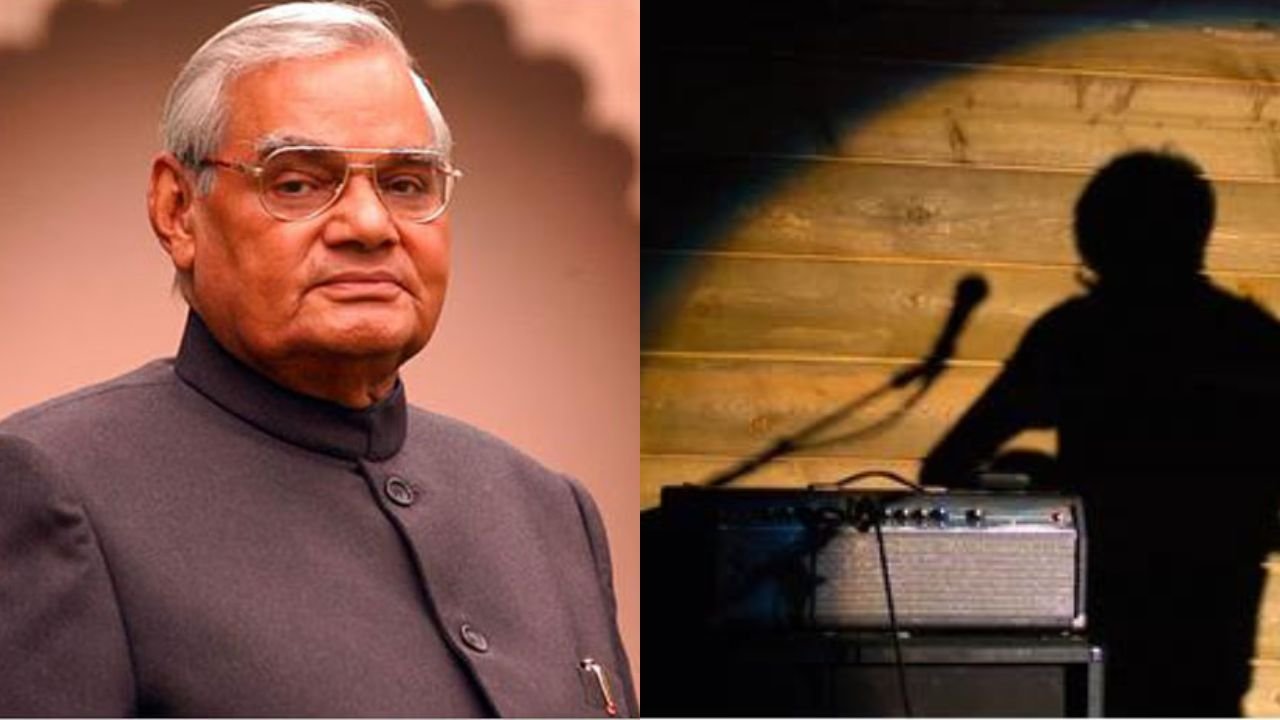
    Renowned classical singer Ustad Hamid Ali Khan has revealed that former Indian Prime Minister Atal Bihari Vajpayee offered him the opportunity to move to India.

    Hamid Ali Khan recently participated in a show where he discussed various topics, including his professional life.

    During the show, Khan said, “In 1979, the government of Pakistan sent me, Asad Amanat Ali Khan, along with Ustad Mehdi Hasan, for a big music program at the Indian Darul Hukot in New Delhi. The event was attended by many notable personalities, including Indira Gandhi, Dilip Kumar, and Manoj Kumar.”

    According to Khan, when Asad and he took the stage, there was a stir in the audience because of their young age. People were surprised that such young singers were sent from Pakistan for such a competitive program, but their performance impressed everyone.

    “After this program, the then-Indian Foreign Minister Atal Bihari Vajpayee invited us to his house for dinner. When we arrived, he told us he was very impressed by us and offered us the opportunity to leave Pakistan and move to India,” he recalled.

    “At that time, Vajpayee said he would provide whatever we needed if we agreed to move to India, with the condition that we would become Indian nationals. We responded, ‘Sir, our entire family is in Pakistan; we cannot move to India. Thank you very much, but we will continue travelling to and from India,” he had responded to Indian PM.

  • India’s Modi pleads for ‘consensus’ as parliament opens after elections

    India’s Modi pleads for ‘consensus’ as parliament opens after elections

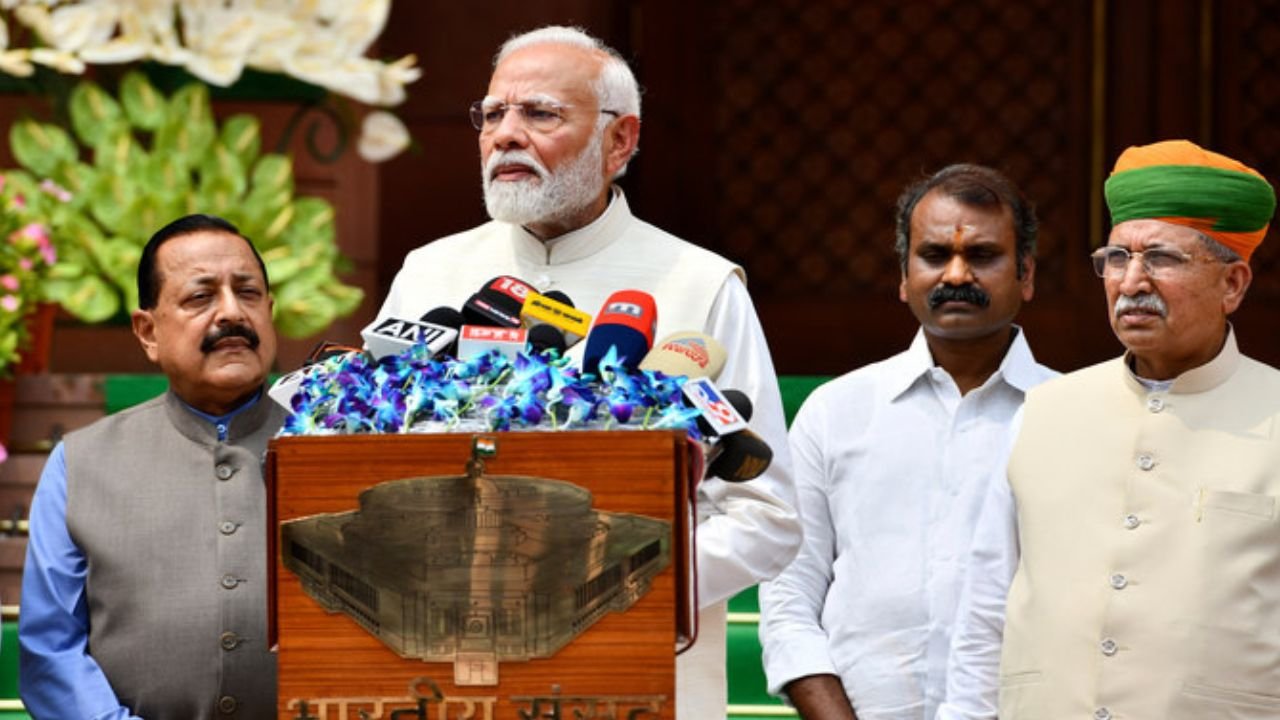
    Indian Prime Minister Narendra Modi appealed to an emboldened opposition for “consensus” Monday, as parliament opened following an election setback that forced him into a coalition government for the first time in a decade.

    Expected in the first session, which will run until July 3, is a preview of Modi’s plans for his third term and the likely formal appointment of Rahul Gandhi as leader of the opposition — a post vacant since 2014.

    Modi’s first two terms in office followed landslide wins for his right-wing Bharatiya Janata Party (BJP), allowing his government to drive laws through parliament with only cursory debate.

    But now analysts expect the 73-year-old Modi to moderate his Hindu-nationalist agenda to assuage his coalition partners, focusing more on infrastructure, social welfare and economic reforms.

    “To run the country, a consensus is of utmost importance”, Modi said in a speech shortly before entering parliament, calling on the opposition to play a constructive role.

    “People expect their representatives to debate and discuss issues which are important to the country […] they don’t expect disturbances or hindrances in the parliamentary proceedings,” he said. “People want substance, not slogans.”

    Modi led lawmakers in taking the oath — as his cheering supporters thumped their desks in support, and opposition members waved the constitution in protest. He said he was “proud to serve” India.

    Minister of Parliamentary Affairs Kiren Rijiju on Monday called for a “peaceful and productive” session, but Indian media said they expected lively debate with a far stronger opposition.

    “All set to spar”, one headline in The Hindustan Times read Monday. “Resurgent opposition set to push government”, The Indian Express front page added.

    Rahul Gandhi, 54, defied analyst expectations to help his Congress party nearly double its parliamentary numbers, its best result since Modi was swept to power a decade ago.

    Gandhi is the scion of a dynasty that dominated Indian politics for decades and is the son, grandson and great-grandson of former prime ministers, beginning with independence leader Jawaharlal Nehru.

    Parliamentary regulations require the opposition leader to come from a party that commands at least 10 per cent of the lawmakers in the 543-seat lower house.

    The post has been vacant for 10 years because two dismal election results for Congress — once India’s dominant party — left it short of that threshold.

    Lawmakers elected behind bars

    The parliamentary session will start with newly elected lawmakers taking their oaths over the first two days. Many will be watching if two lawmakers elected from behind bars, bitter opponents of Modi, will be allowed to join.

    One is Sikh separatist Amritpal Singh, a firebrand preacher arrested last year after a month-long police manhunt in Punjab state. The second is Sheikh Abdul Rashid, a former state legislator in India-occupied Kashmir.

    It is unclear if either will be granted bail to attend the ceremony in person.

    Modi’s decade as premier has seen him cultivate an image as an aggressive champion of the country’s majority Hindu faith, worrying minorities including the country’s 200-million-plus Muslim community.

    But his BJP won only 240 seats in this year’s poll, 32 short of a majority in the lower house — its worst showing in a decade.

    It has left the BJP reliant on a motley assortment of minor parties to govern. Modi has kept key posts unchanged in this government and the cabinet remains dominated by the BJP.

    That includes BJP loyalists Rajnath Singh, Amit Shah, Nitin Gadkari, Nirmala Sitharaman and S. Jaishankar — the defence, interior, transport, finance and foreign ministers, respectively — staying on in their jobs.

    But out of his 71-member government, 11 posts went to coalition allies who extracted them in exchange for their support — including five in the top 30 cabinet posts.

    Many will also be eying the election of the speaker, a powerful post overseeing the running of the lower house, with lawmakers slated to vote on Wednesday.

    Coalition allies covet the post, but others suggest Modi will put forward a candidate from his BJP.
  • Growing Saudi-India partnership: MBS and Modi discuss expanding trade goals

    Growing Saudi-India partnership: MBS and Modi discuss expanding trade goals

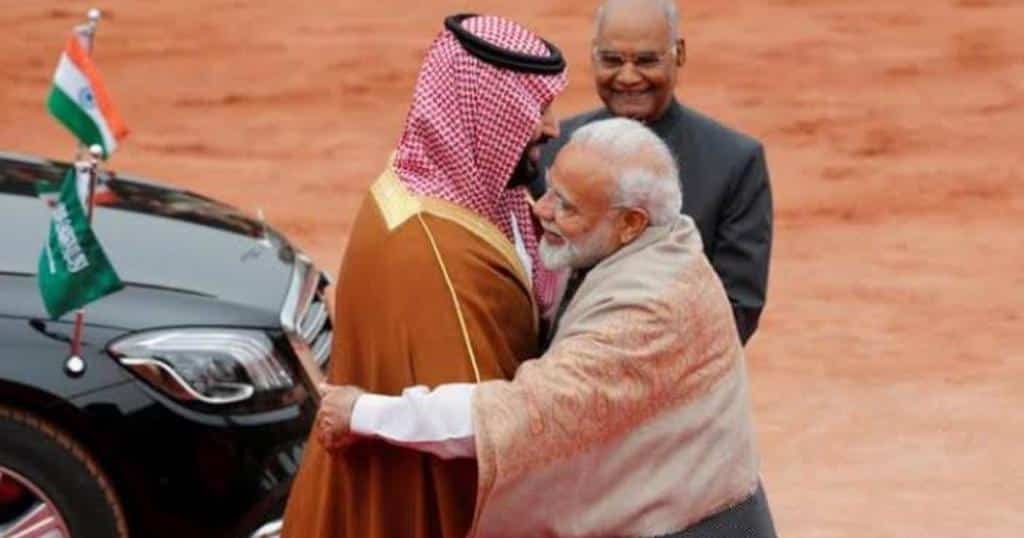
    Indian Prime Minister Narendra Modi and Saudi Crown Prince Mohammed bin Salman held discussions on trade ties in New Delhi after the G20 Summit. The leaders met at the Hyderabad House, New Delhi, for the Saudi-Indian Strategic Partnership Council meeting. During the talks, they covered various areas of cooperation and regional and international topics of mutual interest.

    Modi expressed satisfaction with the discussions, highlighting synergy with Saudi Arabia. He emphasized the potential for collaboration in grid connectivity, renewable energy, food security, semiconductors, and supply chains.

    The meeting involved senior officials from Saudi Arabia, including Minister of Energy Prince Abdulaziz bin Salman, Foreign Minister Prince Faisal bin Farhan, and Minister of Investment Khalid al-Falih. Falih mentioned the possibility of establishing an office for Saudi Arabia’s sovereign wealth fund, the Public Investment Fund, in India’s tax-neutral financial services center, Gujarat International Finance Tec-City.

    Furthermore, the Saudi Export-Import Bank (Saudi EXIM) and the India Export-Import Bank (India EXIM) signed an agreement to boost exports and mutual market presence.

    This gathering followed the announcement of a multinational rail and ports deal involving India, Saudi Arabia, the United States, the European Union, the United Arab Emirates (UAE), and other global leaders. The deal aims to connect the Middle East and South Asia through the India-Middle East-Europe Economic Corridor, enhancing connectivity and reducing shipping costs.

    US President Joe Biden viewed this agreement as a significant step and a counter to China’s Belt and Road Initiative.

  • ‘Modi could visit Pakistan in a month’: Mian Mansha hints at backdoor diplomacy with India

    ‘Modi could visit Pakistan in a month’: Mian Mansha hints at backdoor diplomacy with India

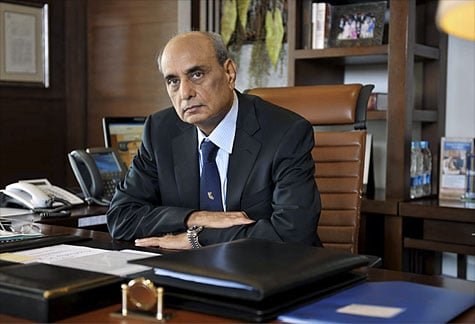
    Business tycoon Mian Muhammad Mansha claims that he is aware of backchannel diplomacy being pursued by India and Pakistan.

    Talking to the Lahore Chambers of Commerce and Industry on Wednesday, Mansha said that there should be “no permanent enemies” and the two arch-rivals should work to resolve their differences.

    “If the economy does not improve, the country may face disastrous consequences. Pakistan should improve trade relations with India and take a regional approach to economic development. Europe fought two great wars but ultimately settled for peace and regional development. There is no permanent enmity.”

    He further insisted that the two countries need to resolve their issues and increase trade.

    “If things improve between the two neighbours, Indian Prime Minister Narendra Modi could visit Pakistan in a month,” said Mansha.

  • In pictures: UN chief gets uncomfortable as maskless Modi gives a big hug during #Cop26

    In pictures: UN chief gets uncomfortable as maskless Modi gives a big hug during #Cop26

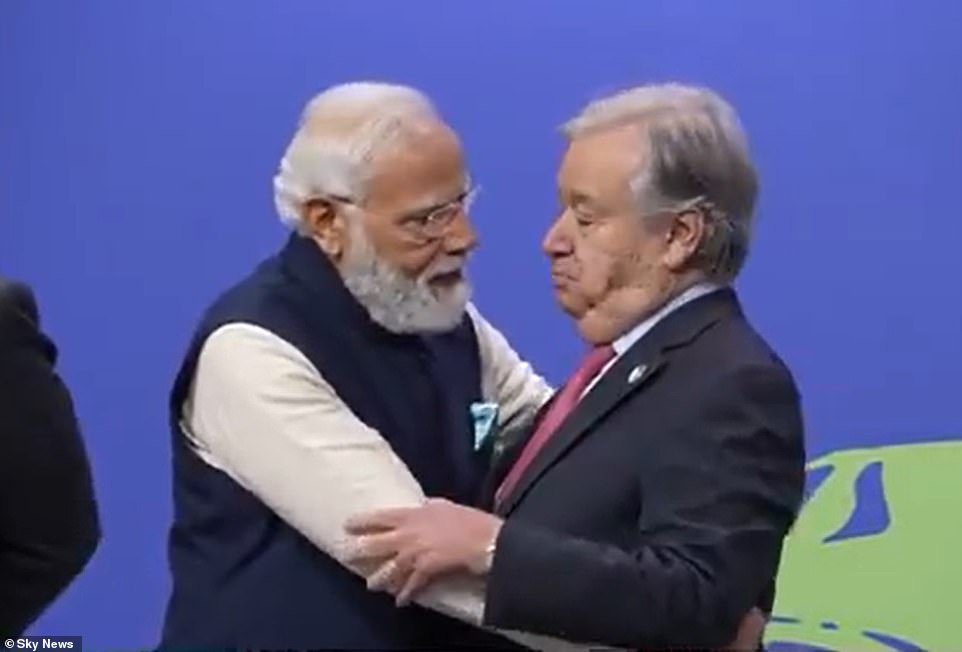
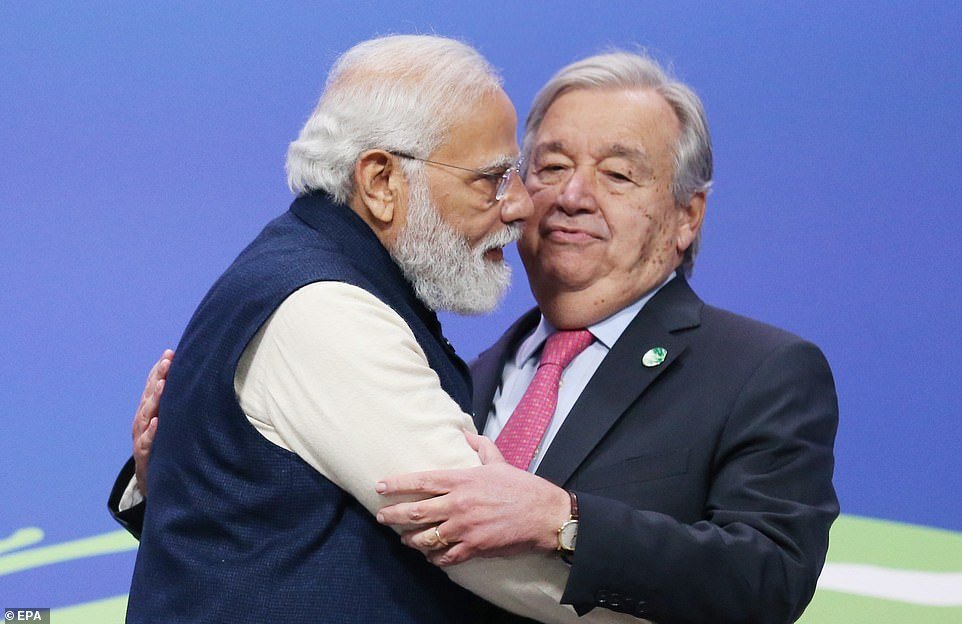
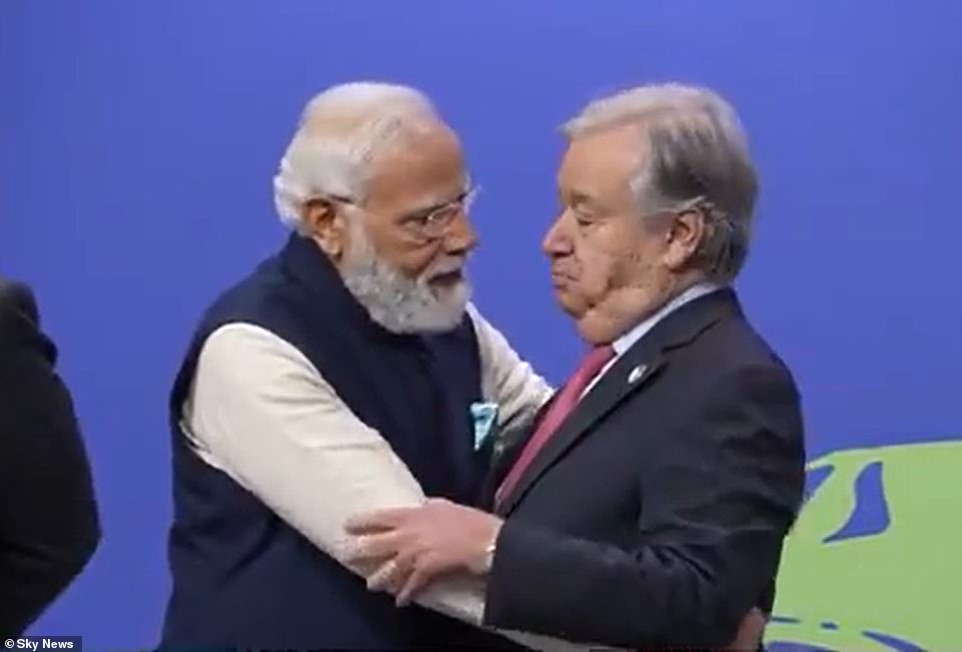
    Indian Prime Minister (PM) Narendra Modi was once again seen getting too close and hugging United Nations (UN) Secretary-General Antonio Guterres on the opening day of Cop26 — a climate conference — in Glasgow.

    Antonio Guterres was seen visibly uncomfortable and awkward as PM Modi tried to embrace him after he greeted British Prime Minister Boris Johnson at the start of the Glasgow climate conference.

    Guterres placed an arm on Modi to try and keep him at a safer distance but could do little to stop bear-hugger Modi.

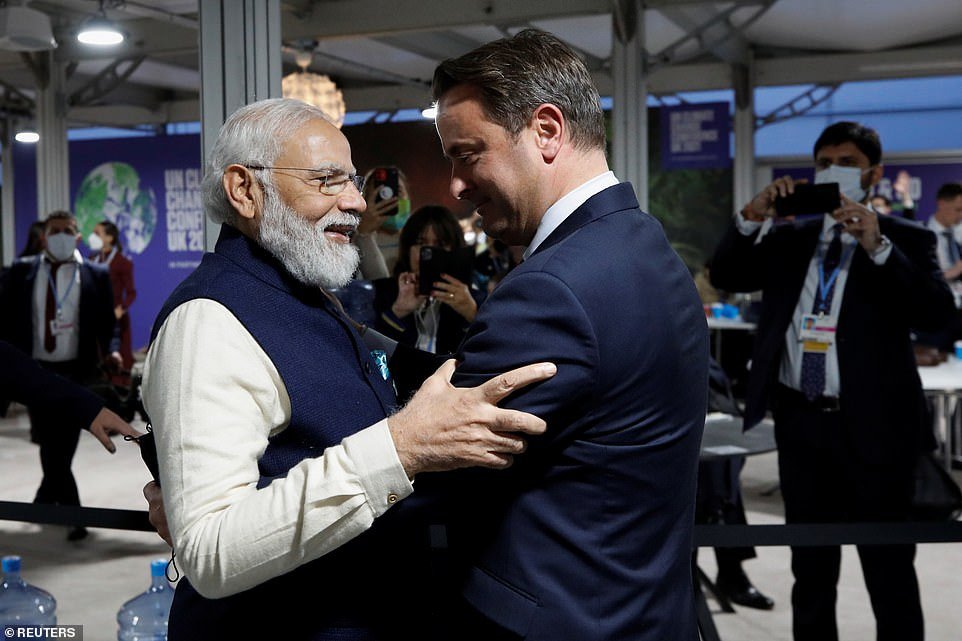
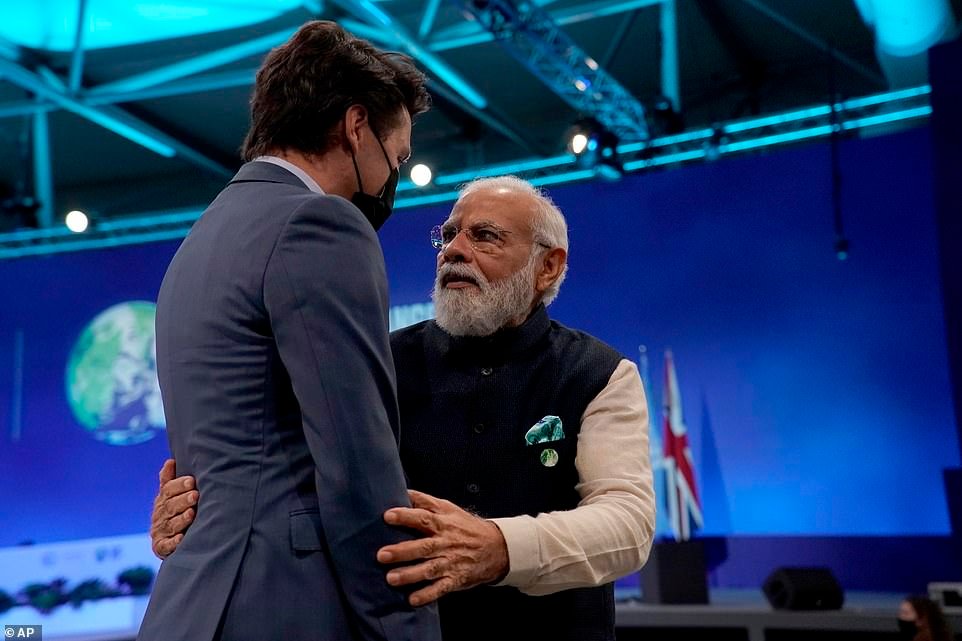
    Modi has been pictured getting close and cosy with PM of Luxembourg Xavier Bettel and Canadian PM Justin Trudeau.

    Modi was seen carelessly meeting the world leaders in an atmosphere where Covid-19 SOPs, including wearing face masks, were strongly advised to be followed.