Tag: indirect taxes

  • Pakistan reaffirms commitment to $6.5 billion IMF bailout, dismissing rumors of retraction

    Pakistan reaffirms commitment to $6.5 billion IMF bailout, dismissing rumors of retraction

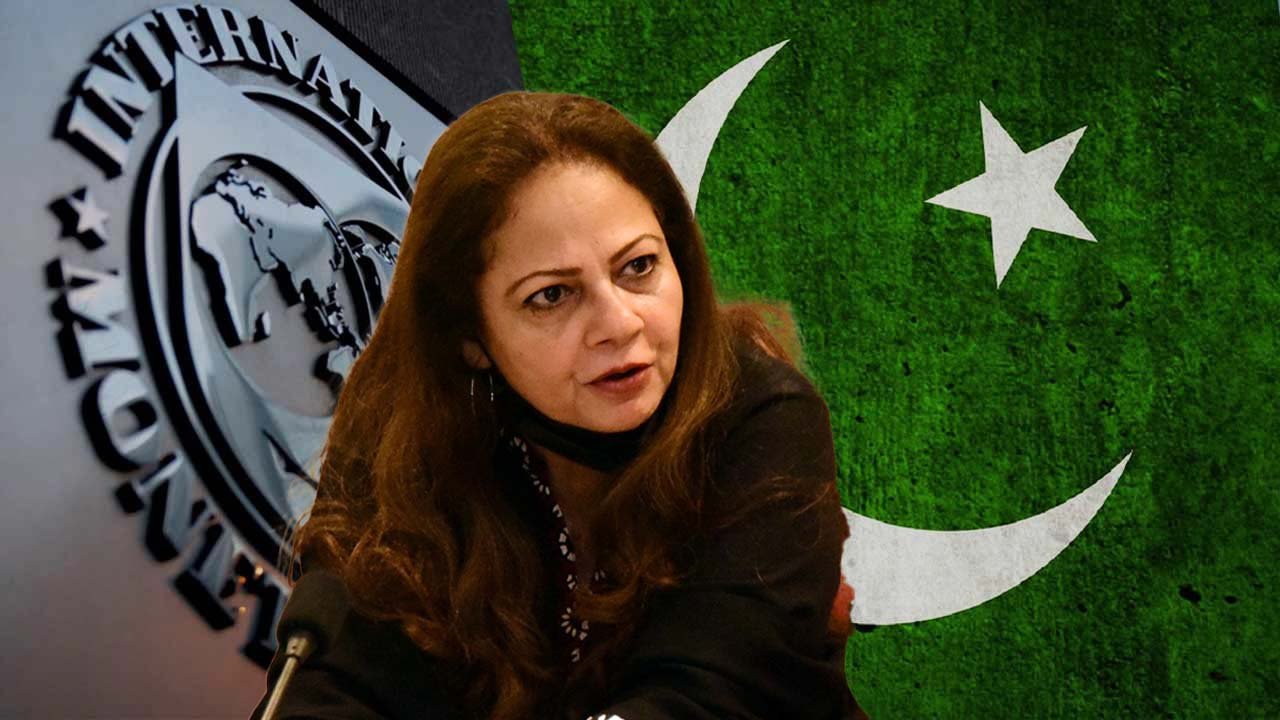
    On Wednesday, Minister of State for Finance and Revenue, Dr Aisha Ghaus Pasha, dismissed rumours of Pakistan retracting from the anticipated $6.5 billion bailout programme with the International Monetary Fund (IMF).

    According to Geo, Pasha clarified that discussions were ongoing between the Federal Board of Revenue (FBR) and the Finance Division, emphasising that Pakistan remained engaged with the IMF. Speculation arose when reports suggested that Pakistan had taken a firm stance against the IMF and refused to share details of the upcoming budget.

    This led to concerns that the financially strained nation was reneging on the deal originally agreed upon by the Imran Khan-led Pakistan Tehreek-e-Insaf (PTI) government.

    Pasha expressed the government’s commitment to continuing the IMF programme, acknowledging the political sacrifices made by the coalition government to meet the Fund’s conditions. Negotiations with the IMF have been aimed at restarting the $6.5 billion bailout programme, which is crucial for Pakistan to avert default.

    During a meeting with journalists after the Senate Standing Committee on Finance, Pasha revealed that the coalition government would present its second budget in the first week of June, marking the second year since assuming power in April. The Finance Bill 2023-24 is scheduled to be presented in the National Assembly on June 9, while the Economic Survey 2022-23 will be released on June 8, according to sources.

    Assuring the public during the briefing, Pasha affirmed that the government would strive to alleviate the burden on the masses amidst these challenging times, as the budget figures were being finalized. However, she cautioned that the situation would remain difficult until the tax-to-GDP ratio reached double digits, emphasizing the necessity of expanding the tax base.

    The state minister disclosed the Ministry of Finance’s plan to transition from indirect taxes to direct taxes, stating that such a shift would reduce the burden on the general population. She reiterated the government’s intention to introduce direct taxes in the upcoming budget for the fiscal year 2023-24, expressing concern over the negative impact of tax concessions on the economy.

    Meanwhile, FBR Chairman Asim Ahmed briefed the committee on the capital value tax, disclosing that the revenue generated from this tax during the current financial year amounted to Rs9 billion.

    Addressing the concerns of senators regarding the implementation of capital valuation tax on domestic and foreign assets, Ahmed clarified that this measure aimed to include the wealthier individuals in the tax net. He also noted that the revenue board was registering new individuals with foreign assets while maintaining records of those already registered.

  • Imposing super tax on the rich will reduce budget deficit: Miftah

    Imposing super tax on the rich will reduce budget deficit: Miftah

    The government’s recently announced indirect tax (super tax) is intended to assist the country in increasing tax revenue and lowering the budget deficit, according to Finance Minister Miftah Ismail.

    He was relating to the large industries’ 10 per cent super tax or poverty alleviation tax.

    13 industries, including LNG terminals, sugar, cement, steel, textile, tobacco, fertiliser, banks, oil and gas, beverages, automobiles, and steel, will be subject to this one-time levy, according to Miftah. The government labelled these 13 industries for a special tax as they made significant profits last year.

    Companies in these sectors earning more than Rs300 million will be subject to a 10 per cent super tax, he added.

    According to the finance minister, this tax is a one-time levy that will only be in effect for fiscal year 2022–2023.

    He clarified on Twitter that the 4 per cent super tax will be imposed on all industries.

    “For the specified 13 sectors, another 6 per cent will be added for a total of 10 per cent,” he said. “So their tax rates will go from 29 per cent to 39 per cent. This is a one-time tax needed to curtail the previous four record budget deficits.”

    The imposition of a super tax on the wealthy, according to Finance Minister, will lessen the country’s reliance on foreign aid, lower the budget deficit, and bring the country closer to financial stability.

    Other businesses that make over Rs150 million will be subject to a 1 per cent super tax, and those that make over Rs200 million will be subject to a 2 per cent tax. On top of the current rates, it is worth noting that these taxes are additional.

    Businesses that earn more than Rs250 million in revenue will pay a 3 per cent super tax, and those that earn more than Rs300 million will pay a 4 per cent super tax.

    He continued, citing statistics, that there were 9 million retail and wholesale establishments in Pakistan, and that the government wanted to bring an additional 2.5–3.5 million into the tax system.

    “We are linking the income tax and sales tax of these shops with the electricity bill,” Miftah said. “Now, small shops will pay a fixed tax of Rs3,000 and large shops will pay Rs10,000.”

    Only 22 of Pakistan’s more than 30,000 gold trading companies, he claimed, were registered, and their average annual sales came to Rs4,000.

    Sales tax and a fixed income of Rs40,000 will now be paid by gold shops of 300 square feet or less.

    He said that the government would lower the sales tax on large stores from 17 per cent to just 3 per cent.

    The withholding tax on jewellery sales to gold shops by the general public has been reduced from 4 per cent to 1 per cent.

    According to Miftah, fixed tax structures similar to these will be introduced for real estate agents, car dealers, and builders. Since this tax only applies to income and not to spending, inflation will not rise.

    Additionally, the withholding tax for the IT sector has been eliminated. Sales and income taxes would not apply to IT companies with annual revenue of less than Rs80 million.

    Miftah emphasised that Pakistan needs the IMF programme to resume as the country’s foreign exchange reserves are at a critical point.