Indonesian authorities arrested a man trying to sell elephant tusks and the horns of critically endangered rhinos via social media.
The illegal wildlife trade remains rampant in Indonesia, where law enforcement is lax, but the arrested man could face up to 15 years in prison if convicted, the environmental ministry said in a statement late Wednesday.
South Sumatra police began an investigation after seeing posts on Facebook earlier this year offering parts of protected wildlife for sale.
A 60-year-old man, identified only by the initials “ZA”, was arrested last week during a transaction while trying to sell a rhino horn and a pipe made of an elephant tusk in Palembang, South Sumatra.
Police found seven more rhino horns and at least four elephant tusks at his house.
“It seems like he’s very experienced in wildlife trading,” the environmental ministry said.
In June police arrested a gang of poachers suspected of killing 26 critically endangered Javan rhinos in Ujung Kulon National Park since 2018.
They once numbered in the thousands across Southeast Asia, but have been hard hit by rampant poaching and human encroachment on their habitat, and the environment ministry says there are only around 80 of the beasts left in the wild.
Sumatran rhinos have also been declared critically endangered by the International Union for Conservation of Nature or IUCN with fewer than 50 remaining.
A woman was found dead inside the belly of a snake after it swallowed her whole in central Indonesia, police said Wednesday, the second python killing in the province in a month.
Siriati, 36, had gone missing after she left her house Tuesday morning to buy medicine for her sick child, police said, prompting relatives to launch a search.
Her husband Adiansa, 30, found her slippers and pants on the ground about 500 metres (yards) from their house in Siteba village, South Sulawesi province.
“Shortly after that, he spotted a snake, about 10 metres from the path. The snake was still alive,” local police chief Idul, who like many Indonesians has one name, told AFP.
Village secretary Iyang told AFP that Adiansa became suspicious after he noticed the python’s “very large” belly. He called the villagers to help cut open its stomach, where they found her body.
Such incidents are considered extremely rare, but several people have been swallowed by pythons in recent years.
A woman was found dead last month inside the belly of a reticulated python in another district of South Sulawesi.
Last year residents in the province killed an eight-metre python, which was found strangling and eating one of the farmers in a village.
A 54-year-old woman was found dead in 2018 inside a seven-metre python in Southeast Sulawesi’s Muna town.
And the year before, a farmer in West Sulawesi went missing before being found being swallowed by a four-metre python at a palm oil plantation.
When three Indonesian teen girls formed a metal band 10 years ago to sing about gender equality and peace over bone-crunching guitars and drums, they could scarcely have dreamed of one day playing at Glastonbury.
Yet, a decade later, Voice of Baceprot’s three Muslim women will become the first band from Indonesia to perform at the world-famous festival in Britain this week, where the headliners include Coldplay and Dua Lipa.
Their set will mark the latest highlight in a wild career that has seen Firda Kurnia (guitar and vocals), Widi Rahmawati (bass) and Euis Siti Aisah (drums) amass a huge fanbase while challenging gender stereotypes in male-dominated Indonesian society.
“Honestly, Glastonbury is not on our wishlist because we feel like it is too high a dream,” Euis, 24, told AFP.
“(I am) half in disbelief. That is why we keep checking whether it is the official Glastonbury or if someone pranked us.”
Voice of Baceprot rose from humble beginnings in a village near the West Javan city of Garut.
They won fans with their raucous Rage Against the Machine covers — the word “baceprot” means noisy in Sundanese, an Indonesian traditional language — and also won fans with their original material.
Then came wider international attention, including plaudits from some superstars. Red Hot Chilli Peppers bassist Flea once tweeted that he was “so down with Voice of Baceprot”.
And while the group has previously played in the United States and Europe — including at the famous Wacken metal festival in Germany — there are nerves ahead of Glastonbury.
“Hopefully my nervousness is a reminder for me to be more prepared,” said Euis.
– Indonesia tour dream –
Muslim conservatives in Indonesia have criticised the band over the fact that they are women, and also claimed their clothes are inappropriate.
But Voice of Baceprot have stuck to their beliefs and shot back through their music.
Their biggest hit — “God, Allow Me (Please) to Play Music” — has racked up millions of plays on YouTube and Spotify, and takes aim at the conservative detractors who say women should not play such music.
The band has also written songs about climate change and women’s rights.
“We create songs based on what we see, hear, read, and experience ourselves,” said Firda.
The group’s rise has come with a hazard they had not anticipated: “obsessed” fans curious about every aspect of their lives.
Some have even showed up at their homes to try and meet them.
“We’re like: ‘OK, maybe this is one of the job’s risks.’ Our families sometimes get confused,” said Firda, 24.
After forming in 2014, Voice of Baceprot played at small festivals around West Java, one of Indonesia’s most conservative provinces.
They later moved to the capital Jakarta and also played online concerts during the Covid pandemic.
They have since returned to their hometown, where they are building their own studio.
Widi said the band has received “a lot” of offers to play abroad.
But as they prepare to play the biggest show of their lives at the famous Worthy Farm in southwest England, Voice of Baceprot say one of their dreams is rooted at home.
“We actually really want to tour Indonesia,” said Widi. “But we haven’t had the opportunity yet.”
A woman has been found dead inside the belly of a snake after it swallowed her whole in central Indonesia, a local official said Saturday.
The husband of 45-year-old Farida and residents of Kalempang village in South Sulawesi province discovered her on Friday inside the reticulated python, which measured around five metres (16 feet).
The mother-of-four had gone missing Thursday night and failed to return home, forcing a search effort, village head Suardi Rosi told AFP.
Her husband “found her belongings… which made him suspicious. The villagers then searched the area. They soon spotted a python with a large belly,” said Suardi.
“They agreed to cut open the python’s stomach. As soon as they did, Farida’s head was immediately visible.”
Farida was found fully clothed inside the snake.
Such incidents are considered extremely rare but several people have died in Indonesia in recent years after being swallowed whole by pythons.
Last year, residents in Southeast Sulawesi’s Tinanggea district killed an eight-metre python, which was found strangling and eating one of the farmers in a village.
In 2018, a 54-year-old woman was found dead inside a seven-metre python in Southeast Sulawesi’s Muna town.
And the year before, a farmer in West Sulawesi went missing before being found eaten alive by a four-metre python at a palm oil plantation.
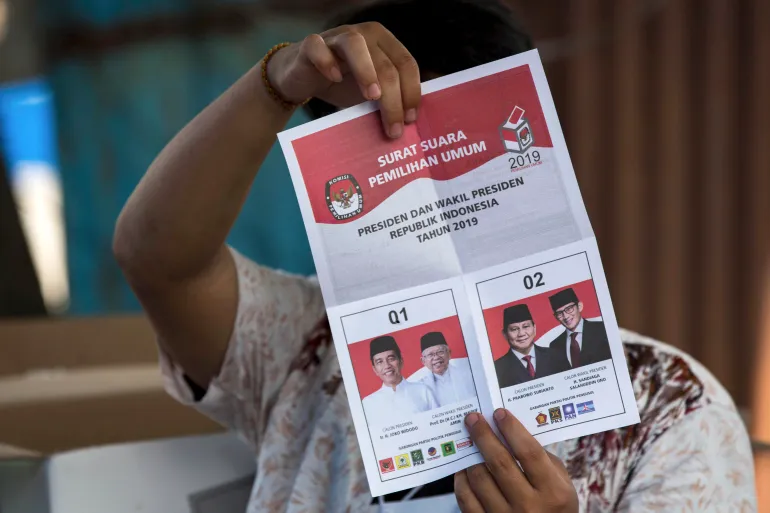
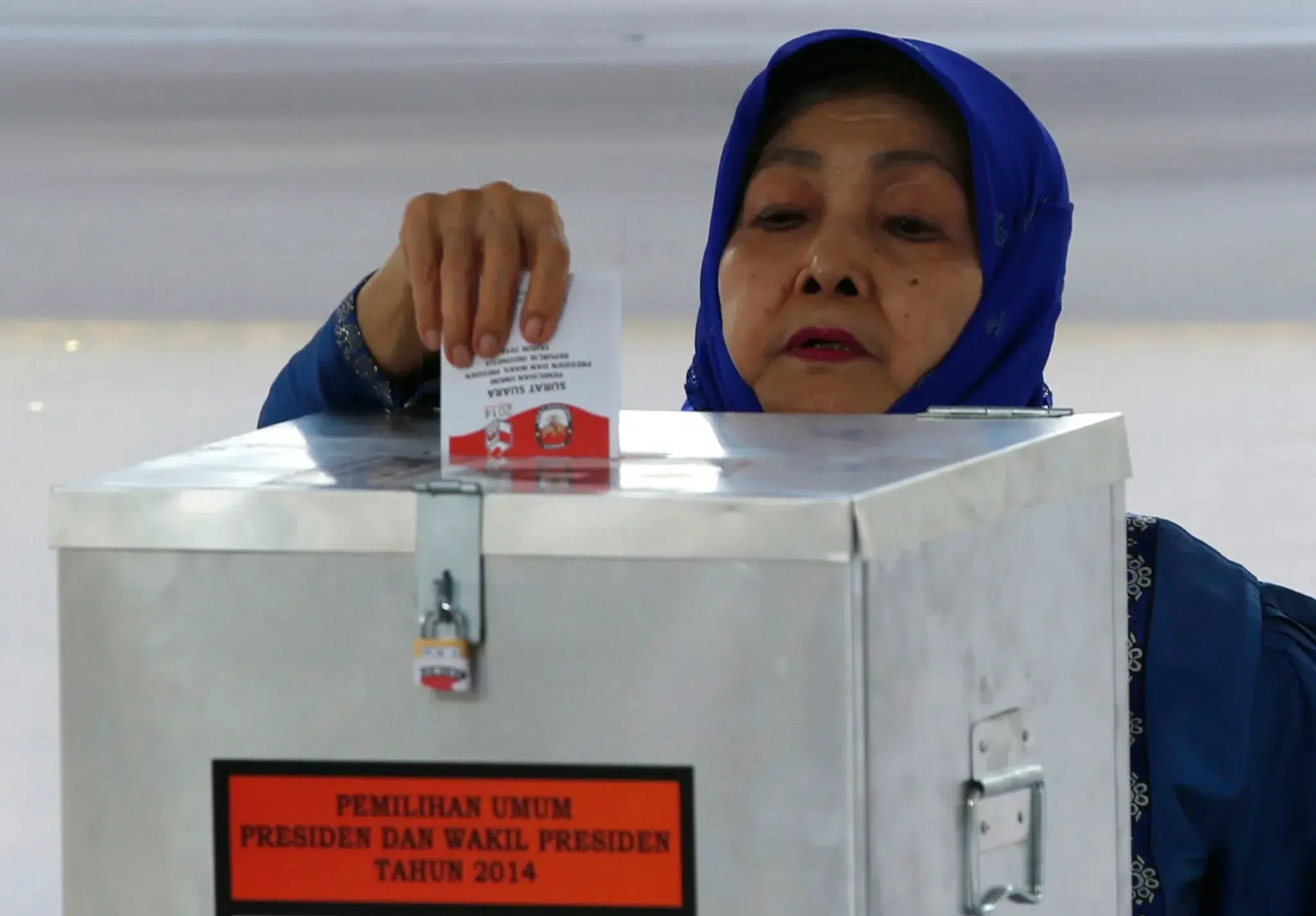
Indonesians began voting for a new president Wednesday with Defence Minister Prabowo Subianto the frontrunner to lead Southeast Asia’s biggest economy despite concerns over his human rights record.
Polls project Subianto, a military chief during the Suharto dictatorship a generation ago, to secure a majority and replace popular outgoing president Joko Widodo, who observers claim indirectly supported his campaign.
The 72-year-old is the clear favourite after a campaign mixing populist rhetoric with pledges to continue the policies of Widodo, who has presided over steady economic growth but reached the constitutional two-term limit.
“The hope is to win,” Subianto told reporters before voting in Bogor on Wednesday.
“Come to the voting station… cast your votes according to your conscience.”
Nearly 205 million people are eligible to vote for Subianto or his rivals, former Jakarta governor Anies Baswedan and former Central Java governor Ganjar Pranowo, in just the fifth presidential election since the end of Suharto’s dictatorship in 1998.
Polling stations opened at 7:00 am (2200 GMT) in the easternmost region of Papua and were due to close at 01:00 pm (0600 GMT) at the other end of the country in jungle-clad Sumatra.
A logistical feat involving more than 800,000 polling stations and 20,000 seats up for grabs saw planes, helicopters, speedboats and even cows used to cart ballots around the sprawling archipelago of nearly 280 million people.
In Papua’s Timika city, officials inspected makeshift polling stations built from logs, metal sheets and palm leaves as voters arrived to eye candidate lists.
In the capital Jakarta, a thunderstorm deluged 34 polling stations, according to the city’s disaster mitigation agency.
Workers wearing shirts that read “not voting is not an option” relocated some stations where ballot boxes had been wrapped in plastic, while others used pumps to drain floodwater.
Official results are not expected until March, but so-called quick counts from government-approved pollsters — shown to be reliable in the past — are expected to indicate the winner later Wednesday.
‘Decisive leader’
Consultant Debbie Sianturi was one of those determined to vote.
“I want to have a leader that will continue the democracy,” the 57-year-old said.
Another said Subianto’s experience made him a popular candidate.
“He has a military background, so I think he will be a decisive leader,” said Afhary Firnanda, a 28-year-old office worker in Jakarta.
Election commissioner Idham Kholik told AFP all voters should be allowed to cast their ballots if large queues remained when polls closed.
Subianto needs to claim more than 50 percent of the overall vote and at least a fifth of ballots cast in over half the country’s 38 provinces to secure the presidency.
If he falls short, a second-round vote will be held in June.
Baswedan, seen as the favourite to challenge Subianto in that event, told supporters to help ensure a fair vote in the graft-riddled country where voters dip their fingers in halal ink to prevent double voting.
“Come back to the voting station, monitor the vote count,” he told reporters.
Pranowo, who entered election day last in polls after once being the front-runner, said he hoped for a clean election.
“Today is the best time for all to return to the good path of democracy,” he told reporters.
Commitment to democracy
Another key factor in Subianto’s popularity is having Widodo’s eldest son, 36-year-old Gibran Rakabuming Raka, as his vice presidential running mate, a move that has raised eyebrows.
In October, Indonesia’s then-chief justice, who is Widodo’s brother-in-law, changed the rules that had barred candidates below the age of 40 from running for high office.
Widodo enjoys near-record approval ratings after two terms of solid economic growth and relatively stable politics in the nation’s young democracy.
However, some legal experts and rights groups have accused Widodo of improperly using government funds to support Subianto.
Subianto and his aides have rejected accusations of impropriety.
Subianto was dismissed from the military in 1998 over accusations he ordered the abduction of democracy activists at the end of Suharto’s rule, but he denied the accusations and was never charged.
He has since rehabilitated his image, thanks in part to a savvy social media campaign targeting Indonesia’s youth that portrayed him as a “cuddly grandpa”.
But rights groups have expressed alarm that he could roll back hard-won democratic freedoms, pointing to the alleged disappearances.
“We’ve been always worried about his commitment towards democracy,” said Yoes Kenawas, a researcher at Jakarta-based Atma Jaya Catholic University.
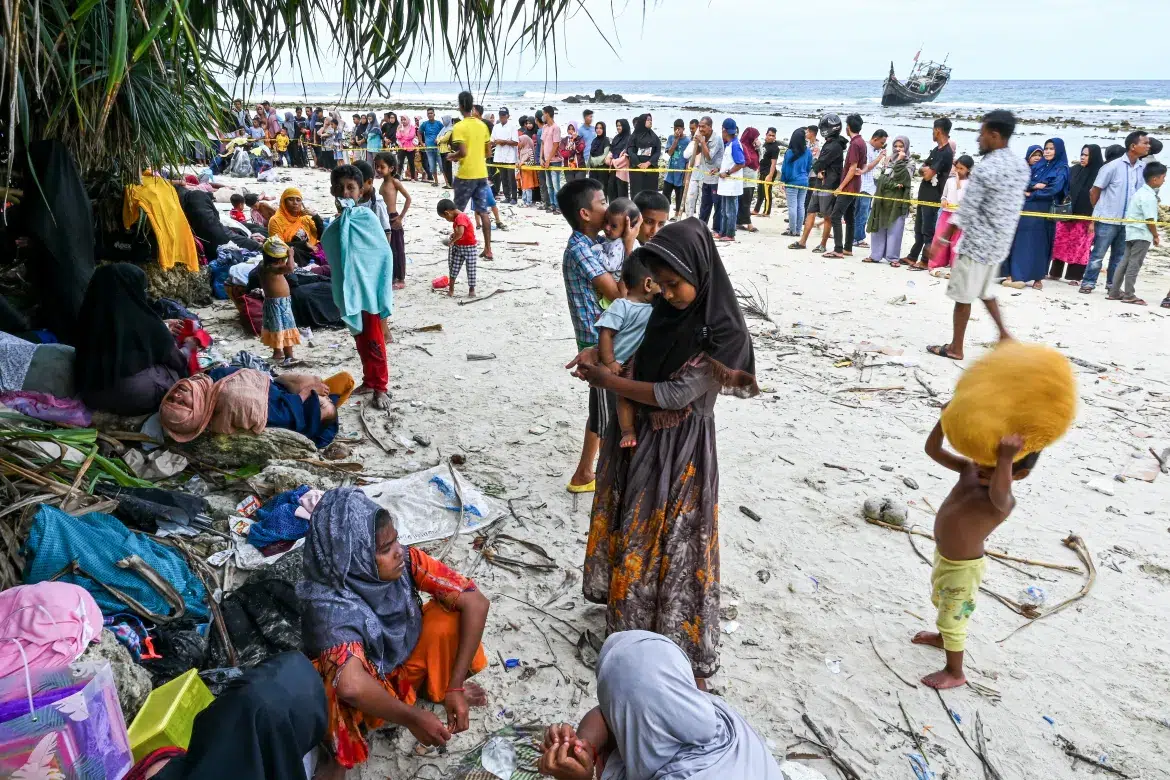
Arriving on a rickety boat in western Indonesia from squalid Bangladesh camps after weeks at sea late last year, hundreds of Rohingya refugees came to shore only to be turned around and pushed back.
The persecuted Myanmar minority were previously welcomed in the ultra-conservative Aceh province, with many locals sympathetic because of their own long history of war. But a wave of more than 1,500 refugees in recent months has been treated differently.
A spate of online misinformation in the world’s most populous Muslim-majority nation has stoked what experts say is rising anti-Rohingya sentiment culminating in pushback, hate speech and attacks.
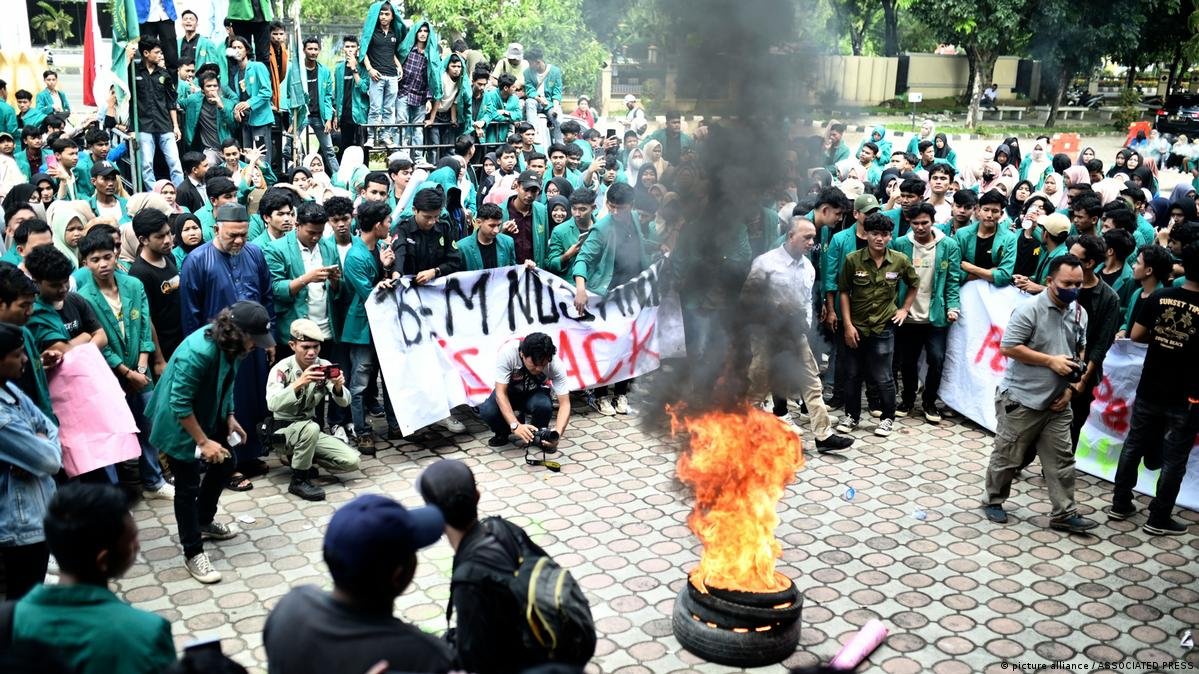
In December, hundreds of university students entered a government function hall in Banda Aceh city hosting 137 Rohingya, chanting, kicking refugees’ belongings and demanding they be deported. The refugees were relocated.
“The attack is not an isolated act but the result of a coordinated online campaign of misinformation, disinformation and hate speech,” the United Nations Refugee Agency (UNHCR) said.
On social media, anti-Rohingya videos have been spreading since late last year, racking up more than 90 million views on TikTok alone in November, according to Hokky Situngkir, TikTok analyst at Bandung Fe Institute.
It began after some local media outlets reported the Rohingya’s arrival with sensational headlines, said Situngkir.
The reports have framed the mostly Muslim Rohingya as criminals with bad attitudes and Indonesian community leaders have reinforced this narrative.
Some TikTok users have reshared the sensational articles and videos, which would help generate more views and money.
“Sometimes when the sensation is too big, it turns out to be misinformation,” Situngkir told AFP.
Victims of human traffickers
President Joko Widodo has called for action against human traffickers responsible for smuggling Rohingya and said “temporary humanitarian assistance will be provided” to refugees while prioritizing local communities.
But a few days after the attack on a refugee shelter, the Indonesian navy pushed away a Rohingya boat approaching the Aceh coast.
Jakarta — not a signatory of the UN refugee convention — has appealed to neighboring countries to do more to take in the Rohingya.
On TikTok, dozens of fake UNHCR accounts have flooded Rohingya videos with comments.
“If you don’t want to help, just give them one empty island so they can live there,” one read, presented as if it was written by a real UNHCR account.
A post sharing a report that Indonesia’s Vice President Ma’ruf Amin was considering moving the refugees to an island was viewed three million times.
A verified account wrote underneath: “Big no! It is better to expel them, no use in sheltering them.”
Ismail Fahmi, analyst for social media monitor Drone Emprit, told AFP the narrative “seems coordinated” but presented as if “it was organic.”
The campaign started with posts from anonymous confession accounts, and then several users with large followings replied with anti-Rohingya messages, making the narrative appear to be trending, he said.
Locals say social media is making such anti-Rohingya sentiment appear widespread, but that was not reflected across Aceh day-to-day.
“It seems massive when we observe it on social media,” said Aceh fishermen community secretary-general Azwir Nazar, acknowledging that Rohingya defenders online were treated as a “common enemy.”
But, he said, “In reality, in our daily lives, things seem normal.”
Stoking anti-Rohingya feelings Some of the most viewed videos peddling misinformation showed overcrowded vessels claiming to be ships carrying Rohingya to Indonesia.
The footage, viewed millions of times on TikTok, actually showed ferry passengers on domestic Bangladesh routes, according to an AFP Fact Check investigation.
Another video claimed Rohingya damaged an East Java refugee center — more than 2,300 kilometers (1,429 miles) from Aceh.
Rohingya in Aceh
An AFP Fact Check investigation debunked the claim through interviews with authorities who said the perpetrators were not Rohingya.
The videos were uploaded on TikTok and video platform Snack, then reposted on other social media sites like Facebook and by local media outlets with millions of followers, boosting the misinformation’s reach, AFP’s Fact Check team found.
AFP, along with more than 100 fact-checking organizations, is paid by TikTok and Facebook parent Meta to verify videos that potentially contain false information.
Both organizations declined AFP requests for comment.
Some videos and comments were also related to this month’s presidential election.
Some mocked candidate Anies Baswedan, saying he supports the Rohingya because he recommended they be housed “in a separate place” to avoid conflict. Others praised front-runner and Defense Minister Prabowo Subianto who has said Indonesia should “prioritize our people.”
But in several presidential debates so far, the candidates have not mentioned Rohingya migration.
For some in Aceh, anti-Rohingya feelings have stemmed from frustration at a lack of a government solution.
But the inflated anti-refugee posts have left them wondering if that feeling is genuine.
“Only Allah knows whether (the posts are) all humans,” said Nazar.
“Or perhaps, with the technology now, there might be AI or robots involved.”
The new year is just over one month away and it is going to be the biggest election year in history yet.
40 countries are scheduled to vote in 2024 across the globe which, as calculated by Bloomberg Economics, represent 41% of the world’s population and 42% of its global GDP.
The marathon will begin with Taiwan in January and end with the US in November.
Here are some of the prominent countries lined up for elections: Republic of the Congo, Democratic Republic of the Congo, Egypt, Gambia, and Libya in Africa; Brazil, Colombia, Mexico, Peru, the United States, and Venezuela in the Americas; Bangladesh, India, Indonesia, South Korea, Sri Lanka, Taiwan, Australia, and Pakistan in Asia and Oceania; Austria, Belarus, Belgium, the European Union, Finland, Germany, Ireland, Portugal, Russia, Spain, Turkey, Ukraine and the United Kingdom in Europe.
There are, however, four elections that the world has eyes on — elections that are expected to alter geopolitics in the next decade.
Russia will elect the new president in March who will govern until 2030, putting Russia-NATO relations at the forefront.
In April-May, India will hold elections and as per analysts, Modi’s loss can push back investors.
The European Union will conduct bloc-wide polls in June to appoint members of the European Parliament for the 2024-2029 which will be pertinent for the increasing friction between right-wing and left-wing policymakers on issues like immigration and Ukraine.
The United States will hold legislative and presidential elections in November for 2025-2028, while everyone curiously waits whether Republicans will return to the White House or not.
A judicial panel in Indonesia has dismissed the Chief Justice of the country over allegations of conflict of interest. It was reported that Chief Justice Anwar Usman gave a verdict in favour of President Joko Widodo’s son, Gibran Rakabuming Raka.
Last month, Chief Justice who happened to be the President’s relative, gave a ruling regarding the age limit of vice-presidential elections, a decision critics saw as favouring him to a great extent. The controversy led to an outrage resulting in his dismissal by the panel of judges in the top court.
The judicial panel found him guilty of violating the ethical code of judges as he is the brother-in-law of the president and should have remained neutral but he could not recuse himself.
The panel was asked to investigate the conduct of judges amid public outcry after they ruled that the minimum age requirement of 40 need not apply to election candidates who had previously held elected office. The ruling was made just days before the start of registration for the 2024 election. The 36-year-old, already serving as a mayor of Surakarta city, was able to register for the election of the vice president.
The panel has decided that Justice Anwar can serve as one of the nine judges of the court but must not take part in any election-related cases in the future as those fall under a conflict of interest. The rest of the eight judges have also been reprimanded by the panel.
Criticism against the decision stemmed from the public seeing the step as part of Widodo’s aim of forming a dynasty by appointing his son the the vice-president. He himself has completed two terms and has not backed any candidate formally for upcoming elections.
Among the developing member countries of the Asian Development Bank (ADB), Pakistan ranks as the least prepared nation for digital education, according to the ADB’s report titled “Towards Mature Digital Education Ecosystems, the Digital Education Readiness Framework.”
The report underscores several areas where Pakistan needs improvement, including low internet connectivity (only 34.1 per cent of households are connected), slow fixed broadband speeds, high fixed line broadband costs, and limited rural electricity access.
In contrast, Uzbekistan stands out as the most prepared country for digital education, closely followed by Indonesia. On the flip side, Pakistan is the least ready, with Fiji following suit.
Across all five evaluation pillars, the “Providers” category shows the lowest performance, with six out of the ten DMCs categorised as “initial” in readiness, including Cambodia, Bangladesh, the Kyrgyz Republic, Mongolia, Pakistan, and Fiji (in descending order of scores). The remaining four countries are classified as “emerging” in readiness, comprising Indonesia, the Philippines, Viet Nam, and Uzbekistan.
The gap between the model country’s normalised score and the highest-scoring country is a significant 45 points. While the 10 DMCs manage to keep mobile broadband costs relatively low as a per centage of GNI per capita, there is considerable variation in fixed broadband costs.
Cambodia, Indonesia, and Pakistan emerge as the least affordable in this aspect, while Bangladesh, Mongolia, and Uzbekistan offer more cost-effective solutions.
In terms of urban electricity access, most countries excel, with nearly 100 per cent of urban households having access to electricity. Rural electricity access in the 10 DMCs ranges from 90 per cent to 100 per cent, with Pakistan lagging behind at just 41.3 per cent of rural households lacking access to electricity.
Households with TV coverage are relatively high across the board, averaging 81.7 per cent. Cable TV subscriptions per 1,000 individuals vary from low to moderate among the countries studied, with Pakistan having the highest subscription rate.
Pakistan’s National Education Policy for 2017–2025 focuses on enhancing ICT access in schools, using ICT to improve teaching quality and student learning, and developing complementary ICT approaches. However, it lacks clarity on access to devices.
Teacher training in ICT skills, particularly for online education delivery, is lacking. Although teachers do create their own educational content, it tends to be basic, such as documents and presentations. Internet quality varies, with schools having some limitations in handling heavier content, while higher education and TVET teachers enjoy better quality.
Institutional support for teachers in delivering online education requires improvement, particularly in schools, where paper-dependent systems are prevalent. Students in Pakistan exhibit reasonable proficiency in digital skills, but access to devices at home is limited, with smartphone access being the primary means.
The utilisation of private EdTech platforms for conducting classes or interacting with students is quite low among teachers. Pakistan also has a relatively small share of ICT graduates among tertiary education graduates.
Pakistan, as a partner state of the Global Partnership for Education (GPE), has utilised GPE grants for tech tools to deploy teachers where needed and introduced apps for teacher attendance in certain regions. These initiatives aim to support distance learning across the country.
A 6.0-magnitude earthquake hit off the coast of Indonesia’s Sumatra island early Monday, the US Geological Survey has reported.
The seismic activity occurred around 6:30 am local time (2330 GMT). There were no immediate reports of casualties or major damage. In addition, no tsunami alert was issued.
“The earthquake caused people to panic. It was felt between 3-10 seconds in four districts in Aceh and North Sumatra province,” Abdul Muhari, a spokesman for the BNPB disaster mitigation agency, said in a statement.
Earlier on 10 January, a powerful deep-sea earthquake of 7.6 magnitude had damaged village buildings in a lightly populated island chain in eastern Indonesia and was widely felt in northern Australia.