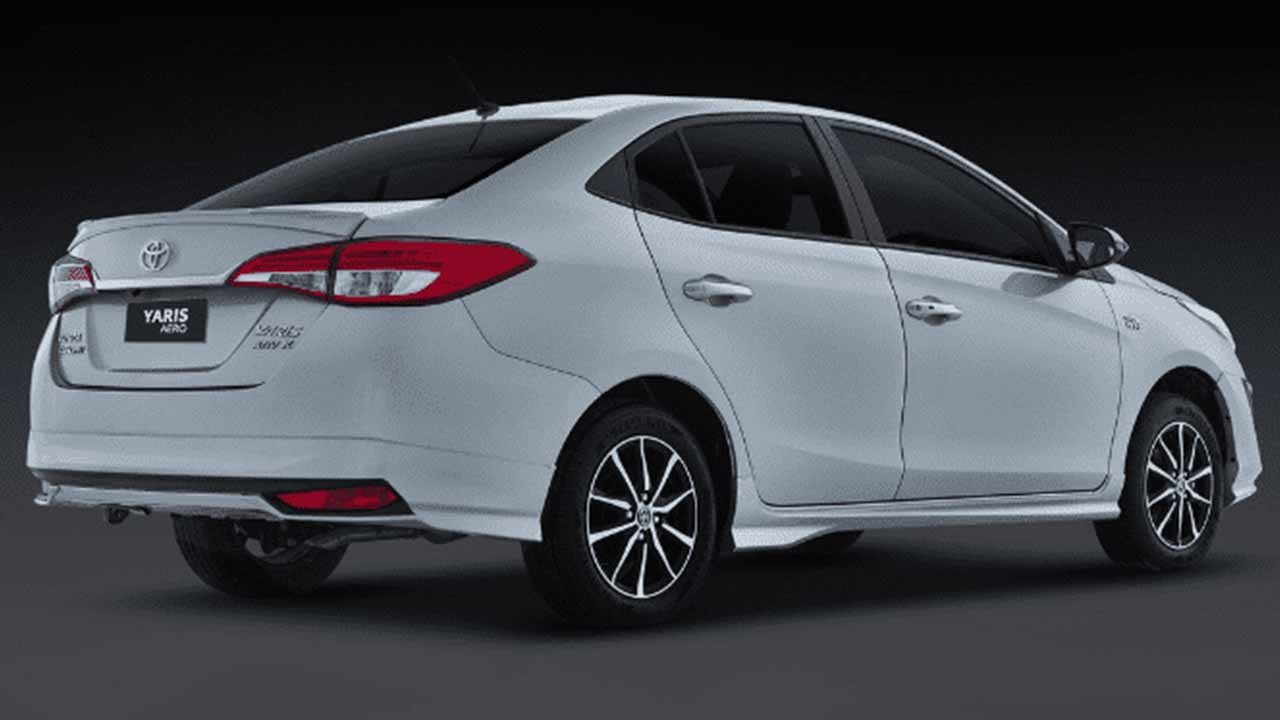
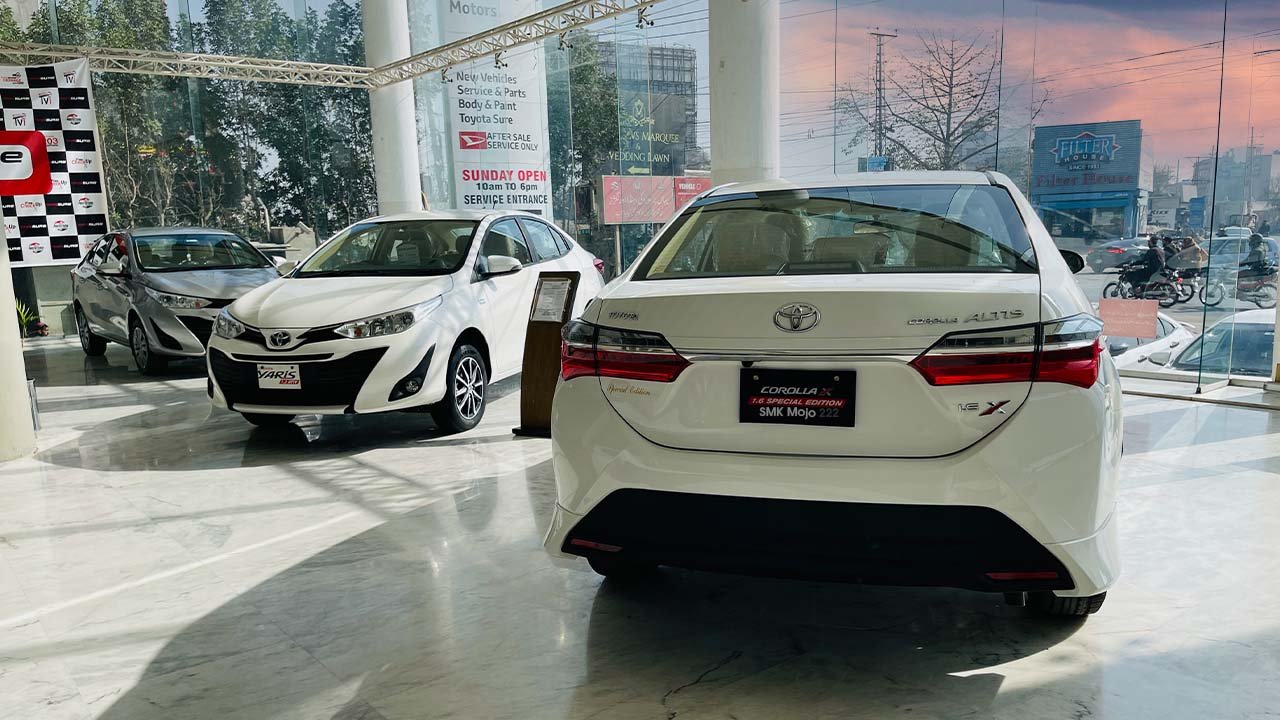
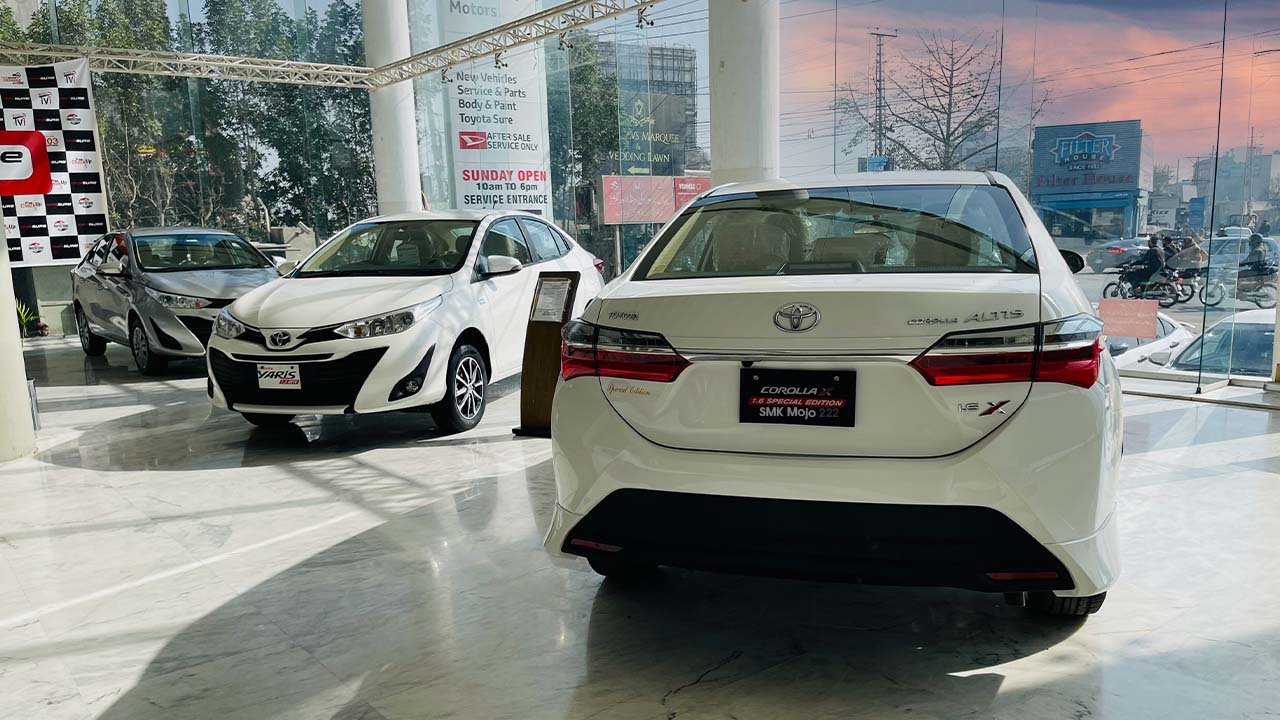
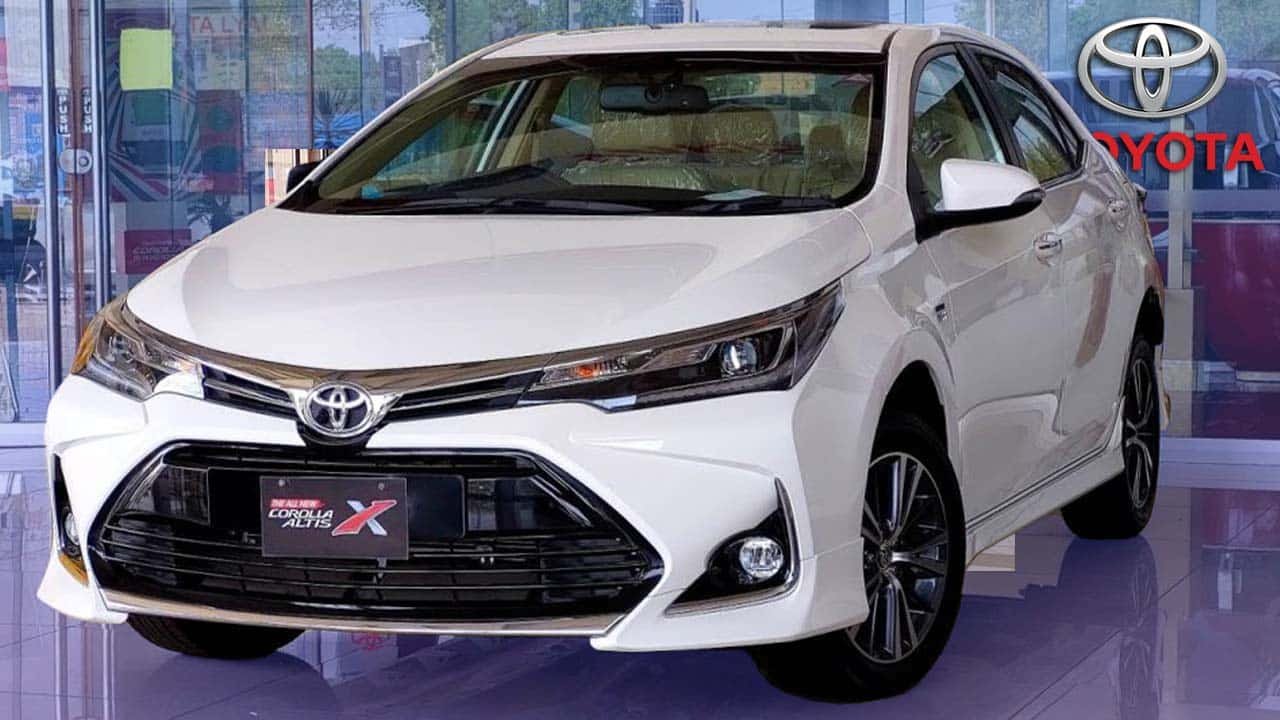
Indus Motor Company, the manufacturer of Toyota vehicles in Pakistan, has announced a significant price adjustment for its Yaris sedan range.
This adjustment, effective from Thursday, reflects a reduction in prices ranging from Rs73,000 to Rs133,000.
The revised pricing structure for the Yaris lineup is as follows: the 1.3 MT LO, 1.3 CVT LO, and 1.3 MT Hi variants will now be priced at Rs4.326 million, Rs4.616 million, and Rs4.586 million, respectively, representing a reduction of Rs73,000 for each model.
Additionally, the price of the Yaris CVT Hi has been lowered by Rs133,000 and is now priced at Rs4.766 million.
According to Business Recorder, this decision comes in response to the recent imposition of a 25 per cent sales tax on vehicles priced above Rs4 million.
By implementing these price cuts, Indus Motor Company aims to ensure that the Yaris remains within the 18 per cent sales tax bracket.
Initially, the government’s decision to raise the sales tax was targeted at vehicles with engine sizes of 1,400 cc and above, as well as those priced above Rs4 million.
However, it later extended to include SUVs below the 1,400cc threshold, prompting manufacturers to advocate for a Rs4 million price cap.
As a consequence of this tax adjustment, certain models from Toyota, Honda, and Suzuki are now subject to the increased sales tax regime.
Indus Motor Company (IMC), the manufacturer of Toyota vehicles in Pakistan, has declared a temporary shutdown of its production plant for a duration of six days.
The decision stems from the company’s concern over low inventory levels and a shortage of essential components, as disclosed in a formal notice submitted to the Pakistan Stock Exchange (PSX).
The notice specified, “Based on the current low level of inventory of manufactured vehicles and the shortage of parts and components for vehicle manufacturing, due to supply chain challenges, the company has decided to close its production plant from March 6th, 2024, to March 11th, 2024 (both days inclusive).”
Pakistan’s automotive sector is grappling with various challenges, including the nation’s sluggish economic growth, surging inflation rates, and elevated borrowing costs, all of which are contributing to a decline in vehicle sales.
To address these challenges, Indus Motor Company recently announced its board’s approval of an investment of approximately Rs3 billion.
This investment aims to enhance the localization of production, a crucial step in the company’s broader strategy to consistently increase the localization of parts and components in locally manufactured vehicles.
This temporary shutdown underscores the broader challenges facing the automotive industry in Pakistan and reflects IMC’s proactive approach to managing its production in response to current market conditions.
In a significant move within Pakistan’s automotive sector, Indus Motor Company Limited (INDU) has greenlit an investment of approximately Rs3 billion (around $10.76 million) aimed at bolstering the localisation of production.
The company, renowned for being the manufacturer of Toyota-brand vehicles in the country, disclosed this pivotal development in a notice submitted to the Pakistan Stock Exchange (PSX) on Thursday.
The announcement conveyed, “We are pleased to announce that the Board of Directors, in its meeting held on February 21, 2024, has approved an investment of around Rs3 billion to be made by the company for additional localization of parts and components of various existing vehicles.”
Indus Motor revealed that this investment aligns with the company’s overarching strategy to continually augment the localization of parts and components of vehicles manufactured within the country.
This move is poised to curtail the outflow of foreign exchange and foster growth within the local auto industry.
“The announced investment shall be made towards expenditure in plant and machinery, moulds, dies, equipment, and related expenses for localization of parts and components to be manufactured locally for various existing vehicles,” stated Indus Motor.
The timeline for this substantial investment is set to conclude by the third quarter of the calendar year 2025.
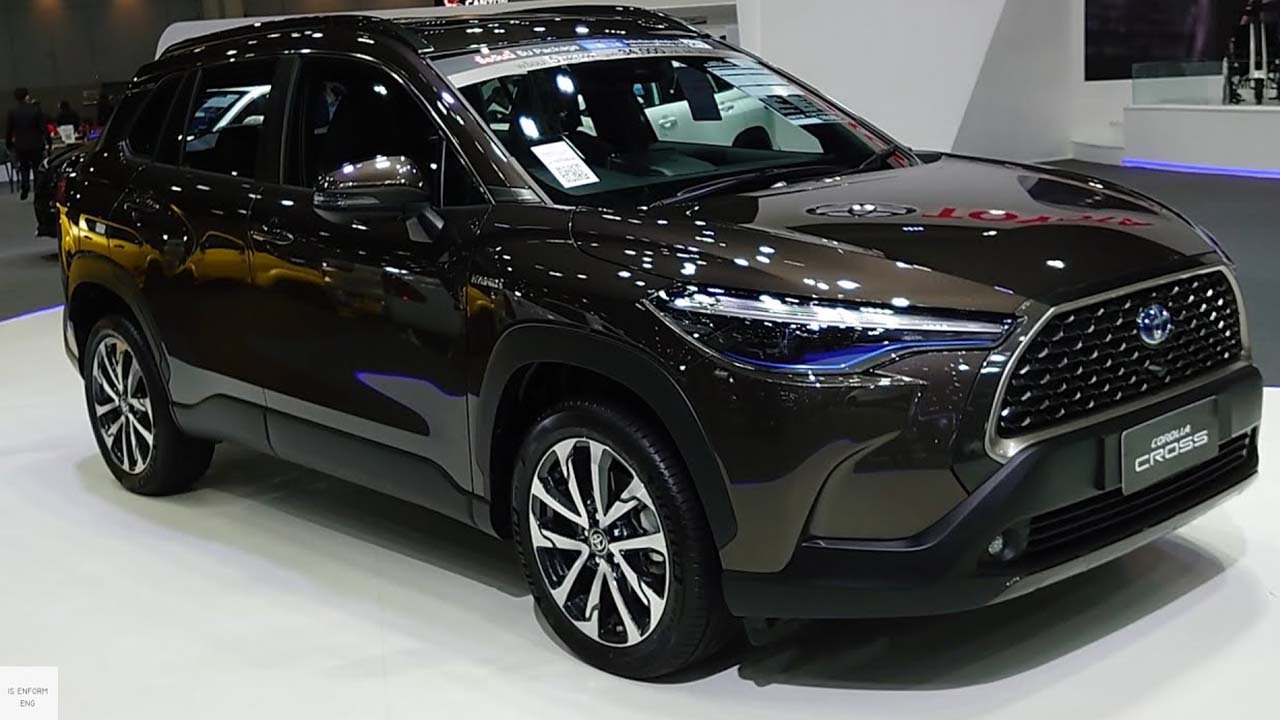
Indus Motor has previously indicated its commitment to increasing product localization. Notably, the company introduced its Hybrid Electric Vehicle (HEV) Corolla Cross last year, emphasising that 50 per cent of its value was localized.
CEO Ali Asghar Jamali highlighted that, after accounting for government taxes, over 50 per cent of the Corolla Cross’s value comprises localised parts, distinguishing it among other assembled hybrids in the country.
Indus Motor Company (IMC) celebrated the launch of the 4th generation Toyota Corolla Cross Hybrid Electric Vehicle (HEV) at its manufacturing facility in Karachi.
This marks a significant achievement for IMC, emphasising the ‘Made in Pakistan’ initiative and showcasing the strong bond between Japan and Pakistan. Notable figures present at the ceremony included Federal Secretary Asad Rehman Gilani, Toyota’s top leadership and the Japanese Ambassador to Pakistan, Mitsuhiro Wada.
Yoshiyuki Takai, expressing optimism about the Corolla Cross HEV’s reception in Pakistan, highlighted the environmental benefits of increased hybrid vehicle adoption.
Gilani, on behalf of the government, congratulated IMC and reiterated the commitment to support hybrid and electric technologies, aligning with the Auto Policy 2021–26. IMC’s CEO, Ali Asghar Jamali, emphasised the company’s dedication to sustainability, revealing an investment exceeding $100 million in manufacturing the first locally produced HEV.
The Corolla Cross HEV boasts a smooth and efficient 1800-cc engine with hybrid and gasoline options. Jamali also outlined IMC’s contribution to the local automobile sector, encompassing a comprehensive value chain, part manufacturers, authorised dealerships, and a substantial workforce of over 450,000 people.
Indus Motor Company, the leading assembler of Toyota-brand vehicles in Pakistan, has made a significant move to benefit its customers.
In a recent announcement sent to its dealers on Tuesday, the company revealed a substantial reduction in car prices, effective October 24. This decision was prompted by the recent strengthening of the Pakistani rupee against the US dollar.
Following this development, the basic Yaris model 1.3MT LO is now more affordable, with a price decrease of Rs100,000, or 2.2 per cent, bringing its new price to Rs4.399 million.
Similarly, the top variant, 1.5 CVT Aero, will now be available at Rs5.849 million after a reduction of Rs120,000.
The Toyota Corolla’s variant prices have been reduced between Rs200,000 and Rs250,000. Furthermore, Toyota’s pickup Revotrucks are now more budget-friendly, with price reductions ranging from Rs450,000 to Rs790,000.
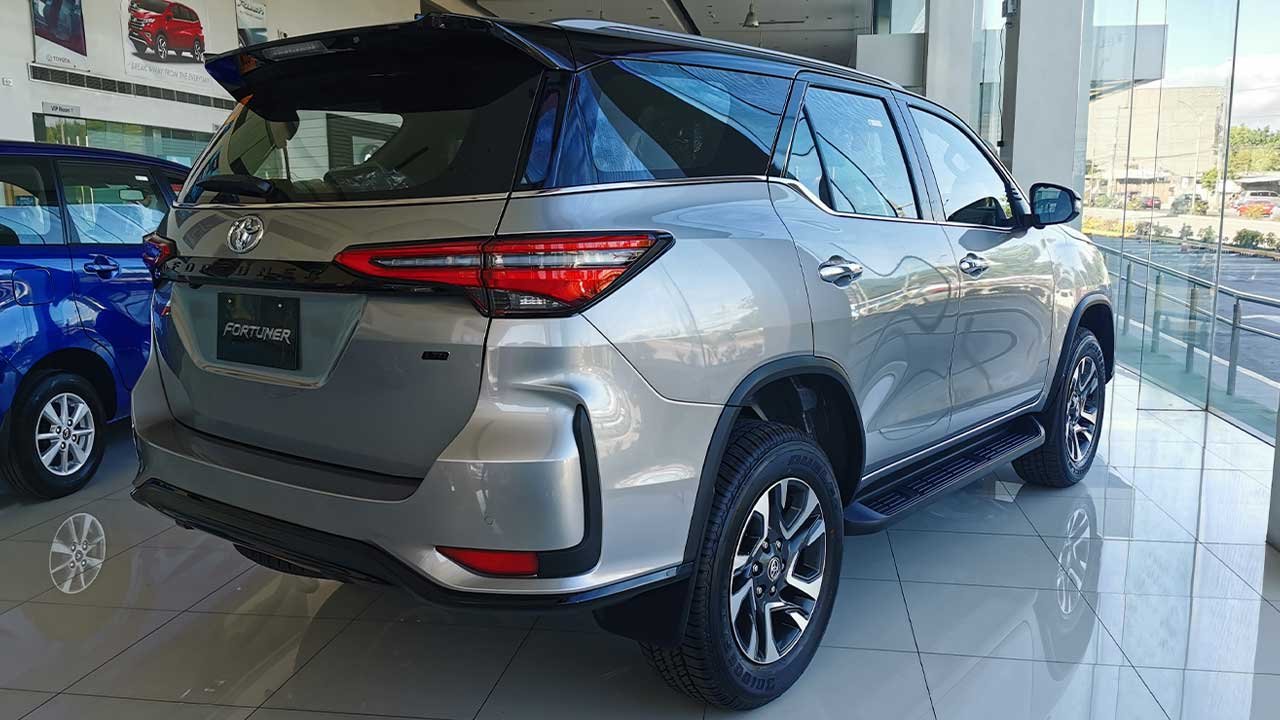
One of the most notable changes is seen in the Fortuner G4x2 Petrol STD, which will now be priced at Rs14.499 million after a substantial reduction of Rs1.31 million, or 8.3 per cent.
This price adjustment follows the footsteps of other major players in the industry, including MG Motors and Lucky Motor Corporation (LMC), both of which have also announced price reductions for their vehicles.
The automobile sector in Pakistan has faced challenges recently, mainly due to fluctuating exchange rates and restrictions on imports.
The rupee experienced a significant depreciation against the dollar, reaching a record low of Rs307.1 on September 5.
However, it has since recovered, stabilising around the Rs279–280 level. This positive trend aligns with the efforts of the caretaker government, which took measures against smugglers and hoarders, contributing to the currency’s recovery.
Apart from currency fluctuations, the auto sector was affected by previous government policies, including import restrictions aimed at preserving foreign exchange reserves.
Additionally, higher finance costs and a considerable rise in car prices led to a decrease in consumer demand. In the first quarter of FY24, car sales in Pakistan plummeted to 20,983 units, marking a 40 per cent decline compared to the same period the previous year.
Here are the latest prices of all Toyota cars in Pakistan:
Indus Motor Company (IMC), the leading manufacturer of Toyota vehicles in Pakistan, has announced a temporary production suspension lasting a month due to inventory shortages.
The company informed the Pakistan Stock Exchange (PSX) of this development.
Starting on October 17 and concluding on November 17, 2023, Toyota IMC has chosen to halt production in response to insufficient inventory of vehicles and parts stemming from supply chain challenges.
The company has stated that they will keep stakeholders informed of any adjustments to this plan. This marks the ninth production closure announcement by Indus Motor this year. In the previous month, the company ceased plant operations from September 28 to October 9 due to similar inventory issues.
In its most recent financial report, Indus Motor recorded a profit-after-tax (PAT) of Rs9.66 billion for FY23, representing a nearly 39 per cent decline compared to the earnings of Rs15.8 billion in the preceding year’s corresponding period.
The Pakistani auto sector, heavily reliant on imports, has encountered hardships due to government measures to restrict imports and limit LC issuance. Elevated financing costs and substantial car price hikes have also dampened consumer demand.
In the first quarter of FY24, sales figures reached 20,983 units, reflecting a 40 per cent decrease compared to the same period in the prior year.
The Pakistani automotive industry is grappling with dwindling demand, primarily attributed to soaring prices, costly auto financing, and increased taxes, all contributing to a year-on-year decline in sales.
Indus Motor Company Limited, the firm responsible for the assembly of Toyota vehicles in Pakistan, has recently announced a temporary suspension of its production operations until October 9. This significant decision was formally communicated through a notice submitted to the Pakistan Stock Exchange (PSX).
The rationale behind this temporary cessation of production is primarily linked to the company’s current vehicle inventory status. Indus Motor Company Limited has set the production plant’s closure period from September 28 through October 9 to address these concerns.
This pause in production is the latest in a series of similar actions undertaken by the company. Previously, Indus Motor Company Limited had temporarily halted production from August 25 to September 6, attributing it to reduced demand and inventory challenges. Additionally, the company faced a production plant shutdown from July 21 to August 3, driven by complications in the importation of raw materials, logistical hurdles in clearing consignments, and disruptions in the supply chain from select international vendors.
These issues collectively hampered the company’s supply chain, leading to insufficient inventory levels to sustain uninterrupted production. Furthermore, a similar production hiatus had occurred earlier, from June 26 to June 27, with the same underlying reasons.
Indus Motor Company Limited has recently made the difficult decision to close its production plant temporarily. The interruption is set to last for two weeks, as the company faces significant challenges in importing essential raw materials, leading to disruptions in its supply chain.
The root of the problem lies in the difficulties the company and its vendors are encountering in importing raw materials and clearing consignments. These issues are primarily attributed to the struggles with opening letters of credit (LCs) and supply chain problems from certain foreign vendors. Unfortunately, this has left the company with insufficient inventory levels to maintain its production activities.
The company’s secretary addressed these concerns in a statement released to the Pakistan Stock Exchange, outlining the seriousness of the situation. Indus Motor’s production plant experienced a brief shutdown the previous month due to similar issues with raw material imports. However, the current circumstances have exacerbated the problem, forcing the company to take this temporary production halt.
Commencing from July 21, 2023, and extending until August 3, 2023, the plant’s complete shutdown is expected to have implications beyond Indus Motors itself. Other major players in the automotive sector, such as Pak Suzuki Motors and Honda Cars, have also faced similar challenges and implemented several shutdown days in recent months.
The automotive industry, along with other sectors dependent on imported raw materials, has been struggling due to a shortage of foreign exchange reserves in Pakistan. The complications surrounding LCs have severely impacted the supply chain’s seamless functioning, leading to significant disruptions in production activities.
Indus Motors holds a significant position in Pakistan’s automobile industry and has notably invested $100 million in local production of hybrid electric vehicles (HEVs). Furthermore, the company plays a crucial role in the local automotive ecosystem, with over 50 part manufacturers contributing to the value chain by producing parts worth over Rs250 million every working day.
Additionally, the company has established 53 independently owned authorised dealerships that provide aftersales service, generating substantial employment opportunities for over 450,000 people directly and indirectly across the country.
The temporary closure of the production plant presents various challenges for Indus Motors, its employees, and the overall automobile industry. The company’s management is likely to be exploring potential solutions to address the scarcity of raw materials and resume operations as soon as the situation allows.
As analysts point out, finding lasting solutions may require collaboration between the government and relevant stakeholders to ensure a stable supply of raw materials for the automotive industry and other affected sectors. Swift action and strategic measures will be vital to mitigate the economic impact of these closures and preserve the growth trajectory of Pakistan’s automotive sector.
The automobile industry of Pakistan experienced a severe blow in the fiscal year 2022-23, with car sales plummeting by 56 per cent to a mere 126,879 units, according to data shared by the Pakistan Automotive Manufacturers Association (PAMA) on Tuesday. This significant decline can be attributed to various factors, including the non-availability of completely knocked down kits (CKDs), exorbitant car prices, a surge in auto financing, and the reduced purchasing power of buyers.
In June 2023, the monthly sales took a substantial hit, dropping by 79 per cent compared to the same period last year, reaching a meager 6,034 units. However, it is worth noting that the sales in June were 10 per cent higher when compared to the sales in May.
Among the car manufacturers, Honda Atlas Car (HCAR) witnessed the most notable increase in sales, with a month-on-month surge of 253 per cent to 307 units in June. This growth can be attributed to the lower sales base in the previous month and the availability of necessary car parts.
Pak Suzuki, on the other hand, experienced a modest month-on-month growth of 2 per cent in June, with sales reaching 3,009 units. The surge in Bolan sales by 67 per cent contributed to this increase. However, the company’s bookings took a significant hit, plunging by 57 per cent to 65,364 units in the fiscal year 2022-23.
Indus Motor Company, responsible for assembling Toyota cars, observed a 7 per cent increase in bookings on a month-on-month basis, reaching 1,846 units in June. Nonetheless, the company’s total car sales for the fiscal year 2022-23 amounted to 31,104 units, reflecting a decline of 58 per cent year-on-year.
Hyundai Nishat Motor witnessed an 11 per cent month-on-month increase in sales, with the sales of Tucson surging by 61 per cent to 313 units and Elantra sales increasing by 28 per cent to 88 units in June.
Shifting focus to the tractor segment, Millat Tractors (MTL) experienced a 42 per cent month-on-month increase in bookings, reaching 2,136 units in June. Conversely, Al Ghazi Tractors (AGTL) recorded sales of 854 units, marking a decline of 57 per cent. Overall, the total tractor industry sales for the fiscal year 2022-23 amounted to 30,942 units, representing a decrease of 48 per cent due to factors such as floods, plant shutdowns, lower consumer buying power, and higher prices.
Looking ahead, the high interest rates and the significant increase in auto prices resulting from the depreciation of the Pakistani rupee against the dollar are expected to continue negatively impacting auto sales in the fiscal year 2024. Furthermore, restrictions on opening letters of credit (LCs) for importing CKDs by auto assemblers may lead to lower plant capacity utilisation and, in extreme cases, plant shutdowns across the industry.
Indus Motor Company (IMC) announced a 37 per cent decrease in its profit-after-tax (PAT) for the third quarter of financial year 2022-23, with earnings of Rs3.216 billion compared to Rs5.118 billion in the same period last year.
Despite this, the automaker saw an increase in its quarterly PAT by 142 per cent, which was attributed to an improvement in gross margins, resulting in an operating profit after two consecutive quarterly operating losses. The company also declared an interim cash dividend of Rs24.4 per share, in addition to the previously paid interim cash dividend of Rs18.4 per share.
Muhammad Abrar, an investment analyst at Arif Habib Limited, explained that IMC was able to offset the impact of currency devaluation by raising the prices of its cars significantly. The automaker’s operating expenses were also curtailed. While revenue decreased by 29 per cent due to lower units sold, IMC’s gross profit was Rs3.05 billion during 3QFY23, compared to Rs5.23 billion in the same period last year.
Pakistan’s auto sector has been struggling due to the government’s decision to curb imports and restrict issuance of Letters of Credit (LC), higher finance cost, and massive increases in car prices. Despite this, IMC’s gross margins improved to 6.3 per cent on a QoQ basis, which was unexpected, according to Abrar.
According to Brecorder, the company’s earnings per share (EPS) stood at Rs40.92, compared to Rs65.11. IMC’s board of directors met to review the company’s financial and operational performance in the first nine months ended March 31, 2023. While higher profits are expected in the upcoming quarter due to the increase in car prices and the reduction of operating expenses, the country’s auto industry reported a 66 per cent decrease in car sales compared to March 2022.
Last week, Pak Suzuki Motor Company Limited also reported its highest-ever quarterly loss of Rs12.9 billion in the first three months of 2023 due to decreased sales and high finance costs.