Tag: industry

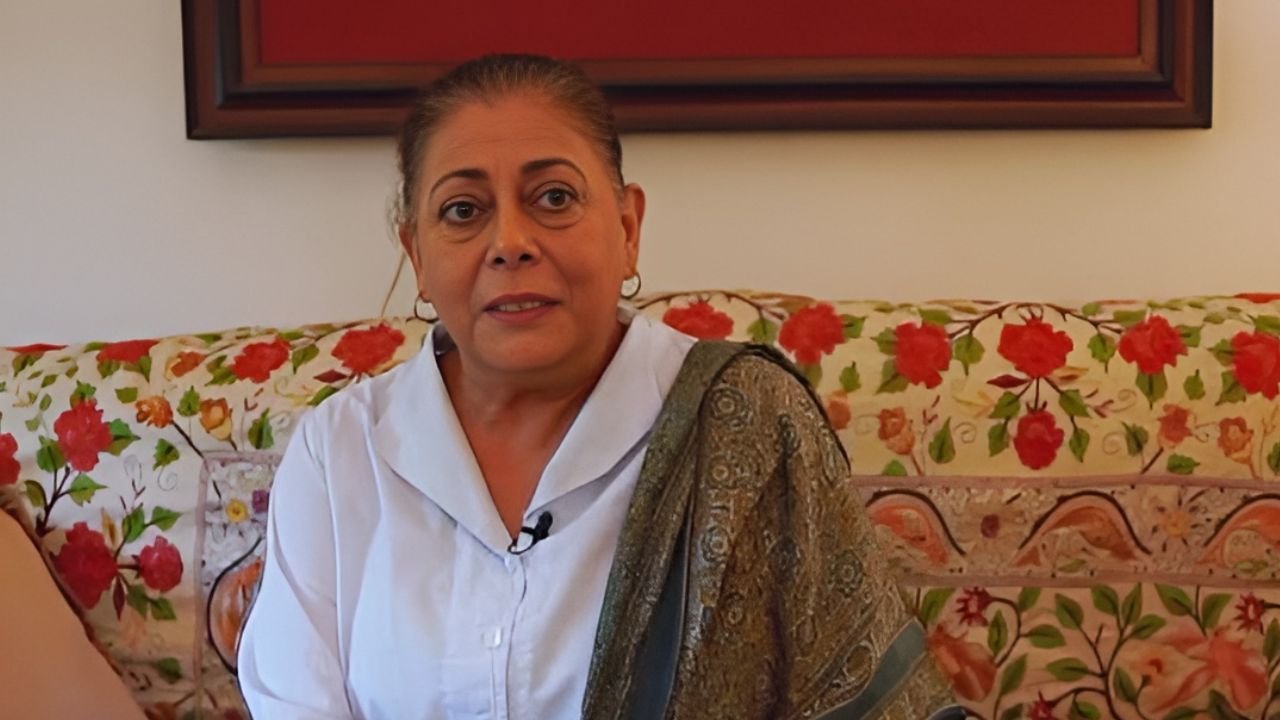
  • ‘We’re a colonised people’: Simi Raheal criticizes industry’s obsession with whitening injections

    ‘We’re a colonised people’: Simi Raheal criticizes industry’s obsession with whitening injections

    In an interview with The Current, Simi Raheal shared her thoughts on the industry’s obsession with fair complexion. “We are such ‘colonised’ people; the entire industry has changed its colour with whitening injections, and you are asking me this question,” she commented.

    Many celebrities now have significantly different skin tones compared to when they first started their careers, highlighting a trend in the industry.

    When asked are why are we colonised,
    Raheal said, “Our society isn’t aware, despite getting an education. An education doesn’t just mean that you can read ABC. Education means expanding your thoughts, seeing other people, accepting them, and enjoying their diversity. Till the time we don’t learn this, we will remain colonized.”

    The veteran actress is currently starring in ‘Umro Ayyar’, now screening in cinemas.

  • ‘Just a coincidence’: Ahsan Khan on marrying outside the industry

    ‘Just a coincidence’: Ahsan Khan on marrying outside the industry

    Love may find its way into the most unexpected locations, and for celebrities, sometimes the heart chooses to follow a path away from the spotlight. This was the situation with actor Ahsan Khan who recently revealed that his marriage to a girl who was not part of the entertainment industry was entirely accidental.
    Ahsan Khan recently sat down with the ‘Samma Podcast’ to talk about a host of issues.

    “There are many educated, well-mannered, and family-oriented girls from good backgrounds in our industry, but their marriages have taken place outside the industry,” he observed.
    Calling it “just a coincidence” that his mind matched with a girl outside the industry, Ahsan simply said he liked her.
    Ahsan Khan married his wife Fatima Khan in 2008.

  • ‘Talent isn’t enough’: Shaheera Albasit opens up about nepotism in the industry

    ‘Talent isn’t enough’: Shaheera Albasit opens up about nepotism in the industry

    Actress Shaheera Jalil Albasit recently spoke about the prevalence of favouritism and nepotism in the country’s entertainment industry.

    In an interview with ‘Something Haute,’ she shared her personal experiences with the issues.”Favouritism, nepotism, everything exists in the industry. It is there,” Albasit said, highlighting the widespread nature of these practices.

    When asked if she had personal experiences with favouritism and nepotism, she admitted, “I have, especially at the beginning of my career, when I used to go for auditions, I would feel that.”

    However, she noted that it can be difficult to pinpoint specific instances, as they often operate within the boundaries of industry rules and regulations. “But one cannot deny the privilege of nepotism. It simply means you are facilitated with all the resources since childhood, even if you don’t want them,” she explained.

    “But I’ve also realized that this industry is very cut-throat and often hard work and effort of an individual take over their talent and all the other factors. So one must accustom oneself accordingly and if you have decided to join this industry, just be prepared to give your all to it to prove your mettle,” the actor concluded.

    Currently, Albasit is starring in the popular drama serial ‘Burns Road Kay Romeo Juliet’ alongside Iqra Aziz and Hamza Sohail.

  • Actresses are exploited in the showbiz industry: screenwriter Bee Gul

    Actresses are exploited in the showbiz industry: screenwriter Bee Gul

    Screenwriter Bee Gul who has written dramas like
    ‘Talkhiyaan’, ‘Raqeeb Se’, and ‘Dar Si Jati Hai Sila’ is well known for her skill as a writer.
    Gul was a guest on Rafay Mehmood’s podcast when she discussed the ‘exploitation’ that goes on behind the scenes.
    She said that, “women entering the industry often anticipate offers of exploitation. This reality cannot be ignored.

    Many aspiring actresses accept these offers, recognizing their potential, and often feel they have no other means to secure opportunities within the industry’s accepted standards if they don’t comply with requests from producers or directors.”
    “A friend’s experience, who faced difficulty landing lead roles because she refused to engage in such practices,” Gul claimed.

  • Nawazuddin Siddiqui’s daughter joins acting school

    Nawazuddin Siddiqui’s daughter joins acting school

    Bollywood actor Bollywood thespian Nawazuddin Siddiqui’s daughter has enrolled in an acting school.
    Despite not having a film background himself, Nawazuddin made a name for himself in the industry as one of its most talented actors. Now, he wants his daughter, Shora Siddiqui, to join the film world too.

    In an interview, he said he wished for her to follow his footsteps. Nawazuddin and his wife have resolved their differences for the sake of their children.
    “I want for Shora to achieve her dreams. At 13-years-old, she’s ready to excel in the performing arts.”

    He added, “I’ve enrolled her in an acting school. If she chooses to pursue acting as a profession, I want her to be a skilled actress.”
    Nawazuddin also said that acting is an art, and he will always support her in every possible way.

  • Iran ready to share tech expertise with Islamabad, says Iranian President Raisi

    Iran ready to share tech expertise with Islamabad, says Iranian President Raisi

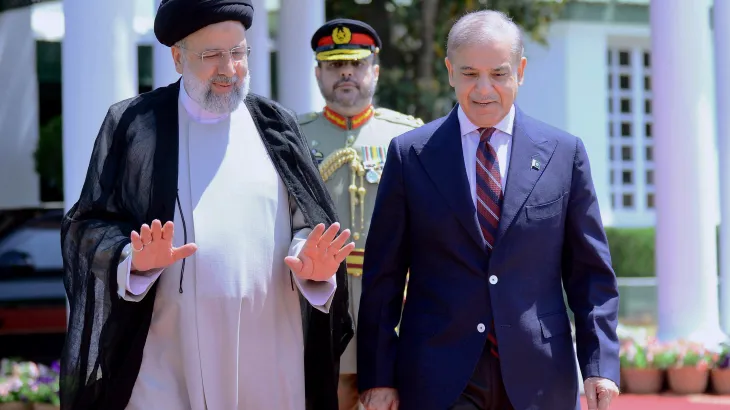
    After visiting Lahore and Karachi, Iranian President Ebrahim Raisi said that Tehran is ready to share its strengths in industry, science, and technology with Pakistan. He made the remarks during his three-day official visit to Pakistan.

    While speaking at a ceremony in Karachi’s Chief Minister House, he pointed out that despite challenges, Iran made progress in these fields and was prepared to share this knowledge with Pakistan.

    “I am here with a message of peace and prosperity for the Pakistani nation from the people of Iran and its leadership,” he said, adding, “The governments on both sides are willing to remove all obstacles to expanding trade between the two countries and in this regard, several options were discussed [in his recent meetings Pakistani leadership].”

    The Iranian President also said that the trade partnership will make the relationship between the two countries stronger, stressing that no power on earth “can affect the historical ties between the two countries.”

  • Nora Fatehi says early days in Bollywood were ‘painful’

    Nora Fatehi says early days in Bollywood were ‘painful’

    Nora Fatehi, the Canadian-born Bollywood actress and dancer who has shot to fame, reflected on her early days and struggles in Bollywood, describing them as “painful”.
    During a recent interview, Nora discussed the efforts she made to establish herself in the industry, and the challenges she faced during her initial days in India.

    “When I arrived in India, I had only 5,000 rupees, and at that time, I had no idea what 1,000 dollars meant. I used to live in an apartment with nine mentally ill girls, two of whom I shared a room with.”
    She alleged that the agencies through whom she wanted to enter the showbiz world were also involved in her harassment.
    “While living with nine girls in an apartment, I used to question myself about the difficult situation I had put myself in. Even today, those initial dreadful days still shock me,” she recalled.

    “In the beginning, talent hunting agencies made me work more and paid me less. I survived for a long time on just one egg and bread. It was one of the most difficult times for me. I also needed treatment after moving to India, but I did not have enough money to go to a good hospital for my treatment.”

  • Shiraz Uppal talks about ‘Funkari’ controversy with Aima Baig

    Shiraz Uppal recently gave an interview to a private TV channel and talked about the controversy with singer Aima Baig regarding the song ‘Funkari’ released this year.

    “I resolved the issue because at the stage of my career that I am at now, after creating the music of many famous singers’ famous songs, it should not be tolerated that anyone takes away credit, and people in our industry are very good at denying credit.”

    The singer said, “I wanted to set an example for newcomers in the industry because newcomers are not able to raise their voice for their rights. They fear that they will have trouble getting more work in the future.”
    He said that he was in a position to speak up for his right, adding, “I replied to Aima Baig so that the new people who are coming in the industry also have the confidence to raise their voice for their right. Aima was arguing with me that the song ‘Funkari’ was written by Shakeel Sohail, who was my close friend.”
    Shiraz Uppal said, “I made it clear to Aima that Shakeel Sohail had passed away in June 2020 and that I had written the lyrics for the song ‘Funkari’ in November 2020.”

    Stressing that he would never take his friend’s credit, Uppal emphasized, “I wrote this song 6 months after his death. I have all the proofs which I showed to Aima and she admitted her mistake.”

    Aima Baig had claimed that she wrote Funkari together with Sohail Shakeel.

    At the time, Uppal refuted Aima Baig’s statement, stating, “He had written the song on his own six months after Shakeel Sohail’s passing.”
    Following Shiraz Uppal’s clarification, the disagreement persisted but eventually got resolved when Aima Baig acknowledged her mistake.

  • Pakistan’s economy picks up pace: GDP growth hits 2.13%

    Pakistan’s economy picks up pace: GDP growth hits 2.13%

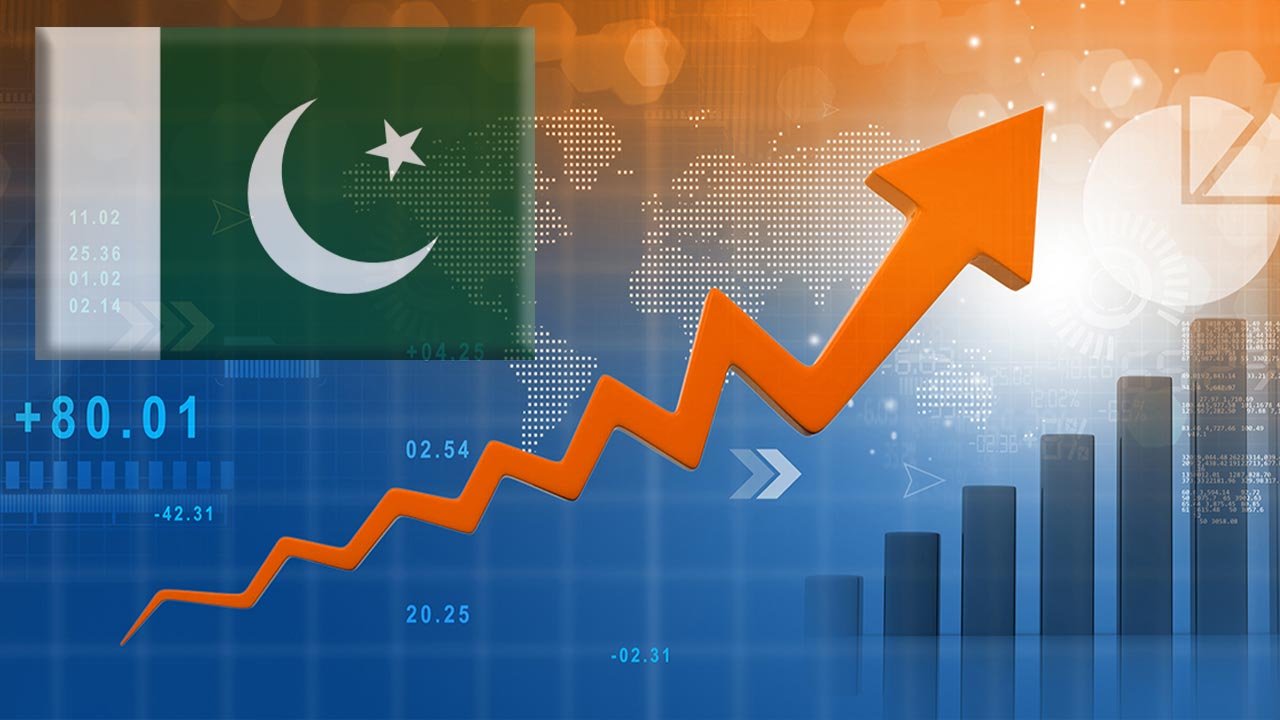
    In the first quarter of the fiscal year 2023-24, Pakistan’s economy exhibited signs of recovery with a Gross Domestic Product (GDP) growth rate of 2.13 per cent, marking a significant improvement from the 0.96 per cent recorded in the same period of the previous fiscal year, according to estimates released by the Pakistan Bureau of Statistics (PBS) on Tuesday. 

    These estimates gained approval during the 107th National Accounts Committee (NAC) meeting convened on the same day.  

    To align with the structural benchmarks outlined in the IMF-SBA program, PBS engaged in consultations with stakeholders and data providers. They presented revised GDP figures for both the fiscal year 2022-23 and the first quarter of 2023-24 to the NAC. 

    In a noteworthy development, the NAC also sanctioned the incorporation of quarterly national accounts into the country’s statistical system. 

    Revisiting the GDP figures for the fiscal year 2022-23, the growth rate has been revised to -0.17 per cent, a departure from the provisional report of 0.29 per cent. 

    Breaking down the growth by industry, the 107th NAC greenlit a sector-specific methodology for compiling quarterly GDP. This includes a series of quarterly growth rates for various industries spanning from the first quarter of 2016-17 to the first quarter of 2023, with 2015-16 serving as the base year. 

    For the first quarter of 2023-24, the agricultural sector exhibited growth of 5.06 per cent, the industrial sector 2.48 per cent, and services 0.82 per cent. 

    In agriculture, crops recorded a robust growth of 6.13 per cent, with a notable 11.16 per cent increase in important crops.  

    The expansion is attributed to a rise in the sowing area, particularly for rice, cotton, and maize, with increases of 21 per cent, 11 per cent, and 5 per cent, respectively. Sugarcane saw an 11 per cent decline, but this was offset by growth in other major crops. 

    The industrial sector, which experienced a continuous decline in the preceding fiscal year except for a modest growth in the second quarter, reversed its trend in the first quarter of 2023-24, registering a growth of 2.48 per cent. Mining and quarrying posted a positive growth of 2.15 per cent, based on quarterly production in the mining sector.  

    Large-Scale Manufacturing (LSM) demonstrated growth of 0.93 per cent according to the Quantum Index of Manufacturing (QIM). Construction industry growth was estimated at 1.73 per cent, with a notable 15.38 per cent increase in cement production. 

    In services, the overall growth was 0.82 per cent. Wholesale and retail trade, reliant on the output of agriculture, manufacturing, and imports, was estimated at 3.05 per cent due to positive growth in agriculture and industry.  

    Transport grew by 1.7 per cent, based on quarterly data. Information & Communication, previously negative, showed a growth of 2.4 per cent, primarily due to a low base and quarterly information received from sources. 

    The finance and insurance industry reported a growth of -12.79 per cent, driven by a decline in the output of insurance companies and brokers, along with high growth in the deflator.  

    Public administration reported -16.65 per cent growth in the quarter, with high deflators contributing to a decline in constant prices.  

    Negative growth in education and human health and social work activities was largely influenced by a decrease in government budget data along with a high deflator. 
  • Lahore, do you know what the biggest pollutant in your city is?

    Lahore, do you know what the biggest pollutant in your city is?

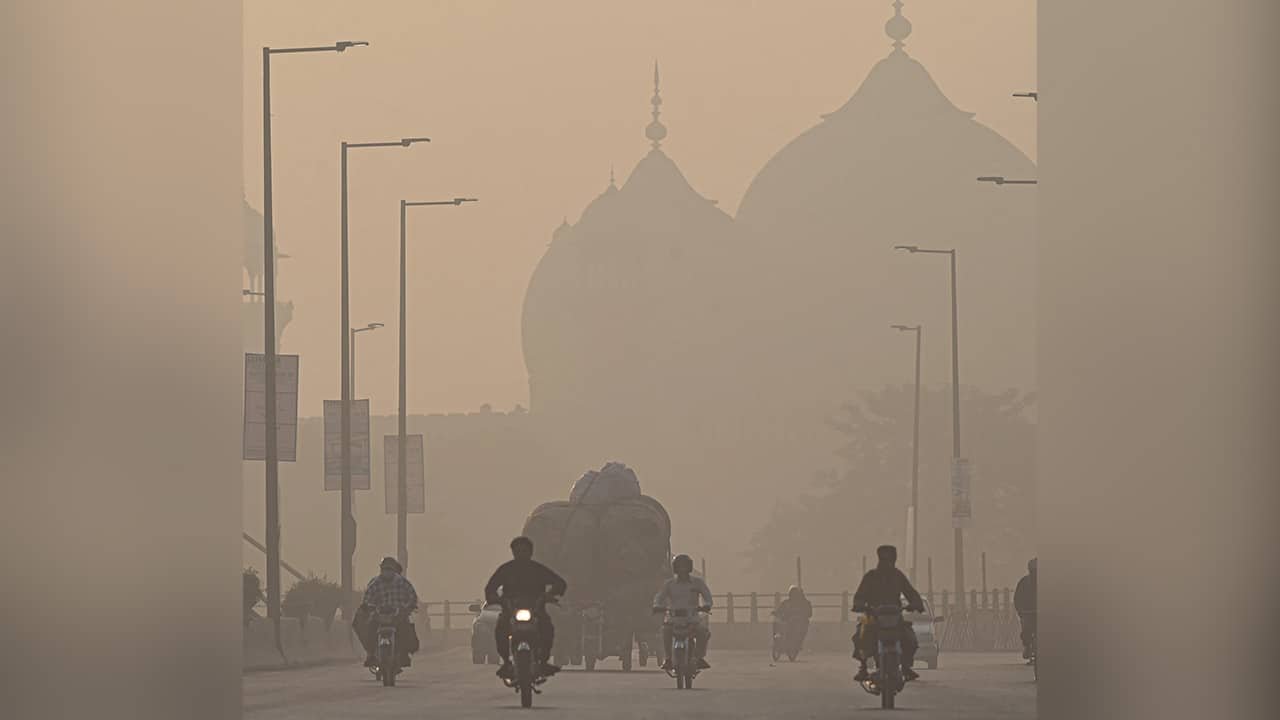
    The Urban Unit of the Planning and Development Department of Punjab has released a report revealing that over 80 per cent of Lahore’s pollution originates from the transport sector.

    Titled “Sectoral emission inventory of Lahore,” the report represents the first comprehensive attempt in the Punjab province to assess atmospheric pollutants resulting from human activities across six developmental sectors.

    The report identifies various primary sources of pollution in Lahore. Transportation accounts for 83 per cent of the emissions, making it a significant contributor. The increasing number of registered vehicles in Lahore, including a notable rise in two-stroke vehicles such as motorbikes, scooters, and auto-rickshaws, is a cause for concern.

    However, it is worth noting that vehicle figures may be inflated as anecdotal evidence suggests that many vehicles in the Punjab province are registered in Lahore.

    In addition to transportation, the burning of crop residues contributes 3.9 per cent to the pollution levels, while waste burning—a common practice in the outskirts of Lahore—accounts for 3.6 per cent.

    Furthermore, the report highlights that emissions from the industrial (9 per cent), domestic (0.11 per cent), and commercial (0.14 per cent) sectors primarily result from the consumption of inefficient fuels like coal and diesel oil.

    The report also examines the health impact of the pollution in Lahore. The concentration of pollutants in the city’s ambient air exceeds the defined limits of Pollutant Equivalent Quantities (PEQs). Air pollution is currently the most severe form of pollution affecting the residents of Lahore.

    Citing the Air Quality Life Index Fact Sheet for Pakistan, the report reveals that if the World Health Organization’s guidelines for an annual average PM2.5 concentration of 5µg/m3 are met, the average life expectancy of Lahore residents could increase by 6.8 years. Moreover, the rising pollution in the city has led to an increase in respiratory diseases.

    The report emphasises the broader challenge of air pollution in Pakistan and the subsequent problems it causes. Pakistan’s air quality performance, as assessed by the Environmental Performance Index (EPI) published by Yale University in 2022, ranks 176th out of 180 countries with a score of 5.7 in air quality points. This indicates a decrease of -0.3 compared to the previous report. The World Air Quality Report (2021) by IQAir also ranks Pakistan as the third-most polluted country in terms of air quality.

    Additionally, the report highlights the country’s high climate vulnerability and environmental degradation. Rapid urbanization is exacerbating exposure to pollution within Pakistani cities. Urban areas, while significant centers of energy production and atmospheric emissions globally, are particularly susceptible to climate-related disasters.

    Major urban centers in Pakistan face challenges such as inadequate waste management, rapid urban sprawl, air pollution, poor access to water and sanitation, and congestion.